

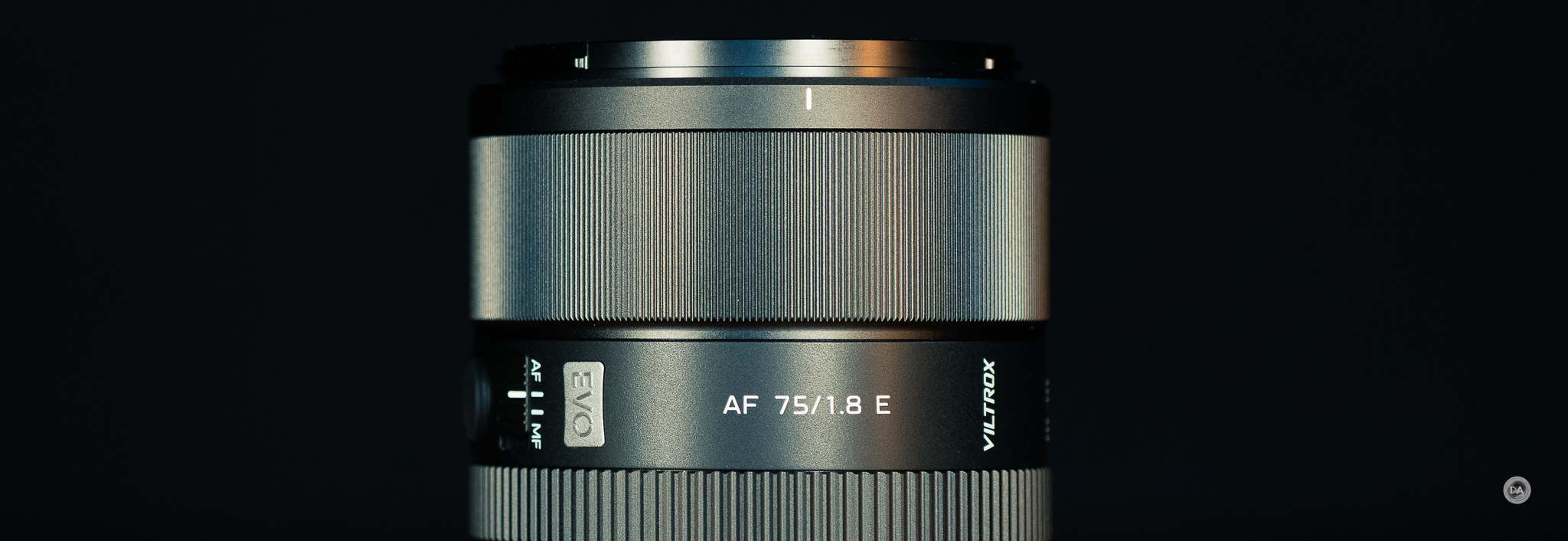
The Viltrox EVO series has hit the sweet spot for a lot of people. First came the 85mm F2, then the 35mm and 55mm F1.8 full frame options, each of which has proven to be both critical and commercial successes. I thought initially that this was going to be a uniquely full frame series, but, like the AIR and PRO series from Viltrox, we are now seeing APS-C additions to the lineup. I’m delighted to see that the first EVO lenses are longer than the typical 23-25mm, 33-35mm, and 50-56mm options we see for APS-C primes. The first two APS-C lenses for the EVO series will be a 75mm F1.8 (reviewed here) and a 90mm F2.2 option (my review here), giving us a 112.5mm and 135mm full frame equivalent field of view. This isn’t the first 75mm lens that Viltrox has released for APS-C, as the 75mm F1.2 was the first lens in their PRO series in late 2022. It was that lens that marked Viltrox’s arrival as a serious competitor to other brands, and since that moment they have been on a serious roll. The 75mm F1.2 PRO is an amazing lens, but it is also BIG (101mm long) and heavy (670g). The new EVO 75mm F1.8 weighs just 325g and is 25mm shorter and18mm narrower, making it a much more natural match for APS-C cameras, which tend to be smaller than their full frame counterparts. You can also get it for just $310, which is barely more than half what the 75mm F1.2 costs.Does that add up to a recipe for success? We’ll find out in the video review linked below or in this text review.
Follow Me @ YouTube | Patreon | Instagram | Facebook | DA Merchandise | Flickr | 500px | X
Thanks to Viltrox for sending me a review copy of this lens. As always, this is a completely independent review. *The tests and most of the photos that I share as a part of my review cycle have been done with the Sony a7RV and the Sony A1 II. You can find the listing for the EVO 75mm F1.8 here.
__________________________________________________________________________________________________
Viltrox EVO Series Lens Reviews
APS-C Series
Full Frame Series
___________________________________________________________________________________________
AI SUMMARY: The Viltrox EVO series has made a strong impression with its range of fast prime lenses, particularly the new APS-C options like the 75mm F1.8 and 90mm F2.2, which offer versatility in focal lengths uncommon for this format. The EVO 75mm F1.8 lens stands out for its lightweight, compact build and robust features, providing an appealing alternative to heavier models like the Viltrox Pro 75mm F1.2. While the lens delivers impressive optical performance and autofocus capabilities, it lacks some high-end features found in more expensive counterparts, presenting a strong price-to-performance ratio. Overall, the EVO series is a remarkable option for photographers seeking affordability without compromising quality.
Strengths:
- Excellent optical performance with sharpness and contrast, even at wide apertures.
- Lightweight and compact design makes it a natural fit for APS-C cameras.
- Competitive pricing and strong price-to-performance ratio.
- Versatile aperture control with solid features, including a declick option.
Weaknesses:
- Autofocus performance, while good, may not be as fast as high-end models for action photography.
- Limited weather sealing details provide some ambiguity regarding durability in adverse conditions.
- Flare resistance isn’t flawless
I was excited to see Viltrox choose some longer focal lengths for their opening APS-C options in the EVO series, as there are far more options at shorter focal lengths than there are on longer focal lengths. The 90mm was a bit more intriguing to me personally, as it covers ground that Viltrox hasn’t on APS-C before, but the 112.5mm focal length of the 75mm might be a little more accessible to some people than the longer 90mm lens, and there’s no question that the EVO 75mm produces gorgeous images.

Viltrox continues to leverage the same basic housing for each of the lenses in this series thus far, which not only saves them money but also is helpful to consumers. All of the lenses have a common 58mm front filter thread, have the same feature set*, and have features and buttons in the same position. They have a similar size and weight, making them easy to swap for gimbal use.
*Fuji XF mount versions of the APS-C EVO lenses will have fewer features because features like a declickable aperture, custom button, and AF | MF switches are not supported on Fujifilm bodies. You can see this on the XF version of the EVO 90mm F2.2 shown alongside the 75mm below.
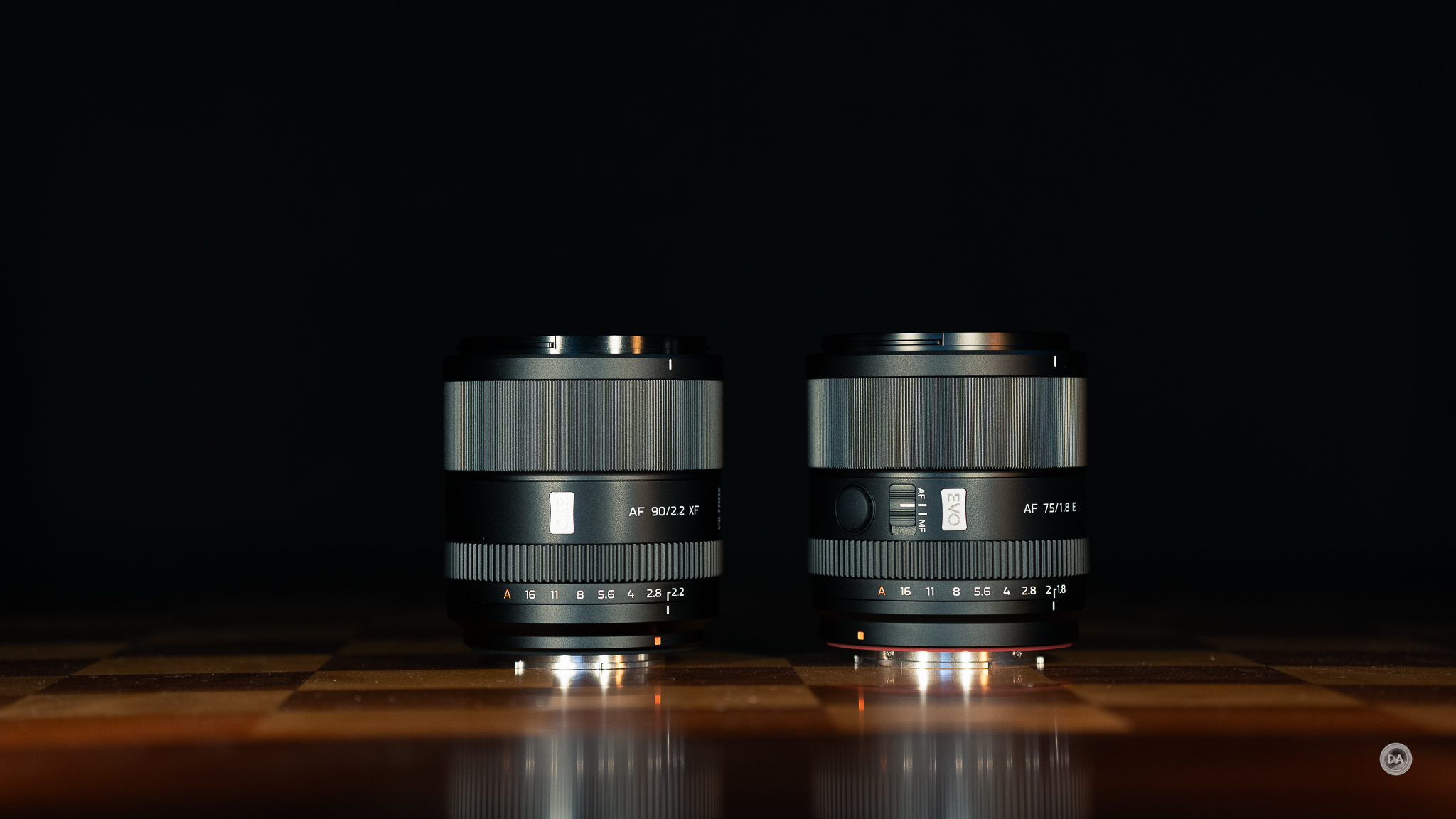
Direct competitors on all platforms don’t really exist. Here on Sony E the closest is the Samyang AF 75mm F1.8 or the TTArtisan AF 75mm F2, though these are full frame lenses. There are the 75mm F1.2 options from Viltrox and then the Sirui Sniper AF 75mm F1.2, though those are obviously bigger, heavier lenses with much brighter maximum apertures. The EVO 75mm sits about midrange in this pack in terms of cost, with the most expensive being the Viltrox Pro at $580 USD and the cheapest being the TTArtisan at about $200. Samyang does make a unique 75mm F1.8 APS-C lens for Fuji X-mount, and that lens can be had for about $450 USD, though it doesn’t seem to gotten much traction (and I’ve never tested it). The EVO 75mm can be had for right over $300, meaning as per usual, Viltrox arrives well positioned on the value front, offering more features and performance for less money than true competitors.

Is this the lens that you should add to your kit? Let’s go deeper and find out.
Viltrox EVO 75mm Build and Handling
I absolutely love the formula Viltrox has chosen for this new mid-level series, as it checks just about all the boxes for me. The first is a robust approach to aperture control, starting with an aperture ring that can be used with traditional “clicks” at the one-third of a stop points throughout the aperture range.
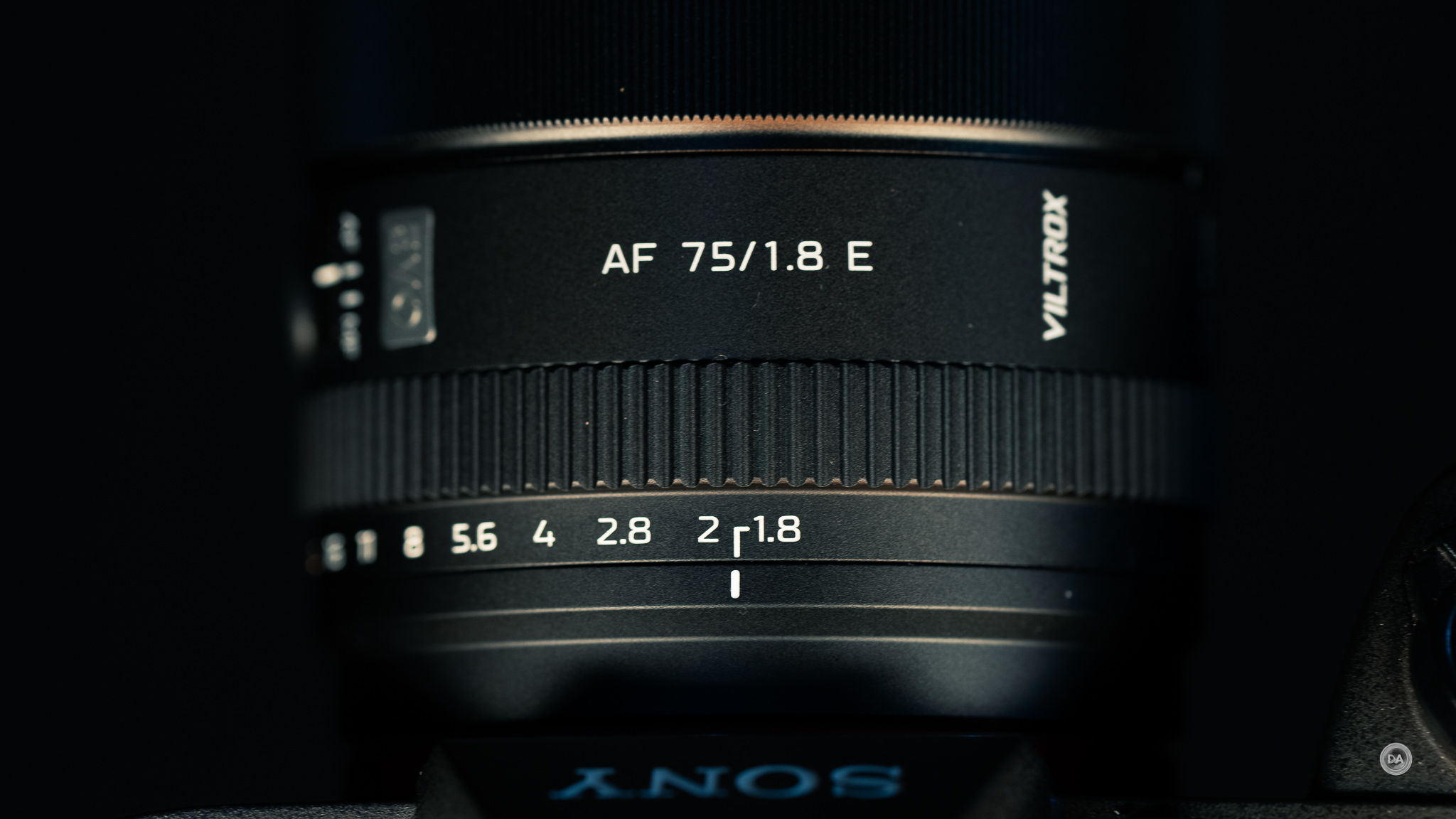
The aperture ring works perfectly here, with markings at the one third stop positions and light detents at those places if you have the “clicks” on. You also have a declick option where you can smoothly rack from F2 to F16. There is a firmer detent between F16 and the A (automatic) option which will allow aperture to be controlled from within the camera. The one aperture feature that is missing is an iris lock which would allow you to either lock into or out of the aperture ring, though the detent before the A mode is firm enough that you shouldn’t stray there by accident.
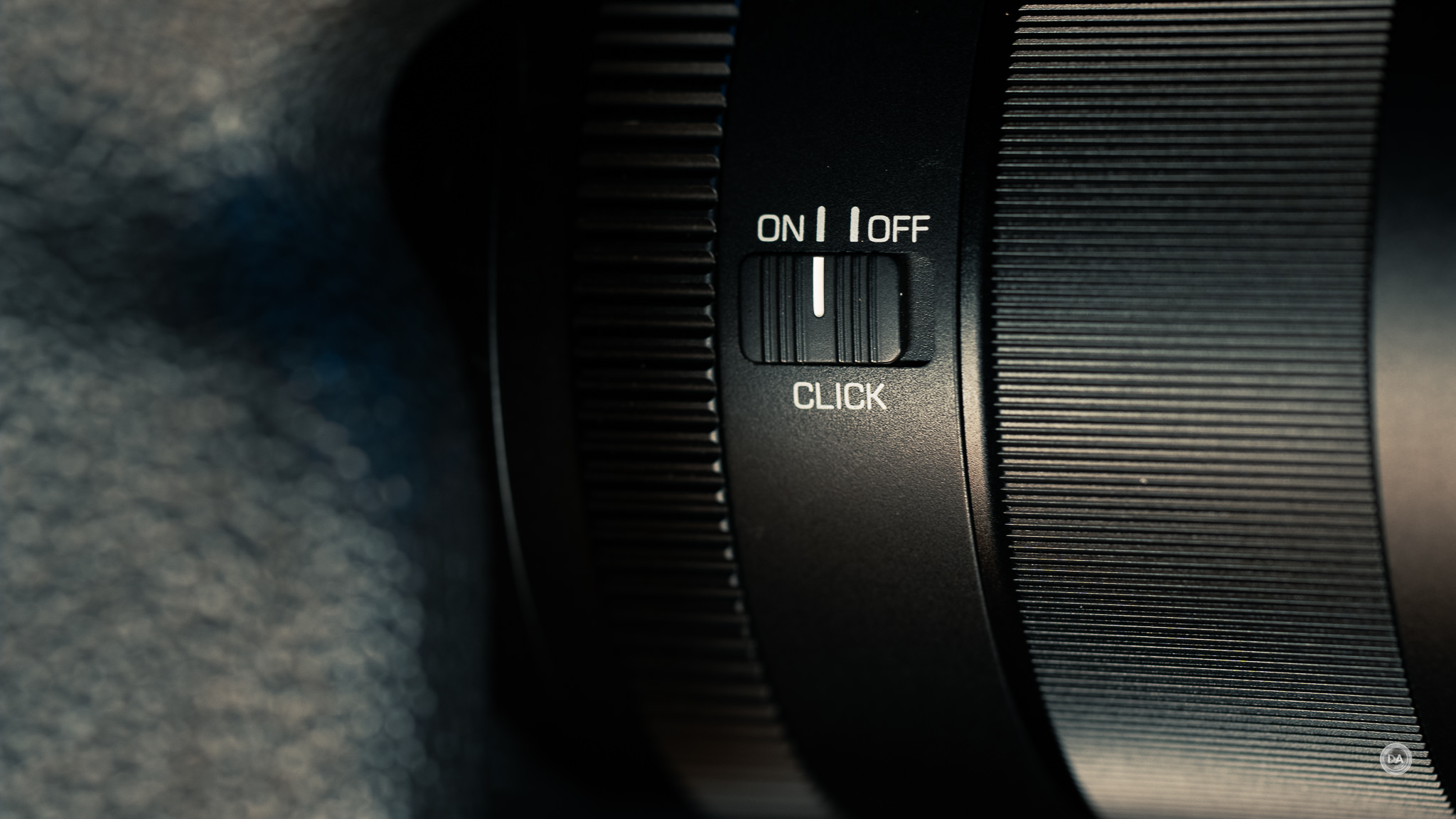
I was able to perform aperture racks in the declicked mode without visible steps.
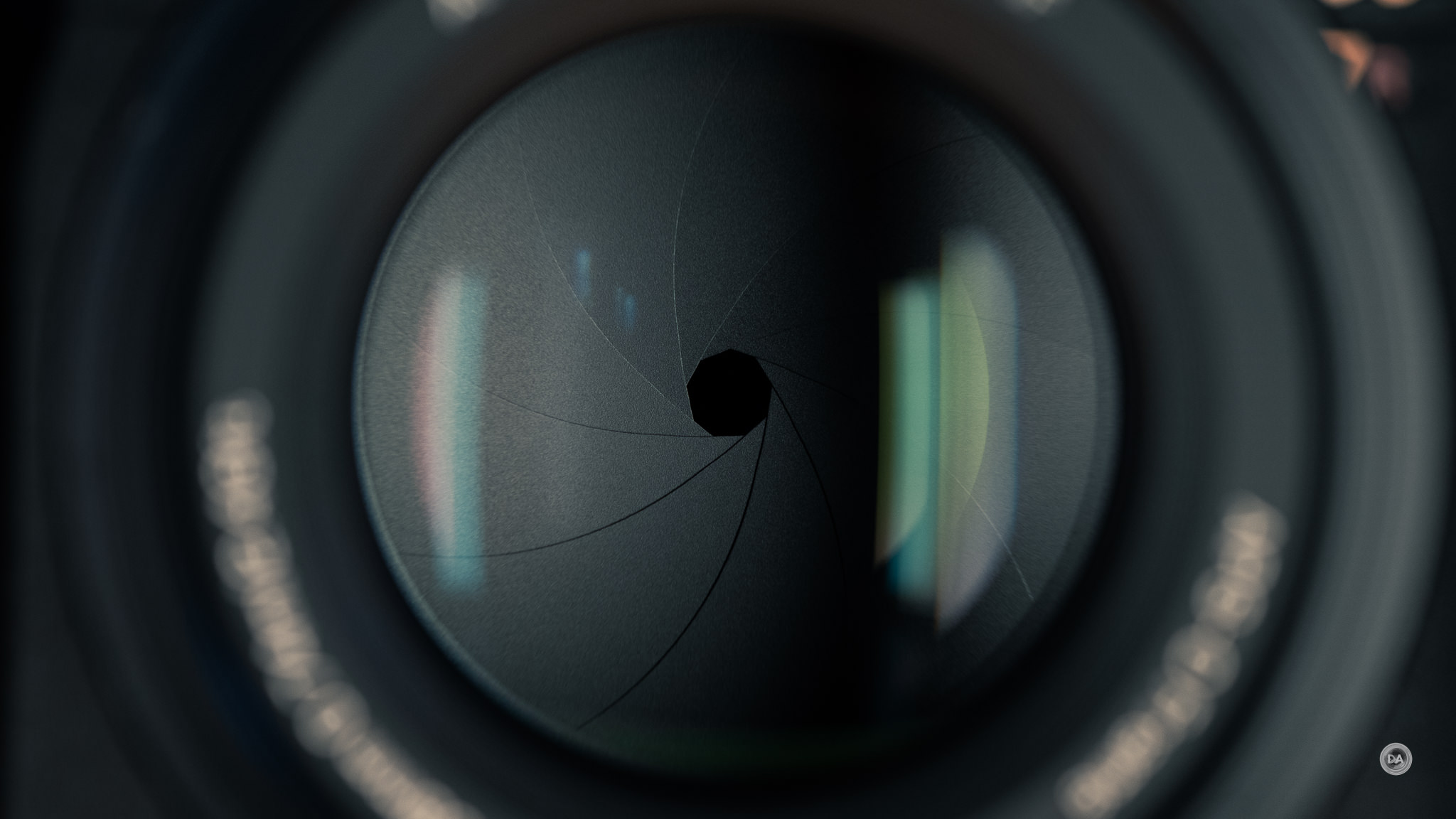
The iris itself has 9 aperture blades, and these make for a nicely rounded aperture (though with a slight outline of the blades) even when stopped down a fair bit. Here’s what the bokeh geometry looks like at F1.8, F2, and F2.8:



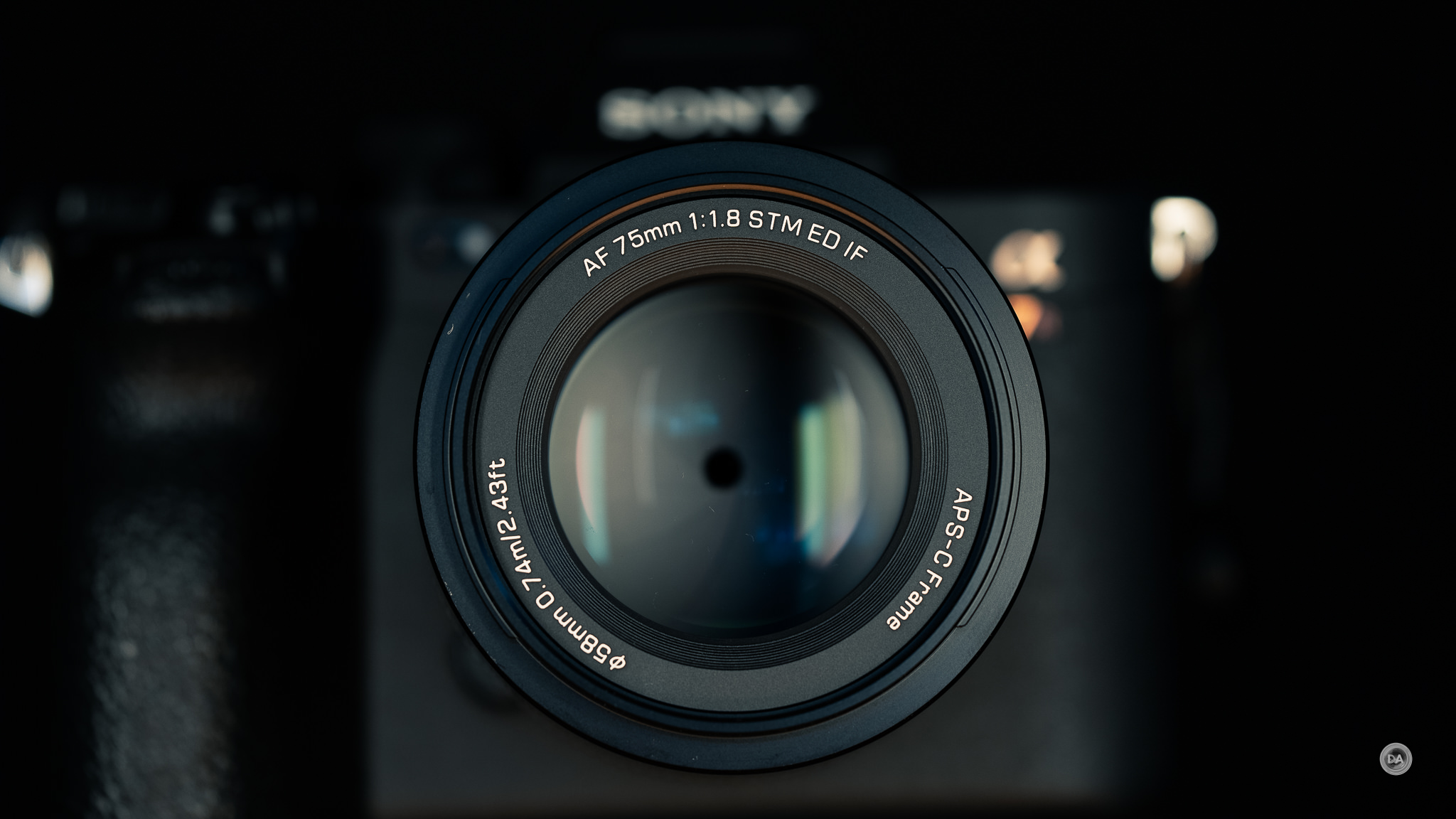
There is a 58mm filter thread up there, which is shared across all five EVO lenses thus far.
Other features include an AF | MF switch and a custom/Fn button that can be programmed to various functions from within the camera.

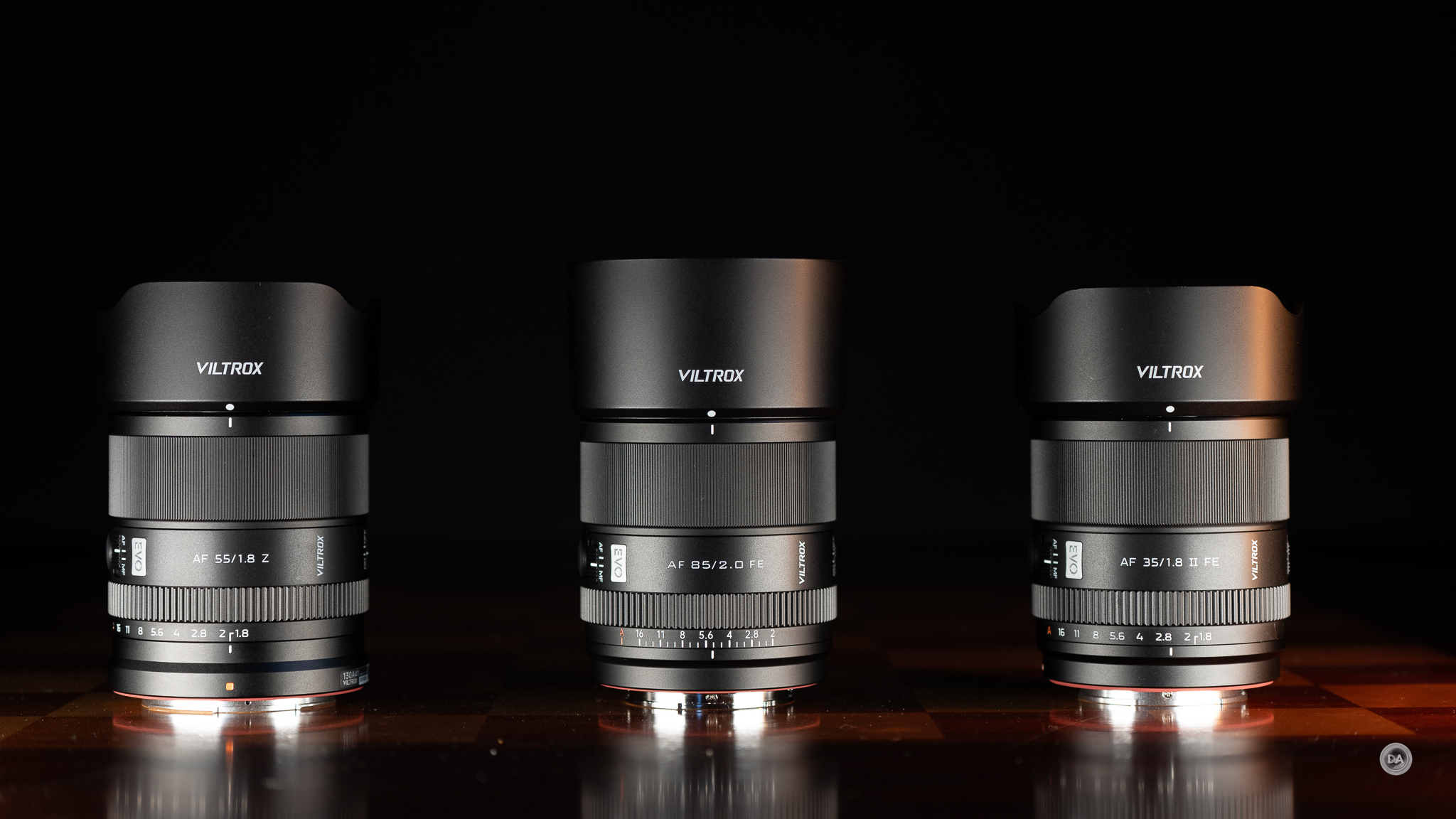
Viltrox is clearly leveraging a common form factor as they have with some of their other series, with the five lenses in the new EVO series sharing exterior dimensions and features, though there is a variation in their hoods. The new APS-C lenses are the same size as the full frame series.
Viltrox has been a little coy about the weather sealing on the EVO lineup. There is no mention of weather sealing in the packet that they sent me, though I do see a weather sealing gasket at the lens mount and the information packet does mention a special coating on the front element to resist moisture and fingerprints.
I was curious if these were the only seal points, but when I reached out to Viltrox, they shared this cutout with me.
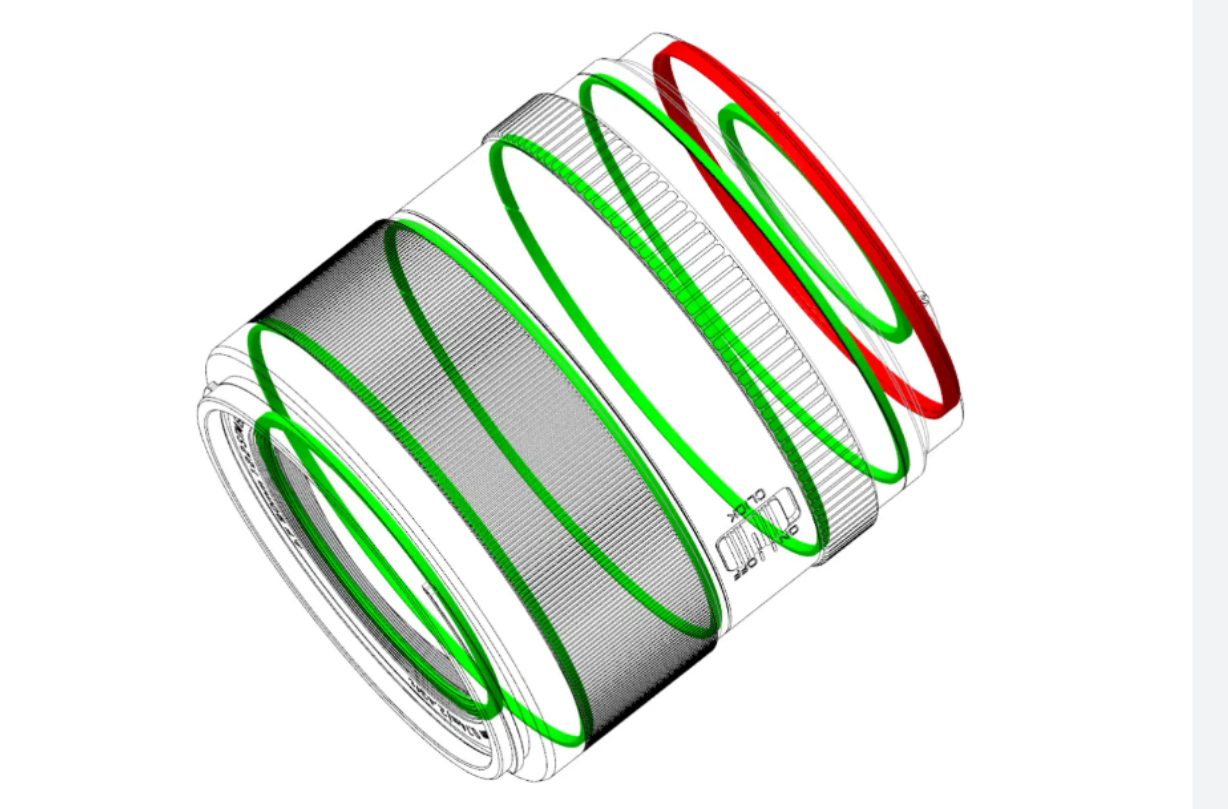
I was shocked, because I count seven seal points in there, which is better than expected. Viltrox told me that those internal seals are felt rather than rubber, but even getting the basic rubber gasket plus some form of internal seals at this price point is impressive.
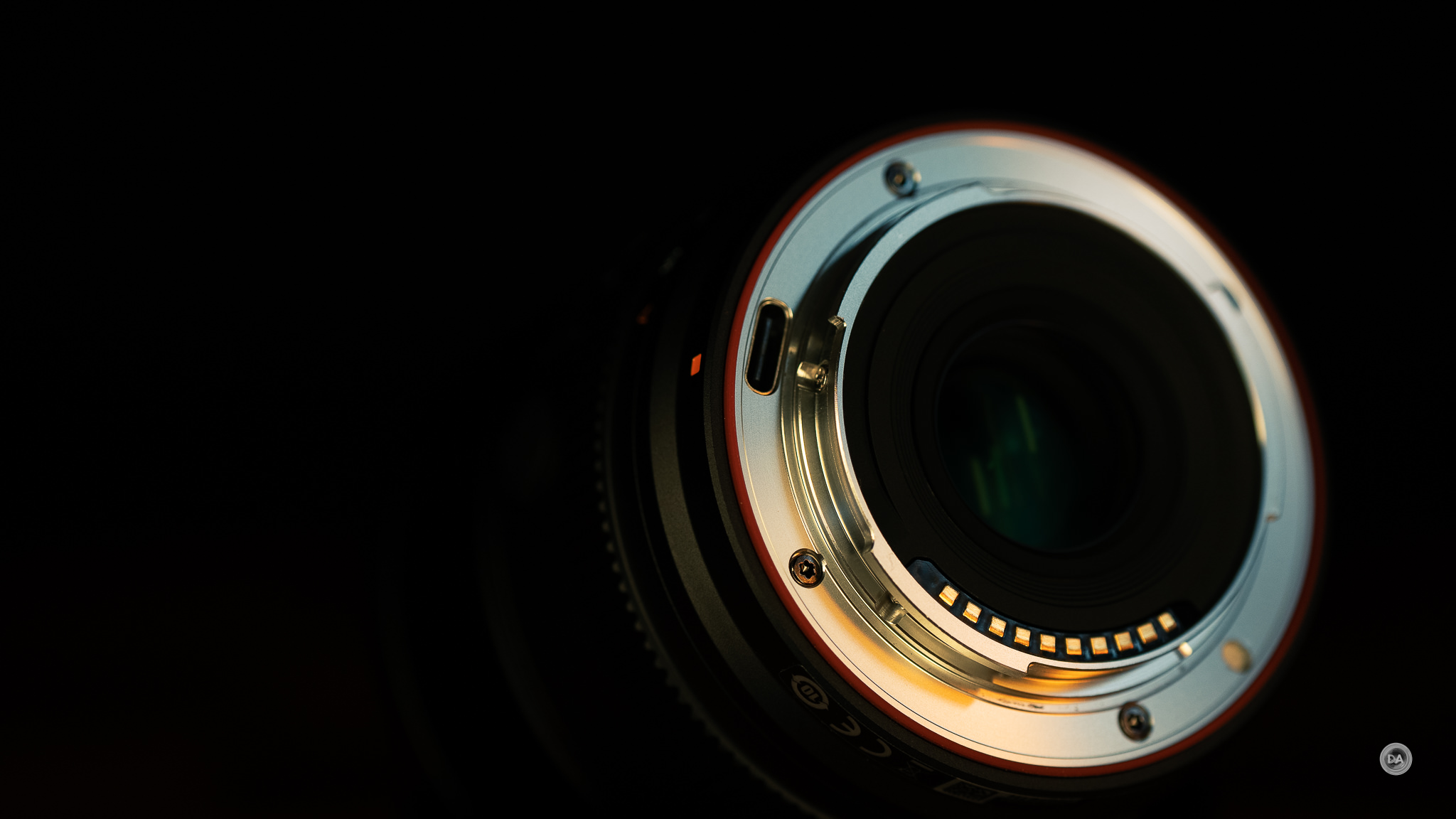
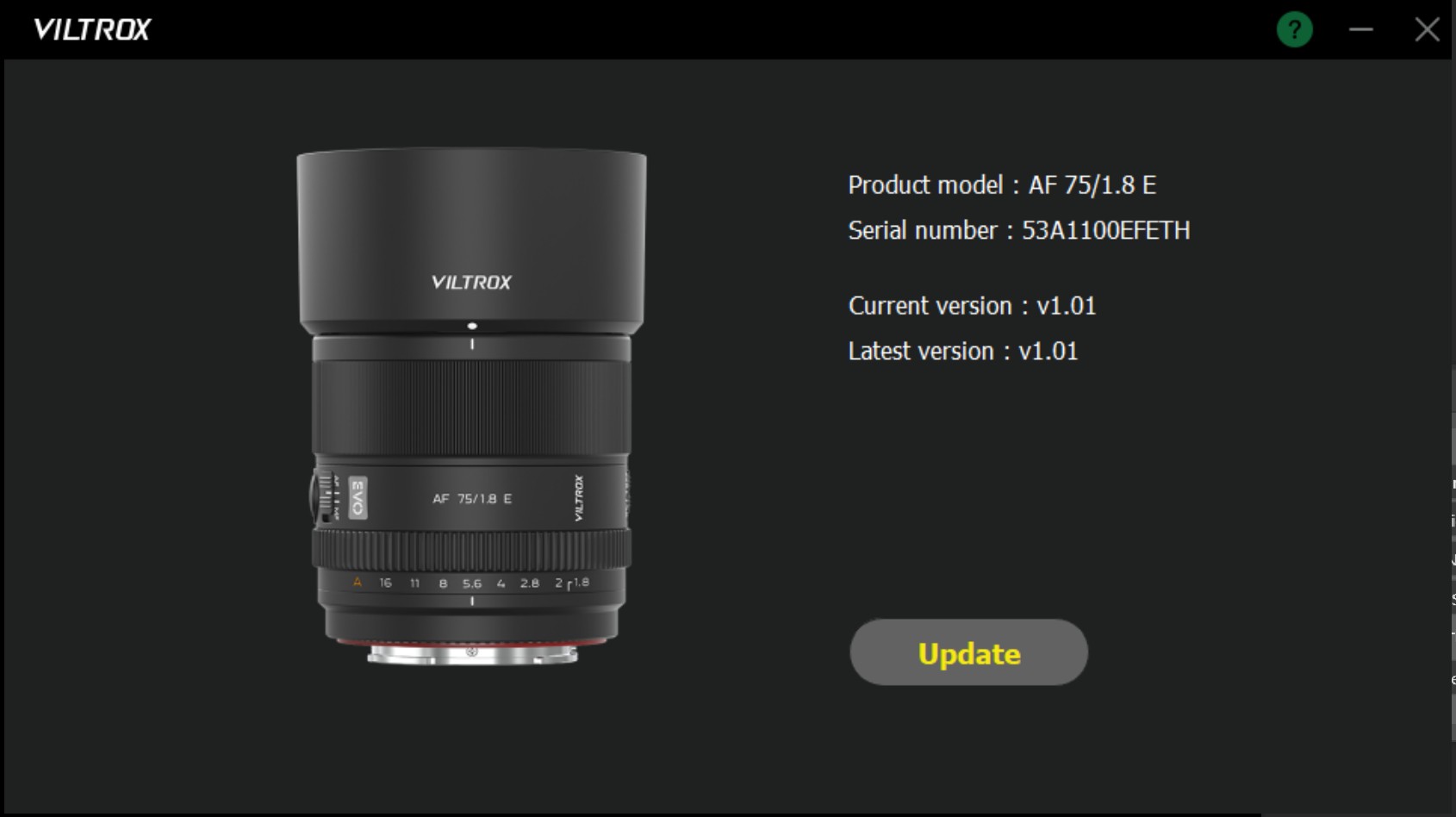
You probably also noted the USB-C port in the lens mount that allows you to do firmware updates right to the lens. I’m a fan of this approach, as it eliminates the need for a separate dock or lens station for firmware updates, and I find the process a little more intuitive than even doing firmware updates through the camera. Viltrox gives you a variety of ways to do the firmware updates. Here’s the screen I got before doing a firmware update via their PC app.
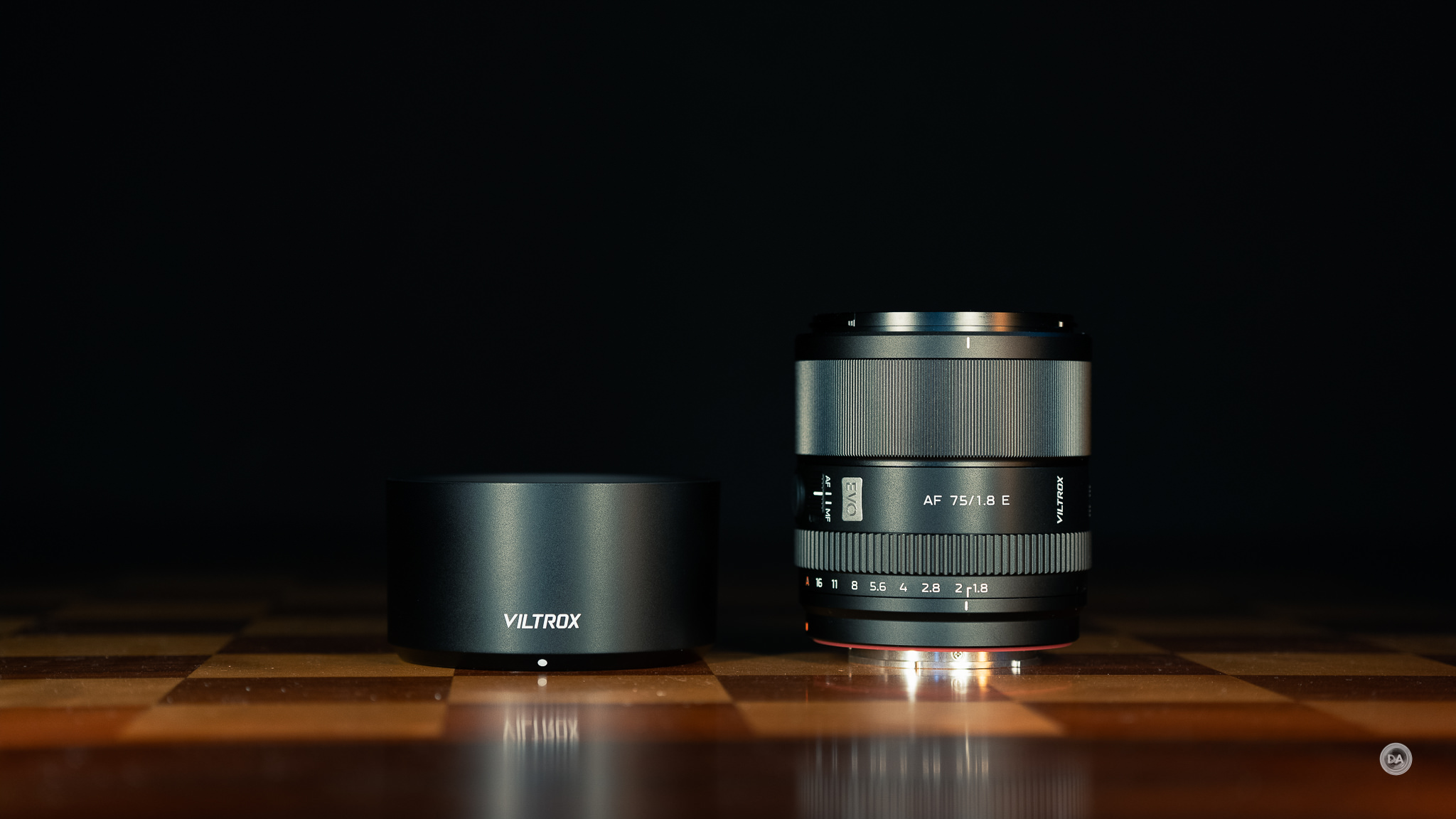
The build materials feel like they fall somewhere between the AIR and PRO series. The body is engineered plastics rather than the magnesium-aluminum alloy found in the PRO series, but the finish is more upscale. It’s a great looking little lens and feels just as premium as any alternative from Sony, Nikon, or Fuji.
This is an extremely nice build quality for this price point.
Included is a small pouch and the lens hood. The lens hood is plastic, yes, but it is also fairly thick and robust. It bayonets on a little too tightly for my tastes, but on the upside it locks into place with good firmness and doesn’t move around.
There is no lens based stabilization, so you will need to rely upon the in-camera stabilization if your camera is so equipped.
I noted how much lighter the EVO 75mm is than the existing Viltrox Pro AF 75mm F1.2, but sometimes a visual comparison really helps. That extra 18mm of diameter looks like this.
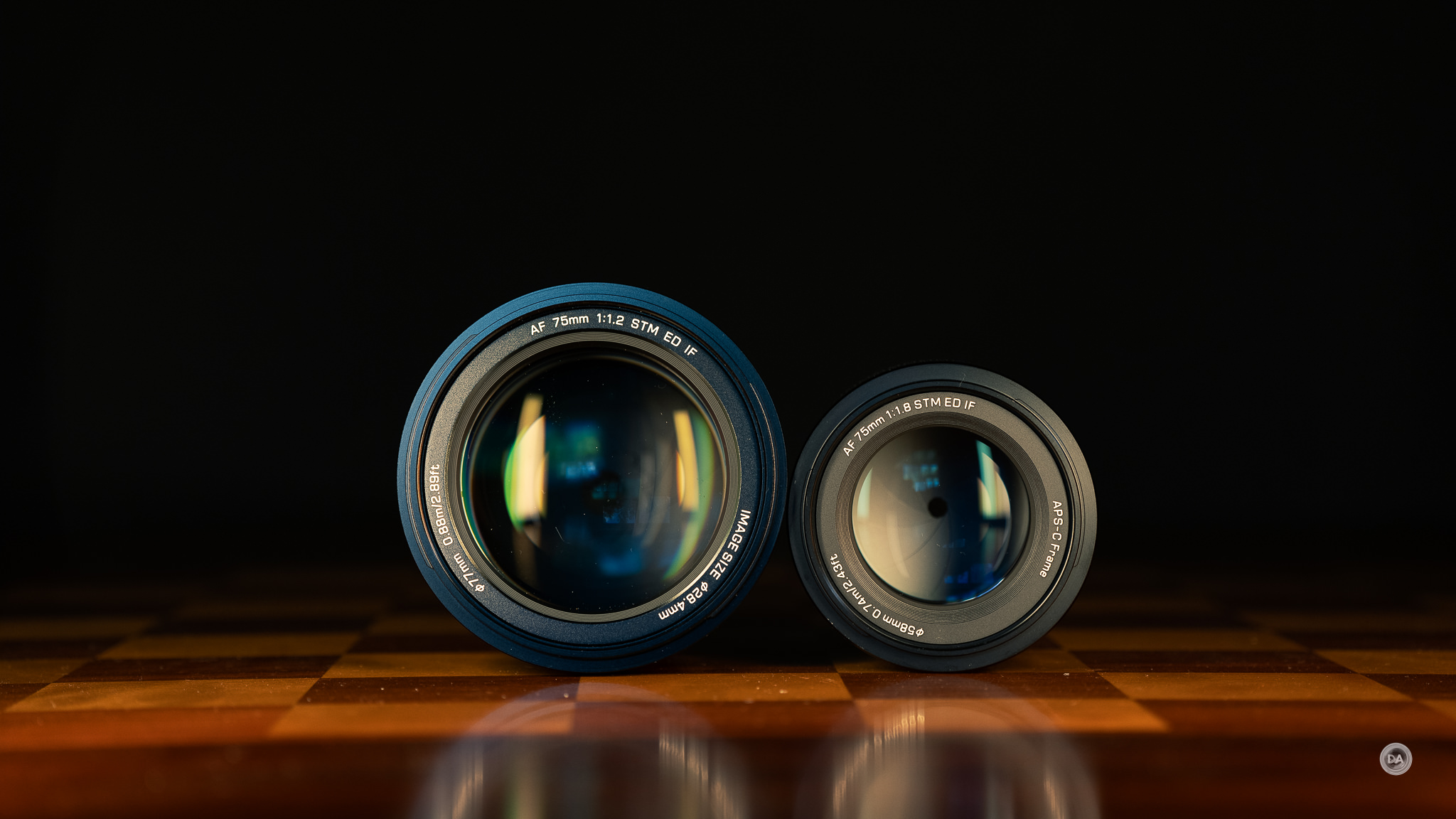
That extra diameter makes the F1.2 lens look twice as big!
And how about the length? Here’s what that extra 25mm looks like:
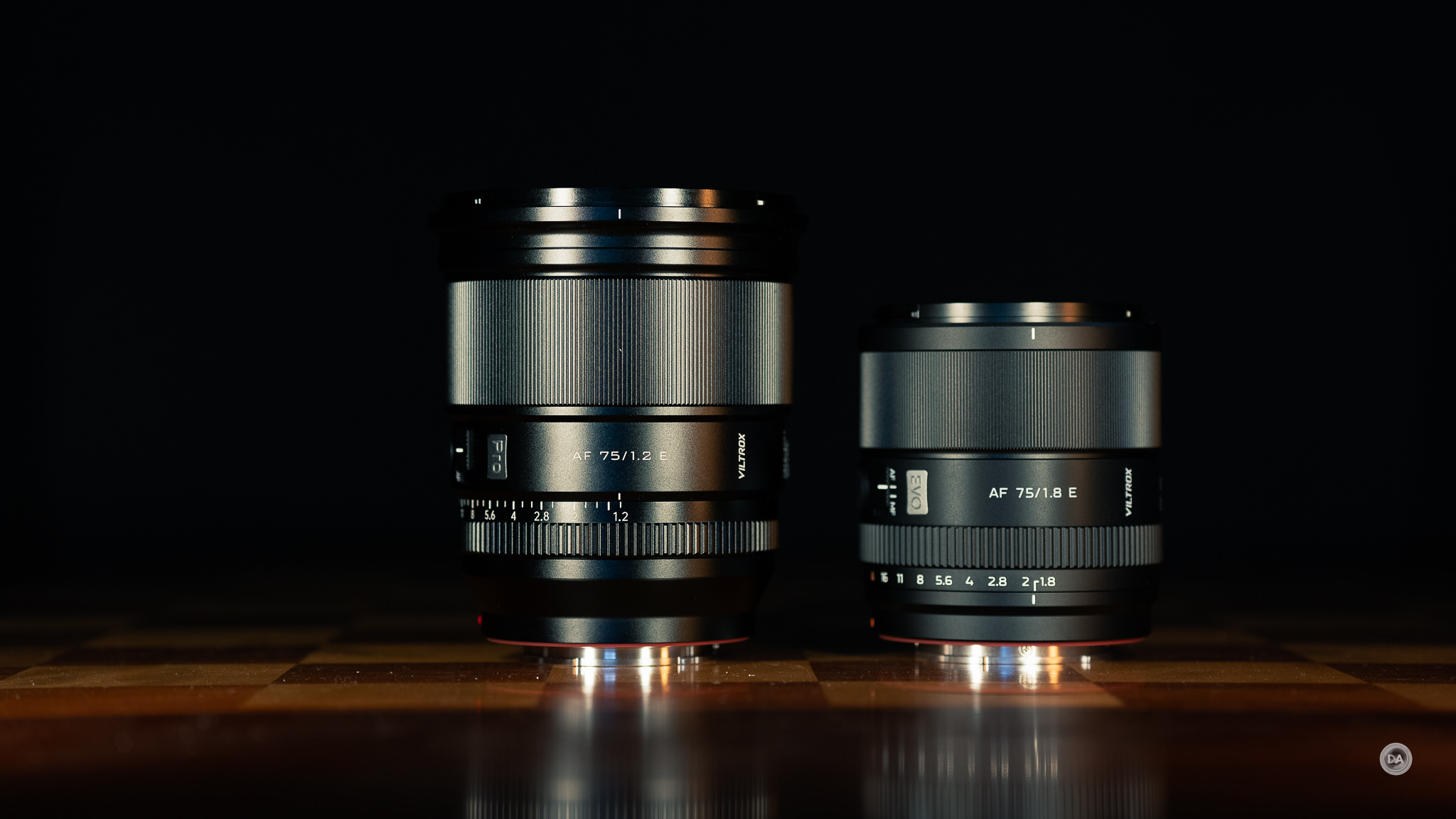
So yes, this is a radically smaller lens than the 75mm F1.2. It is an amazing lens (and much brighter), but not everyone can tolerate that kind of the size and weight, particularly on a compact APS-C camera.
The EVO 75mm is a much easier match to such cameras. The lens is 69mm (2.71″) in diameter by 76mm (2.99″) in length (just like the EVO lenses). The weight of 335g (11.81 oz) is slightly higher than the 320g of the 90mm. The Z-mount version is 2mm longer (78mm) and weighs 355g (12.52 oz) due to the extra length and larger mount diameter. This series isn’t as lightweight as the AIR series, but still feels extremely manageable.
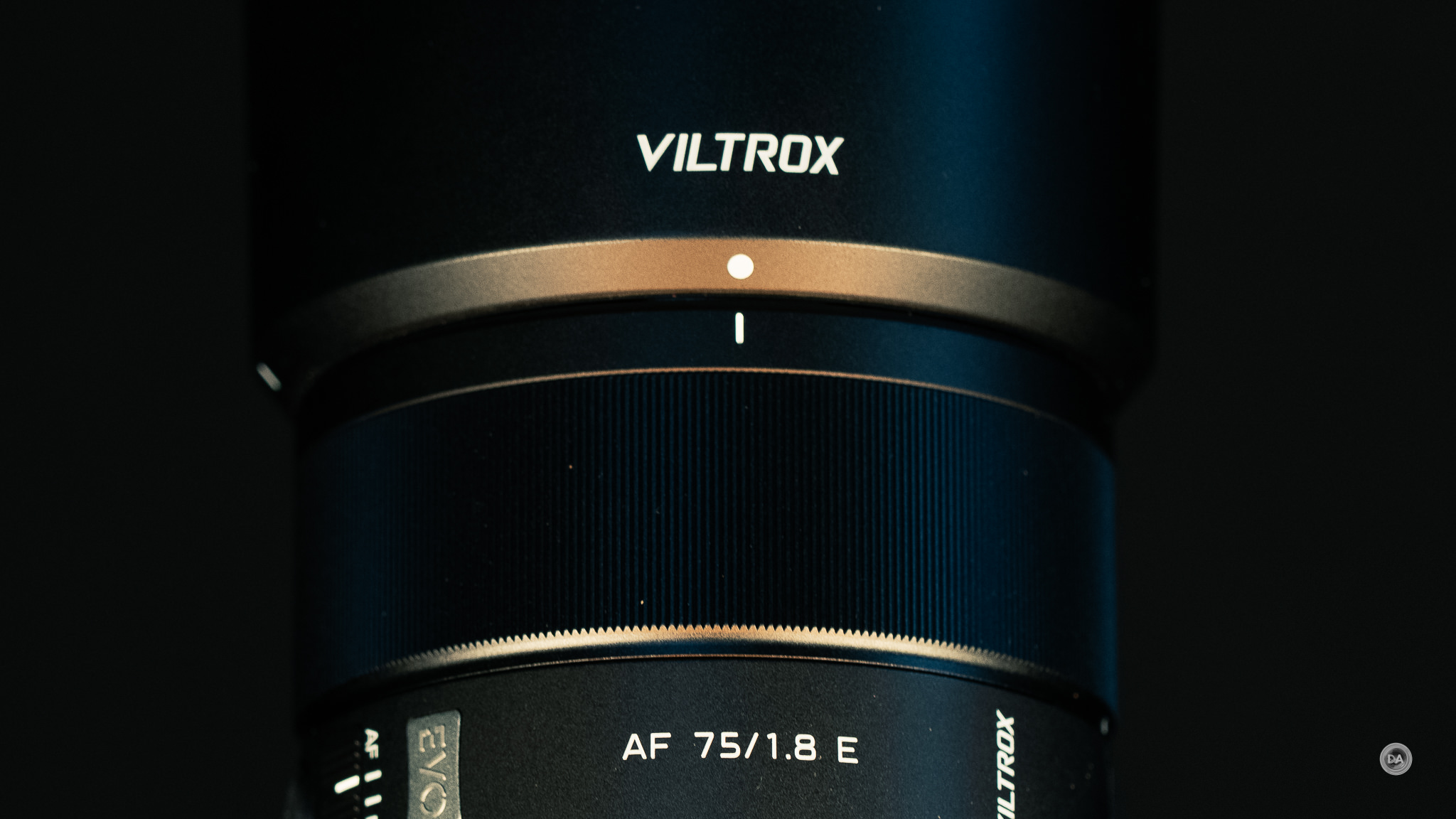
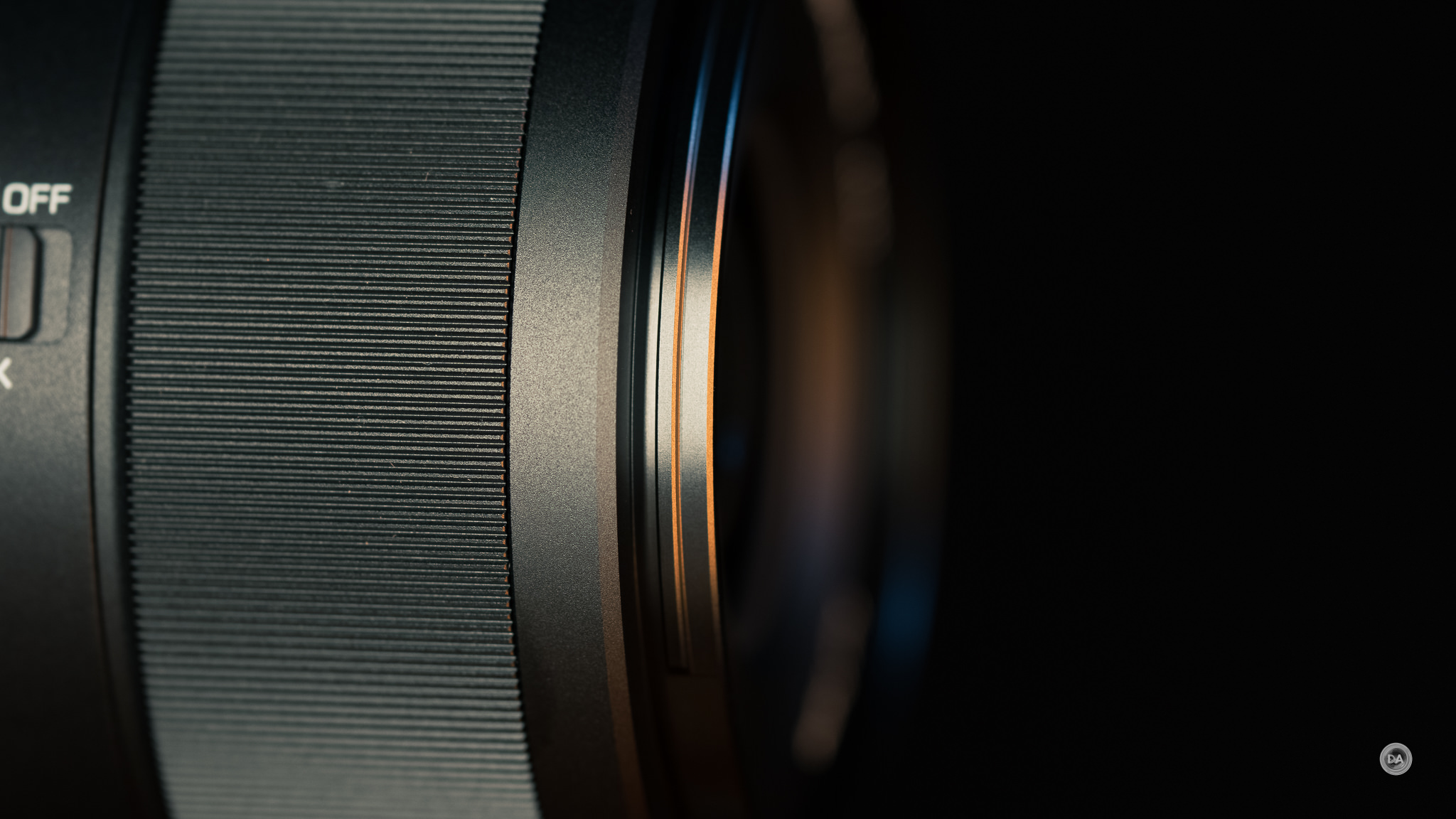
The manual focus ring is tightly ribbed and moves nicely. It has a medium weight to it, but is nicely reactive and doesn’t have any apparent lag. I was able to focus smoothly and with precision. Full time manual override is available (though that could be camera specific).
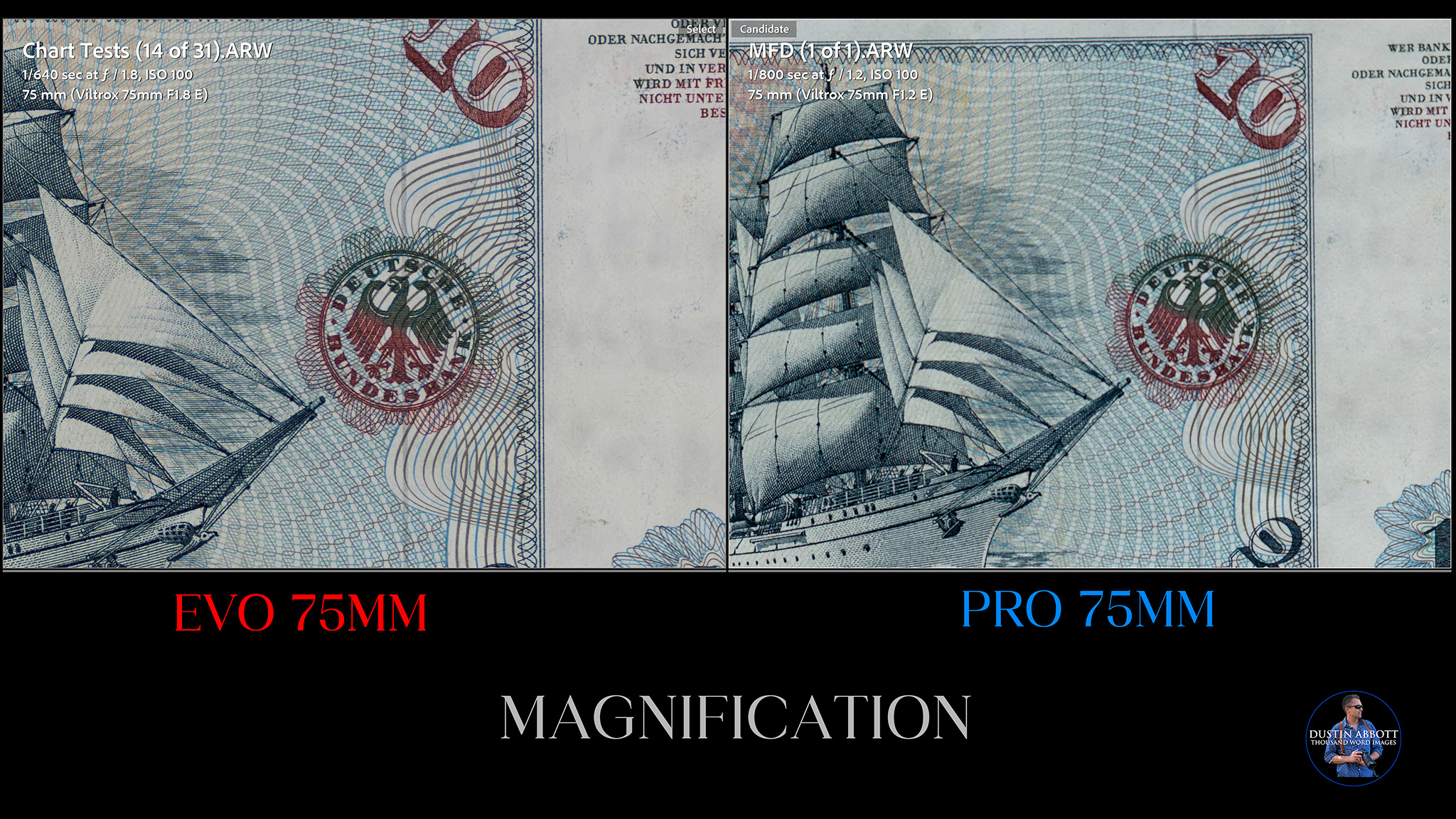
The EVO 75mm only focuses as closely as 74cm and produces just a 0.12x magnification, but that’s considerably better than the 88cm MFD of the Pro 75mm (and it’s magnification is considerably lower). Here’s what the magnification looks like.

Viltrox doesn’t calculate in the crop factor into this figure, so you might have noticed that magnification looks higher than the typical 0.12x. If this were a full frame lens, the magnification figure would essentially look like a 0.18x level of magnification. It is a noticeably higher level of magnification than what we find on the Pro AF 75mm F1.2:
Up close performance at F1.8 is excellent, with a nice, flat plane of focus and good sharpness and contrast.

There’s nothing really to complain about here. The EVO packaging really hits a sweet spot for me, combining that compact size with a robust feature set. Add on a competitive price, and you’ve got a winning combination.
Autofocus for Stills
Viltrox has now moved to higher end HyperVCM (voice-coil motor) focus in their recent premium lenses, but it looks like they will be sticking with their STM motors for the AIR and EVO series. These lenses have smaller optical elements to push in their focus group, so the STM (stepping motor) produces enough thrust. Focus isn’t quite GM level fast (the best are basically instant), but focus moves back and forth with good quickness. I suspect that most everyone will be satisfied with focus speed, unless you are trying to shoot high speed sports. I had no problem grabbing focus on a groom in his “getting ready” shots using available light.

Autofocus precision was excellent on my Sony camera delivering well focused results time after time.


Focus was also consistently accurate, locking onto very slim subjects and delivering excellent focus.

The focus motor is quiet but not as silent as their HyperVCM focus motors. There’s a very light whirring to be heard if you put your ear right up to the lens barrel, but nothing that I could hear during actual focus conditions.
People shots were always perfectly focused in a wide variety of conditions.

As per usual, my recommendation for those wanting to photograph fast action on Sony is to use a first party Sony lens, though in this case, I don’t really know of a better lens on Sony, Nikon, or Fuji. Autofocus was pretty solid for me.
Video AF
STM motors definitely cover a spectrum of performance, and fortunately the STM motor in the EVO 75mm is one of the better ones. Video focus pulls were smooth and crisp, with no visible steps and confident focus lock. Focus pulls seem nicely damped, allowing them to have a decently cinematic quality. Focus breathing is fairly obvious, however
I found the focus breathing to be minimal at smaller distances like my “hand test”, only really noticing it during big focus pulls.

My “hand test” where I alternatively block and unblock the camera’s view of my face with my hand went well, with smooth and confident transitions from my hand to my face and back. Autofocus was smooth when tracking me approaching the camera, and picked up fairly quickly when I stepped out of frame and back in.
Generally autofocus for video was great in all my clips unless I inadvertently got too close. I used it for filming some of my episodes on my YouTube channel and found that focus was stable and confident. Viltrox has years of experience of developing autofocus lenses on Sony at this point…and it shows.
Viltrox EVO 75mm F1.8 Image Quality
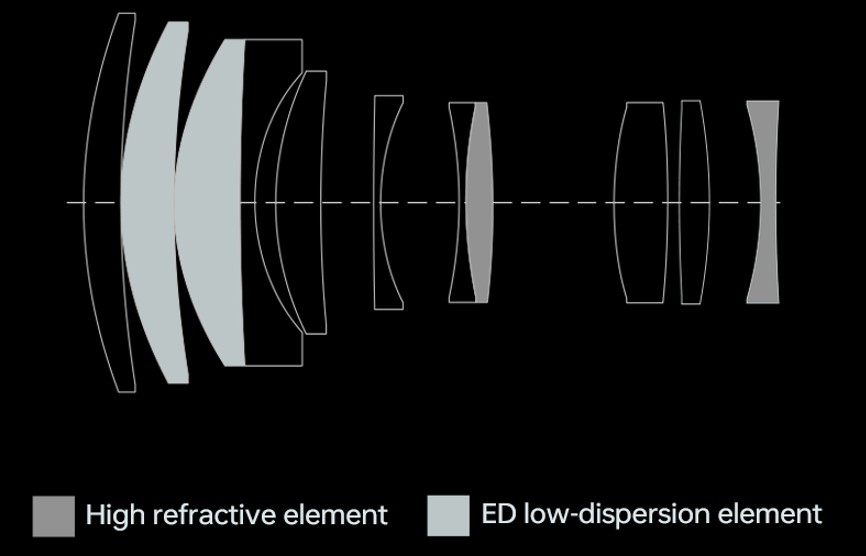
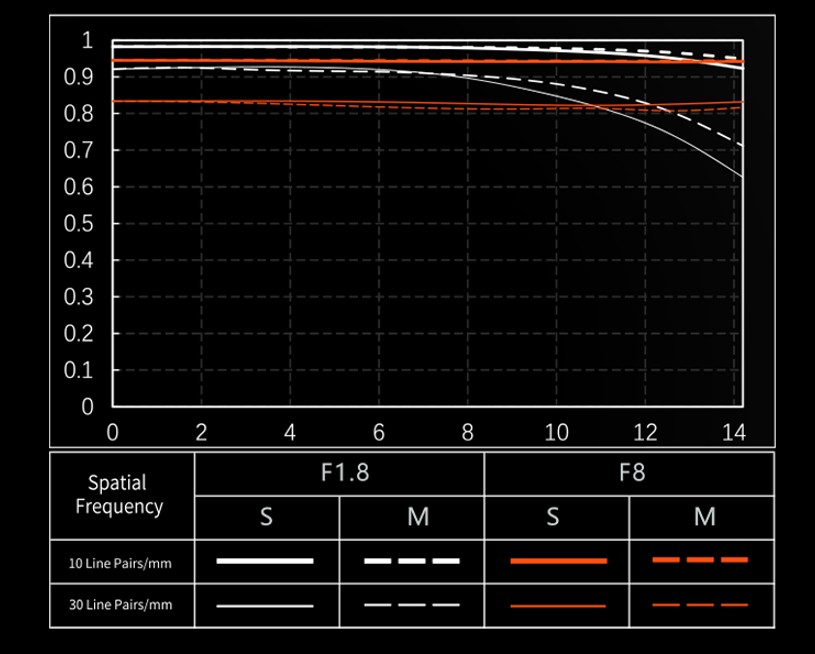
The EVO 75mm sports a fairly simple optical design of 11 elements in 9 groups. This includes 2 ED (extra low dispersion) elements and 3 HR (high refractive index) elements. The MTF chart is pretty exceptional, showing incredible sharpness in the center and midframe, and even the corners are largely good (still averaging nearly 70%). As has been the case with a number of recent Viltrox optical designs, the F8 performance isn’t quite at sharp in the center and midframe as F1.8 but stays remarkably consistent right into the far corners (if anything, slightly sharper there).
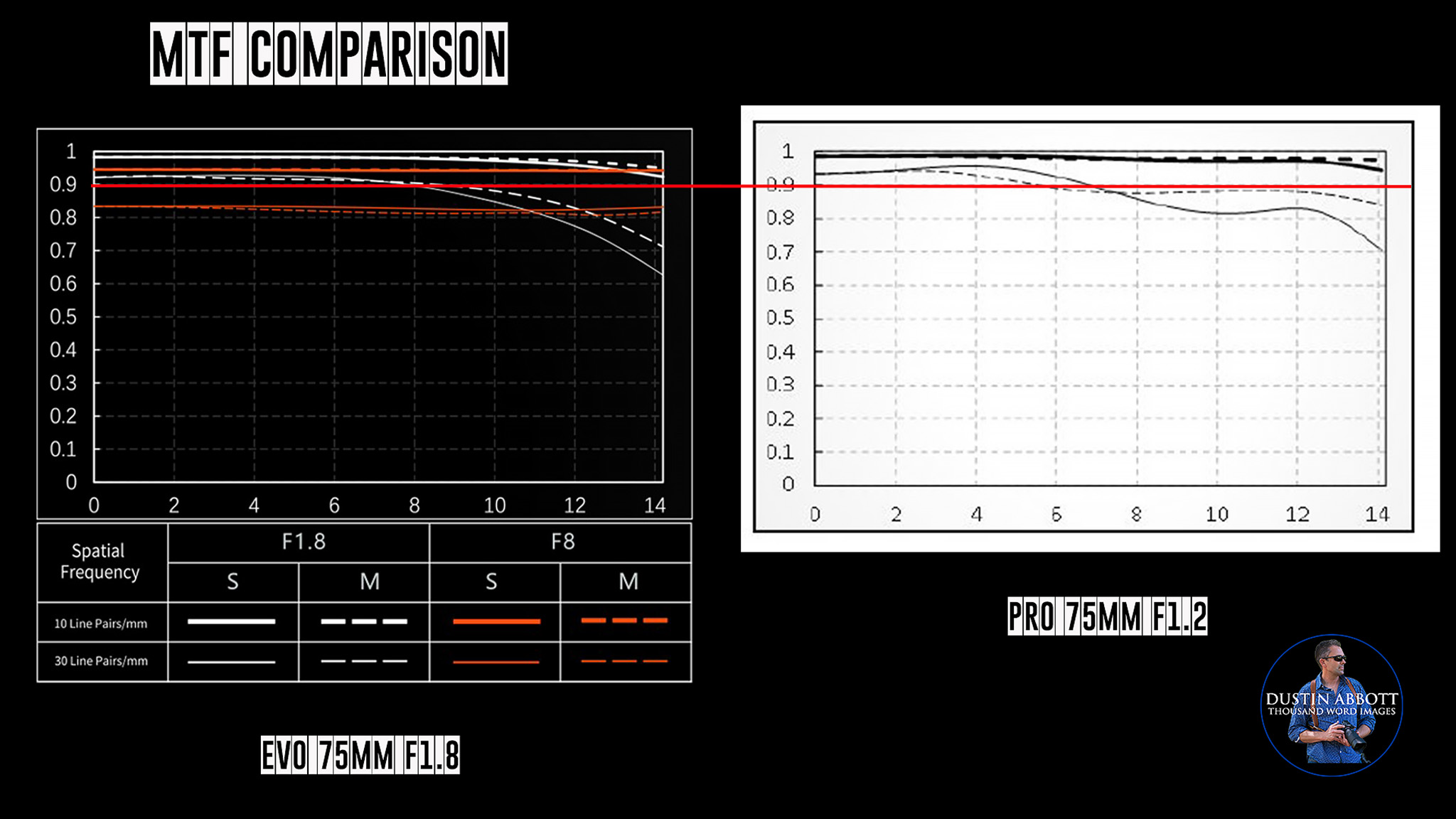
I thought it might be illustrative to do a comparison to the premium PRO AF 75mm F1.2, which has been a benchmark for performance. I often line up the charts and run a line through the 80% threshold, as anything above that is fantastic. Both of these lenses are so sharp, however, that I moved the benchmark up to 90%. What I found is that both lenses are pretty much exceptional through the midframe. I would say that the F1.2 lens is very slightly sharper, particularly at the rule of thirds zone. The EVO 75mm stays very consistent a little past that area before dropping a little further in the corners.
I had Grok analyze the MTFs, and it pumped out some interesting information, including this chart:
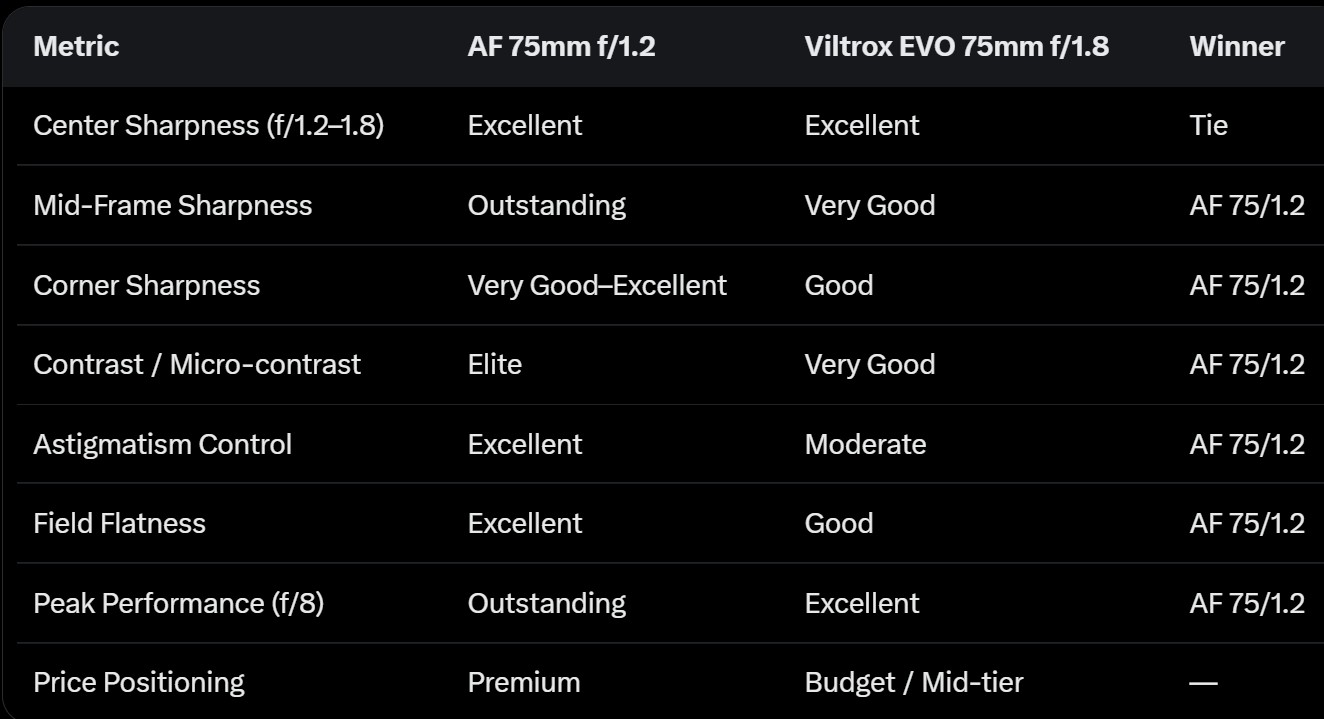
As we are about to see, the EVO 75mm is an impressively good lens optically, but this chart is a reminder of just how elite the Pro AF 75mm F1.2 really is…particularly considering it has that bright F1.2 maximum aperture. It is also significantly larger and heavier, as we have seen, so it will be nice to get some of that performance in a smaller, cheaper package.
Real world sharpness is fantastic even at F1.8, delivering excellent contrast and detail.


Clearly this focal length/aperture value is not overly stressing this lens size, as there is no distortion and very little vignette. I used only a +38 to correct the vignette here.
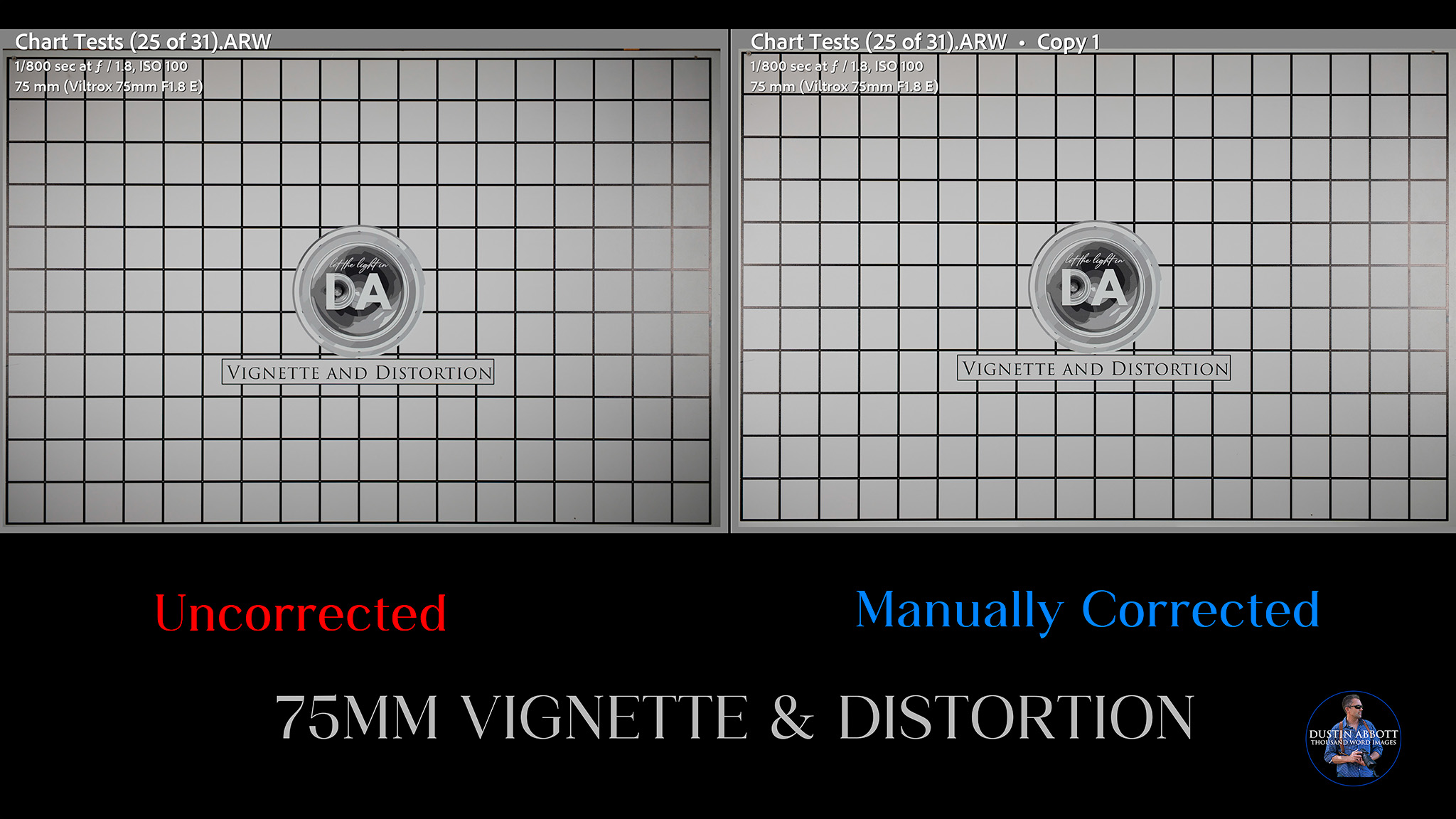
In real world conditions I didn’t really notice the vignette at all. Here’s a wide open shot without any corrections.

Longitudinal Chromatic Aberrations, or LoCA, manifests as fringing before and after the plane of focus. Unlike the 35mm and 55mm EVO lenses, Viltrox does not claim an APO (Apochromatic) design here, but that doesn’t stop the lens from having near perfect correction for fringing. I saw little evidence of longitudinal chromatic aberrations either before or after the plane of focus on my test chart.

I also saw basically perfect correction of LoCA on my Dad’s old SLR, too, with no evidence of fringing on shiny surfaces or on the bokeh balls beyond.
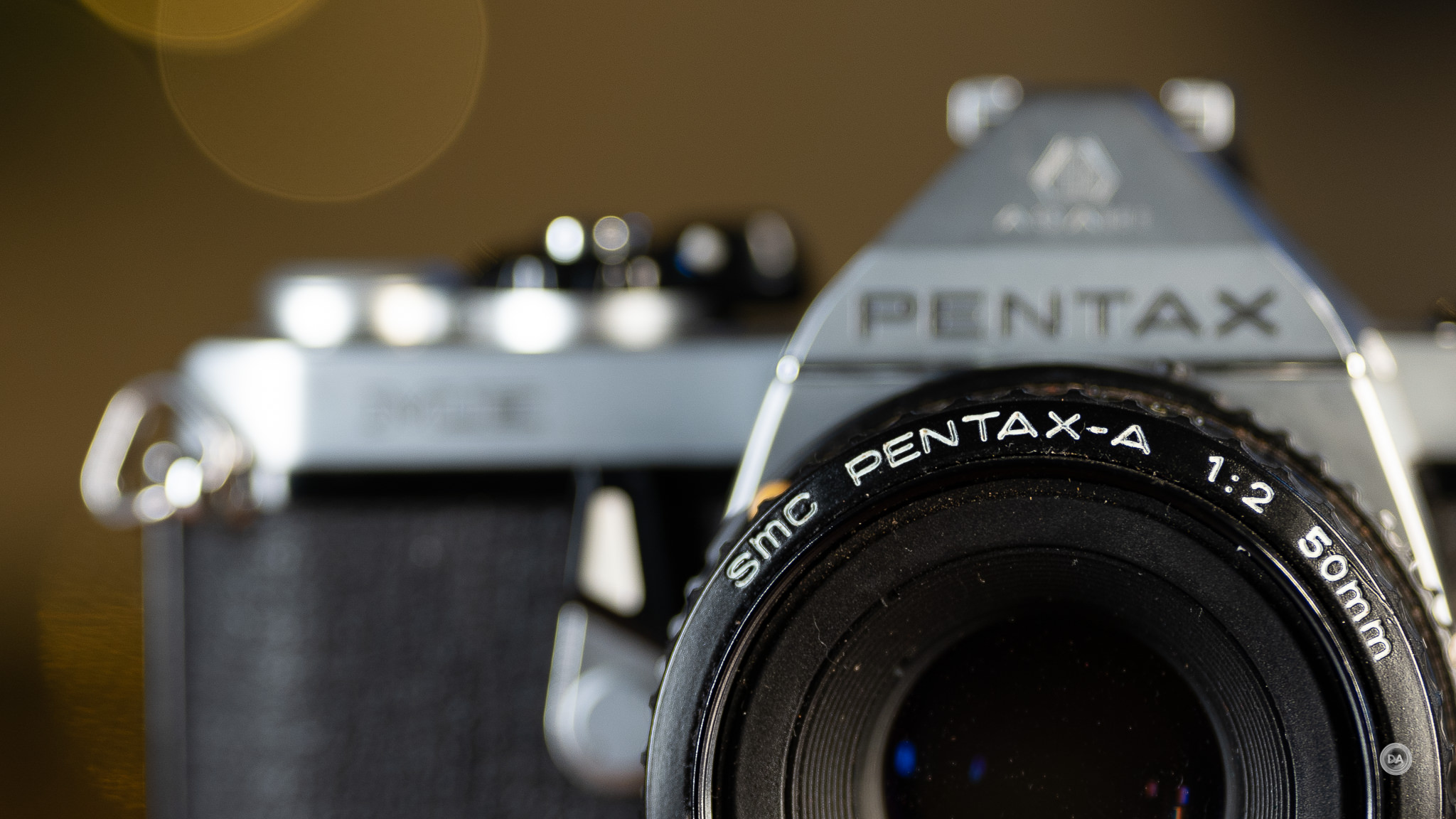
While we are here, it is worth noting how smooth the specular highlights are, too, without very little noise or busyness inside of them. That certainly helps with the overall look of the bokeh!

Lateral Chromatic Aberrations (LaCA) show up as fringing around contrast transitions near the edge of the frame. I see no evidence of LaCA either.
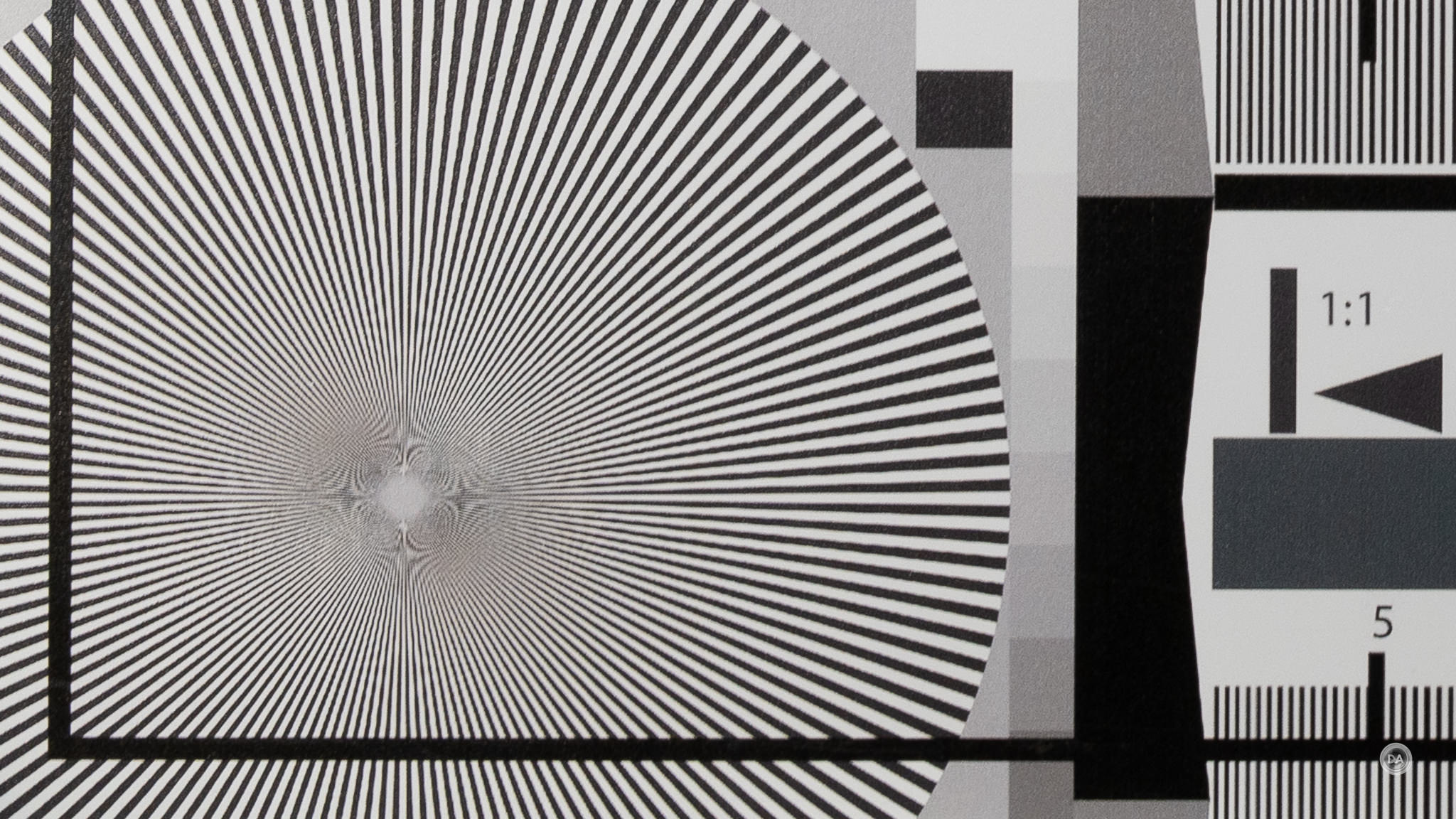
Other than a bit of vignette, this is a lens that takes care of any optical problems through optical corrections…just the way I like it.
So how about resolution and contrast? These results are shot on the APS-C mode of the Sony a7RV (26MP) and the crops are shown at roughly 200% magnification level. Expect the results on the 40MP Fujifilm sensors to be slightly less apparently sharp than here. Here’s a look at the test chart that the crops are taken from.

If we zoom in and look at the 200% crops at F1.8 from the center, mid-frame, and lower right, we discover that sharpness and contrast are excellent in the center and mid-frame, and still fairly strong right into the corners.



This is sufficient to provide excellent real world sharpness. You can see the detail and contrast in this crop are excellent.


This is going to make most pixel peepers very happy.
I was consistently impressed with the real-world sharpness and contrast even when pixel-peeping.
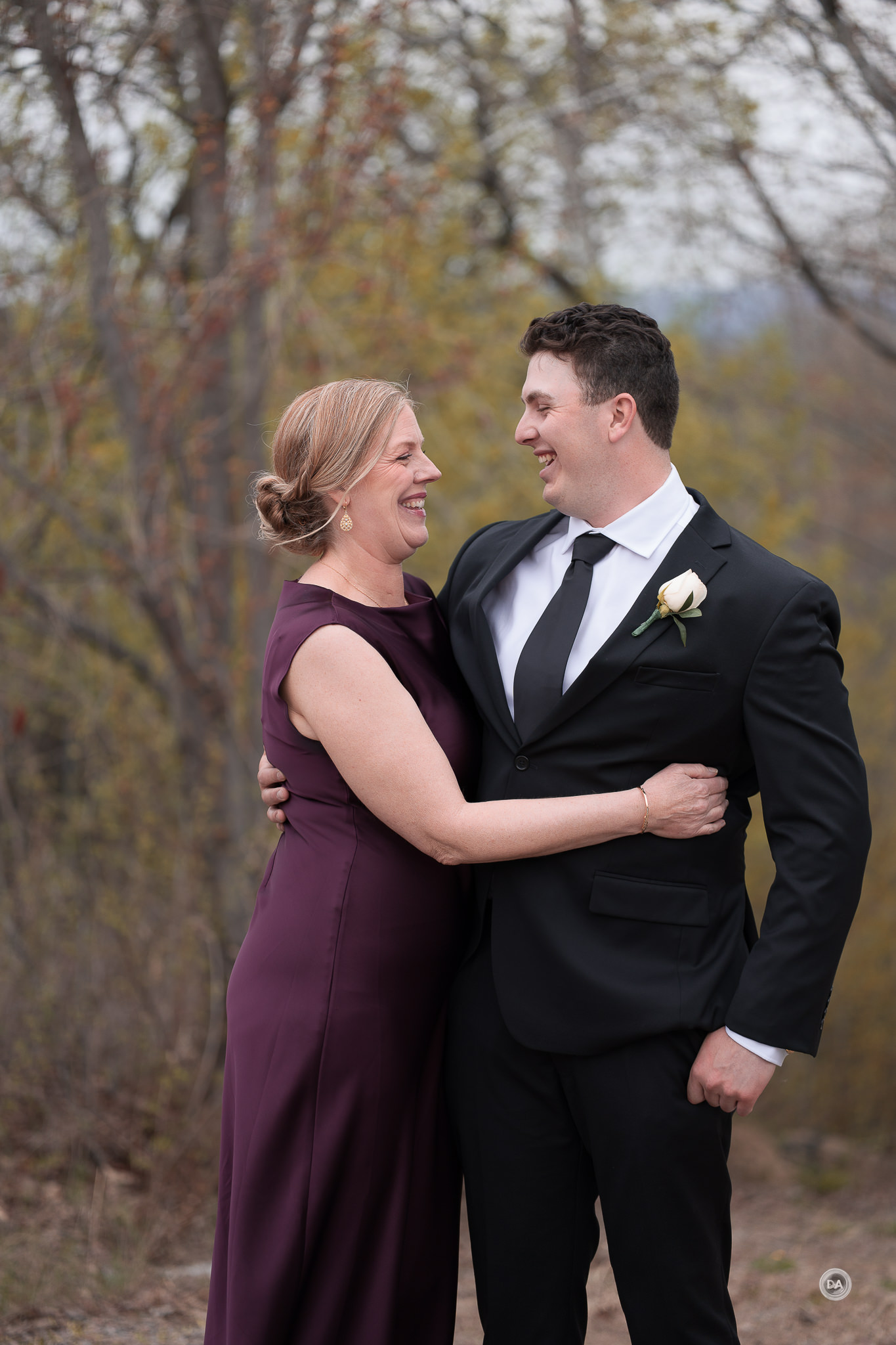
I never felt the need to stop down to get additional sharpness in real world shooting…just for increased depth of field. That being said, while stopping down to F2 makes no noticeable difference, stopping down to F2.8 does increase contrast and detail a bit further.

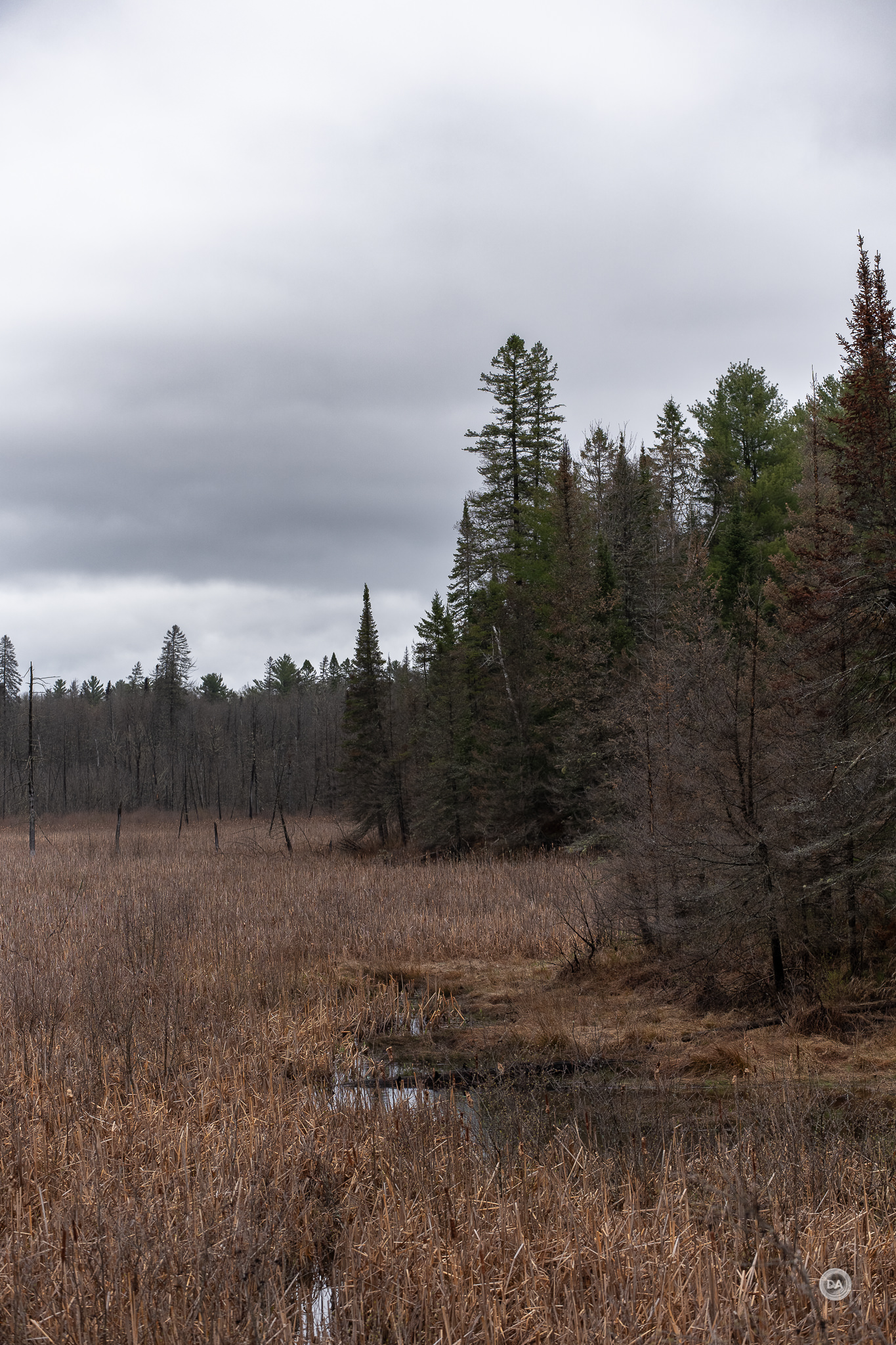
Stopping on down to F4 or F5.6 is mostly a lateral move, as sharpness, while excellent, doesn’t really improve further. Landscape results are sharp and detailed.

Portrait detail is excellent. Here’s one at F3.2:


Diffraction is an unfortunate reality on higher resolution cameras, so you will see a faint softening by F11 and a more obvious softening by the minimum aperture of F16, though frankly results at 100% will still look fine.

In short, this is yet another very strong lens from Viltrox is terms of sharpness and contrast.
While the EVO 75mm isn’t going to match the Pro 75mm F1.2 in terms of the quantity of bokeh, the quality of the bokeh from the EVO 75mm is fairly excellent. It manages to produce that soft, creamy background rendering that I love despite only having a moderately large maximum aperture.

Look at how nice the fall-off from focus to defocus is there.
Likewise here, I feel like the rendering in the transition to defocus is particularly nice.

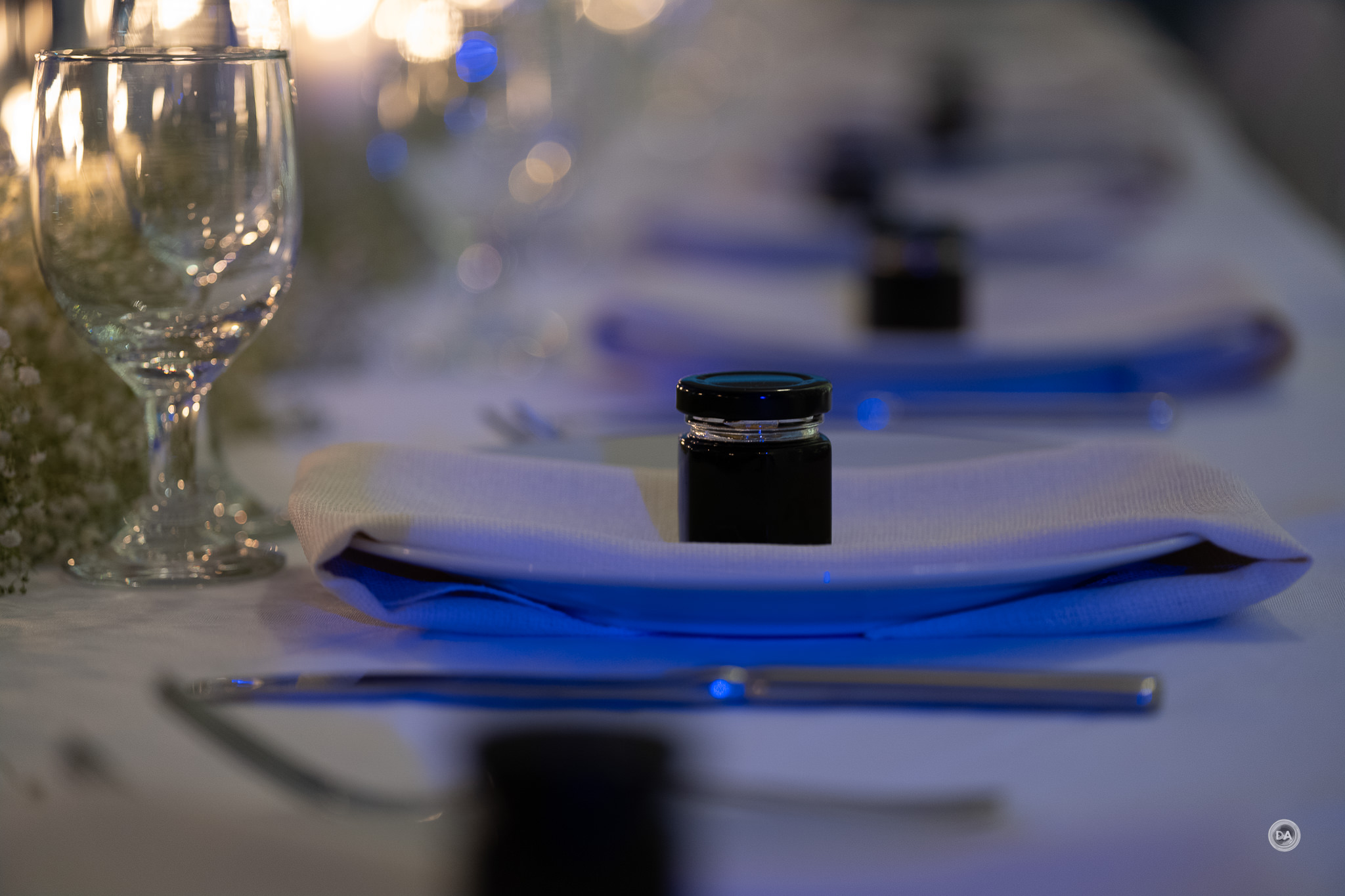
How about a different type of image with more specular highlights?

Quite nice!
Subject isolation is also nice, showing a crisp line of focus and nice transitions before and after the plane of focus.
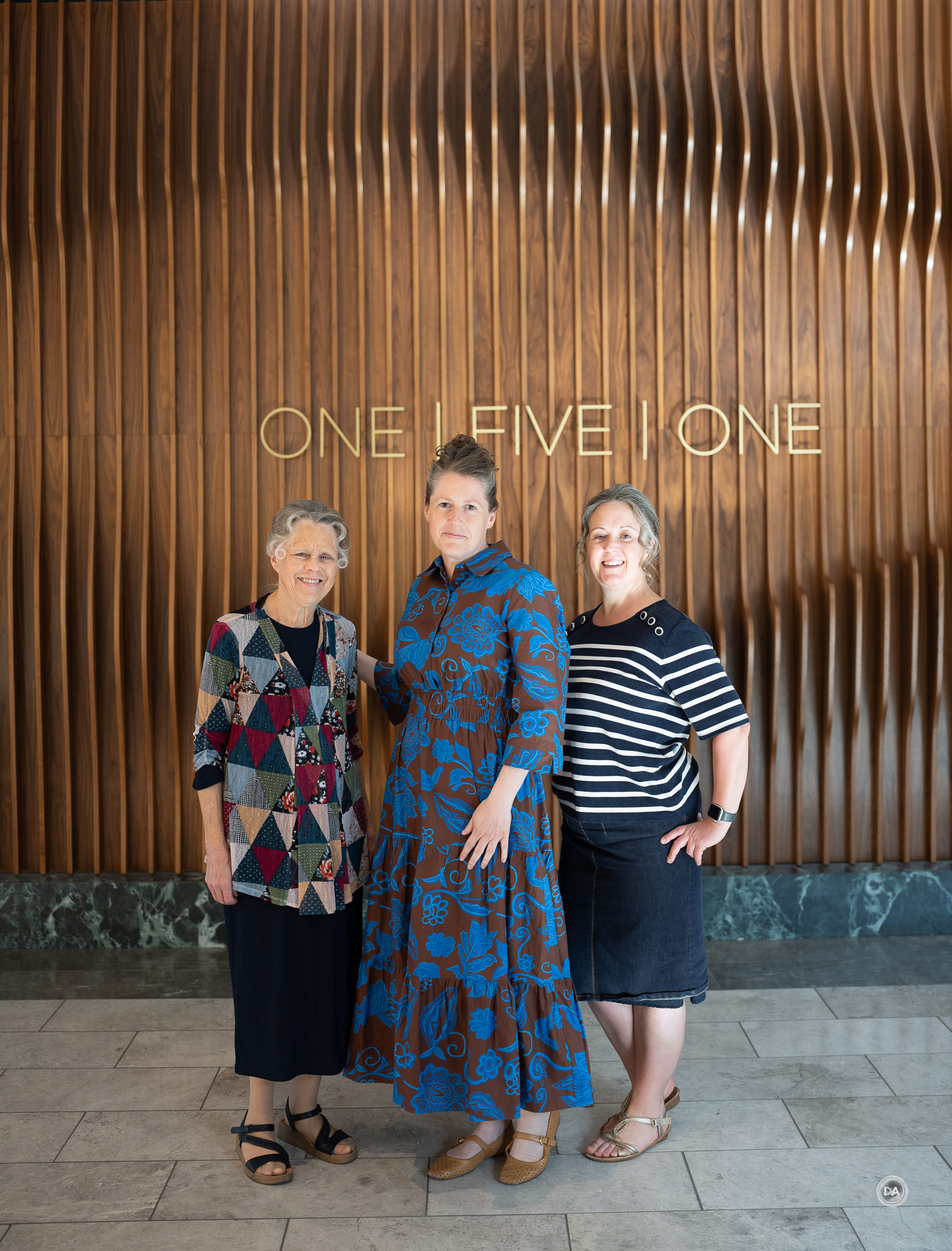
Subject isolation for full body portraits at F1.8 won’t be intense, but I like the fall-off fine here:

How about flare resistance? Viltrox’s coatings still don’t match the best from the first party lenses, though some of the characteristics from this lens are probably going to work for photographers artistically. There can be a bit of a glow or veiling effect when the light source is right out of frame at certain angles.

Here you can see a bit of ghosting, but the overall effect is one that I like artistically.

Stopping down will produce rather strong blades on the sunstar. This is a taste thing, and I don’t particularly love it.

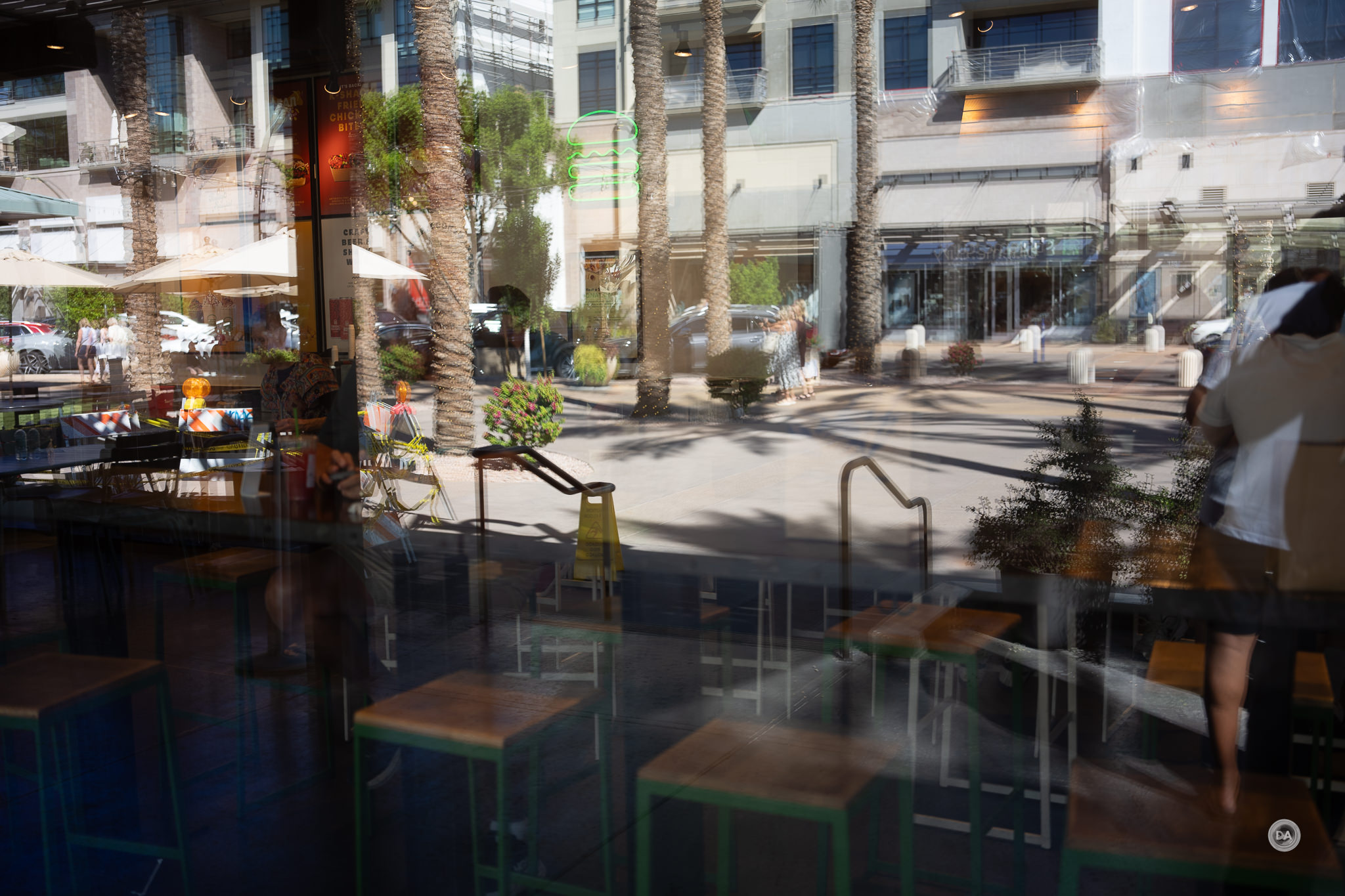
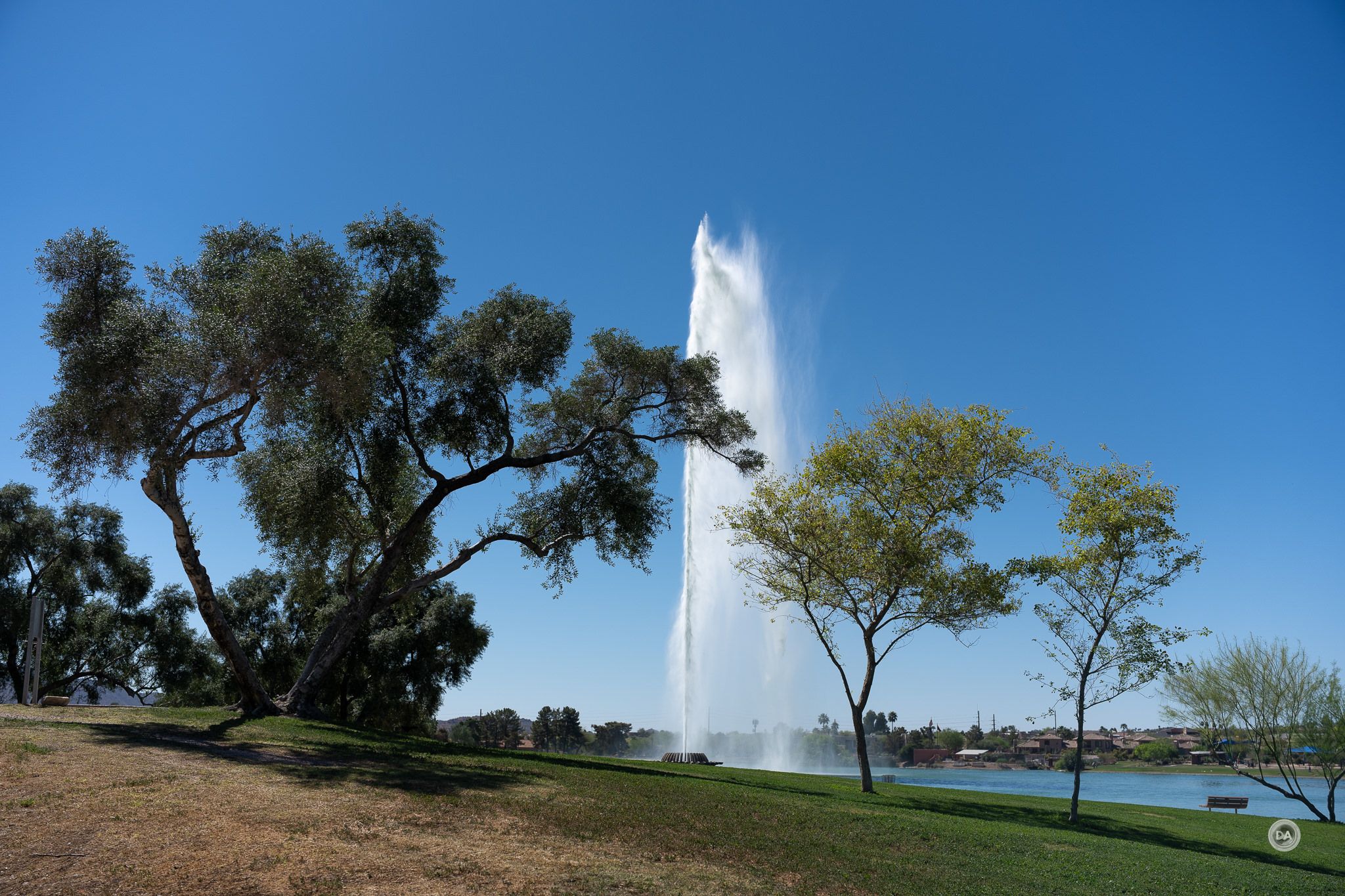
In general, however, this is another beautiful lens optically from the EVO series. Part of what I love about this series is that the lenses are compact, very competitively priced, but don’t skimp on either the features or the performance. Here’s a mini-gallery of more images for you to enjoy.



















Conclusion
The EVO series of lens continues to be an absolute sweet spot for me. They are well made, compact, feature rich, and optically excellent. I think this particular combination of attributes makes these some of the most attractive primes across a broad swath of photographers, and, frankly, the series I can see these doing the biggest damage to are Viltrox’s own Pro series. The EVO series gives you access to largely the same feature set and a lot of the performance in a much smaller, more affordable package.

We don’t get the higher end focus system reserved for the Pro and LAB series lenses, but the smaller glass elements in the EVO lenses are easier to move anyway, and I once again found autofocus generally excellent.

Where Viltrox always shines is in the price-to-performance ratio. This is a top notch lens that you can get for barely more than $300, making the Viltrox AF 75mm F1.8 EVO an outstanding value. You can use the code DUSTINABBOTT at Viltrox to shave a extra 5% off the MSRP of any Viltrox lens. That’s great news whether you are a Sony, Nikon, or Fuji shooter. Now if only our Canon friends could join the party…

Pros:
- Optical Performance:
- Exceptional sharpness and contrast across the frame, even wide open at F1.8.
- Excellent correction of chromatic aberrations, producing clear images without fringing.
- Minimal distortion and vignetting, enhancing image quality.
- Compact and Lightweight Design:
- The 75mm F1.8 is significantly smaller and lighter than previous models, making it ideal for APS-C cameras.
- A common 58mm filter thread across the EVO series simplifies the use of filters.
- Robust Build Quality:
- The lens features a solid construction with a pleasing aesthetic, combining durability with a premium feel.
- Internal weather sealing points (though limited) and a special front element coating enhance usability in varying conditions.
- Versatile Aperture Control:
- A well-designed aperture ring allows for smooth transitions between clicked and de-clicked modes, catering to both photography and videography needs.
- Practical Features:
- Quick-access AF/MF switch and a customizable button for added functionality.
- USB-C port for direct firmware updates, making lens maintenance more straightforward.
- Autofocus Performance:
- The autofocus system is responsive and accurate, with good tracking capabilities for portraits and general use.
- Performs well in video, providing smooth focus transitions with minimal steps.
- Strong Price-to-Performance Ratio:
- Priced competitively at right over $300, offering features and performance that rival more expensive options.
- Discount offers enhance accessibility for various shooters.
- Bokeh Quality: Produces pleasing, creamy backgrounds with smooth transitions from in-focus to out-of-focus areas.
Cons:
- Weather Sealing Ambiguities:
- Uncertainty regarding full weather sealing might limit the lens’s appeal to those who frequently shoot in challenging conditions.
- Limited Magnification Ratio:
- The lens’s closest focusing distance of 74cm limits macro capabilities, which might be a drawback for some users.
- Bigger and Heavier Alternatives:
- Competing options exist with brighter maximum apertures (e.g., F1.2), which, while bulkier, may appeal to users prioritizing low-light performance.
- Focus Breathing:
- Although minimal, noticeable focus breathing during video work could hinder cinematic qualities for some videographers.
- Potential for Lens Flare:
- Coating may not compete with higher-end brands, resulting in possible flare or ghosting artifacts in certain lighting situations.
_________________________________________________________________________
GEAR USED:
Purchase the Viltrox EVO 75mm F1.8 @ Viltrox (use code DUSTINABBOTT for 5% off) | B&H | Adorama | Amazon | Amazon Canada | Amazon UK | Amazon Germany
Purchase the Viltrox EVO 90mm F2.2 @ Viltrox (use code DUSTINABBOTT for 5% off) | B&H | Adorama | Amazon | Amazon Canada | Amazon UK | Amazon Germany
Purchase the Viltrox EVO 35mm F1.8 @ Viltrox (use code DUSTINABBOTT for 5% off) | B&H | Adorama | Amazon | Amazon Canada | Amazon UK | Amazon Germany
Purchase the Viltrox EVO 55mm F1.8 @ Viltrox (use code DUSTINABBOTT for 5% off) | B&H | Adorama | Amazon | Amazon Canada | Amazon UK | Amazon Germany
Purchase the Viltrox EVO 85mm F2 @ Viltrox (use code DUSTINABBOTT for 5% off) | B&H | Adorama | Amazon | Amazon Canada | Amazon UK | Amazon Germany | Pergear
_________________________________________________________________________
Purchase the Sony a7RV @ B&H Photo | Adorama | Amazon | Camera Canada | Sony Canada | Amazon Canada | Amazon UK | Amazon Germany
__________________________________________________________________
Purchase the Sony a7IV @ B&H Photo | Adorama | Amazon | Camera Canada | Sony Canada | Amazon Canada | Amazon UK | Amazon Germany
_________________________________________________________________
Purchase the Sony Alpha 1 @ Camera Canada | B&H Photo | Adorama | Amazon | Sony Canada | Amazon Canada | Amazon UK | Amazon Germany | Ebay
_________________________________________________________________
Want to support this channel? Use these affiliate links to shop at: B&H Photo | Amazon | Adorama | Camera Canada | Amazon Canada | Amazon UK | Ebay | Make a donation via Paypal
Buy DA Merchandise https://bit.ly/TWIMerch

Keywords: Viltrox AF 75mm FE EVO, Viltrox AF, EVO, Viltrox EVO, #EVO, #EVO75, #explorebeyond, Viltrox 75mm, Telephoto, APS-C, F1.8 f/1.8, STM, Viltrox EVO 75mm F1.8 FE, Viltrox EVO 75mm Review, Sony a7V, Sony A1 II, α1 II, Sony a7RV, Review, Hands On, Dustin Abbott, Real World, Comparison, Sharpness, Bokeh, Flare Resistance, Autofocus, Image Quality, Sample Images, Video, Photography, let the light in, weathersealing, #letthelightin, DA
Related posts:
 Viltrox AF 35mm F1.8 II EVO E-Mount Review
 Viltrox EVO 85mm F2 FE Review
 Viltrox EVO 55mm F1.8 APO Z Review
 Viltrox EVO 90mm F2.2 X-Mount Review
 Viltrox EVO 85mm F2 Nikon Z-Mount Review
 Viltrox AF 56mm F1.7 E-mount Review
 Viltrox AF 56mm F1.7 E-Mount Gallery
 Viltrox AF 85mm F1.4 PRO FE Review
 LAB vs GM – Sony 35mm Showdown
 Brightin Star AF 12mm F2.8 Review