

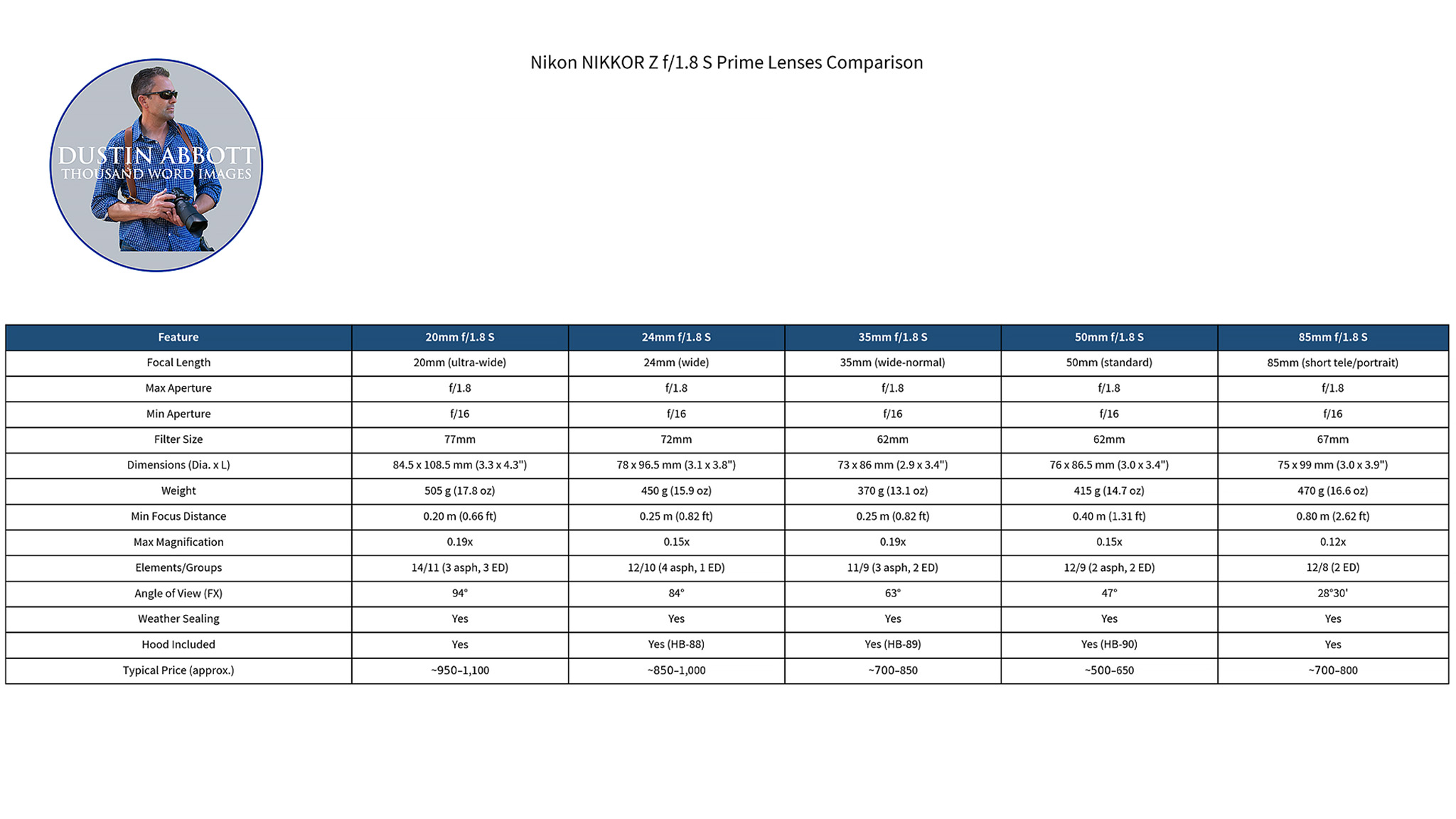
- Nikkor Z 20mm F1.8 S
- Nikkor Z 24mm F1.8 S
- Nikkor Z 35mm F1.8 S
- Nikkor Z 50mm F1.8 S
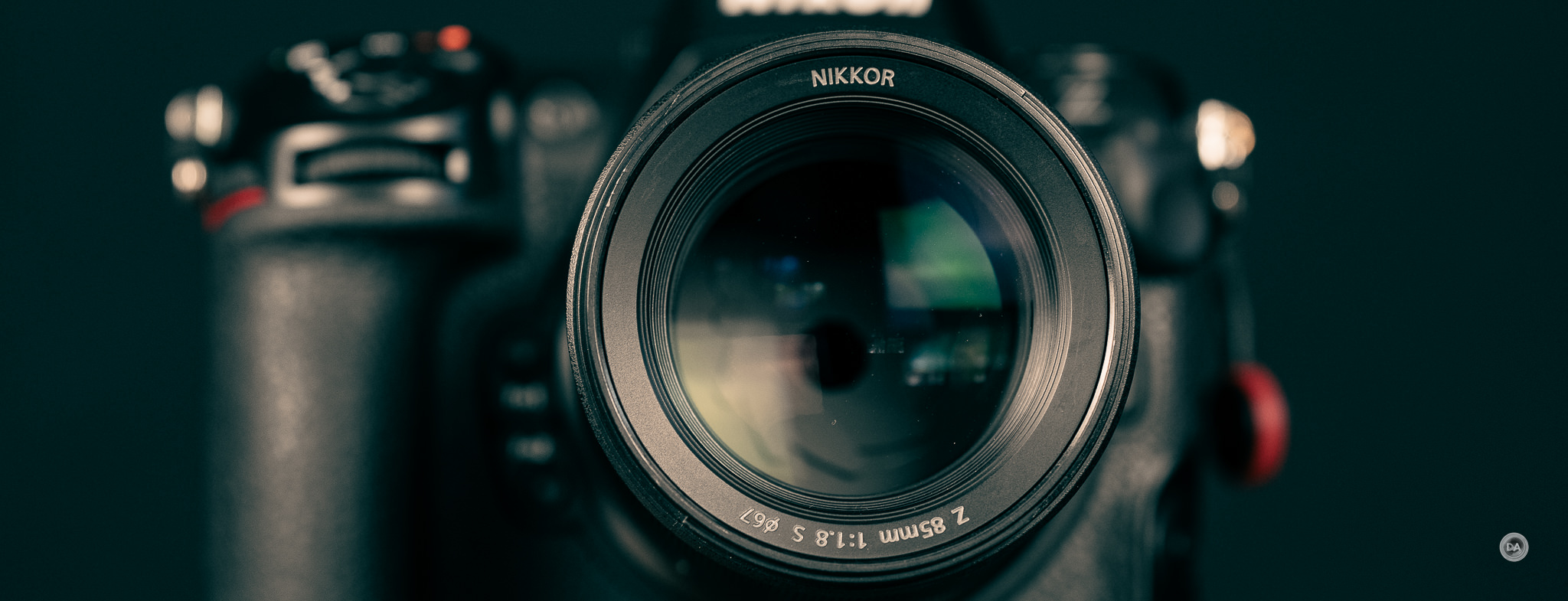
- Nikkor Z 85mm F1.8 S
AI SUMMARY: The Nikon Nikkor Z 85mm F1.8 S lens is a well-crafted optic within Nikon’s premium S-line, offering excellent image quality with a good balance of sharpness, contrast, and minimal distortion. Its build quality is robust, featuring weather sealing, although it lacks some modern conveniences found in competing lenses, such as a dedicated aperture ring. Autofocus performance is generally reliable, particularly for still subjects, but can be inconsistent during high-speed shooting, making it less ideal for action photography. Despite facing stiff competition from newer, cheaper alternatives, the Nikkor Z 85mm F1.8 S remains a strong choice for portrait photographers seeking high-quality optics.
Strengths:
- Exceptional image quality with high sharpness and contrast.
- Solid build quality and weather sealing.
- Good autofocus performance for stills and portrait work.
Weaknesses:
- Limited features compared to rivals (e.g., no separate aperture ring).
- Inconsistent autofocus in burst shooting scenarios.
- Higher price point compared to newer, less expensive alternatives.
_________________________________________________________________________________________________
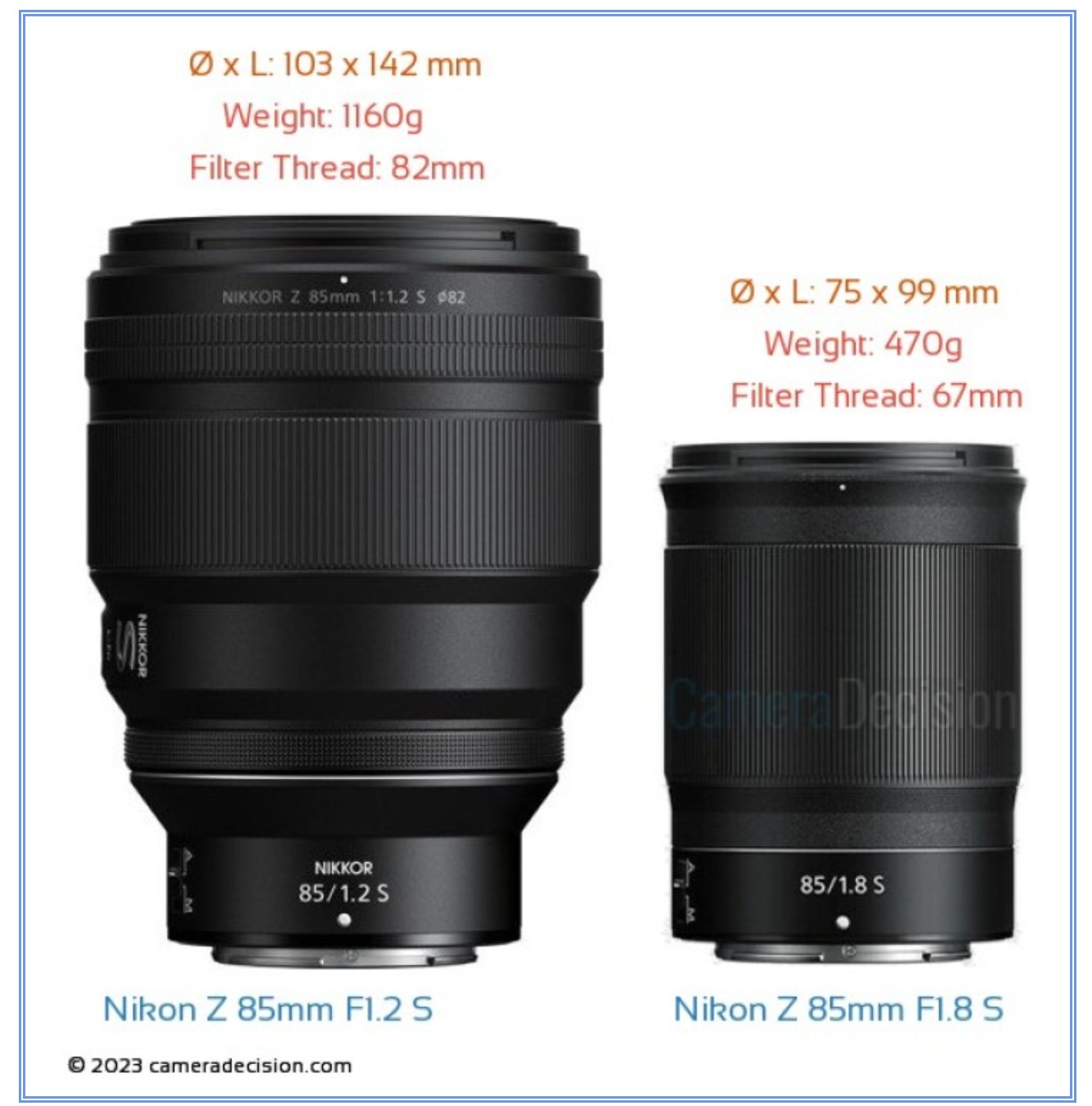

Nikkor 85mm F1.8 S Build and Handling
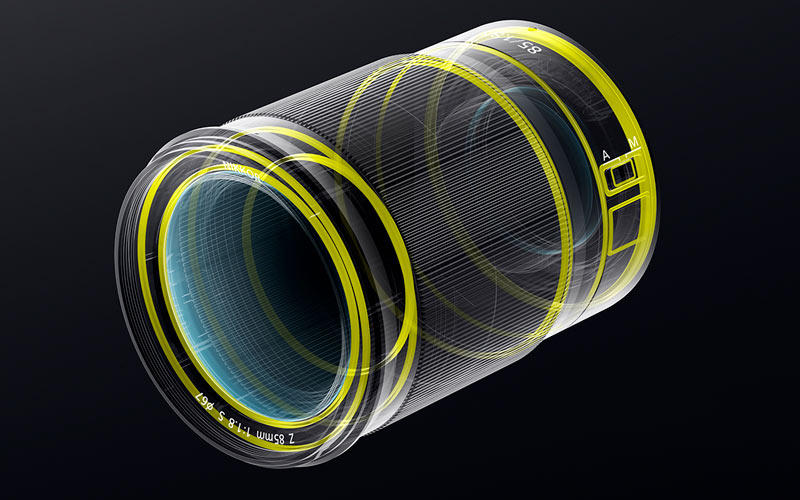
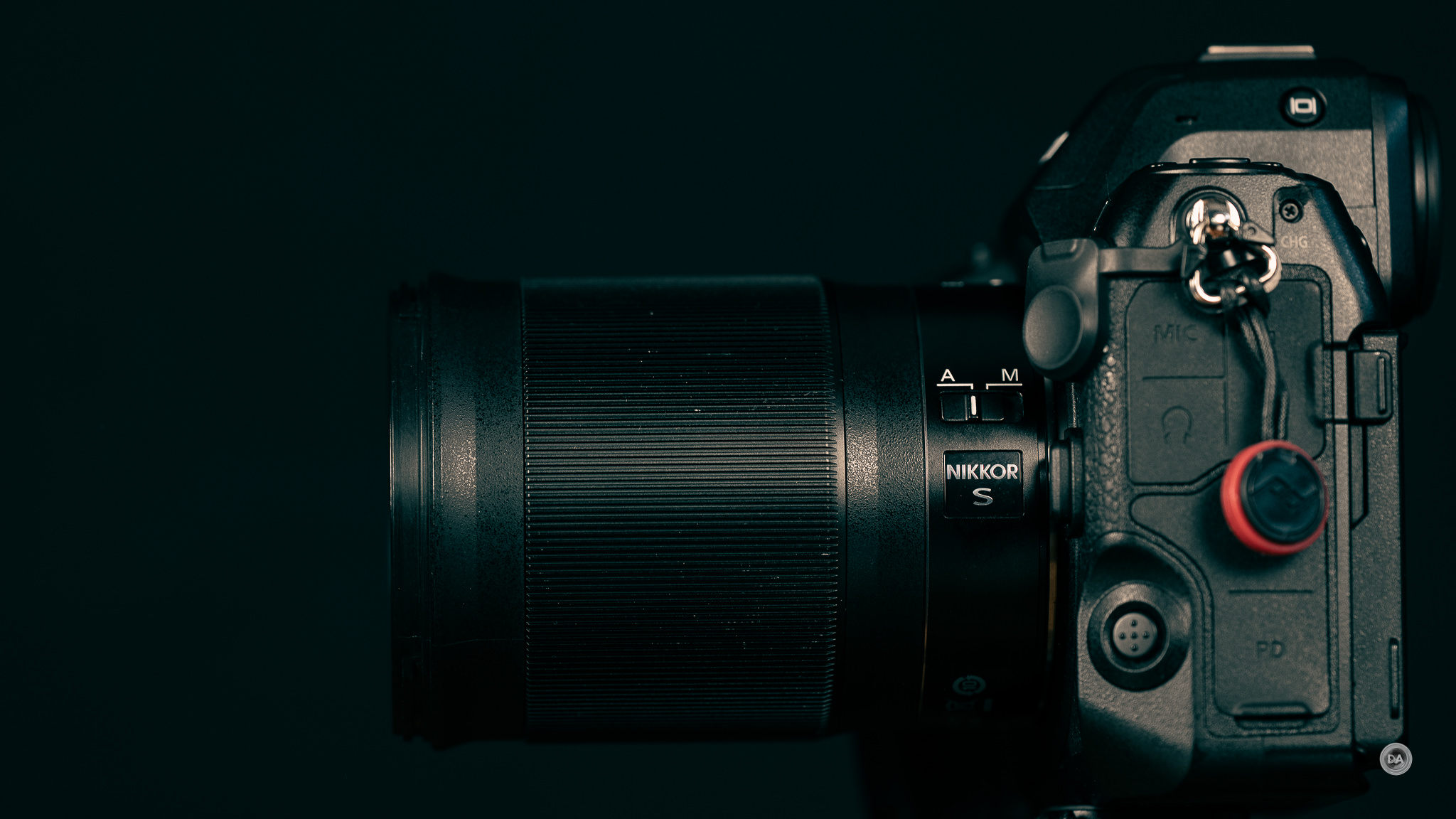
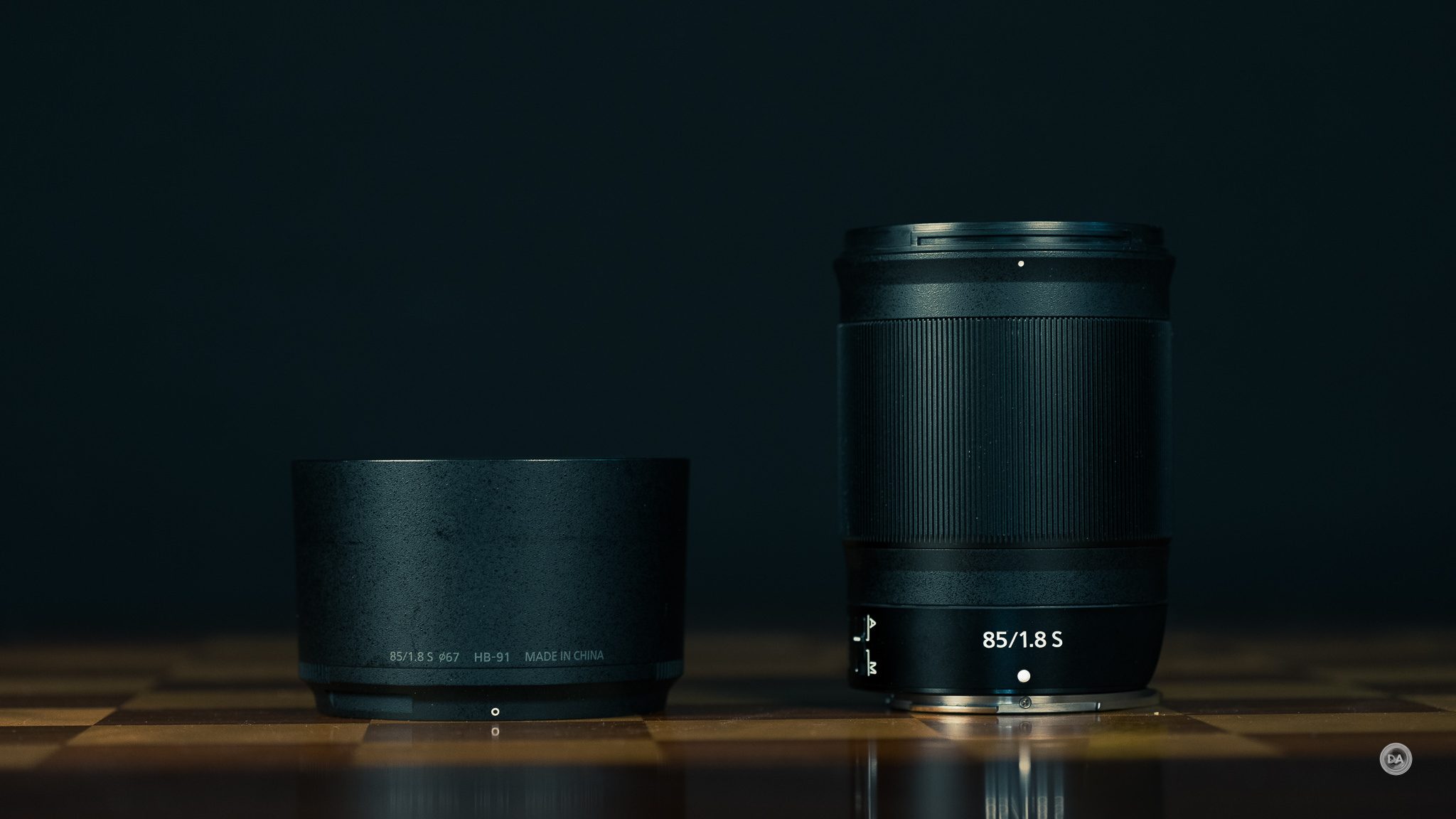
The F1.8 S lenses have a functional but not particularly aesthetically attractive look, in my opinion. They have a single ring on them, so that tends to dominate the lens barrel, and the fact that the Z-mount diameter is so big means that the lenses tend to be about as wide at the mount as they are elsewhere. The result is a fairly boring lens profile with little sculpting or shape to it.


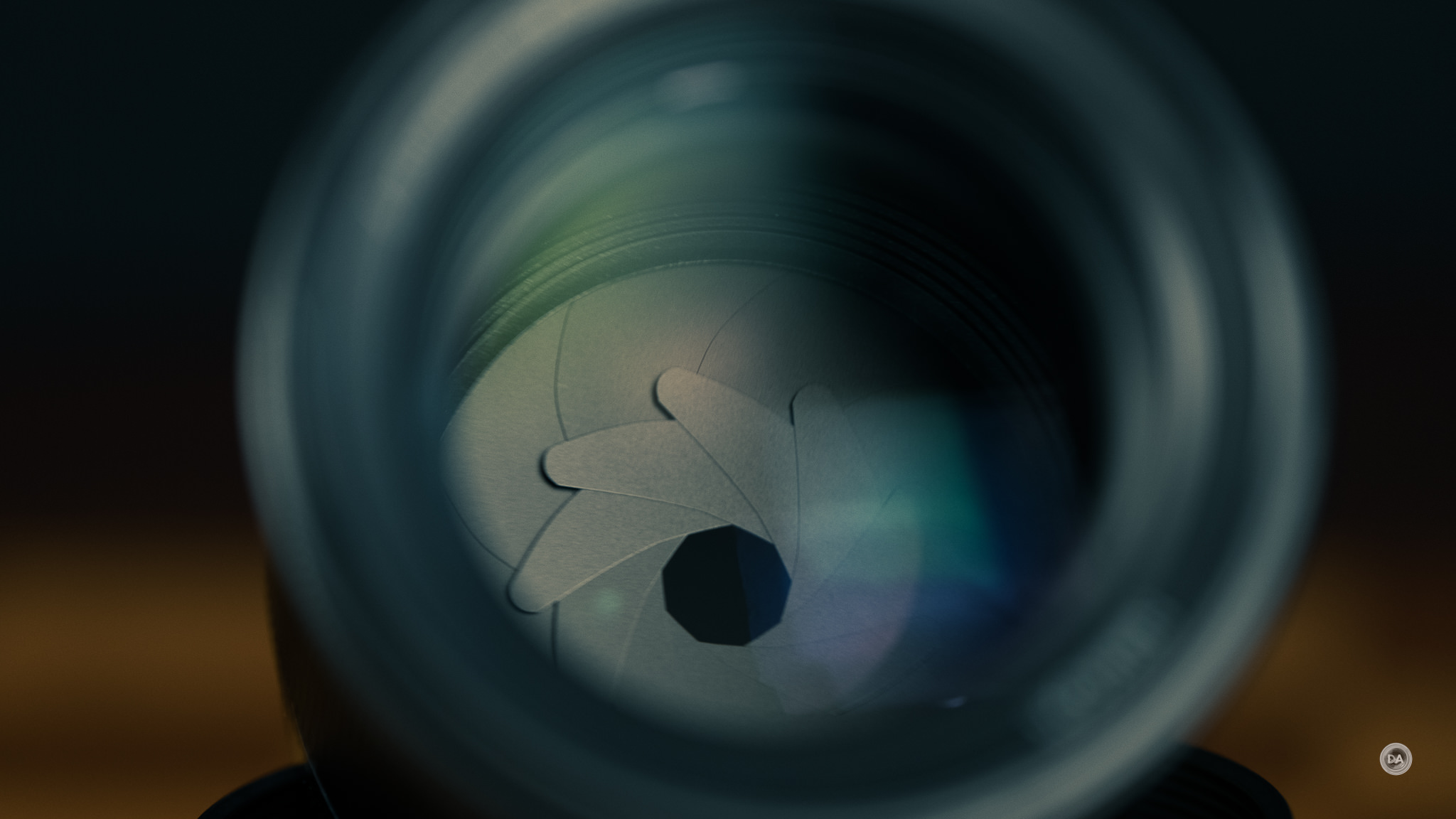



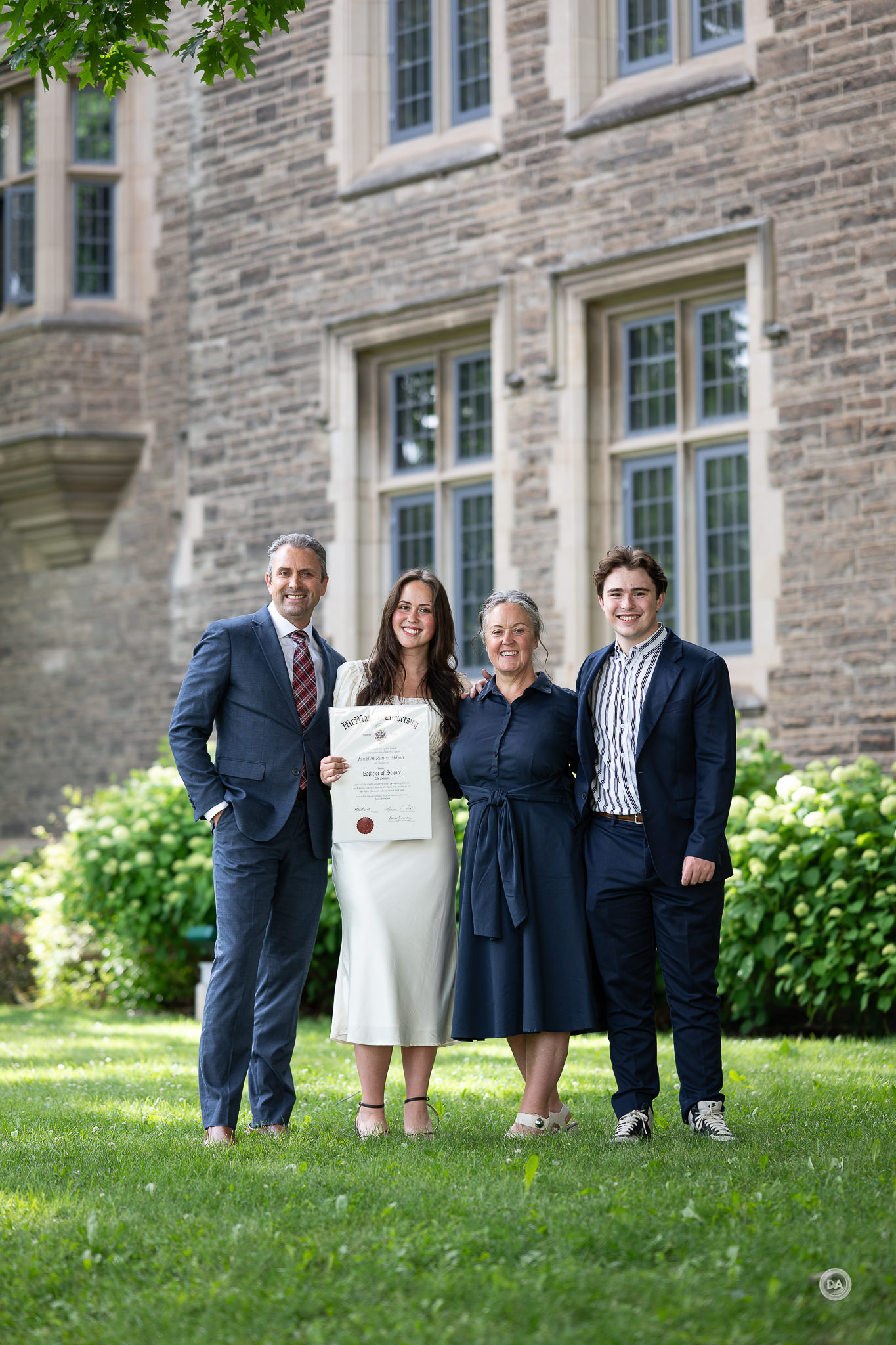
Few 85mm lenses come equipped with lens-based stabilization, and that’s true of the Nikkor Z 85mm F1.8 S. You will have to rely on camera based stabilization (if your camera is so equipped) for stabilization. My Z8 test camera has good stabilization, so I didn’t have any issues. I moved into different lighting and didn’t notice that the shutter speed had dropped to 1/15th of a second, and yet this result is nice and stable (this is a deep crop from a larger image).

If you happen to have a camera without IBIS, however, you will obviously get very different stability results.
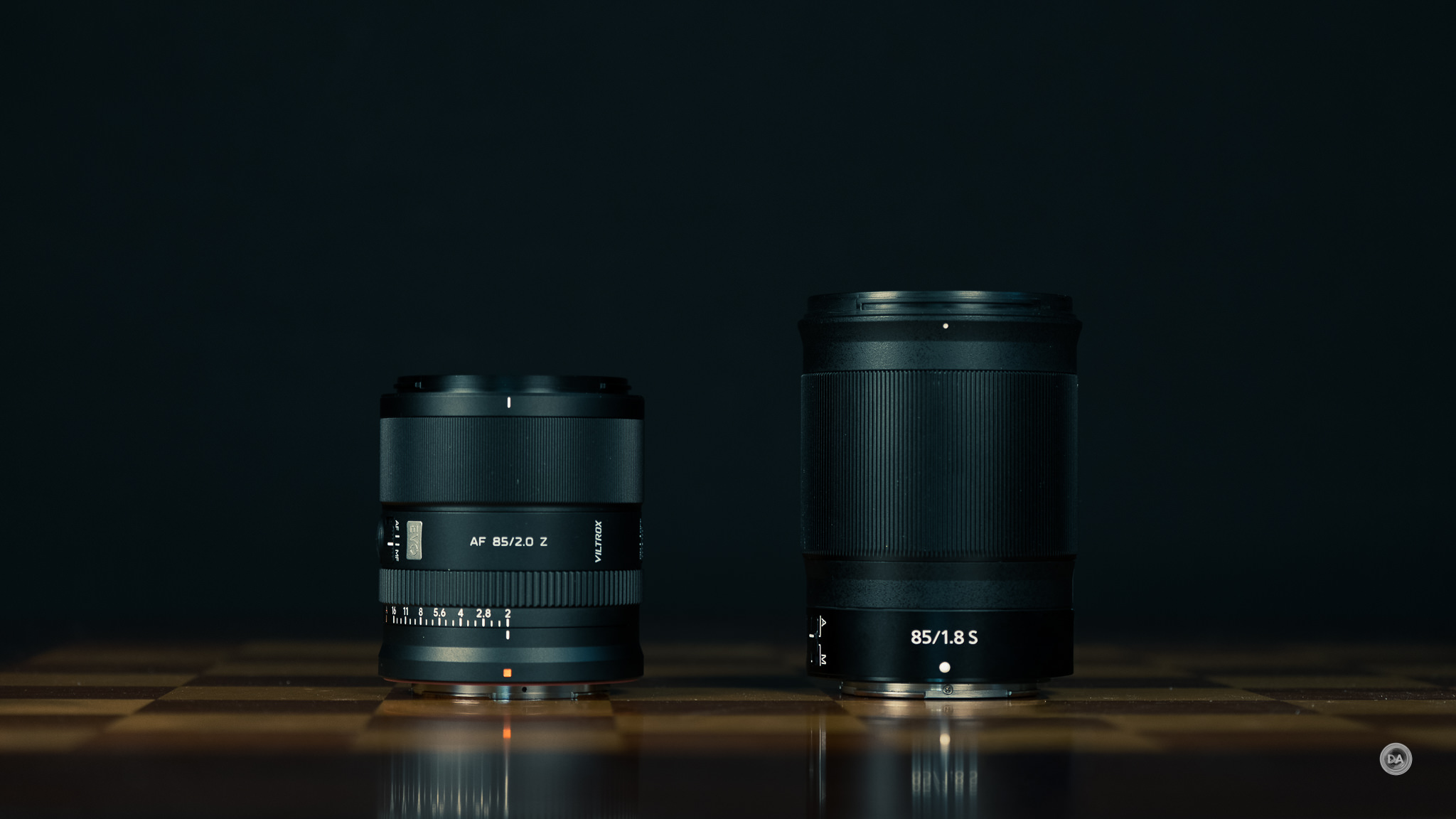
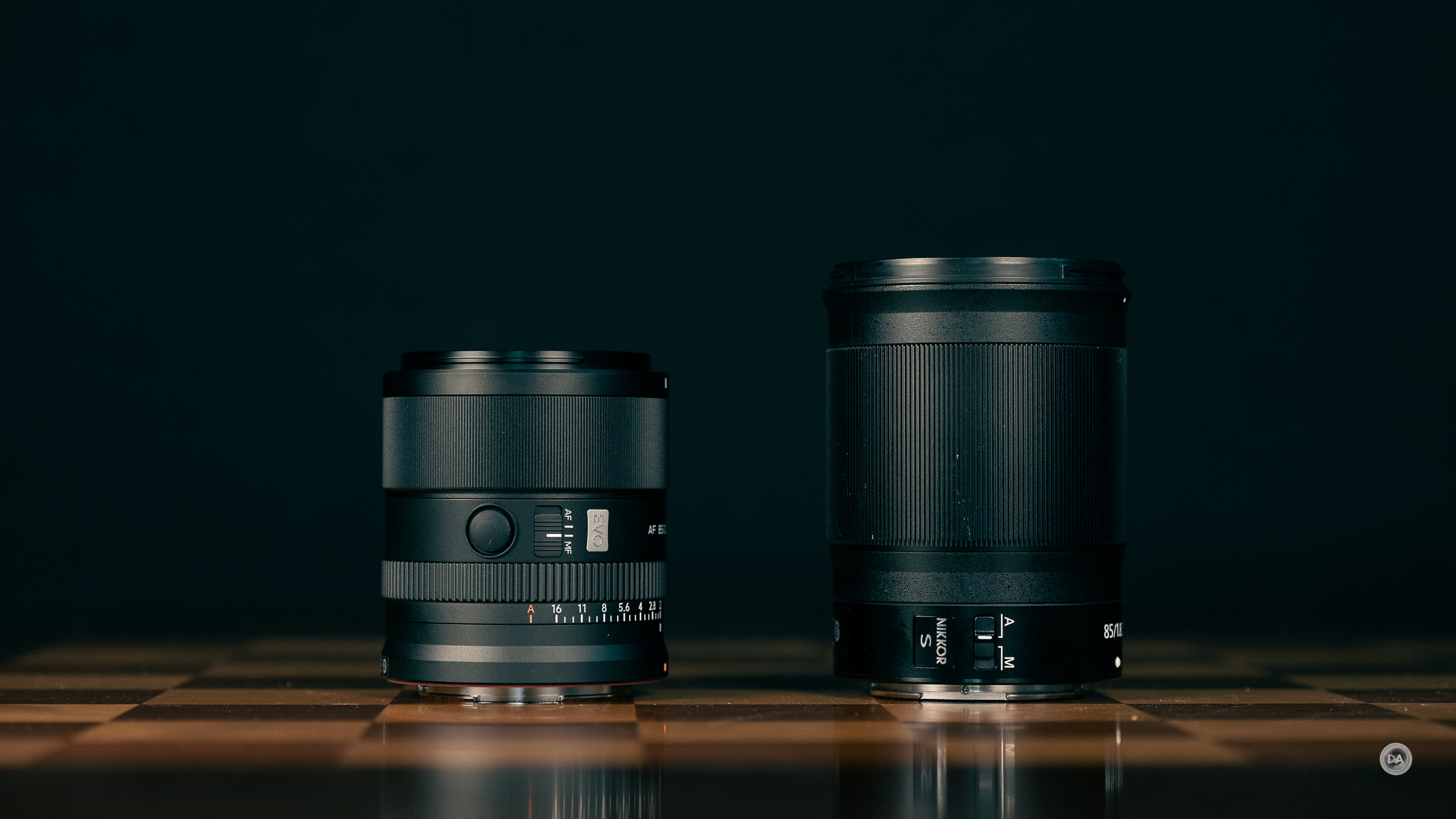
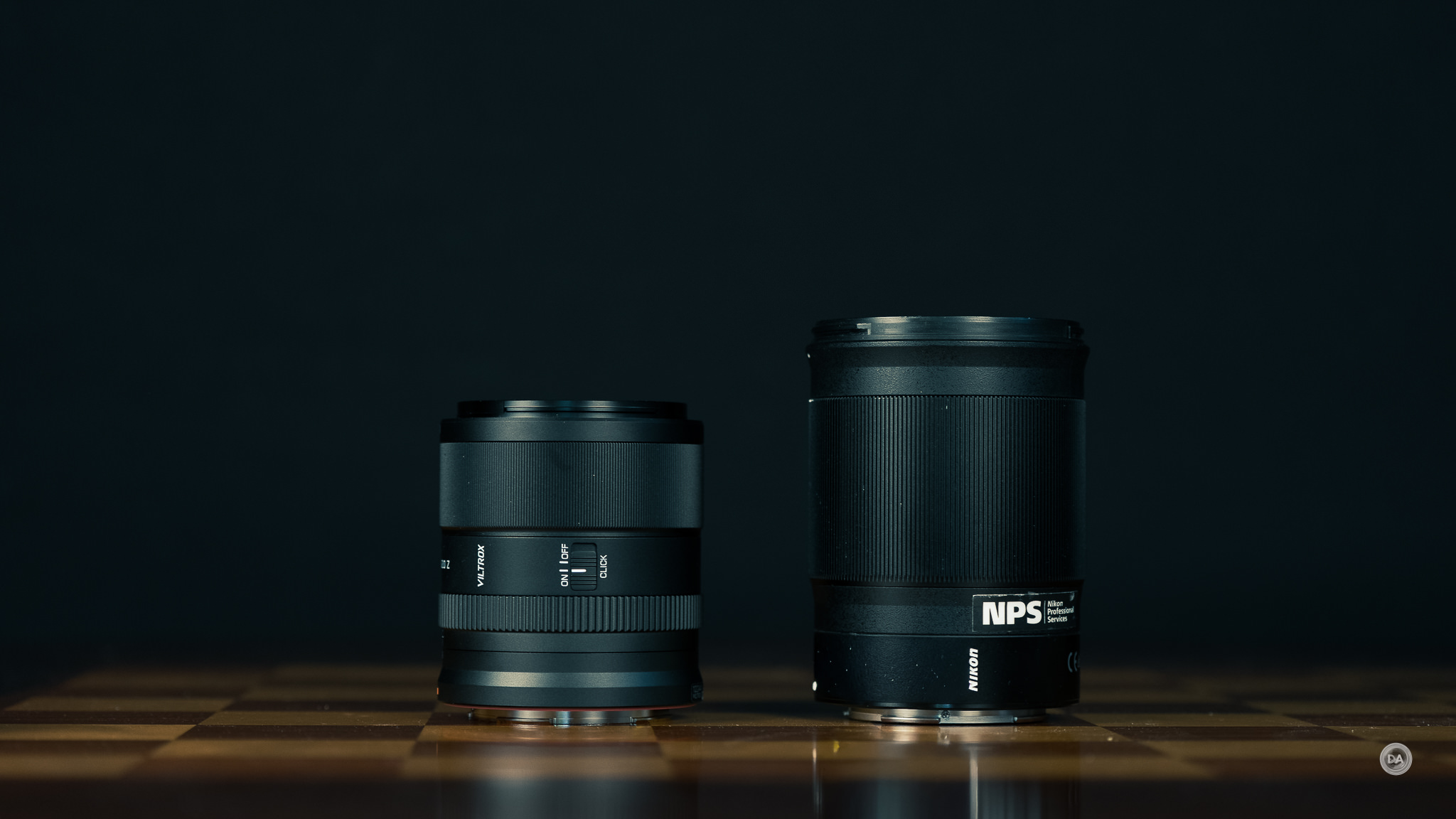
That is likely to give new shoppers some pause, particularly when the current price of the 85mm F1.8 S sits at right under $750 USD, which while not bad relative to the performance, is MUCH higher than the EVO’s $275 USD price tag. One would think that a future MK II version will almost certainly be more feature rich.
Autofocus for Stills

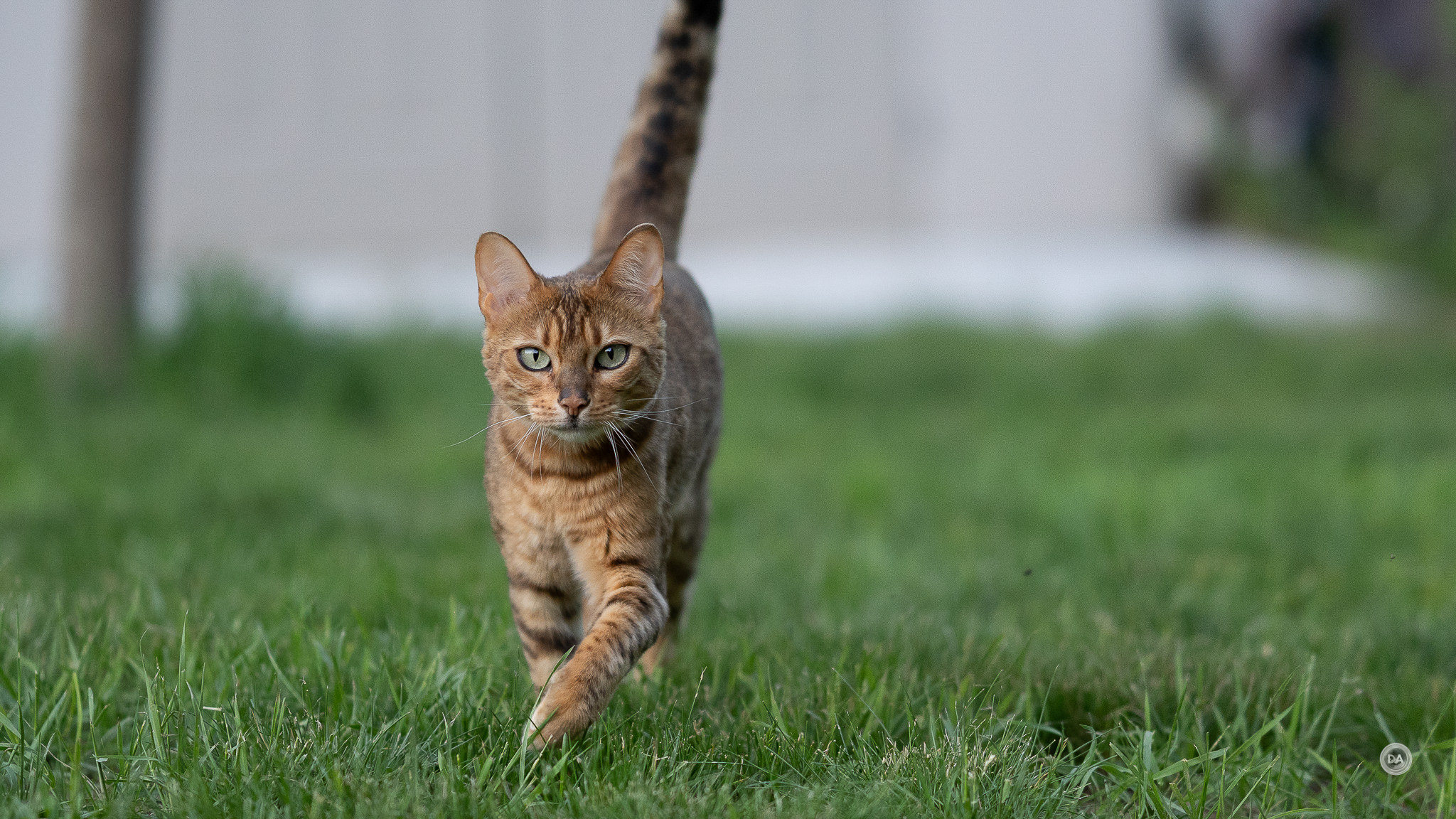
In bursts, however, I found the results somewhat inconsistent. For every shot perfectly focused like the one above, I’d get one like this that was significantly backfocused.

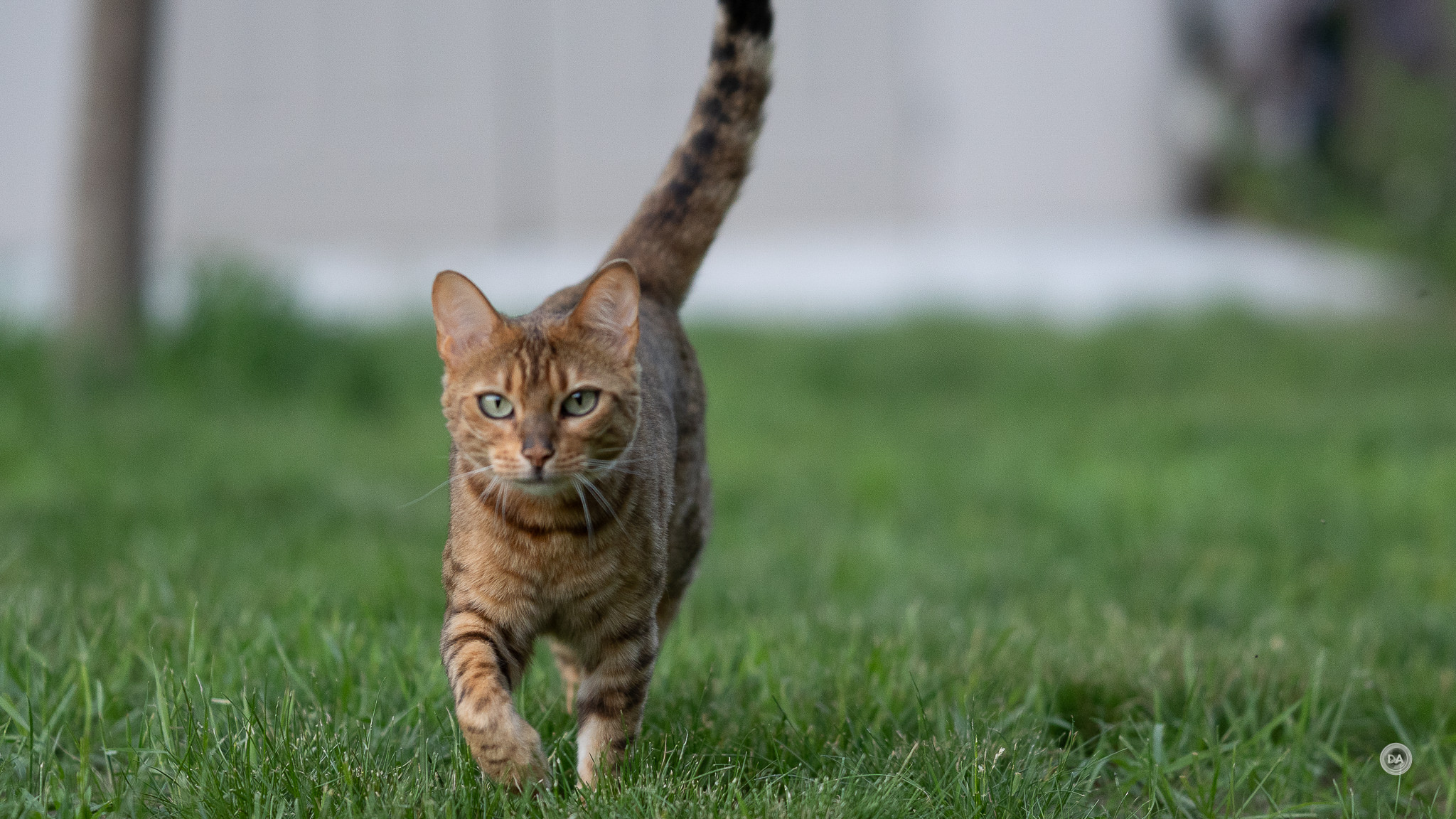
Few people are buying an 85mm lens for sports, but I’m not sure I would use this lens for that purpose. I want to see better consistency with burst sequences like this before I could recommend it for action photography.
With a still subject, however, there was no issue, and the results are beautiful.

In people photos, focus was very clean and accurate.





Here’s another example:

I could hear a light “schnick” sound as focus went back and forth during my focus speed test. Focus motors are not completely silent, but neither are they noisy at all, either.
Autofocus is very solid here, though not anything exceptional. I suspect most people in most situations will be happy.
Video Autofocus
My first test was touch-to-focus video focus pulls, and I saw quick and reasonably confident pulls from one subject to another in my standard test. I didn’t see any visible steps from the STM motor. When doing a similar test outdoors, I saw bit of the quick back-racking that I often seen on Nikon cameras.
Focus breathing isn’t perfectly controlled, so you will see some changing of size of objects depending on their focus position.
My “hand test” where I alternately block the camera’s view of my face with my hand and then remove it went fairly well, and it showed solid transitions from my eye to my hand and back.

Focus stayed stable when shooting some portrait clips, and focus was also solid for my outdoor segments when shooting my video review.
Focus transitions are fairly well damped and aren’t jumpy. I would say that in general this lens has held up well in this area, and is helped by the fact that Nikon’s autofocus in their cameras has significantly improved since the time in which the 85mm F1.8 S was released.
Image Quality Breakdown
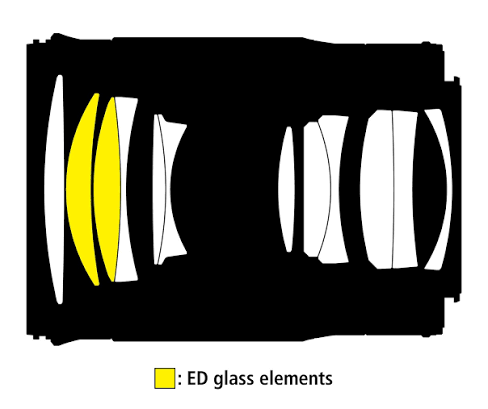
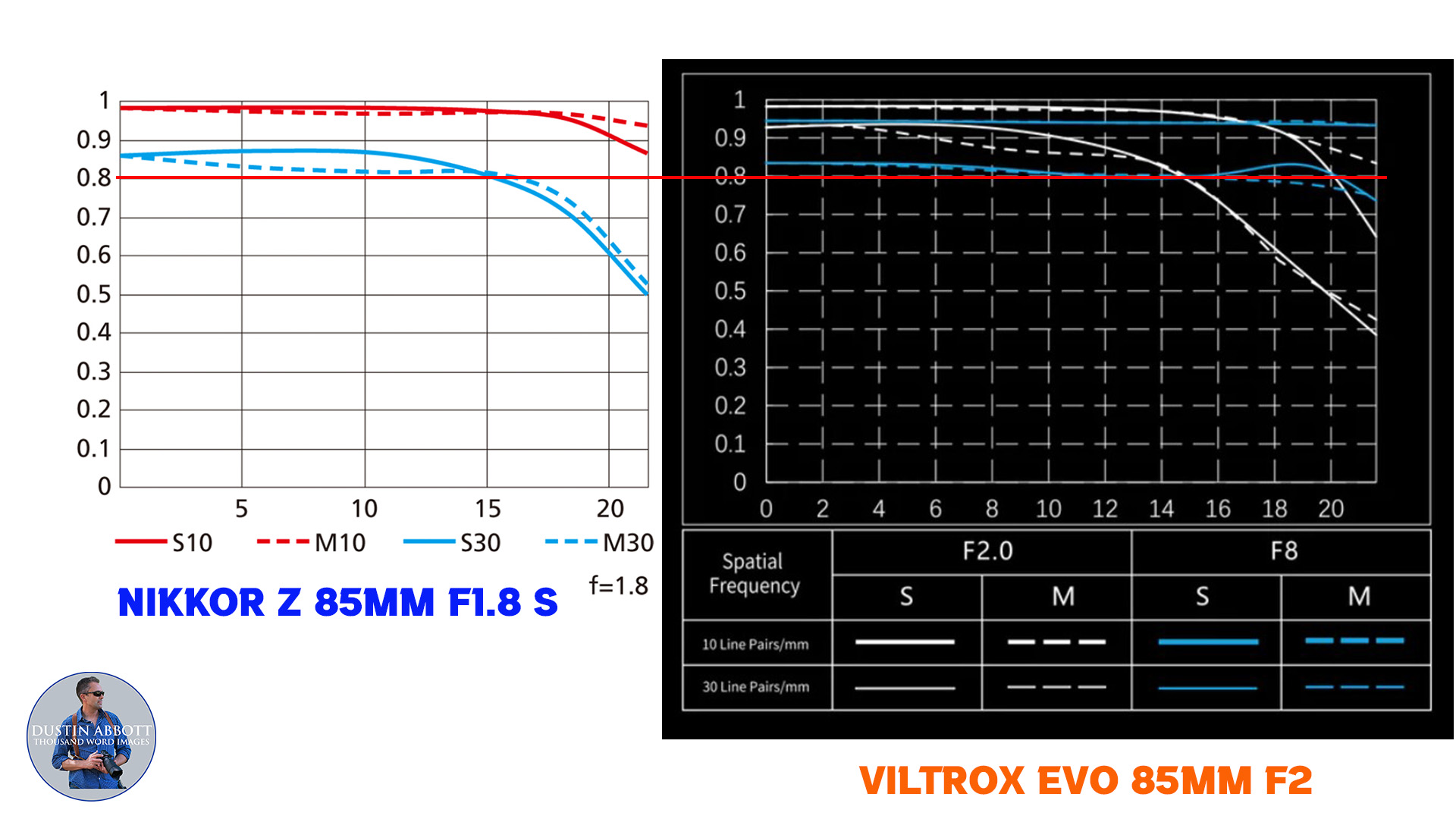
The Nikkor Z 85mm F1.8 S is an FX (full frame lens), though it can also be used on DX cameras where it will give a full frame equivalent of 127.5mm due to the 1.5x crop factor on DX. That’s still useful, giving an near 135mm perspective. The optical design here is 12 elements in 8 groups, including 2 ED (extra low dispersion) elements. The MTF chart shows a very even performance across most of the frame with a drop out in the far corners.
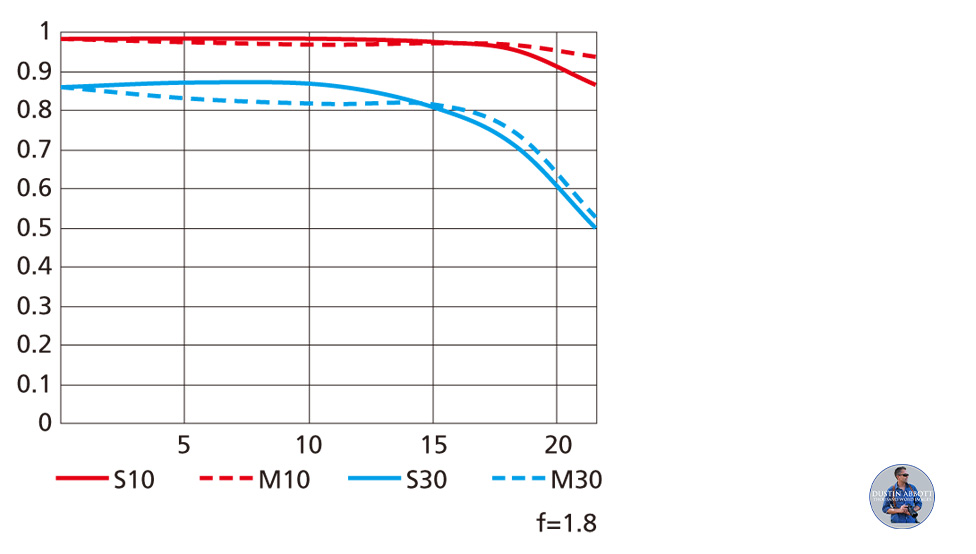
This is a very solid performance, though across a lot of the frame the newer Viltrox EVO 85mm F2 proves the sharper lens according to the MTF, except in the corners, where the Nikkor lens averages out to around 52% while the EVO lens is closer to 42%.
The Nikkor Z 85mm F1.8 S is capable of delivering a beautiful level of detail in your images, with high contrast as well.


The 85mm is closer to the performance of the 50mm than the 35mm in terms of detail and pop, though I would say the 50mm remains my favorite. The 50mm showed a near-Apochromatic lack of fringing, and while the 85mm is fairly good, it can’t match that level of performance. Longitudinal Chromatic Aberrations (LoCA) show before and after the plane of focus. You’ll see some on my test chart after the plane of focus:

You’ll also see it on shiny surfaces like the outlines of the metal frame of my vintage Pentax.

Lateral chromatic aberrations (LaCA) near the edge of the frame are essentially non-existent, so that won’t be a problem.

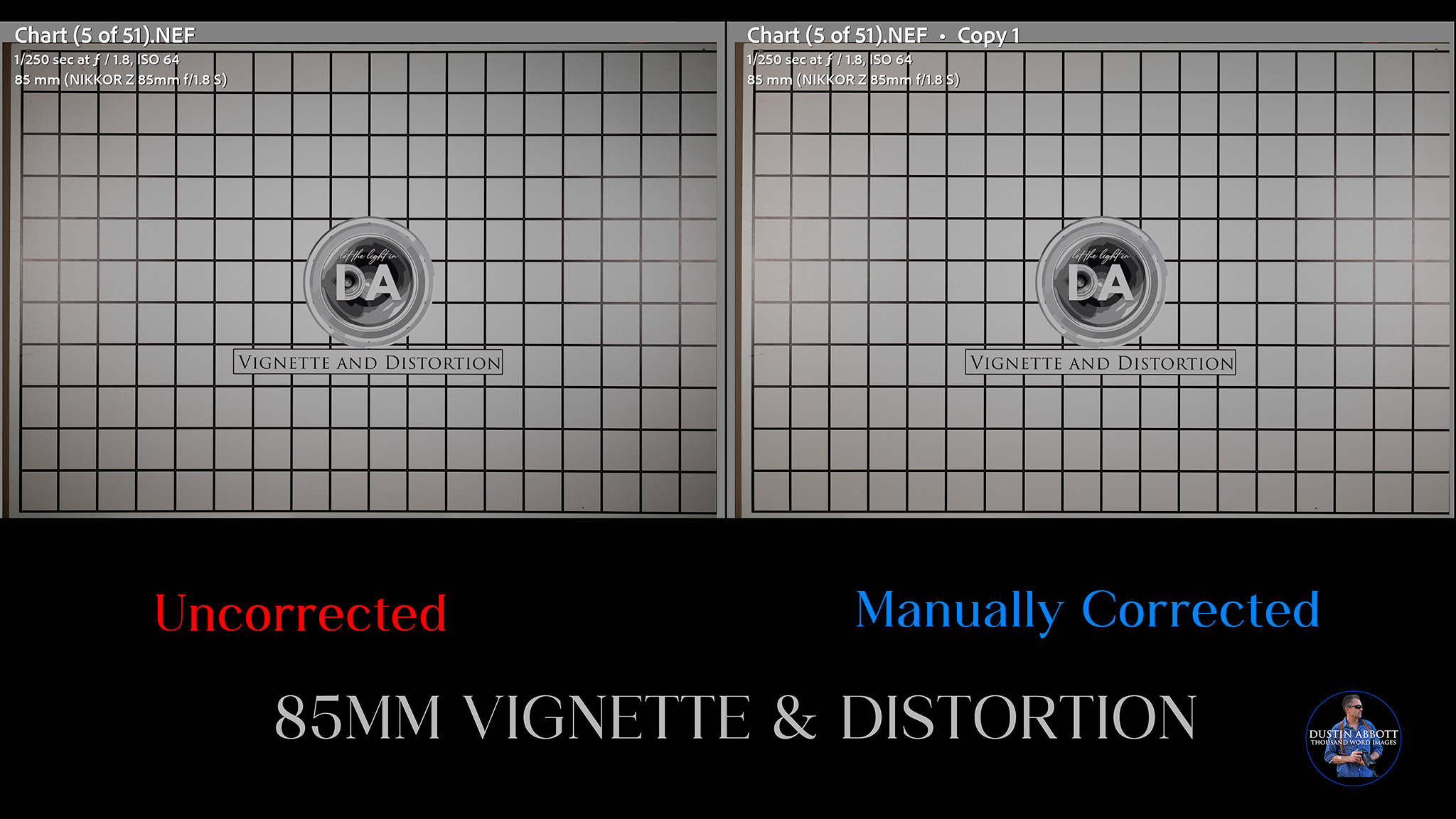
If we move on to vignette and distortion we find the tiniest amount of pincushion distortion which required just a -1 to correct for. It is very linear and corrects easily enough.
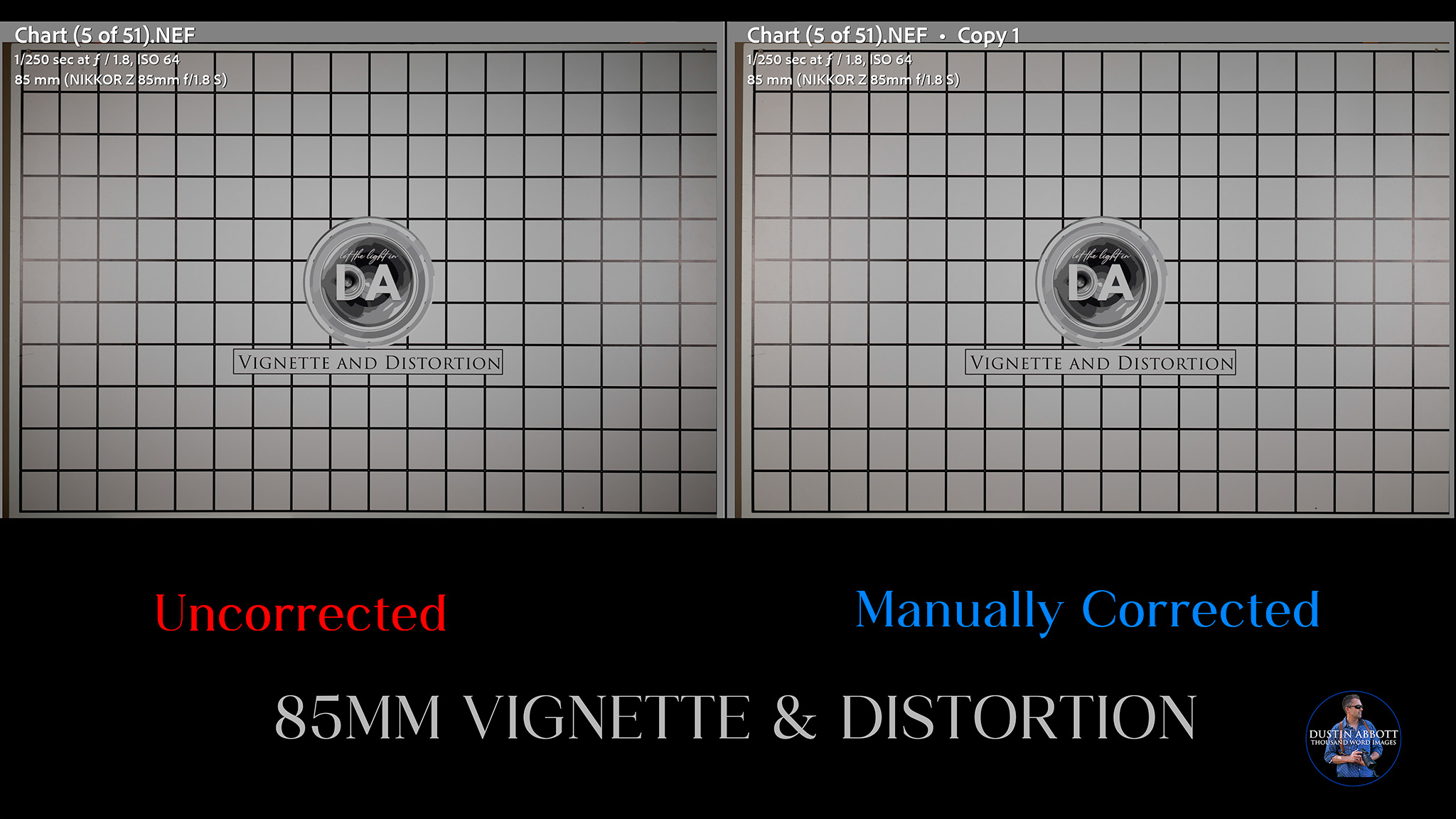
Vignette is also very well controlled. There are a few of Nikkor’s telephoto primes that they market as having minimal vignette, and the 85mm F1.8 S is one of them. I needed to add just a +37 to correct vignette, which is a good stop better than what I see on a lens like the Viltrox EVO 85mm F2.
We’ll move on to inspecting our test chart. This test has been done on a 45MP Nikon Z8 sensor. I use a high end tripod and two second camera delay to ensure vibration doesn’t affect images. Here’s a look at the test chart that we will examine at high magnification:
If we take a look at crops (at roughly 200%) at F1.8 from the center, mid-frame, and lower right corner, we see an excellent center and midframe with only a mild drop in the corners.



So how does that compare to the EVO lens? The EVO lens shows noticeably higher contrast and some higher detail in the center and midframe, but the corners belong to the S-Line lens.
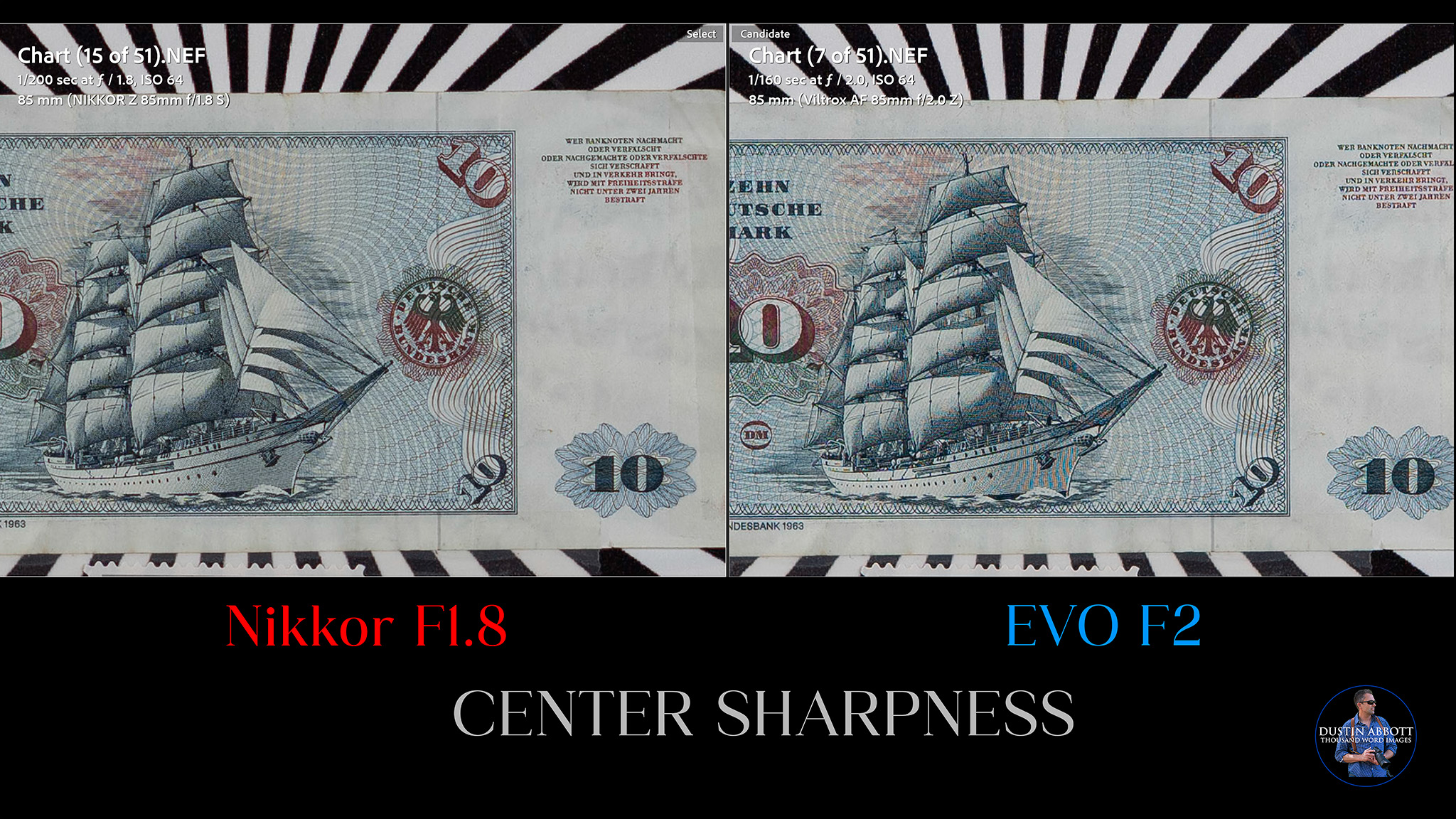
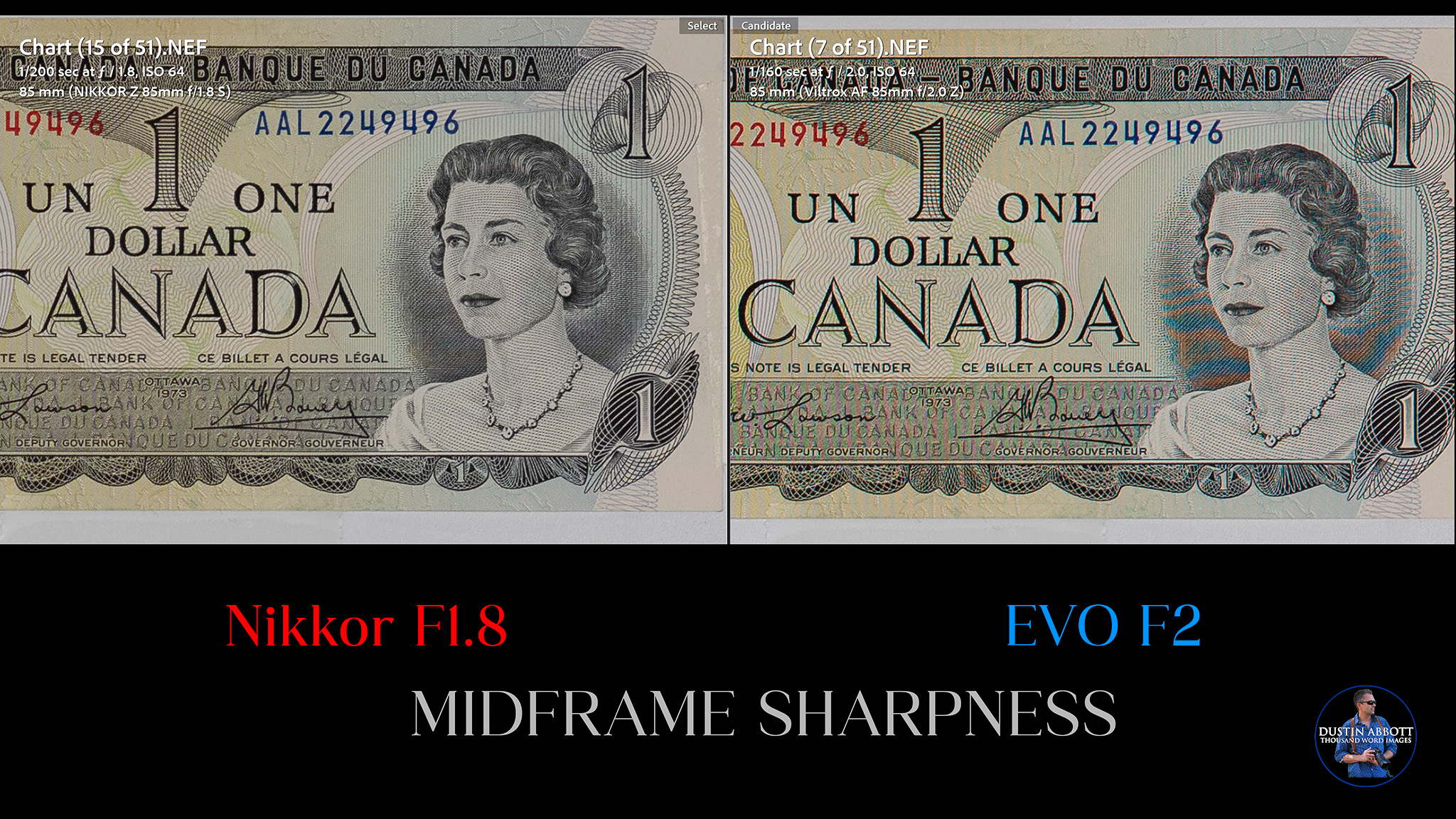
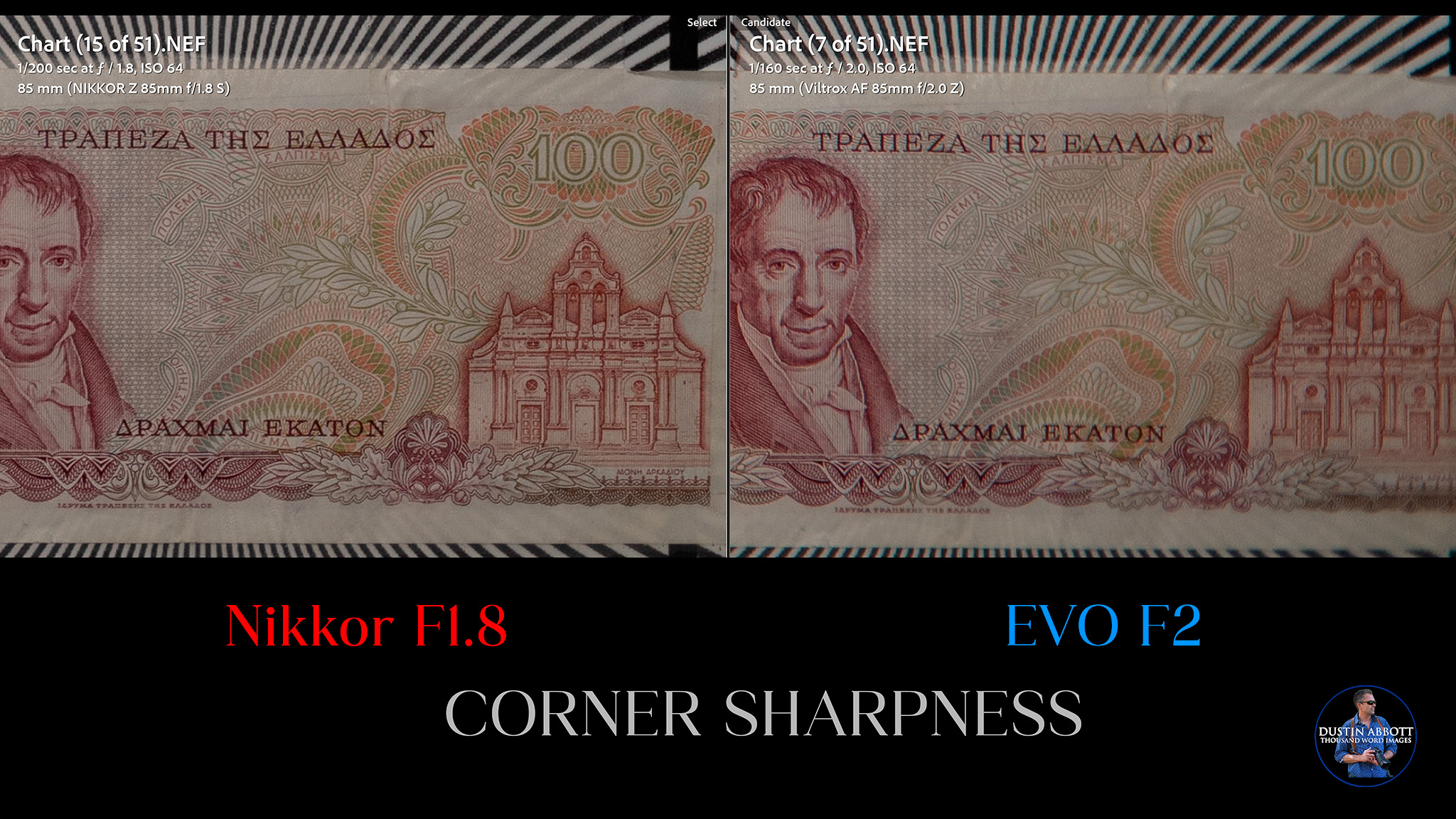
Truth be told, however, I doubt anyone is looking for or needs more sharpness than what we are getting from the F1.8 S.


There is slightly more contrast at F2, though probably not enough that would be noticed even at 100% magnification (you can barely see it at 200% magnification).

The improvement by F2.8 is more noticeable, with fantastic levels of sharpness reaching deep into the midframe.

Corners are good at F2.8, and better still by F4 and F5.6:

Landscape images are, as you’d expect, highly detailed.

Expect the typical diffraction pattern on high resolution cameras where the image is a little softer by F11 and softer still at the minimum aperture of F16, though frankly I’ve seen much worse when it comes to diffraction.
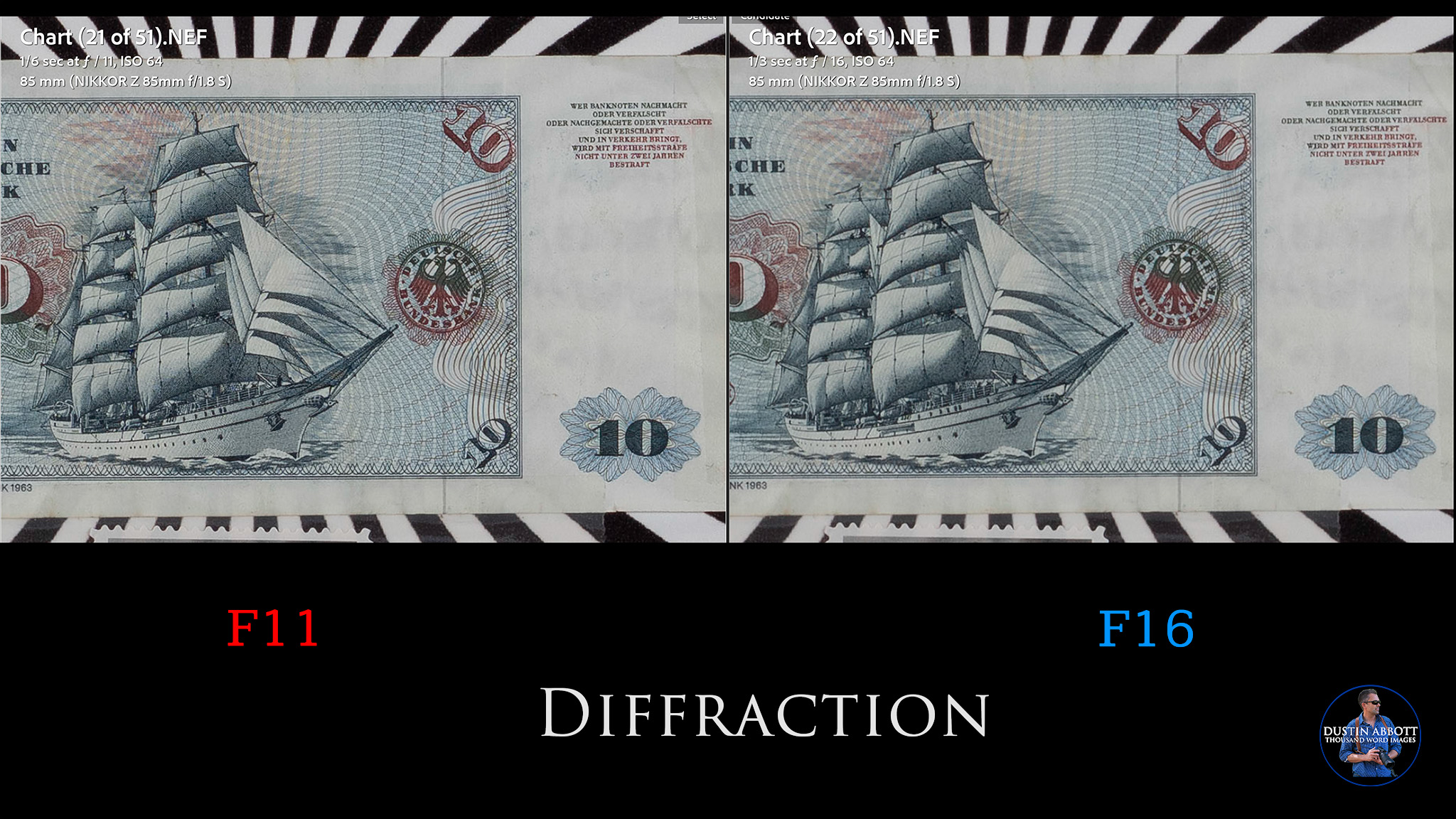
Sharpness and contrast are generally excellent and definitely a cut above what typical 85mm F1.8 lenses perform.
But how about the overall rendering from the lens? Does it have that “special sauce” that makes images look exceptional?
First we’ll look at specular highlights (bokeh balls).

There’s a very fine amount of green fringing around the edges of specular highlights, but nothing worth mentioning. The 85mm F1.8 S has reasonably smooth specular highlights, though I see nothing exceptional there.
Bokeh rendering is often very nice.

I really like the rendering from this shot, here.

Where the lens does excel is in providing very high definition, crisp cutouts of the subject (3D pop).

In many ways that is what stands out to me more than the softness of the backgrounds.

I would say that generally the bokeh is nice but not exceptional.

That being said, I do think the bokeh is slightly nicer than the cheaper EVO lens, though not by a significant margin. That is aided by that slightly brighter maximum aperture (F1.8 is one-third stop brighter than F2).
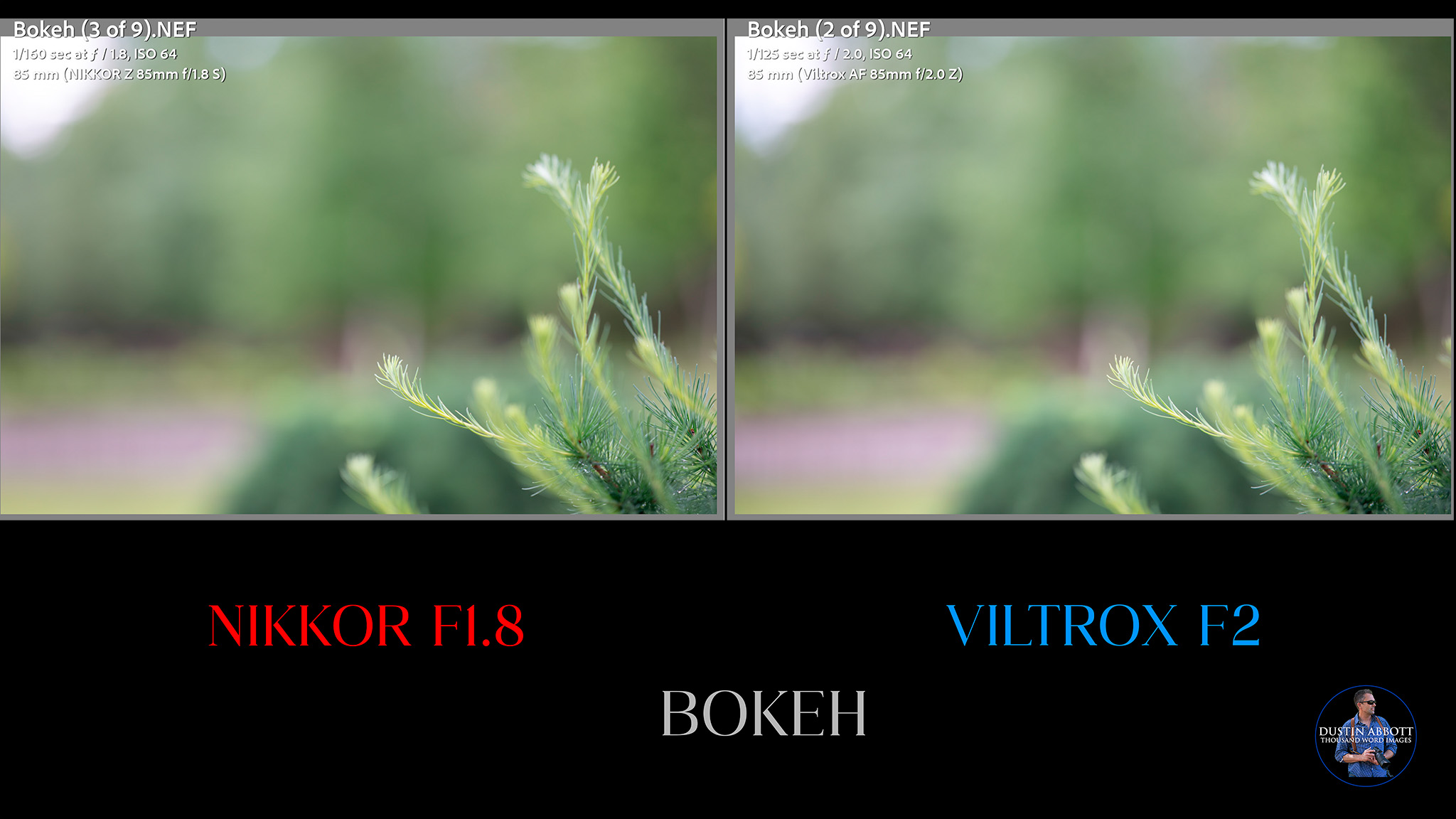
Colors are nice and crisp.

The colors from this interior shot are nice and rich.

Here’s another where the image just looks very pure.
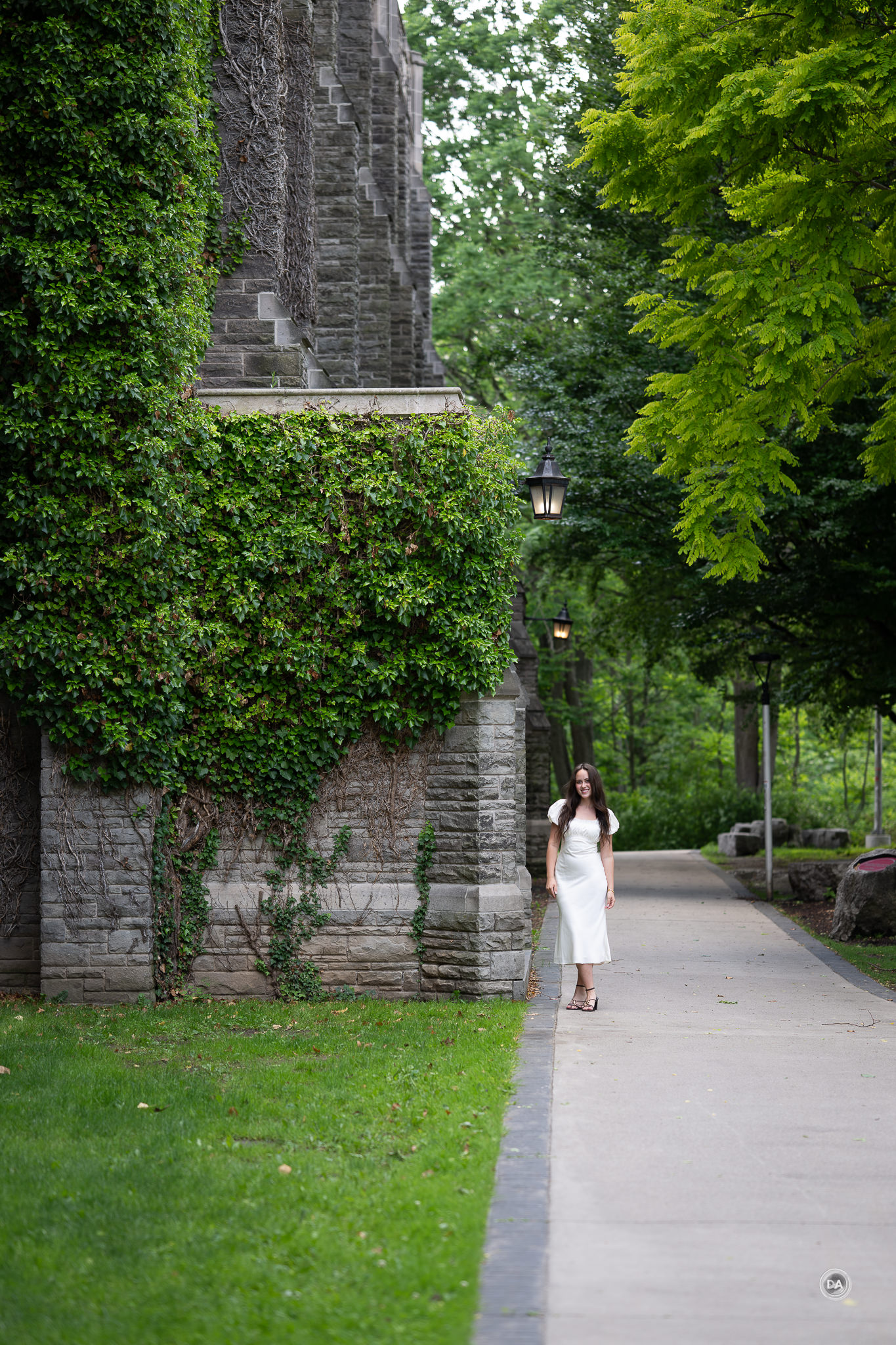
Flare resistance seems solid. The lens utilizes Nikon’s Nano Crystal Coat (N) to help eliminate flare artifacts and ghosting. This shot has a lot of light coming in from the top, but no real flare issues.

When pointing at the sun, I found that direct-on flare resistance was strong, but I could get some veiling at wide apertures with the sun in the corner of the frame, and a bit of a ghosting pattern with the lens stopped down to F11:



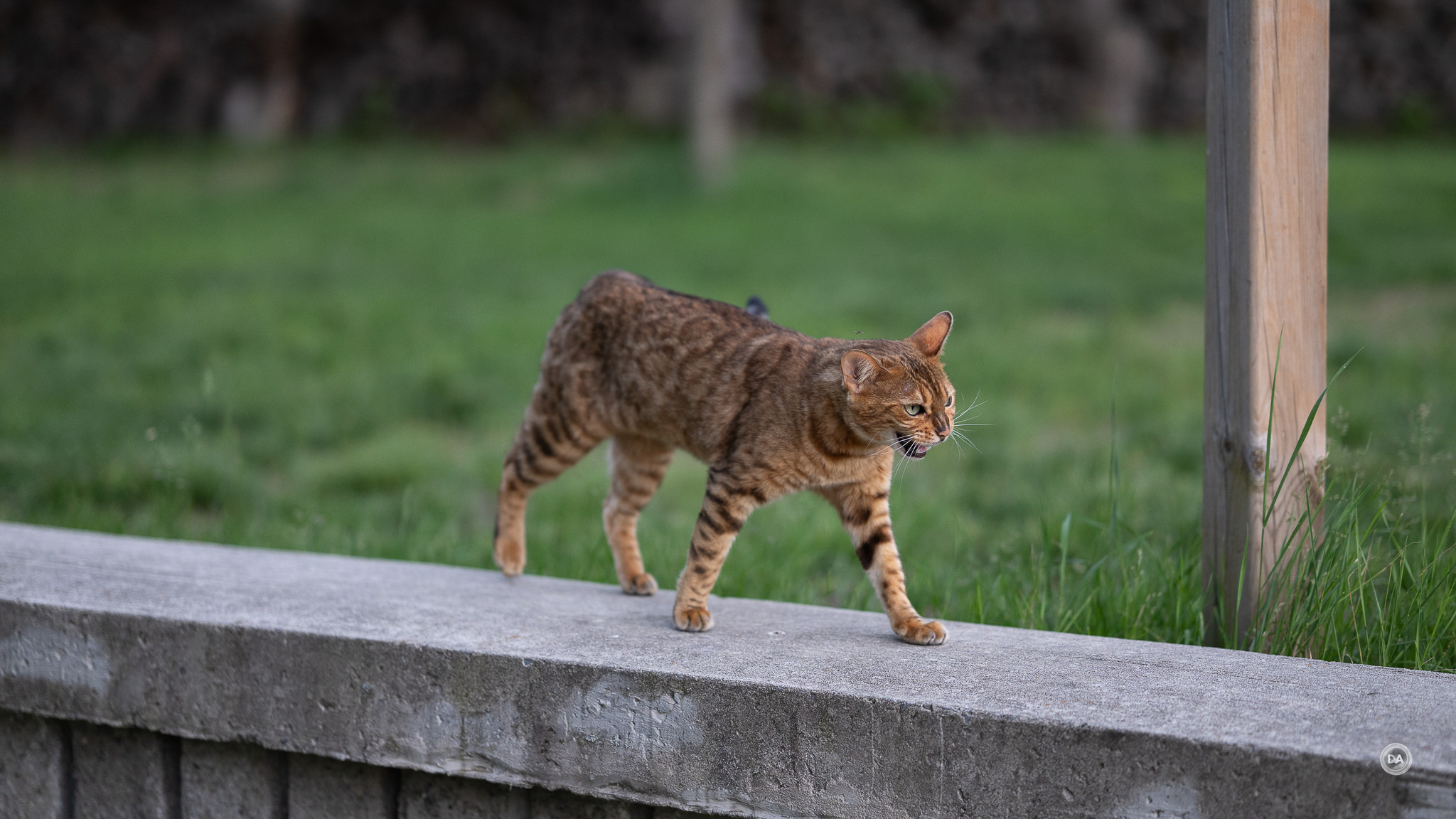
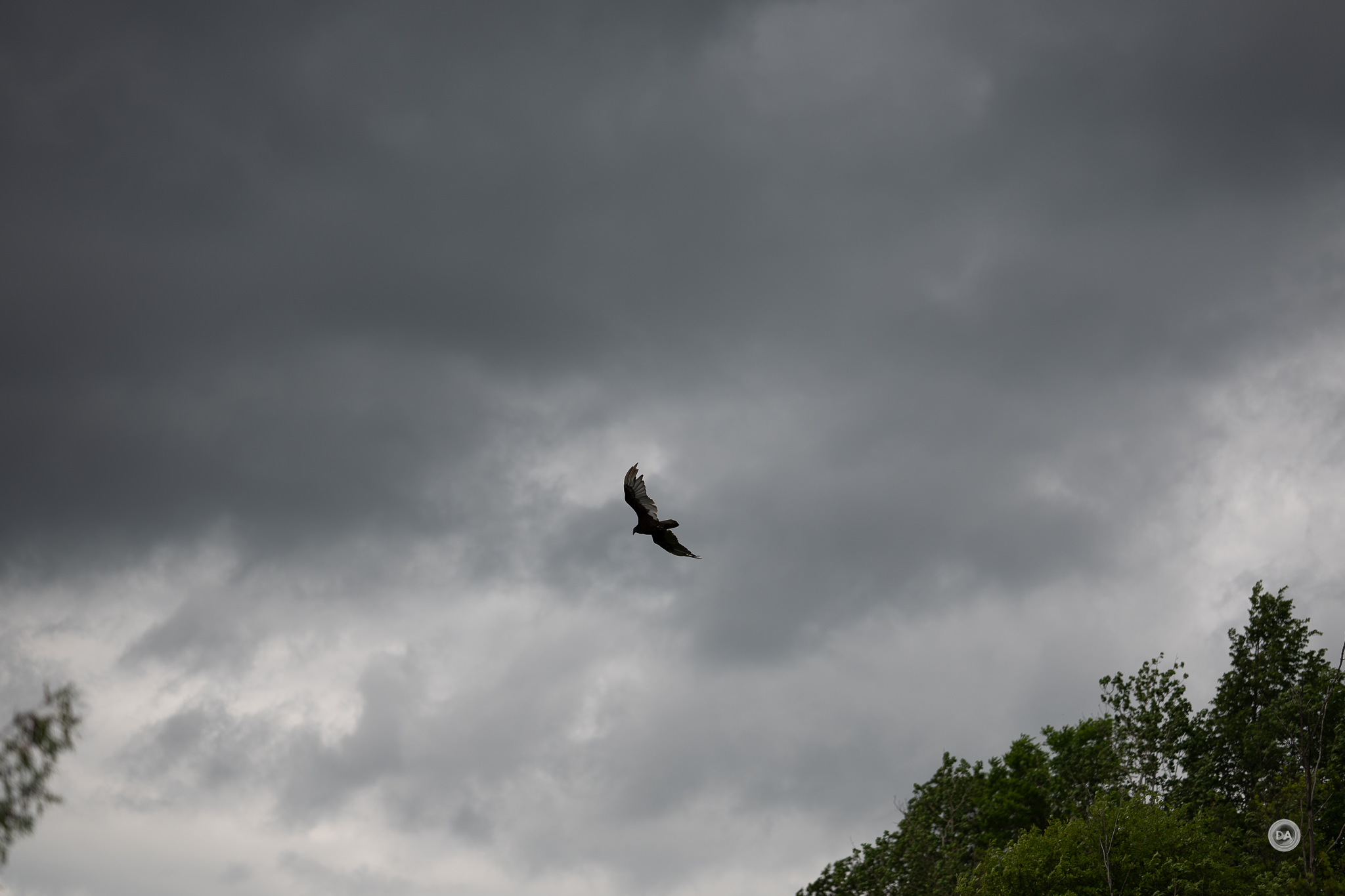
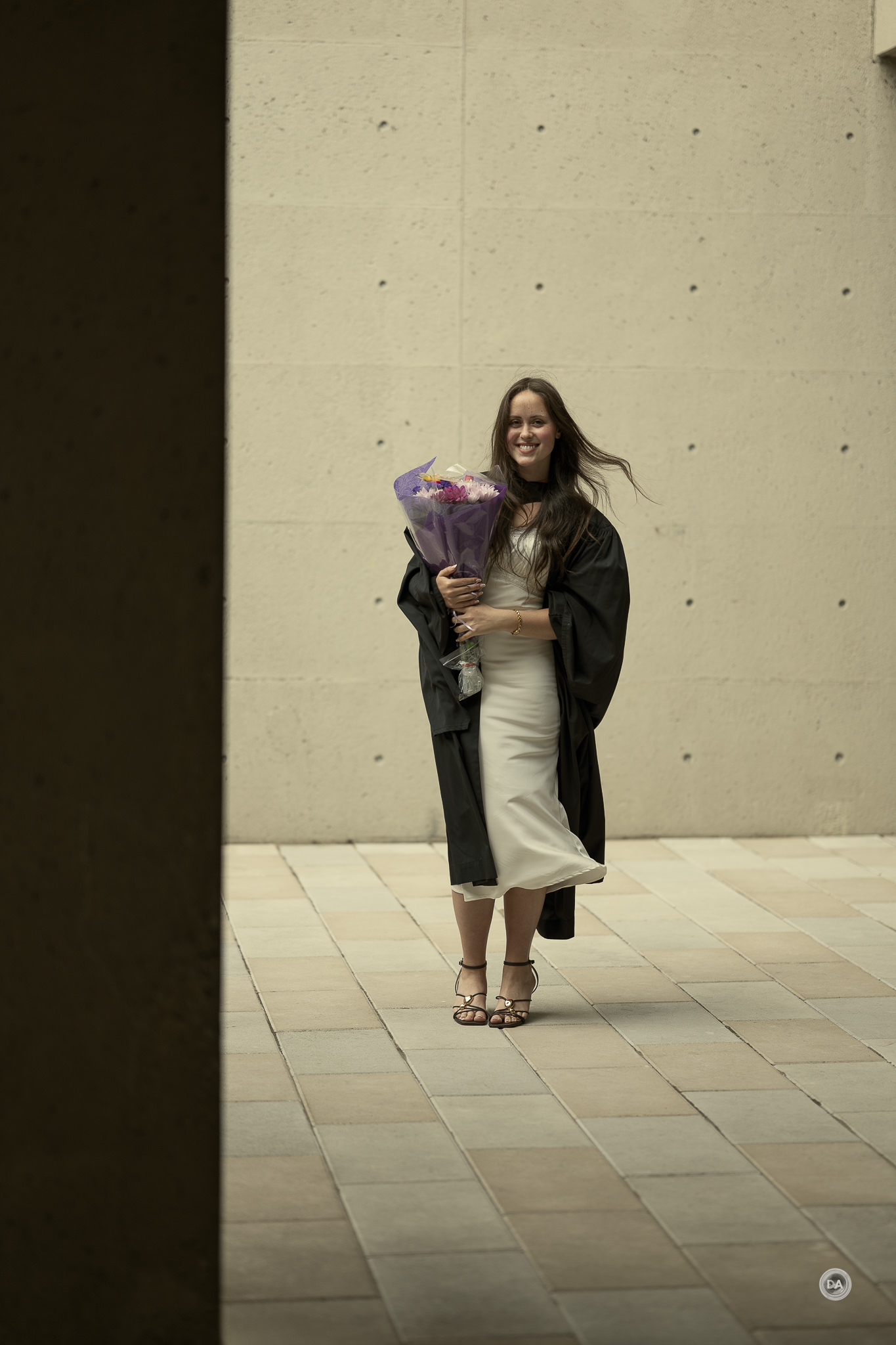
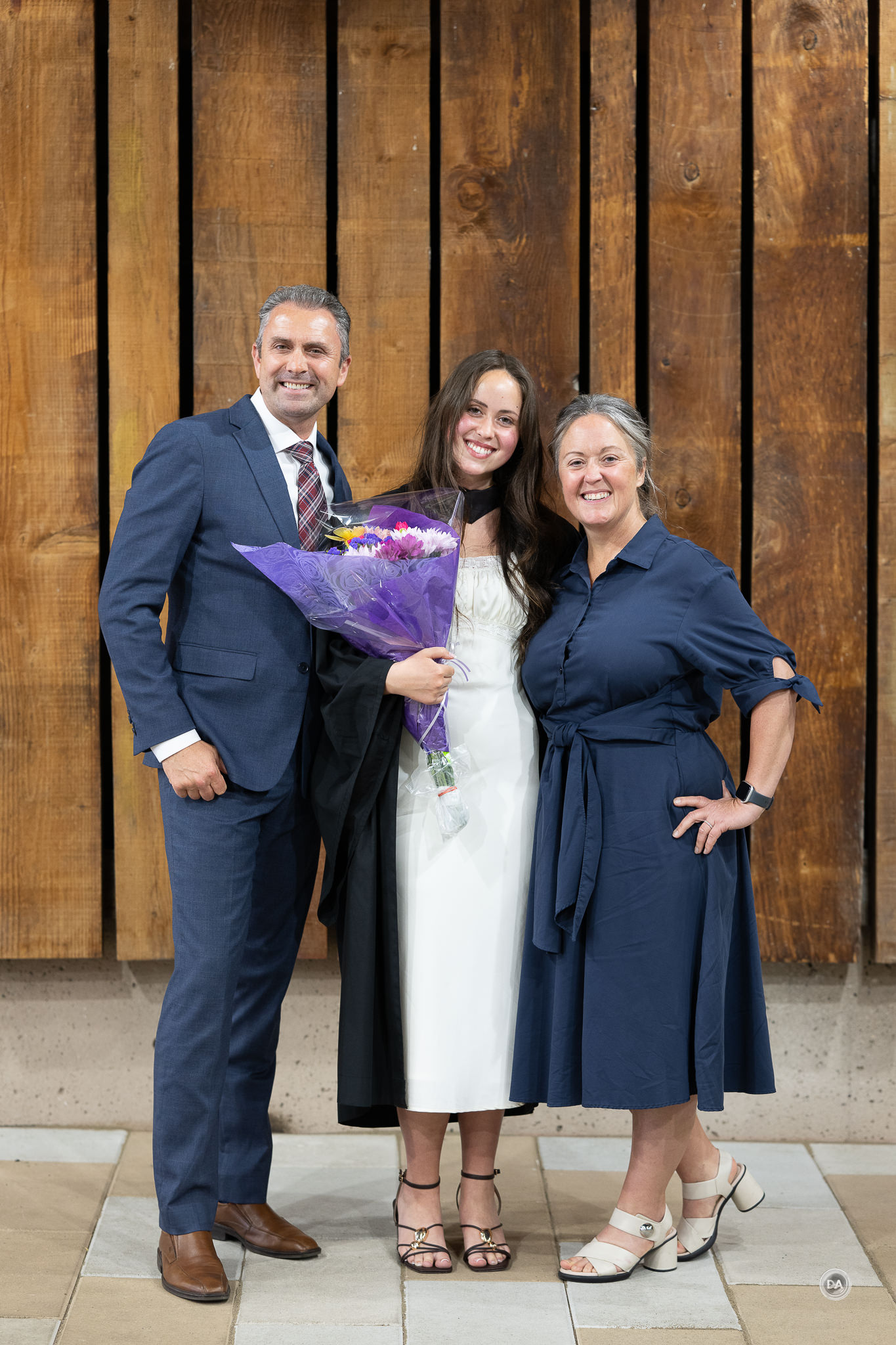
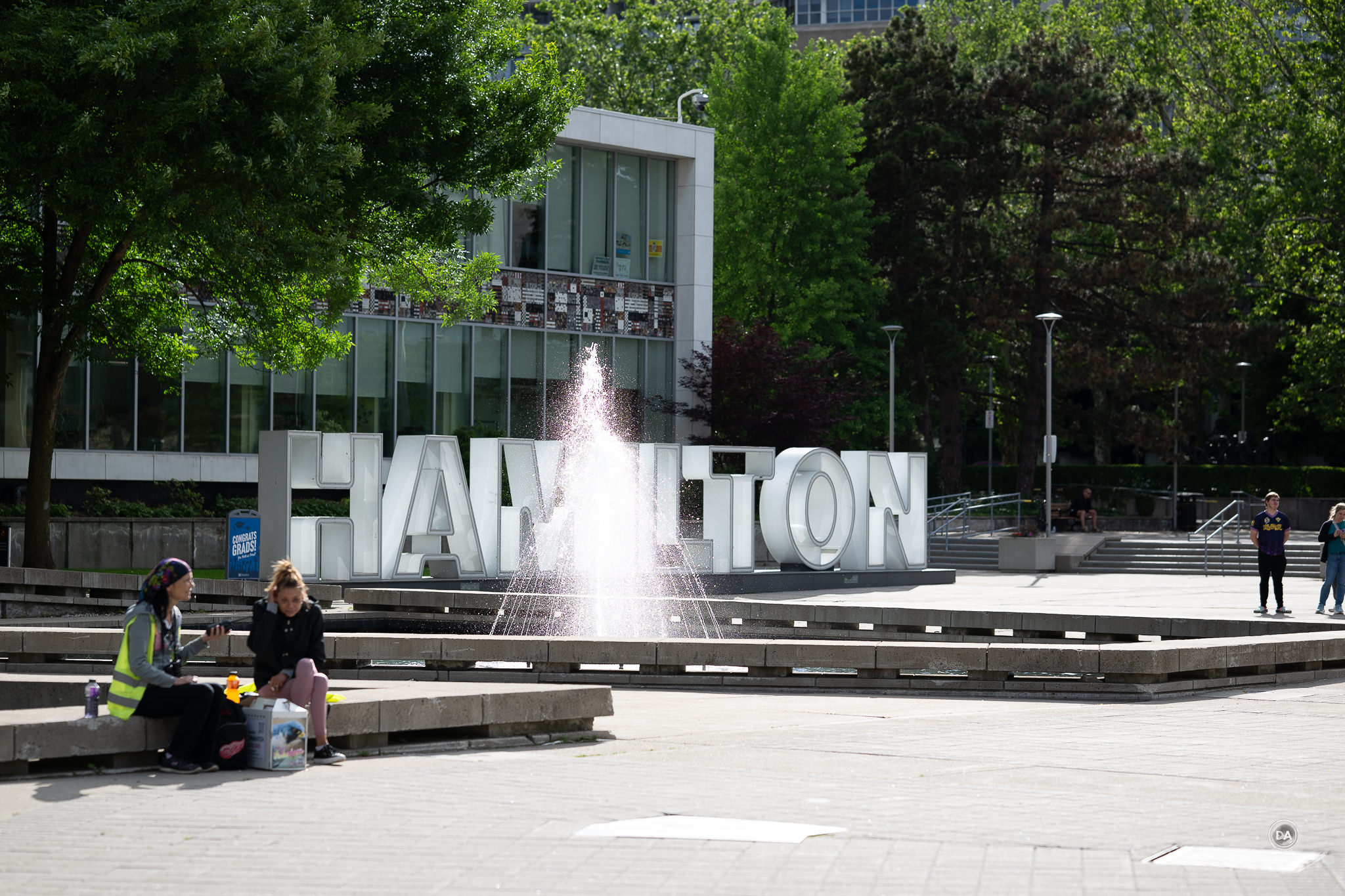
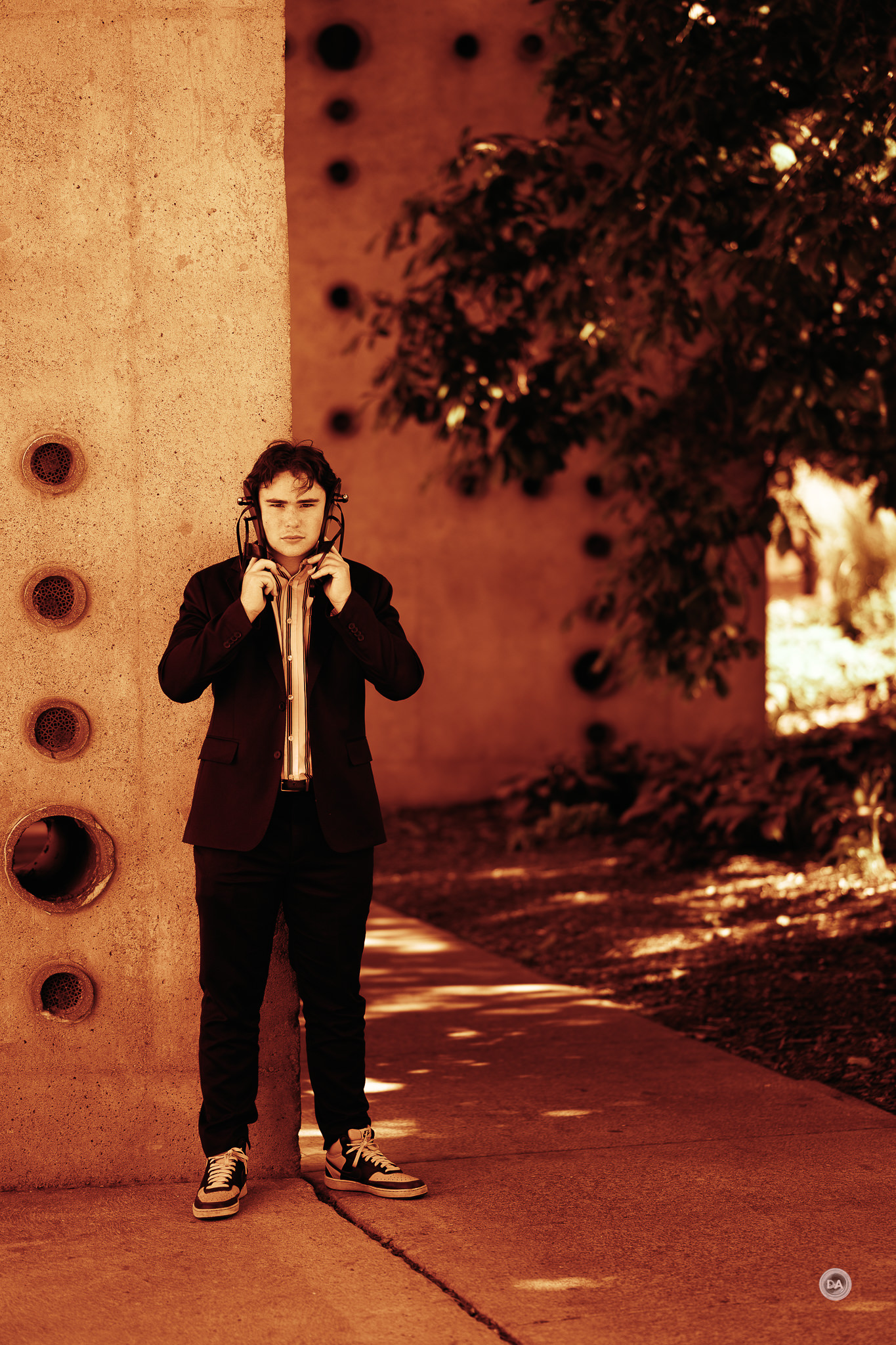
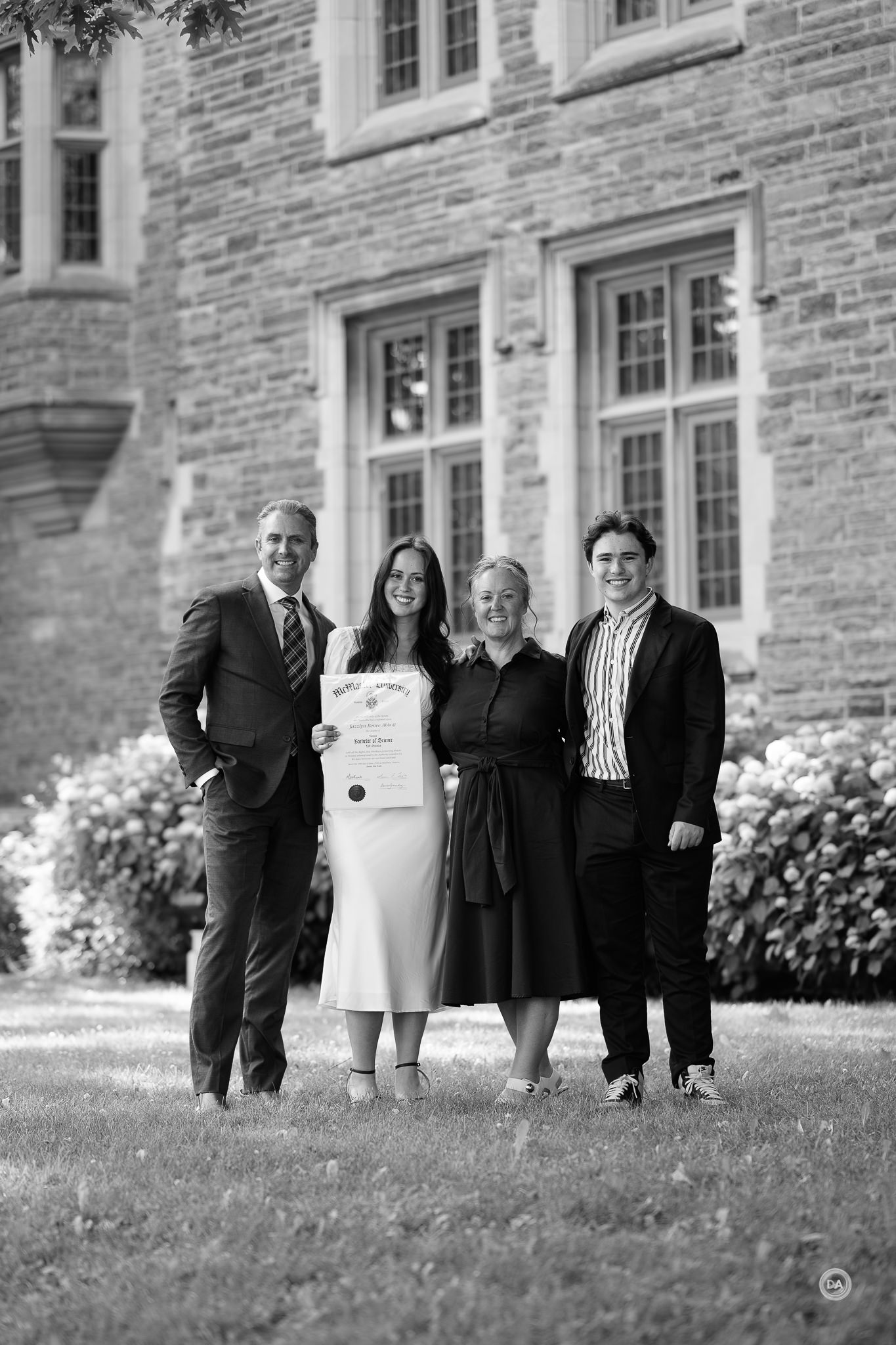
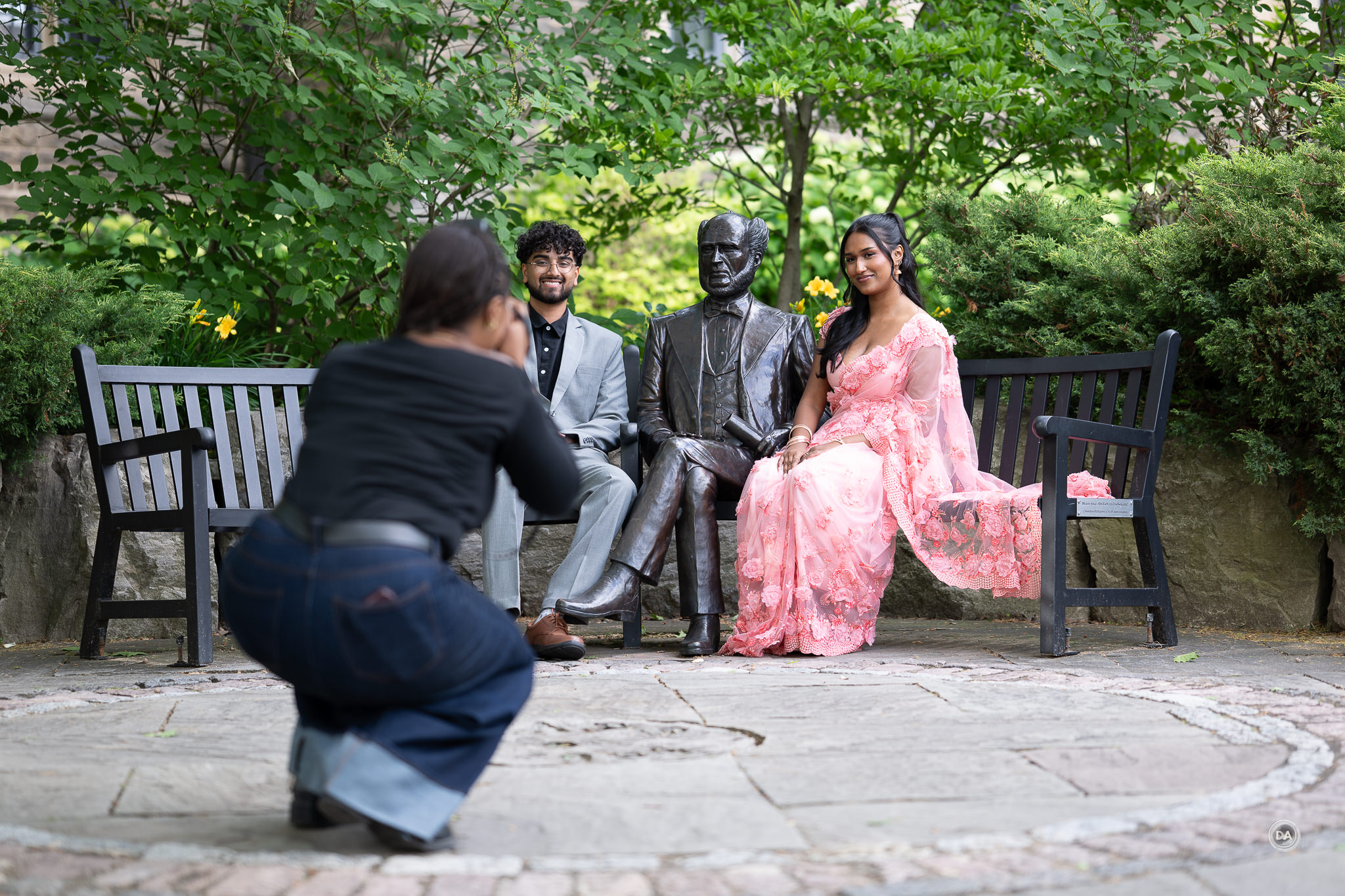
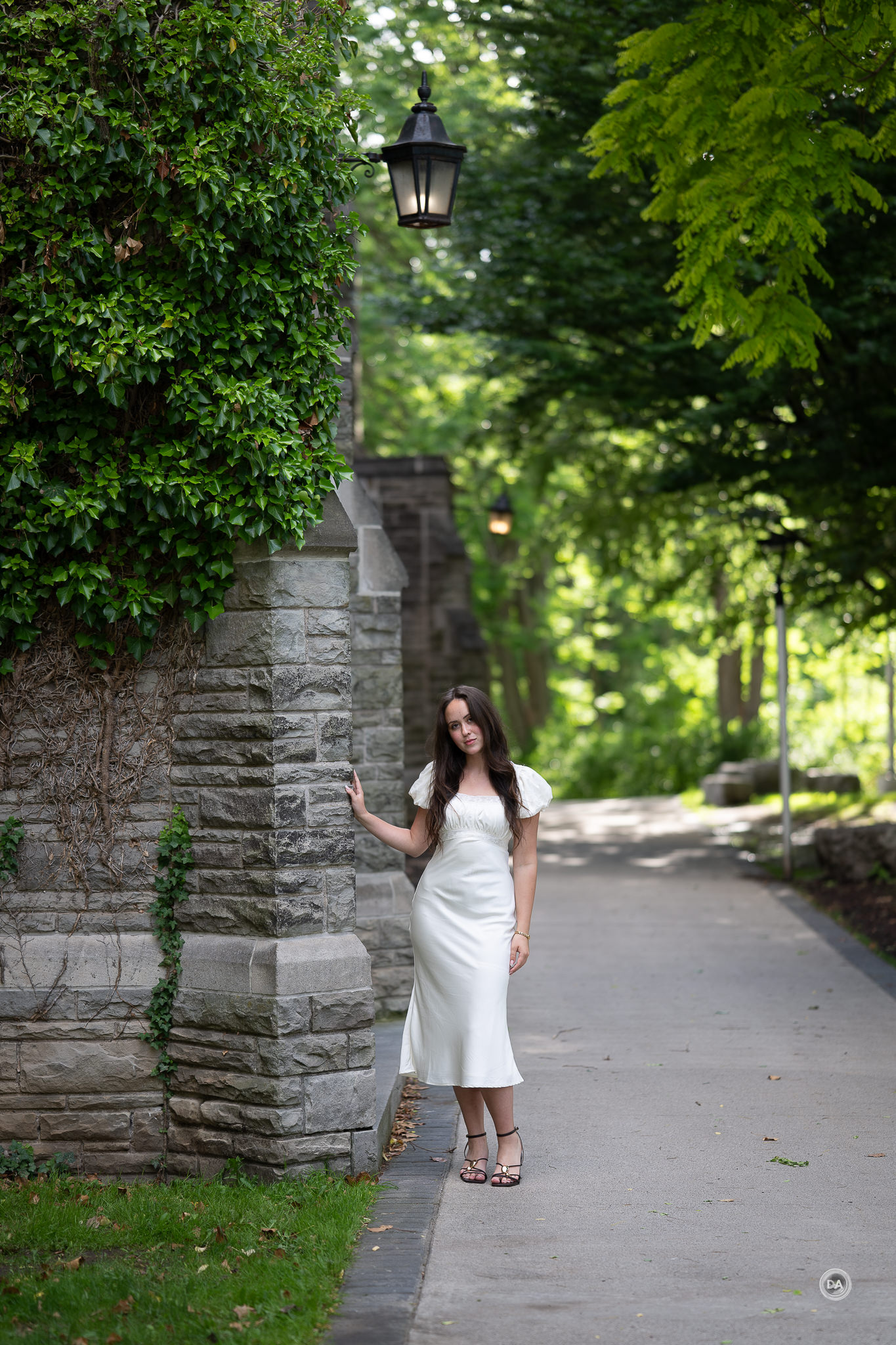
This is a very good lens optically, and it holds up well some seven years after its release. The Viltrox EVO edges it a bit in absolute sharpness, but the 85mm F1.8 S Line delivers excellent sharpness, contrast, low distortion and vignette, and mostly excellent chromatic aberration control. It delivers images with a lot of “pop” to them. Here’s a mini-gallery of more images for you to enjoy.









Conclusion
The Nikkor Z 85mm F1.8 S-Line is often mentioned alongside the 50mm F1.8 S as being the two most special lenses in the lineup. Having spent time with it, I can see why. 85mm F1.8 lenses certainly aren’t the most exotic 85mm options on the planet, but as is typically the case, the Nikkor S-Line option elevates above the typical lens in this class. I particularly found that images had a lot of “pop” to them, with good micro-contrast and 3D separation.
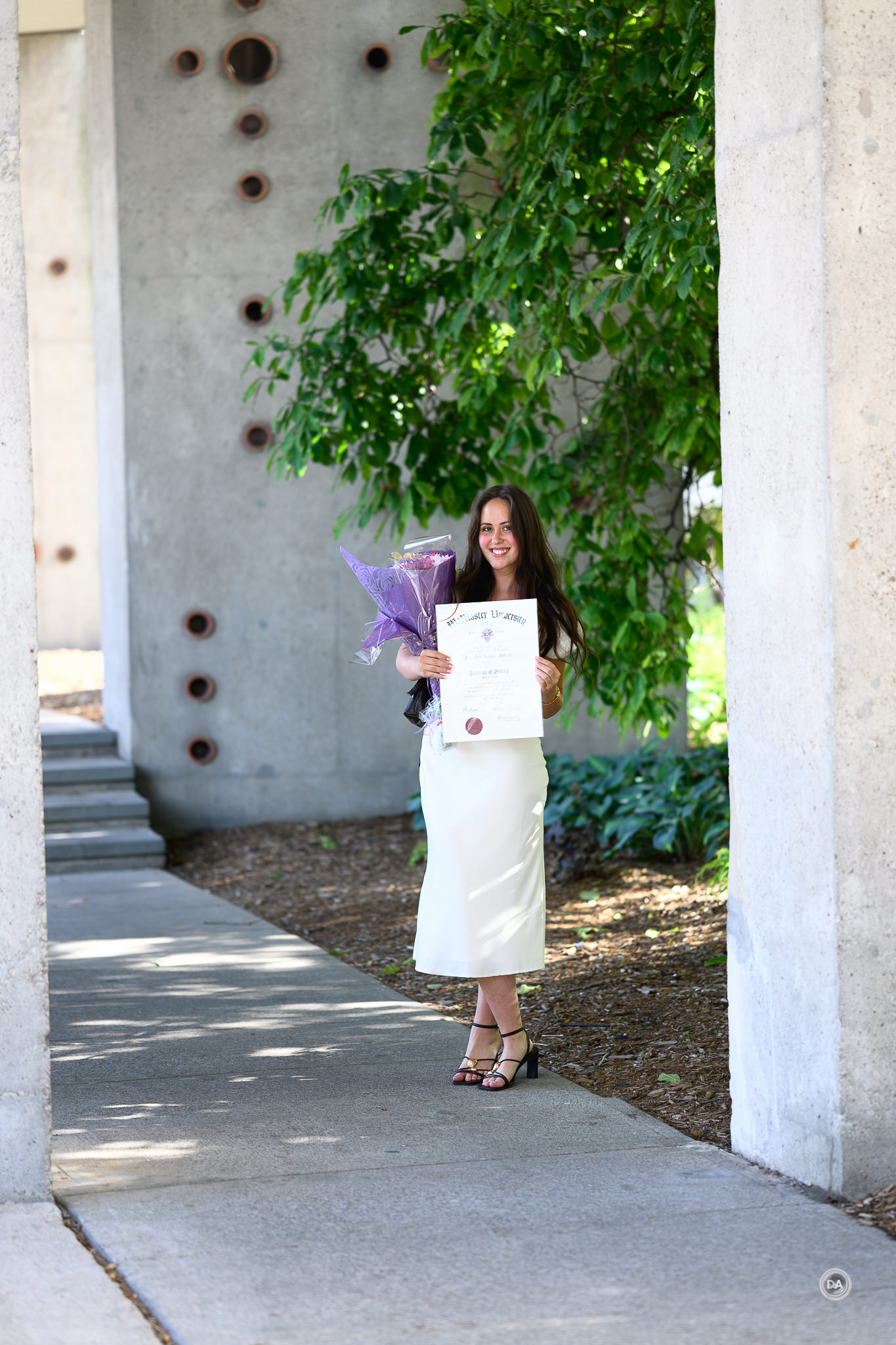
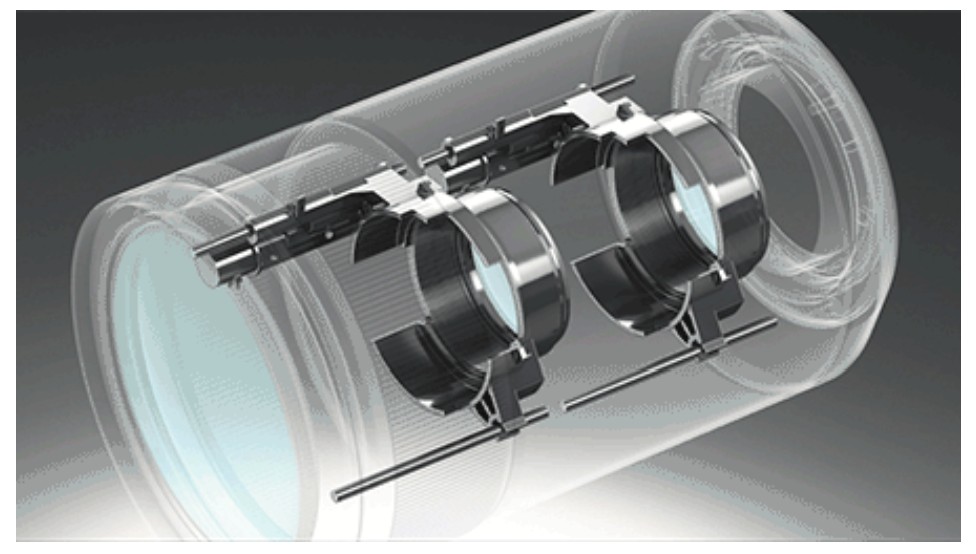
Autofocus is solid due to the twin-STM focus motors, though I did find myself somewhat underwhelmed when shooting action sequences. I got more inconsistent focus results than expected. But this is a lens that will primarily be used for portrait work, and as such it did a great job, delivering one well focused result after another.

The biggest challenge for the 85mm F1.8 S is the newer challengers that now exist. It’s price point of $750 USD makes it more expensive than F1.4 options now available for Z-mount from Viltrox, Sirui, and Kase, and the Viltrox EVO 85mm F2 can be regularly had for a third of the price. That makes the S-Line a bit of harder sell, though the used market also exists for those that want a first party lens but are on a budget. As usual, the biggest challenges to these S-Line lenses are not the performance of the lens itself but rather the reality that there are so many more choices on the market in 2026 than there were in 2019. That doesn’t change the fact that the Nikkor Z 85mm F1.8 S-Line remains a fantastic option to add to your Z-mount kit.

Pros:
- Image Quality: Produces excellent sharpness and contrast, making it suitable for high-quality portraiture.
- Build Quality: Robust construction with a polycarbonate body and metal mount, enhancing durability.
- Weather Sealing: Features multiple seals, providing protection against dust and moisture for outdoor shooting.
- Bokeh Rendering: Offers nice bokeh, providing pleasing background separation, crucial for portrait photography.
- Autofocus Performance for Stills: Reliable Eye AF performance, accurately locking onto subjects with clean focus results.
- Optical Design: Incorporates ED elements to minimize chromatic aberrations and improve image clarity.
- Low Distortion and Vignette Control: Minimal pincushion distortion and well-controlled vignette, enhancing overall image quality.
Cons:
- Limited Features: Lacks a dedicated aperture ring and customizable control options found in newer lenses, which may limit creative control.
- Inconsistent Autofocus in Action Photography: Autofocus can struggle during burst shooting, leading to missed focuses in dynamic situations.
- Price Point: At around $750, it is comparatively expensive, especially with the availability of cheaper alternatives like the Viltrox EVO 85mm F2.
_________________________________________________________________________
GEAR USED:
Purchase the Nikkor Z 85mm F1.8 S @ B&H Photo | Adorama | Amazon | Camera Canada | Amazon Canada | Amazon UK
Purchase the Nikkor Z 35mm F1.8 S @ B&H Photo | Adorama | Amazon | Camera Canada | Amazon Canada | Amazon UK | Amazon Germany
Purchase the Nikkor Z 50mm F1.8 S @ B&H Photo | Adorama | Amazon | Camera Canada | The Camera Store | Amazon Canada | Amazon UK | Amazon Germany
_______________________________________________________________
Purchase the Nikon Z8 @ B&H Photo | Adorama | Amazon | Camera Canada | Amazon Canada | Amazon UK | Amazon Germany
_________________________________________________________________
Want to support this channel? Use these affiliate links to shop at: B&H Photo | Amazon | Adorama | Camera Canada | Amazon Canada | Amazon UK | Ebay | Make a donation via Paypal
Buy DA Merchandise https://bit.ly/TWIMerch

Keywords: Nikkor, 85mm, F1.8, Nikkor 85mm F1.8 S, Nikon 85mm F1.8 S, f/1.8, Nikon, Nikon Z8, Z, Z-mount, Z8, Z5II, Review, mirrorless, Full Frame, Sports, Tracking, Dustin Abbott, Real World, Comparison, Handling, Focus, Portraits, Resolution, High ISO, Image Quality, Sample Images, Photography, 45MP, #letthelightin, #DA, #NIKON, #Z8, #NIKONZ8, #NikonZ35mmF1.8LensReview, #BestNikonPrimeLenses2025, #NikonZMountLenses, #FullFrame85mmLens, #NikonPrimeLensComparison, #Nikon85mmF1.8SReview, #NikonLensBuyingGuide, #AutofocusPerformanceNikon, #NikonLensOpticalQuality, #CompactNikonLenses, #WeatherSealedNikonLenses, #NikonZSeriesLenses, #VideoAutofocusNikon, #ViltroxEVO85mmF2, Viltrox, EVO, 85mm, F2
Related posts:
 Nikkor Z 35mm F1.8 S Gallery
 Nikkor Z 35mm F1.8 S Review
 Viltrox AF 16mm F1.8 Z Image Gallery
 Nikkor Z 135mm F1.8 S Plena Review
 Nikkor Z 135mm F1.8 S Plena Gallery
 Nikkor Z 50mm F1.8 S Review
 LAB vs PLENA: Nikon 135mm Showdown
 Nikkor Z 50mm F1.8 S Gallery
 Nikkor Z 35mm F1.2 S Review
 Nikkor Z 50mm F1.2 S Review