

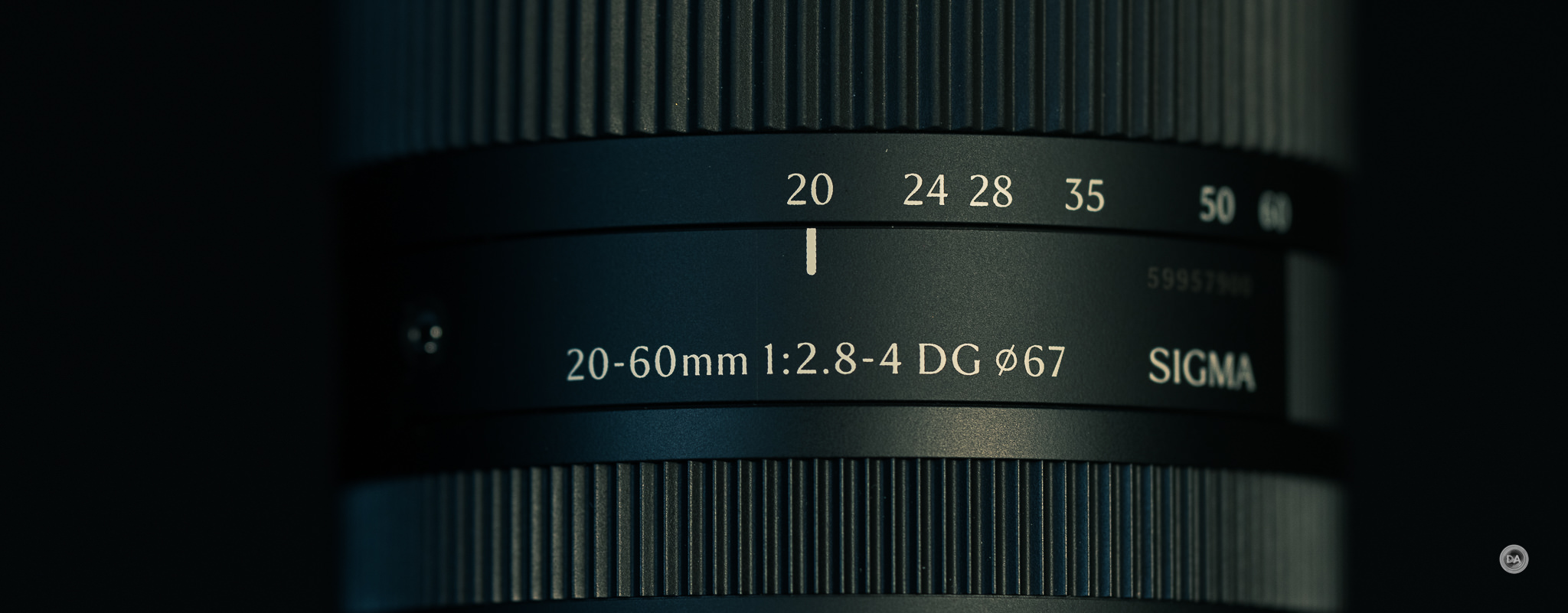
Sigma’s newest lens reminds me of a lot of classic lenses from “back in the day”. No frills, but an exceptionally useful zoom range, useful maximum aperture, and a compact body that is easy to take everywhere. Fujifilm shooters have long loved the XF 18-55mm F2.8-4 OIS because of its useful focal length, reasonably bright maximum aperture, and good image quality, and I’ve also praised Sigma’s 18-50mm F2.8 (which I currently own for Fuji). But Sigma has basically taken that formula and scaled it up for full frame, giving us an even more useful zoom range of 20-60mm and pairing it with that same variable aperture of F2.8-4. The Sigma 20-60mm F2.8-4 DG | Contemporary is going to become a lot of people’s favorite lens for the simple reason that the zoom range is amazingly useful, the size and weight are small and manageable, and the image quality is great. Find out why Sigma’s newest lens is a winner in today’s review…
Follow Me @ YouTube | Patreon | Instagram | Facebook | DA Merchandise | Flickr | 500px | X
Thanks to Sigma Canada (Gentec) for sending me a review loaner of this lens. As always, this is a completely independent review. *The tests and most of the photos that I share as a part of my review cycle have been done with the Sony a7RV along with the Sony Alpha 1 that serve as my benchmark cameras for Sony lenses. You can visit the product page for the Sigma 24-60mm F2.8-4 here.
__________________________________________________________________________________________________
SUMMARY:
The Sigma 20-60mm F2.8-4 DG | Contemporary lens provides a versatile zoom range and compact design, making it an appealing choice for photographers. With a robust build and excellent image quality, it particularly excels in everyday photography and portraits while being lightweight and easy to handle. The lens features effective weather sealing and rapid autofocus, although it does have limitations regarding its maximum aperture and distortion at the wide end. Overall, it stands as a competitive option, particularly for those seeking a practical yet powerful lens for various shooting scenarios.
Strengths:
- Versatile 20-60mm zoom range ideal for multiple photography styles.
- Compact and lightweight design (375g) enhances portability.
- Excellent image quality with effective weather sealing.
- Fast and silent autofocus performance.
Weaknesses:
- Maximum aperture diminishes quickly across the zoom range (only F2.8 at 20mm).
- Noticeable distortion and vignetting at the wide end (20mm).
- Lacks additional features like external switches or buttons for customization.
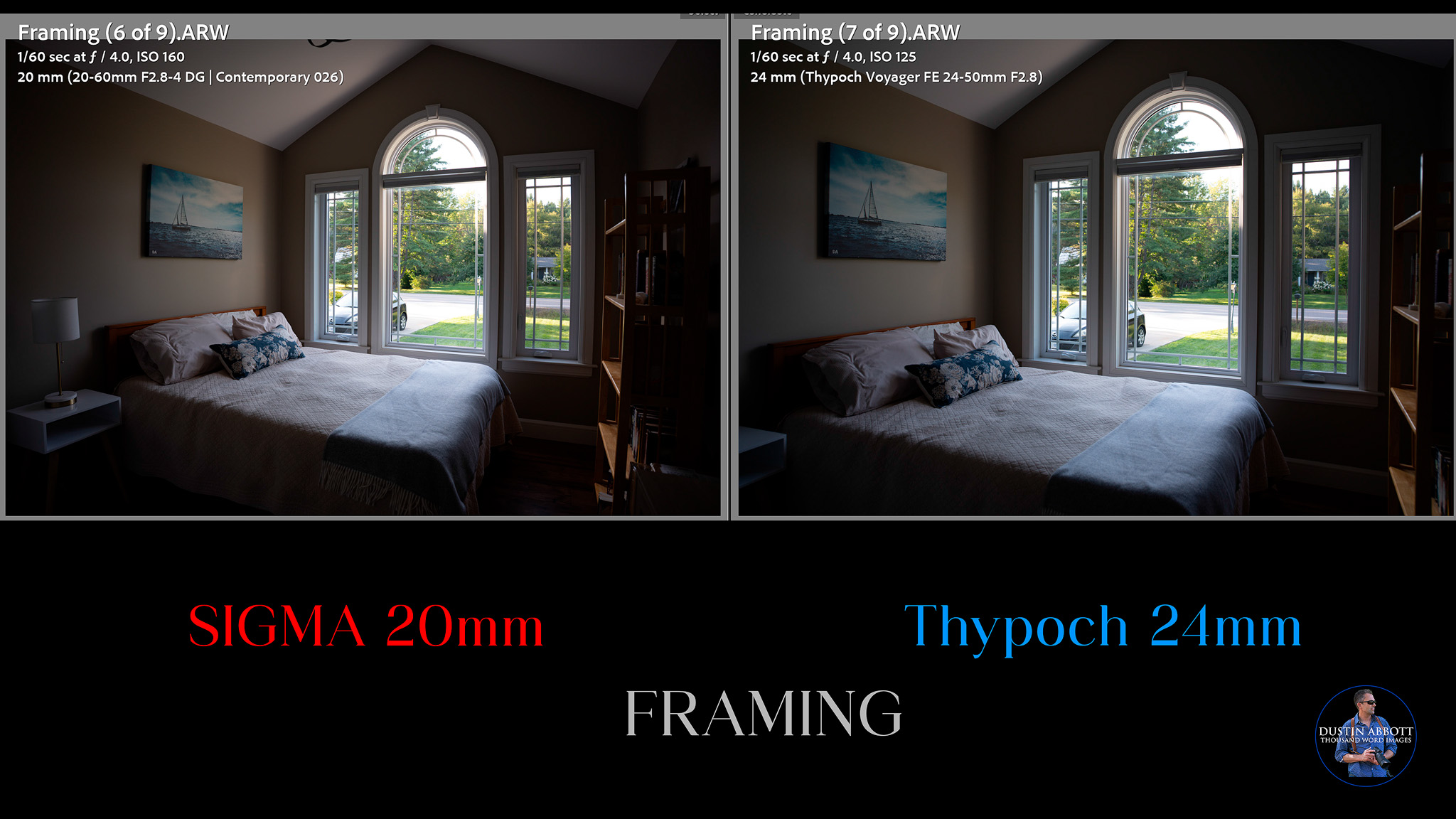
Sony and Thypoch both make 24-50mm F2.8 lenses (I reviewed the Thypoch here), but Sigma ups the ante on both ends by going both wider (here at 20mm vs 24mm):
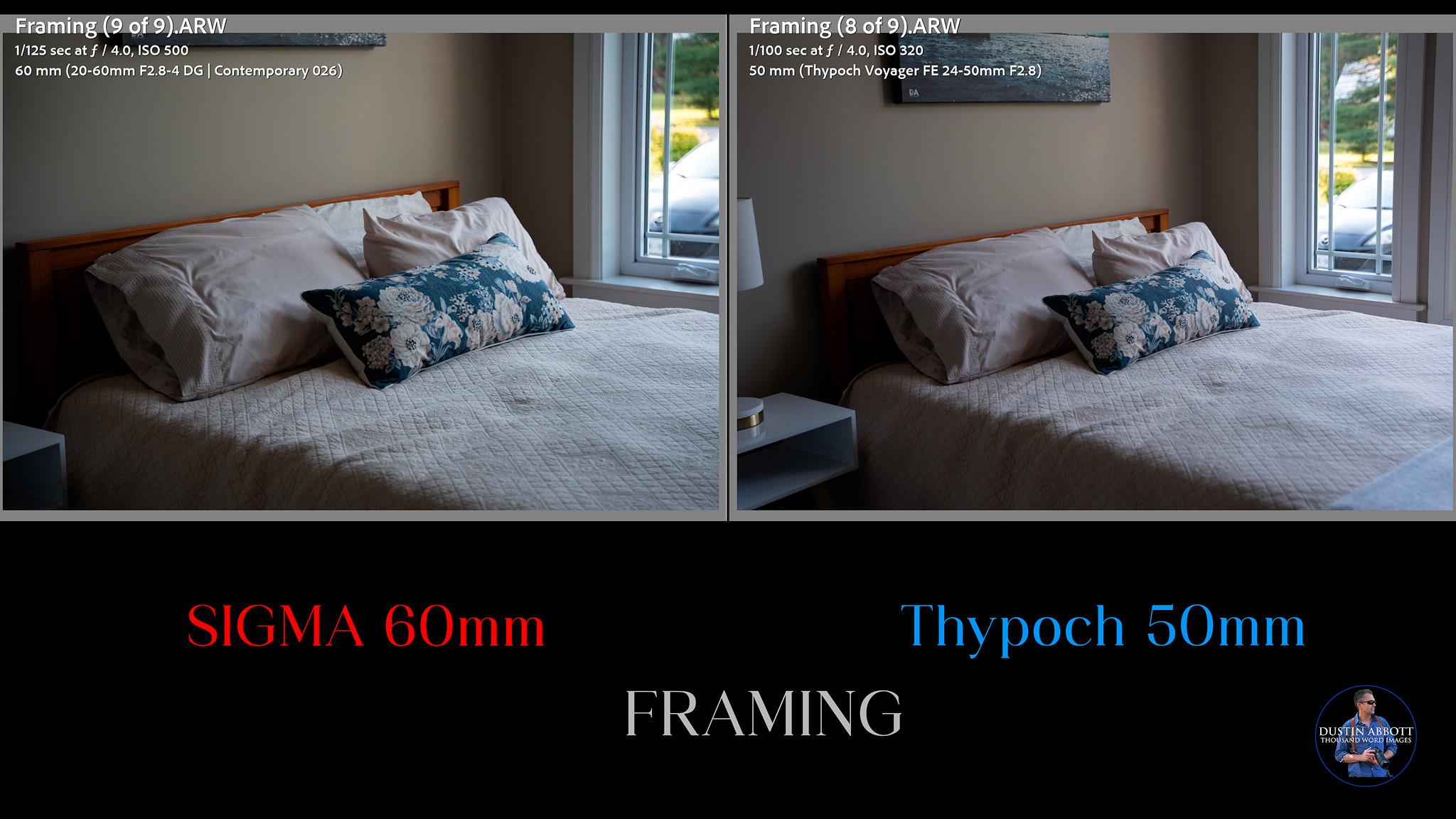
…and longer compared to the Thypoch or Sony (here at 60mm vs 50mm):
Combine that with a lens that only weighs 375g and delivers excellent image quality, and you have a winner.
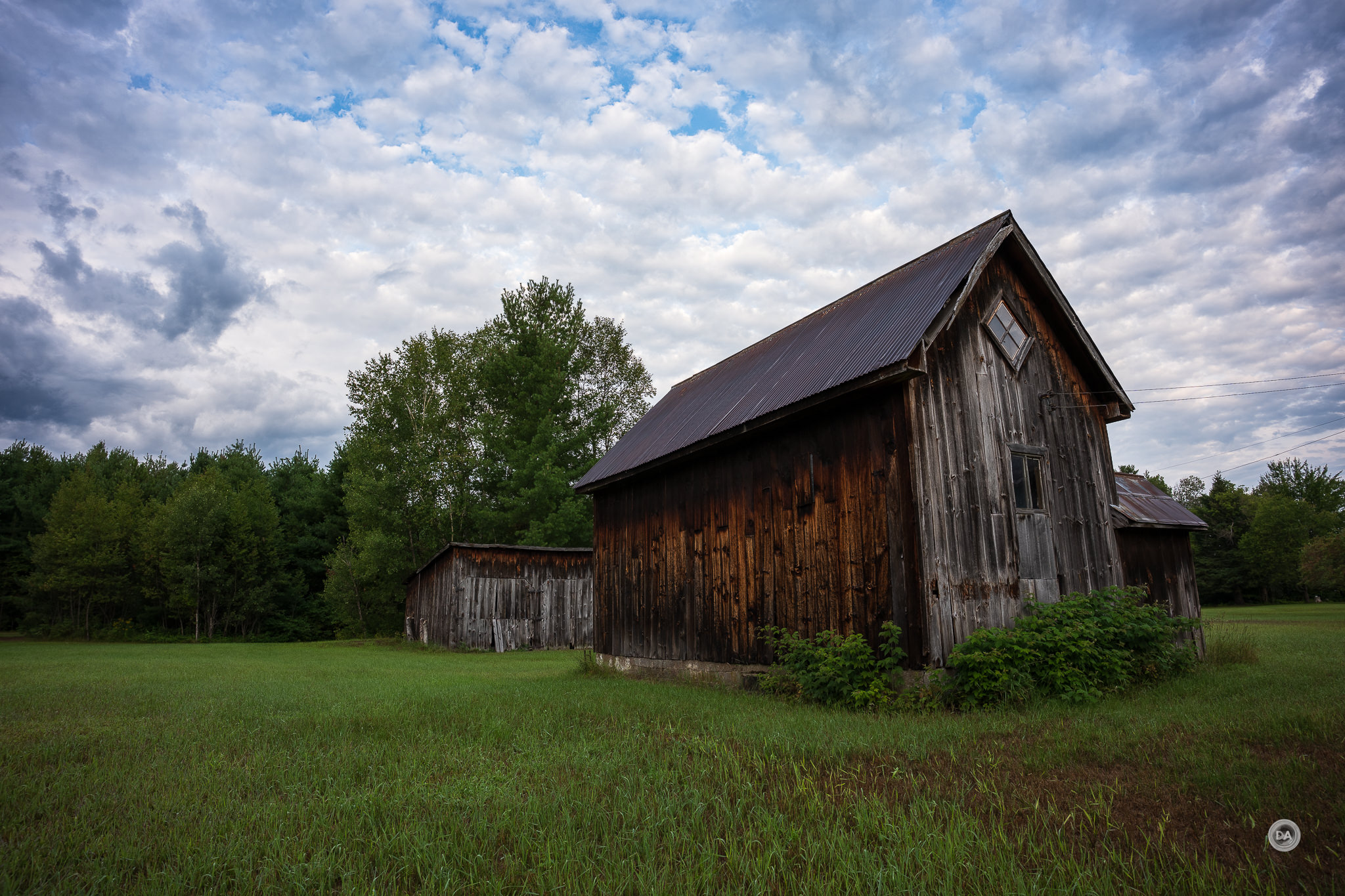
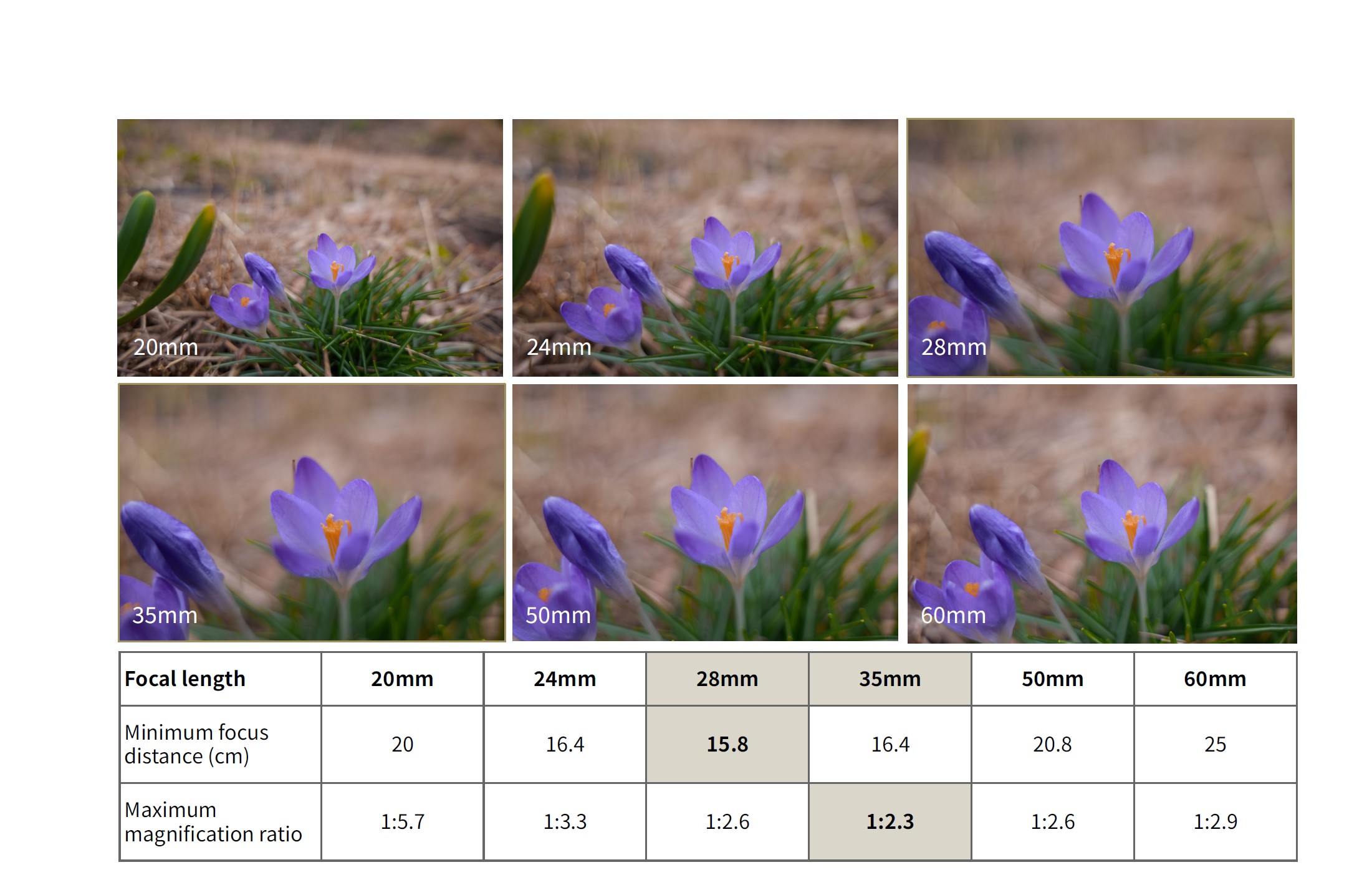
This is a lens that can be used for all kinds of things. Everyday photography, portraits, events, and even close-up work (up to 0.43x magnification at 35mm).
Sound useful? Let’s take a closer look.
Build and Handling
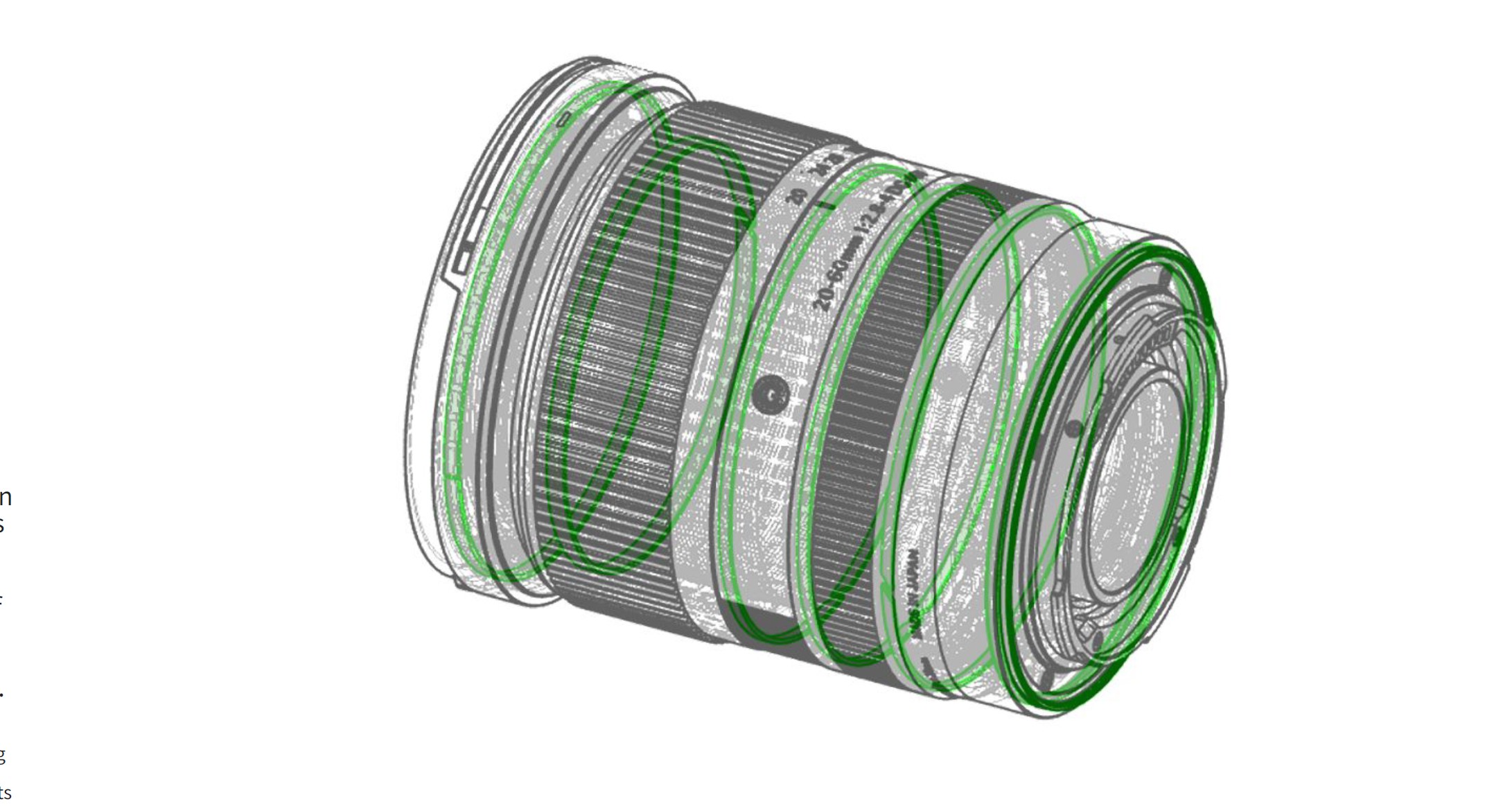
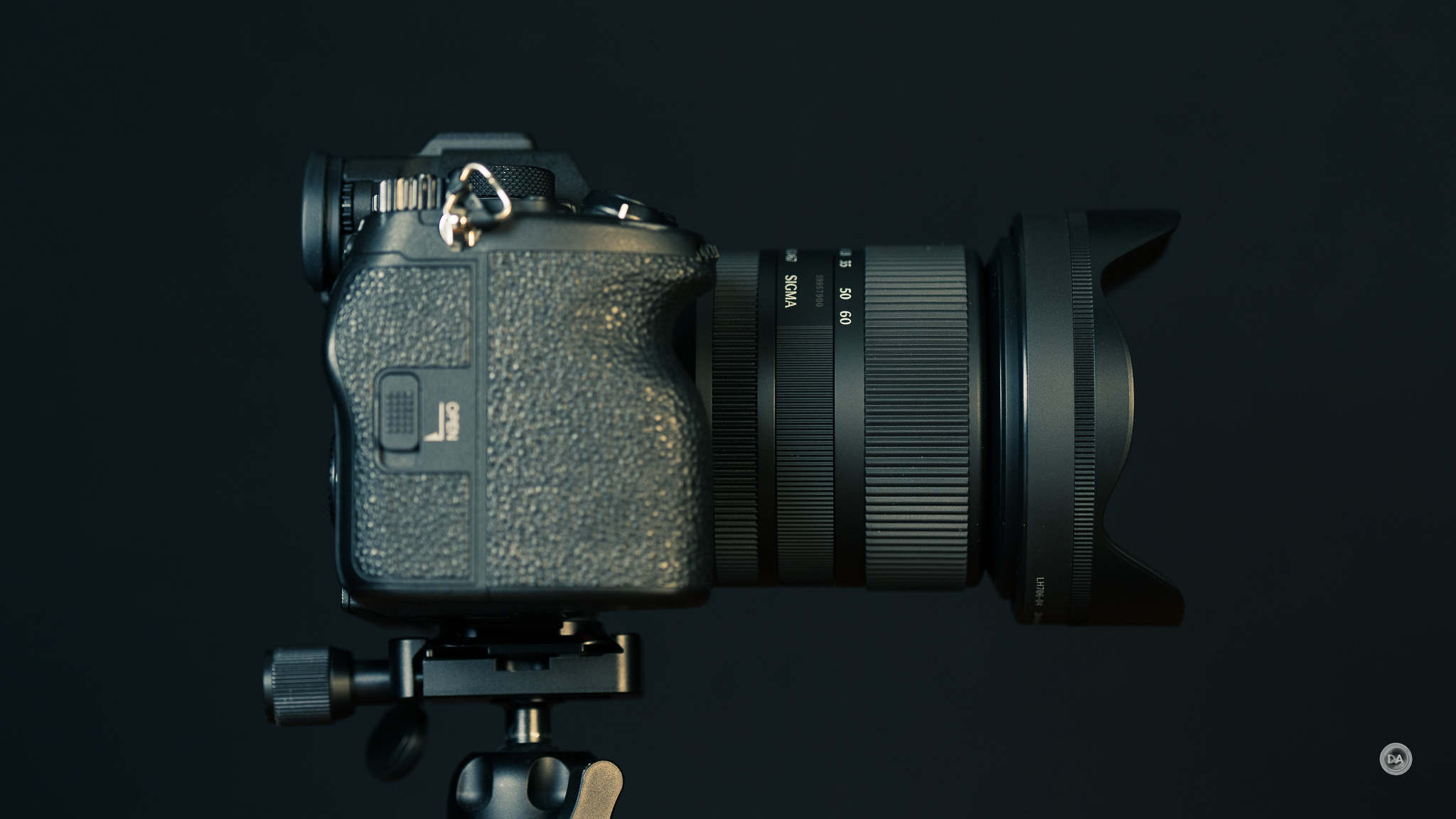
While we have seen some blurring of the lines with Sigma’s recent Contemporary lenses, the 20-60mm mostly returns to the classic formula. That means no external switches or buttons, though we do have thorough weather sealing throughout the lens (at least 7 seal points according to this diagram). That definitely gives it a leg up vs an older lens like Sigma’s 28-70mm F2.8.
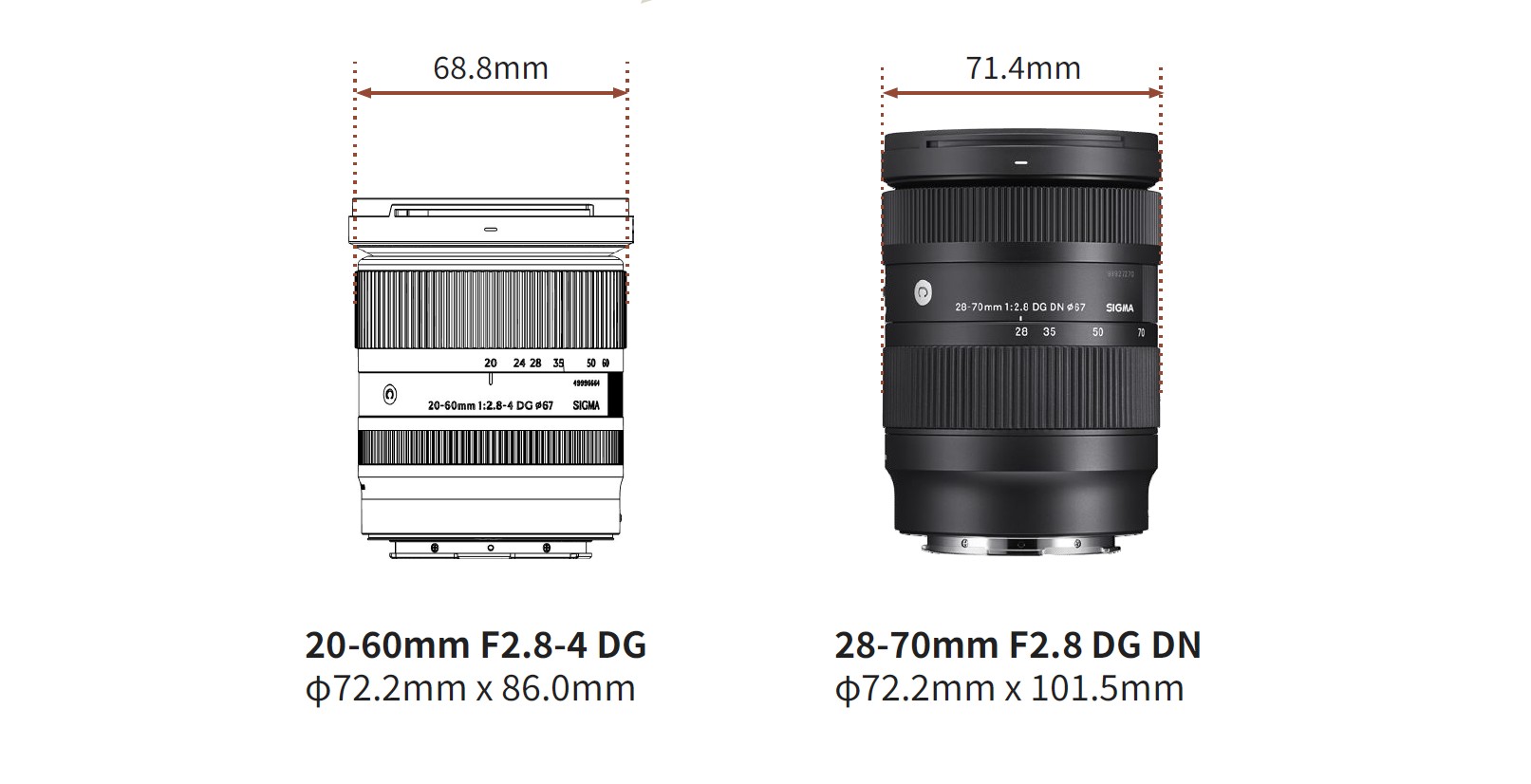
Speaking of that lens, I actually vastly prefer what we have here despite the slower maximum aperture at some focal lengths. The new lens is smaller (72.2mm x 86mm or 2.8 x 3.5”) and has a much more desirable zoom range.
It also has a more thorough weather sealing, better autofocus, and better optical performance. And, it weighs just 375g, or 13.2oz (L-mount version is 10g heavier but 2mm shorter).

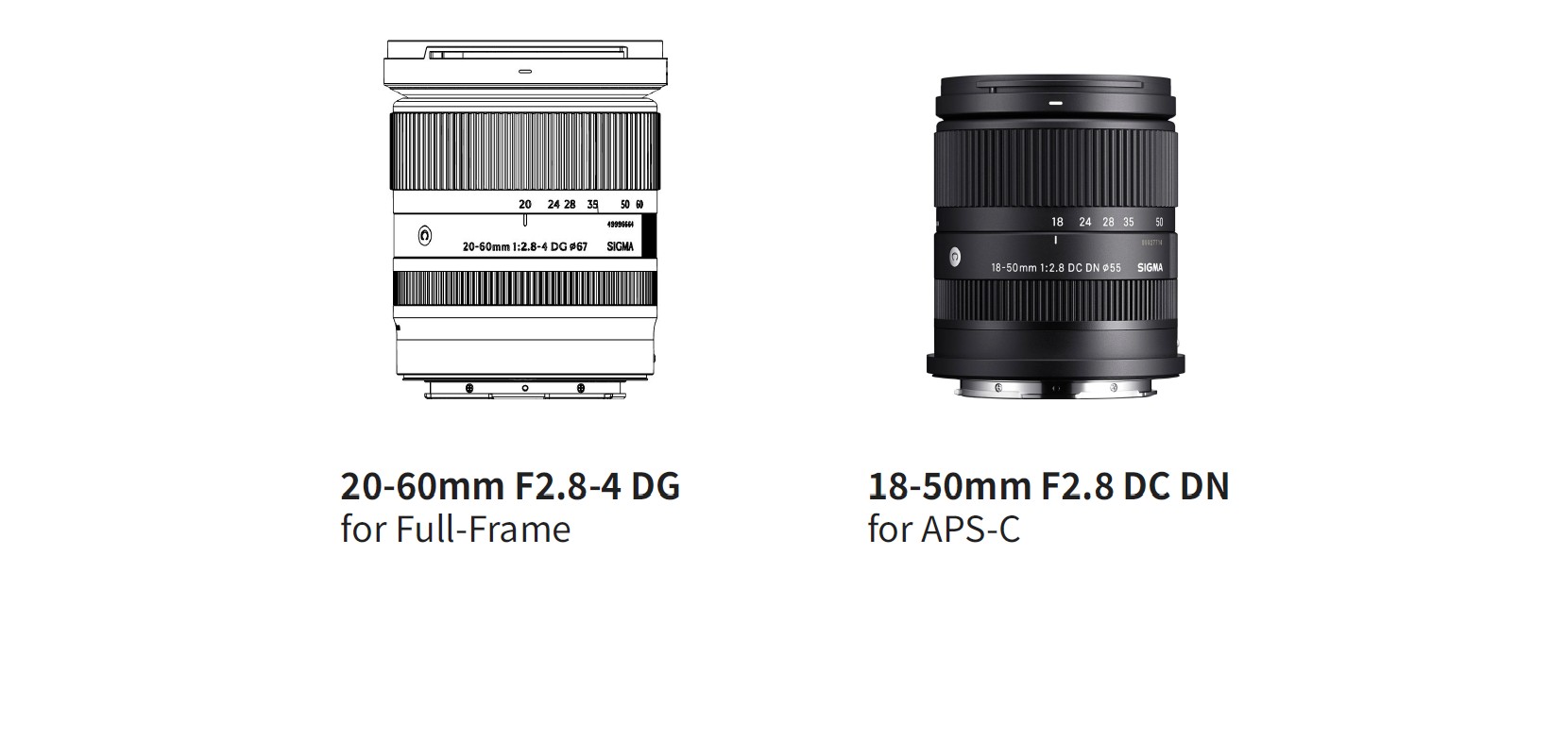
In fact, it is just a bit bigger than the APS-C only 18-50mm F2.8 DC.
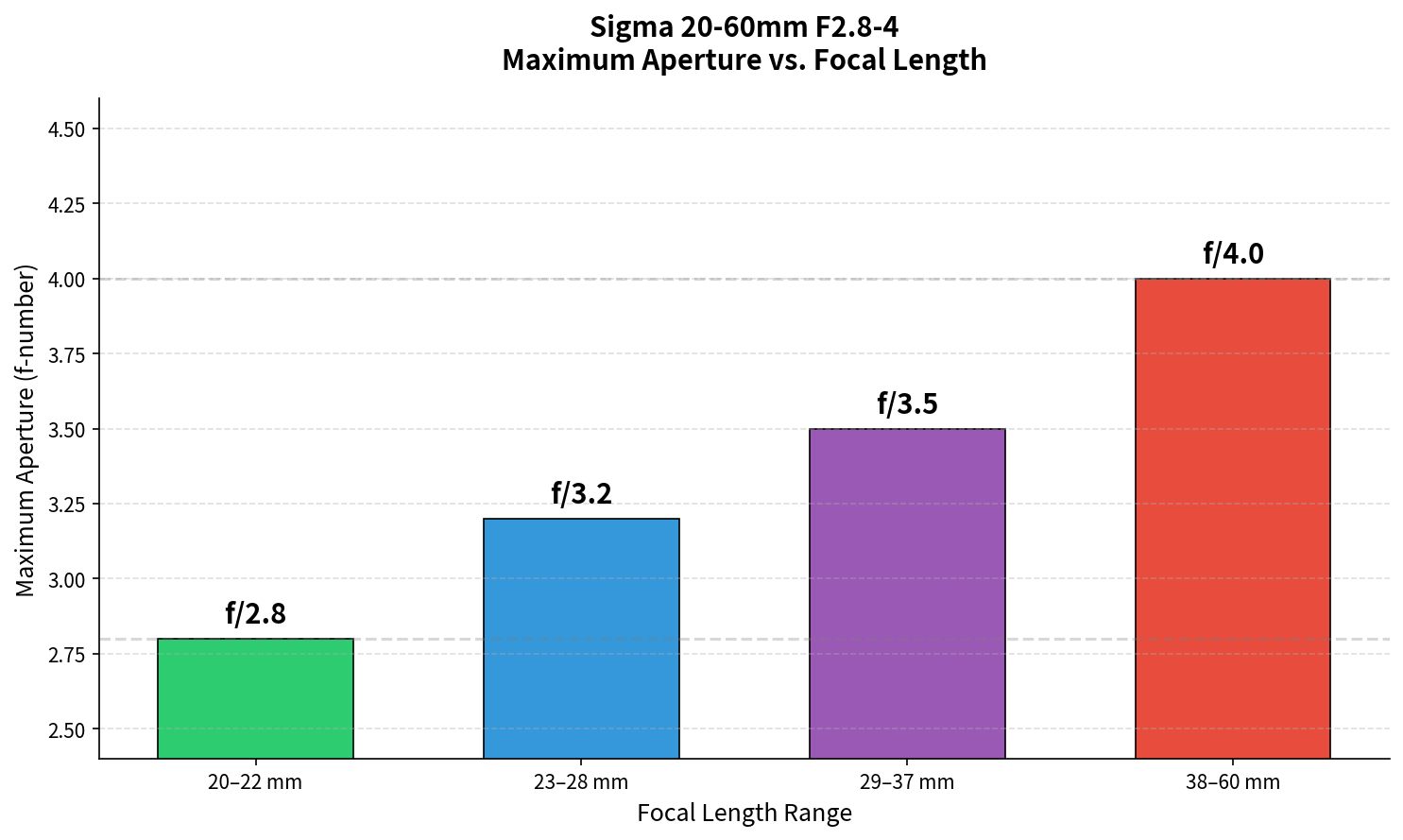
It could be argued that this is the most useful range of any of Sigma’s standard zooms, including the 24-70mm F2.8 ART II, though it lacks the constant F2.8 aperture of either of these alternatives. What is the maximum aperture throughout the zoom range?
- 20-22mm = F2.8
- 23-28mm = F3.2
- 29-37mm = F3.5
- 38-60mm = F4
You can see from the chart that the majority of the zoom range falls in the dimmer categories of F3.5 and F4, with F2.8 only lasting for a few millimeters.
At the same time, F4 is still brighter than most kit style zooms, which traditionally go to F5.6 and even F6.3, meaning that this is still a more useful tool in lower light than lenses like that.
As noted, the features are bare, with no switches or buttons on the lens. All we have is a slim manual focus ring that turns smoothly but without a lot of feel, and then a much wider zoom ring that thankfully also turns smoothly.
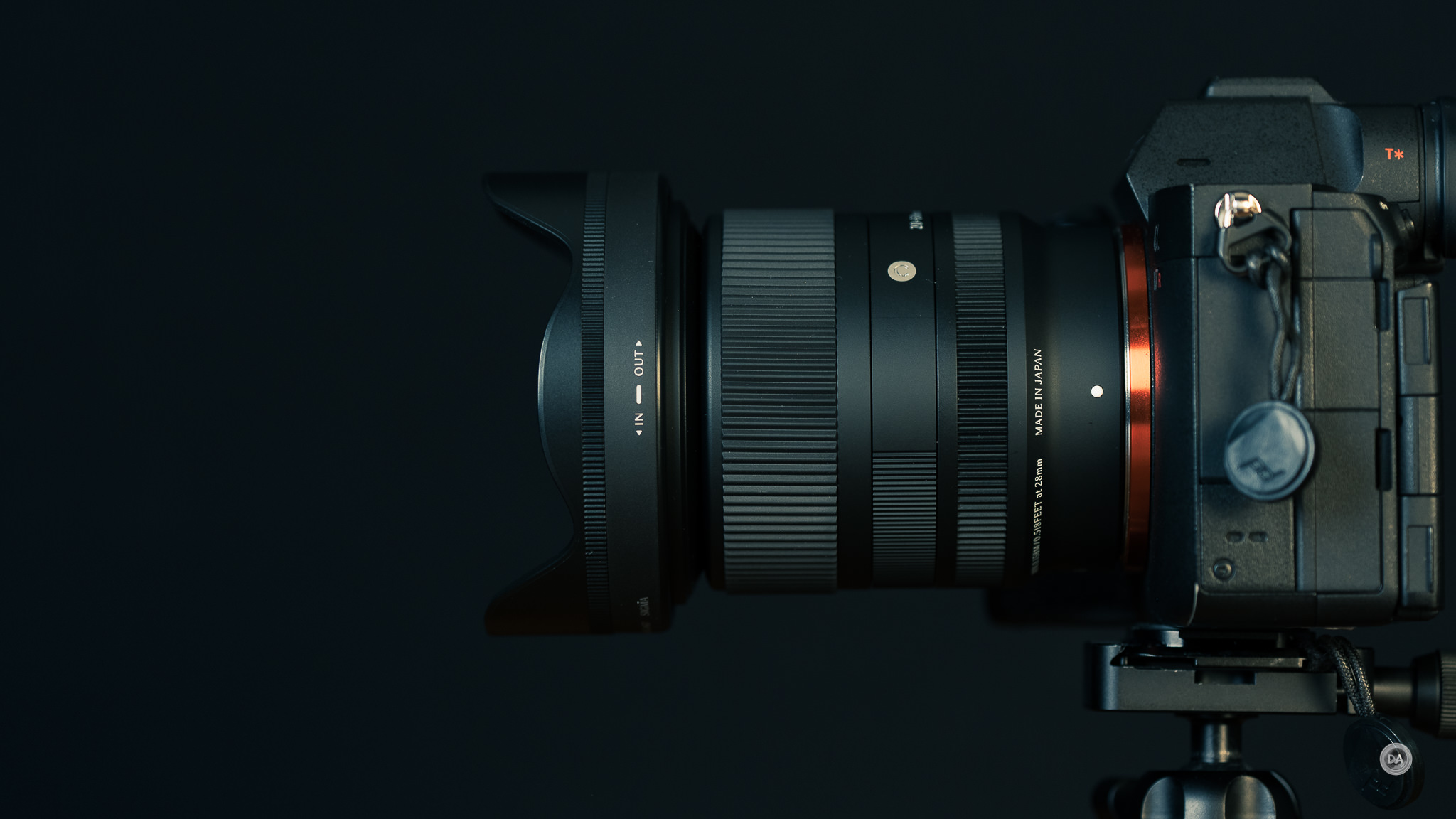
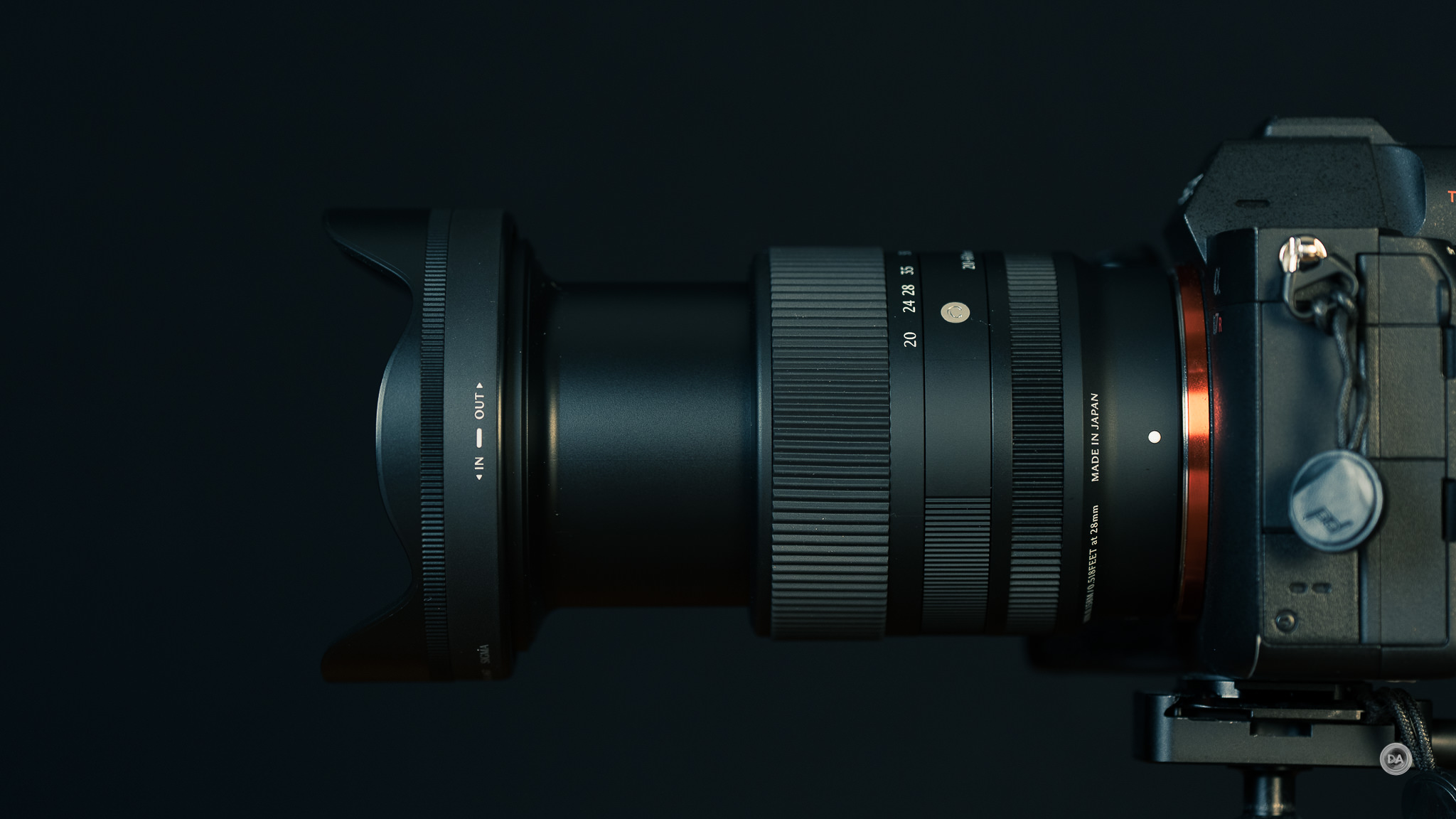
This is an externally zooming lens, so the inner barrel will extend about 37mm by my measurement when the lens is fully extended (at the 60mm position).
The zoom ring was smooth enough that I was able to successfully do zooms during video recording, though I did note that the lens isn’t parfocal and there would sometimes be a split-second lag before the focus motor caught up. It isn’t perfect for video work, but will still be very useful for a lot of reasons.
Up front we have common 67mm front filter threads and a lens hood is included.
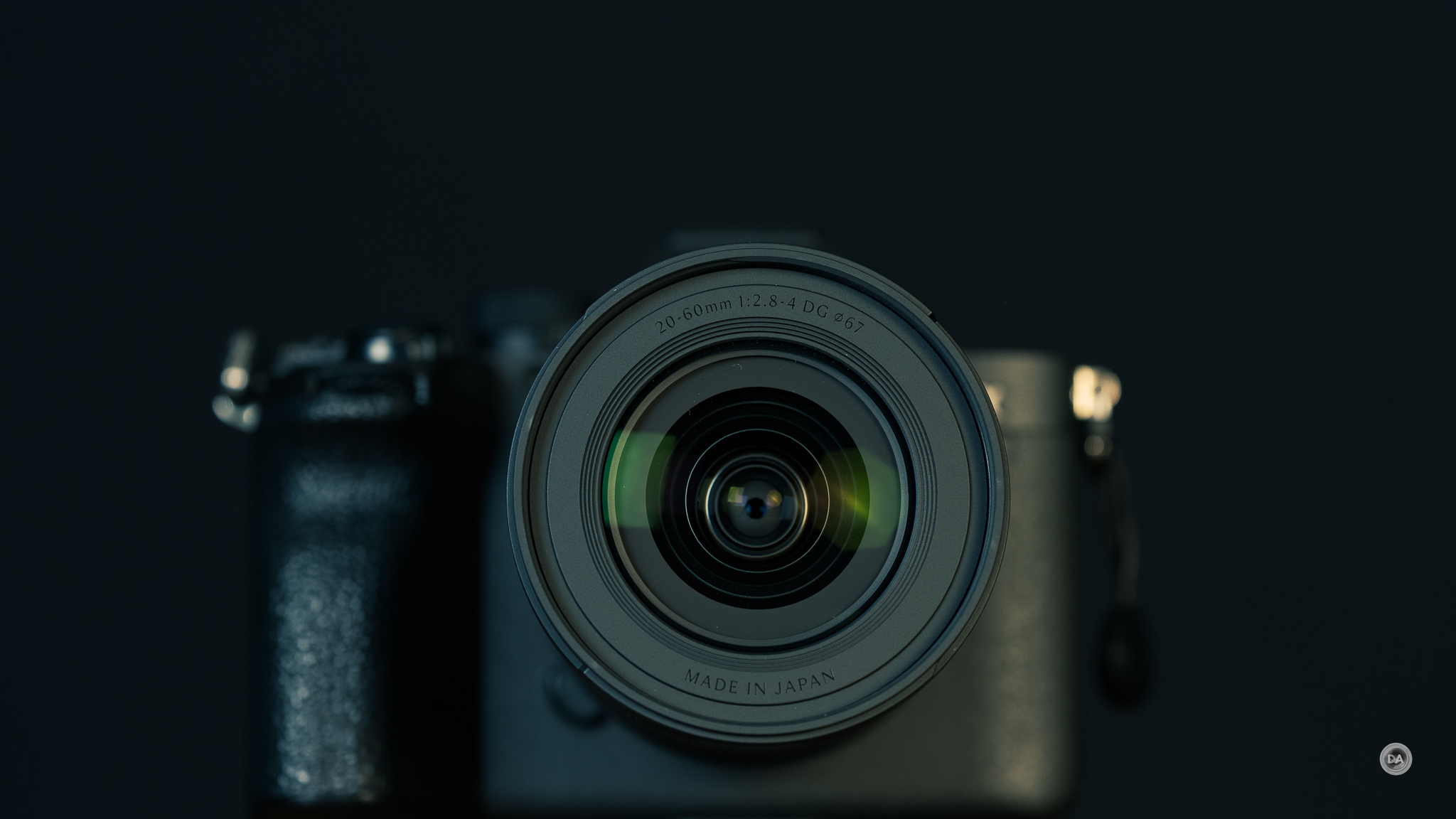
Sigma’s lens hoods are some of the nicest in the business, with grip surfaces and texture variations. There is no locking mechanism, but the bayonet fit is very tight and won’t be unintentionally moving.
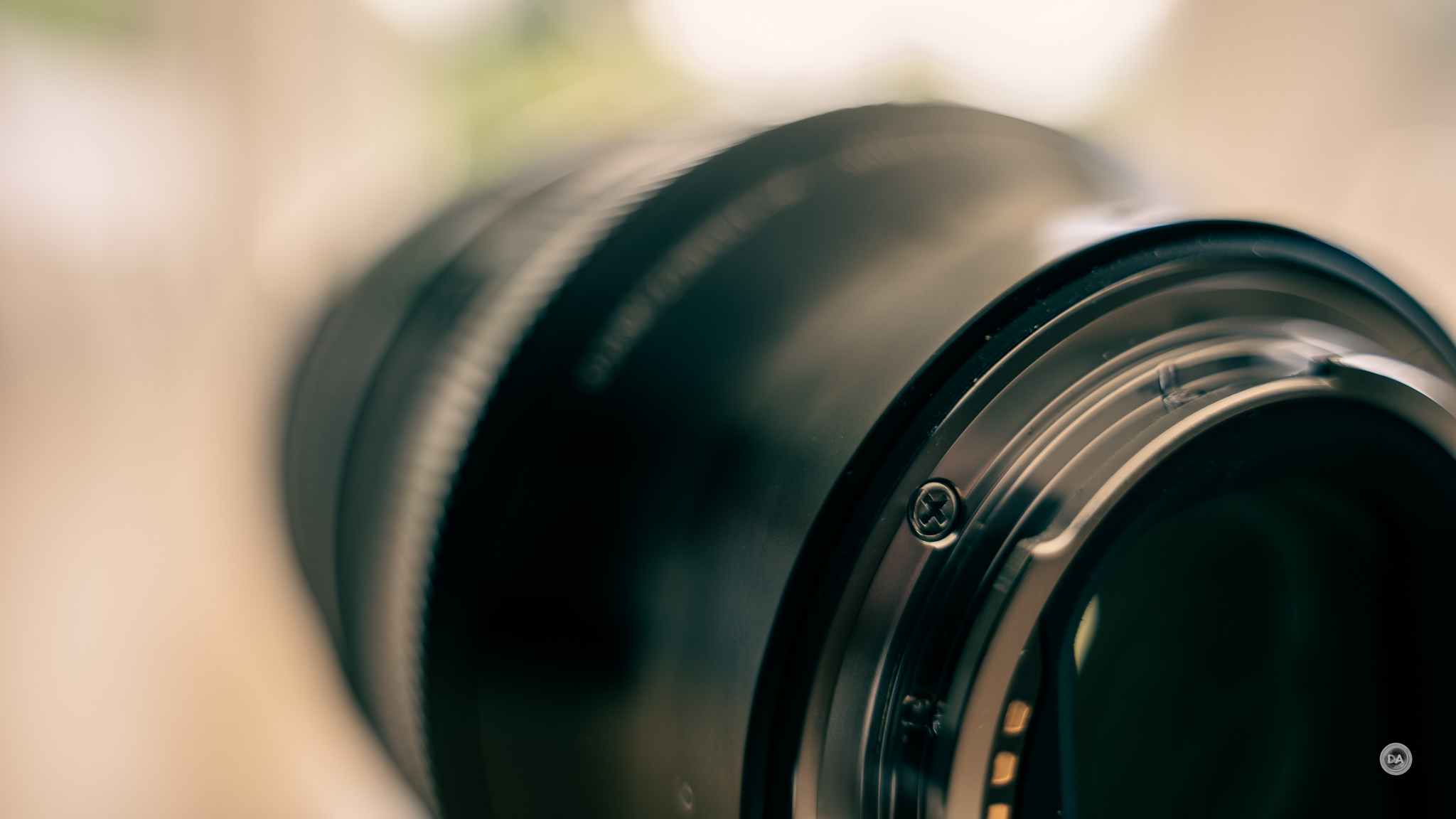
The aperture iris has 9 blades and does a good job of keeping the iris shape circular as the lens is stopped down.
We’ve already seen that the potential magnification is quite high, but here’s a look at a real world subject at the highest magnification (at 35mm and a 0.43x). This is an extremely useful additional element of the lens design.
If you are shooting in the middle of the zoom range, you can get extremely close to your subject (around 16cm), so no one shooting video should run into minimum focus issues. Even at 60mm the MFD is just 25cm, which is still very close.
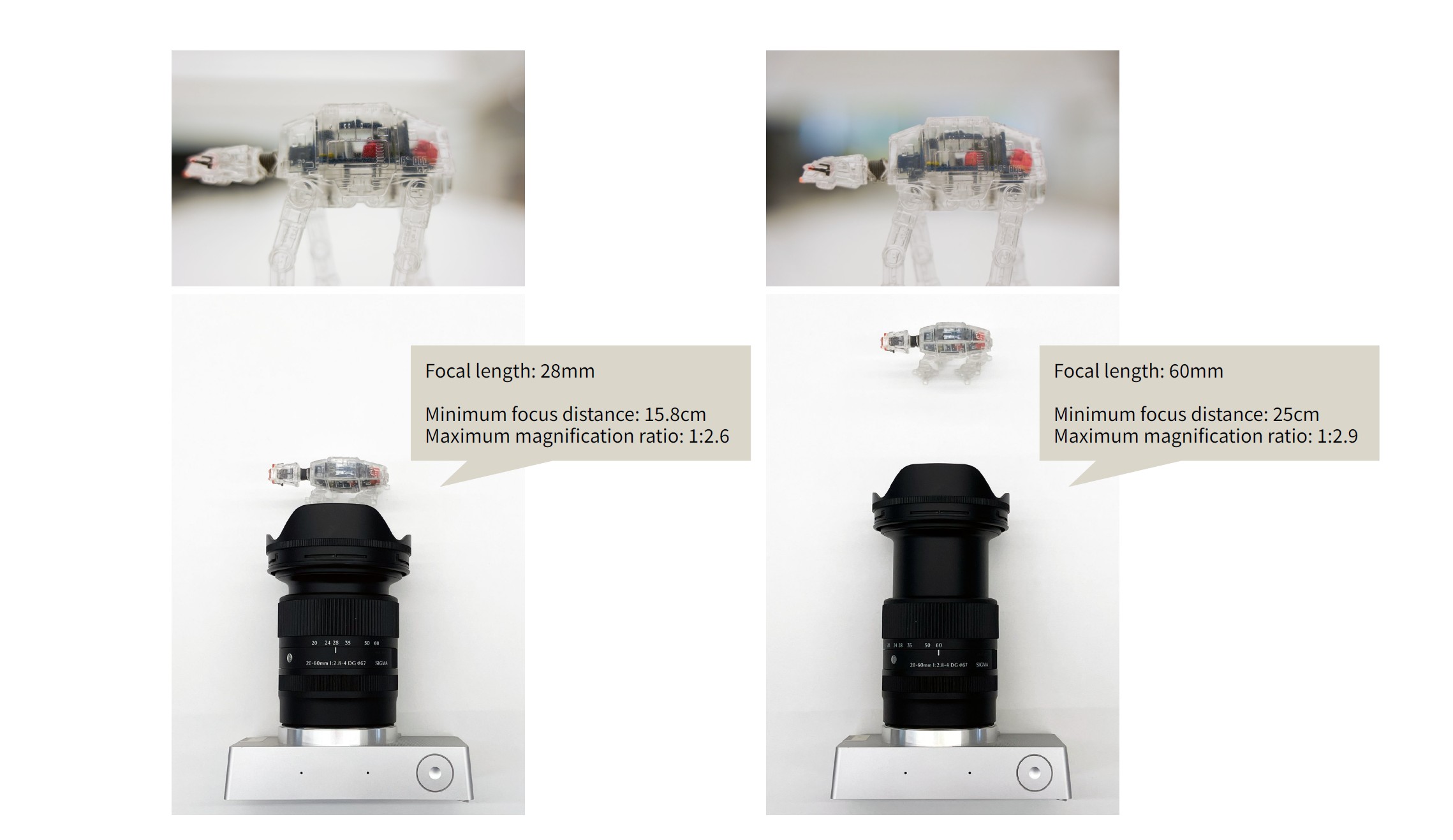
The magnification at 60mm is still high and a bit easier to use due to more working distance.

While there are no bells and whistles here, I still love the package due to the great zoom range and compact size. Build quality feels nice, and it is a handsome little zoom.
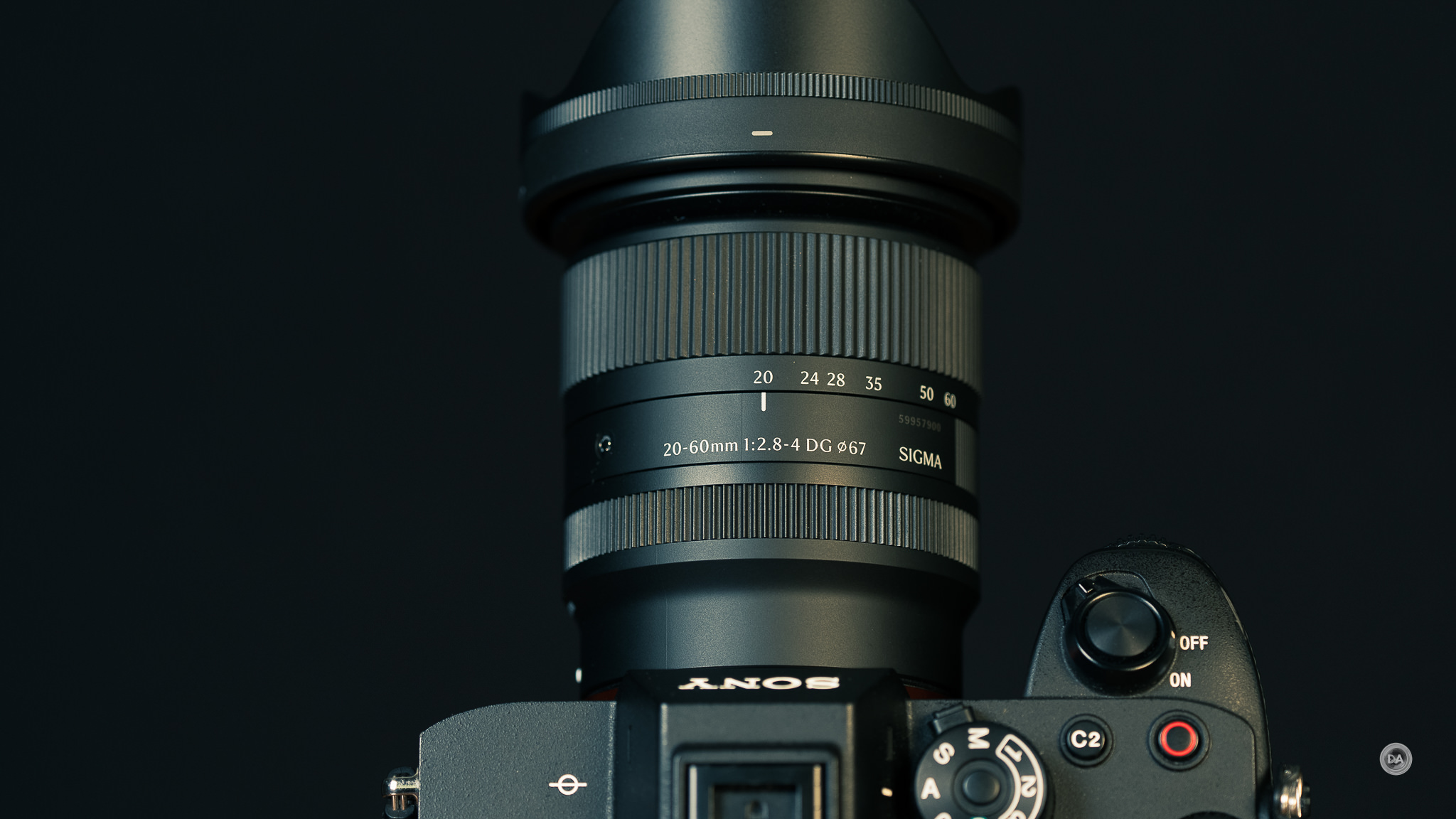
This is Sigma at is best, making functional, useful lenses that put a lot of pressure on the first party lenses. It would be hard to justify spending more on the Sony 24-50mm F2.8, and it is worth noting that the Sony costs nearly $1300! I do really like the Thypoch Voyager lens and its internally zooming design, but the Sigma definitely has the more appealing zoom range along with superior image quality. It’s also even more compact.
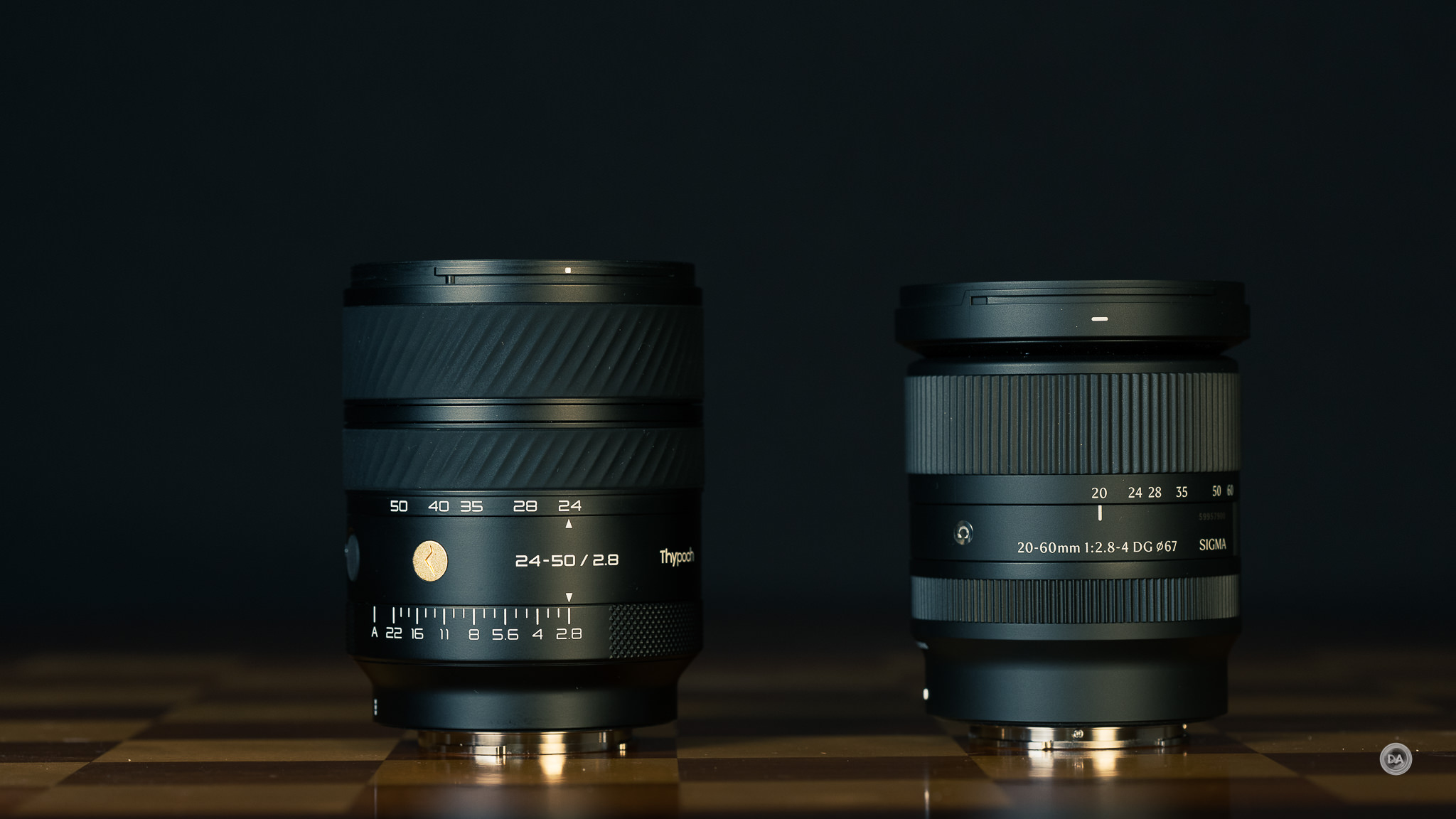
The price tag of $849 USD ($1169.95 CDN) feels about right here. It is more expensive than the budget Thypoch ($649 USD), but undercuts the Sony 24-50mm F2.8 G ($1298 USD) by a wide margin. It definitely offers up a more intriguing zoom range and overall package than either of them. If anything, the loser here feels like the Sigma 28-70mm F2.8, which, outside of having the constantly maximum aperture of F2.8, offers little to justify its nearly $1000 price. All in all, Sigma nailed it here.
Autofocus
So how about autofocus? Sigma has used their high performance HLA (High Speed Linear Actuator) here, and there is plenty of thrust for a lens with smaller elements like this. Focus speed is excellent, with essentially instant focus changes from near to far subjects.
Focus is also essentially silent, with no noise to be heard even if I press my ear against the barrel.
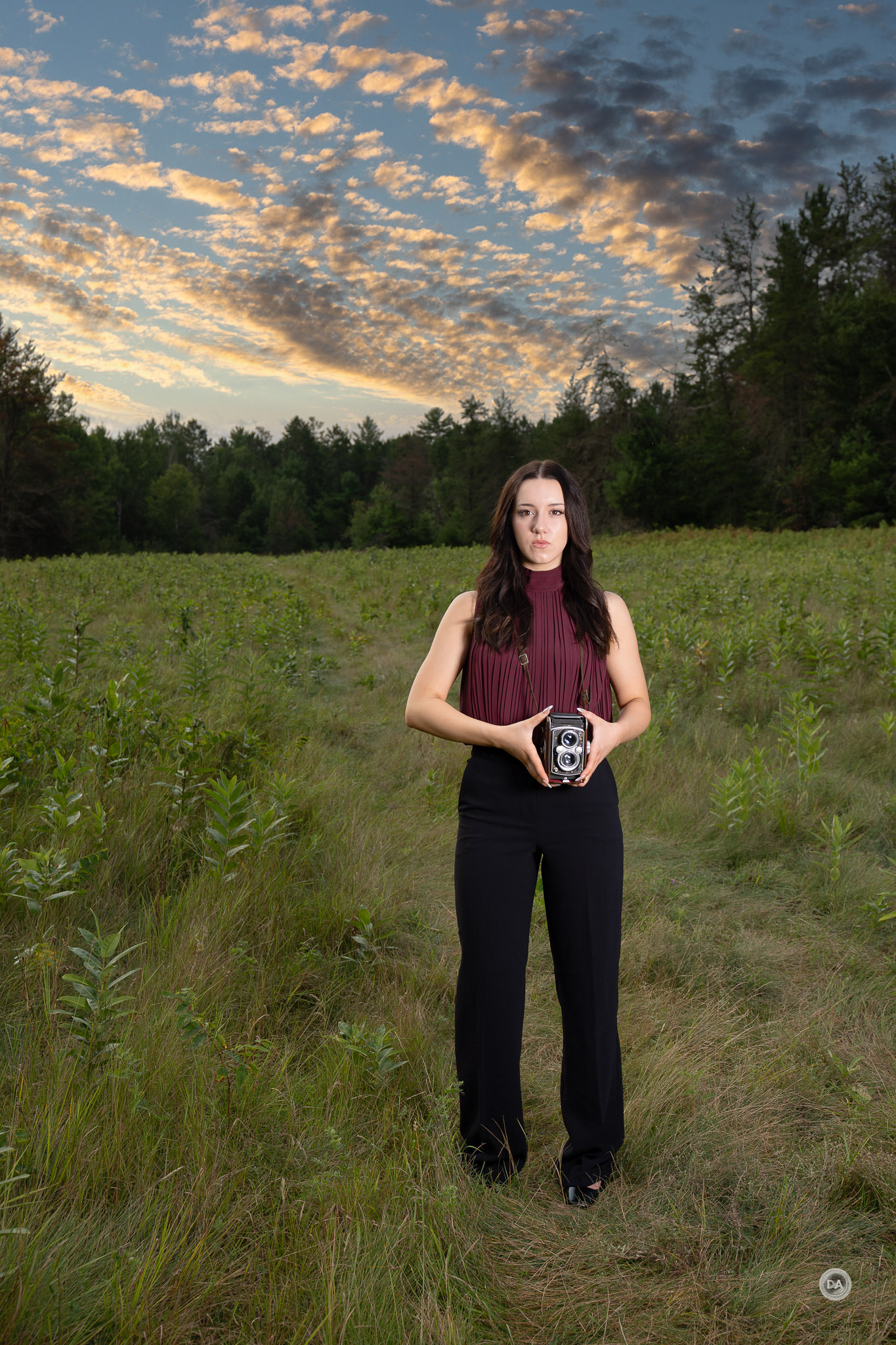
I had excellent focus results when shooting a portrait session, and in this setting I was actually shooting against fairly strong backlighting and using a strobe to front light. If I didn’t use the strobe, this is what I got:
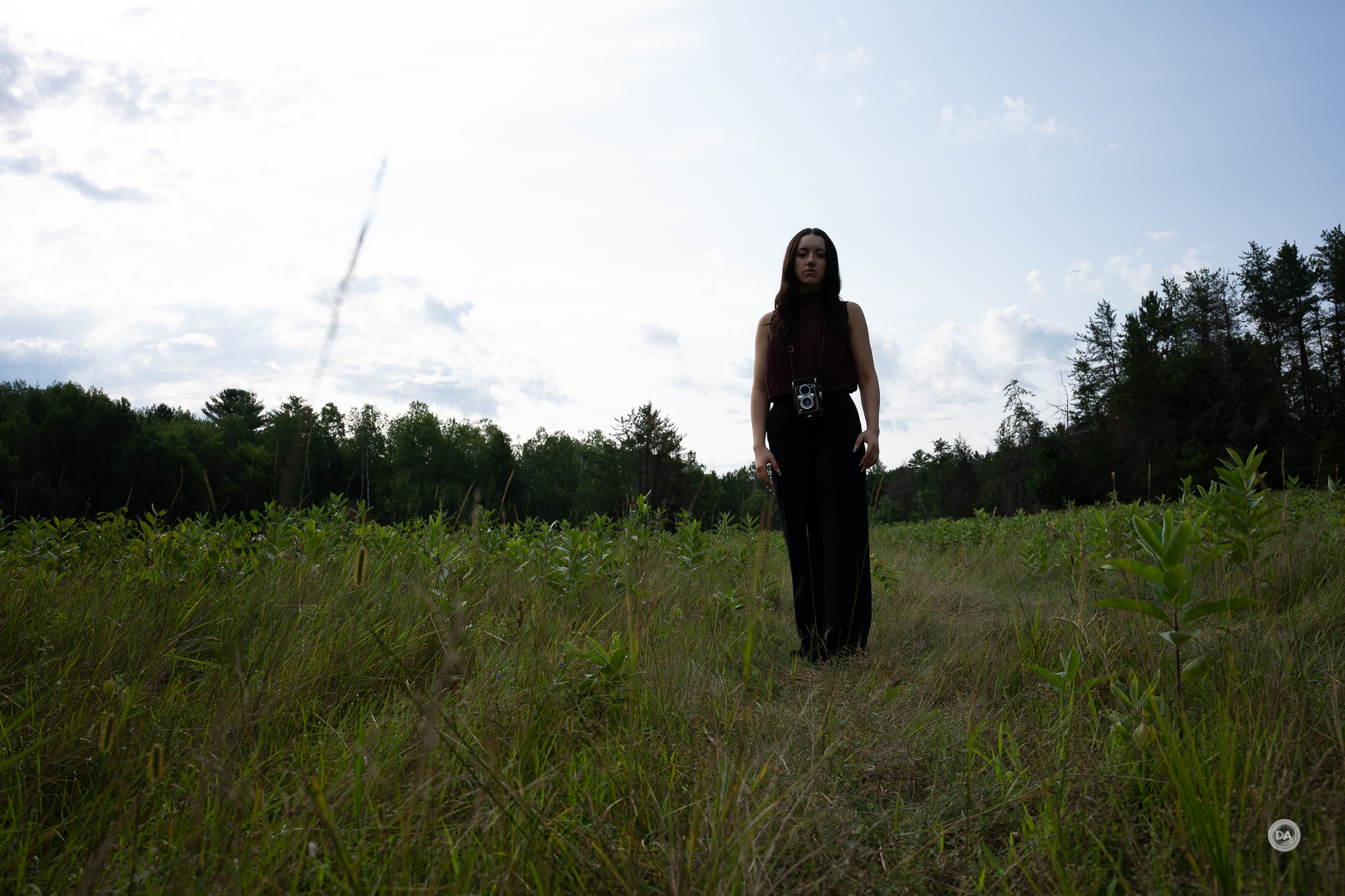
Despite that challenge, the focus is accurate.
And when I added the strobe, the magic happened.
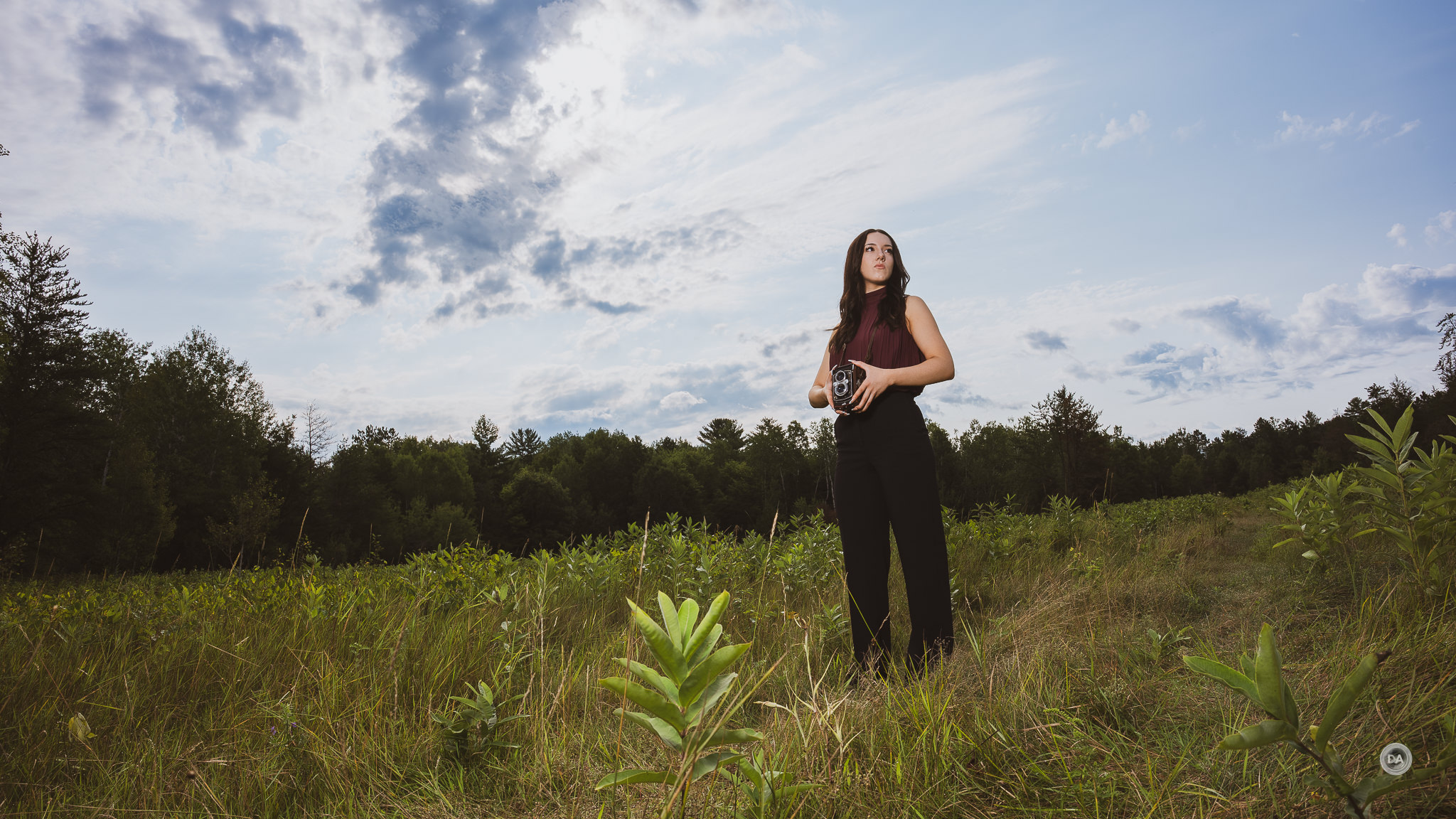
Focus was accurate whether straight on…
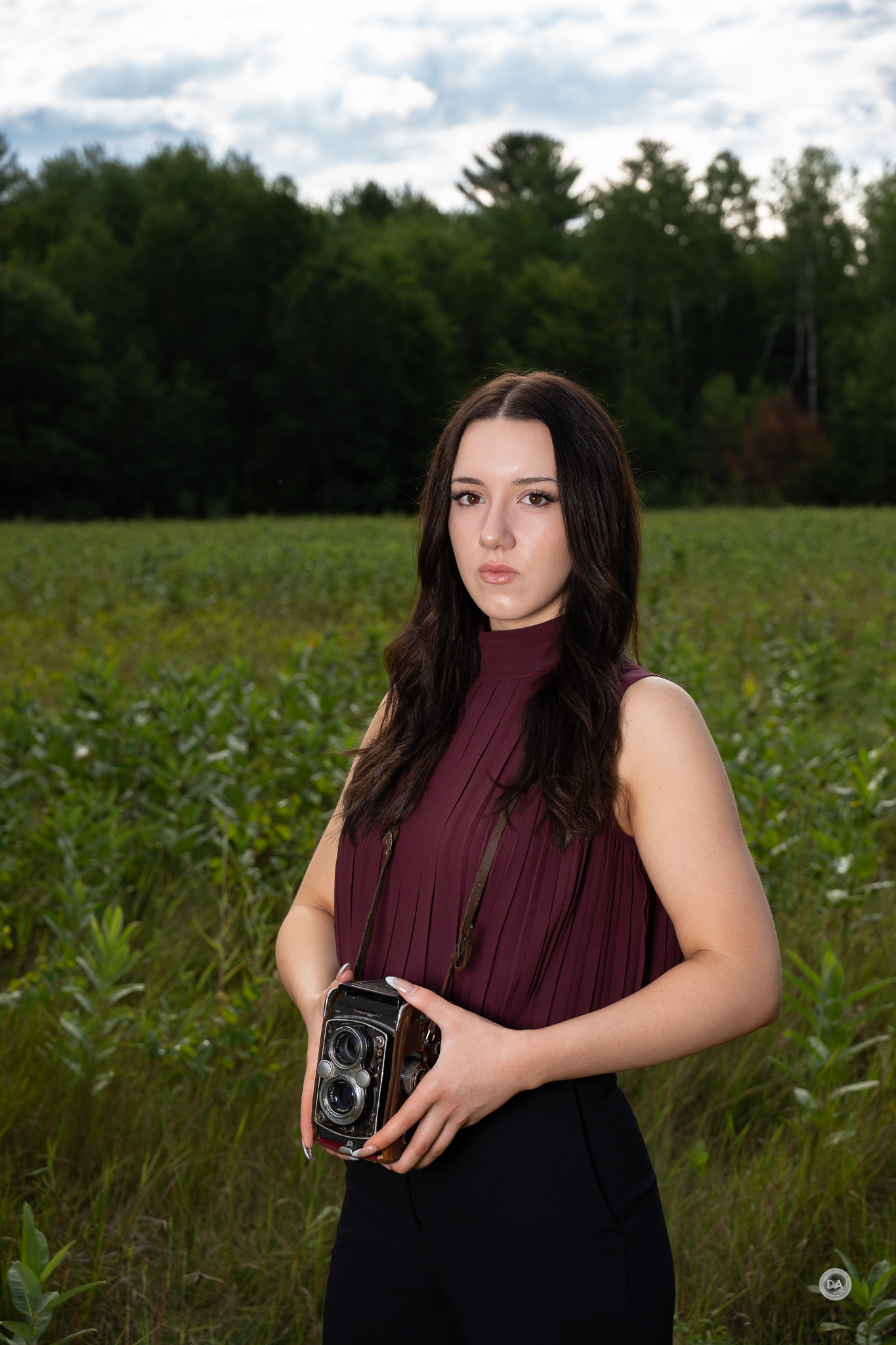
…or in profile.
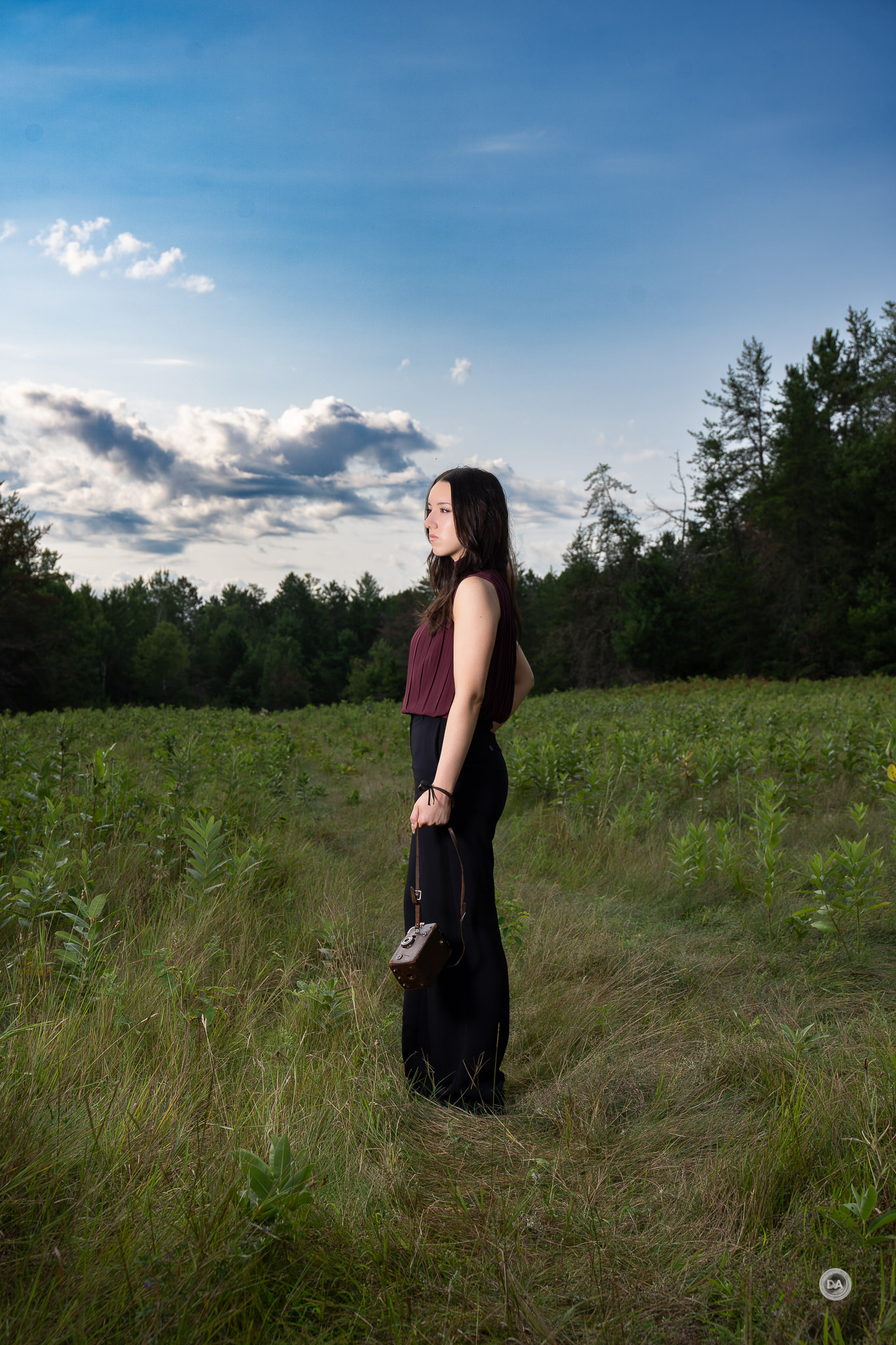
I found the 20-60mm to be very useful for family events, getting well focused results of a new addition to the family.

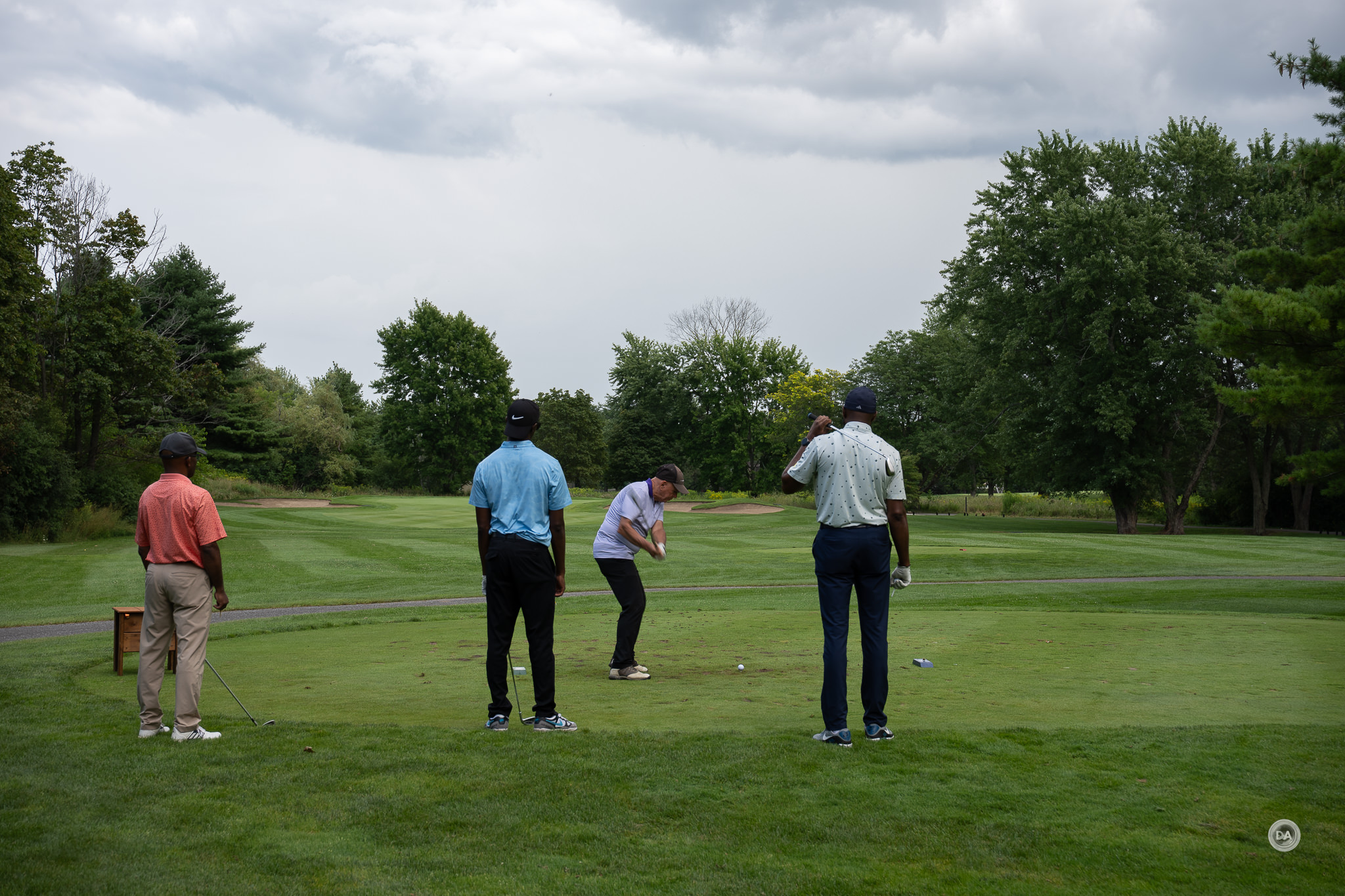
Finally, focus was also accurate to catch quick moments during casual events.

In short, autofocus is excellent.
Video AF
One of Sigma’s priorities on the video side of things was to reduce focus breathing via the use of floating elements. I saw some modest breathing when I tested for it, but it was low enough that I saw next to little in the shorter focus throws from my hand to my eye when extending my hand to block the camera’s view of my face.

Focus pulls when using touch to focus were smooth and confident. I saw no steps, pulses, or settling. Focus just moved from point A to point B without hesitation. You can tell there is a lot of thrust in the focus motors, and you can tune that speed via settings in the camera.
My only complaint came in a couple of clips when shooting flowers. There were moments when a prominent flower was right in the middle of frame and yet focus didn’t shift to it.

I saw something similar a few times in my hand test, as my hand would obviously be in front of the camera, and yet focus doggedly held onto the background.
I wasn’t exceeding the minimum focus distance, either, as when I switched to stills I was able to take the photo I wanted without issue.

Here’s hoping this can be easily rectified via production firmware.
In general, however, the autofocus for video was also excellent.
Sigma 20-60mm F2.8-4 Optical Performance
Sigma has done an exceptional job in the past decade of creating optical designs capable of competing with the very best, and this lens is no exception. The optical design has 15 elements in 13 groups with 3 SLD glass elements and 3 aspherical lenses. You can also see from the diagram where the HLA motor is positioned.
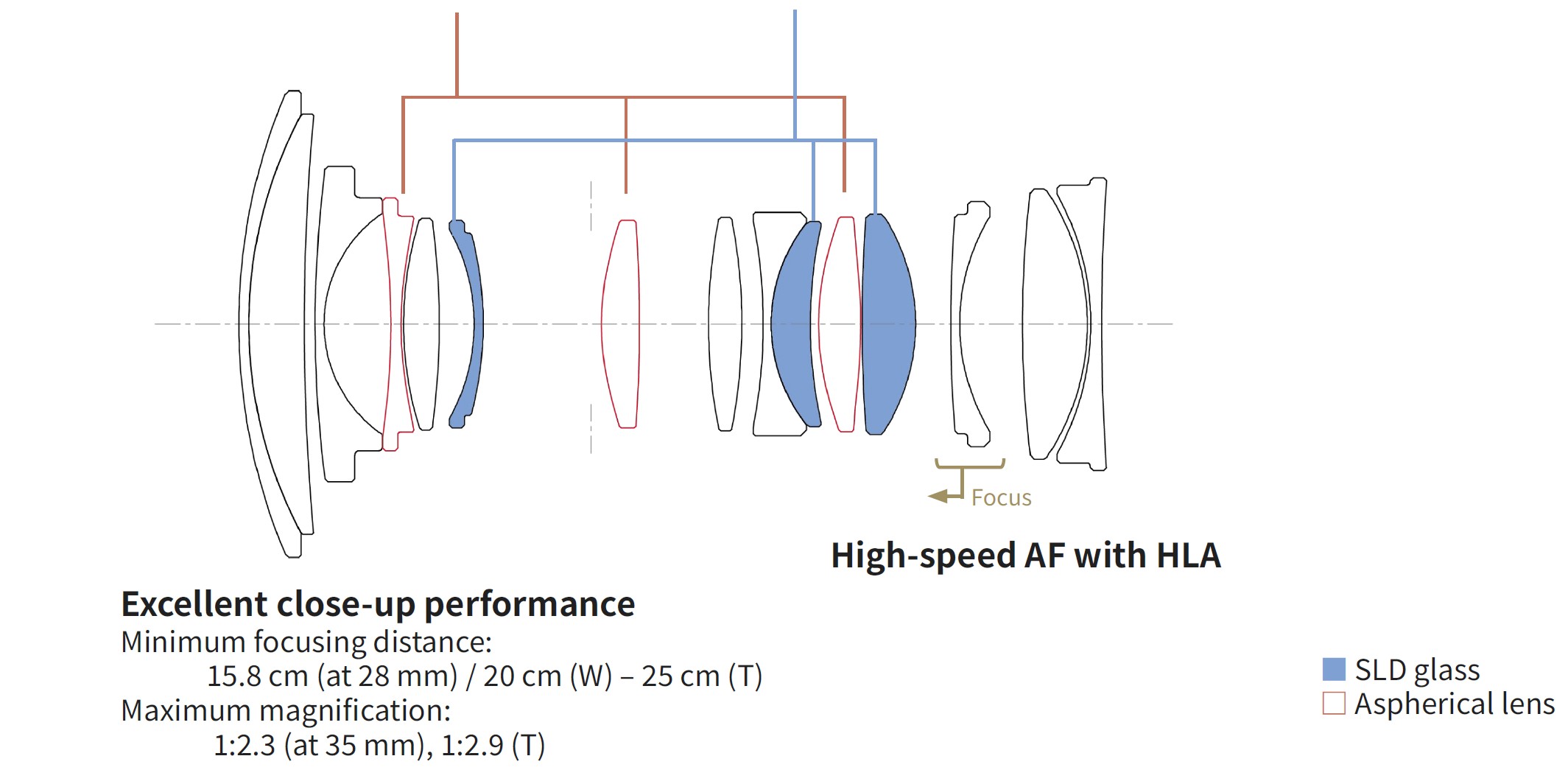
The MTF chart at 20mm looks very good for a zoom like this, with excellent center and midframe performance and a bit of a drop in the corners.
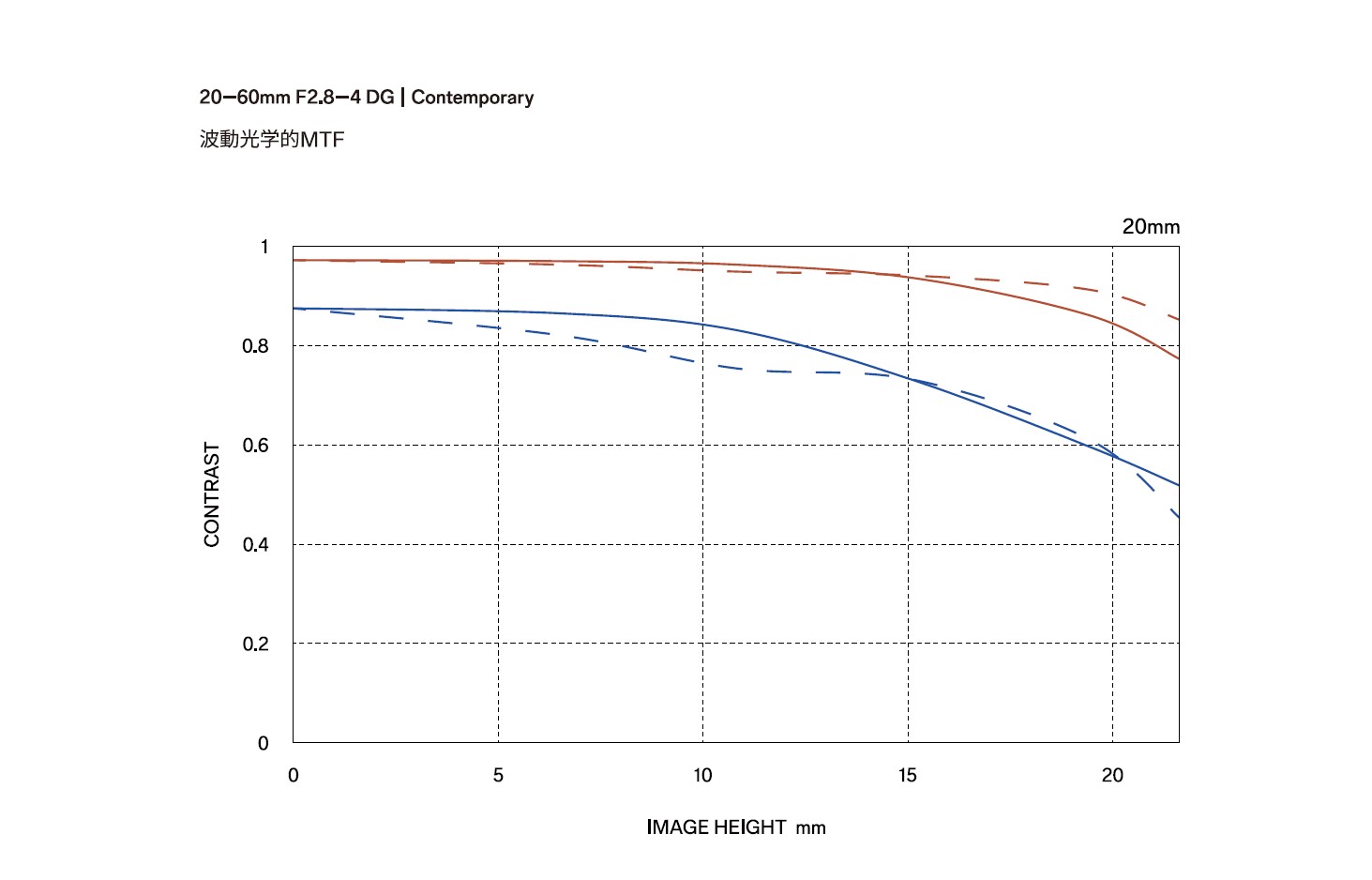
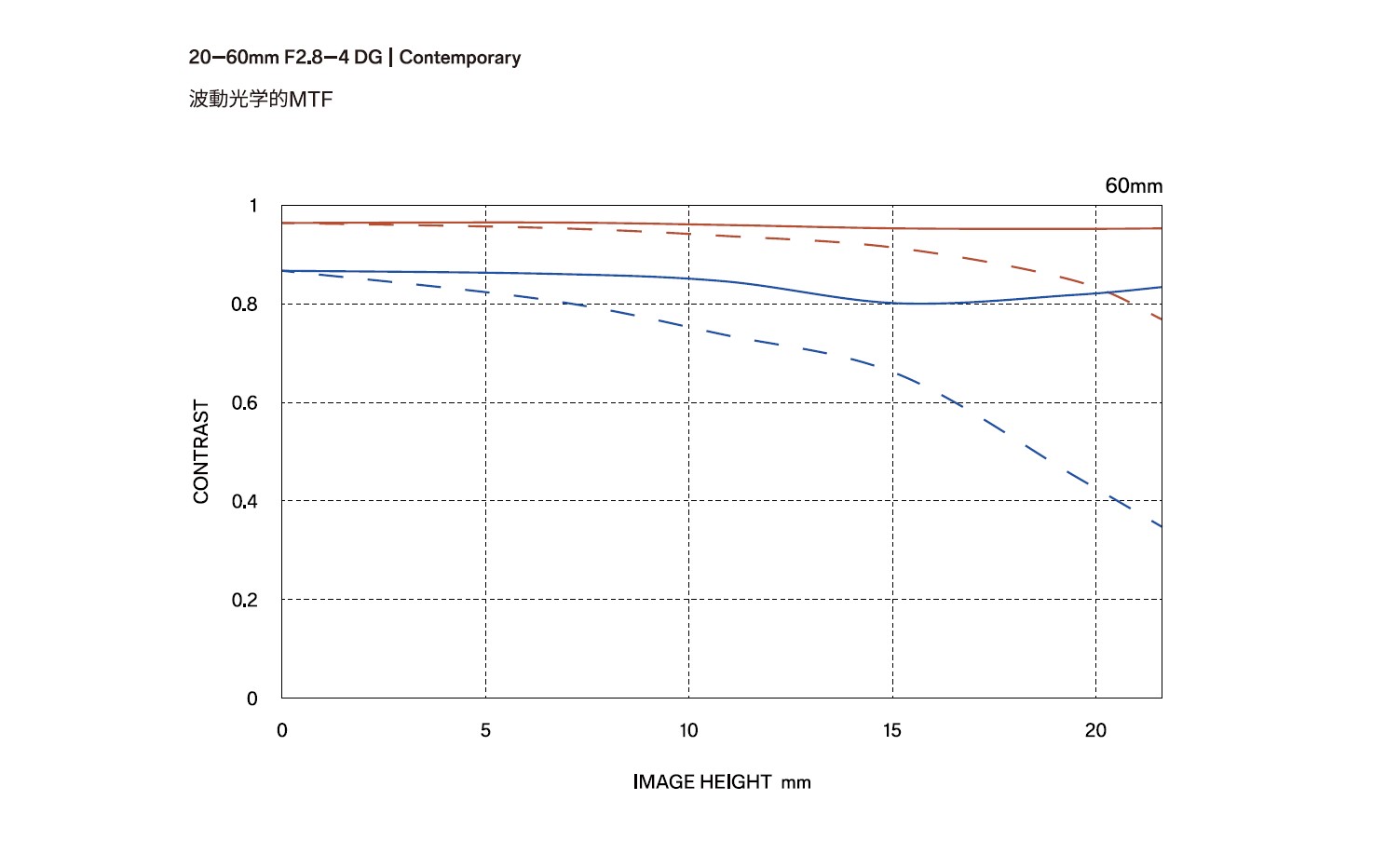
The 60mm chart looks even better in some ways, though there is much more astigmatism in the corners due to the divergence of the meridional and sagittal planes.
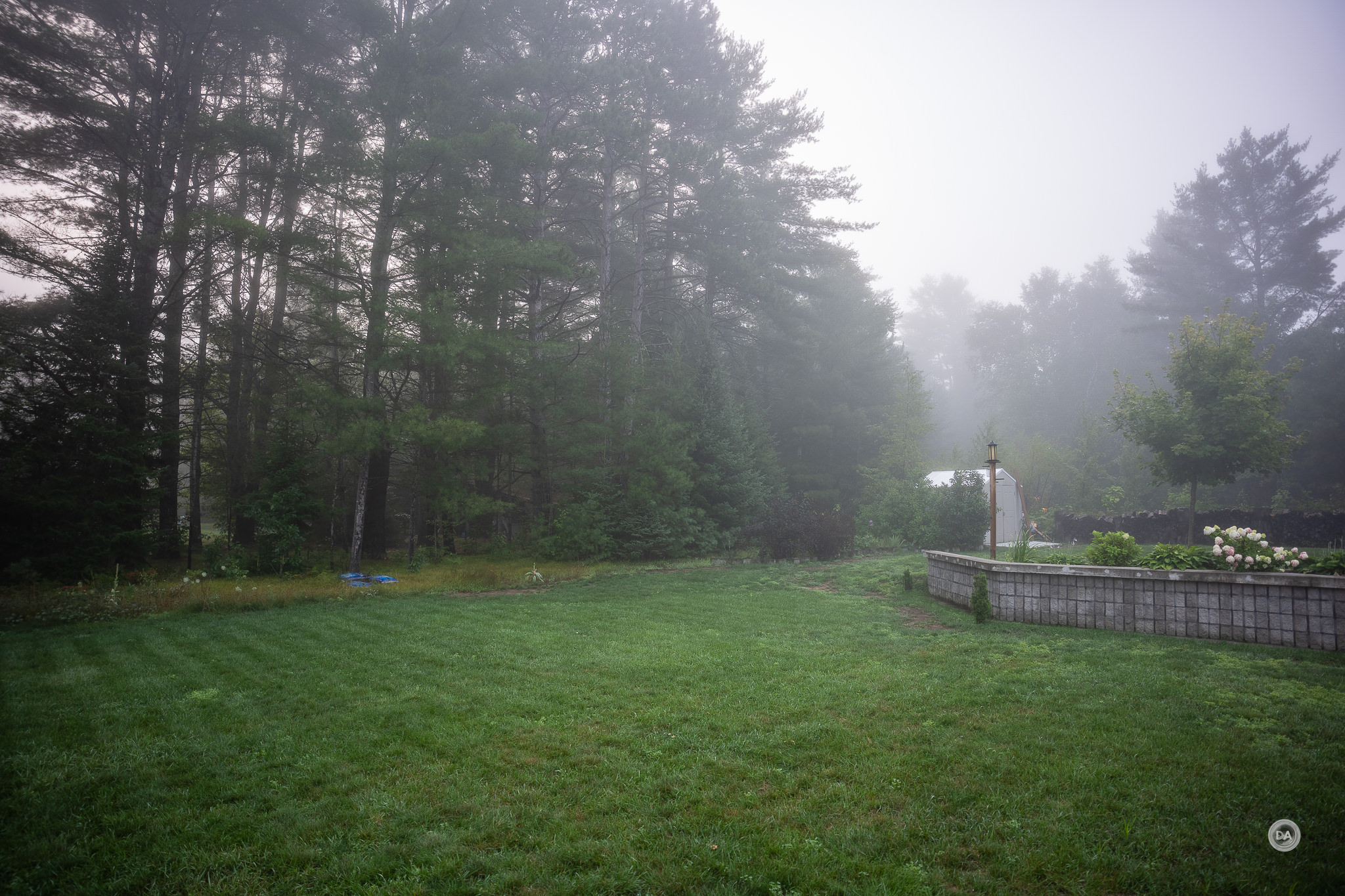
Real world sharpness is often very good. Here’s a look at a subject at 20mm, F2.8:
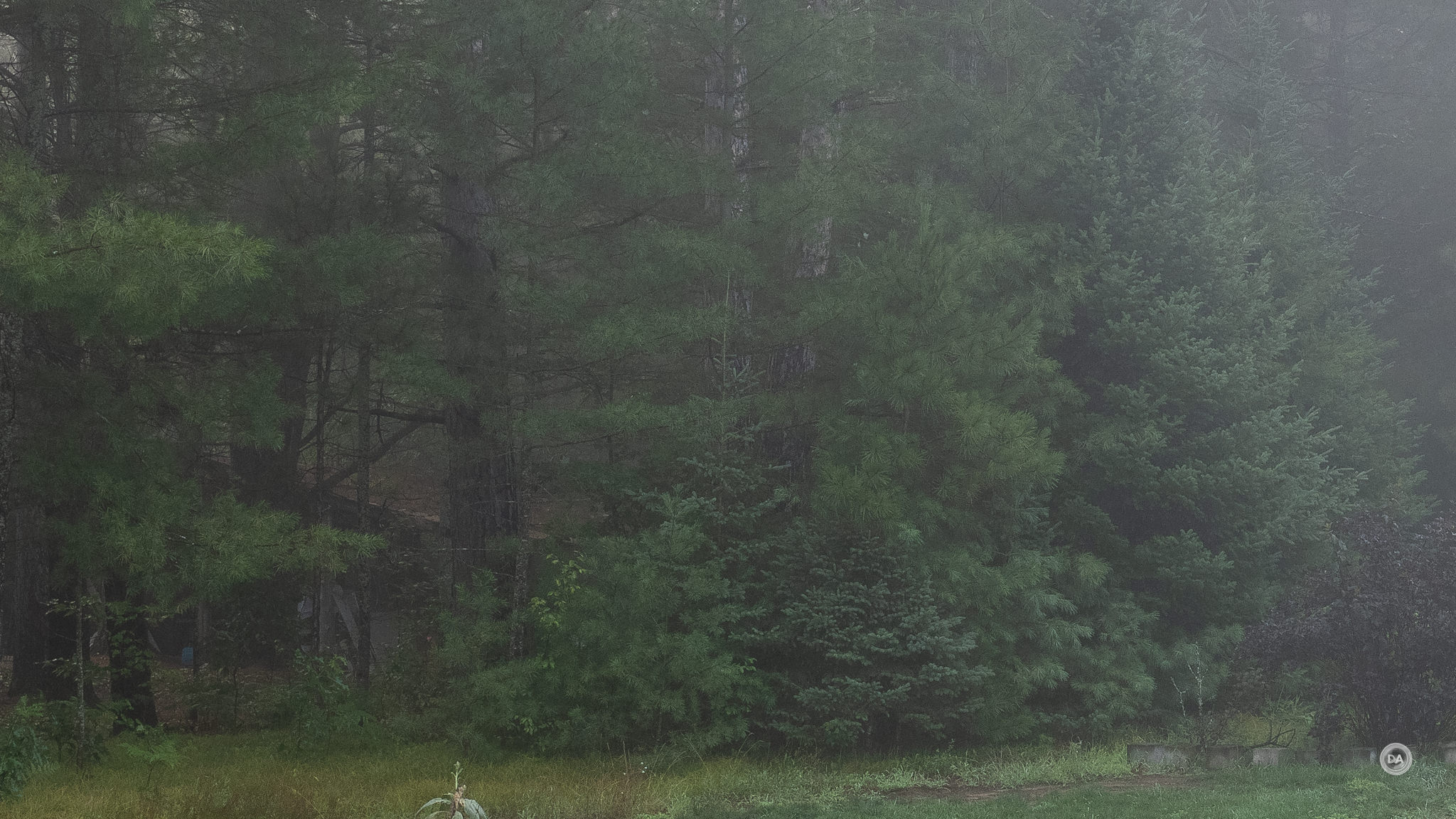
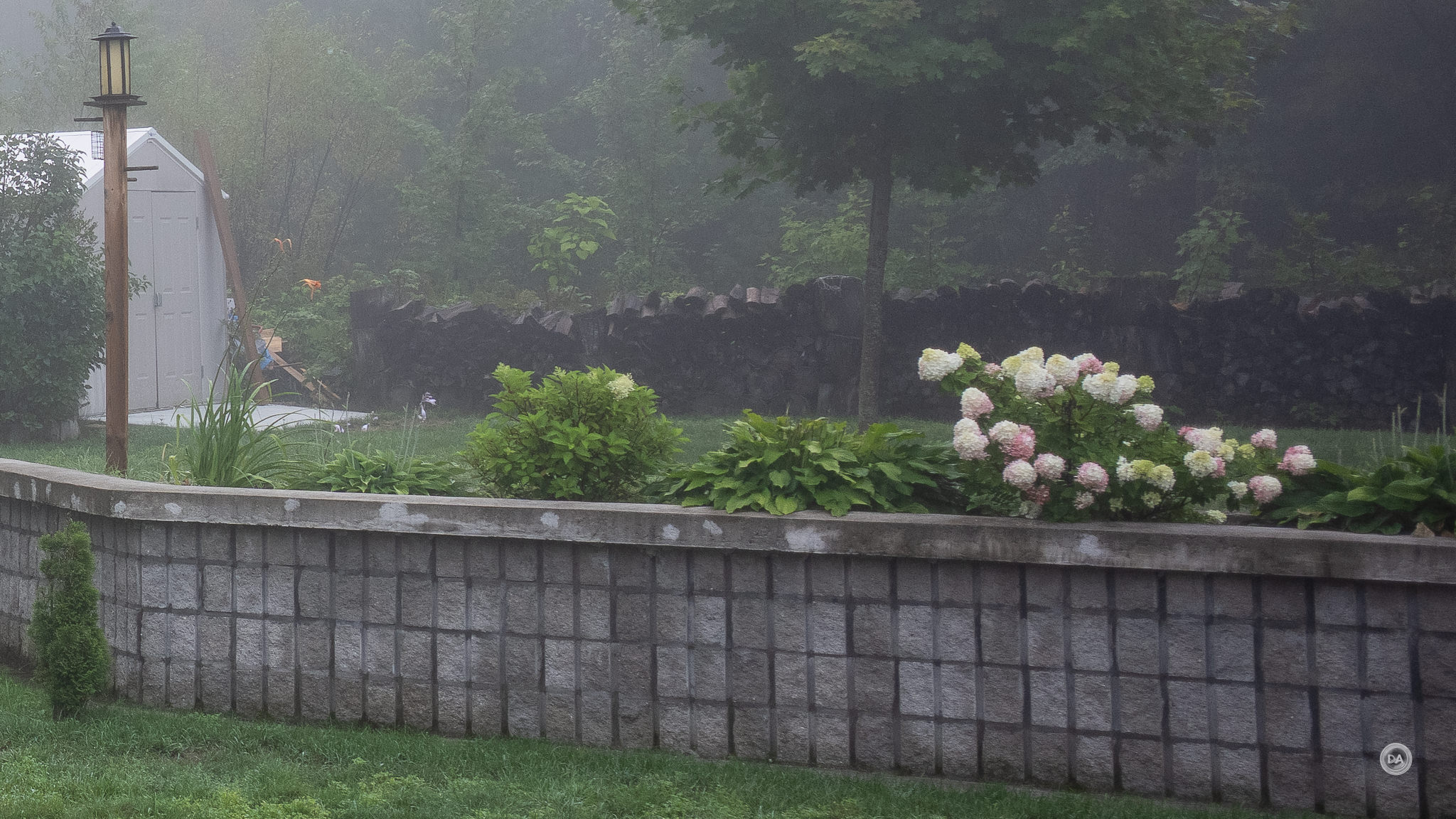
And here’s a look from one at 60mm, F4:


There’s generally a reason that most lens makers don’t go as wide as 20mm in their standard zooms, as engineering wider than 24mm comes with significant challenges. Generally those include heavy distortion and vignette. Is that true of the Sigma?
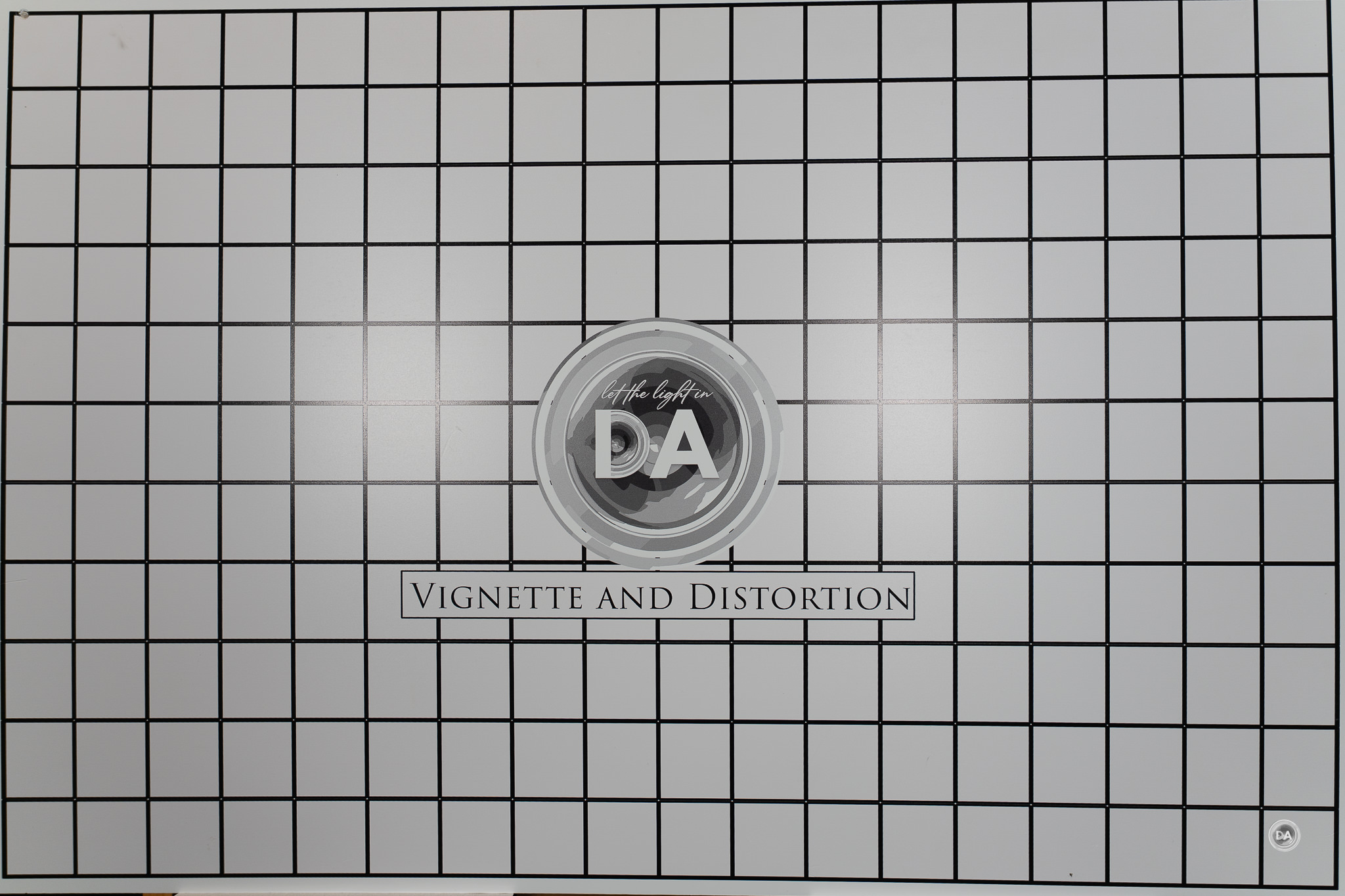
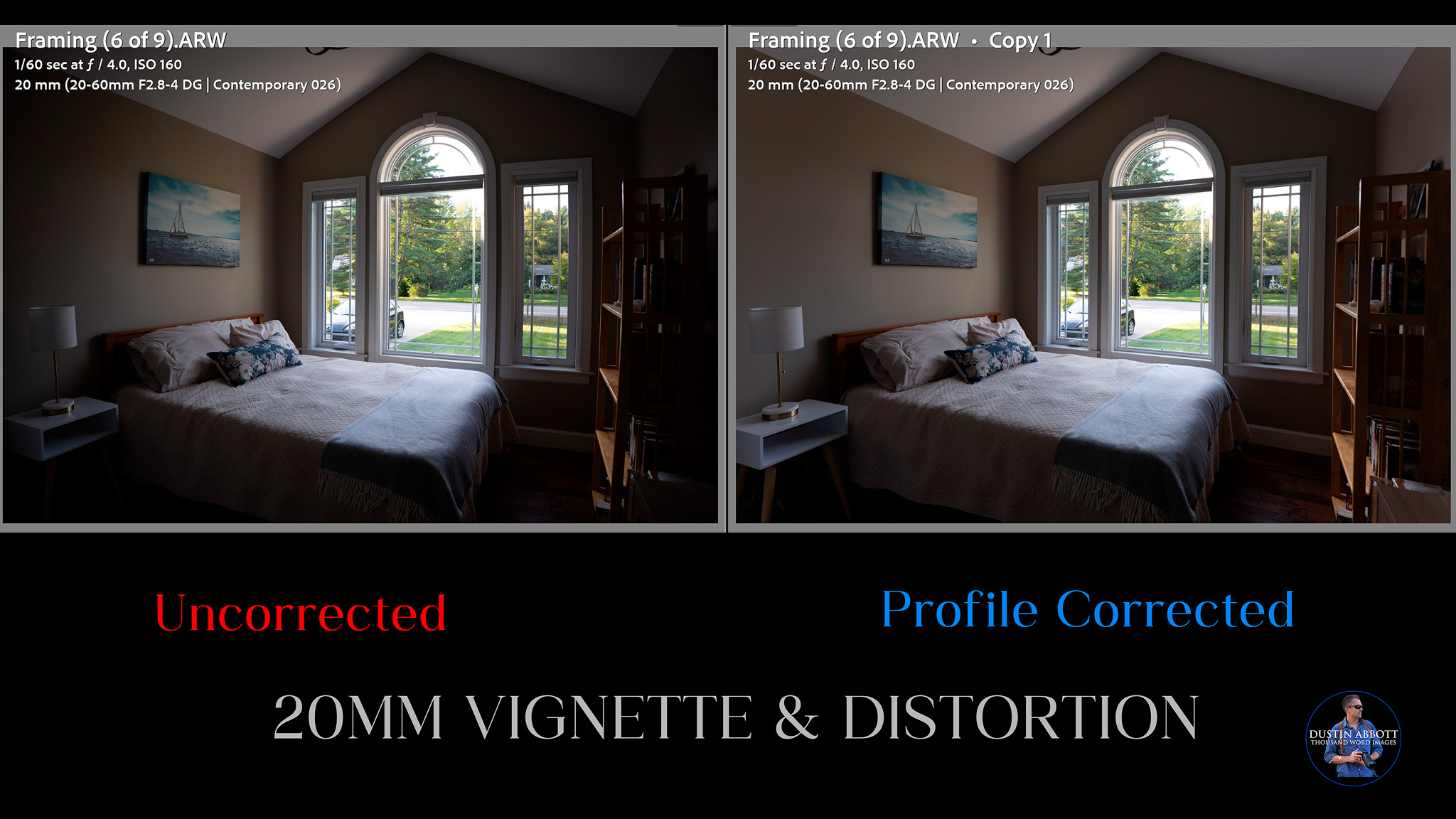
Definitely! There is a lot of optically uncorrected distortion and vignette at 20mm. I needed a +39 to correct what is unfortunately a pretty wavy distortion pattern, and the vignette slider had to be maxed out to achieve the result on the right.

The correction profile works a bit better, but even it can’t correct all of the waves out of the distortion.
An image of a room looks pretty different before and after correction.
Results become far more neutral in the middle of the frame, with minimal vignette and distortion correction needed.
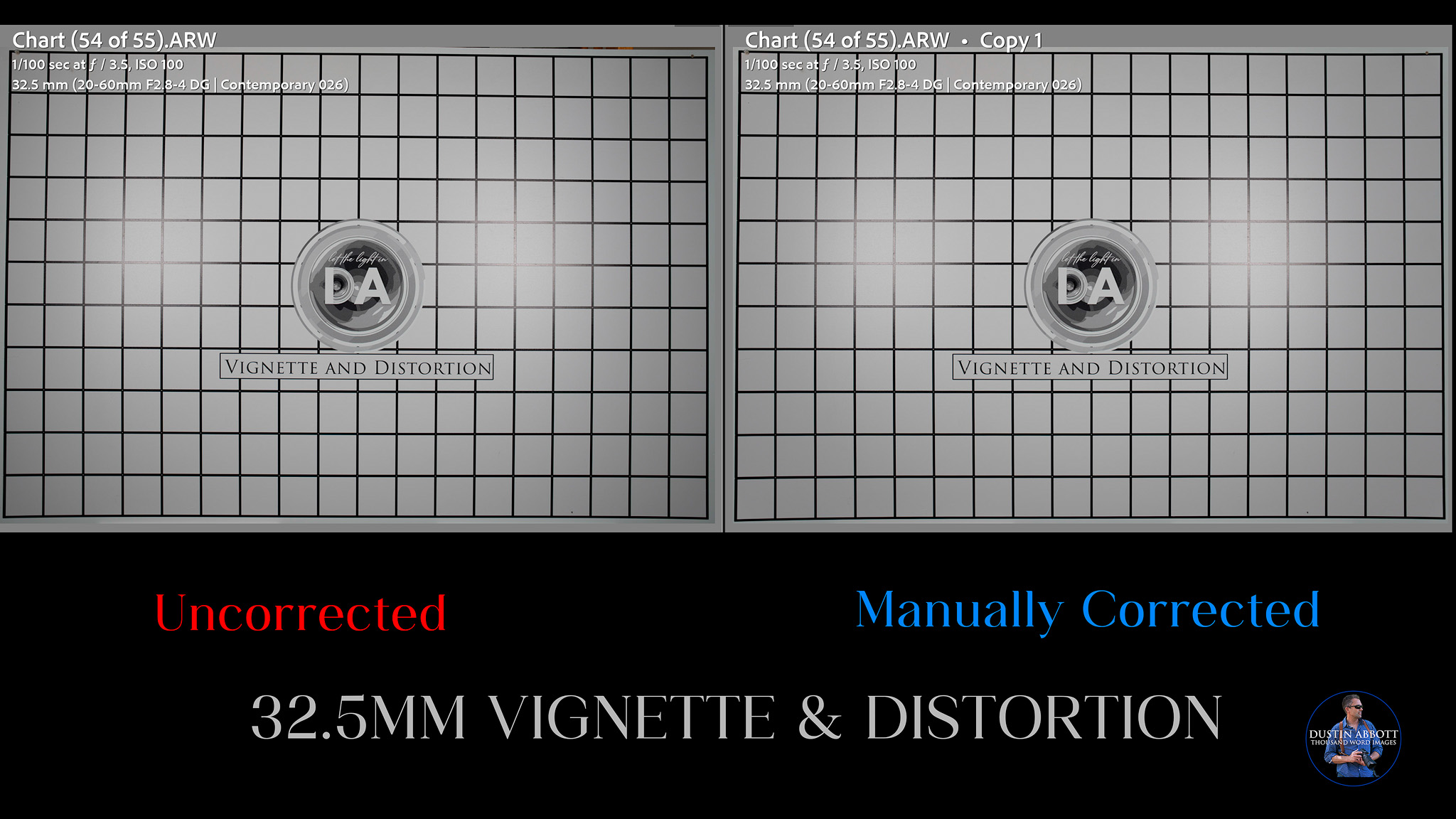
At the 60mm end, there is some pincushion distortion. I needed a -7 to correct the distortion, and a +39 to correct the vignette. Neither of these are extremes, and you can see that the results correct just fine.
The vignette and distortion are a bit of an issue at 20mm, but outside of that things aren’t bad.
Longitudinal Chromatic Aberrations (LoCA) shows up as colored fringing before and after the plane of focus and tends to be more pronounced in large aperture lenses. The 20-60mm is a strong performer in this metric, showing next to no fringing.
I see essentially no fringing on the transition areas of this mushroom.

Lateral Chromatic Aberrations (LaCA) show up as color fringing on either side of contrast objects near the edge of the frame. The 20-60mm shows no real issues with LaCA. There’s the tiniest bit there, but nothing hardly visible.
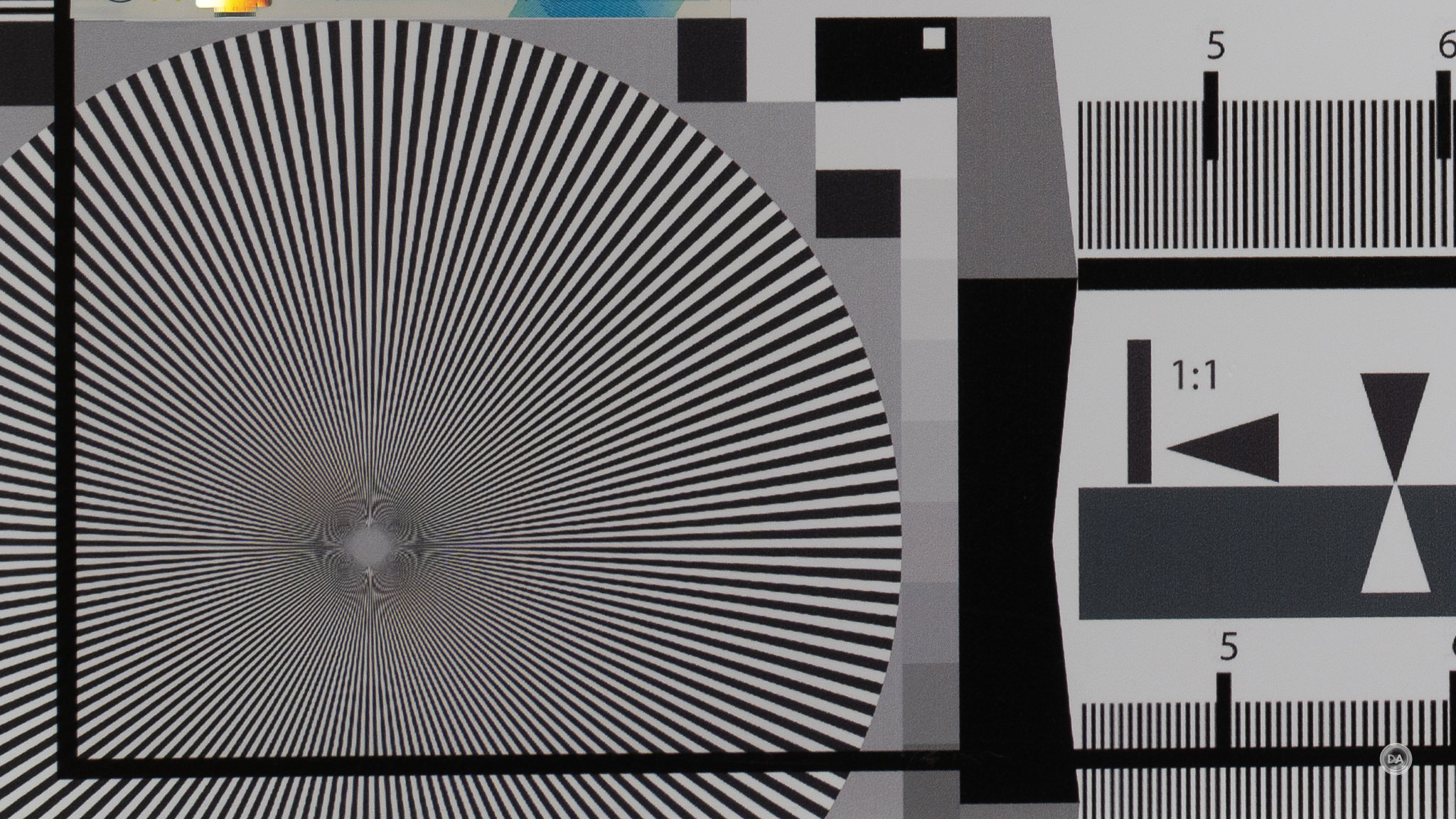
The engineers weren’t able to minimize distortion and vignette on the wide end, but they certainly managed to suppress fringing.
So how about sharpness?
Here’s a look at the test chart that subsequent crops will come from.

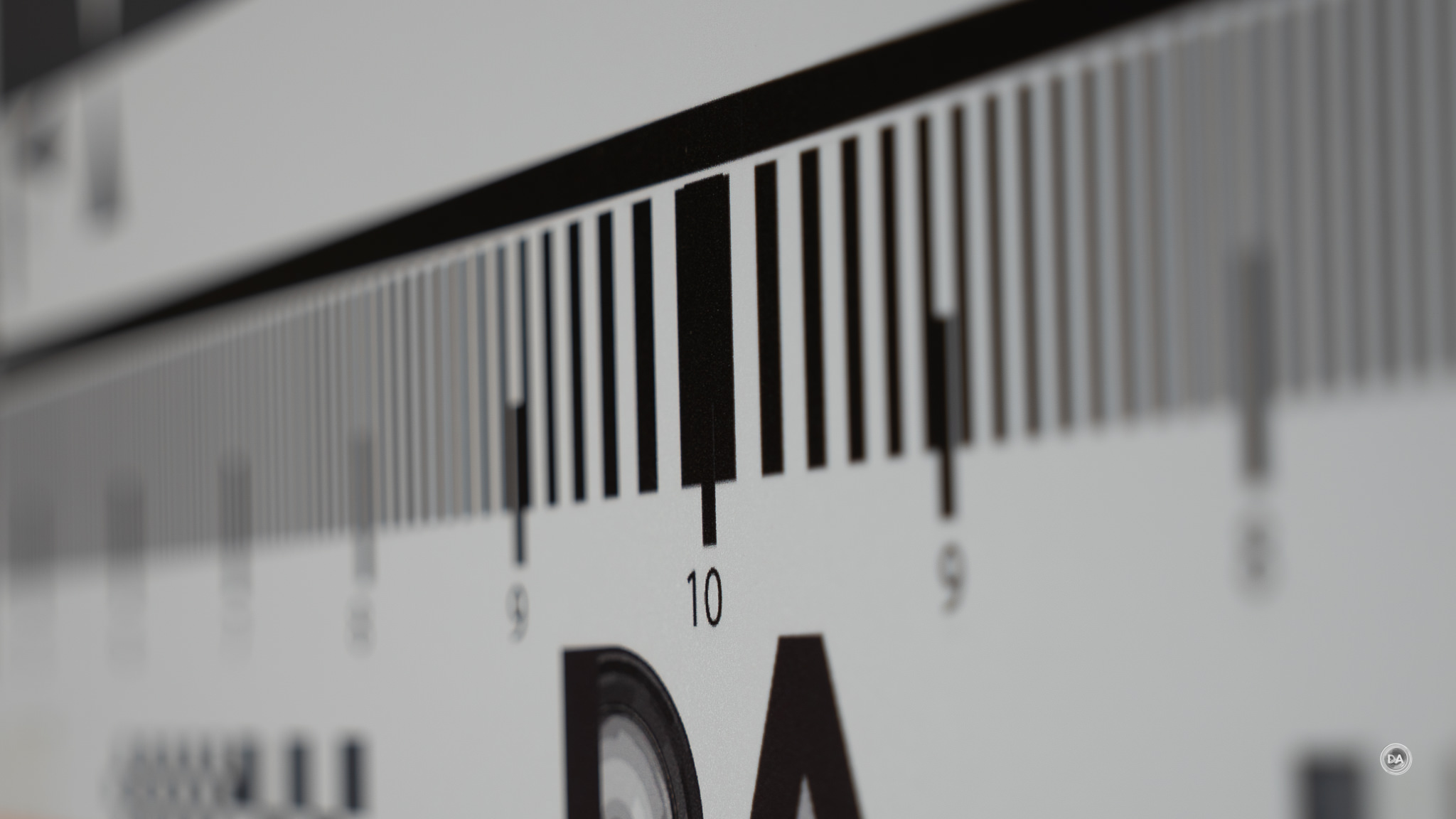
My test chart results are shot on a 61MP Sony a7RV and results are shown at a 200% level of magnification. We will start on the wide end. Here’s crops at 20mm F2.8 from the center, midframe, and corner.



We can see that detail and contrast are excellent in the center, a bit softer in the midframe and corners. Contrast drops as you move out from center.
I reviewed the Thypoch Voyager 24-50mm F2.8 earlier this year. Here’s a look at how these lenses compare across the frame:

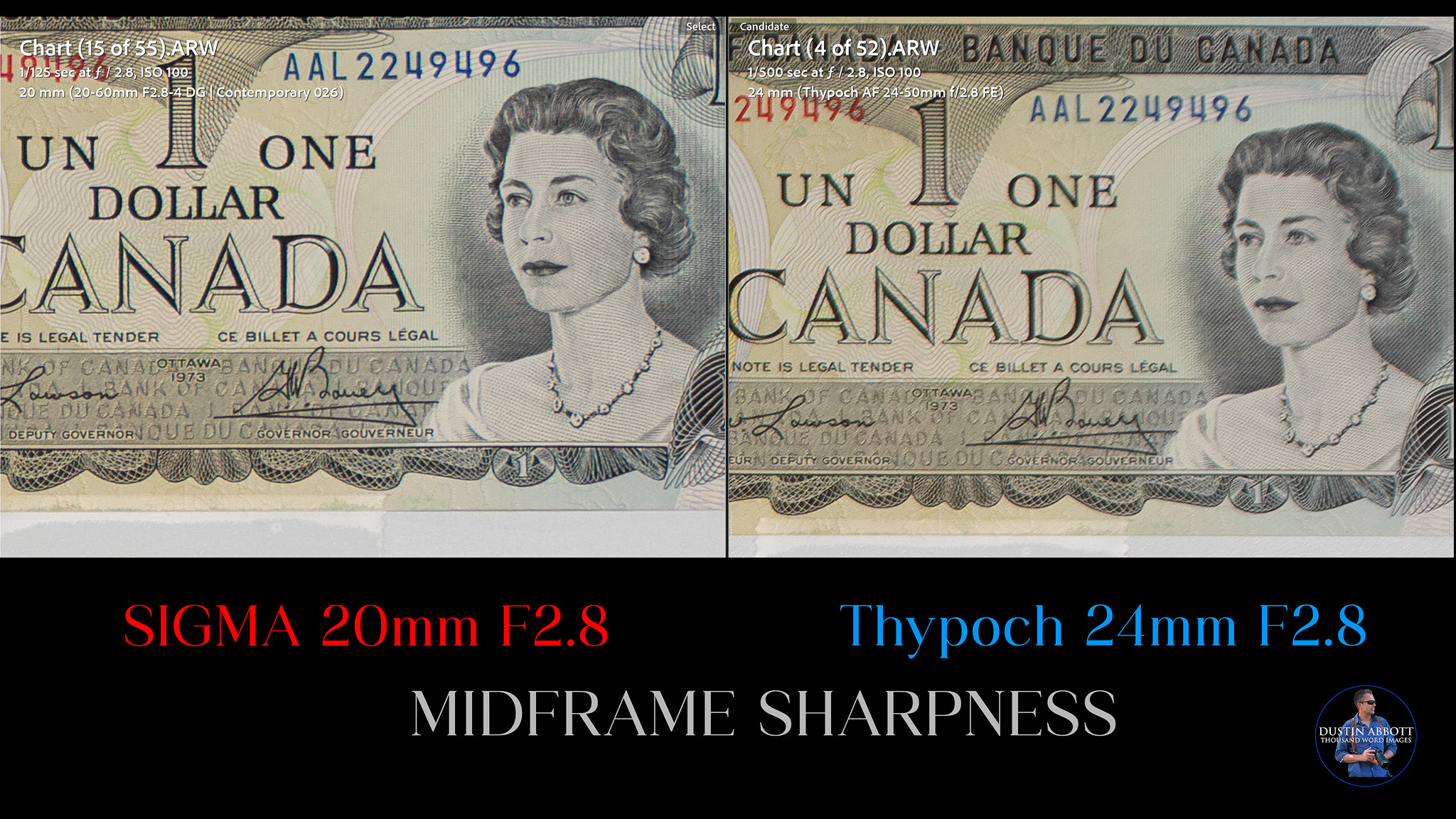
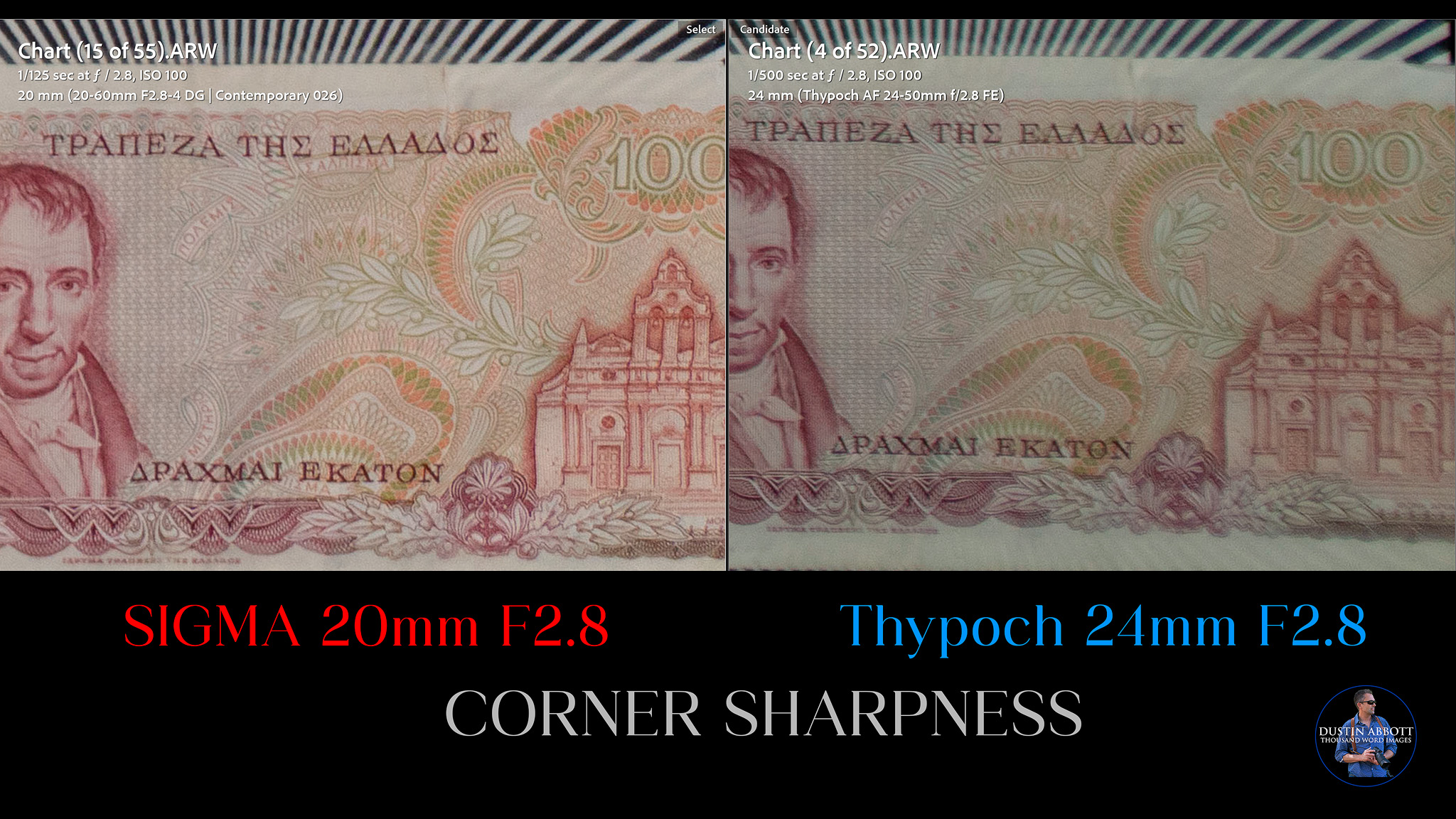
The Thypoch has the edge in the center, but the midframe results favor the Sigma, and while neither is great in the corners, the Sigma is better.
When stopped down to F5.6, the Thypoch remains very slightly sharper in the center, the midframe results are closer but slightly very slightly favor the Sigma, and the corner results favor the Sigma due to a bit more sharpness and contrast but also much lower levels of lateral chromatic aberrations.
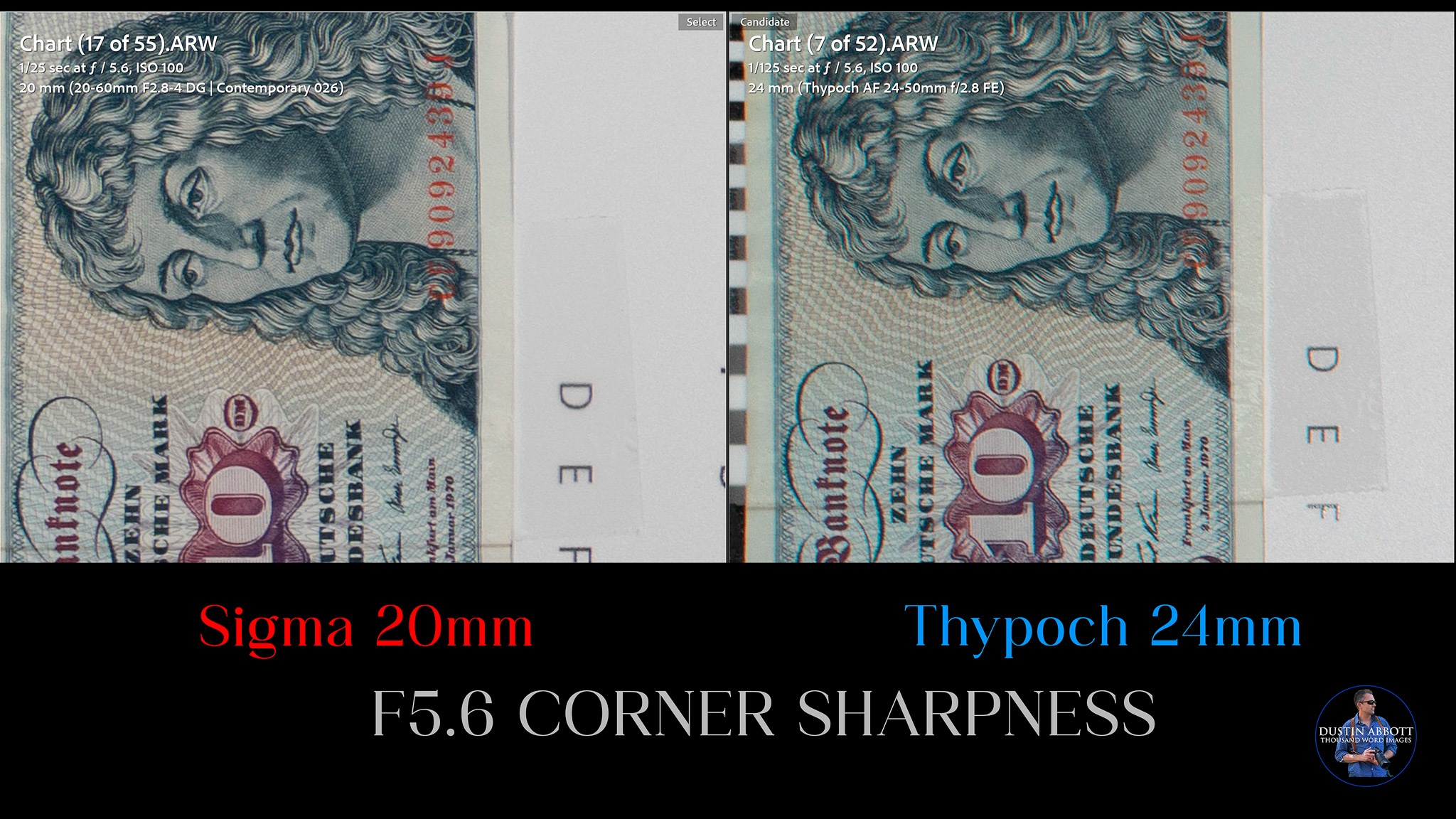
The 20-60mm doesn’t sharpen up much in the center of the frame as you stop the lens down, but the gains become more pronounced the farther from center you progress. The midframe looks marginally better, but the corners look radically better.
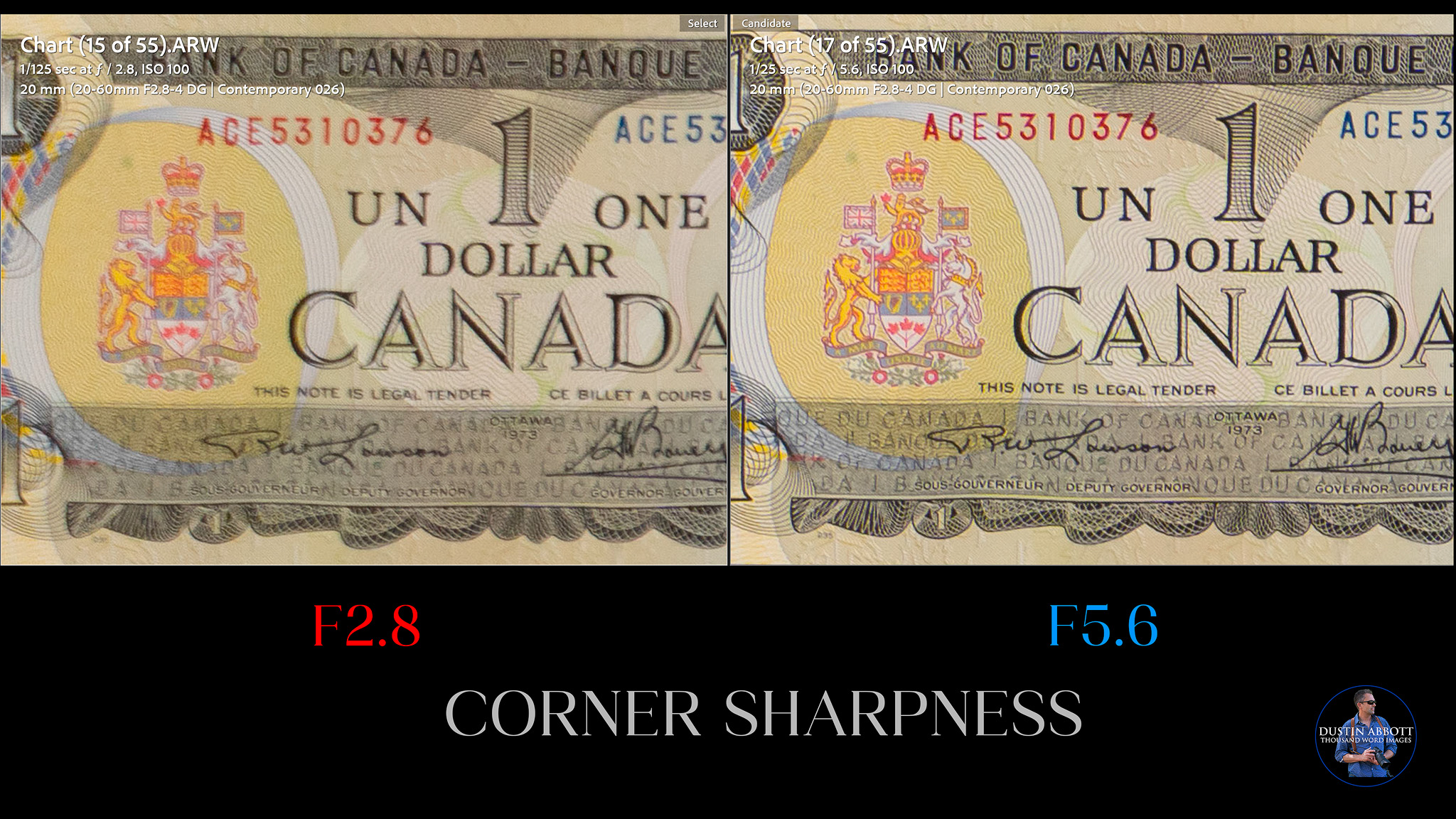
This is a relief to me, as some zoom lenses never fully sharpen in the corners. The fact that the 20-60mm is able to produce sharp corners at typical landscape apertures makes it a much more intriguing option as a compact travel lens.

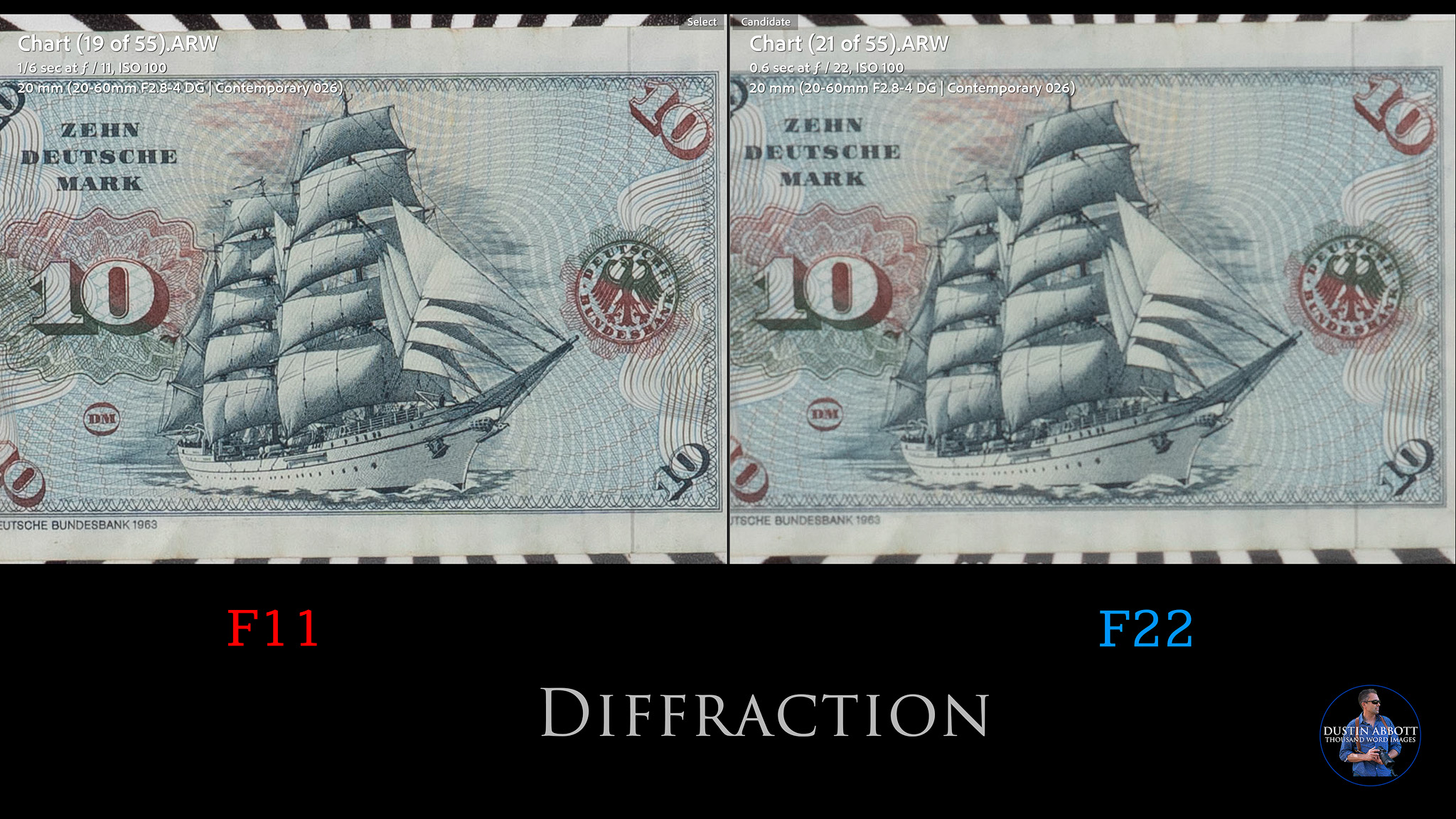
Diffraction is always going to be an issue on high resolution cameras, so expect significant softening beyond F8. F11 is still okay, but the minimum aperture of F22 (at 20mm) and F32 (at 38mm and beyond) is going to look very soft due to diffraction.
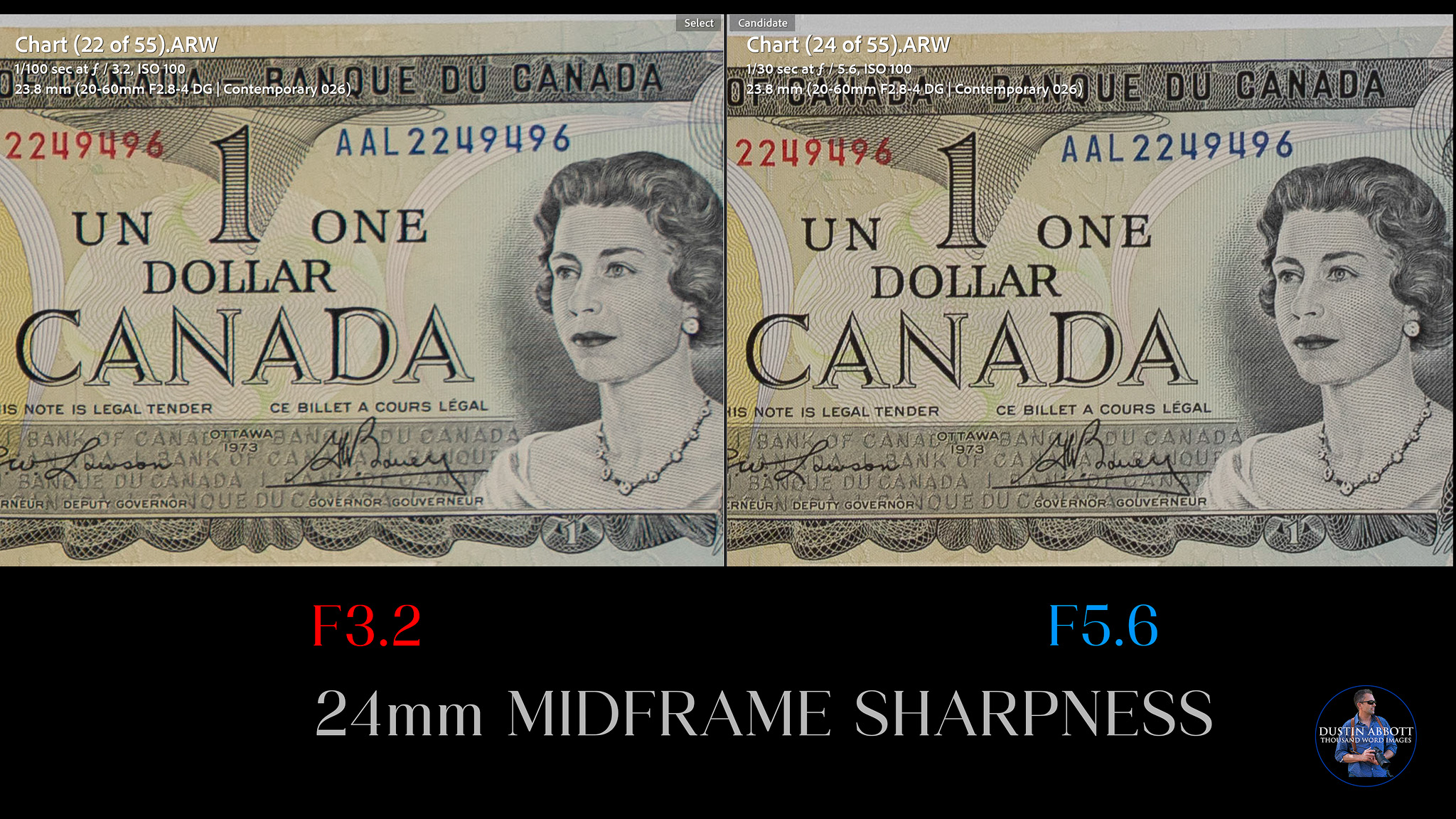
As we saw earlier, the maximum aperture of F2.8 only lasts for a few millimeters, so by 24mm the maximum aperture has slipped to F3.2. This is obviously the most significant weakness of the lens relative to the competition. Sharpness results are largely the same as 20mm, though a few percentage points weaker. As before, the lens sharpens up at F5.6.
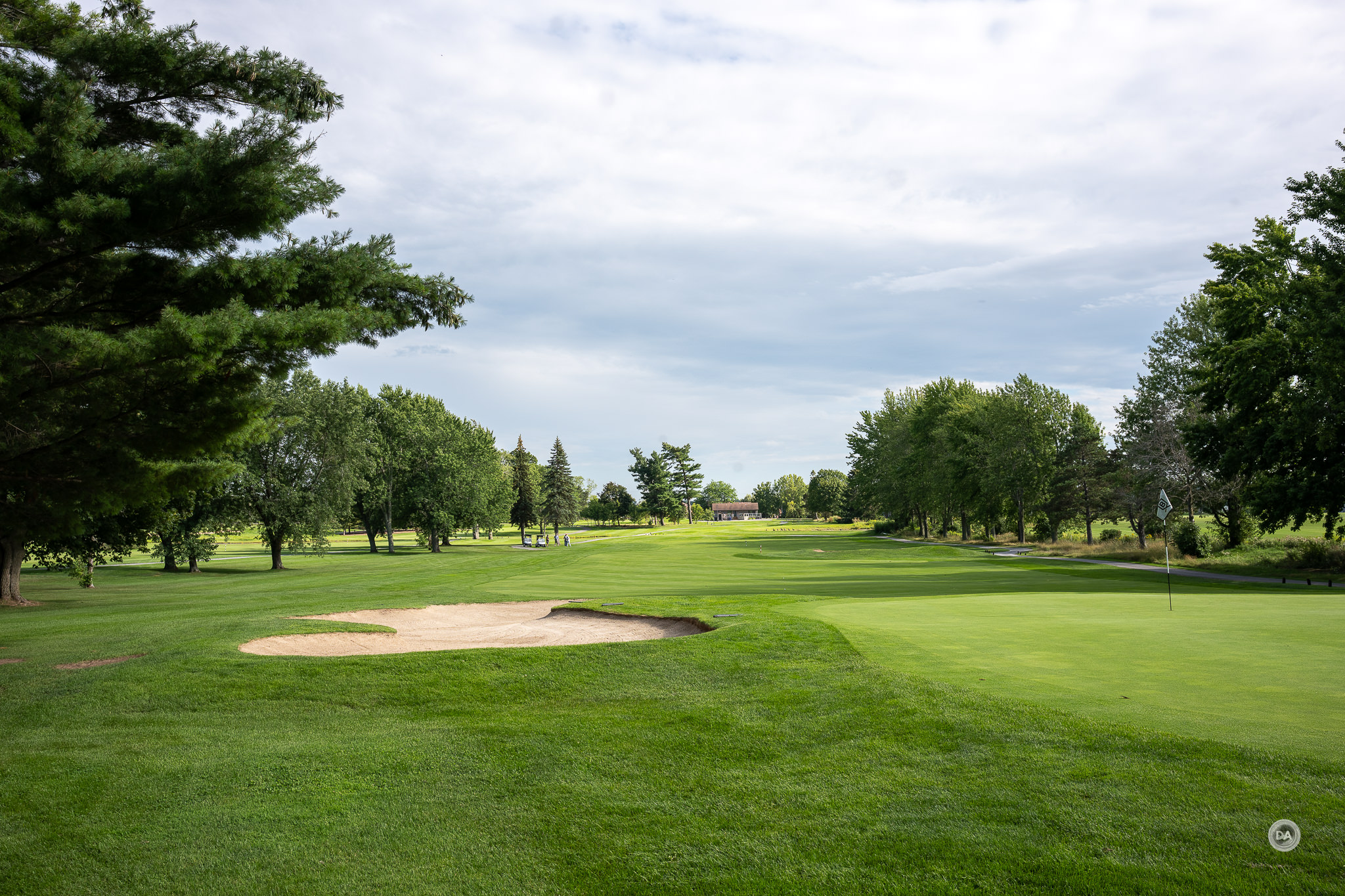
Real world images around 24mm looked fine.

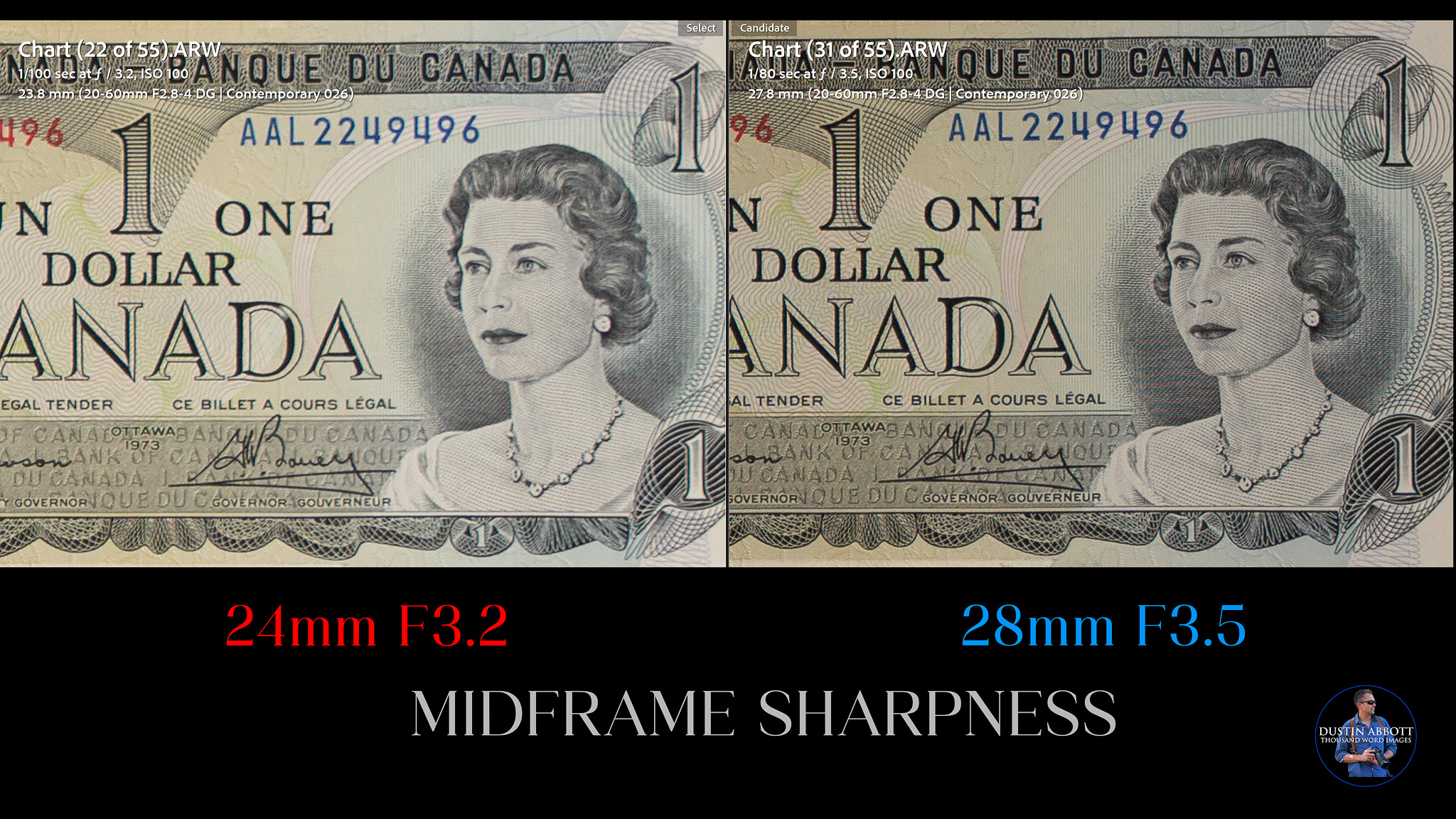
By 28mm the maximum aperture has closed to F3.5. Sharpness is improved across the frame, but most noticeably in the midframe and corners. There’s a pretty huge difference in the midframe between 24mm and 28mm.
Real world images in this range look very crisp and detailed.
35-40mm looks largely the same as 28mm, though, as with 24mm, it is a percentage point or two less sharp than the high water mark of 28mm. Real world images pack a nice punch.
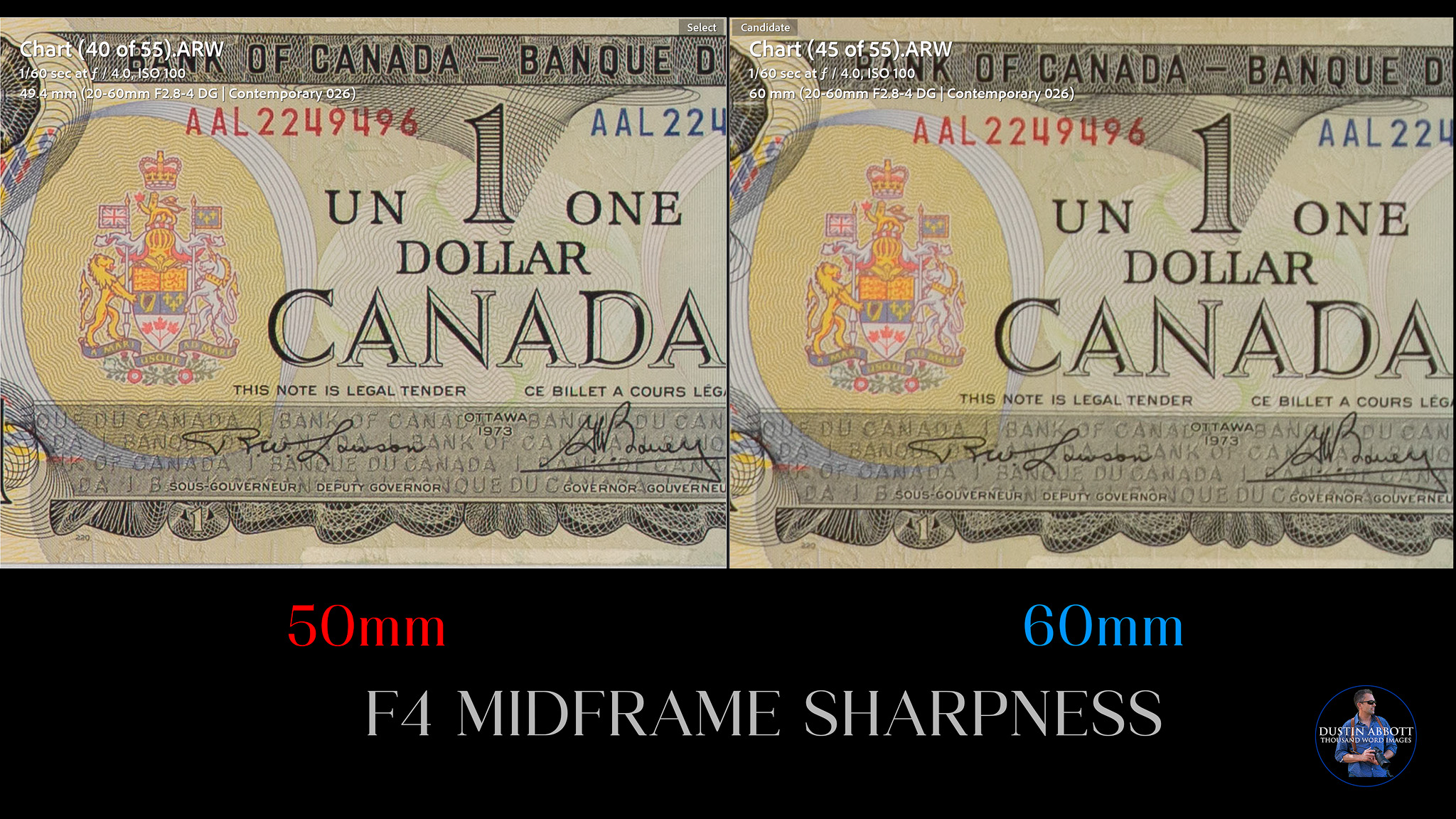
How about the telephoto end? 50mm is slightly sharper across the frame than 50mm. The difference is apparent with them side by side:
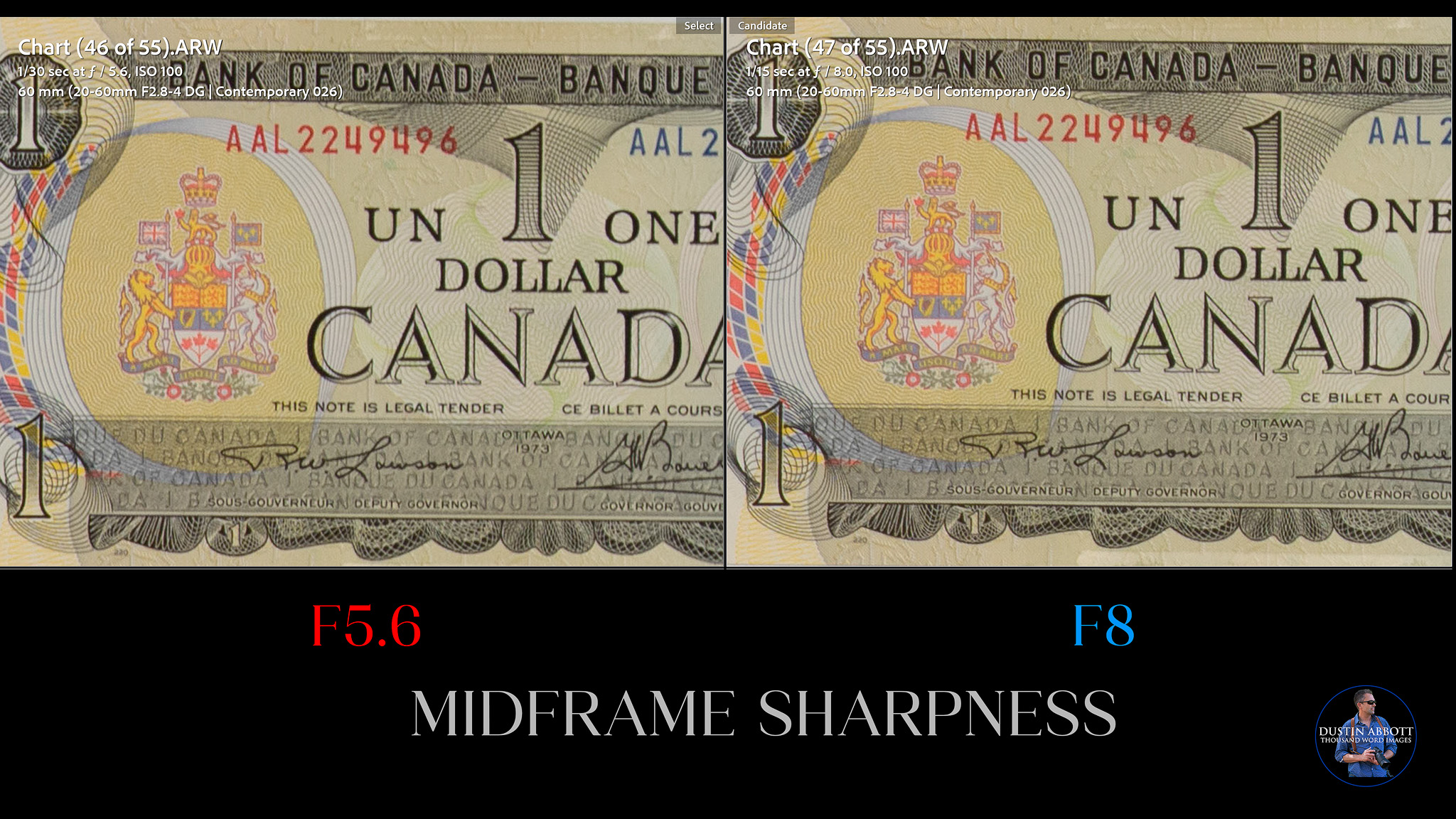
Neither focal length sharpens up quite as much when stopped down as in earlier in the zoom range, though I found that F8 produced a slightly better result than F5.6.
Real world sharpness is pretty good, however, even if contrast isn’t quite as high. A zoom into this F6.3 portrait shot, for example, shows a very nice amount of detail.
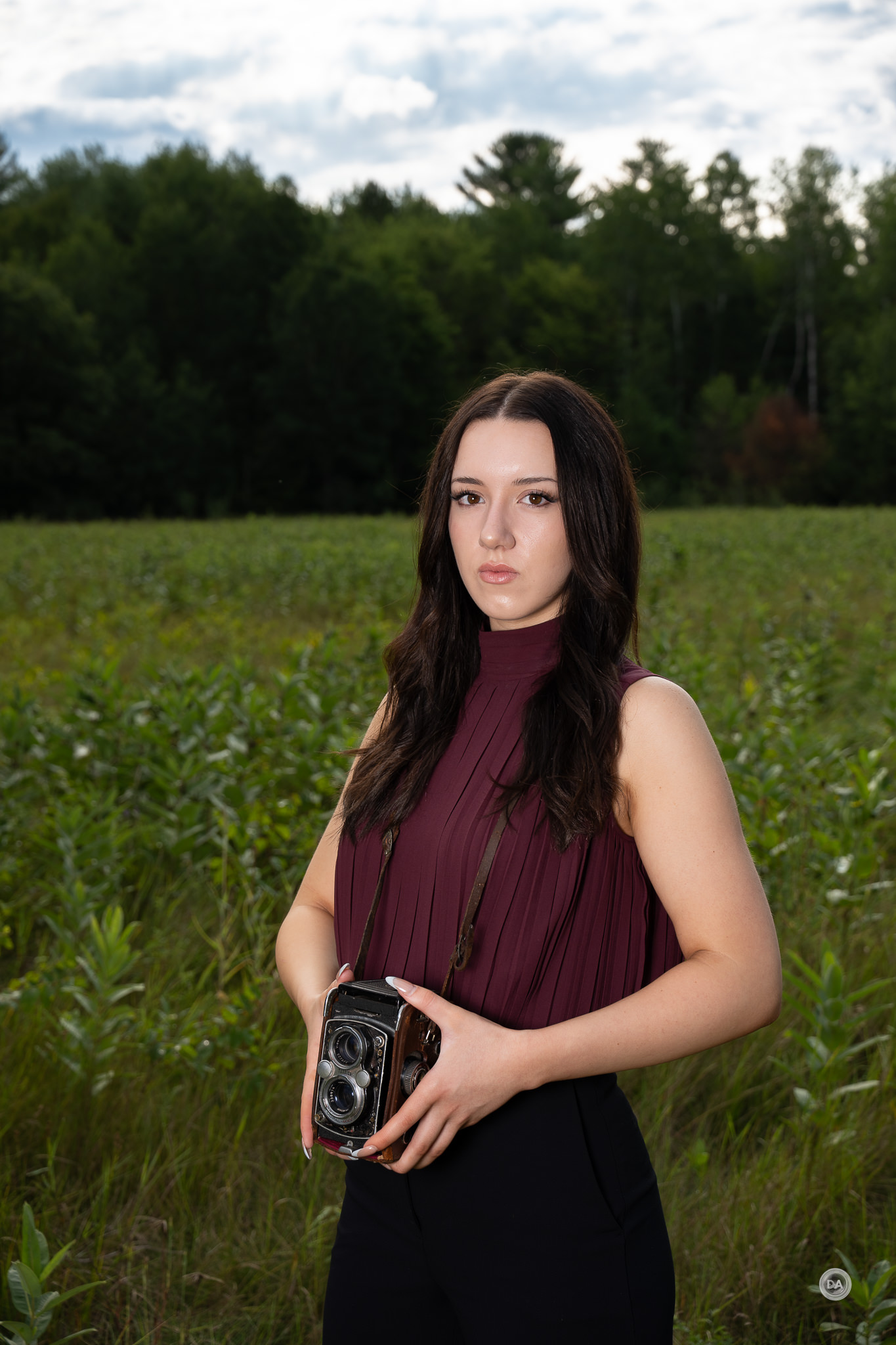
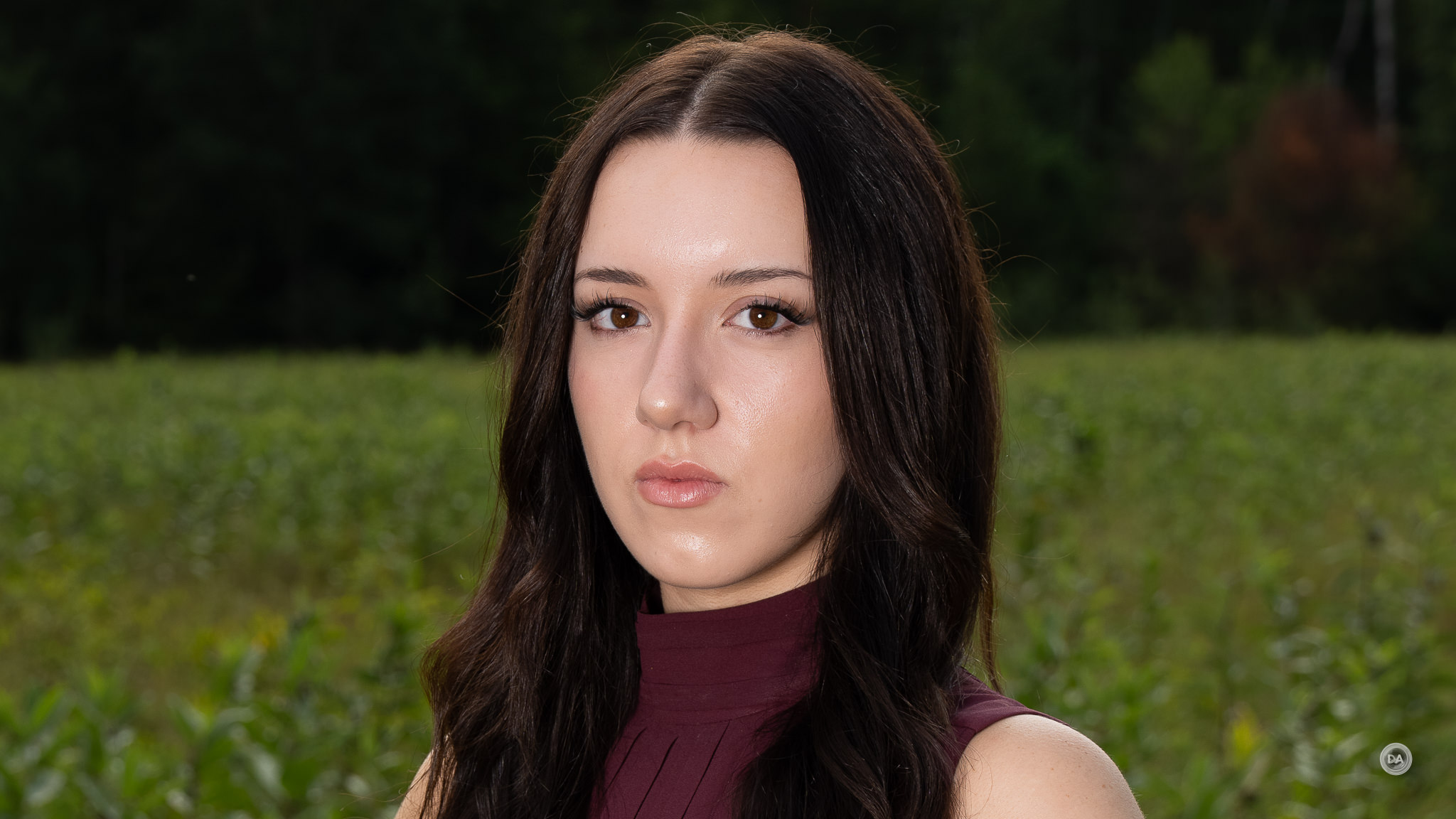
Likewise this landscape shot at F5.6 looks very good in the center and the midframe, and while the corners are a bit softer, they aren’t unusable.

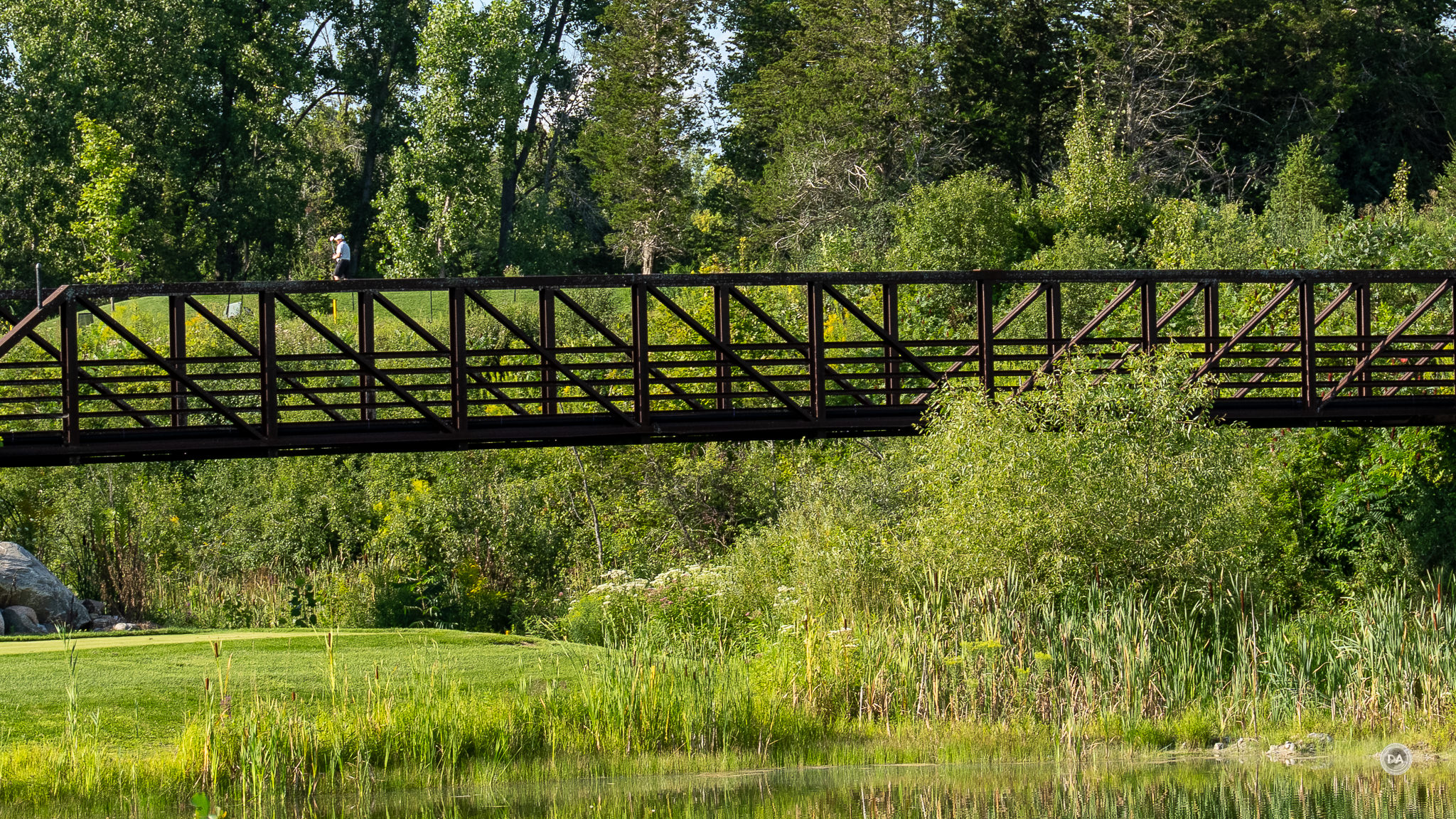
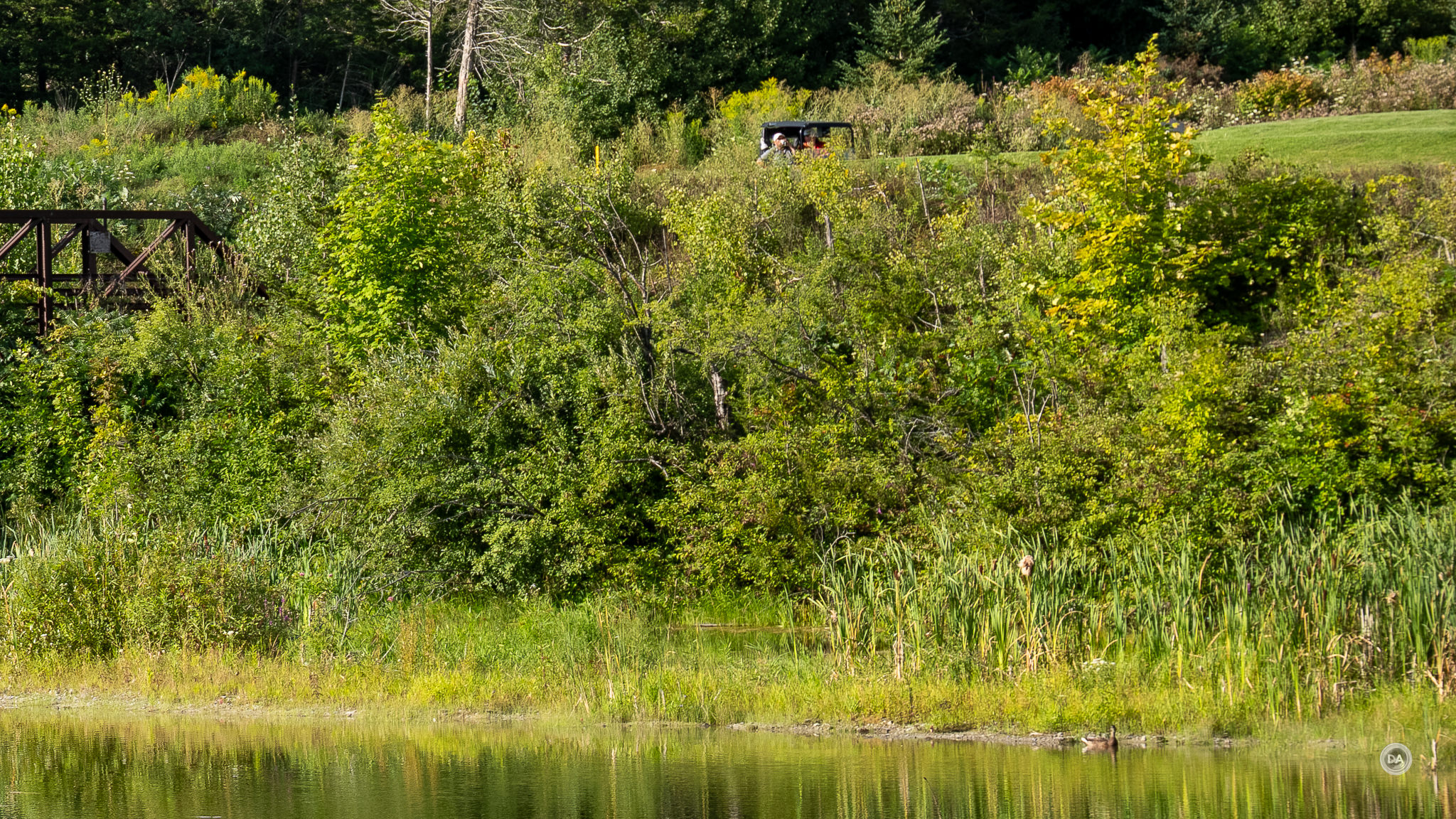
At 60mm vs 50mm (and F4 vs F2.8), the Sigma is a bit sharper wide open, though if you stop the Thypoch down to F4 to match the Sigma, it is a bit better everywhere save the corners, where the Sigma looks a bit better.
So, in general, Sigma has done a good job of producing a zoom that is definitely competitively sharp compared to its direct competitors while also extending the zoom range in both directions. Nice!
How about the general rendering, however?
This is actually a strength for this lens, in my opinion. The bokeh quality can be quite good, depending on the situation.
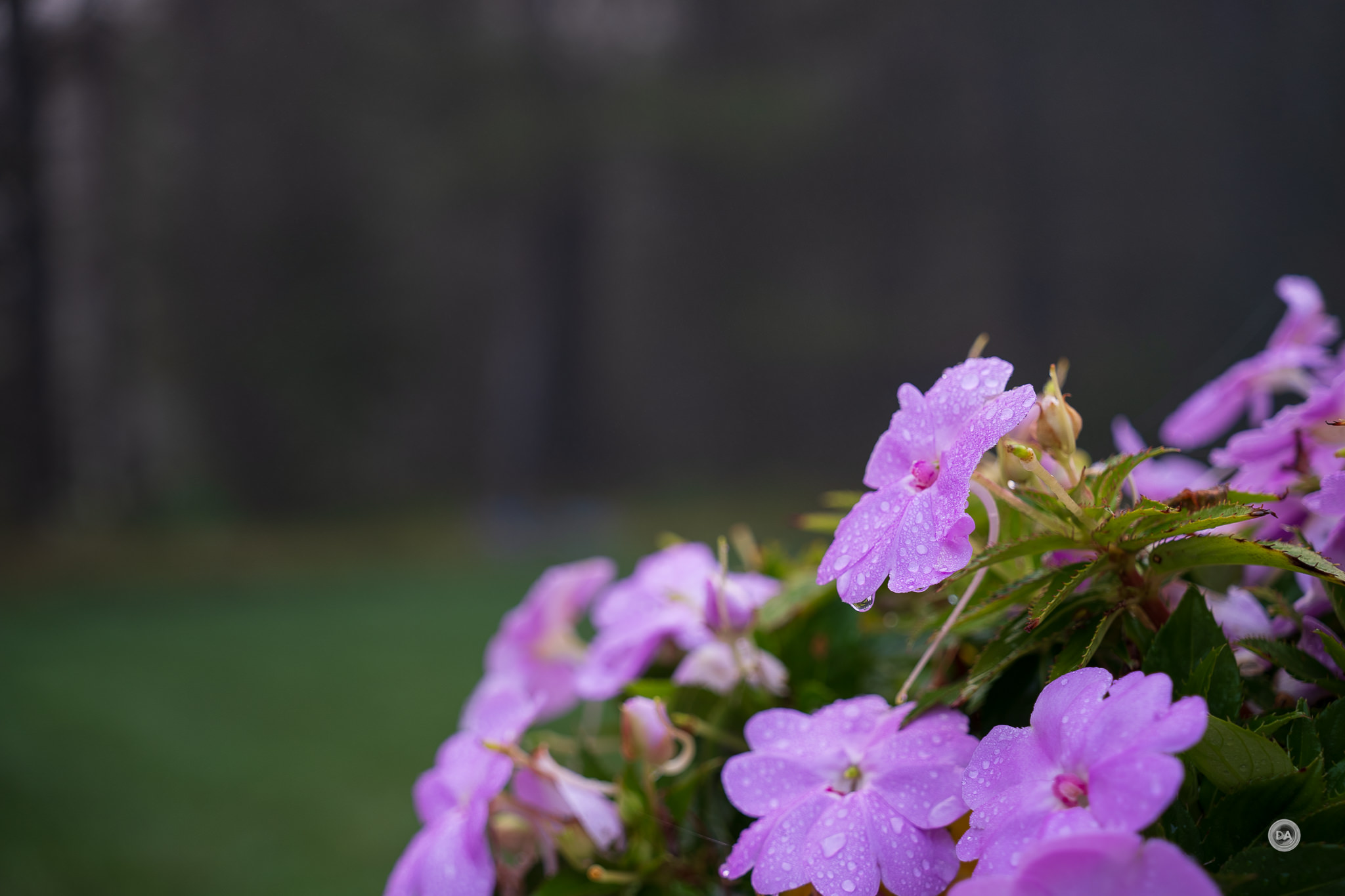
I would say that a lens like the Tamron 28-75mm F2.8 G2 has nicer overall bokeh, but that’s in part because the Sigma has a disadvantage in aperture on the telephoto end. 60mm at F4 can’t always strongly blur a background, resulting in slightly busier results like this.
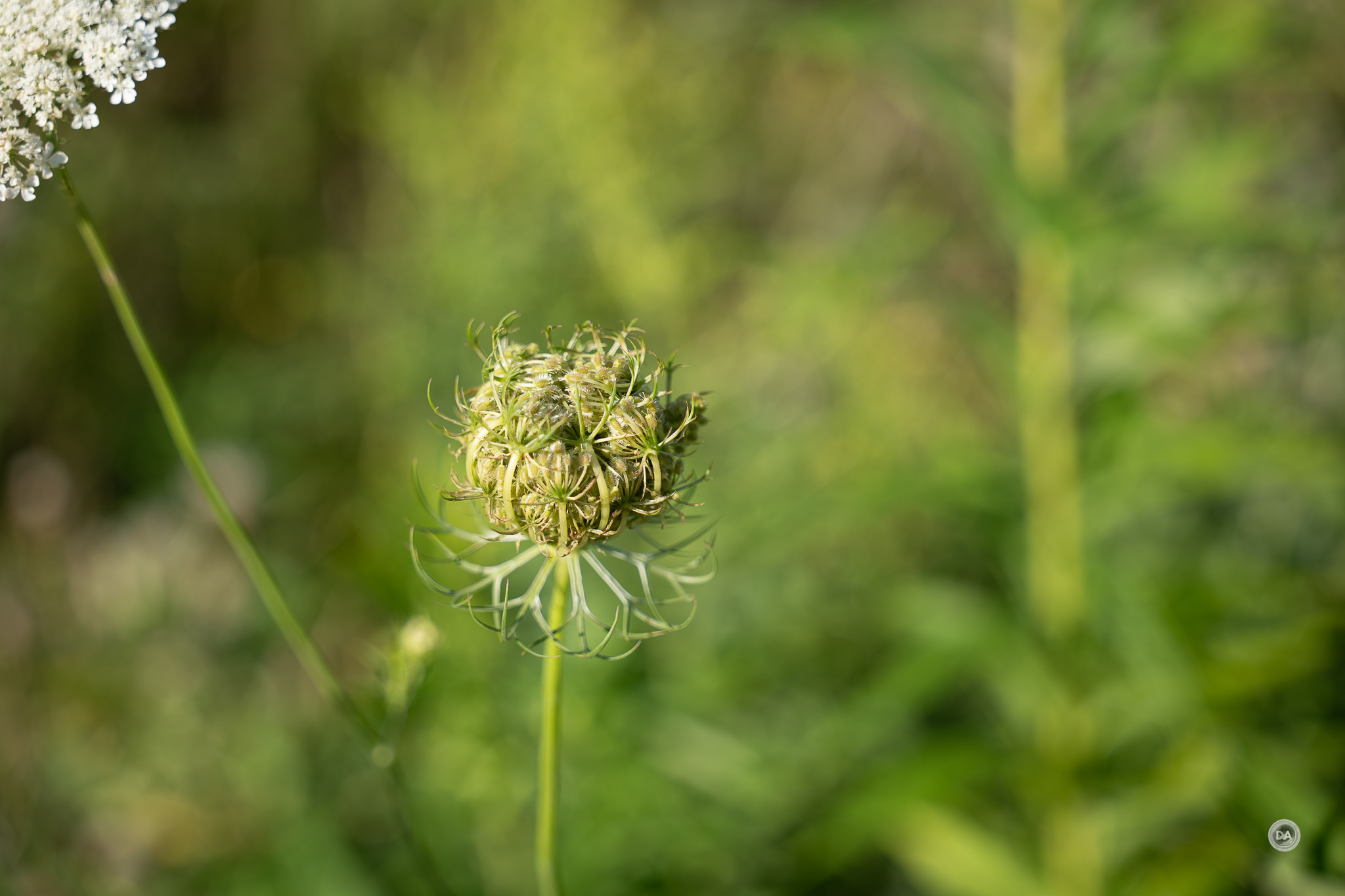
In most cases, however, the bokeh looks quite good even if the blur isn’t strong.

This portrait doesn’t have strong blur, but the transition out of focus is reasonably smooth.
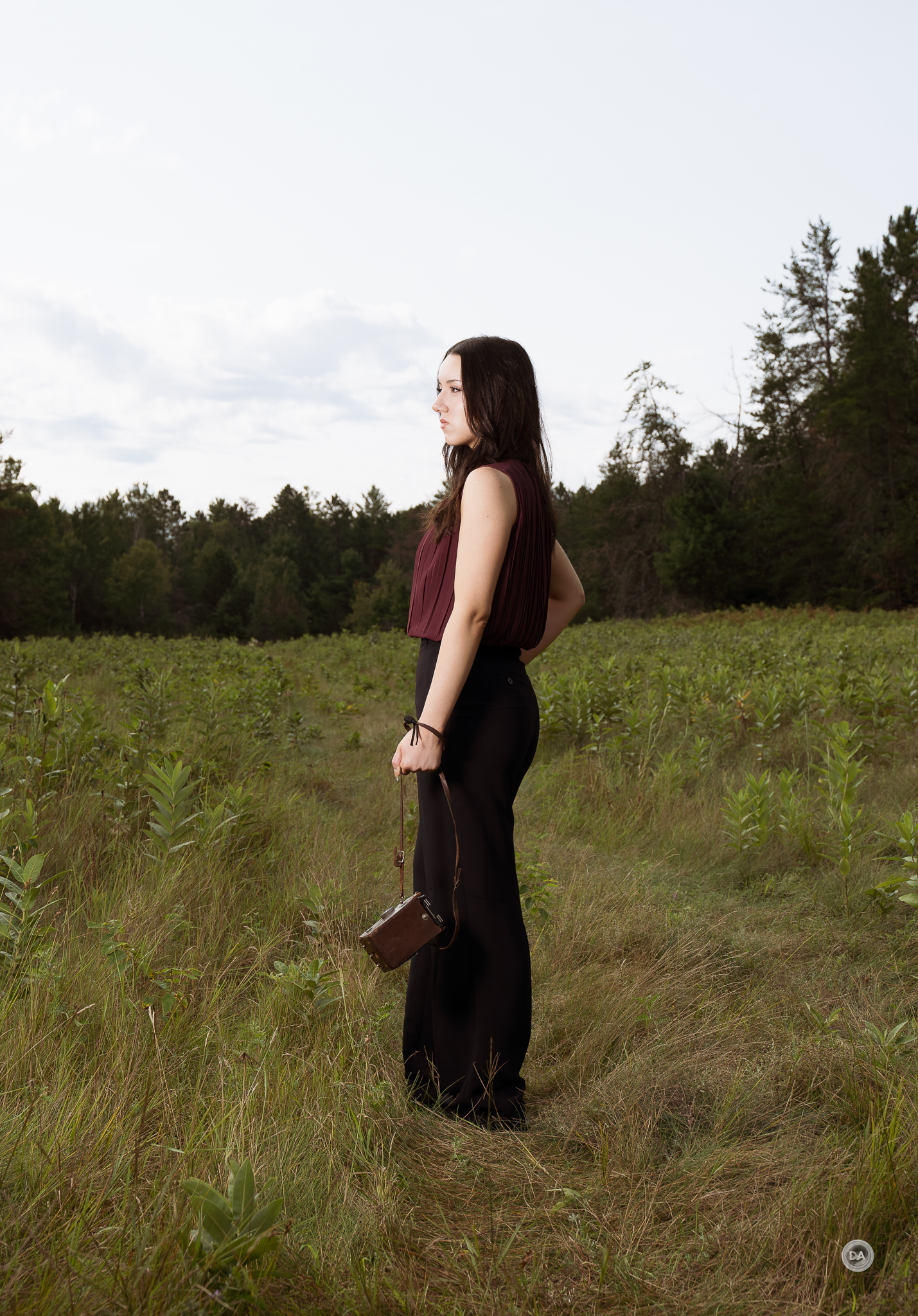
Flare resistance is also quite good. Sigma’s newest coating do a great job of resisting flare artifacts. This portrait, for example, is strongly backlit. I used the Neewer Q4 Pro light, which I reviewed here, to help fill in the subject from the front.

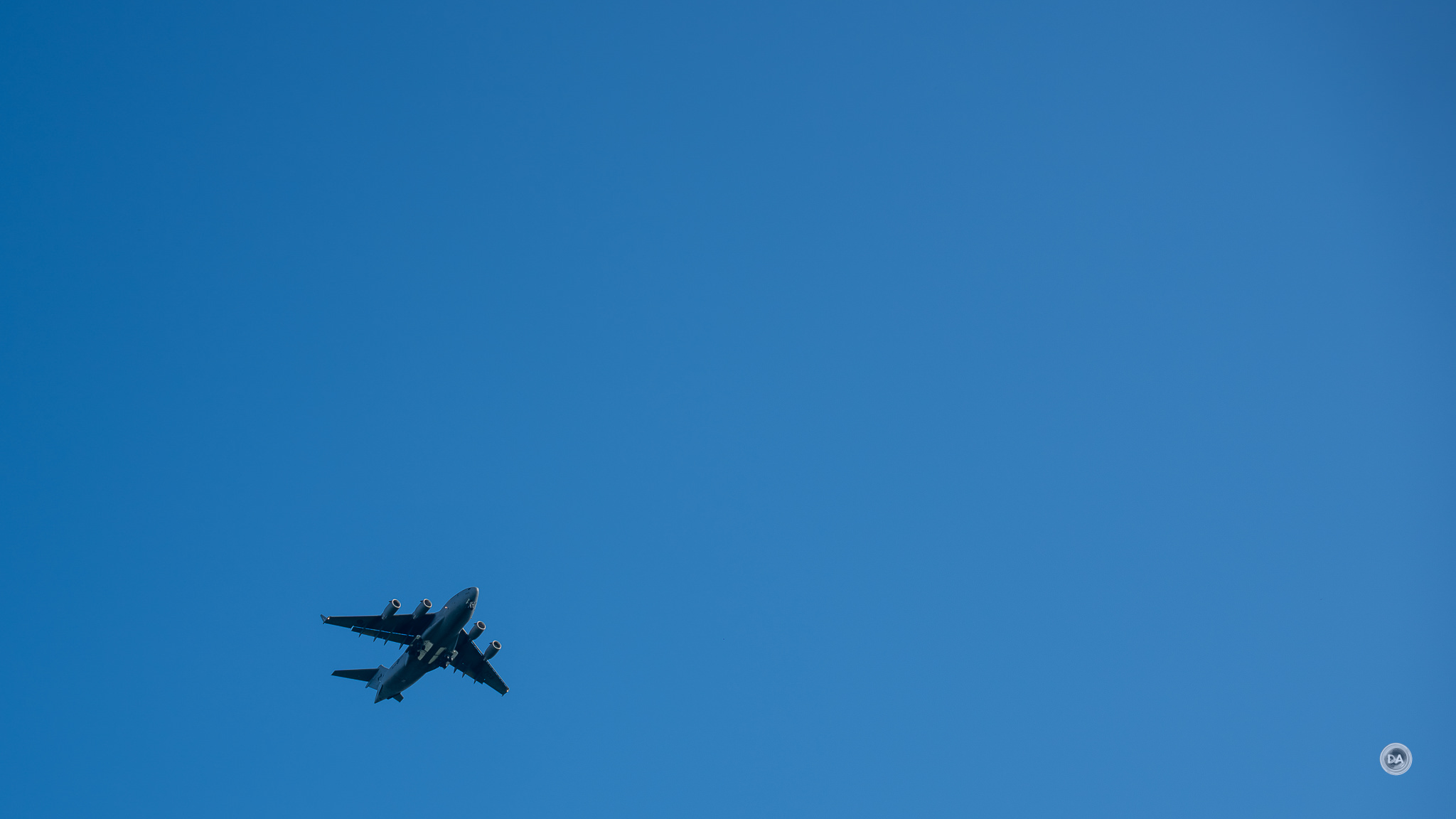
This shot of a military Hercules plan was shot right into the sun with no loss of contrast.

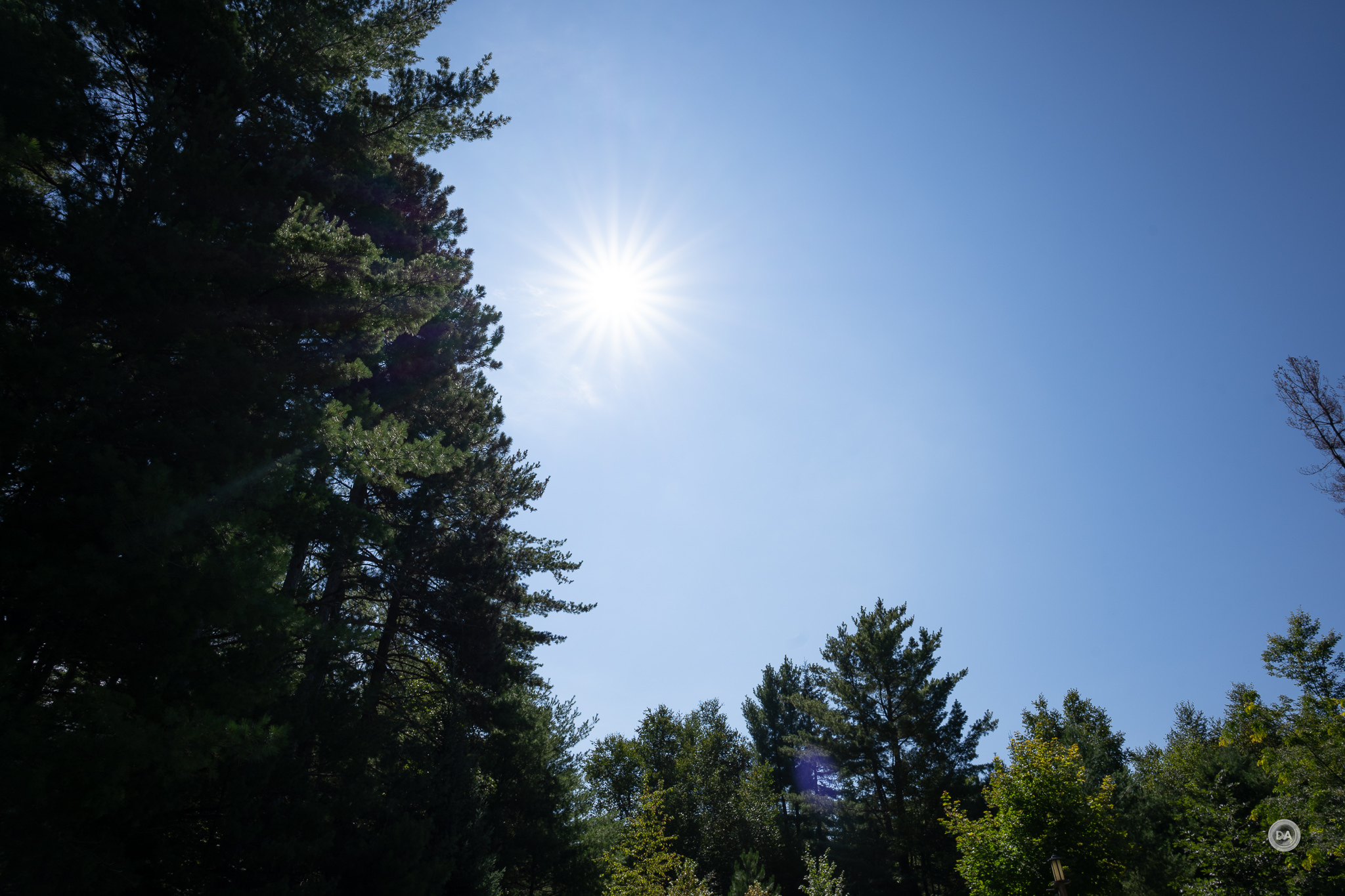
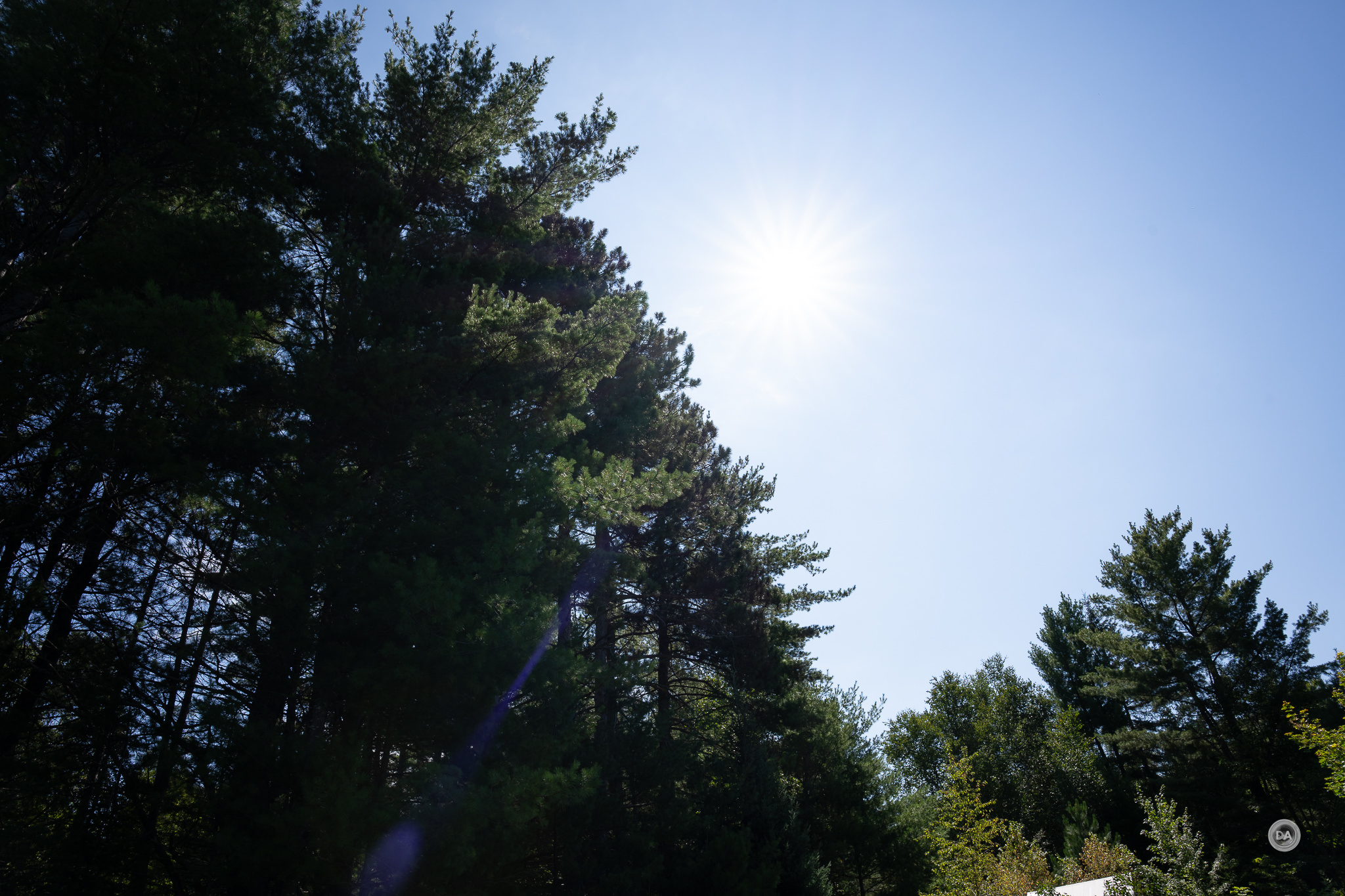
Here’s a variety of “flare photos”, first at F2.8 and then at F11. The final image represents the strongest ghosting that I could get out of the lens.
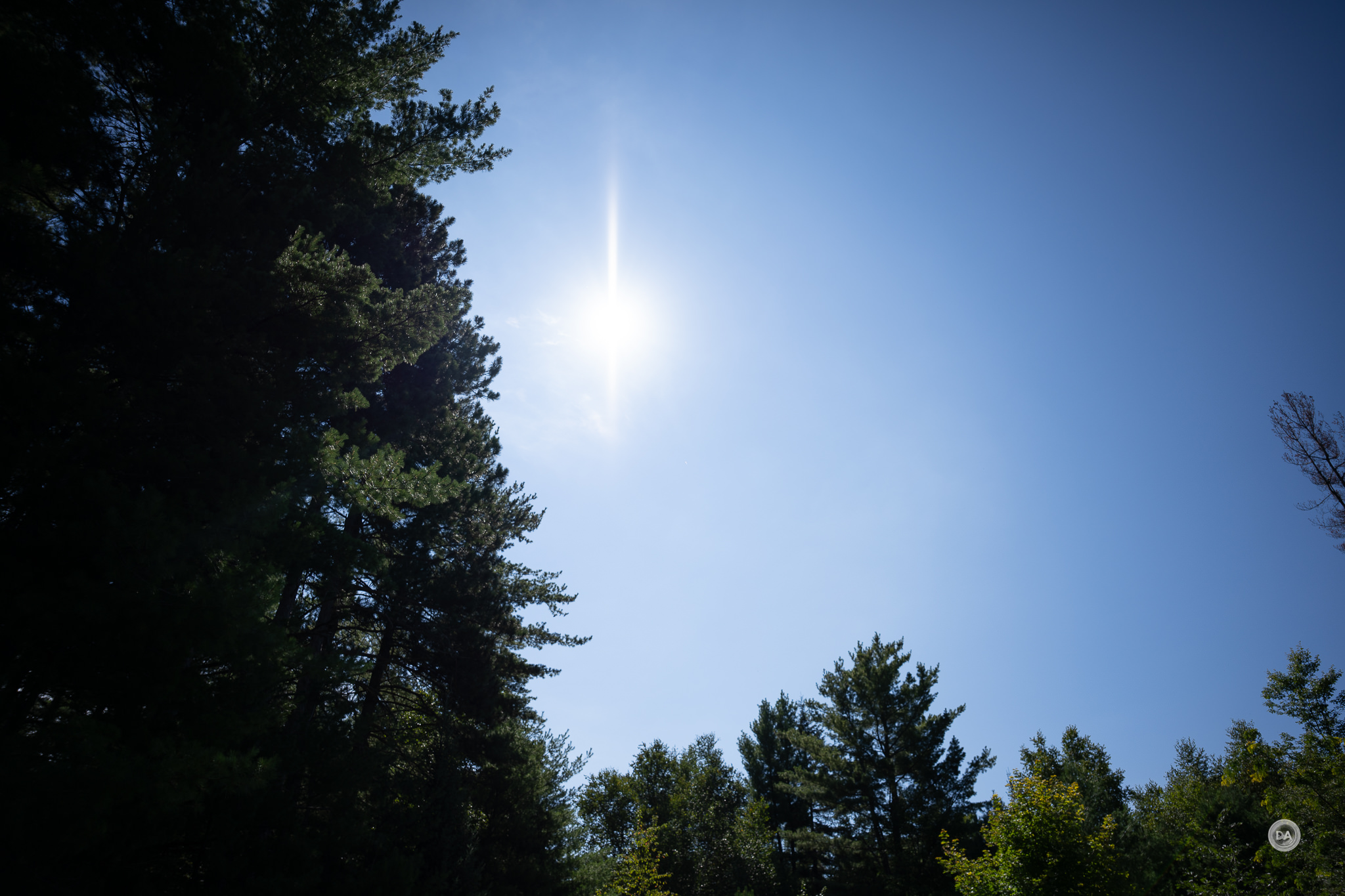
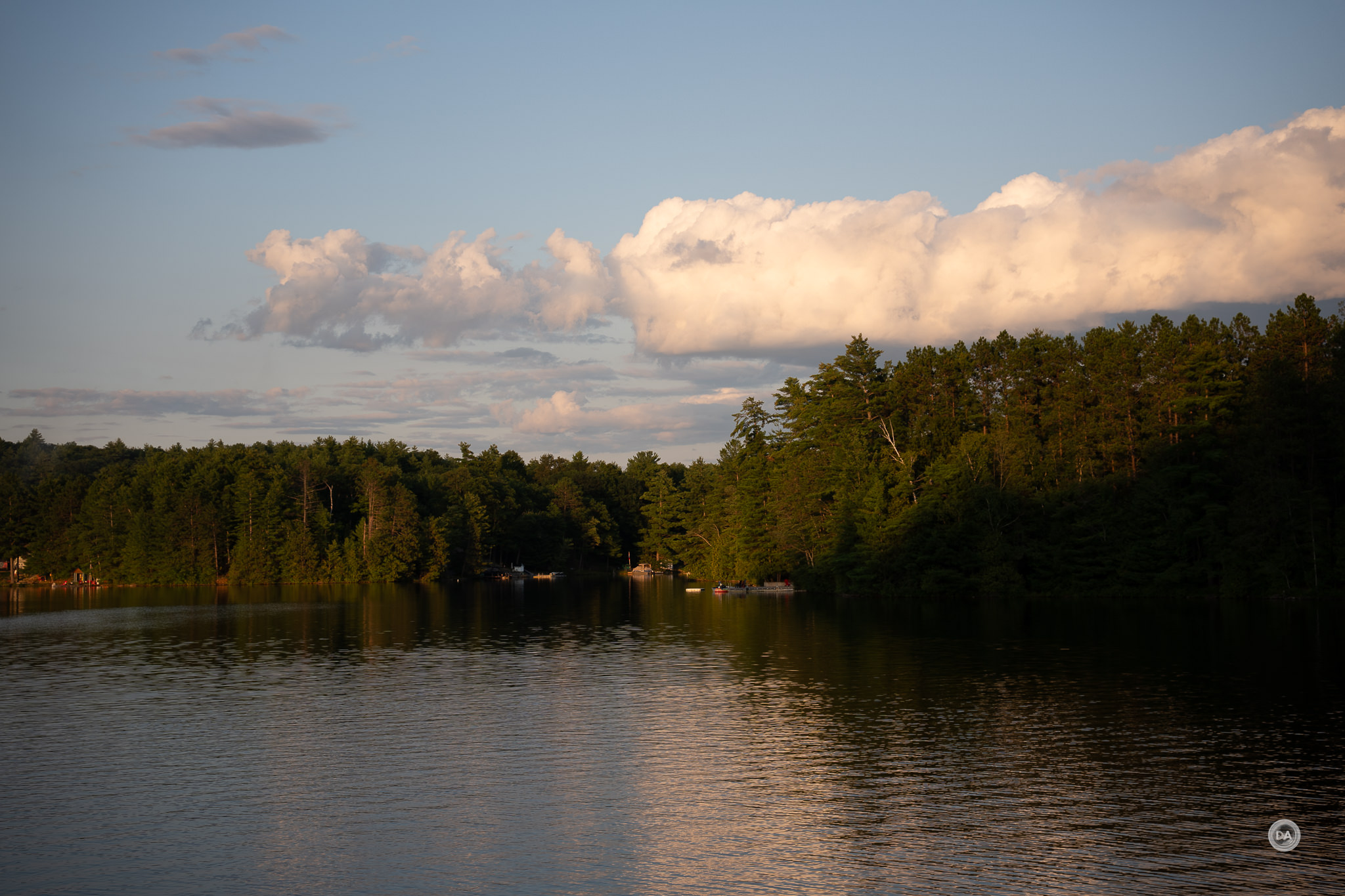
Sigma’s optical glass is good (I’ve watched them grinding it), and colors look rich and accurate.


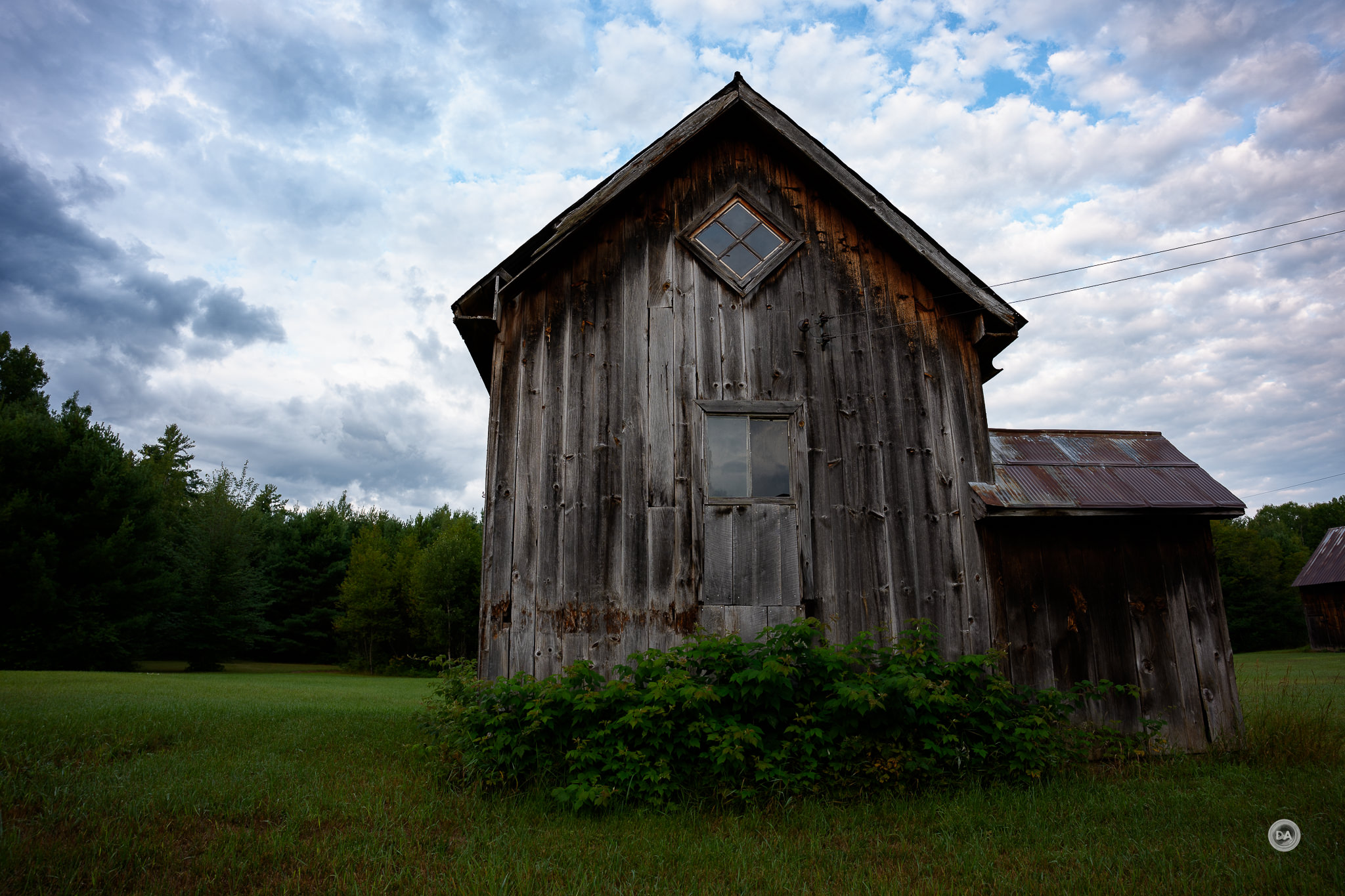
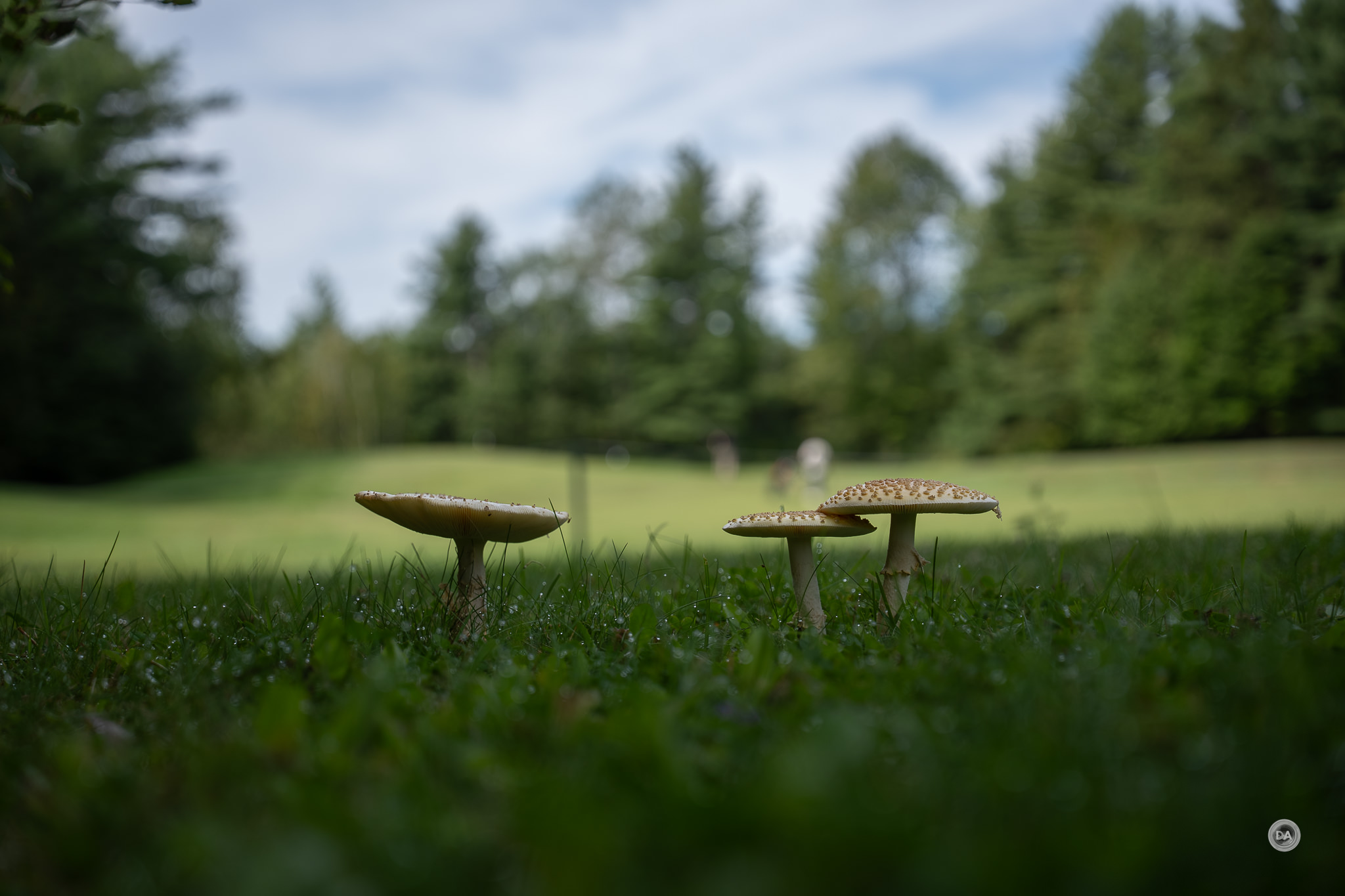
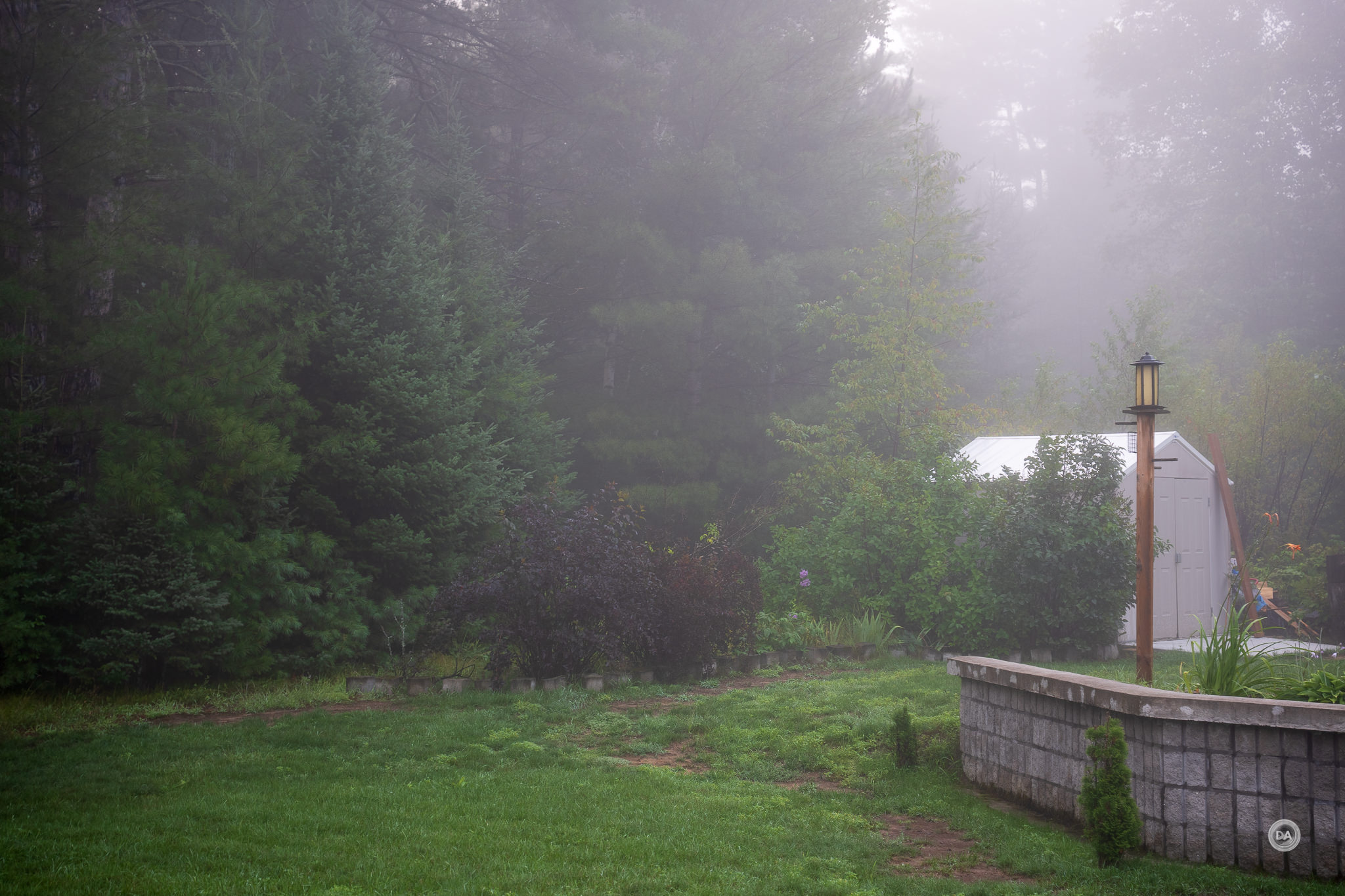
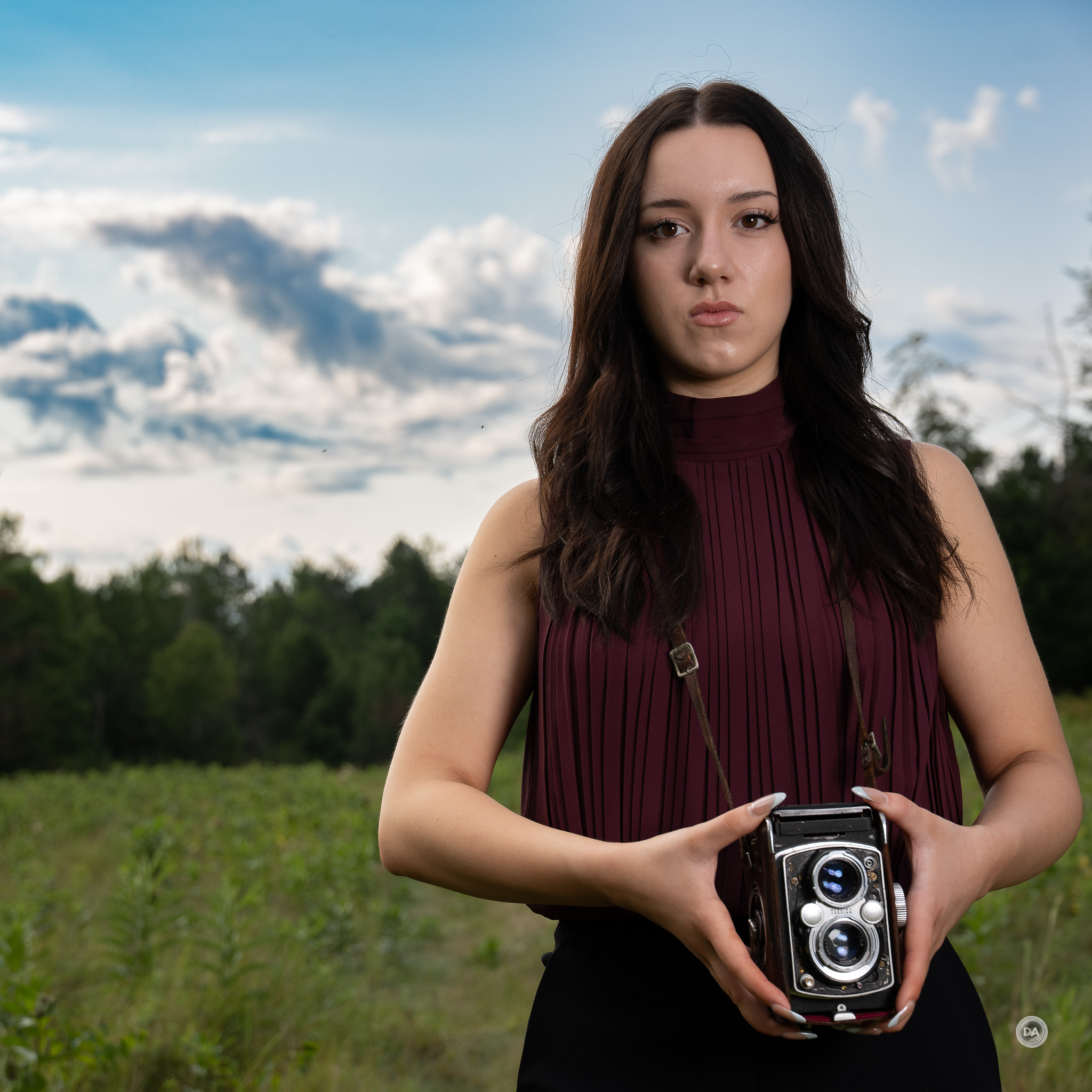
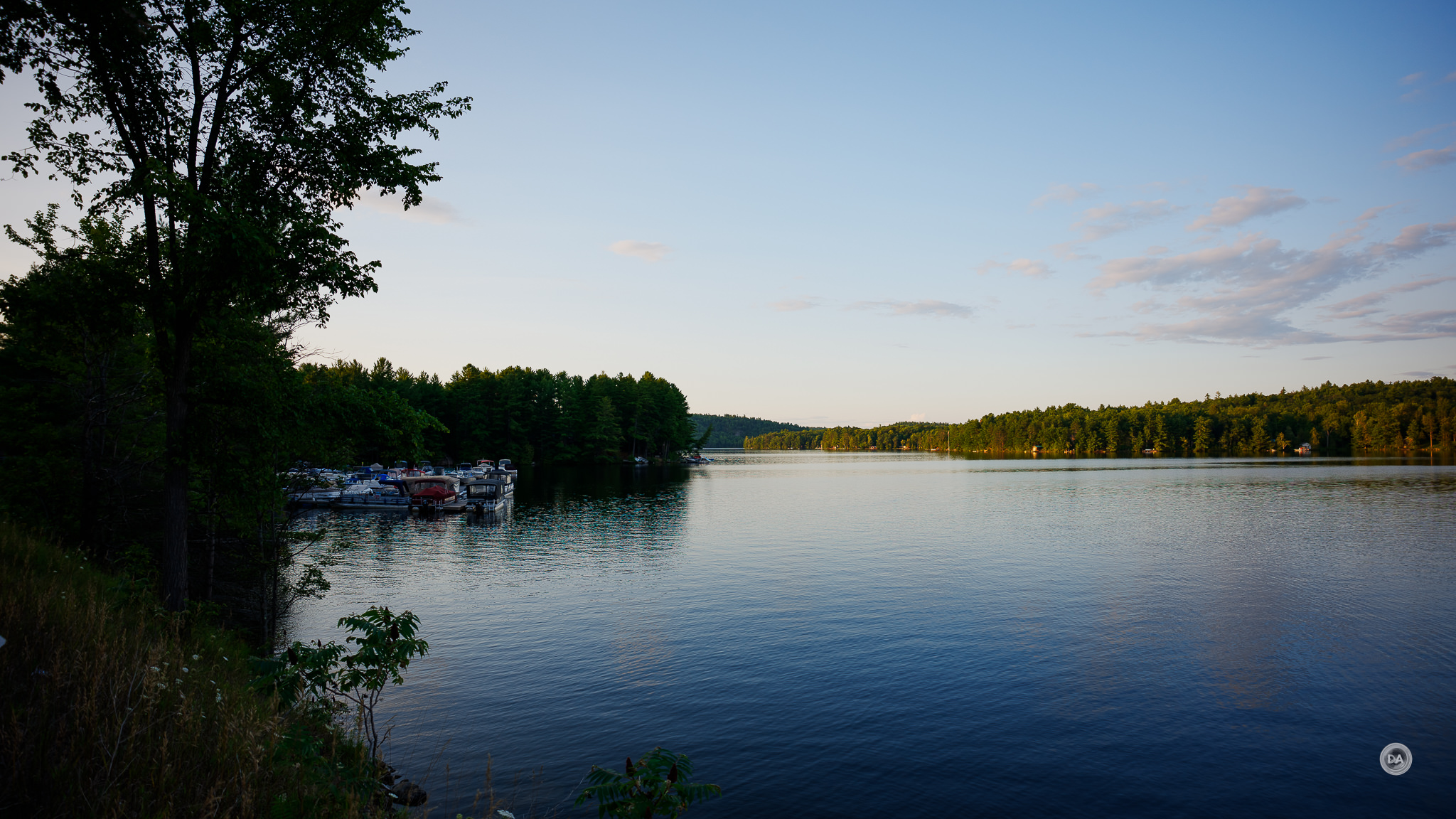
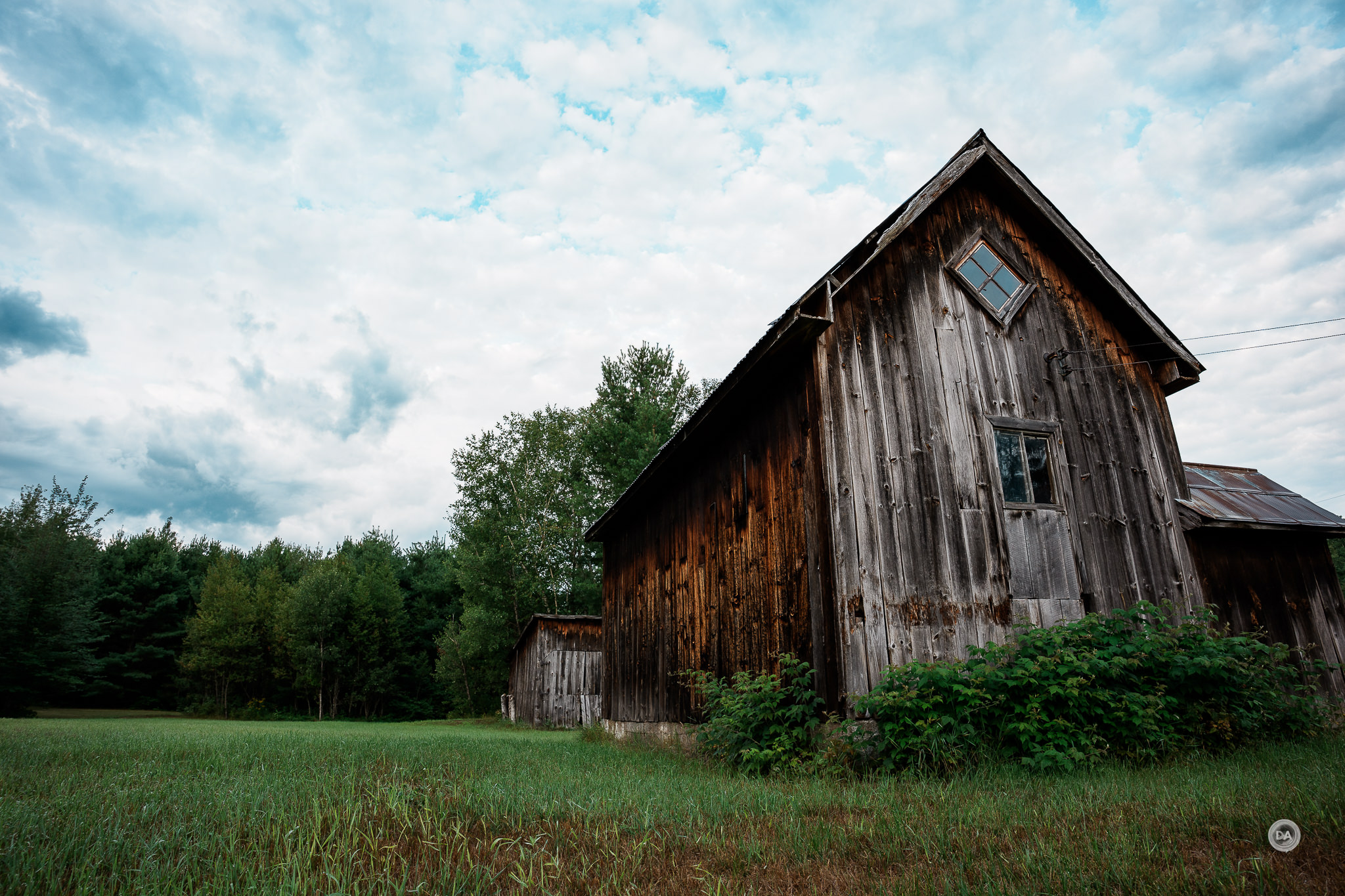
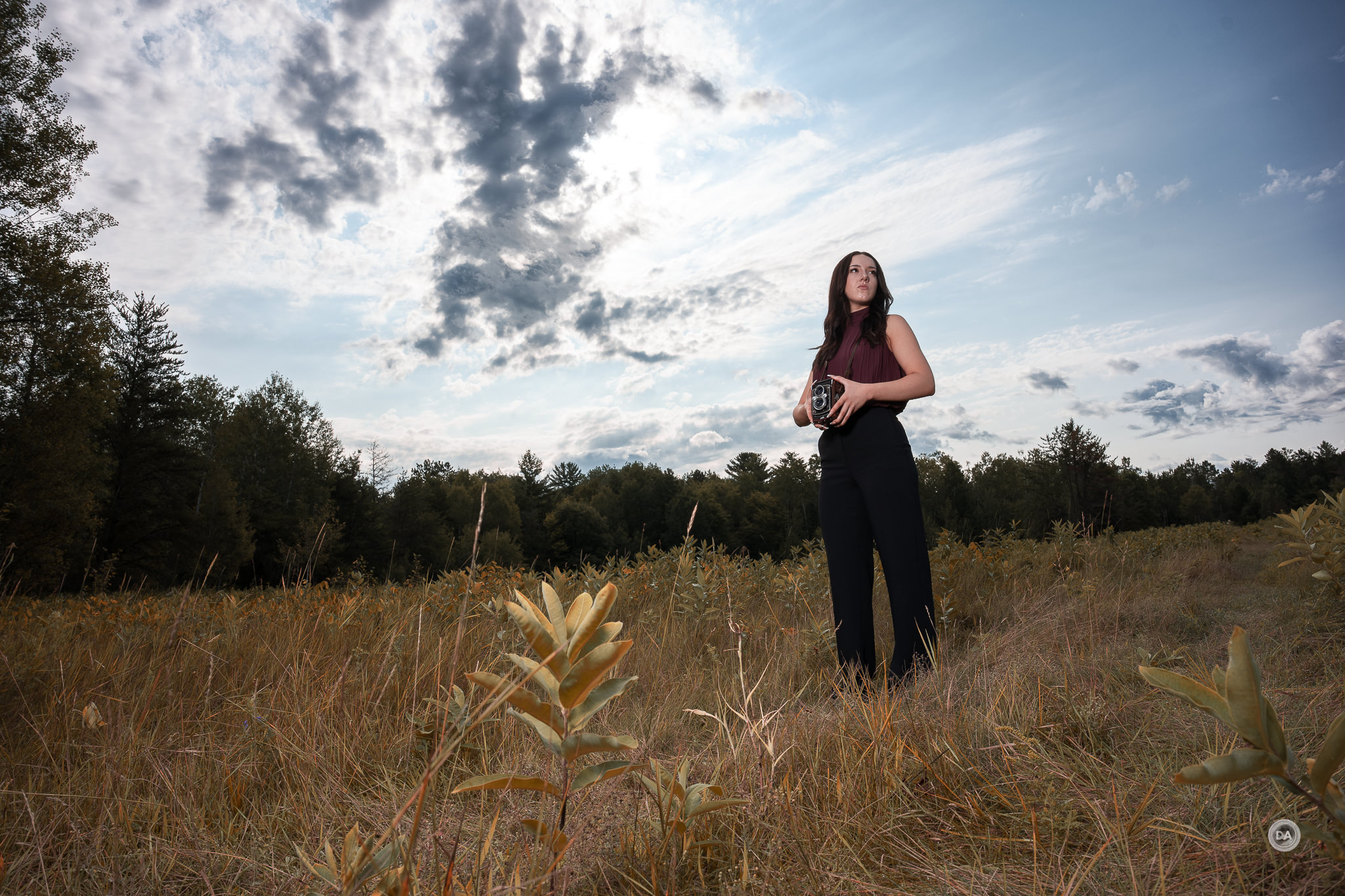
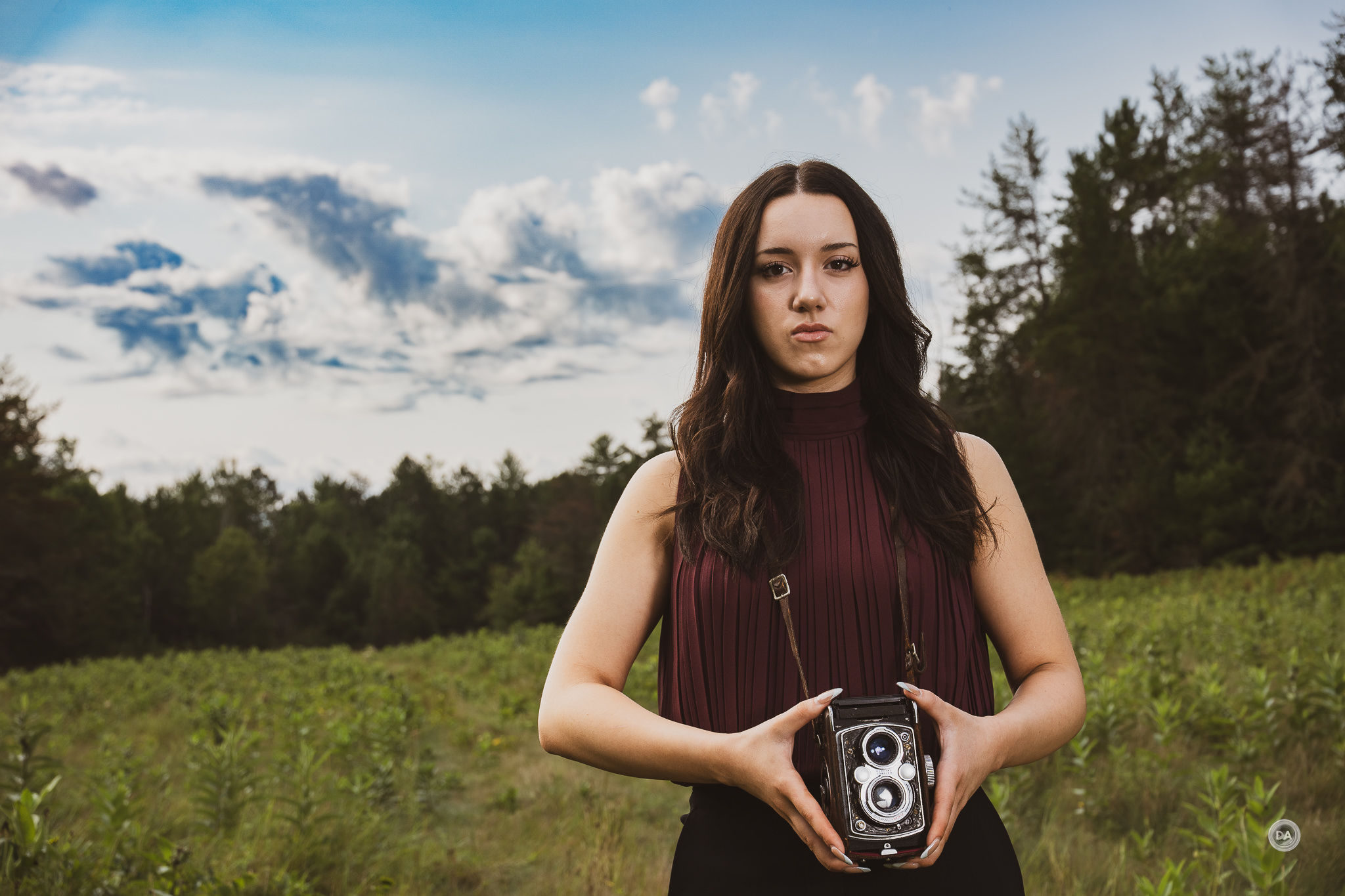
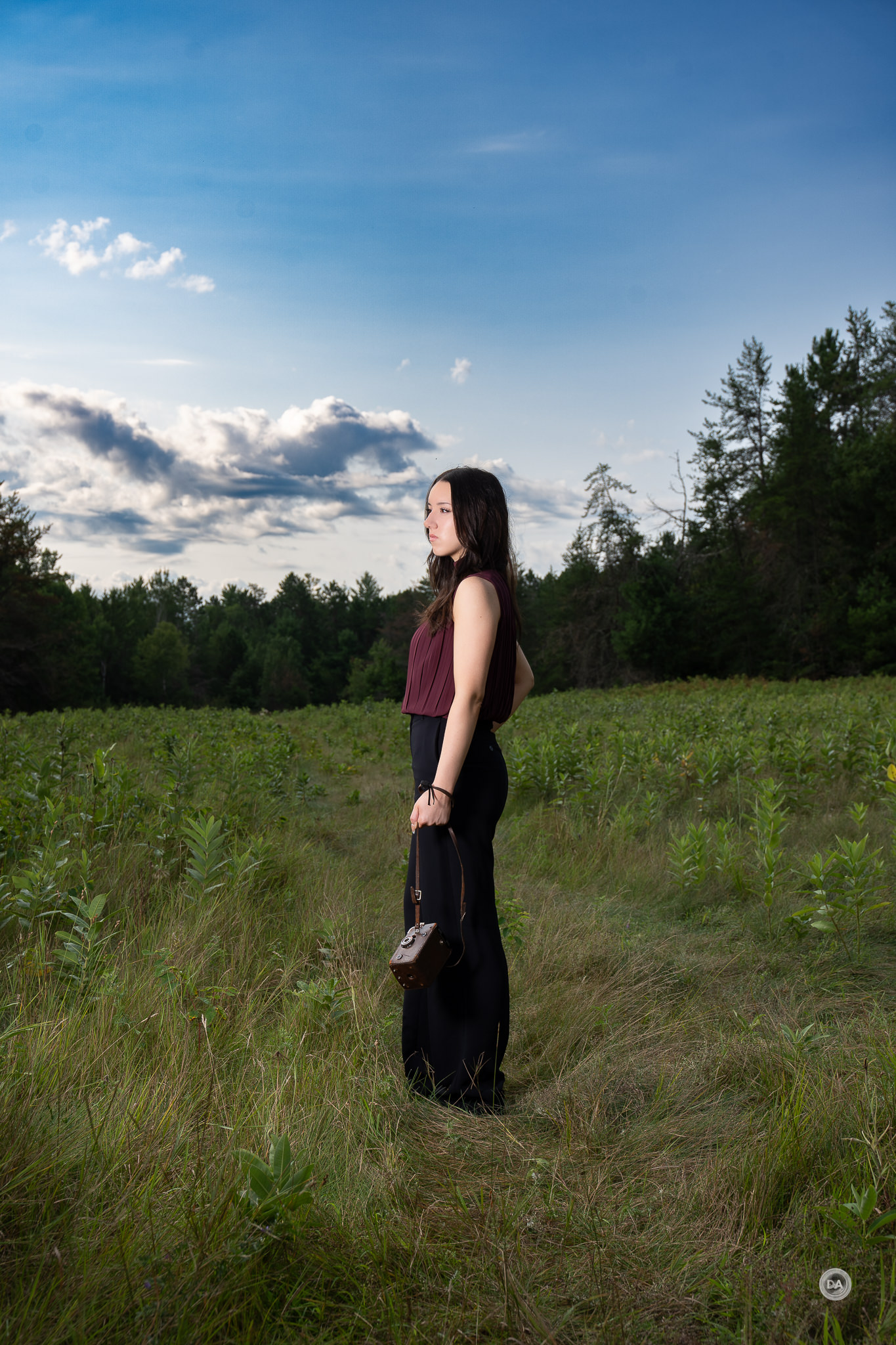
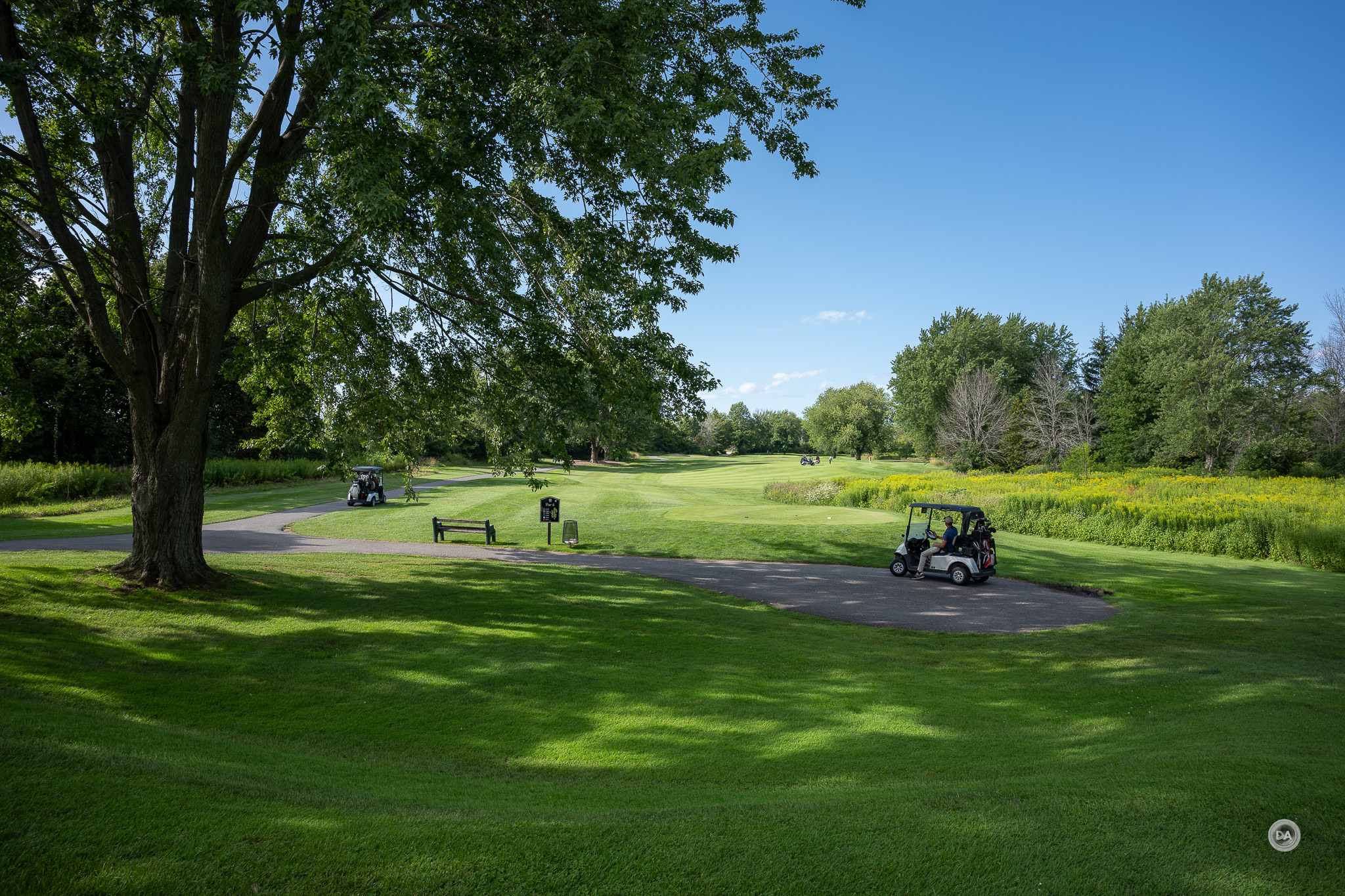
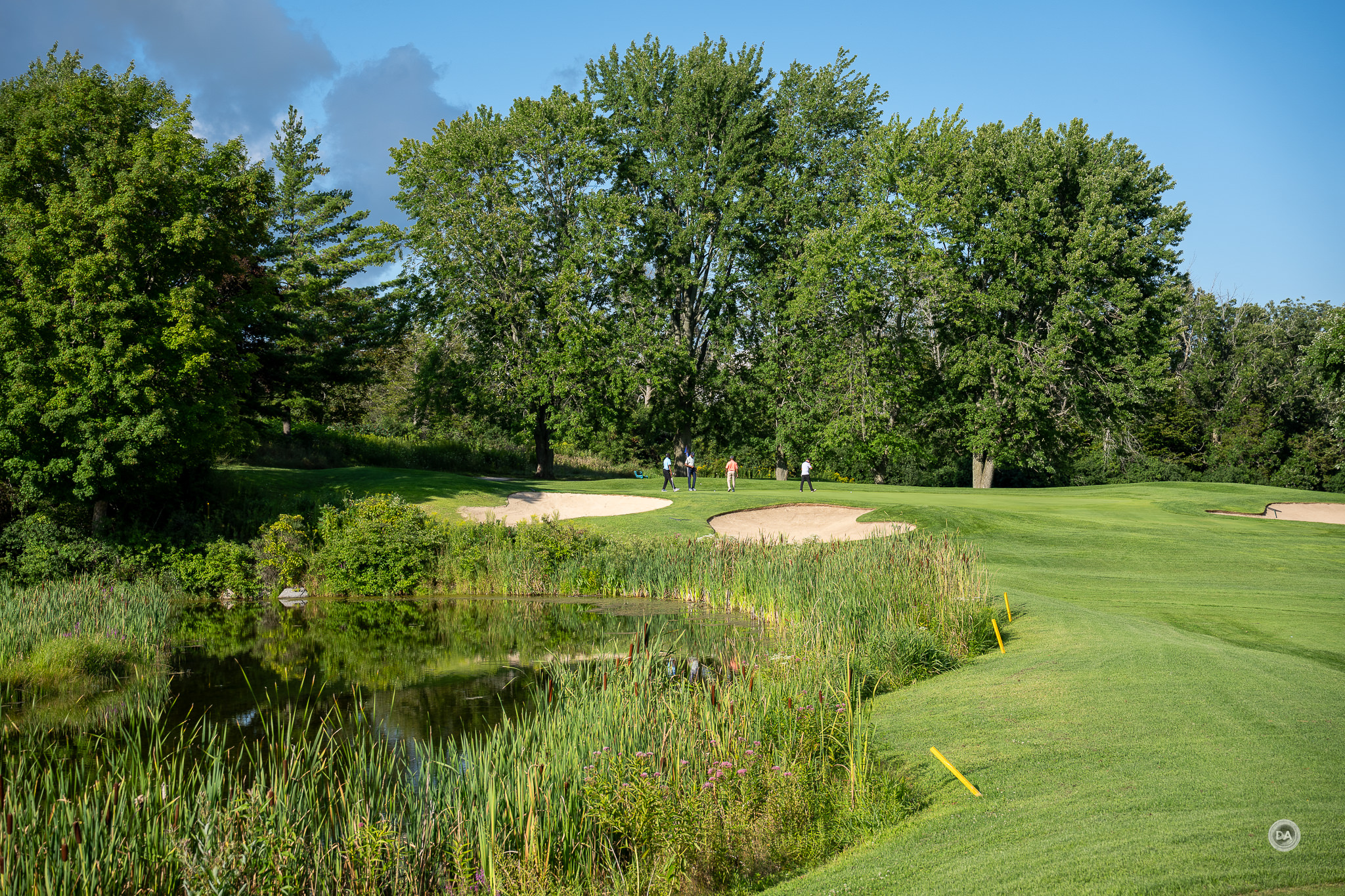
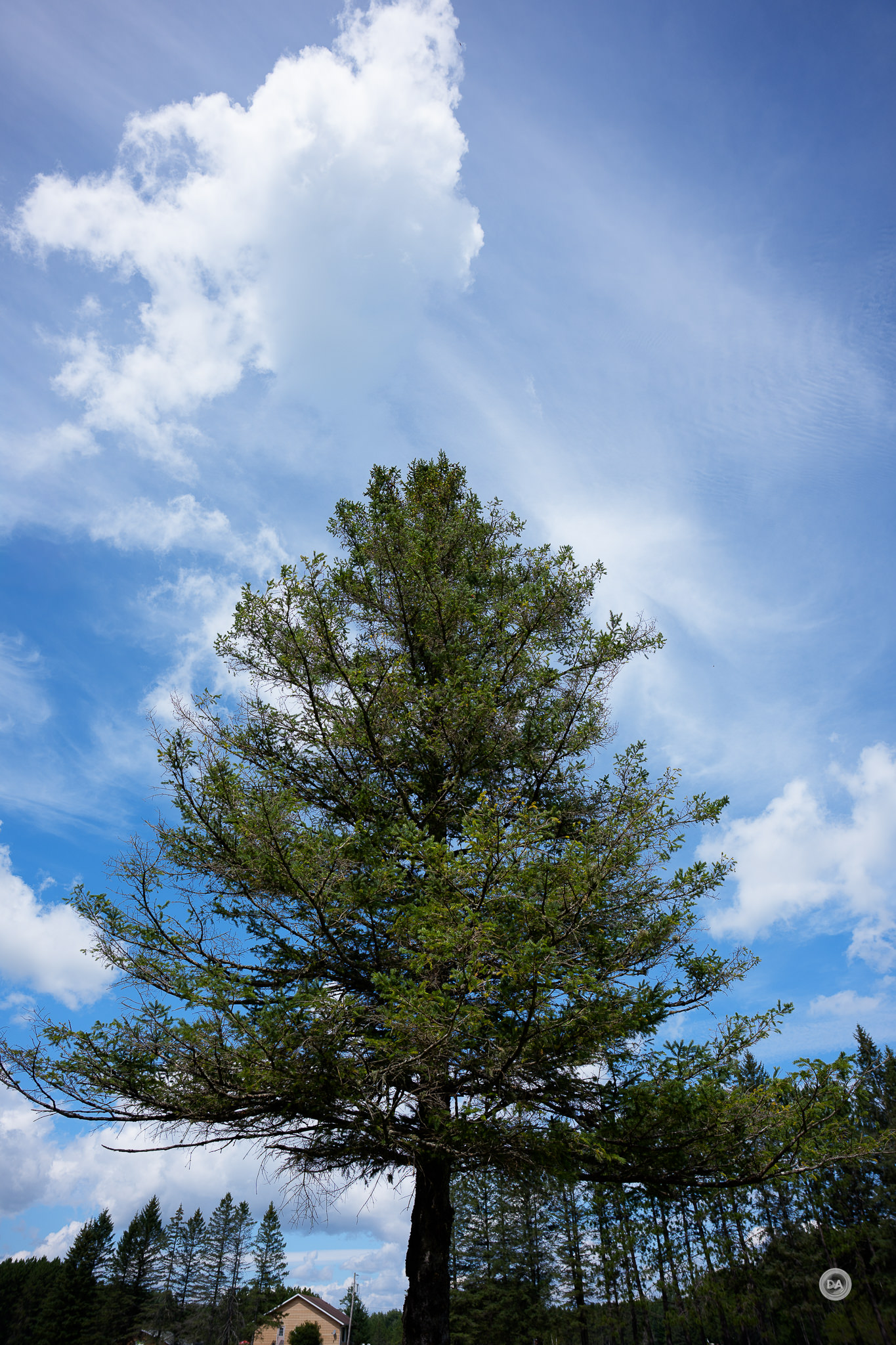
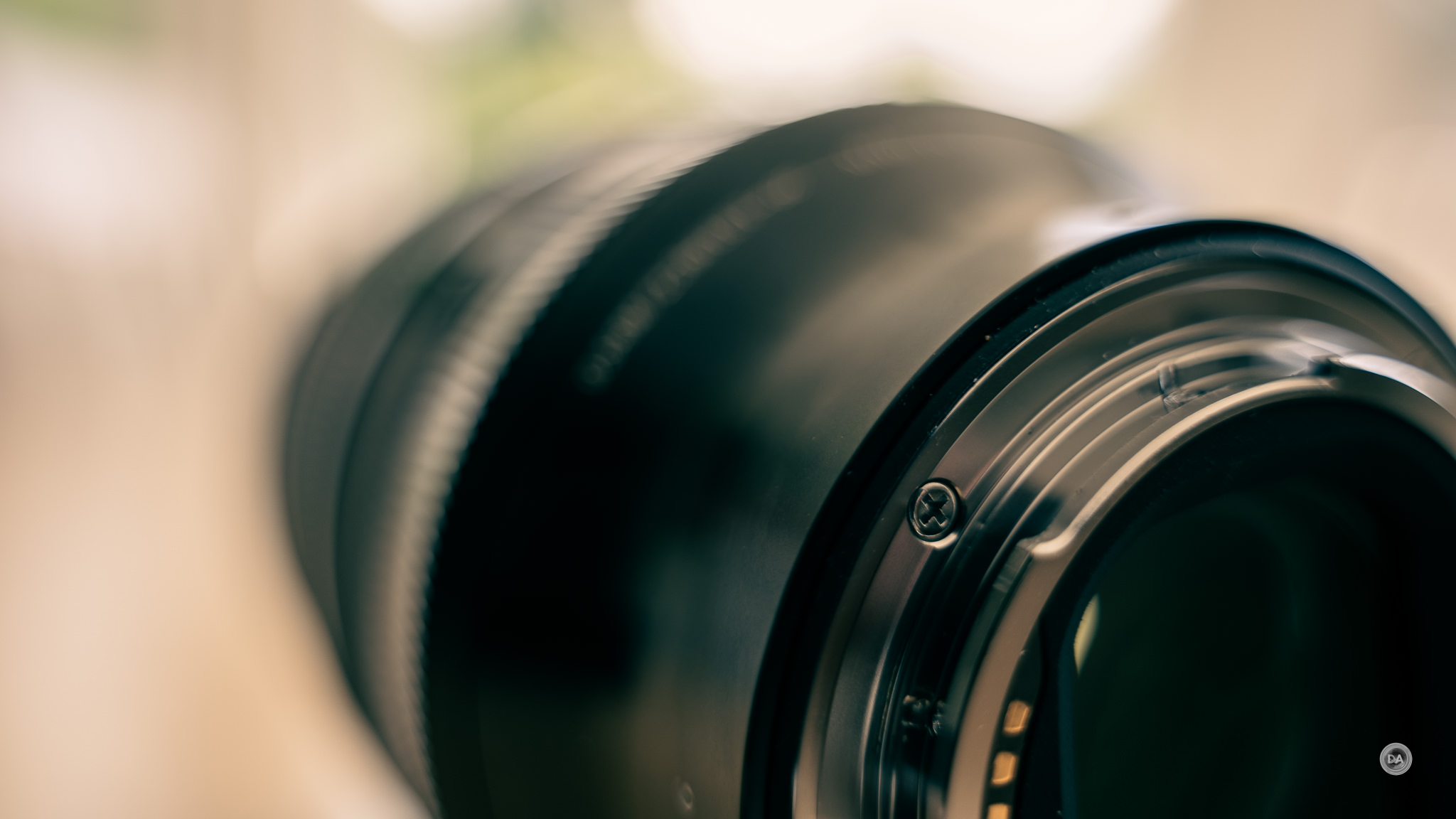
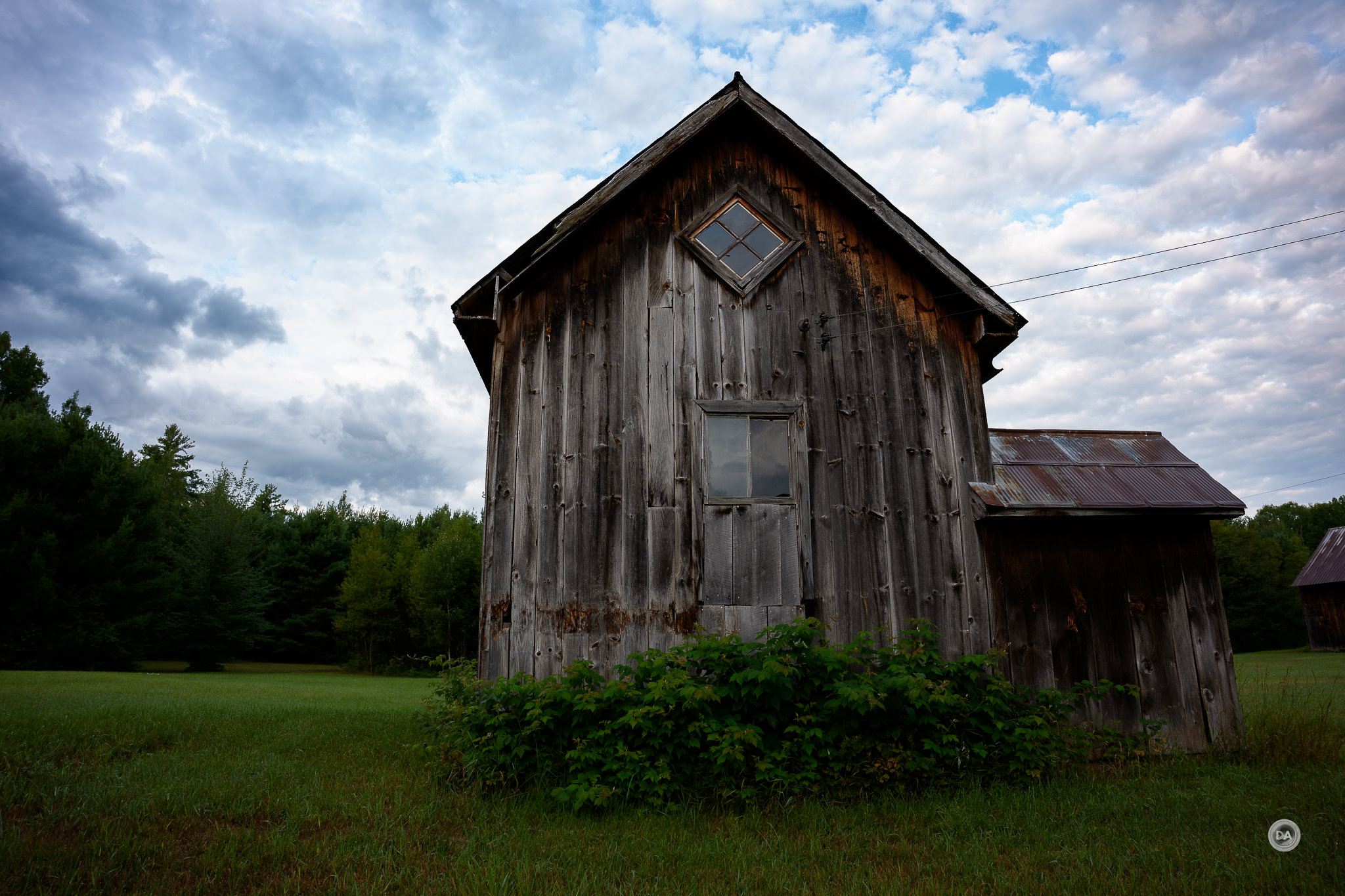
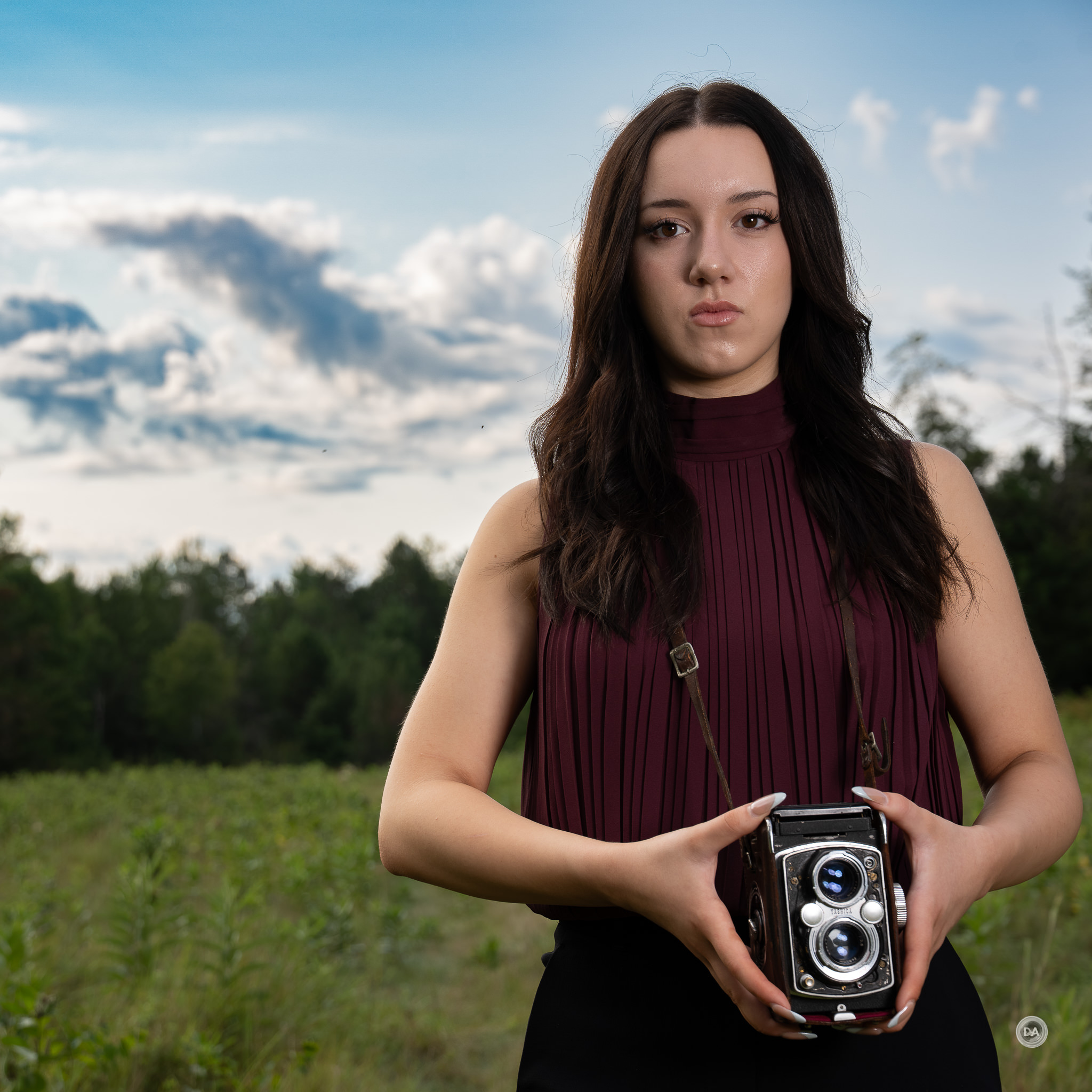
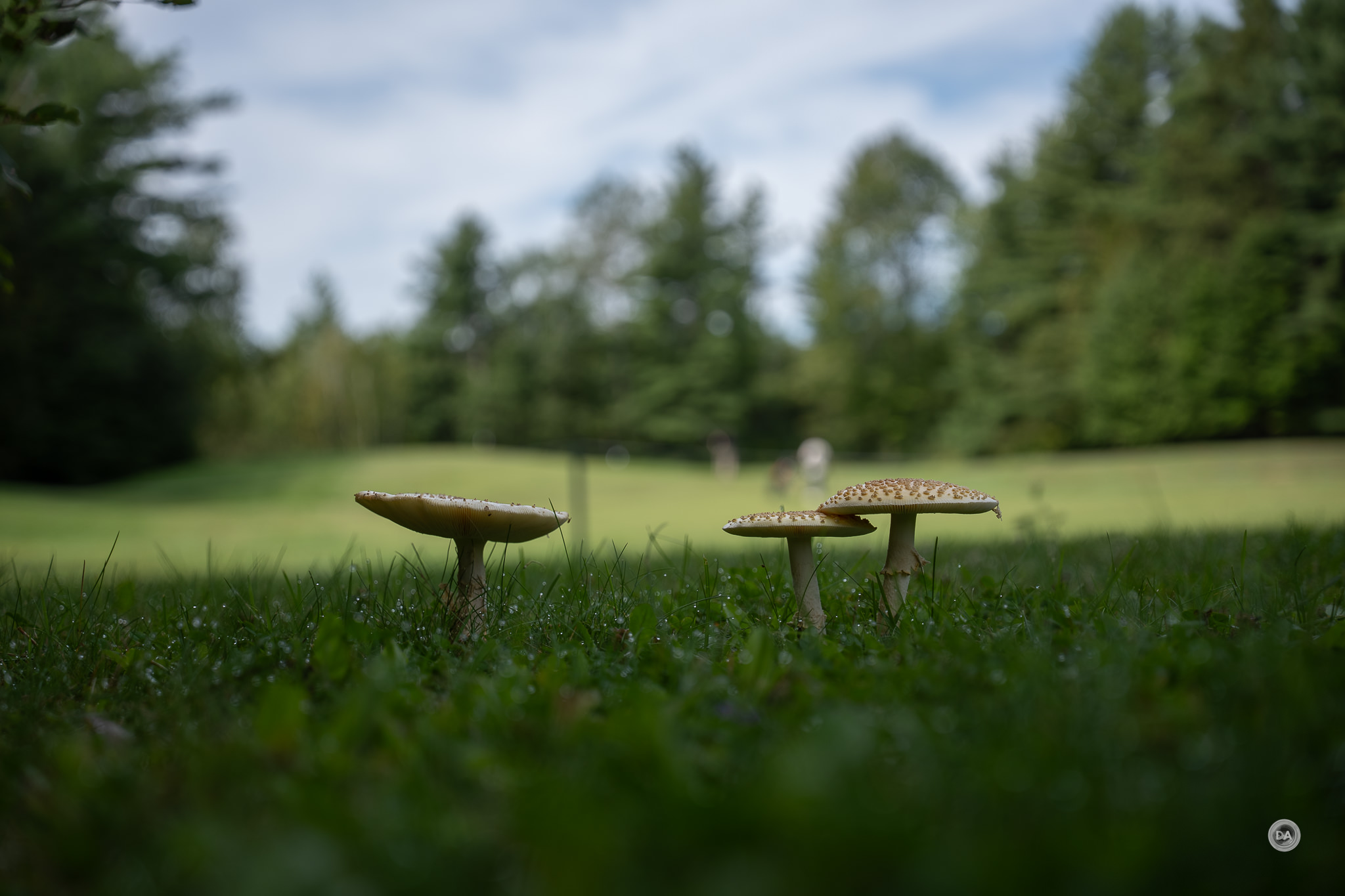
In short, this is a fantastic little lens optically. It’s not flawless, but no compact zoom with an ambitious zoom ratio is. In general, however, I found that I was easily able to get images I liked in a variety of situations. Here’s a mini gallery of extra images for you to enjoy.




Conclusion
In some ways the little Sigma 20-60mm F2.8-4 DG | Contemporary will be overshadowed by the long-awaited Sigma 85mm F1.2 | ART being released at the same time (my review here), but the truth of the matter is that the 20-60mm is going to end up in far more photographer’s bags than what the highlight machine 85mm F1.2 will. There are perhaps more lenses available for Sony E-mount than any mount in history, but there have been relatively few quite like this one. The combination of size, zoom range, and performance is going to make this particular lens very intriguing for a lot of photographers.
I would say that in terms of raw performance, I might still favor a lens like the Tamron 28-75mm F2.8 G2, but that Tamron isn’t nearly as practical for many photographers due to only starting at 28mm. There are a LOT of subjects to be captured within that 20-28mm range, so I suspect that the Sigma might be more practical for many as it means that you are less likely to need a wide angle lens to augment it. It’s easy to crop in or activate APS-C mode on modern high-resolution cameras, so getting more reach out of a lens like this is easier than trying to step back when you can’t fit enough in the frame. Sony’s Clear Image Zoom can get you up to 90mm equivalent with no loss of quality for video work. The bottom line is that I could live with this lens as a travel lens.
I do love the internal zoom and excellent price of the Thypoch Voyager 24-50mm F2.8, but I think that if I were choosing a lens in this range to spend my money on, I’d probably spend the extra $200 and get the Sigma. That extra 4mm is worth a lot, and the performance of the Sigma 20-60mm F2.8-4 is impressive. I can see this become the Sony/L-mount equivalent of the Fuji 18-55mm – a lens so useful that it just stays on your camera.
Pros:
- Versatile Zoom Range: Covers 20-60mm, suitable for a wide variety of photography styles, from landscapes to portraits and events.
- Compact and Lightweight: Weighs only 375g, making it easy to carry for extended periods and ideal for travel.
- Good Image Quality: Delivers excellent sharpness and detail, especially at mid-range and longer focal lengths.
- Effective Weather Sealing: Offers enhanced durability with multiple seal points, allowing for shooting in various weather conditions.
- Fast Autofocus: Features Sigma’s High-Speed Linear Actuator for quick and silent focusing, suitable for both photography and video.
- High Magnification Capability: Can achieve a maximum magnification of 0.43x at 35mm, allowing for versatile close-up work.
- Smooth Zoom and Focus Rings: Both rings operate smoothly, facilitating easy adjustments for different shooting situations.
- High Build Quality: Strong construction materials and design contribute to a premium feel and longevity.
- Minimal Chromatic Aberration: Excellent control over longitudinal and lateral chromatic aberrations, enhancing image quality.
- Bokeh Quality: Provides reasonably smooth transitions in out-of-focus areas, enhancing portrait shots.
- Rich and Accurate Colors: Sigma’s optical design ensures vibrant color reproduction with good contrast.
- Flare Resistance: Effective coatings minimize flare and ghosting, maintaining image contrast even in backlit situations.
Cons:
- Variable Maximum Aperture: The maximum aperture of F2.8 only lasts for a short section of the zoom range, limiting low-light performance (F4 at the long end).
- Distortion at Wide End: Noticeable distortion and vignetting at 20mm, requiring correction in post-processing.
- Limited Features: Lacks switches and buttons for advanced customization compared to other lenses, which may deter some users.
- Less Sharp Corners: While center sharpness is good, corner performance can lag behind, especially wide open.
_________________________________________________________________________
GEAR USED:
Purchase the Sigma 20-60mm F2.8-4 @ B&H Photo | Adorama | Amazon | Camera Canada | Amazon Canada | Amazon UK | Amazon Germany
Purchase the Thypoch Voyager 24-50 @ Thypoch Store | B&H | Adorama | Amazon | Amazon Canada | Amazon UK | Amazon Germany
Purchase the Tamron 28-75mm F2.8 VXD G2 @ B&H Photo | Amazon | Camera Canada | Amazon Canada | Amazon UK | Amazon Germany
___________________________________________________________________
Purchase the Sony a7RV @ B&H Photo | Adorama | Amazon | Camera Canada | Sony Canada | Amazon Canada | Amazon UK | Amazon Germany
__________________________________________________________________
Purchase the Sony a7IV @ B&H Photo | Adorama | Amazon | Camera Canada | Sony Canada | Amazon Canada | Amazon UK | Amazon Germany
_________________________________________________________________
Purchase the Sony Alpha 1 @ Camera Canada | B&H Photo | Adorama | Amazon | Sony Canada | Amazon Canada | Amazon UK | Amazon Germany | Ebay
_________________________________________________________________
Want to support this channel? Use these affiliate links to shop at: B&H Photo | Amazon | Adorama | Camera Canada | Amazon Canada | Amazon UK | Ebay | Make a donation via Paypal
Buy DA Merchandise https://bit.ly/TWIMerch

Keywords: Sigma 20-60mm, 20-60mm, Contemporary, 2.8-4, f/2.8-4, DG, Sigma 20-60mm Review, Sigma 20-60mm F2.8-4 Review, #SIGMAEmount, #SIGMA #SIGMA20-60C, Sony 24-50mm, Thypoch 24-50mm, #SIGMAART, Full Frame, Review, Sony Alpha 1, Sony α II, Sony a7RV, a7RVI, Review, Hands On, Dustin Abbott, Real World, Comparison, Sharpness, Bokeh, Flare Resistance, Autofocus, Image Quality, Sample Images, Video, Photography, let the light in, weathersealing, #letthelightin, DA
Related posts:
 Sigma 85mm F1.2 DG | ART Review
 Sigma 35mm F1.4 DG II | ART Review
 Sigma 24-70mm F2.8 DG DN II | ART Review
 Sigma 24-70mm F2.8 DN II Gallery
 Sigma 28-45mm F1.8 DG DN | ART Review
 Sigma 28-45mm F1.8 DG DN | ART Gallery
 Sigma 28-105mm F2.8 DG DN | ART Review
 Sigma 28-105mm F2.8 DG DN ART Gallery
 Sigma 35mm F1.2 DG II | ART Review
 Sigma 20-200mm F3.5-6.3 DG Review