

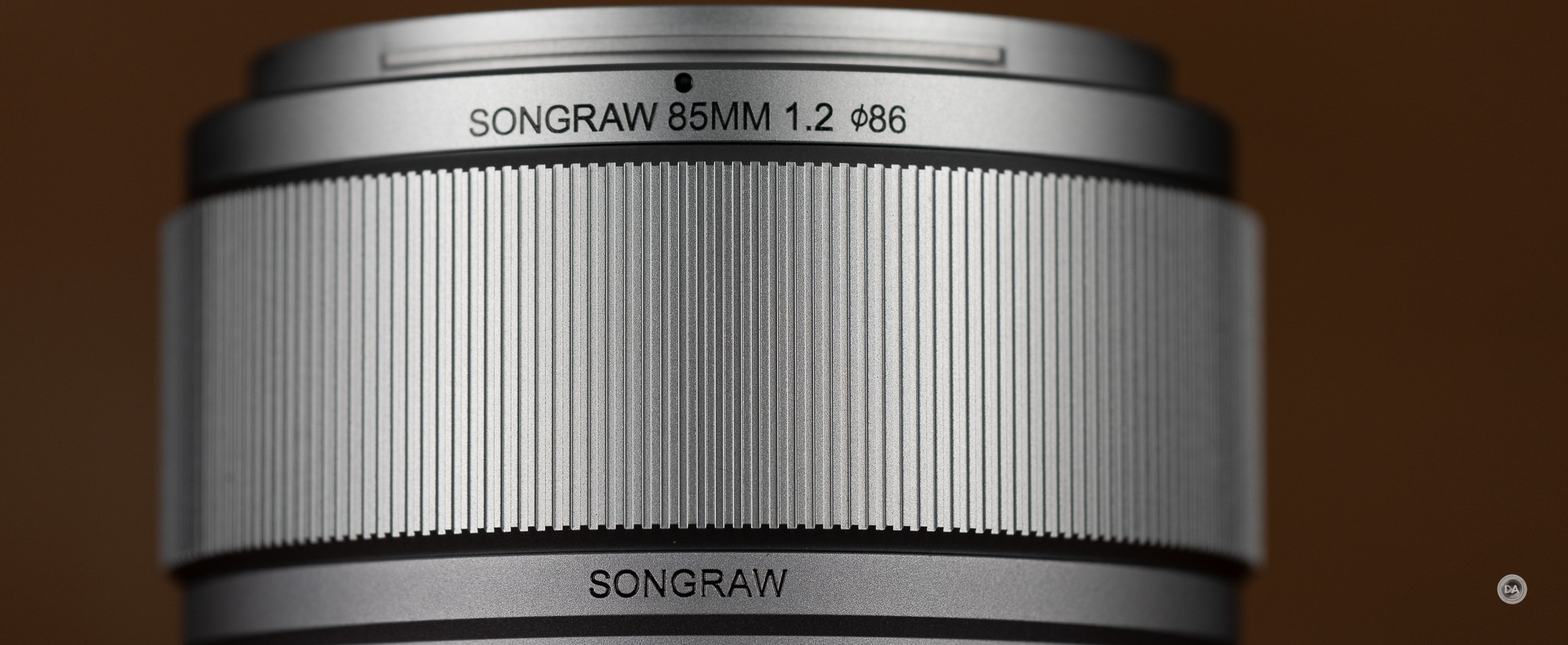
SUMMARY: The SongRaw AF 85mm F1.2 MS lens stands out for its exceptional optical performance and competitive price, making it appealing for portrait photographers. Priced at $649, it’s significantly cheaper than similar models like the Sigma and Nikon, yet it offers stunning image quality with excellent contrast and detail. Despite its impressive specs, the lens’s significant size and weight may deter some users, and its autofocus system, while precise, could benefit from improvements. Overall, it delivers remarkable value, particularly for those who prioritize optical excellence.
Strengths:
- Exceptional image quality with great contrast and sharpness.
- Competitive pricing at $649 compared to other high-end lenses.
- Simplified design for easier use without compromising on optical performance.
Weaknesses:
- Large and heavy, which may be cumbersome for some photographers.
- Autofocus speed and smoothness lag behind competitors with more advanced motor systems.
_________________________________________________________________________________________________
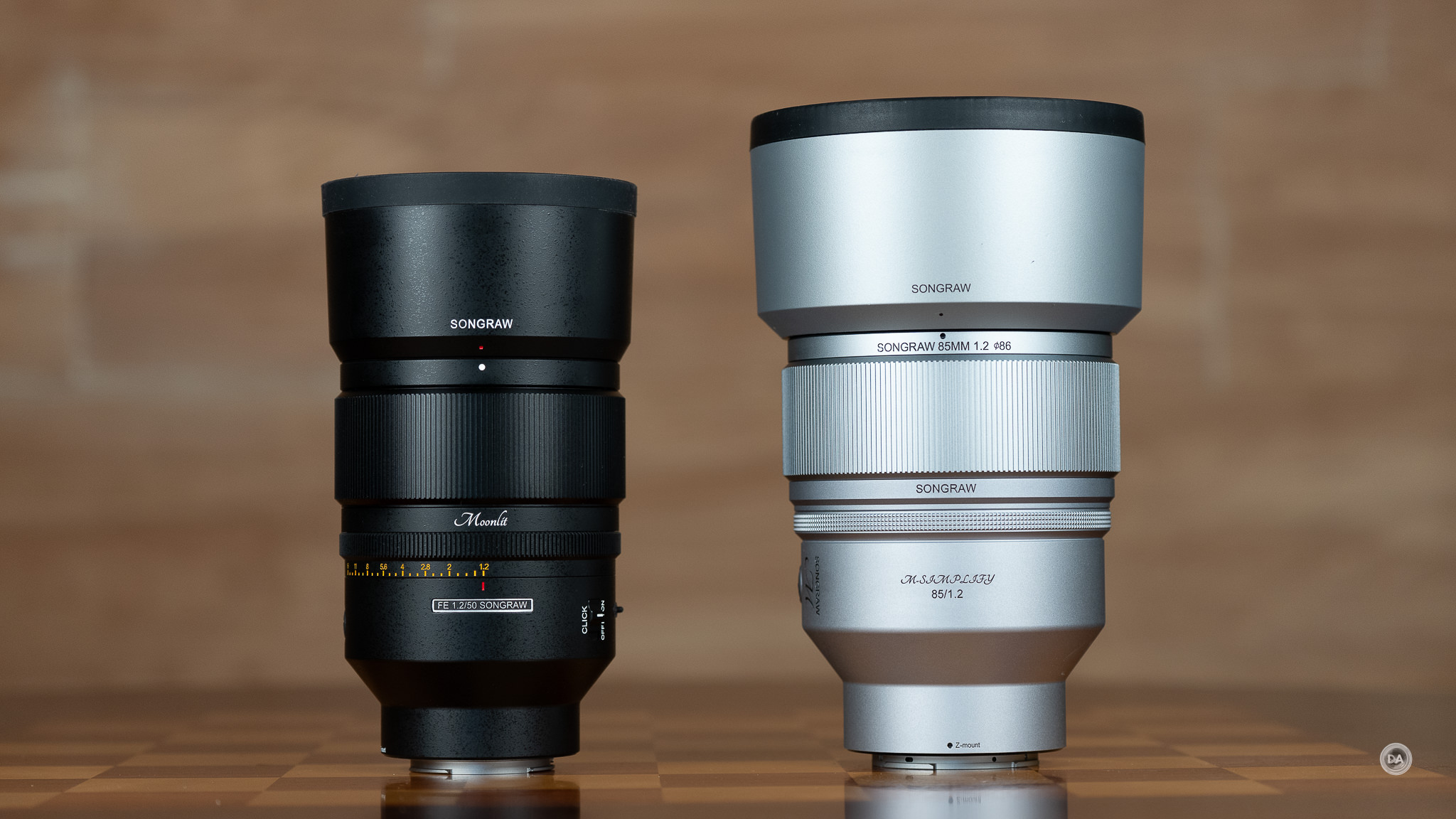
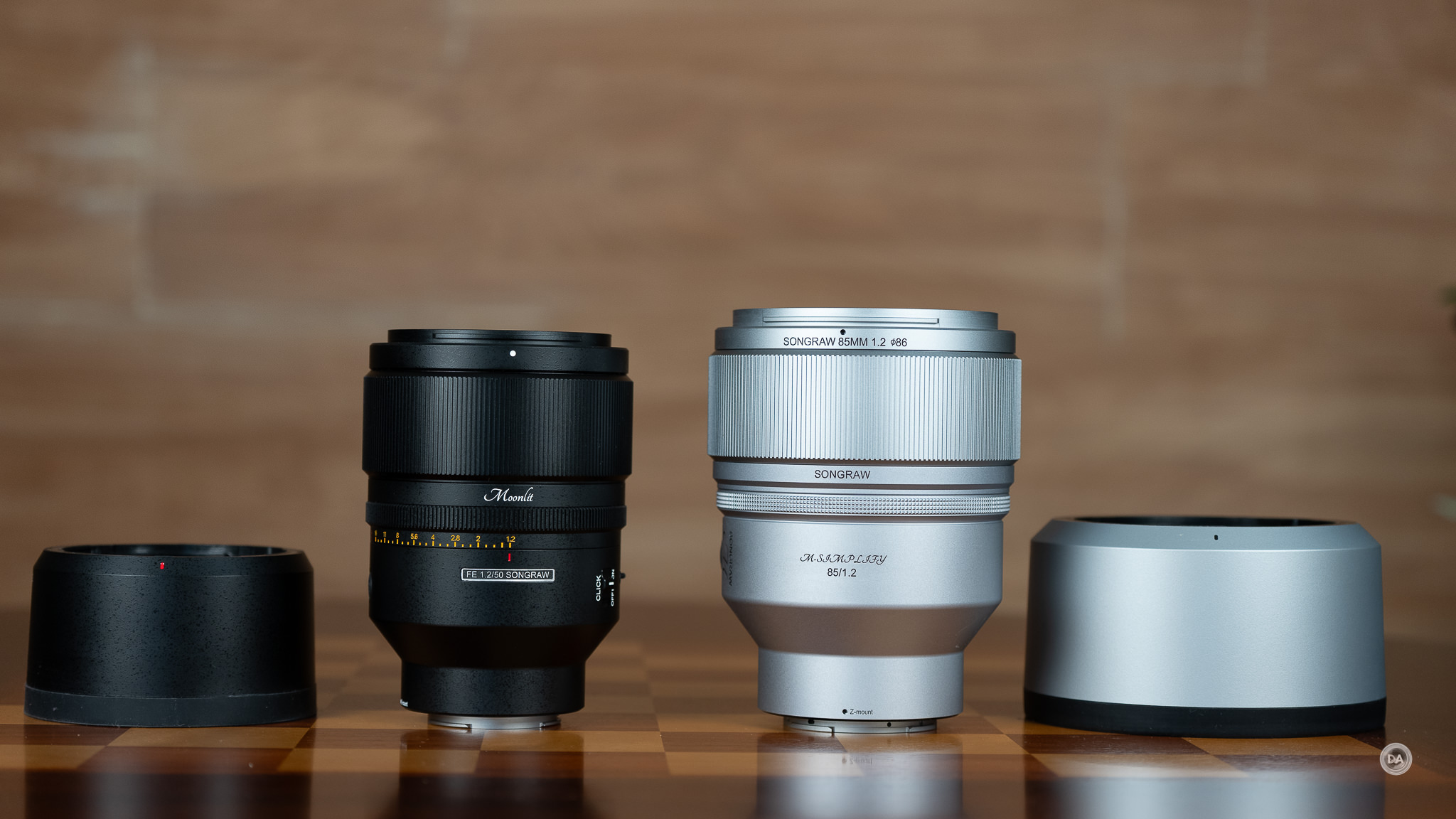
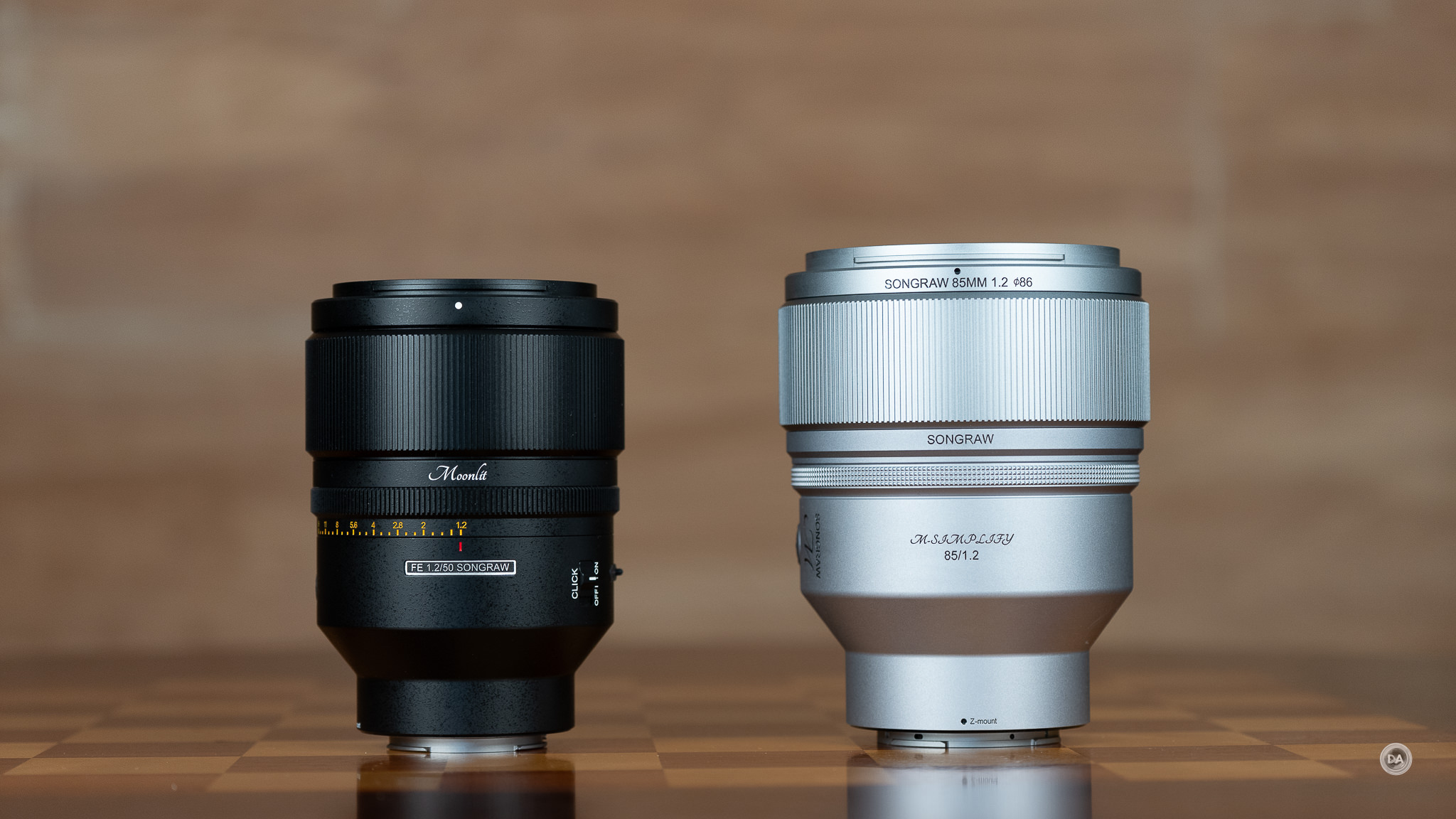
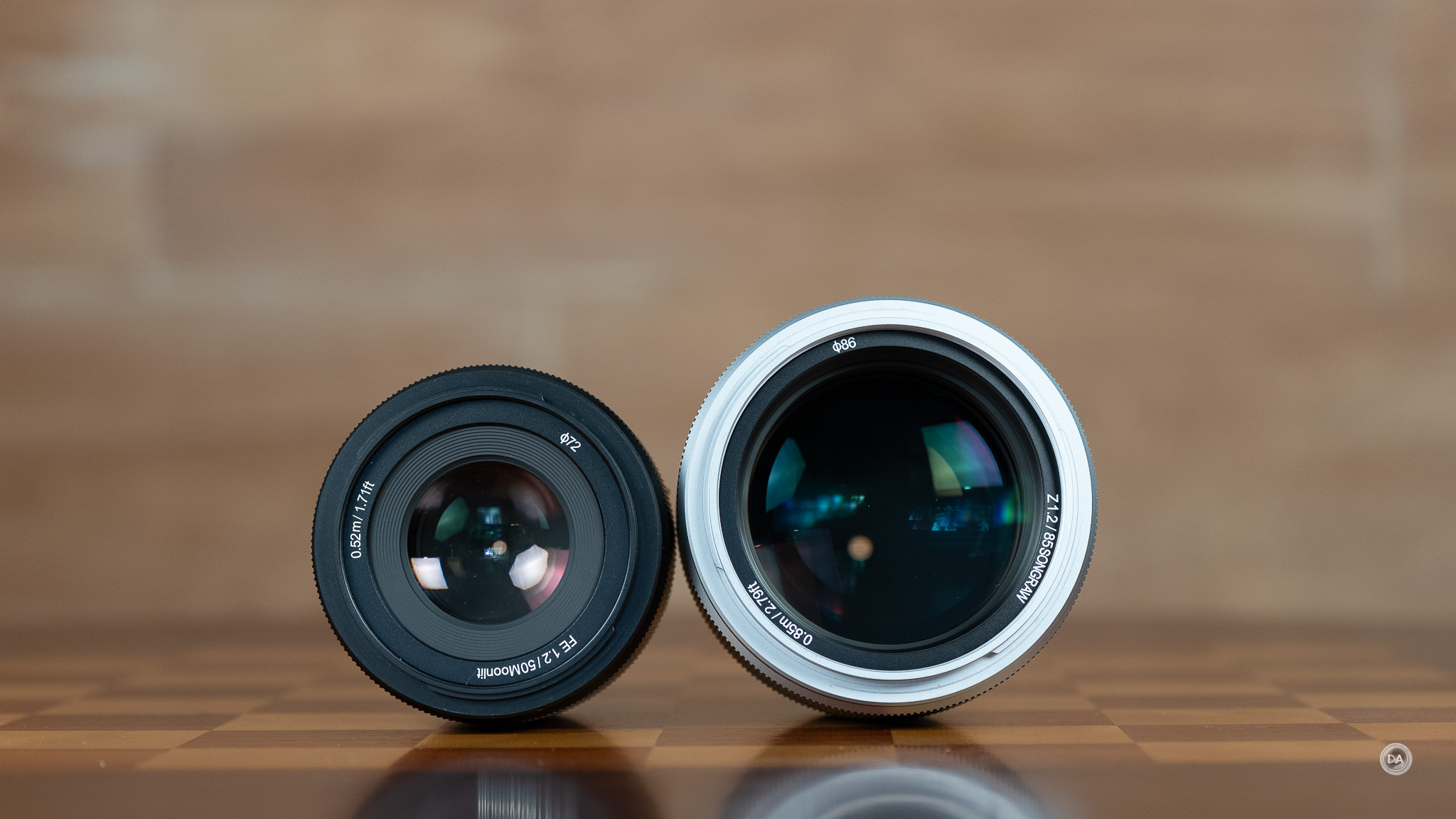
At 1120g (39.5oz), the weight far outstrips the Sigma 85mm F1.2 (905g) but manages to be lighter than the Nikkor 85mm F1.2S (1160g) or the Canon 85mm F1.2L (1195g) by a small margin.



SongRaw 85mm F1.2 MS Build and Handling
I find the silver finish version very eye-catching, which is either good or bad depending on your tastes. Both finishes cover an aerospace-grade aluminum body.
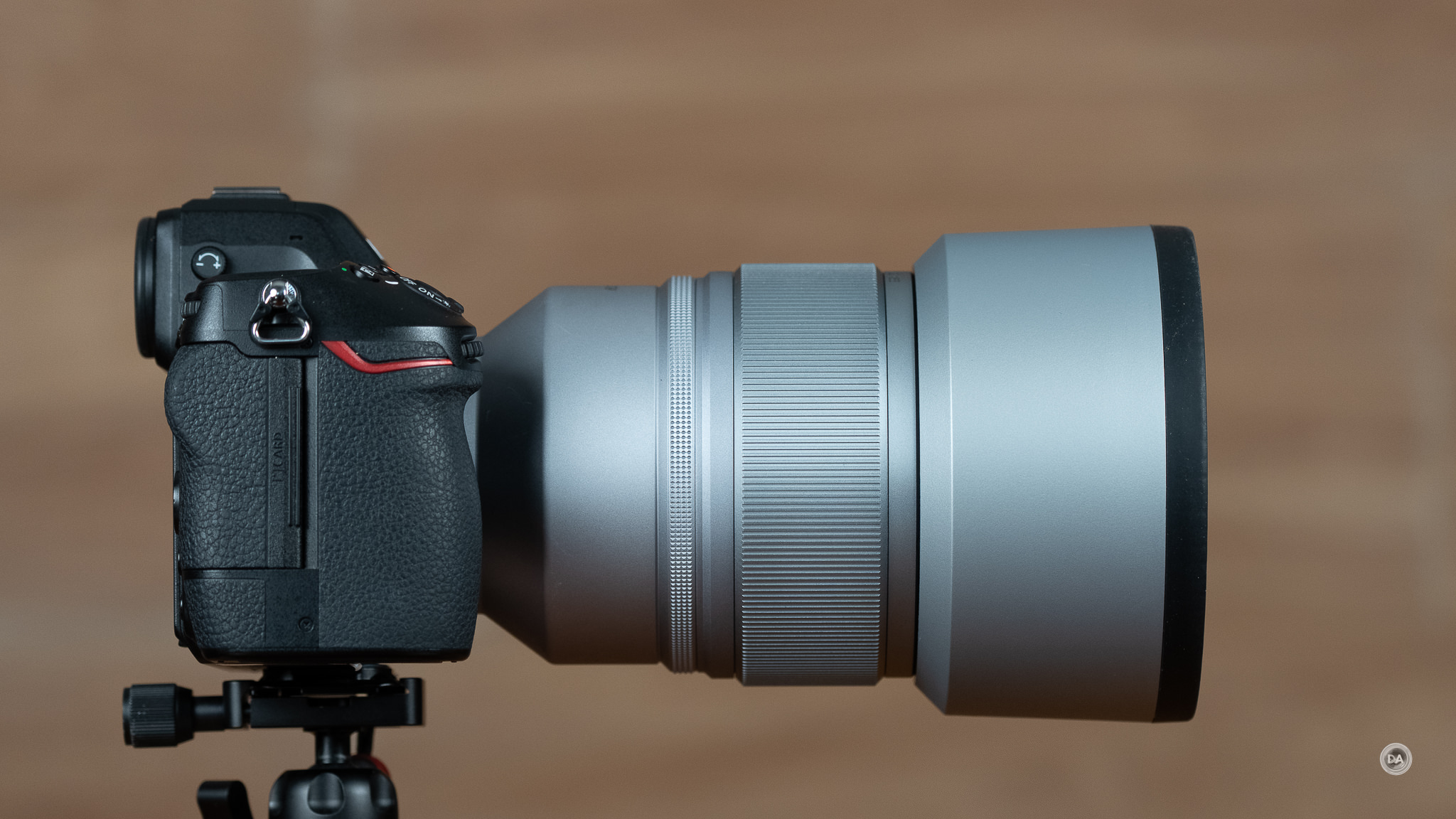
The Moonlit version will have a traditional aperture ring, but the MS version has what looks like Nikon’s customizable control ring but is in fact a fixed section of the lens barrel that does not rotate. All aperture control will have to be done from within the camera body.
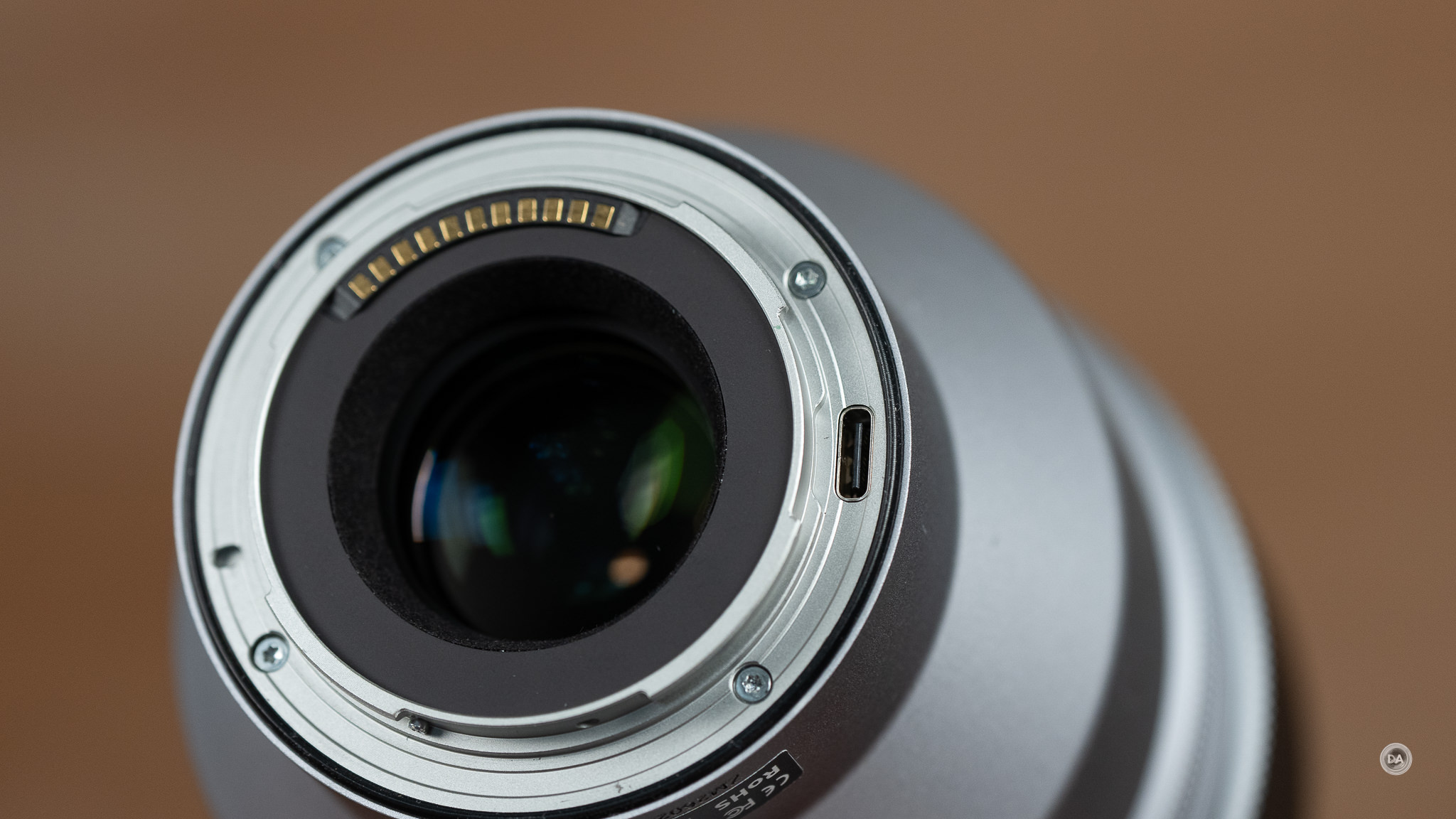
One positive design improvement is that while the 50mm had an external USB-C port covered by a fidgety rubber gasket, the SongRaw 85mm has a much more logical USB-C port located on the lens mount. This is a much easier point to protect, as the rubber gasket at the lens mount is already there to seal out any moisture or dust.
There are a variety of seals within the lens body.
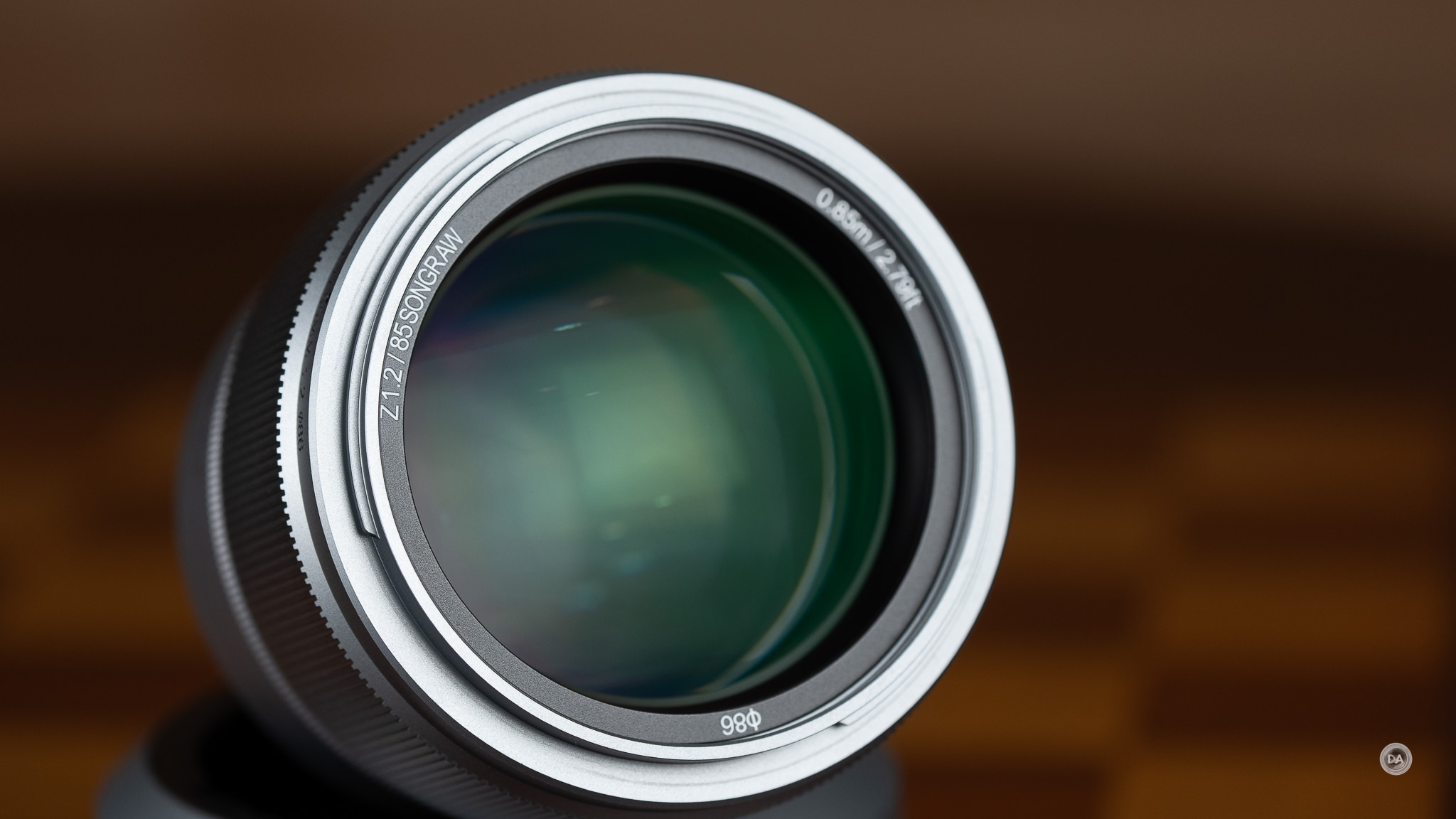
The front element has a special coating that SongRaw calls a “Hydrophobic Anti-Smudge” coating, which seems to function similarly to a fluorine coating. It also looks pretty cool in the right light.
Firmware updates (if necessary) will be easy to accomplish by attaching the lens via USB to your computer, causing a folder for the lens to pop up. You simply download the firmware update file from this website, then copy the file to the lens’ folder. The file will automatically run, causing the folder to briefly disappear, and when it pops back up a few seconds later, the firmware update is done. Very simple.
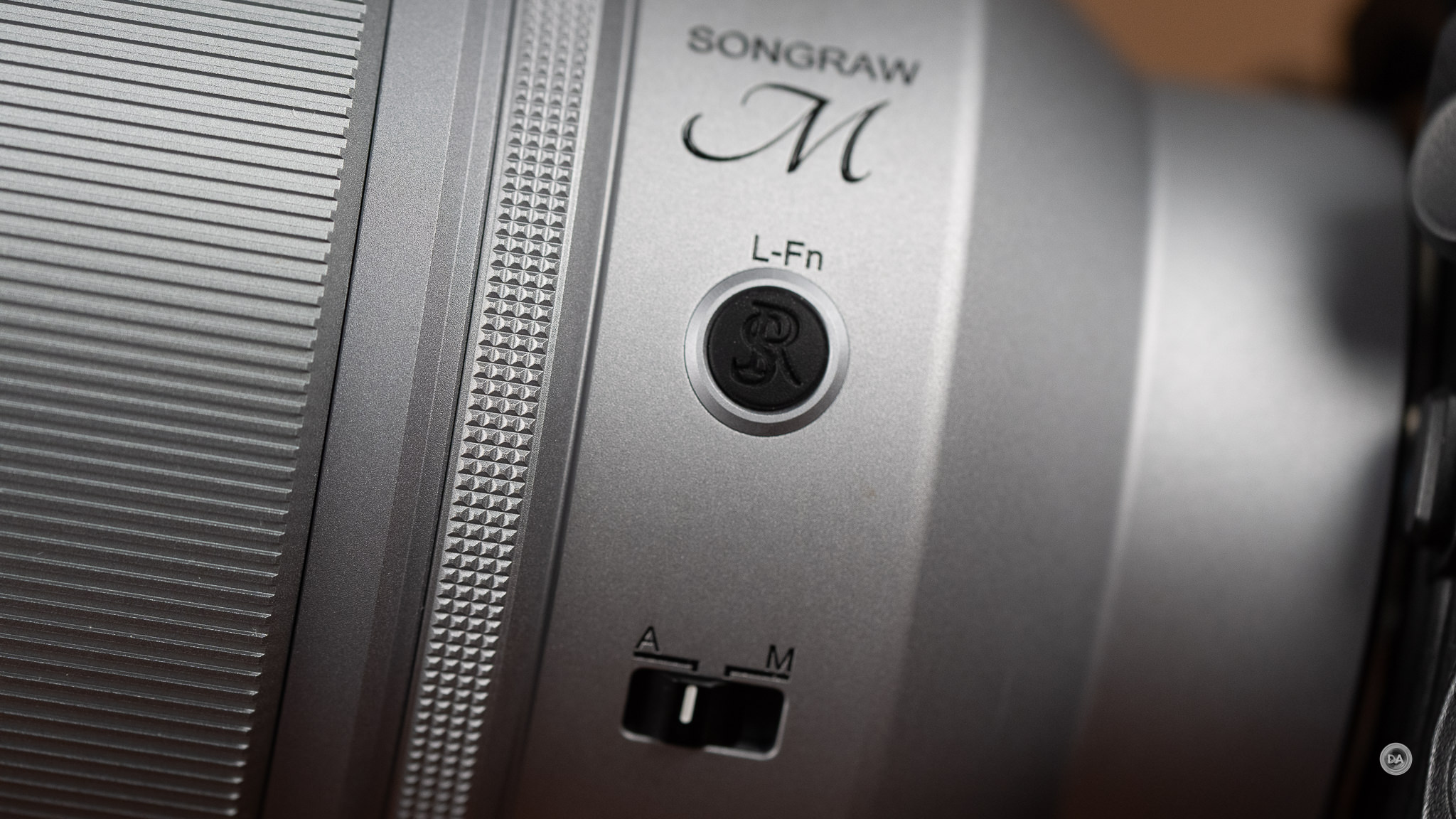
While we do not have aperture control, there is an AF | MF switch along with a custom/function button on the side of the lens. This provides a level of control that is equal to that found on the Nikkor or Canon 85mm F1.2 lenses, though both of those do have a control ring as well.
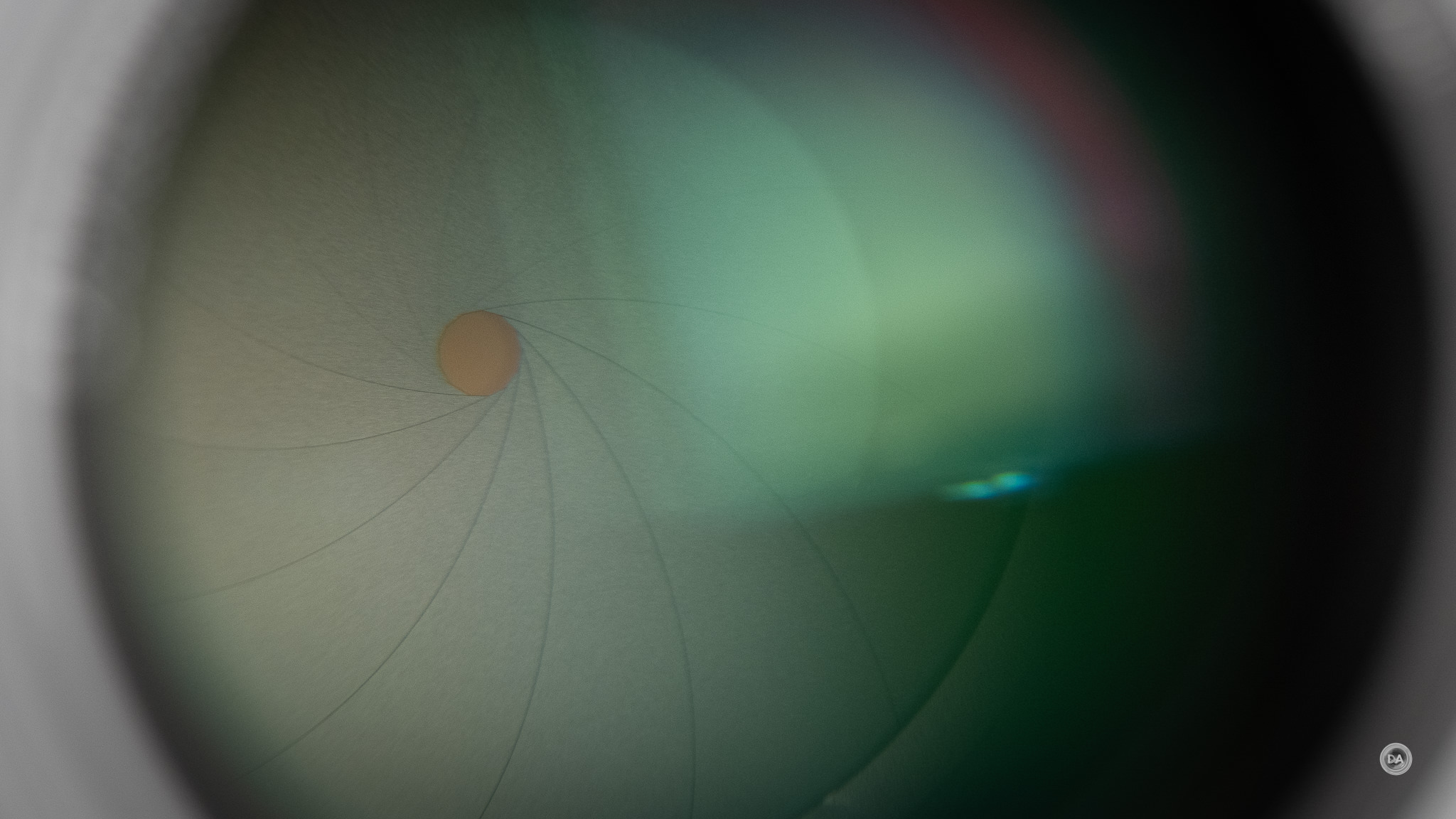
The aperture iris has 13 blades and maintains a beautifully circular shape when stopped down.
Here’s a look at the shape of specular highlights at F1.2, F2, and then F2.8:

The filter threads on the lens are a massive 86mm. This is a relatively uncommon size, but a wide variety of filters are available. SongRaw will sell you a reasonably priced UV filter with the lens, but I would recommend a polarizer or ND filter instead that will give you a little more control over the light.
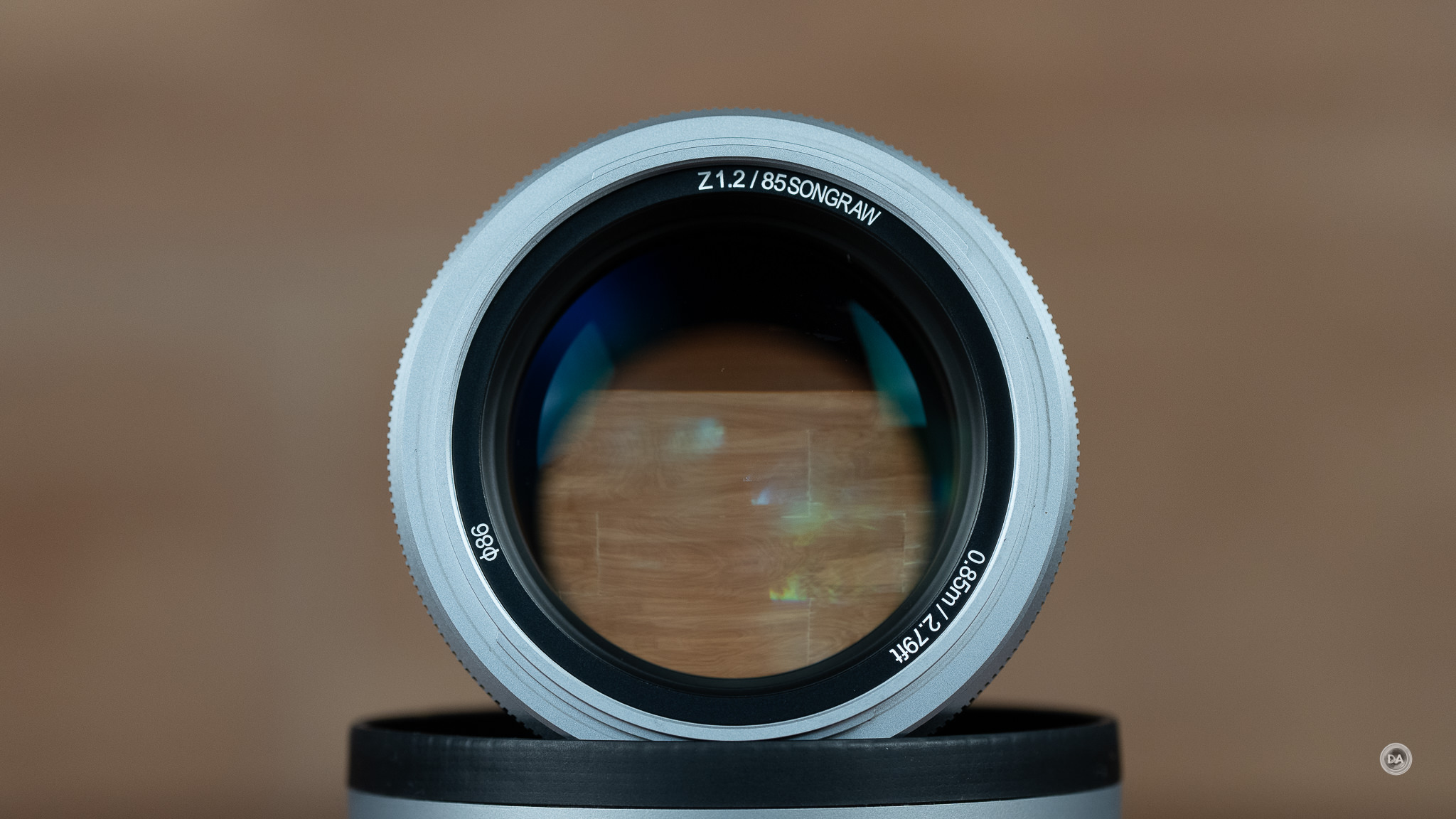
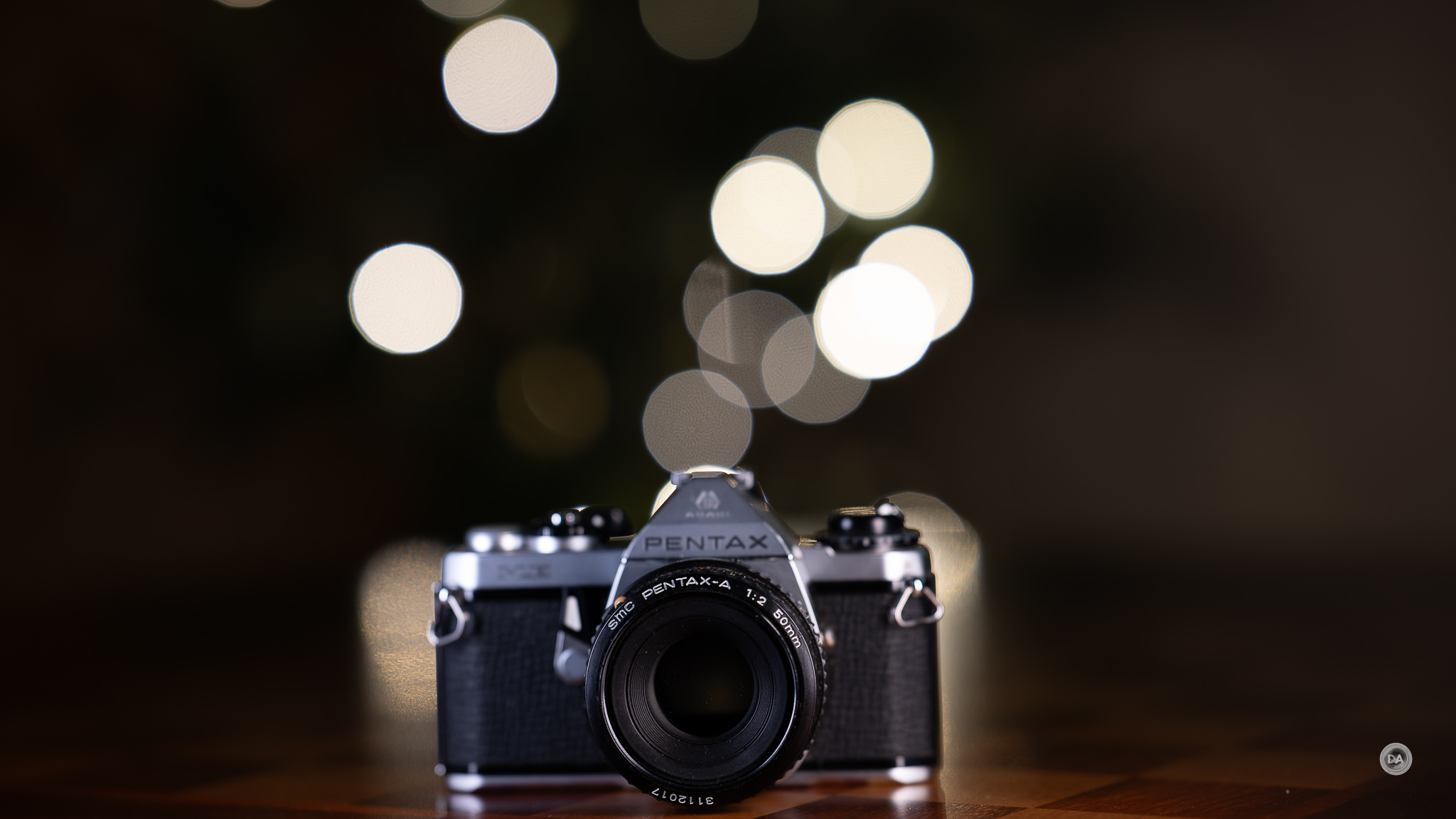
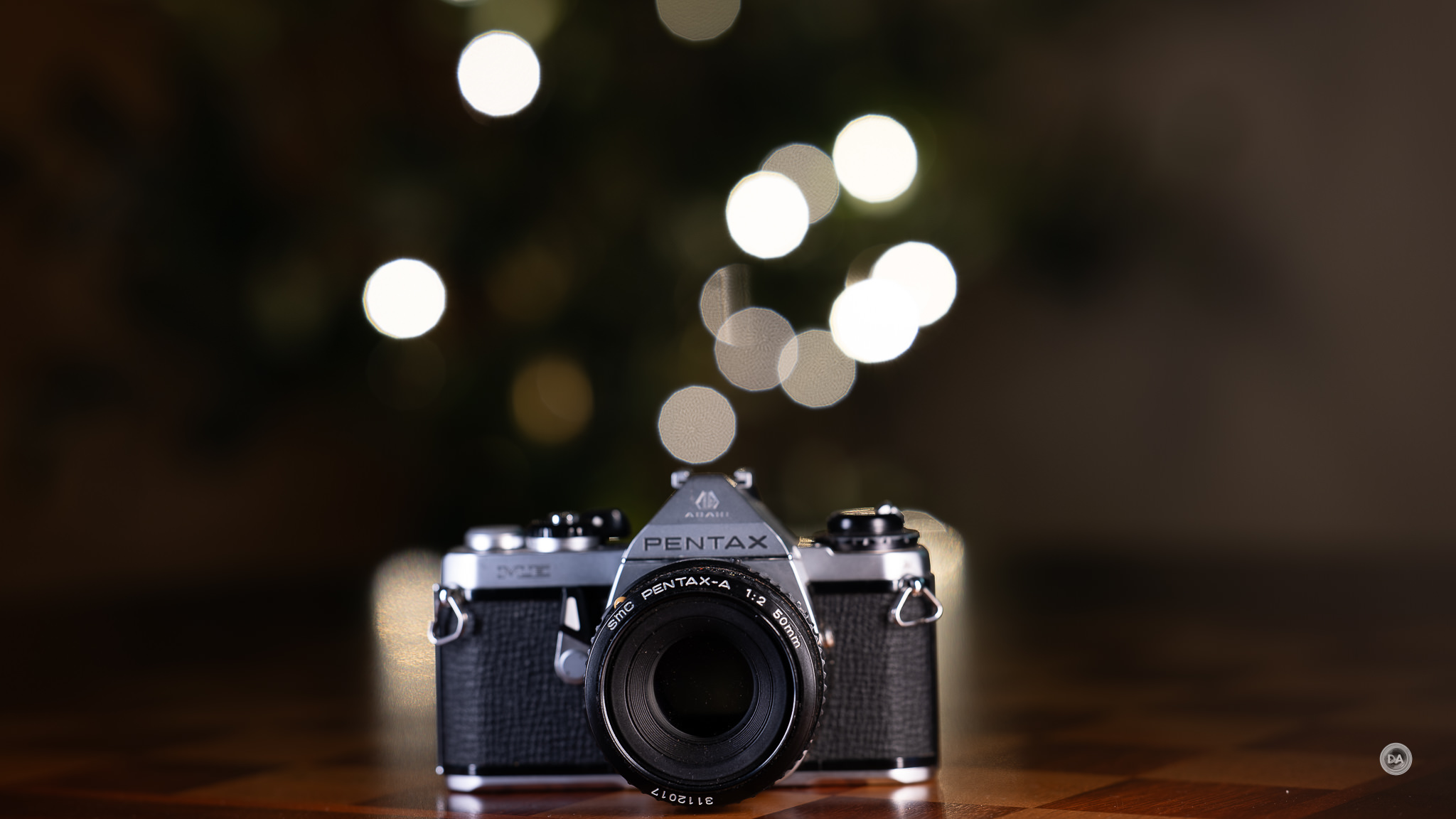
You can see that there is an absolutely massive amount of glass in this lens, which provided me a perfect opportunity to “suspend” the 50mm F1.2 Moonlit in there as an optical illusion.
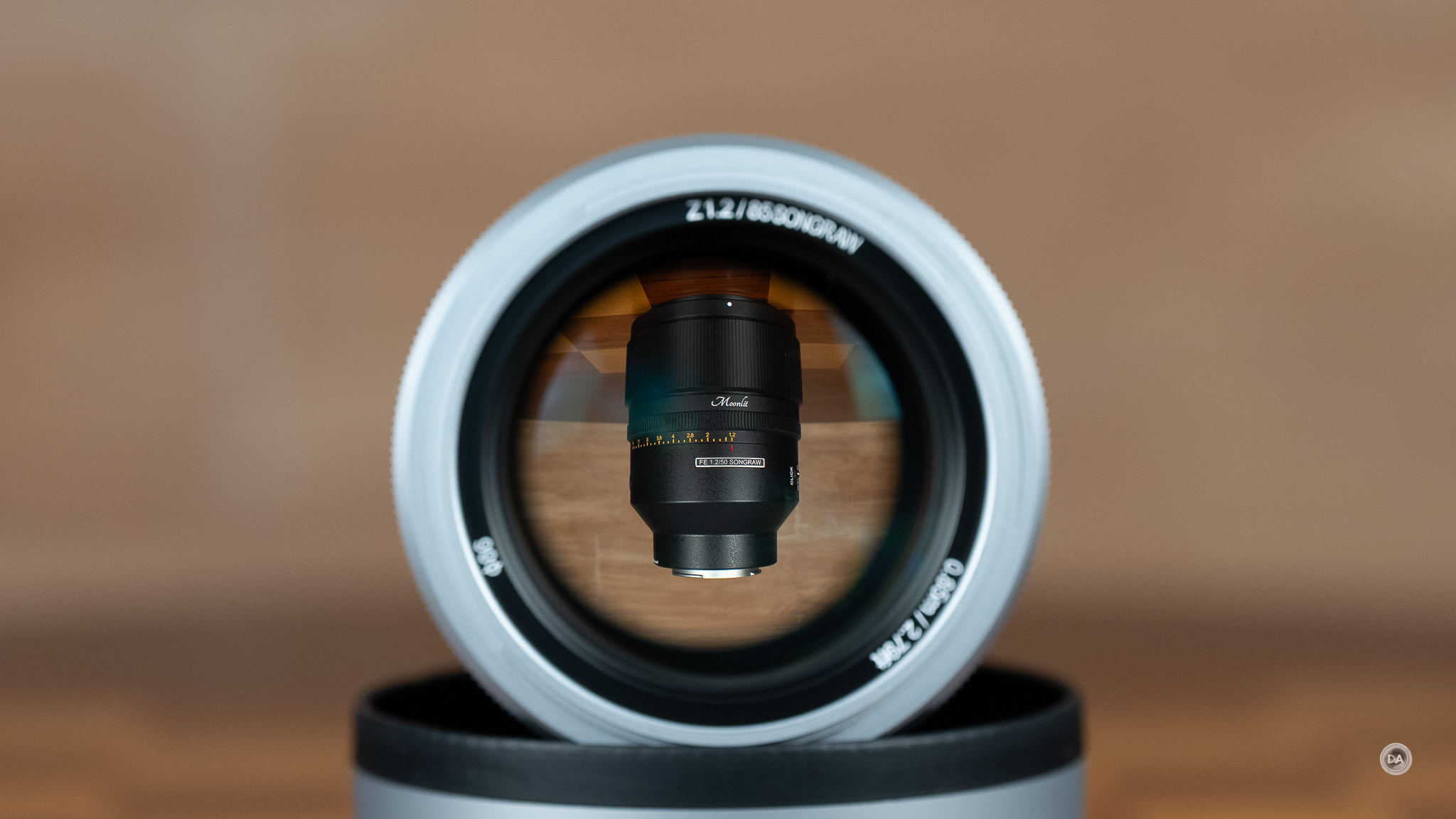
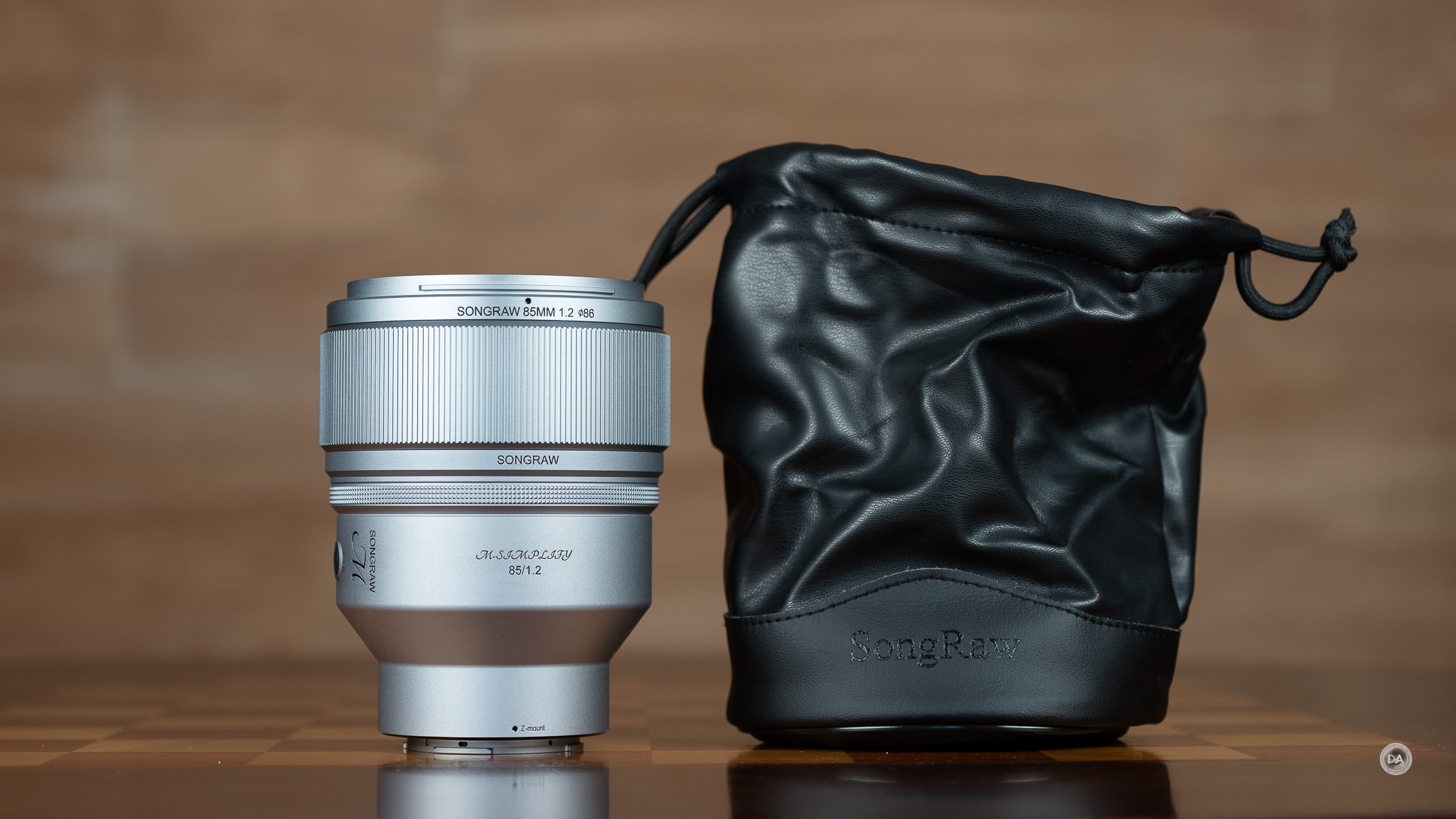
In person the lens feels absolutely massive. I was reminded of the first time I unboxed a Zeiss Otus 85mm F1.4, which had a similar massive build, weight, and an 86mm front filter thread. It was just a physically imposing lens in general. The SongRaw 85mm F1.2 is the same. Bottom line is that if you are put off by large lenses, the Moonlit series probably won’t be for you.
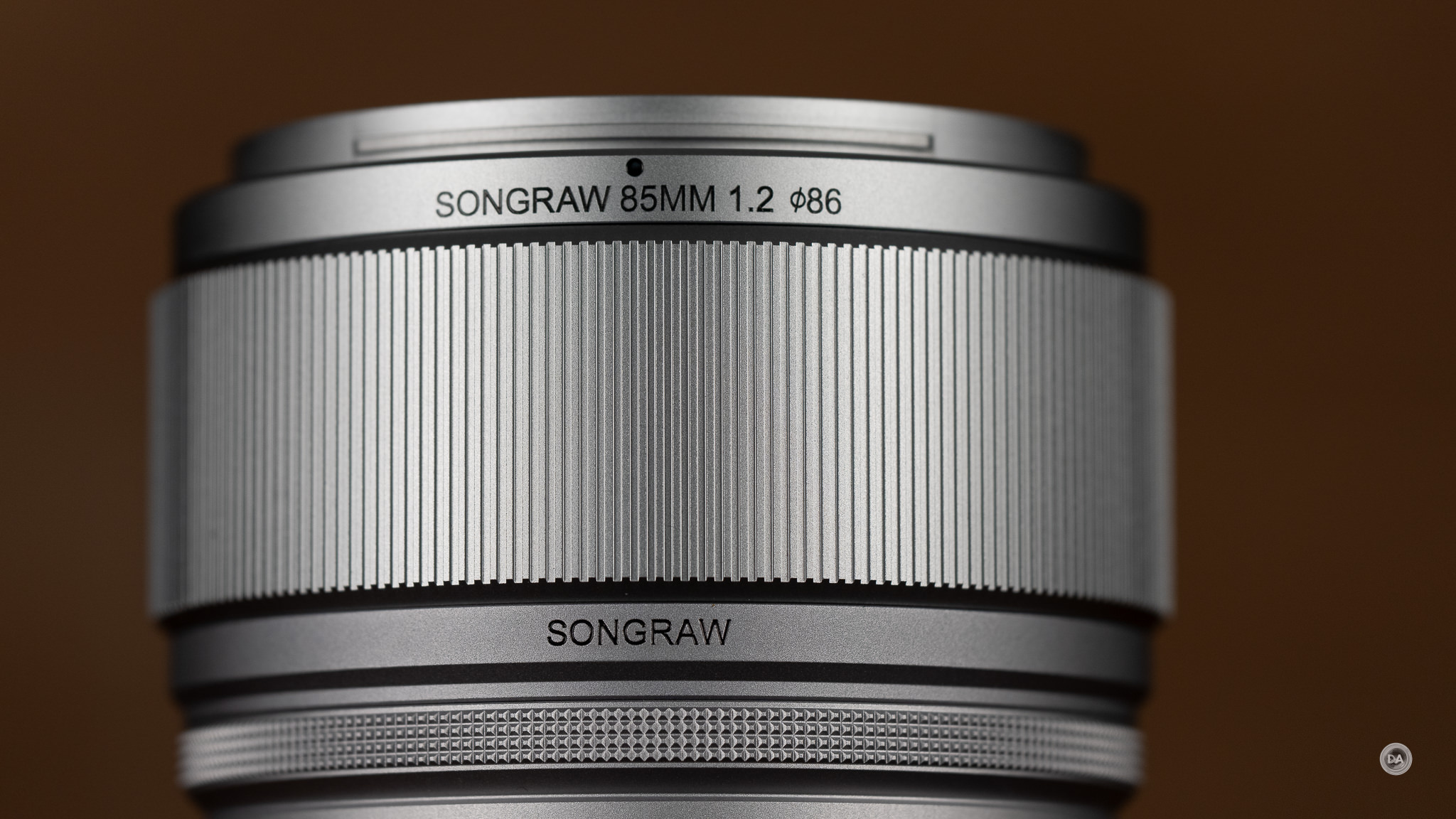
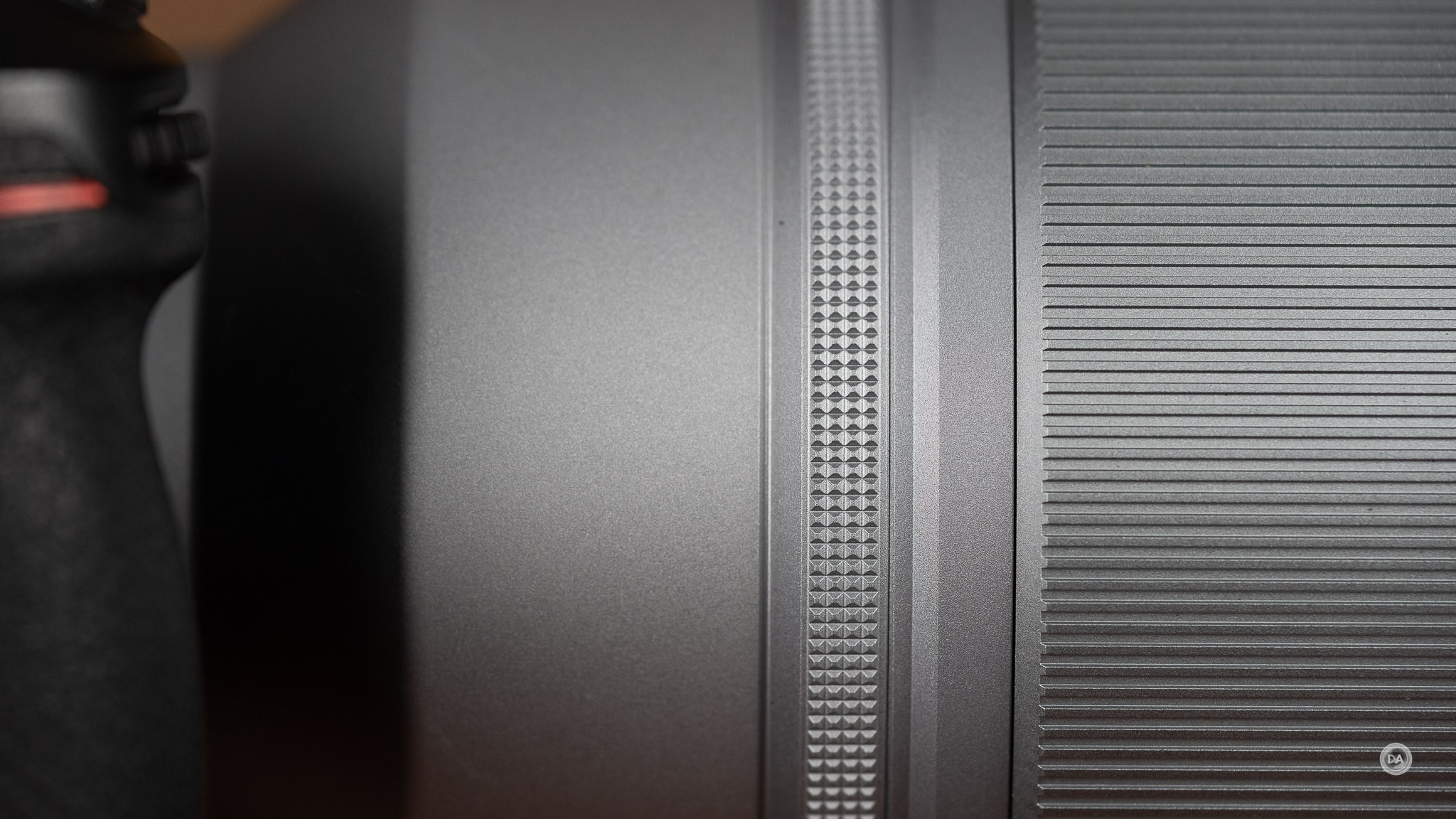
The final element on the lens barrel is a nice, wide focus ring that is made of metal and has nice ribbing for a grip texture. The ring has very nice weight and precision, though the focus throw is very long (you’ll need a lot of rotations if making a big change) and there can be a little focus motor noise if you rotate it quickly. All mirrorless lenses with autofocus use a focus-by-wire system whereby manual focus ring input actually drives the focus motor(s) to make focus changes. Thus, the smoother, faster, and more reactive the focus motor, the smoother the manual focus emulation. In this case manual focus works well, but it isn’t a silent process.
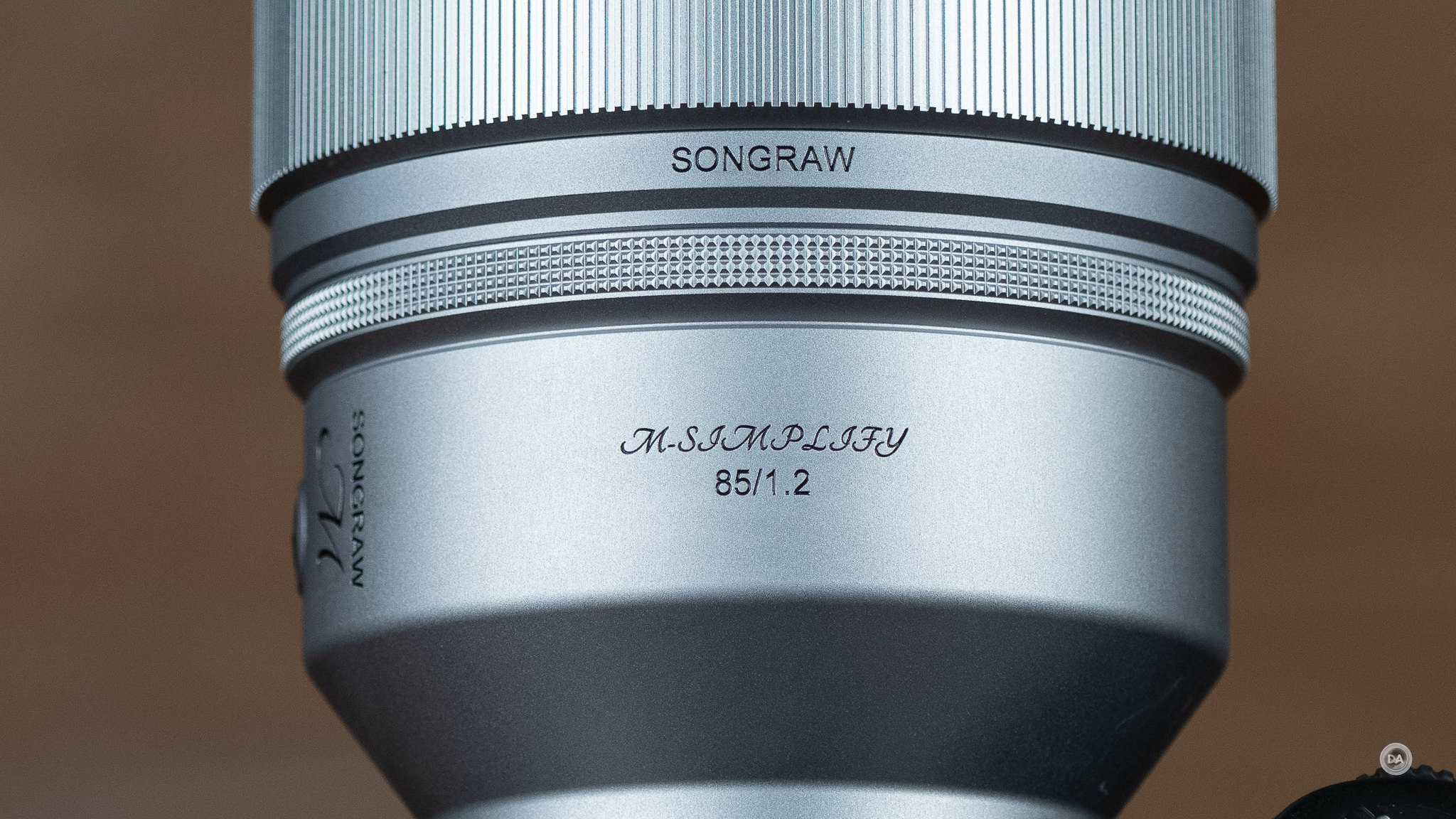
I don’t love the font choice on this section of the barrel, as it is very difficult to read.
The lens comes with a leatherette pouch that looks a lot like the one included with Viltrox’s LAB Series. Also included is a massive lens hood that has a rubberized ring at the front to allow you to set the camera/lens down on that end and also helps absorb a few bumps. The hood was a little tight to bayonet on, but stayed in place well.
The minimum focus distance is 85cm, which is a pretty average for an 85mm lens. The maximum magnification figure is 0.13x, however, which is a bit better than competing lenses from Nikon, Canon, or Sigma. Here’s what the maximum magnification of the AF 85mm F1.2 looks like on my test chart:

That’s not particularly high, but the huge maximum aperture does help to ensure that backgrounds are nicely blurred at close focus distances, allowing you to get some lovely shots at close focus distances.

The biggest downfall of the SongRaw AF 85mm F1.2 MS is size; it’s greatest strength is price.
Autofocus for Stills
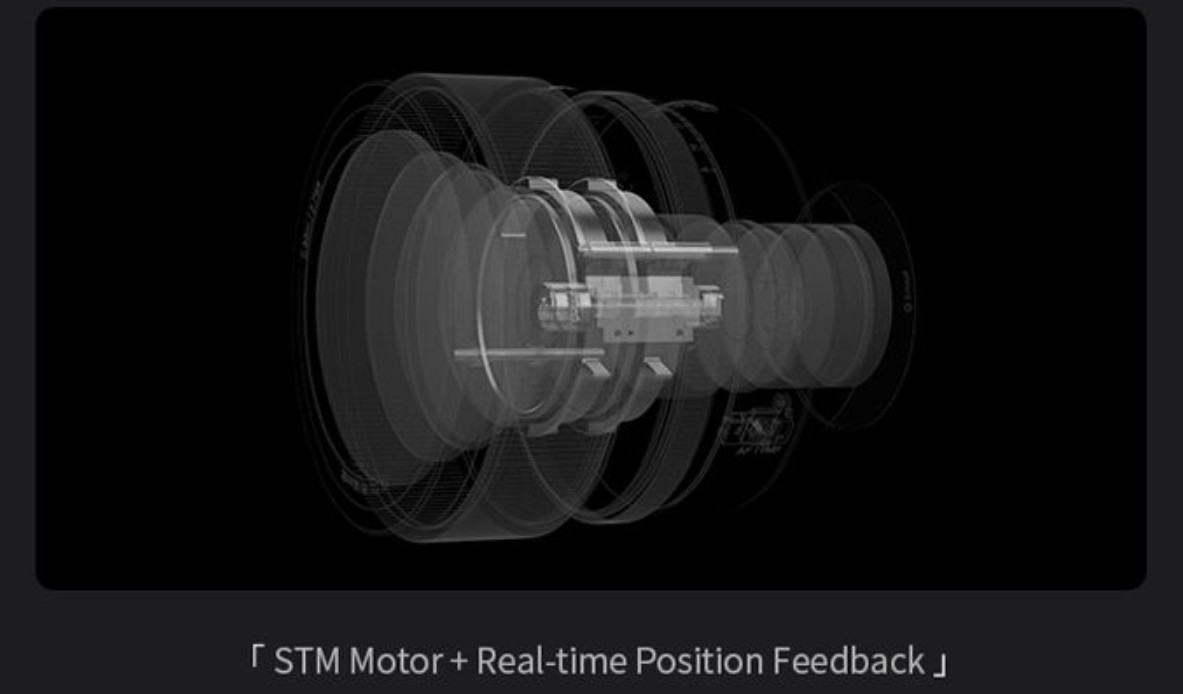
This is now the second system that I’ve tested a SongRaw lens on (Sony FE for the 50mm, Nikon Z for the 85mm), and I’ve gotten really solid focus accuracy on both platforms. This autofocus motor isn’t the fastest or smoothest (I’d love for them to advance to Voice Coil technology in the future), but it is a very precise autofocus motor, which is hugely important in lenses with such massive maximum apertures. There have been an unbelievable amount of mushrooms this year (it was quite a moist summer), and I had a blast with this lens taking low level photos of mushrooms along the ground. The precise focus, combined with great contrast even at F1.2 and very shallow depth-of-field, allow for uniquely beautifully little dioramas along the forest floor.

There’s actually quite a lot of clutter in this image, but that incredibly shallow depth of field allows for enough subject isolation to make it magical. And, if we zoom into the image, we can see that focus is fantastic.

Getting good focus precision with such a big maximum aperture is obviously important, so I appreciate them nailing this important aspect of lens design.

While I appreciate the precision of the focus motor, the reality is that this is an area where a lens like the recent Sigma 85mm F1.2 enjoys a tremendous advantage. It features dual high-thrust voice-coil style motors and has amazing autofocus, and while the Nikkor 85mm F1.2 S also uses STM motors, it is using two of them in concert, producing a quieter, smoother focus experience than what we have here. The single focus motor can’t match those configurations for speed and smoothness, though I think it probably about equal with the Canon RF 85mm F1.2L and its USM motor. For portrait photographers this lens will be extremely capable, and that’s what matters most.
Autofocus speed in my standard tests was a bit of a mixed bag. Most focus changes were quite snappy on my Nikon Z8, but there would be an occasional rack in the wrong direction that would make that particular focus pull much slower.
I was actually able to grab some decent shots of bees in flight, though when I reviewed the images I realized my shutter speed was a little low to truly freeze them. I could see focus locking onto the bees as they zipped around, though, which always impresses me.

Focus precision was also excellent, with my portrait tests showing perfect precision even when shooting at F1.2.


My little grand-nephew loves the drums, and I got this casual shot of him on the drums with his mom. You can see that focus locked on perfectly between the cymbals to deliver a beautifully-focused result.


Focus isn’t top of the heap here, but thanks to good focus precision, I think this lens is perfectly good for the real target audience – portrait photographers. This is too big of a lens to be a general purpose lens, but for those wanting an inexpensive powerhouse for portrait or wedding work, I think that AF is great.
Video Autofocus
My first test was touch-to-focus video focus pulls, and I have some thoughts. First of all, the amount of contrast and three-dimensional pop on the subject from this lens is pretty breathtakingly good. Rarely has my “A” that I use as a foreground subject looked so good in my tests.

Less positive was the confidence of those pulls back and forth. There was some racking in the wrong direction, sometimes some pulsing as focus settled on the subject, and some obvious focus breathing that gave somewhat of a “lurching” feeling to major focus changes.
My “hand test” where I alternately block the camera’s view of my face with my hand and then remove it went fairly well, though the focus breathing didn’t make for a very cinematic experience.

The upside is that the footage looks gorgeous. I really do love the optics from this lens. Even in that basic capture of the frame above, you can see a really lovely transition to defocus. Focus for static shots is stable.
I wouldn’t recommend this lens for video if your needs include a lot of significant focus changes. If you want to do more static shots, however, the focus is fine…and the resulting footage is gorgeous!
Image Quality Breakdown
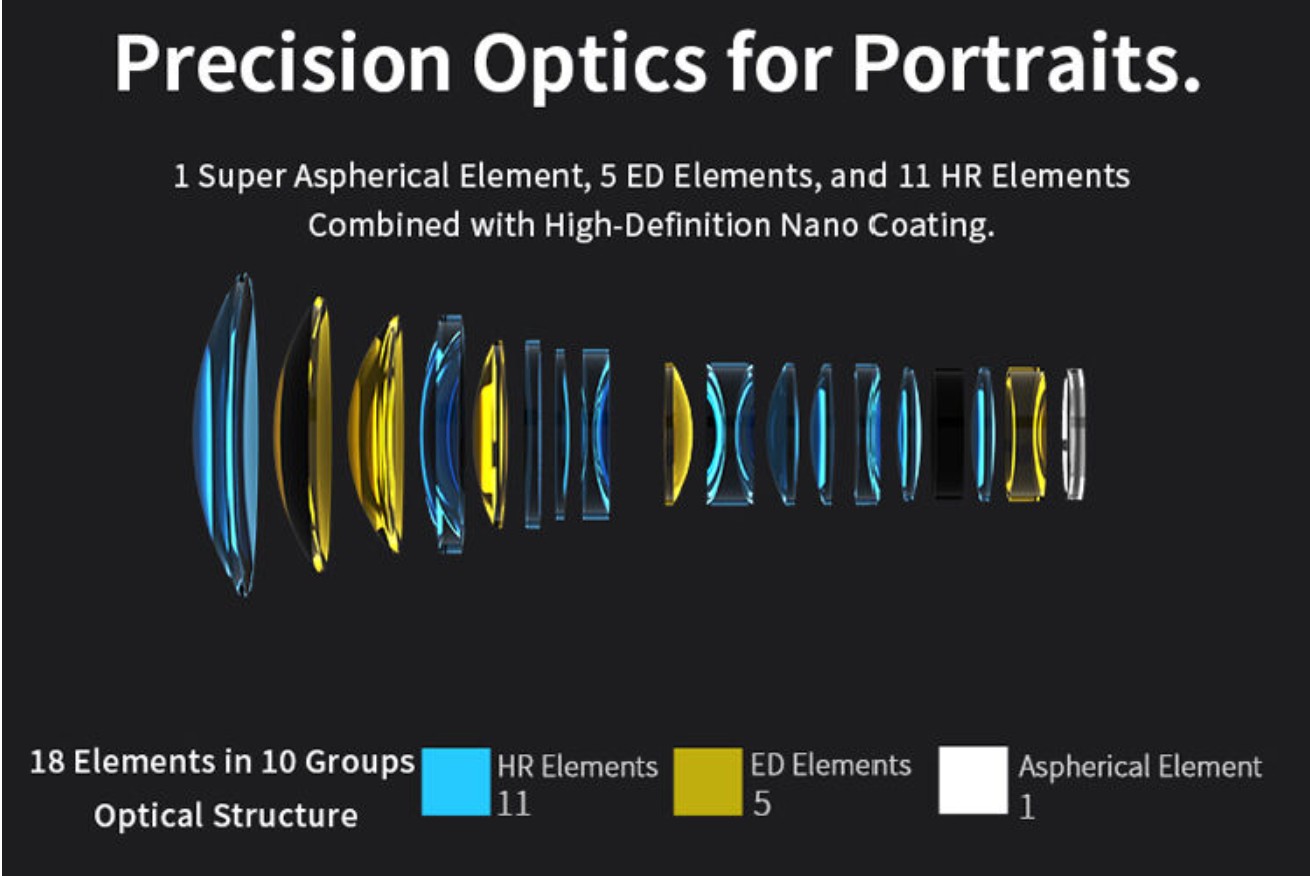
A lens that is this physically large needs to really deliver on the optical front. The SongRaw AF 85mm F1.2’s optical design is 18 elements in 10 groups, and almost all of those are exotic elements. There are 11 High Refractive index elements, 5 Extra-low Dispersion elements, and one aspherical lens, leaving only one normal element in the bunch! SongRaw claims that this is an APO (apochromatic) design, and the image results do seem to back this up. This really does feel like a Otus lens in a lot of ways. The MTF shows excellent center and midframe results at F1.2 with a fade to the corners. The F4 MTF shows consistently good performance across the frame.
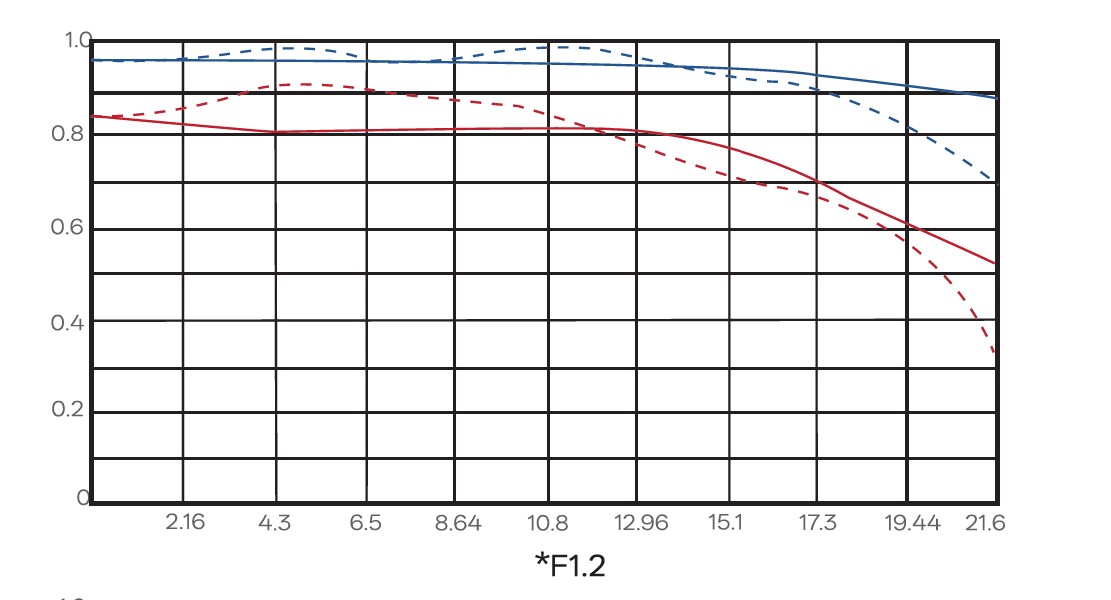
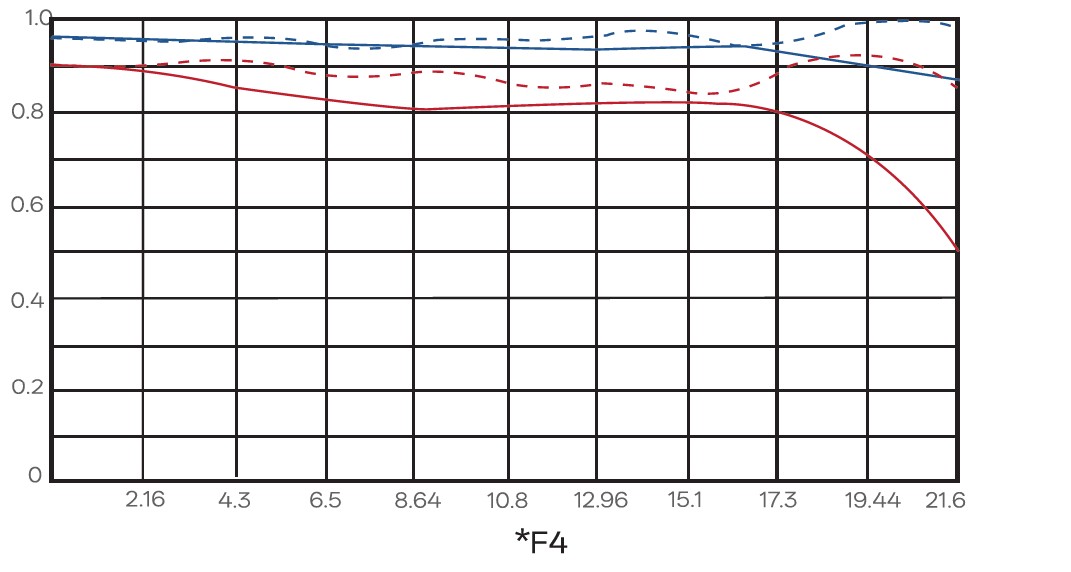
The recently released Sigma 85mm F1.2 ART is considerably more expensive, but you can see that outside of the corners, the SongRaw actually competes favorably with the more expensive lens.
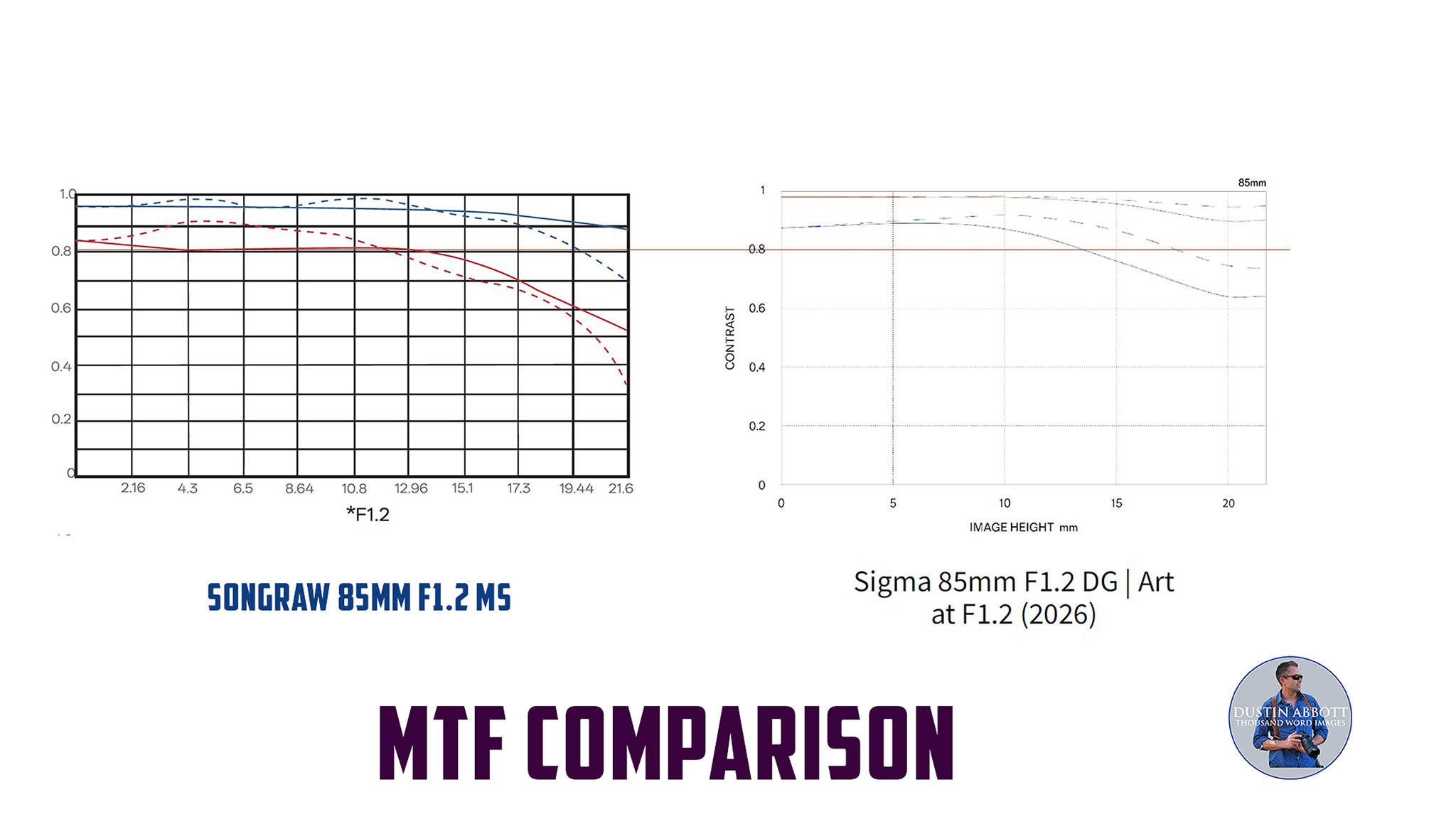
In terms of basic “bang-for-buck”, the Songraw 85mm F1.2 is a spectacularly good lens, delivering a heady combination of sharpness, contrast, and beautiful defocus.


SongRaw states that this is an APO design, and one hallmark of APO designs (outside of great contrast), is very low color fringing due to more accurate focusing of the three color wavelengths. Longitudinal Chromatic Aberrations (LoCA) show before and after the plane of focus. There is very little fringing evidence before or after the plane of focus here.

Moving to a three-dimensional object, I see a very small amount of fringing on a few shiny edges and bit more in the bokeh balls behind. This is very low levels for an F1.2 lens at F1.2, however.
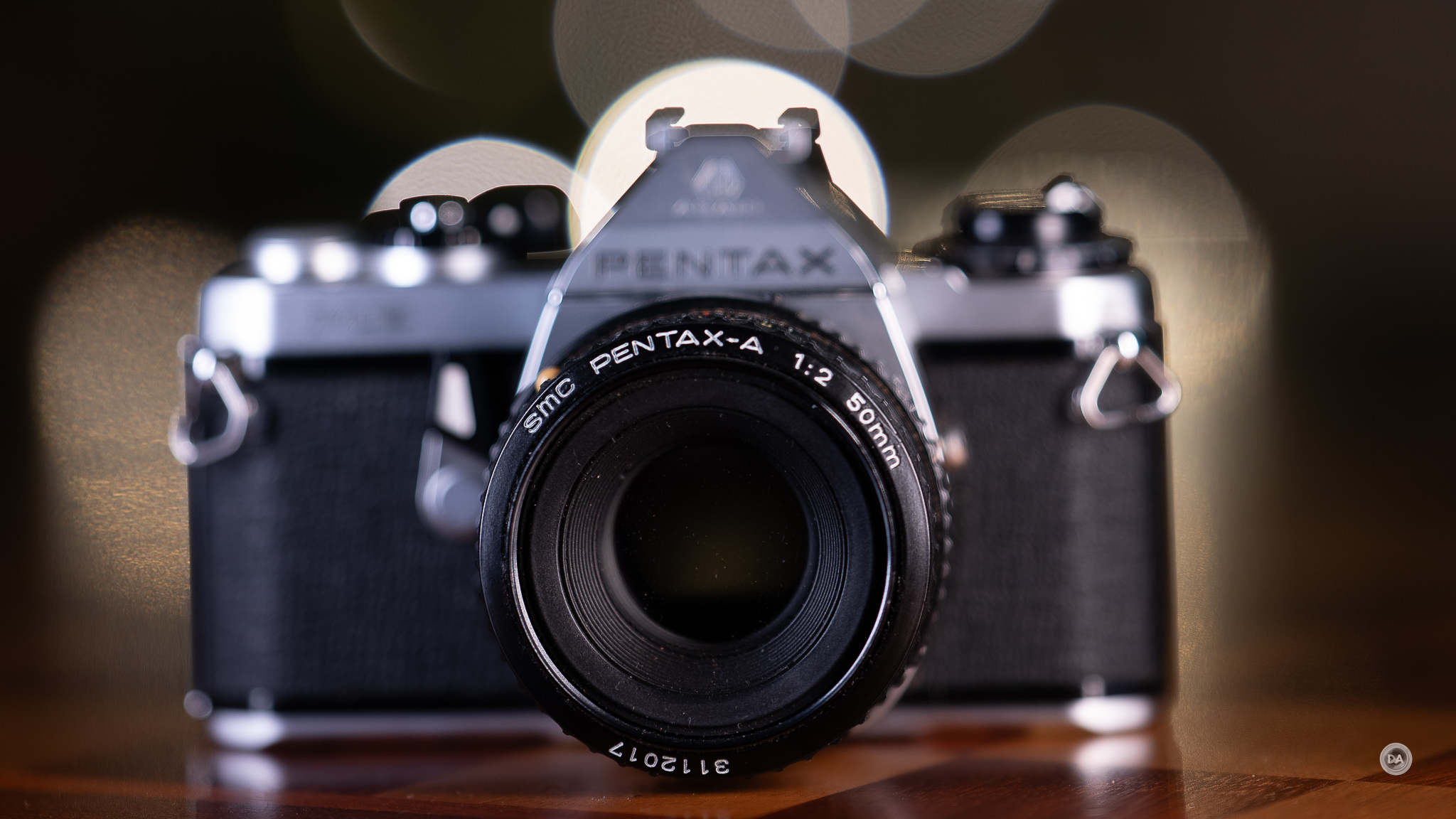
Lateral chromatic aberrations (LaCA) near the edge of the frame show just a tiny amount, so this won’t be a problem, either.
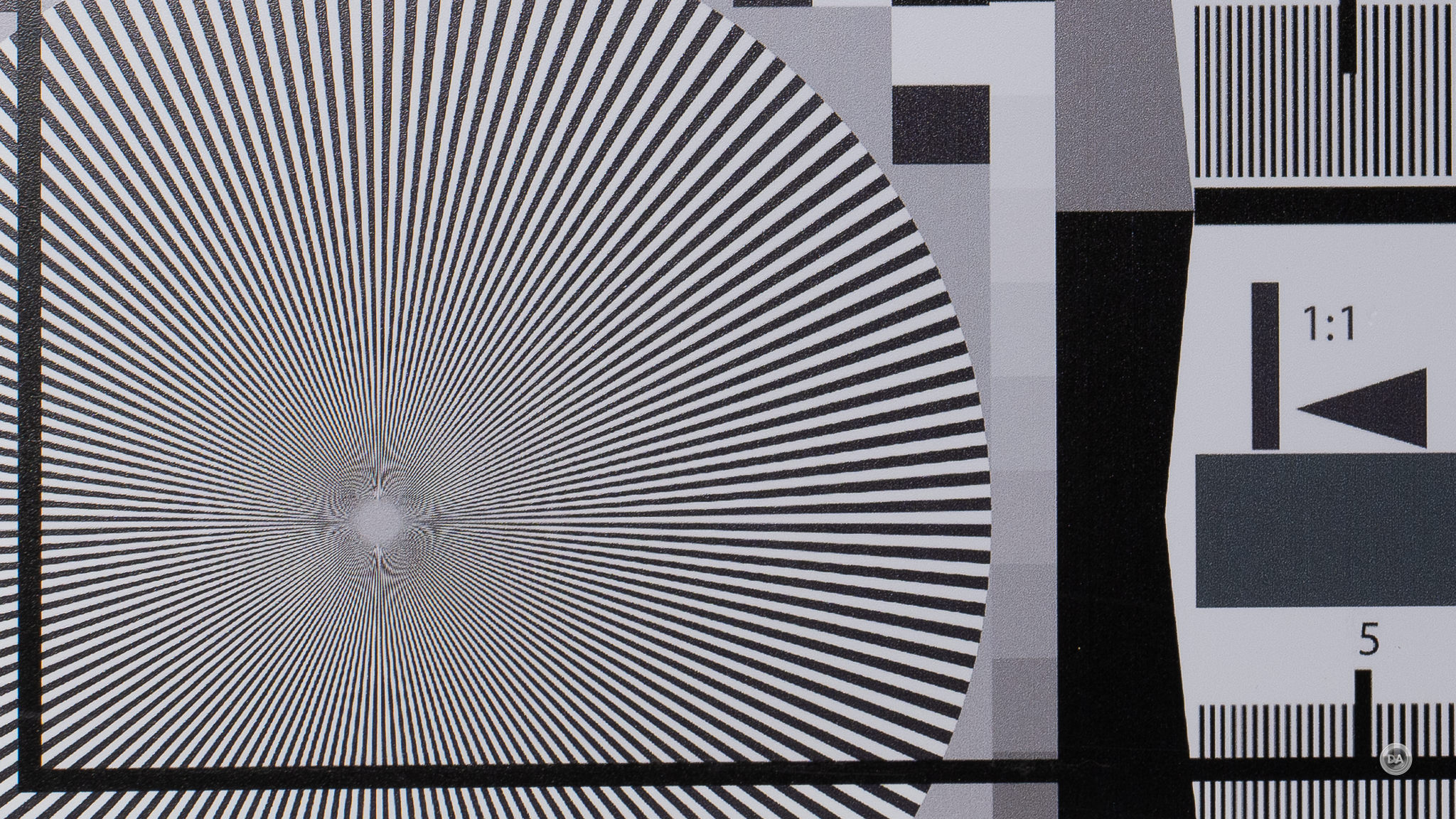
This allows for absolutely intense contrast. Here’s a real world shot at F1.2:

Global contrast obviously looks great, but what if we zoom in (WAY IN) to that little beetle on the leaf of the vine?

We can see that the subject absolutely pops. This is a lens that has great microcontrast.
If we move on to vignette and distortion we find the tiniest amount of pincushion distortion which required just a -2 to correct for. It is very linear and corrects easily enough.
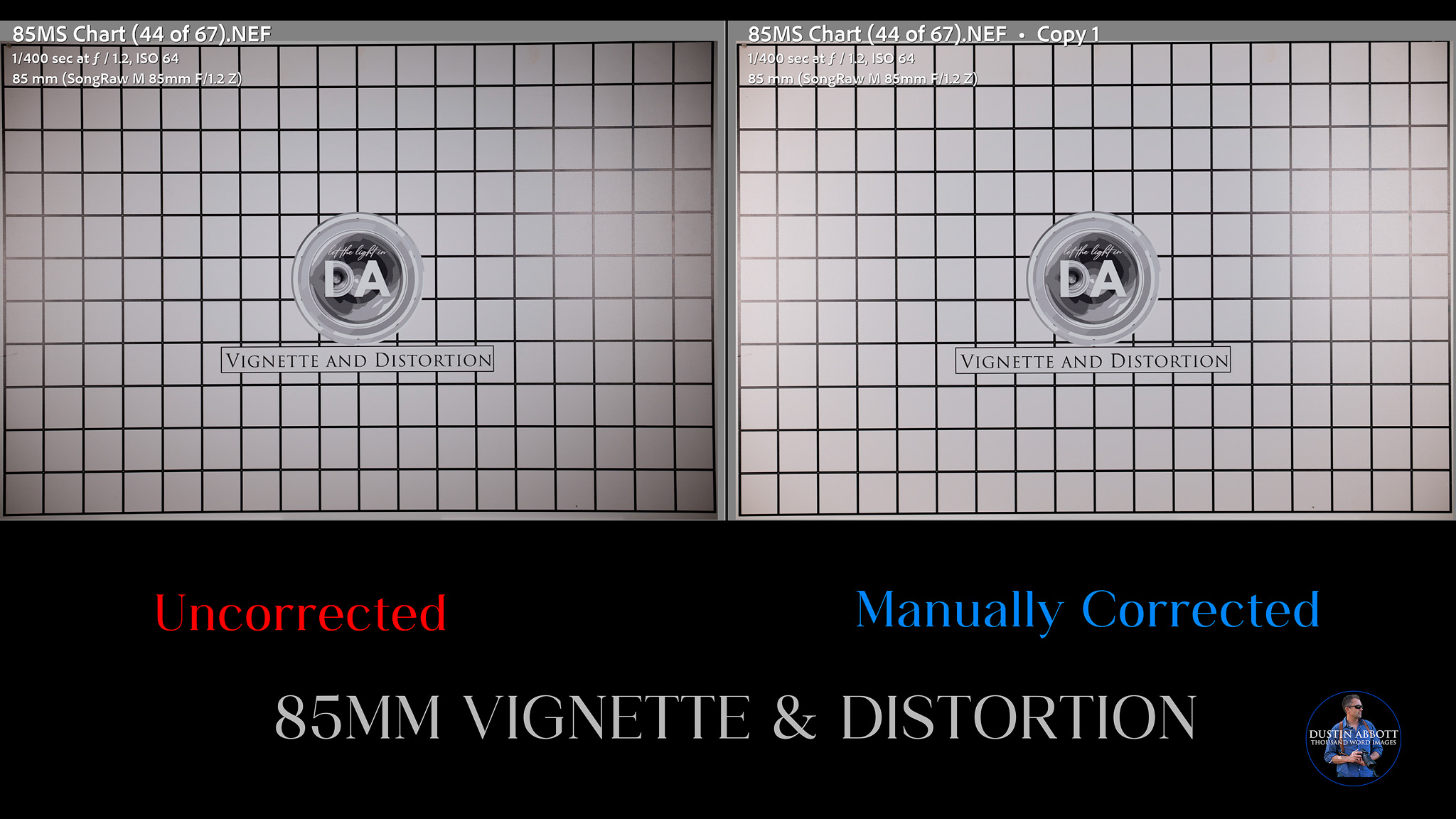
Vignette is fairly heavy at F1.2, requiring a +79 to correct.
We’ll move on to inspecting our test chart. This test has been done on a 45MP Nikon Z8 sensor. I use a high end tripod and two second camera delay to ensure vibration doesn’t affect images. Here’s a look at the test chart that we will examine at high magnification:

If we take a look at crops (at roughly 200%) at F1.2 from the center, mid-frame, and lower right corner, we see a really excellent center and midframe with an obvious but not horrendous drop in the corners.



The Sigma lens I recently tested isn’t available (natively) on Z-mount, and I haven’t yet tested the 85mm F1.2 S. I’ll revisit this comparison once I’ve tested the 85mm F1.2 S.
In the meantime, a similarly priced lens with lovely optics available for Z-mount is the Viltrox Pro AF 85mm F1.4, which I reviewed here. It is also a big, heavy lens, but that is relative when talking about the SongRaw. It obviously isn’t as bright at F1.4 vs F1.2, but it has proven very popular on Z-mount due to the great price-to-performance ratio. Interestingly, the SongRaw is sharper at F1.2 across the frame than the Viltrox is at F1.4.
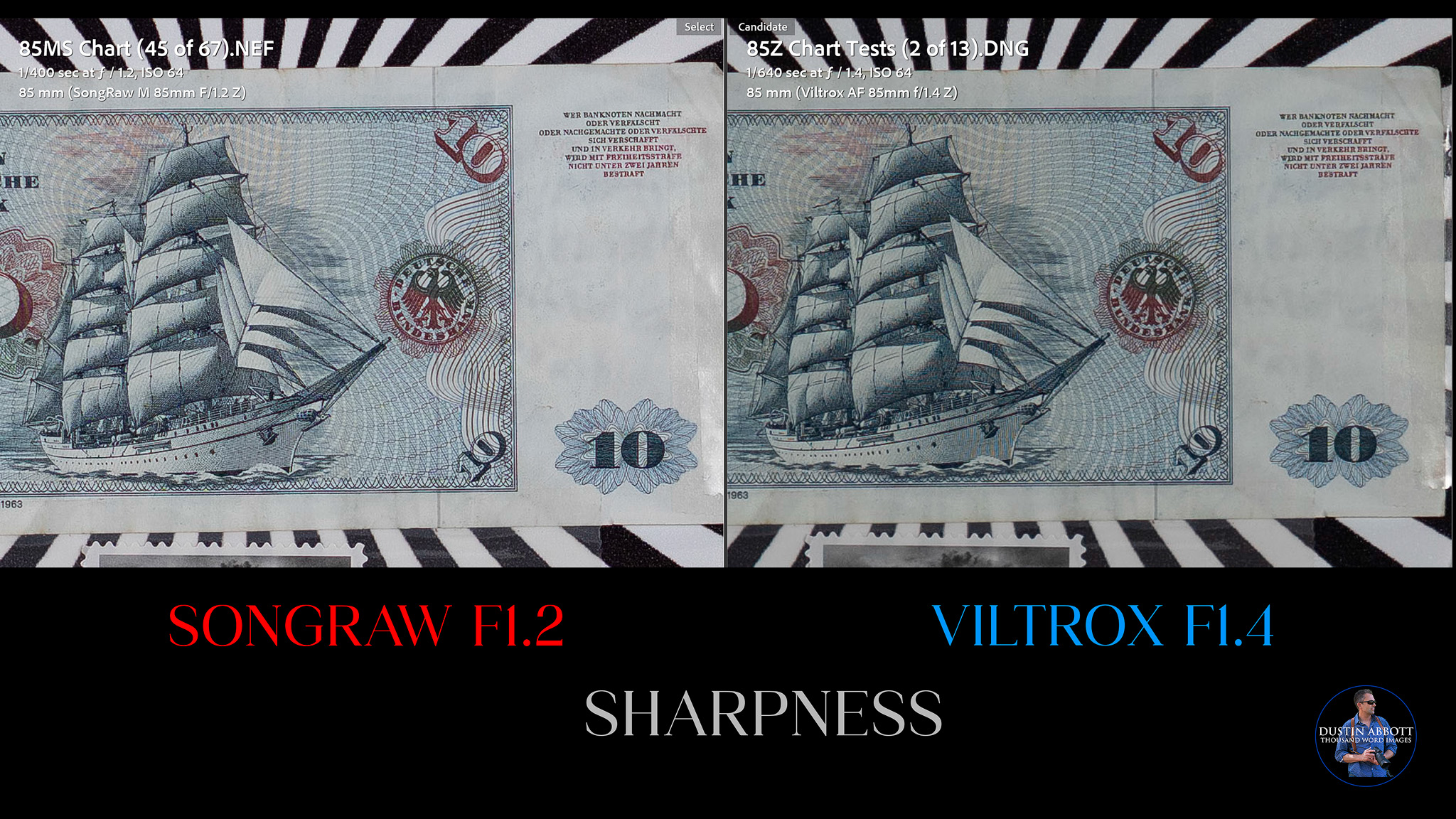
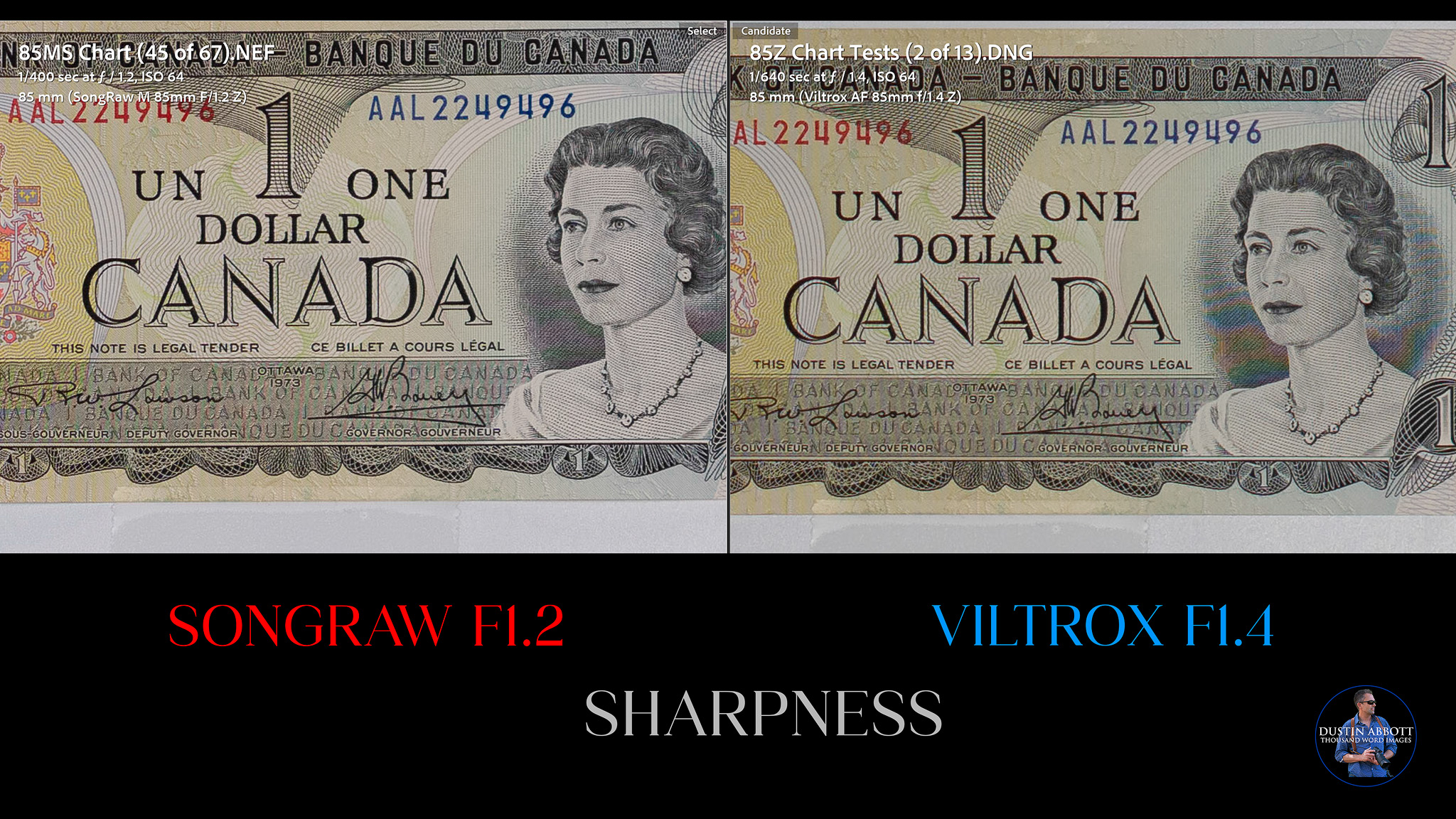
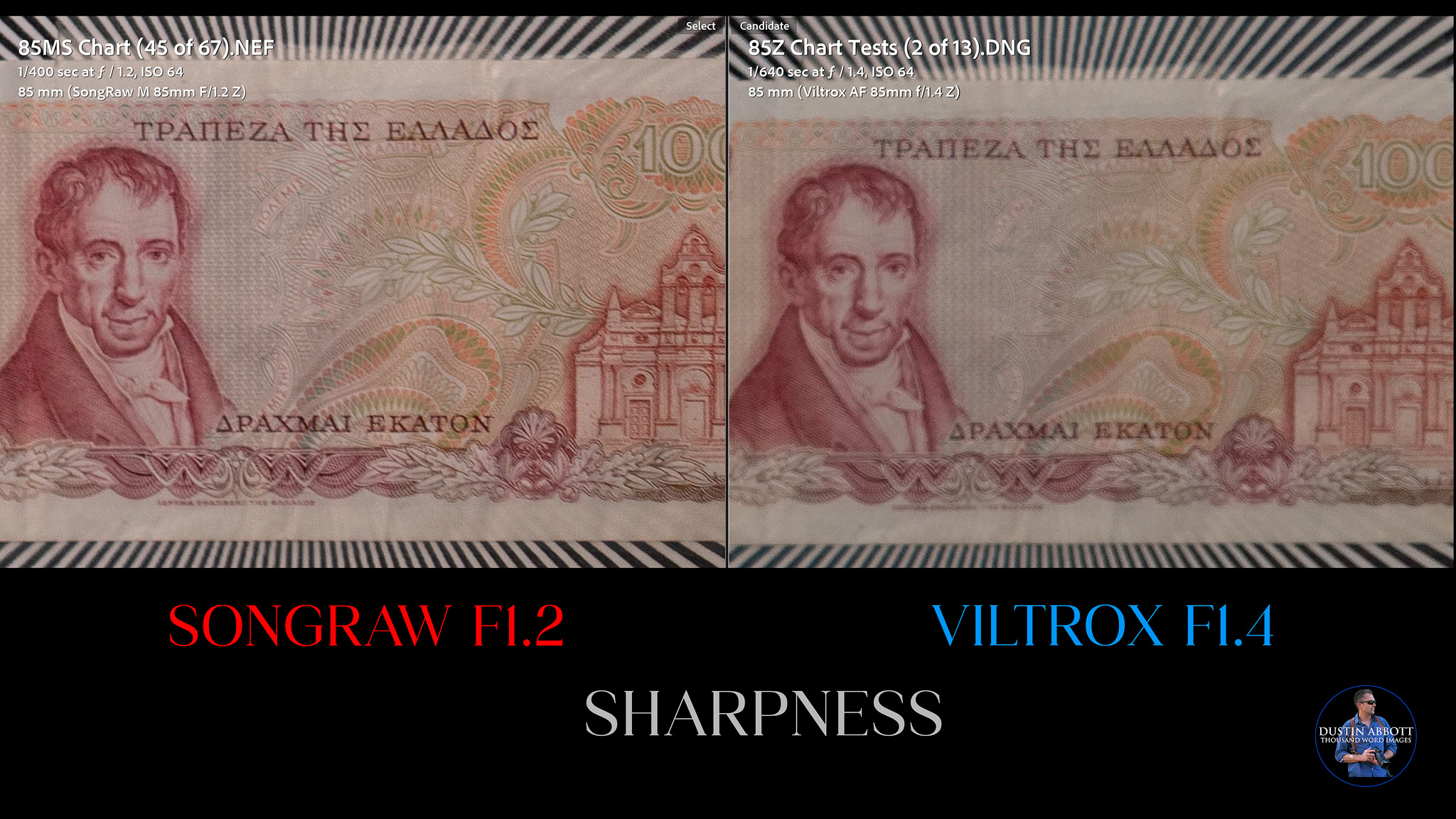
That gives you a sense of how good this lens is in terms of pure sharpness.
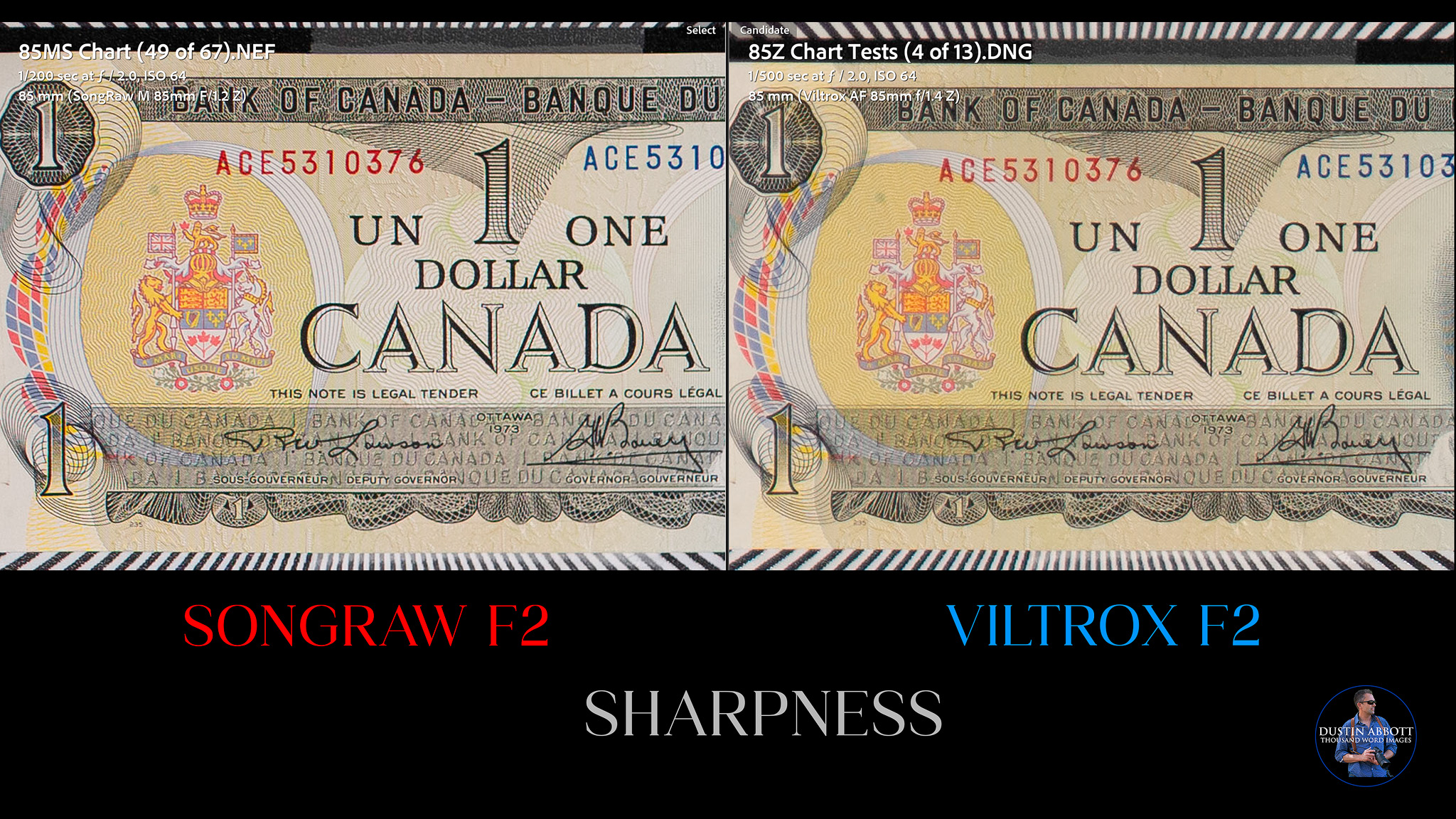
What’s more, that advantage extends to when the two lenses are stopped down to F2. A look at the corners shows that while both lenses have sharpened up considerably there, the SongRaw is the sharper of the two.
Stopping the SongRaw down to F1.4 and F2 provides a little more contrast and detail, and by F2.8, the detail is absolutely intense.
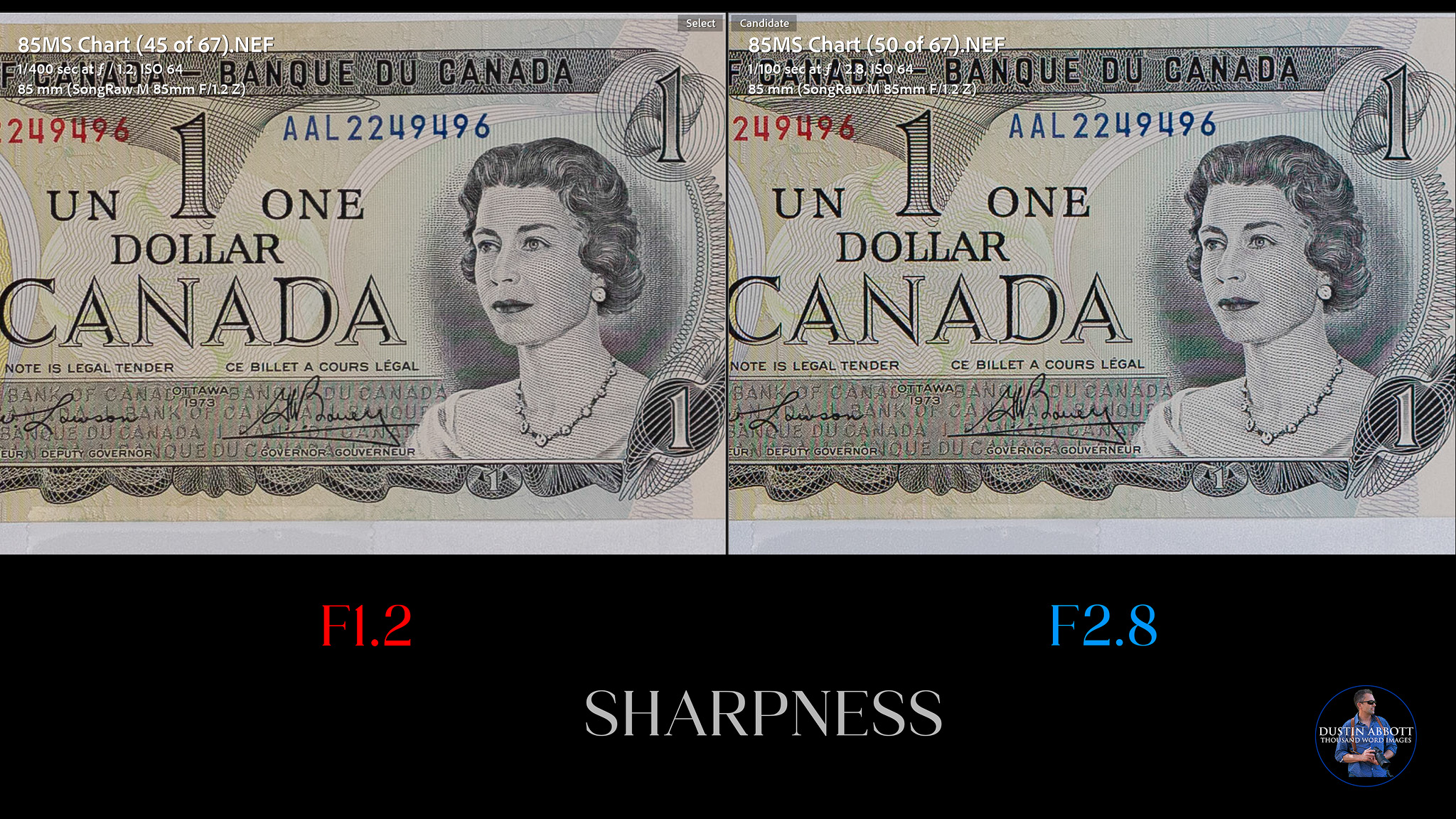
Even the corners are very sharp by this point.
Real world shots at F2-F4 are just awesome. Amazing detail, contrast, and a lovely falloff.

The microcontrast from the lens is gorgeous. Here’s a shot at F2, and the crop shows how beautifully all of the fine details are rendered.


On a side note, why is rust so interesting on someone else’s vehicle and so ugly on your own?
Images shot at landscape apertures are rich and nicely detailed.
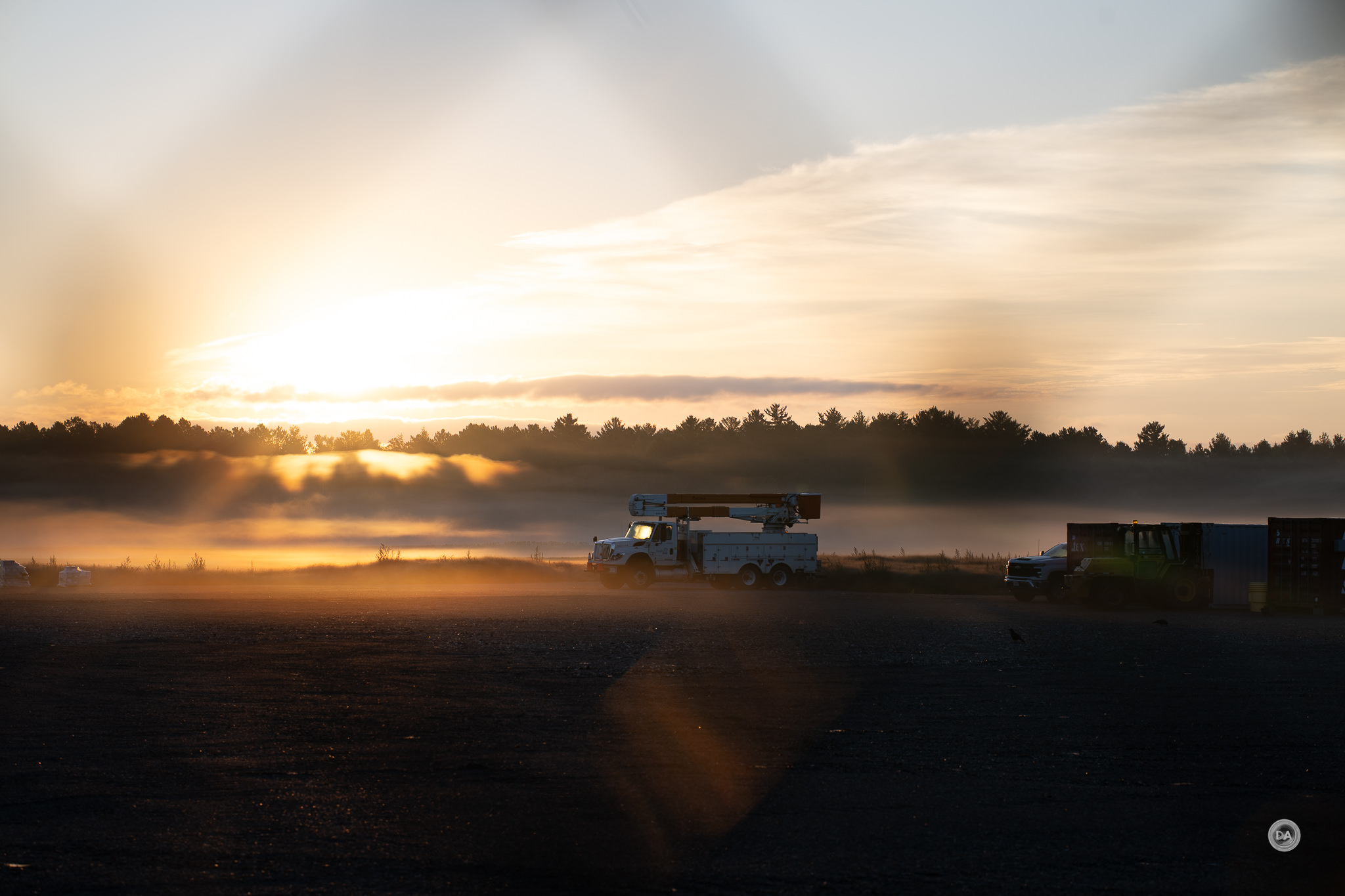
Expect the typical diffraction pattern on high resolution cameras where the image is a little softer by F11 and softer still at the minimum aperture of F16, though diffraction doesn’t hit as hard here on Nikon as it would on a higher resolution Sony body.
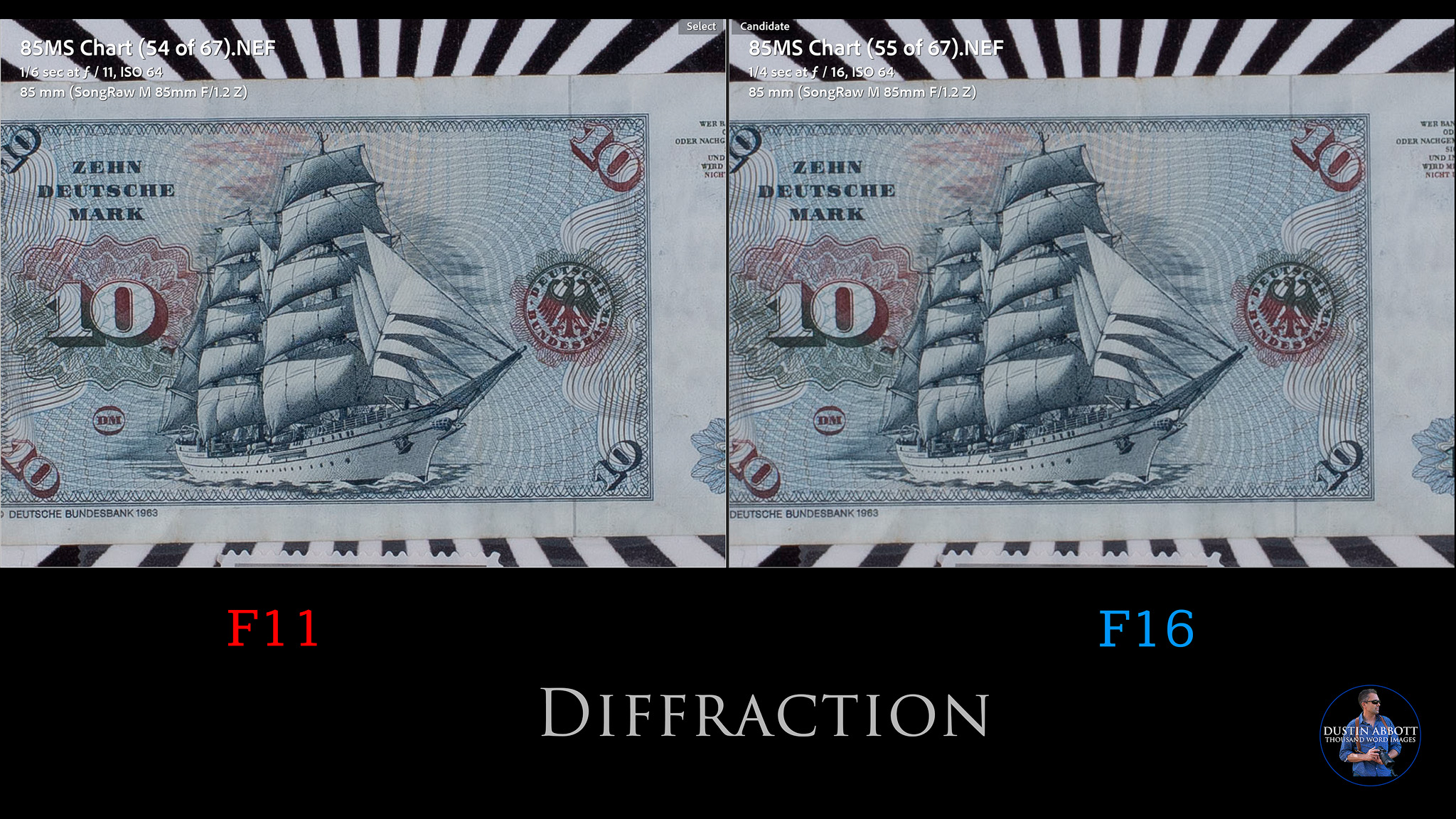
This is an exceptionally sharp 85mm lens, though frankly you can find sharp 85mm lenses that are much smaller. Where the SongRaw really needs to shine (and does) is in the beauty of its rendering.
First we’ll look at specular highlights (bokeh balls).

There’s a very fine amount of blue fringing around the edges of specular highlights, but nothing worth mentioning. There’s a little bit of interior activity, but nothing like “onion bokeh”.
But out in the real world, the rendering is just gorgeous. There’s a tremendous amount of punch to images, and then a really lovely defocused area.

I often shoot this little statue in this position, as the trees beyond are mostly evergreens so the shot works regardless of season (even though half the year the lower portion is white instead of green). First of all, the SongRaw does beautiful things with both the defocus and the colors here.

But there is also something very Zeiss-like about the nature of the vignette and how it affects the rendering and falloff of both light and color. I feel like a lot of images are very Otus-like, which makes me very happy. This shot, for example, I would complete believe could have been taken with the Otus 85mm F1.4.

That’s very high praise for a lens that not only costs thousands less but comes from a brand that has released a grand total of two lenses thus far.
I love the “look” of images, even simple ones.

That heavy vignette draws the eye beautifully, and the fall-off to defocus is lovely. Then, if you zoom in, you can see beautiful detail.

Add to this the fact that an 85mm F1.2 lens is capable of incredible subject isolation, and you have the potential for a lot of really lovely images.

The bottom line is that I have fallen in love with the look of images that this lens produces. I review over 100 lenses a year, and there are only a few of those each year that really capture my attention as being exceptional in their rendering. What I mean by that is that they stand out from other lenses in some key regard. This is one of those lenses. I really liked the Moonlit 50mm F1.2’s rendering, but I love the 85mm F1.2. I think it is more special in all metrics.
The latter image gives us a segway to a final area of assessment that is more mixed. Flare resistance has some give and take. In more direct situations where the light source is somewhat centered in the frame, the results aren’t bad. The first two results here are wide open, while the third is stopped down. None of this looks bad for a lens with this much glass in it.
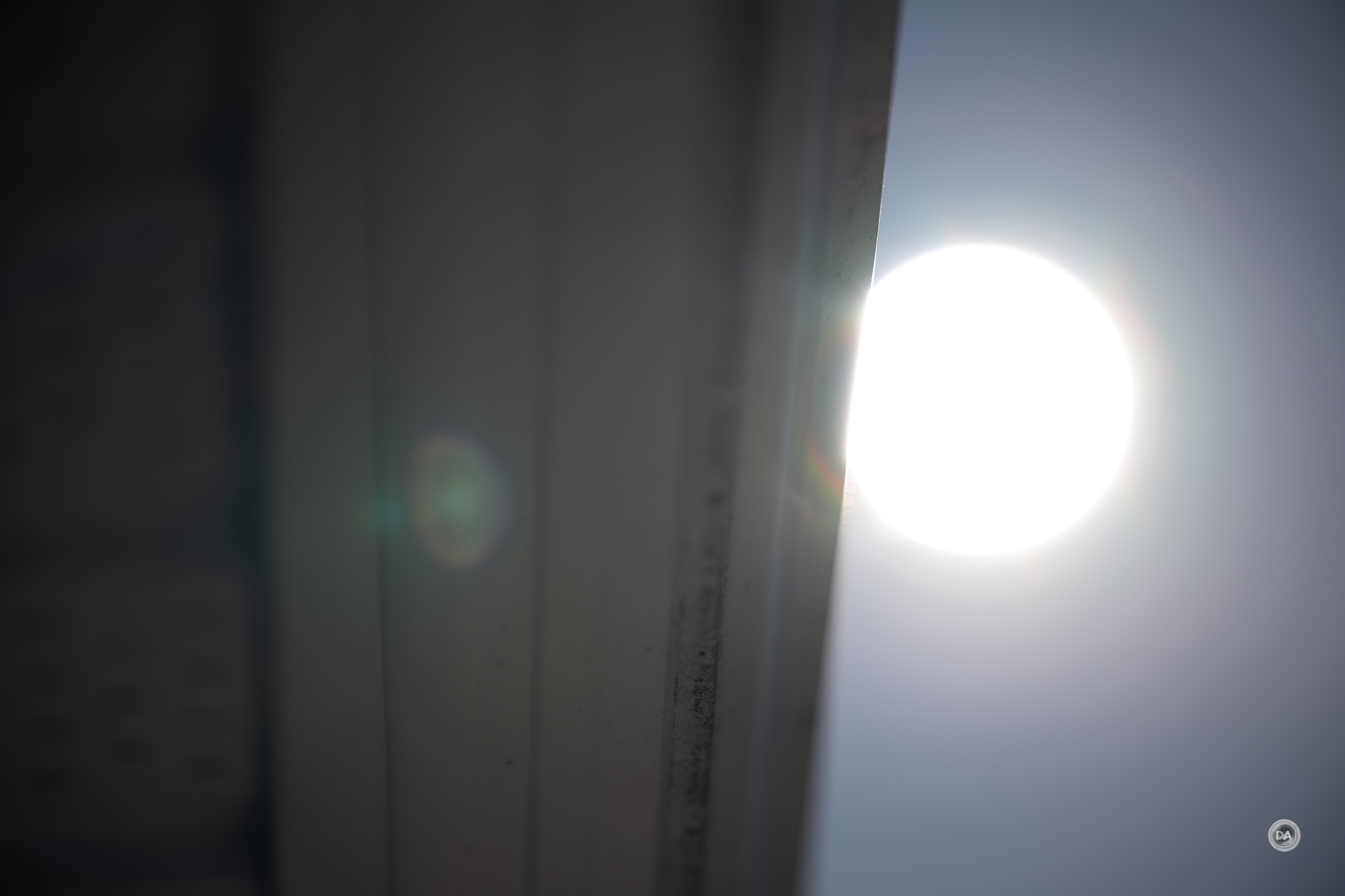
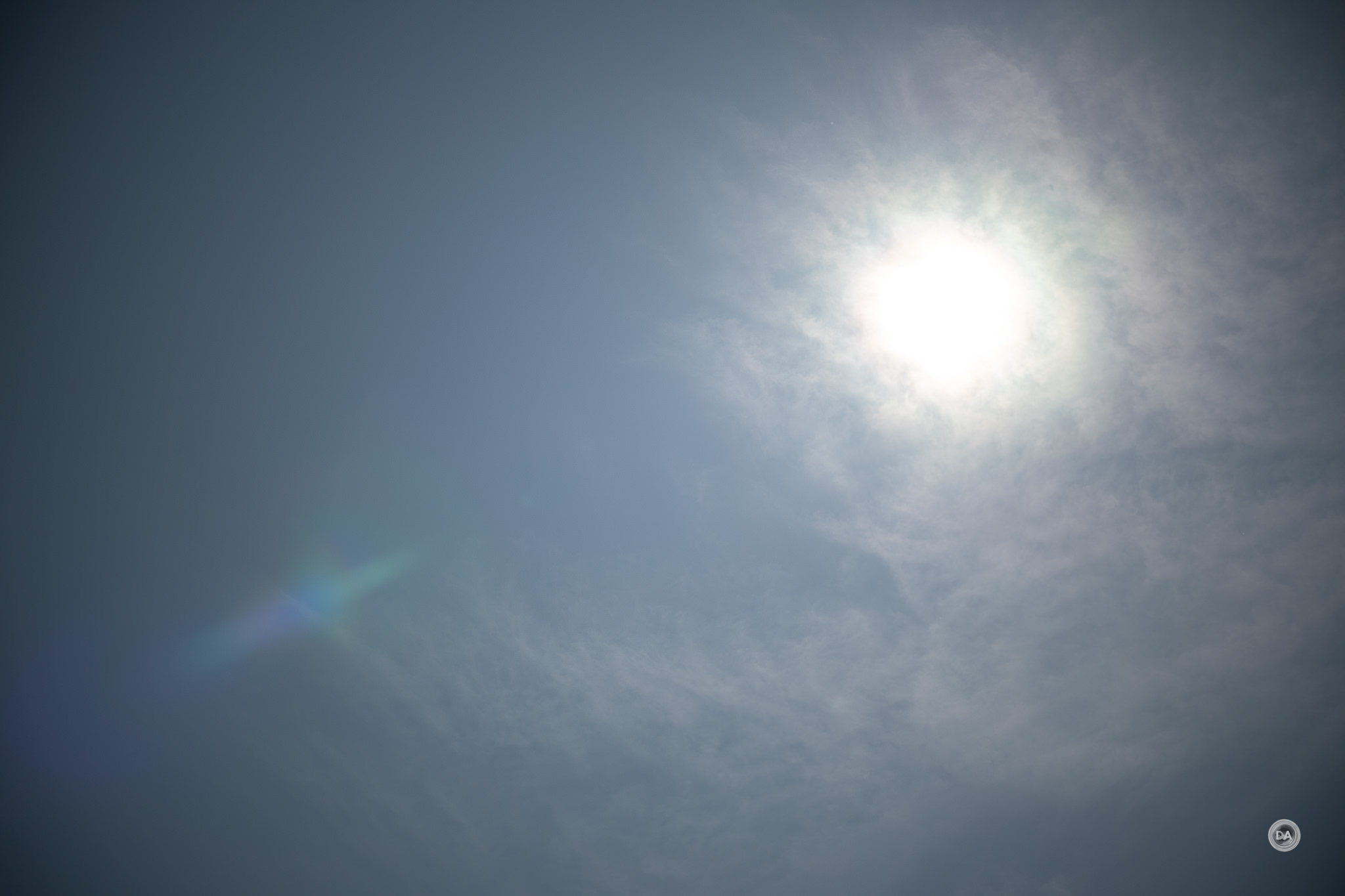

Likewise when shooting with some of the light obstructed, like here, where the results are good.

But at certain angles there is much more veiling and some internal reflections.

That’s clearly not so good unless you are actually looking to use imperfections like this for a “look”.
Most shots will fall somewhere in between those two extremes.

Another area where I really saw an improvement over the 50mm F1.2 Moonlit is in the optical glass. I felt like colors were richer and more accurate, and there wasn’t any kind of color cast to the results. I felt like there was a slight magenta shift with the 50mm lens. I actually really like the colors from the 85mm, though, to be fair, I am reviewing it on Nikon rather than Sony. Perhaps it is as simple as the optical glass being a better match for Nikon’s color science, but I suspect there’s something more than that here. I think part of the new APO optical design is the use of better optical glass.



Bottom line is that I really, really love the images I’m getting out of the SongRaw AF 85mm F1.2 MS. I can shoot the simplest subject, like a pill container with my evening supplements, and still feel like I’m getting an elevated image out of it.

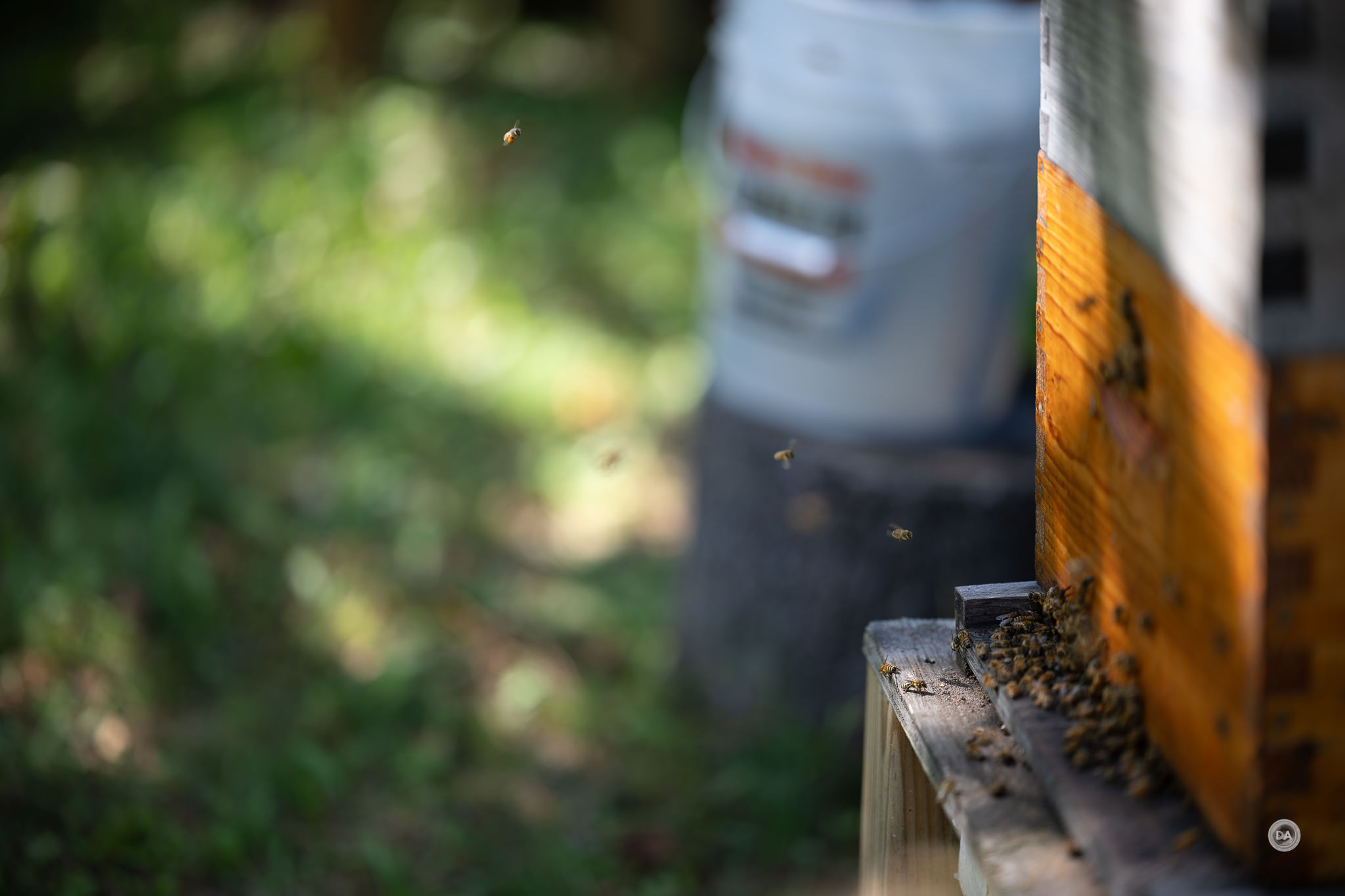
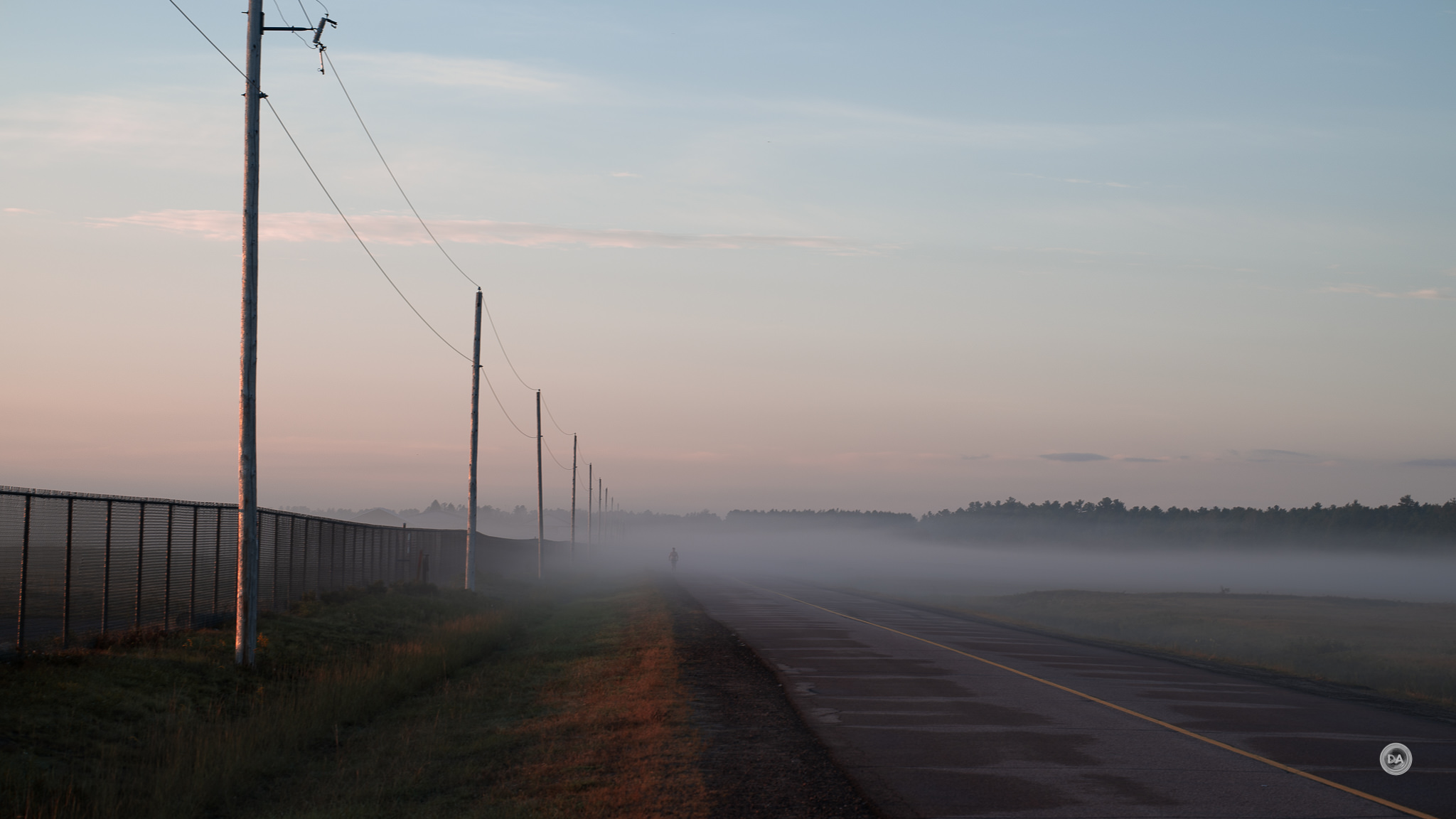
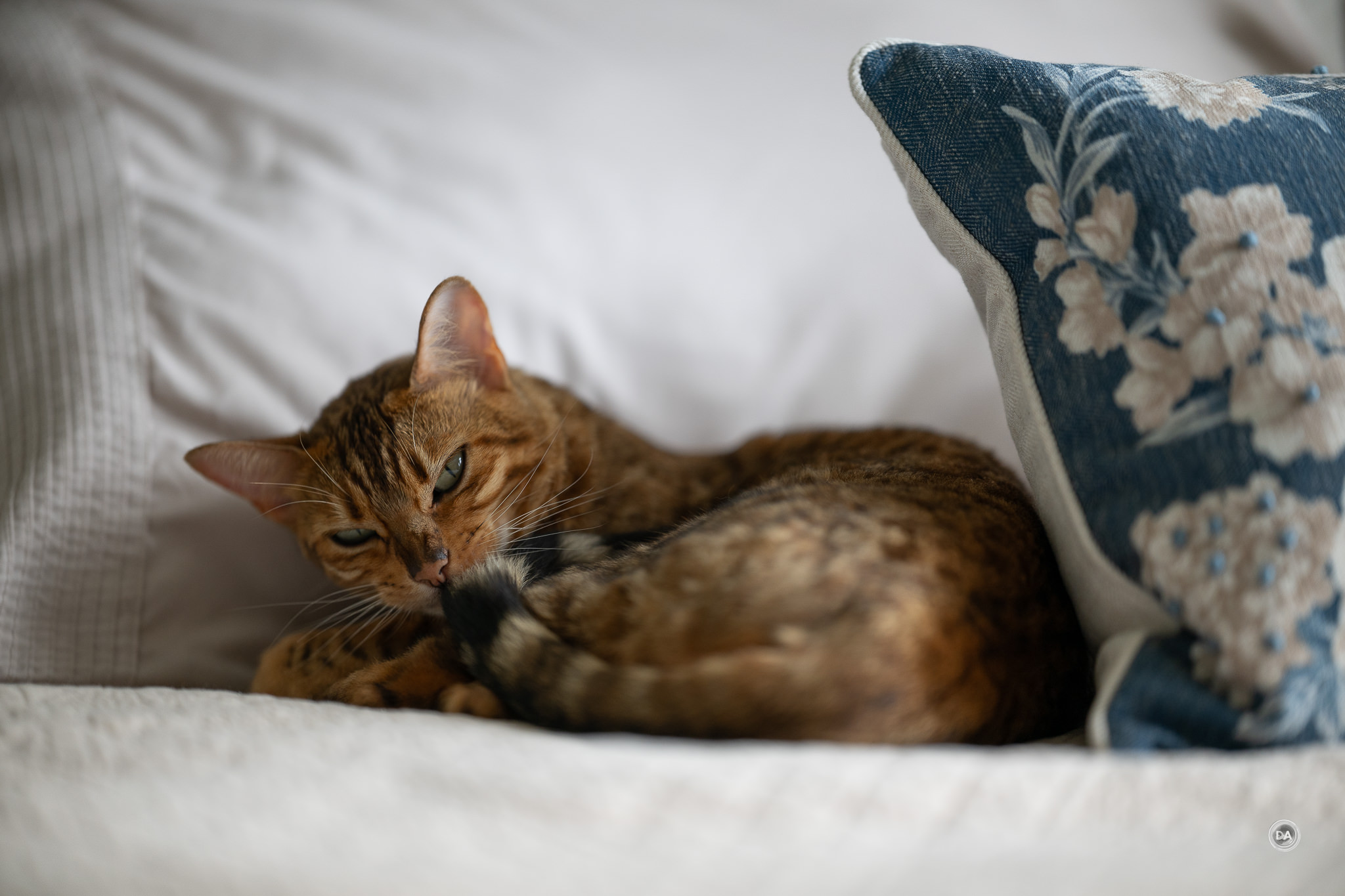
Enough said. The SongRaw 85mm F1.2 is massive, but it rewards the shooter with absolutely stunning image quality at a bargain price. Here’s a mini-gallery of more images for you to enjoy.

















Conclusion
The 85mm F1.2 M-Simplify is only the second lens from SongRaw, but I see improvements already. The optical glass is improved, and the idea of the simplified design at a much cheaper price point helps solve one of the issues I highlighted in the 50mm review – the challenge of spending $1000 on a lens from a brand that no one had previously heard of. This lens, at $650, feels like an absolute bargain, particularly here on Nikon where the 85mm F1.2 S has an MSRP of nearly $3000 USD.

Autofocus remains as the weakest point, not because of any lack of accuracy, but because a lens with this much glass would benefit from either a higher-thrust motor (like a voicecoil motor), or, even better, multiple motors.

But where the SongRaw AF 85mm F1.2 MS really shines is in the lovely optics, which not only combine great contrast, sharpness, and rendering, but also has a unique look to images that feels very Zeiss-like. I’m not quite sure how they did it, but I’m impressed. It’s an utterly huge lens, but at least in this “simplified” version, it is lighter than the S-Line. Keep up the good work, SongRaw. A 35mm F1.2 with this level of performance (and price) would be welcome as well.

Pros:
- Outstanding Optical Performance: Exceptional sharpness, contrast, and overall image quality at various apertures, especially at F1.2.
- Apochromatic (APO) design minimizes color fringing, delivering vibrant and accurate colors.
- Competitive Pricing: At $649, it provides a compelling alternative to more expensive options like the Sigma and Nikon 85mm F1.2 lenses, which are priced at $1599 and $2996, respectively.
- Well-Designed Build: Constructed with an aerospace-grade aluminum body, ensuring durability while maintaining a lightweight feel compared to other high-end 85mm lenses.
- Improved USB-C firmware update process enhances user-friendliness.
- Impressive Bokeh: The lens produces beautiful, creamy bokeh due to its large maximum aperture and 13-blade iris, ideal for portrait photography.
- Enhanced Detail Capture: Excellent performance in microcontrast, allowing fine details to pop even in challenging lighting situations.
- Good Minimum Focus Distance: With a minimum focus distance of 85cm, the lens allows for creative close-up shots, achieving unique subject isolation.
- Strong Build Quality: Sealed against moisture and dust, offering reliability in various shooting conditions.
Cons:
- Size and Weight: At 1120g, the lens is quite hefty, which can be cumbersome for extended shooting sessions or travel.
- Autofocus Limitations: While the autofocus is accurate, it lacks the speed and smoothness found in lenses equipped with dual motors, leading to occasional focus issues.
- Simplicity vs. Control: The absence of an aperture ring may deter photographers who prefer manual control for exposure settings.
- Focus Noise: Autofocus operations produce a noticeable amount of noise, which may not be ideal for video recording.
- Vignette: Heavy vignetting at wide apertures may require post-processing corrections to achieve uniform exposure, though this can be a stylistic choice for some photographers.
- Limited Brand Recognition: As a newer lens brand, SongRaw may face skepticism from some potential users regarding reliability and support compared to established brands.
- Focus Breathing in Video: Autofocus performance for video, especially during significant focus changes, can result in distracting movements, making it less suited for dynamic video scenarios.
_________________________________________________________________________
GEAR USED:
Purchase the SongRaw 85mm F1.2 MS @ B&H Photo | Amazon | Amazon Canada
Purchase the SongRaw 50mm F1.2 @ B&H Photo | Amazon | Amazon Canada
_______________________________________________________________
Purchase the Nikon Z8 @ B&H Photo | Adorama | Amazon | Camera Canada | Amazon Canada | Amazon UK | Amazon Germany
_________________________________________________________________
Want to support this channel? Use these affiliate links to shop at: B&H Photo | Amazon | Adorama | Camera Canada | Amazon Canada | Amazon UK | Ebay | Make a donation via Paypal
Buy DA Merchandise https://bit.ly/TWIMerch

Keywords: SongRaw, Moonlit, SongRaw 50mm, SongRaw MS, 85mm F1.2, f/1.2, F1.2, SongRaw 85mm Review, Nikon Z8, Z, Z-mount, Z8, Z5II, Review, mirrorless, Full Frame, Sports, Tracking, Dustin Abbott, Real World, Comparison, Handling, Focus, Portraits, Resolution, High ISO, Image Quality, Sample Images, Photography, 45MP, #letthelightin, #DA, #NIKON, #Z8, #NIKONZ8, #BestNikonPrimeLenses2026, #NikonZMountLenses, #FullFrame85mmLens
Related posts:
 Nikkor Z 85mm F1.8 S Review
 Nikkor Z 35mm F1.8 S Review
 Nikkor Z 35mm F1.8 S Gallery
 Viltrox LAB 35mm F1.2 Z-Mount Review
 Pergear 100mm F2.8 2x Macro Review
 Pergear 100mm F2.8 2x Macro Gallery
 Nikkor Z 35mm F1.2 S Review
 Nikkor Z 50mm F1.2 S Review
 Viltrox AF 16mm F1.8 Z Image Gallery
 Viltrox AF 20mm F2.8 Z Review