

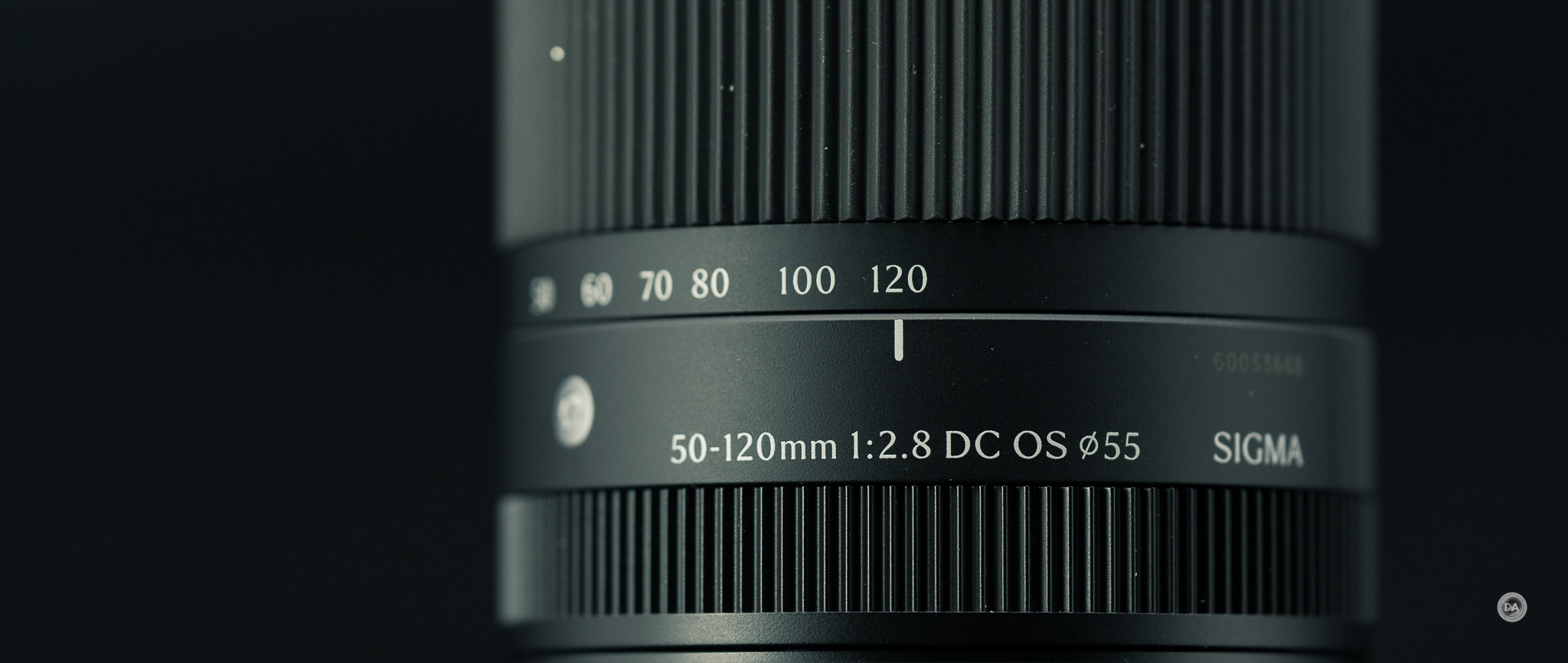
The APS-C space has had a complete dearth of fast (bright) telephoto zoom lenses. There are plenty of slow, variable aperture zooms (typically in the range of F4-F5.6 or F6.3), but F2.8 zooms over 100mm? There has been one across basically all platforms – the big, heavy, expensive, and (at least for me) underwhelming Fuji 50-140mm F2.8, which I reviewed here. I’ve had many people ask me about my recommendation of that lens, and my response has been that I find it difficult to recommend at the price tag of $1899 USD. “Okay”, they’d reply, “so what do you recommend instead?” And my response has…crickets. There really wasn’t an alternative…until now. Sigma has given an exceptional alternative for Fuji X-mount, Sony E-mount, and Canon RF-mount photographers in the form of the new Sigma 50-120mm F2.8 DC OS. It’s smaller, lighter, cheaper, and generally more competent. Find out why Sigma’s newest lens is a winner in today’s review…
Follow Me @ YouTube | Patreon | Instagram | Facebook | DA Merchandise | Flickr | 500px | X
Thanks to Sigma Canada (Gentec) for sending me a review loaner of this lens. As always, this is a completely independent review. *The tests and most of the photos that I share as a part of my review cycle have been done with the Sony a7RV along with the Sony Alpha 1 that serve as my benchmark cameras for Sony lenses. You can visit the product page for the Sigma 50-120mm F2.8 here.
__________________________________________________________________________________________________
SUMMARY: The Sigma 50-120mm F2.8 DC OS lens is a strong competitor to the heavier, pricier Fuji 50-140mm F2.8. The Sigma lens is praised for its compact size, lightweight design, and reasonable pricing at $799, making it a viable option for Fuji X-mount, Sony E-mount, and Canon RF-mount photographers. It delivers impressive optical performance with good sharpness and contrast, although it does exhibit some distortion and vignetting. Overall, the Sigma 50-120mm F2.8 is recommended for those seeking a versatile and portable telephoto lens.
Strengths:
- Compact and lightweight design (390g) compared to Fuji’s 995g.
- Excellent optical performance with sharp images and good contrast.
- Affordable price relative to competitors, making it accessible for many photographers.
- Useful zoom range of 75-180mm equivalent for various shooting scenarios.
Weaknesses:
- Some distortion and heavy vignetting in images, particularly at wider apertures.
- Autofocus performance may be limited on Fuji systems compared to Sony and Canon.
- Slightly constrained zoom range compared to the Fuji 50-140mm lens.
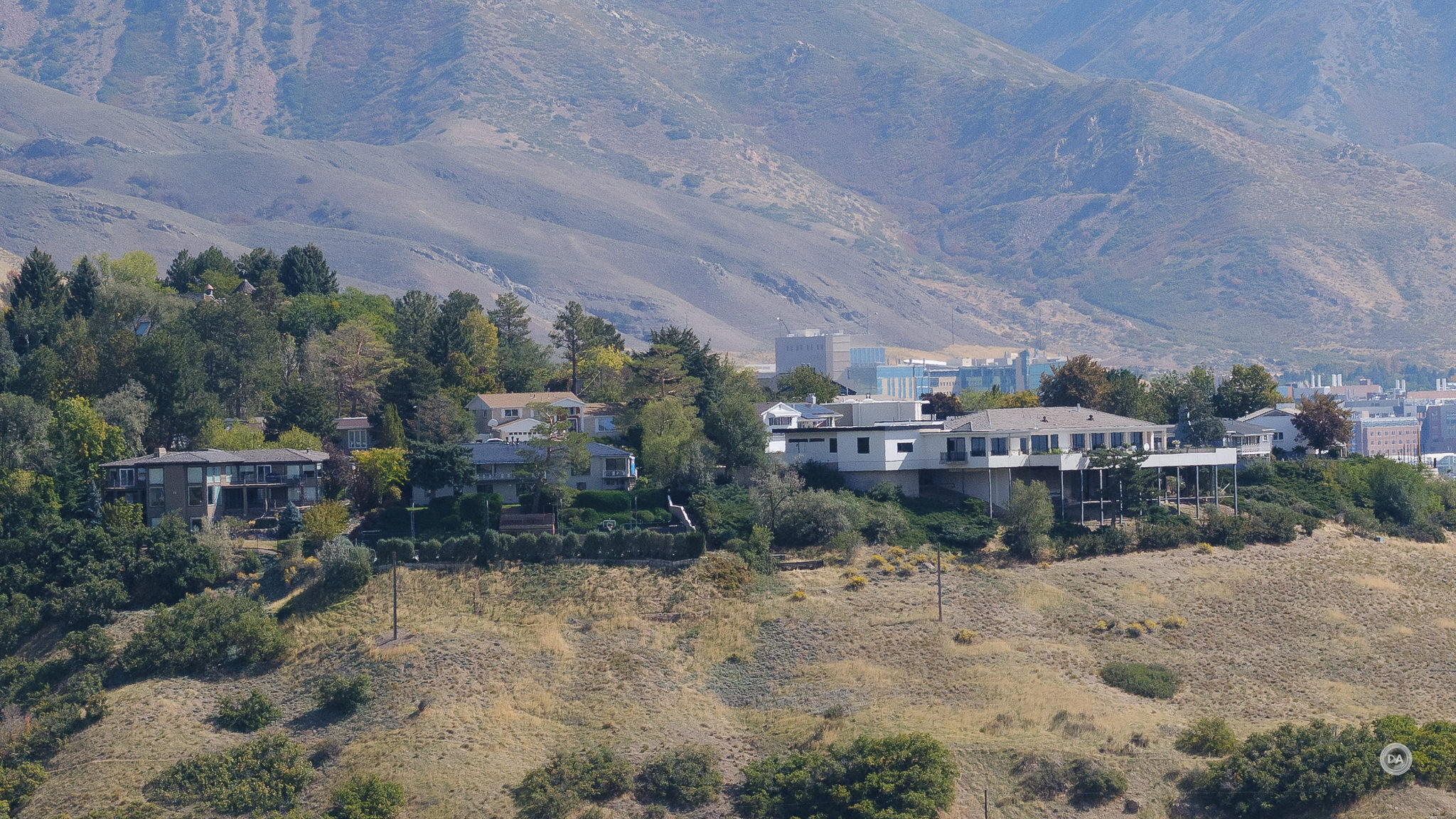
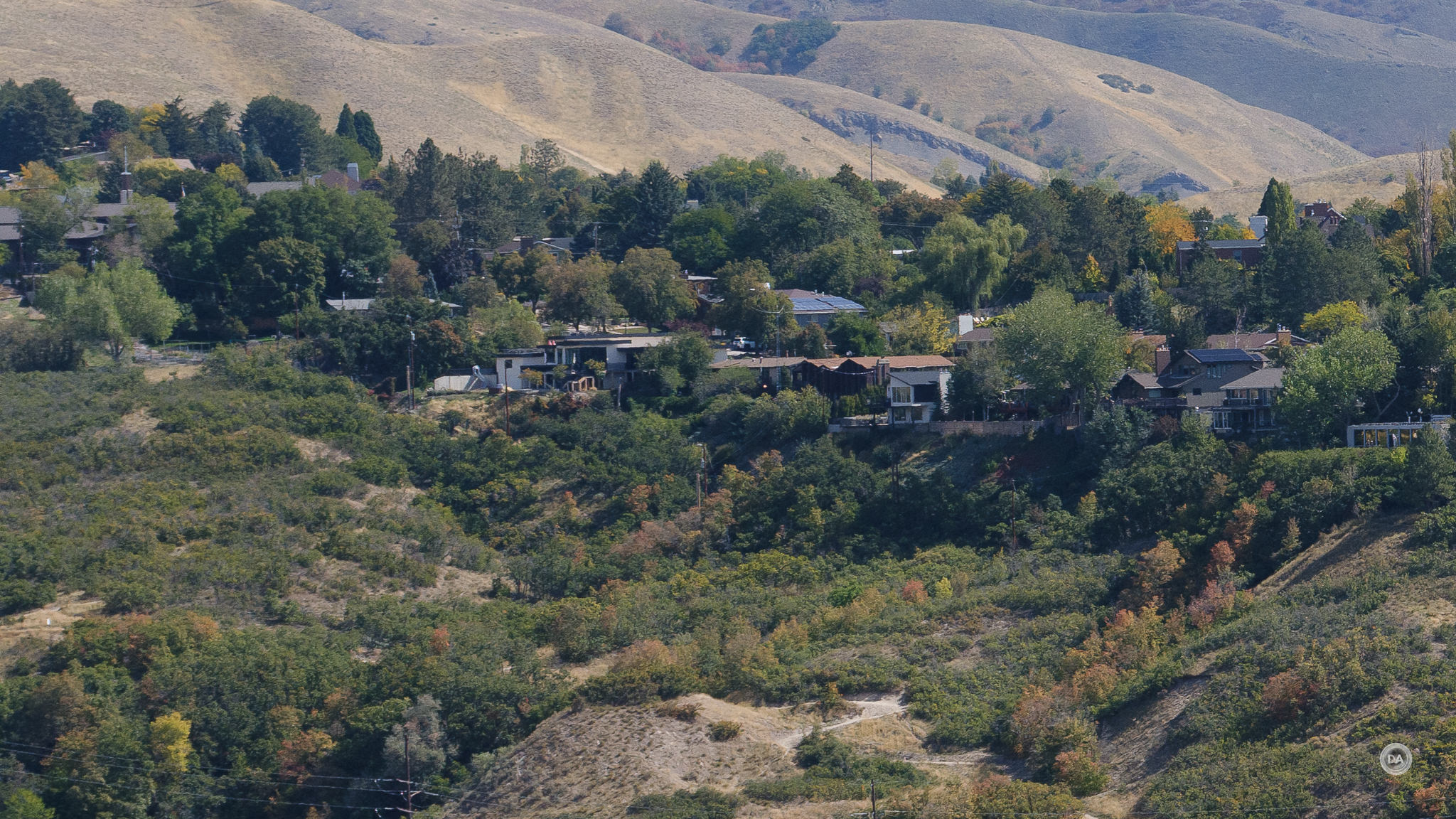
This is a more constrained zoom range than the Fujinon 50-140mm, but the 75-180mm equivalent zoom range is extremely useful. I traveled with the lens to Salt Lake City, Utah, and in a hike above the city, I could look back towards the city and shoot a wider angle view, like this:
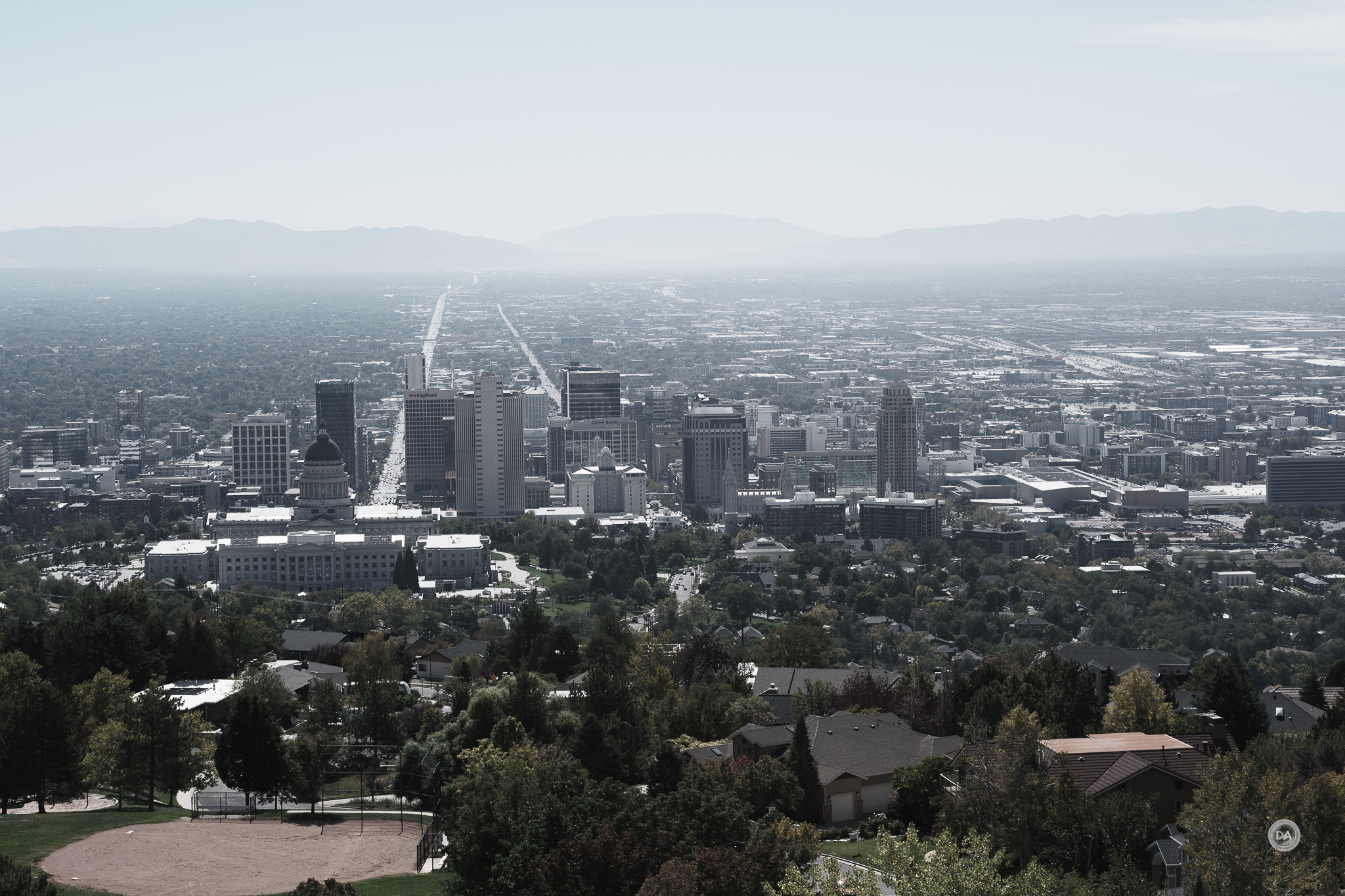
…and then isolate the Utah State Capital and the broad avenue beyond at 120mm, like this:

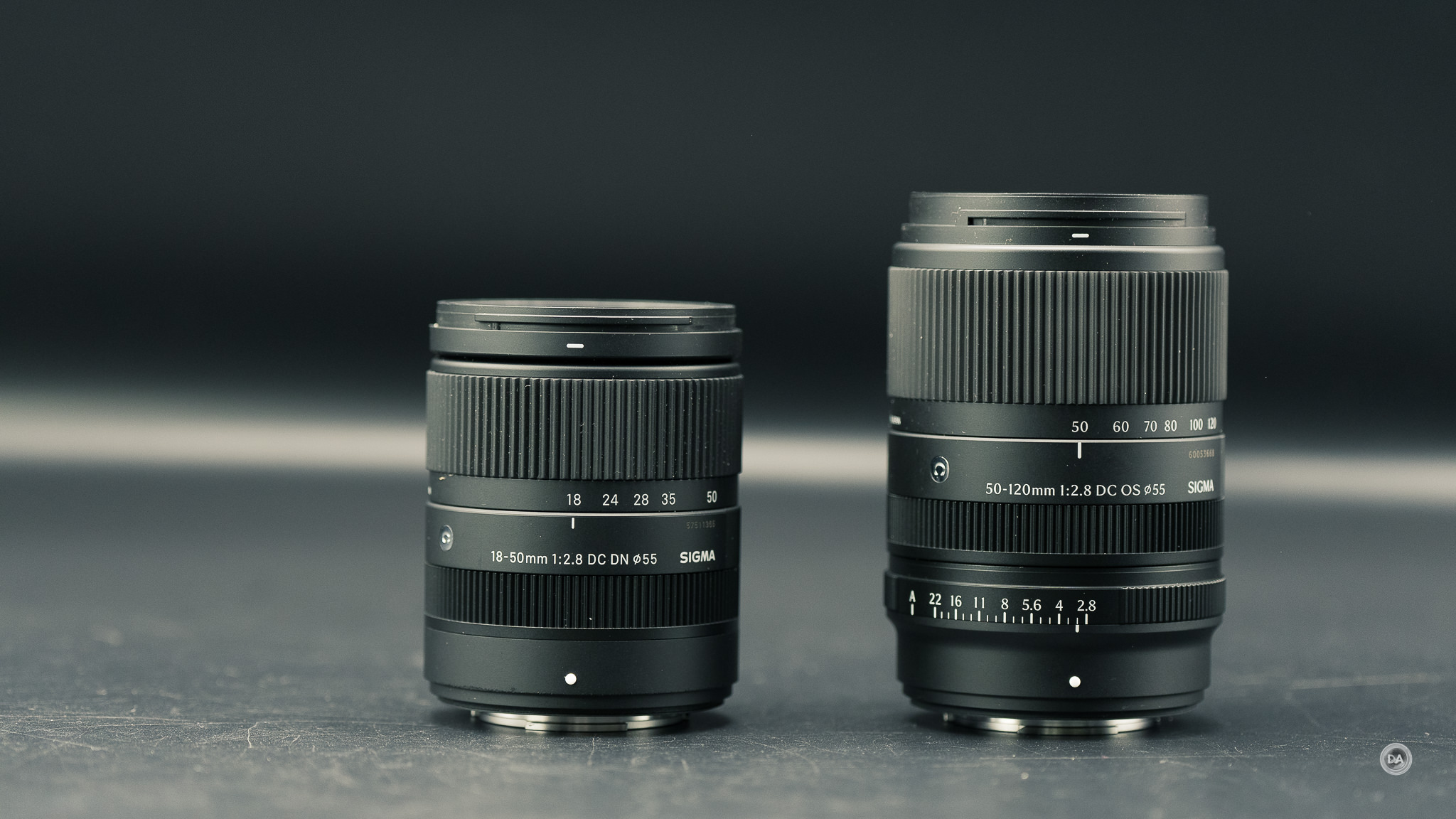
I suspect you can think of a lot of subjects that will fall within that zoom range, and you’d be right. And while I don’t have the 10-18mm F2.8 on hand, I do own the 18-50mm F2.8 for Fuji, and the two lenses make for an extremely compact and lightweight pairing (they also share the same 55mm front filter thread). In fact, the 10-18mm F2.8, 18-50mm F2.8, and the 50-120mm F2.8 weigh a combined 935g. The Fujinon XF 50-140mm F2.8 alone weighs 995g! And this is where the beauty of this new trinity of lightweight zooms really shines.
Sound useful? Let’s take a closer look.
Build and Handling
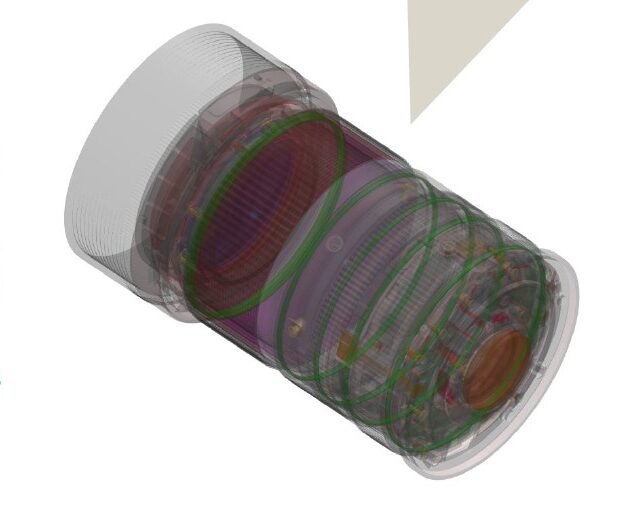
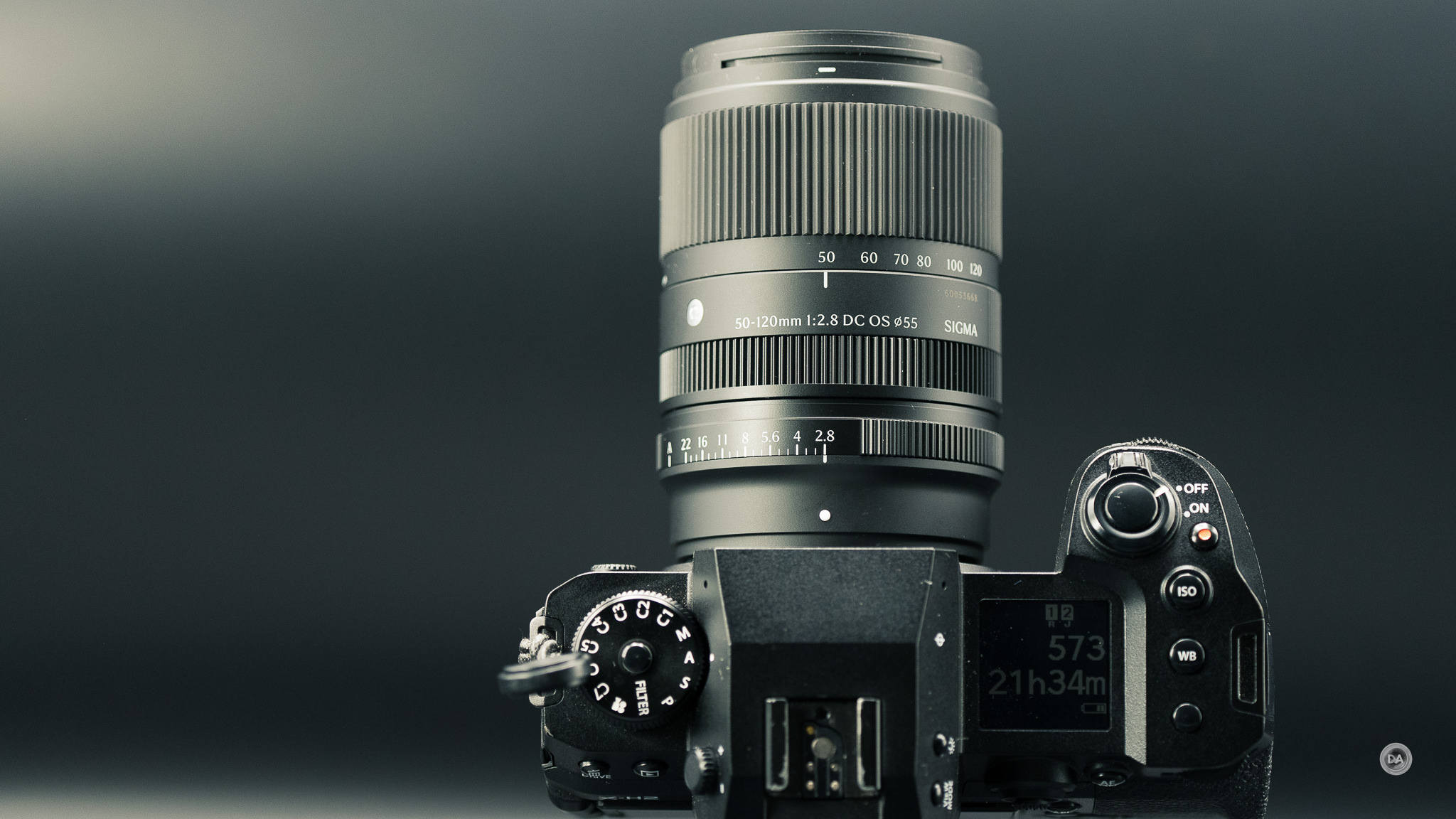
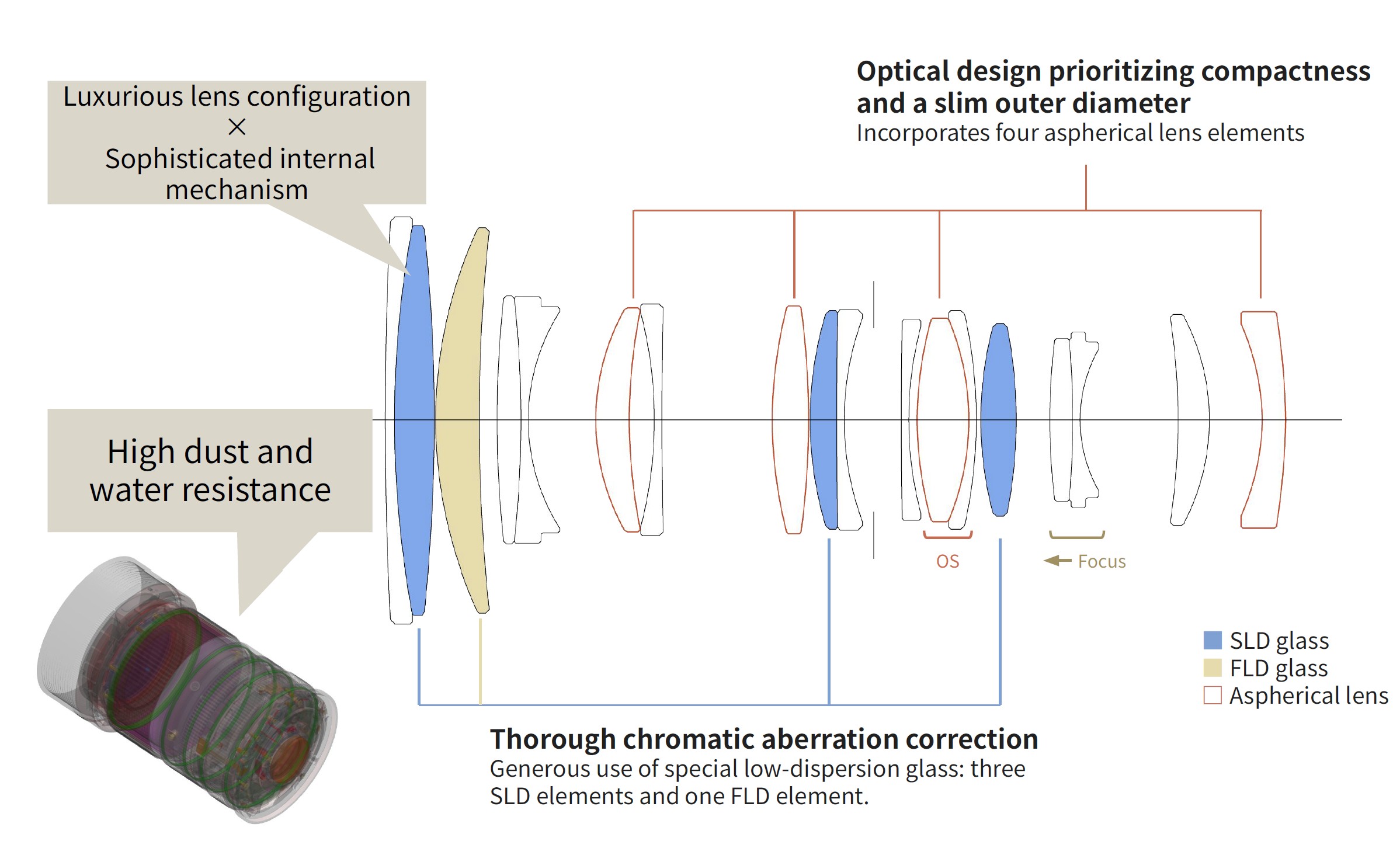
The 50-120mm falls under Sigma’s “Contemporary” lineup, but Sigma has been tweaking the formula of its Contemporary lenses. While that once meant little to no features and the most basic of weather sealing, Sigma has adding certain features as needed to their “C” lenses. In this case, while there are no external switches or buttons, we do have an aperture ring and a thorough weather sealing throughout the lens (at least 7 seal points according to this diagram). This allows the lens to compete with the Fuji 50-140mm, matching its WR (weather resistance), R (aperture ring), and OS (optical stabilization).
As noted, we do have a clicked aperture ring, which is very useful, though there is no declick option or iris lock. The ring operates with clear detents between the one third stop positions, with markings for full stops. There is a space between F22 (minimum aperture) and A (automatic), though the resistance there is not strong.
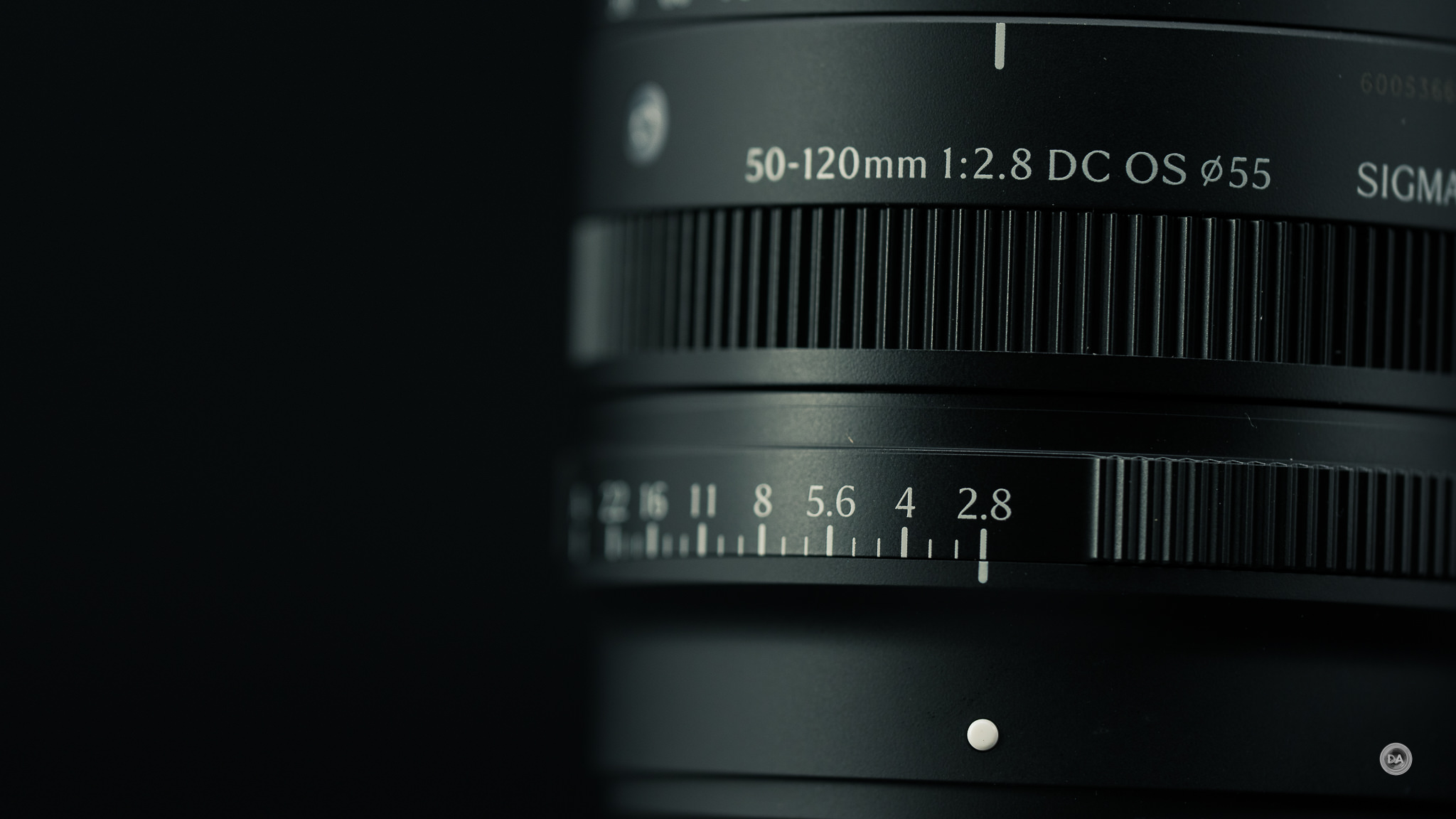
Both the aperture ring and the manual focus ring work well, and that represents the some total of what is on the barrel. The only difference in the feature set between the Sigma and the Fuji 50-140mm, however, is that the Fuji has an ON/OFF switch for the OIS.
Where the Sigma sets itself apart, however, is size. This is a genuinely compact lens, measuring just 66.8mm (2.6”) in diameter x 99.3mm (3.9”) in length. It is an externally zooming design, though the fully zoomed out length is still under 125mm.
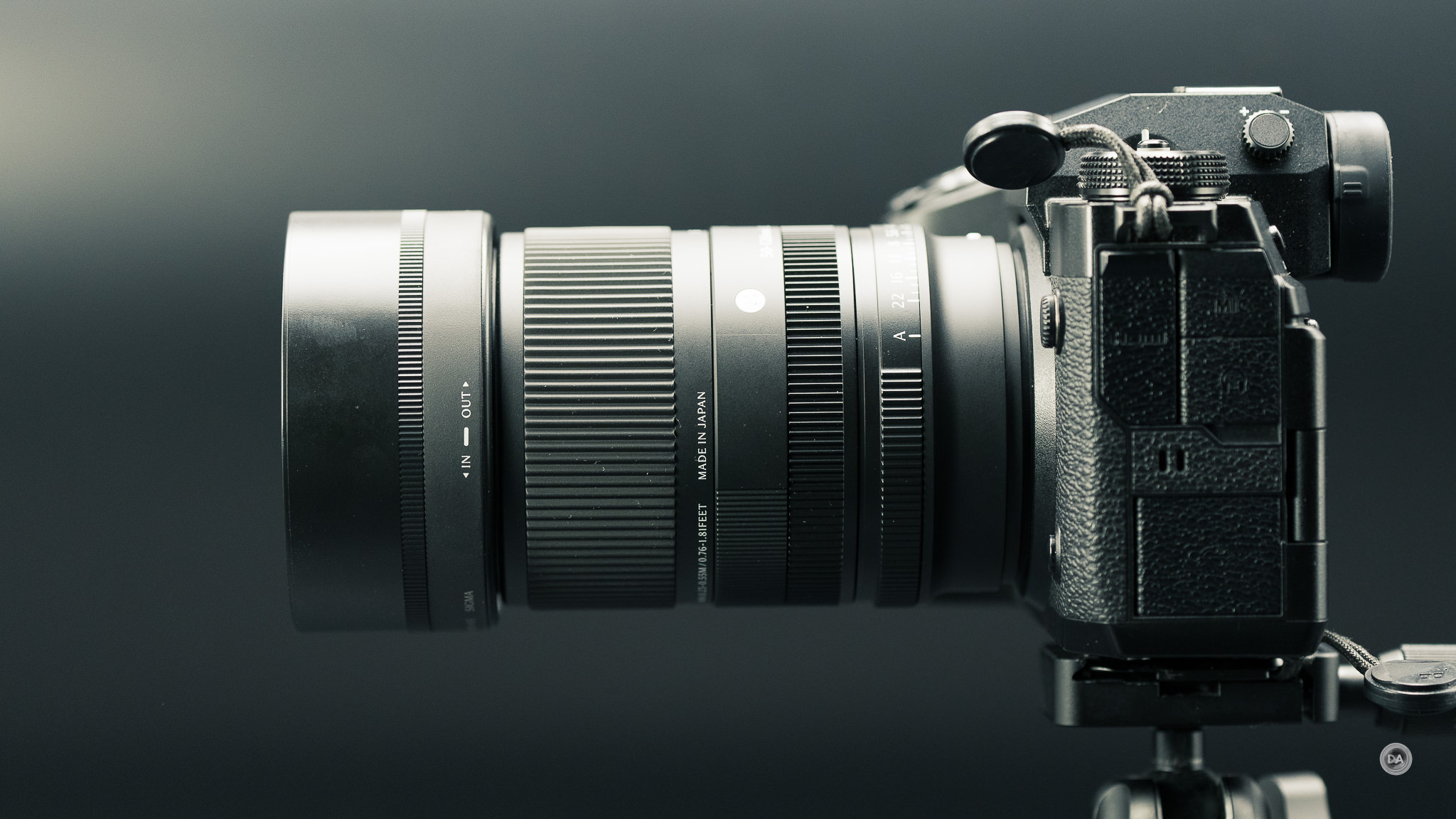
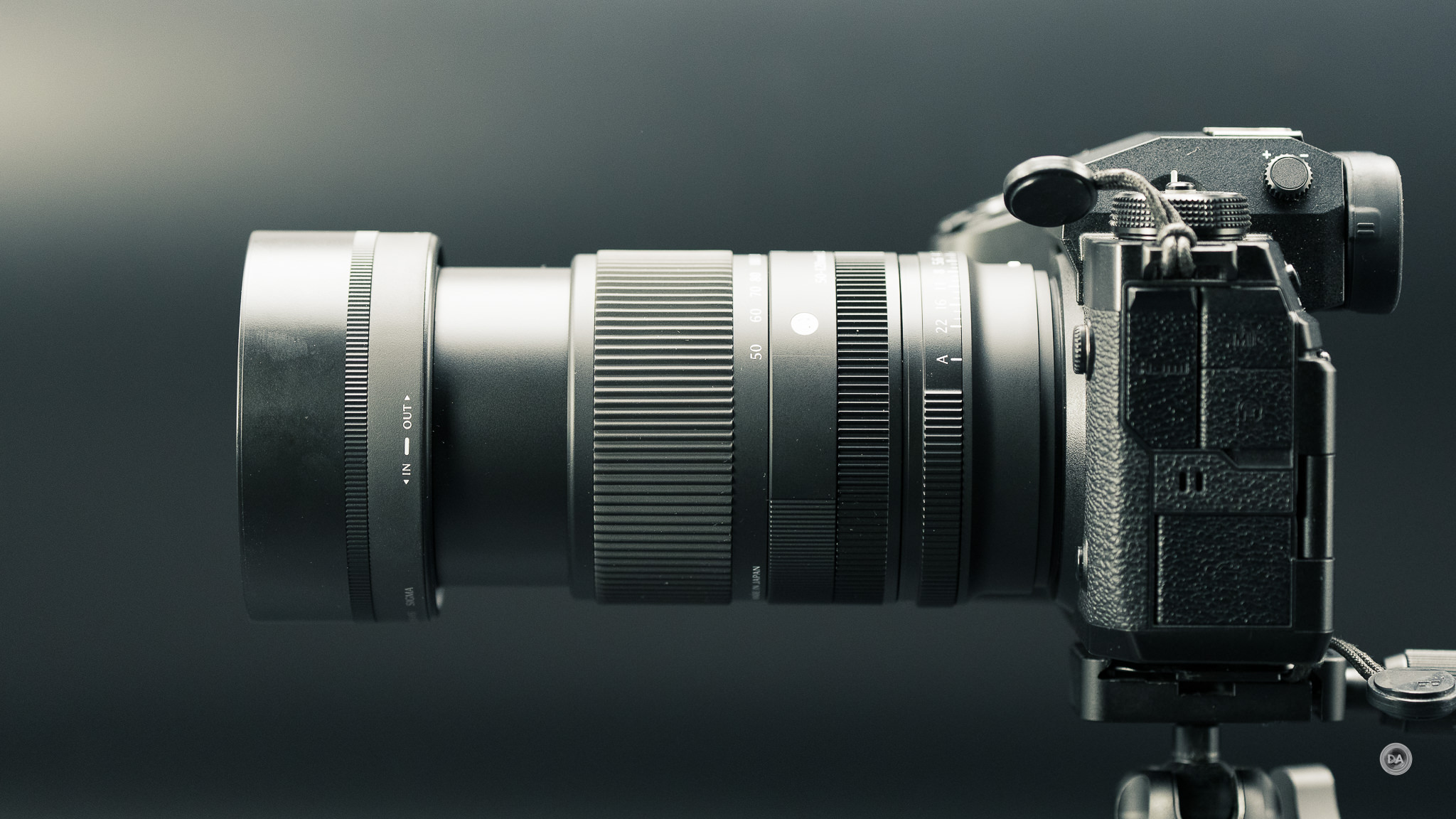
The Fujinon lens is downright massive by comparison, measuring 82.9 x 175.9mm. You can see from this photo from my review of that lens back in 2020 that it is a very different size of lens.
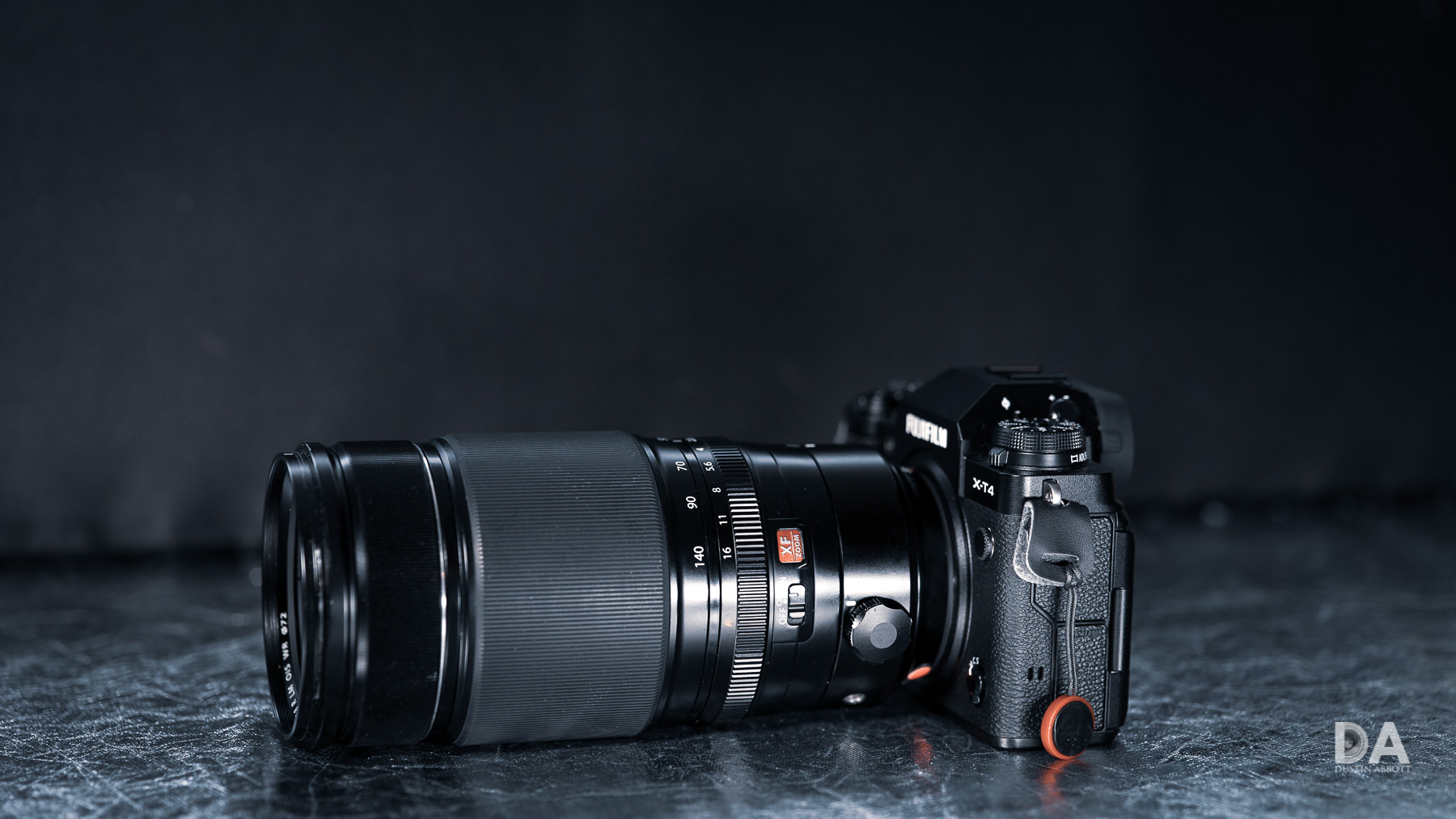
That carries over to the weight, as the Sigma weighs in at 390g (13.8oz), while the Fuji lens is a hefty 995g (35.2oz). The reality is that the Sigma is a much better fit for the size of Fuji’s cameras, particularly the many smaller models. That’s equally true of the compact Sony and Canon APS-C cameras.
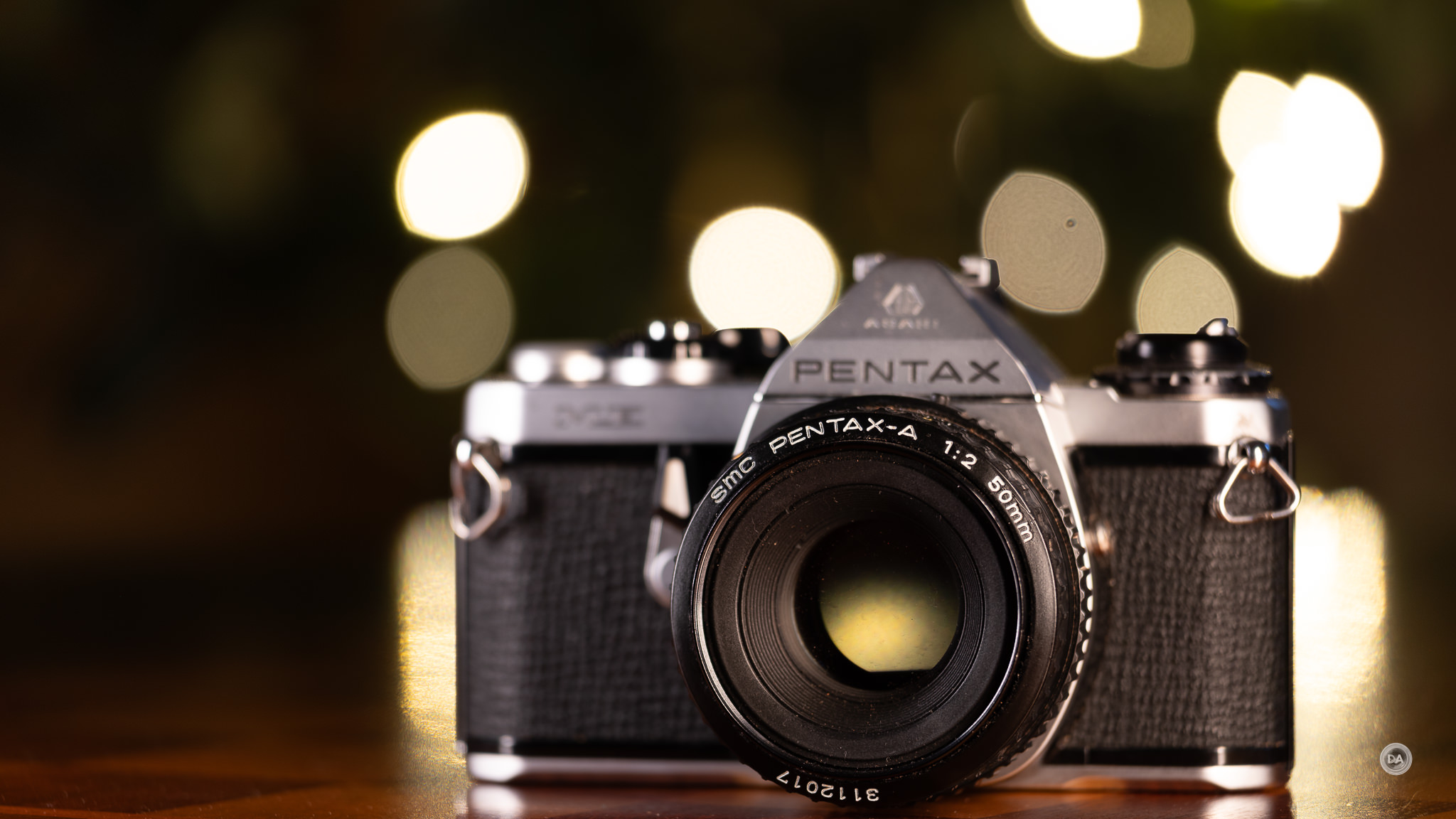
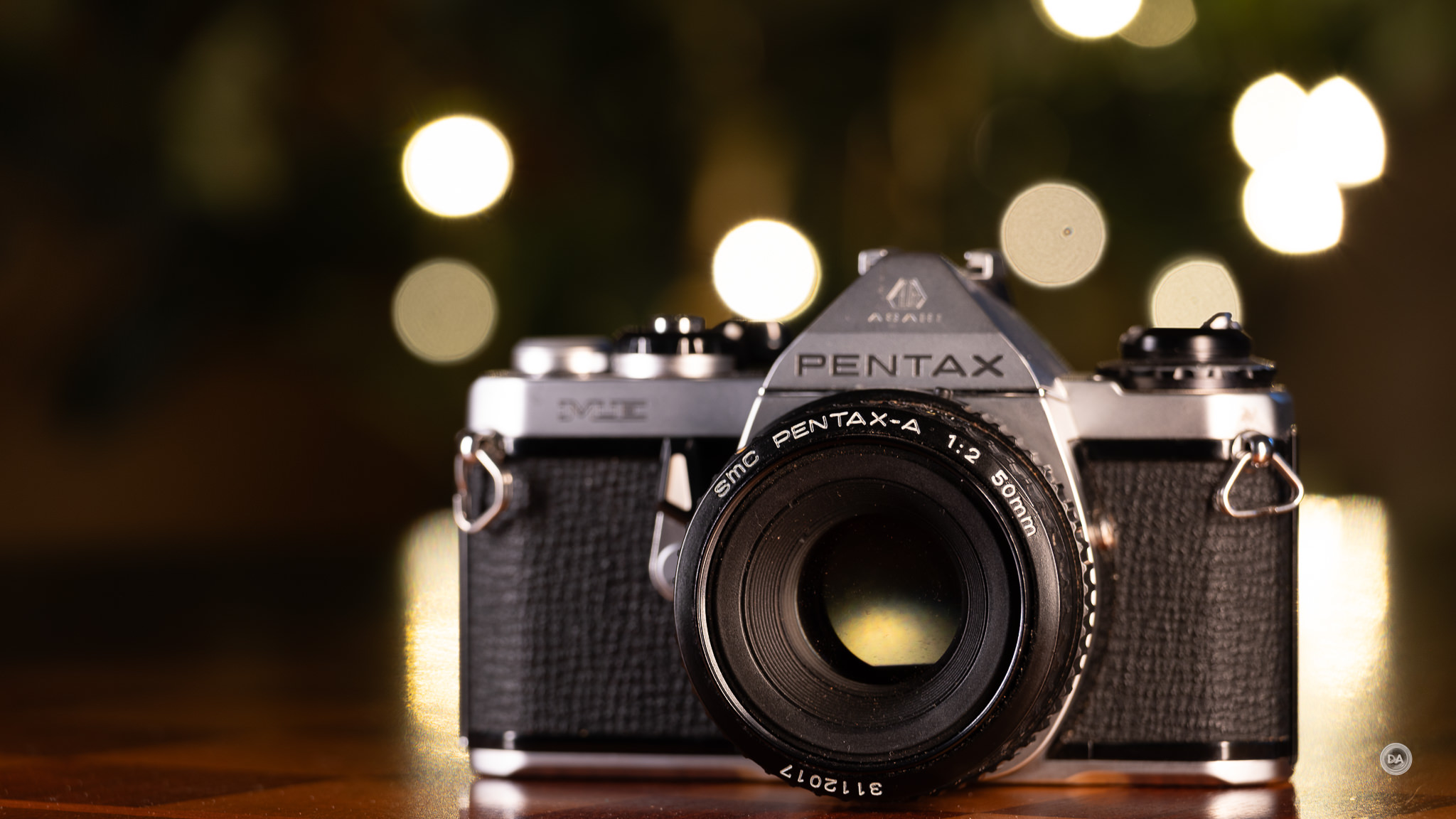
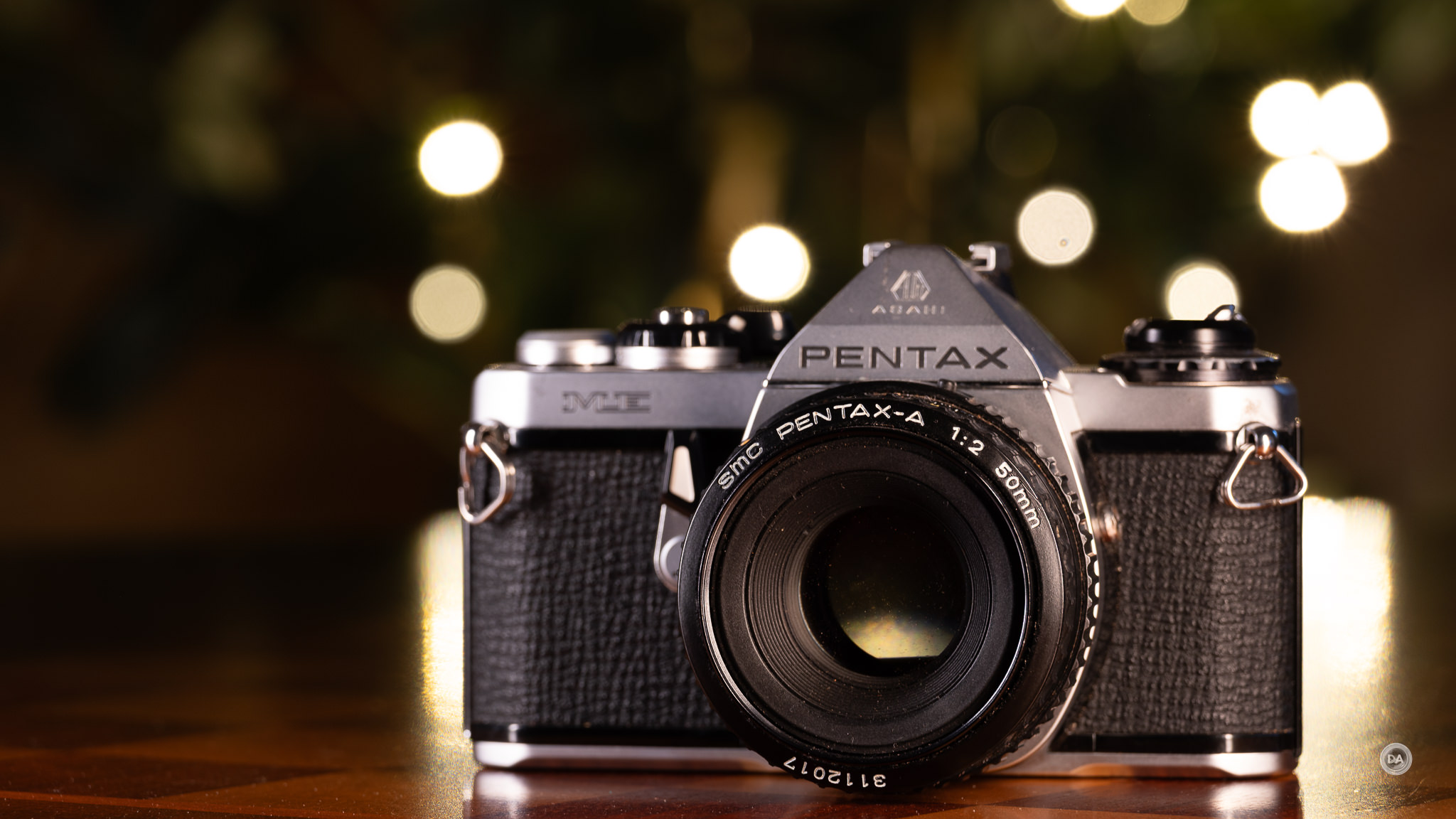
Inside the lens has eleven rounded aperture blades, and while those maintain a good circular shape when stopping the lens down, the lens does experience a fair bit of lemon shape and clipping of specular highlights near the edge of the frame. Here’s a look at F2.8, F4, and F5.6.
The 50-120mm comes with a compact lens hood with an gripped area for helping remove it. It doesn’t have a locking mechanism, but does bayonet into place with good precision.
It also has Sigma’s OS (Optical Stabilization), which has an actual rating in this case (nice to see!). It is rated for a whopping 6.5 stops on the wide end and a still-useful 4.5 stops on the telephoto end. That helps getting stable shots in dimmer lighter conditions and also helps a ton in getting usable handheld footage. This shot in a Starbucks is perfectly stable.
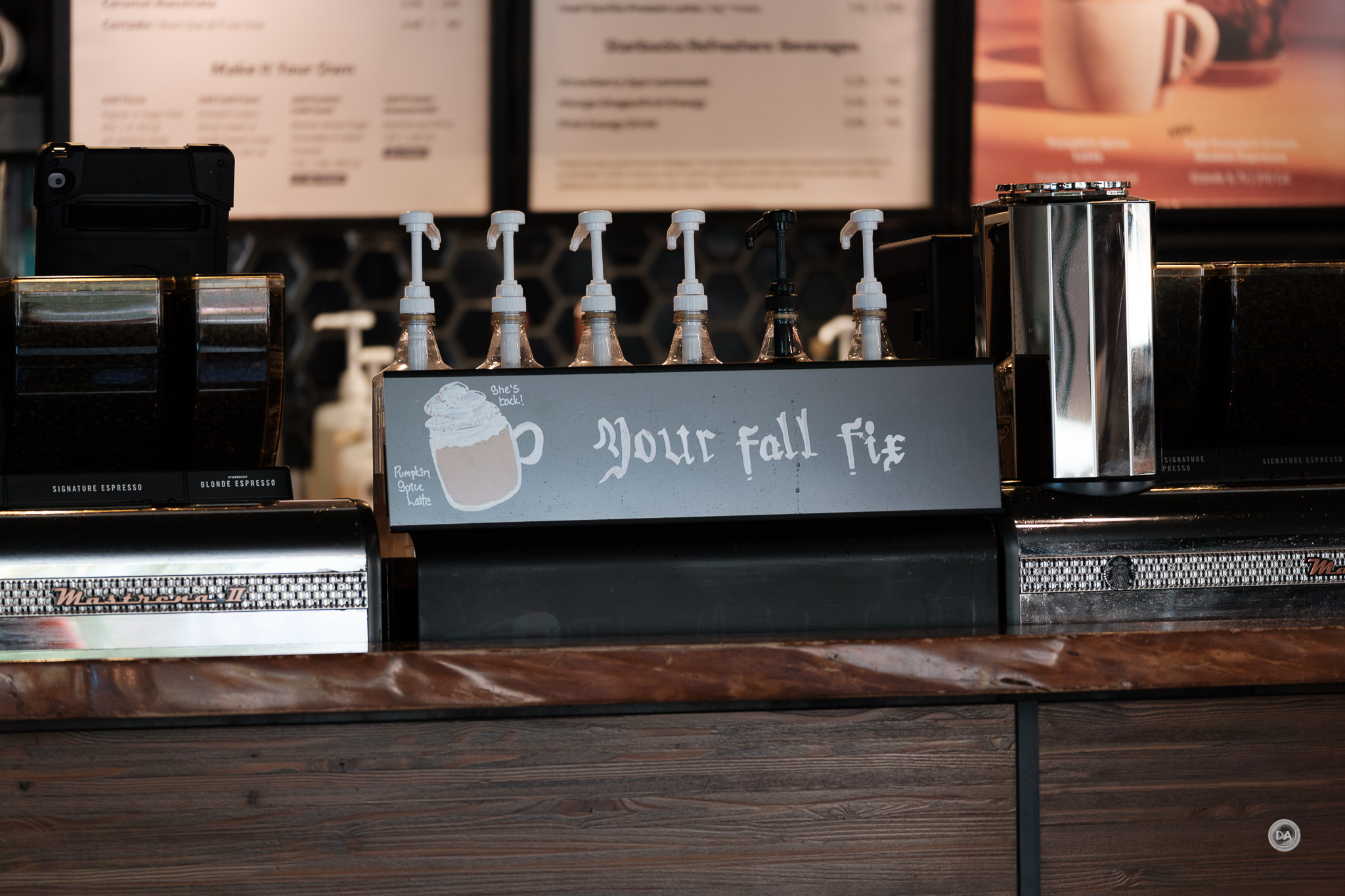
There are two minimum focus distances for each end of the zoom range. At 50mm, you can focus as closely as 23.1cm (about 7cm beyond the lens hood), and can achieve a nicely high 0.33x magnification level, though this doesn’t work great for two-dimensional subjects like my test chart due to some field curvature.

At the 120mm position the MFD grows to 55cm, and while the magnification level drops to lower (but still useful) 0.21x, it is much easier to get images on the telephoto end due to more working distance and a flatter plane of focus.

With the Fuji priced at $1899 USD (ouch!), the Sigma’s price tag of just $799 USD ($1099 CDN) is the icing on the cake. It is less than half of the Fuji’s price, and. more importantly, is inexpensive enough to be in reach for many photographers. A two lens kit of the 18-50mm F2.8 and 50-120mm F2.8 would cost about $1450 and would be a massive improvement over any kind of kit lens. All in all, Sigma nailed it here.
Autofocus
So how about autofocus? That’s a loaded subject on Fuji, as Fuji’s autofocus remains much more primitive than competing systems. I’ve reviewed roughly 100 Sigma lenses, however, and I can safely say that any of their lenses using their HLA (High Speed Linear Actuator) focus motors are excellent. That’s true here, too, despite the limits of Fuji’s autofocus. I did some street photography, my typical hiking/forest photography, and general purpose shooting, and found that autofocus was smooth, quiet, and accurate.
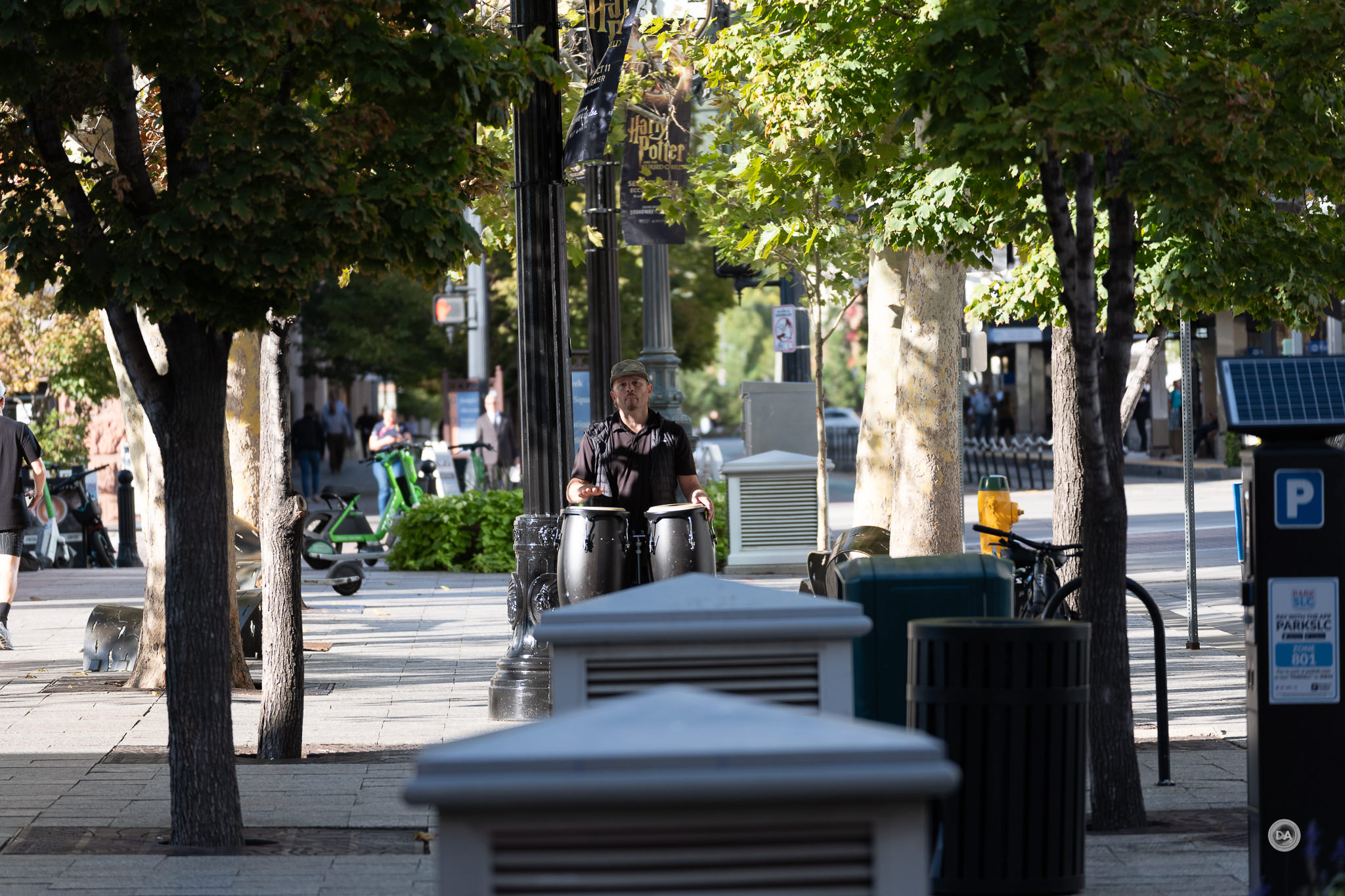
Focus is also essentially silent, with no noise to be heard even if I press my ear against the barrel.
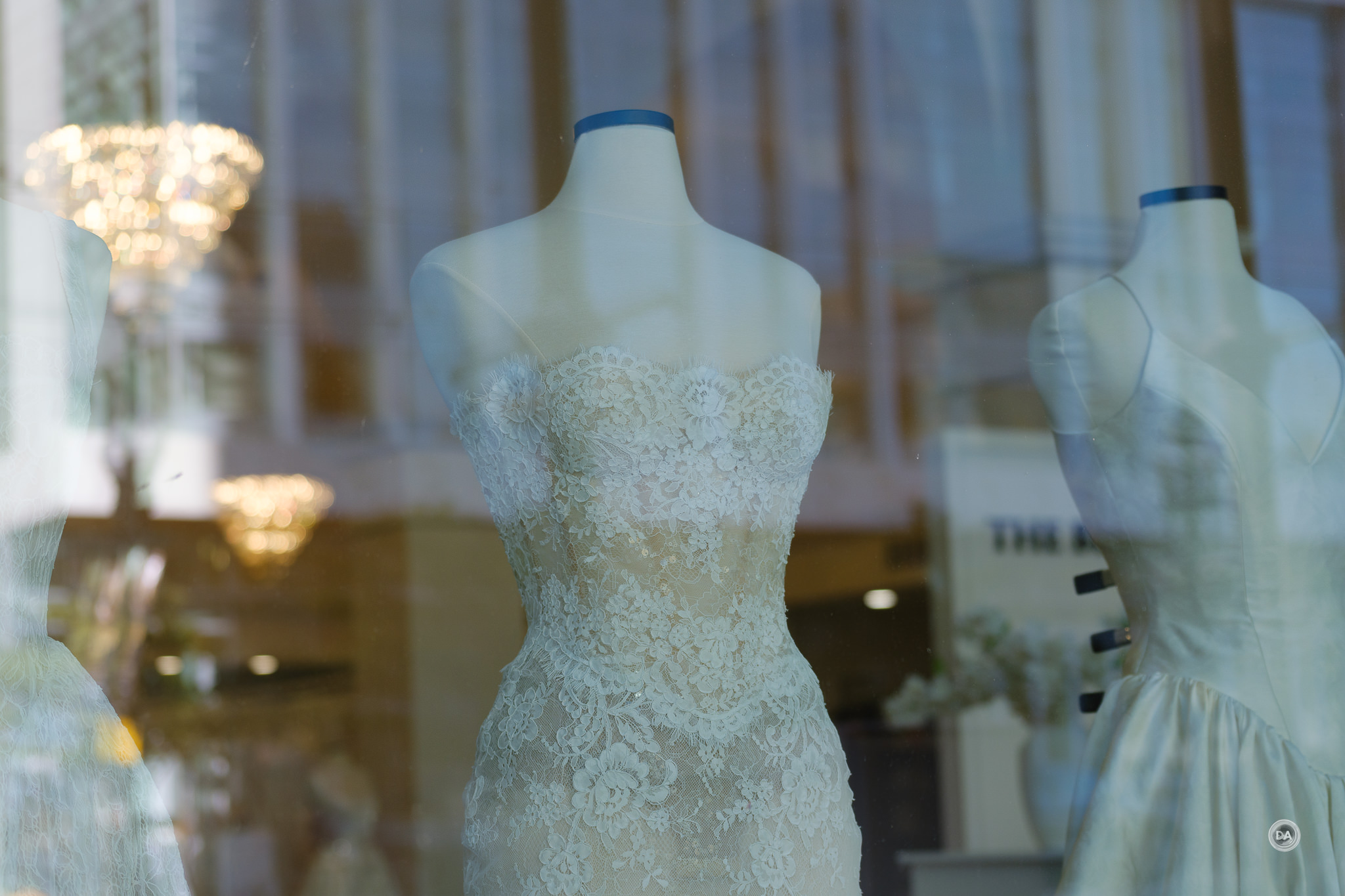
In my formal tests, I found focus moved from close to distant subjects with good speed, though on the telephoto end focus would occasionally do a quick rack in the wrong direction (that’s a Fuji quirk).
Despite the quirks, I was able to get accurate focus on erratically moving subjects like the water droplets in this fountain/mobile that would rapidly change patterns.

I was even able to nab birds in flight with fairly good accuracy.

On Sony and Canon I expect focus to be exceptionally good.
Video AF
One of Sigma’s priorities on the video side of things was to reduce focus breathing via the use of floating elements. This was very evident in my video tests, though on Fuji I find it near impossible to do my touch to focus tests where I evaluate confidence of focus when making major focus changes. I eventually had to manually focus to have consistent pulls. What I saw in terms of focus breathing was impressive, however, with very little change in size of objects relative to their focus position. This allows for very smooth focus transitions that leads to more cinematic outcomes.
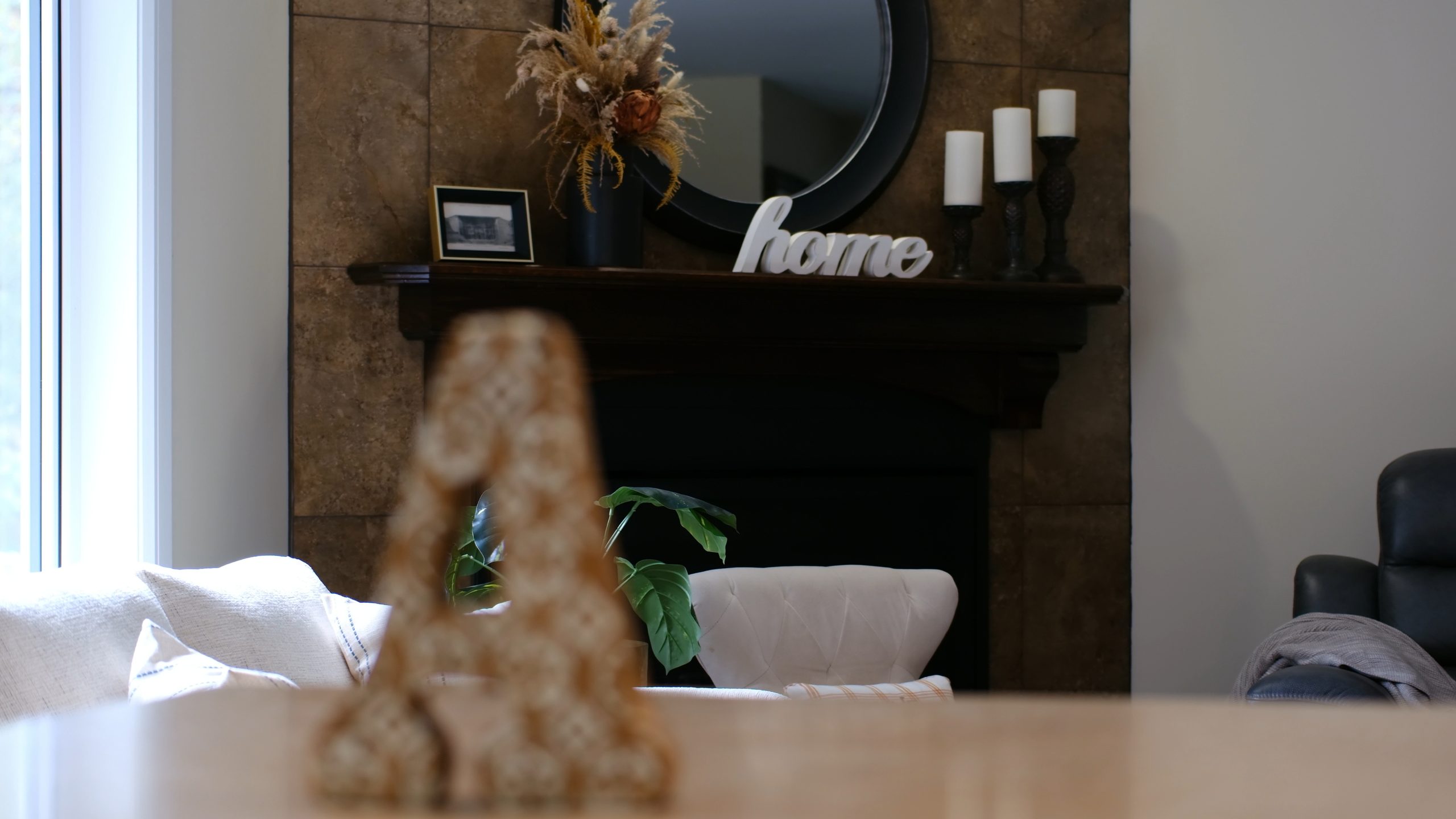
On Fuji there are some focus slips while shooting my “talking head” portions for my video review, but I had so many of those during my 50-140mm review that I had complaints from my audience and have pretty much stopped filming anything like that on my Fuji cameras. I gave it a shot with the Sigma, and while it was better, I still had to do some creative editing with B-roll to cover up some moments when focus slipped. I don’t see anything like that when testing Sigma lenses on Sony and Canon, however, and most Fuji shooters are accustomed to workarounds to mitigate the limitations of Fuji’s autofocus.
Beyond that, however, I thought footage looked really nice. Crisp, detailed, and Sigma’s optical glass seems like a positive compliment to Fuji’s color science. Here’s a still from one of the segments of my video review.

While I can only truly comment on what I see in front of me, I have absolute confidence that focus will be much more reliable on other platforms, and, here on Fuji, I would say that the Sigma is delivering a much better than average performance. I continue to have high hopes that Fuji will have a breakthrough in the next generation of hardware and deliver more competitive autofocus, at which point this Sigma lens will perform even better.
Optical Performance
Sigma has done an exceptional job in the past decade of creating optical designs capable of competing with the very best, and this lens is no exception. The optical design has 18 elements in 13 groups with 3 SLD glass elements, 1 FLD element, and 4 aspherical lenses. You can also see from the diagram where the HLA motor is positioned.
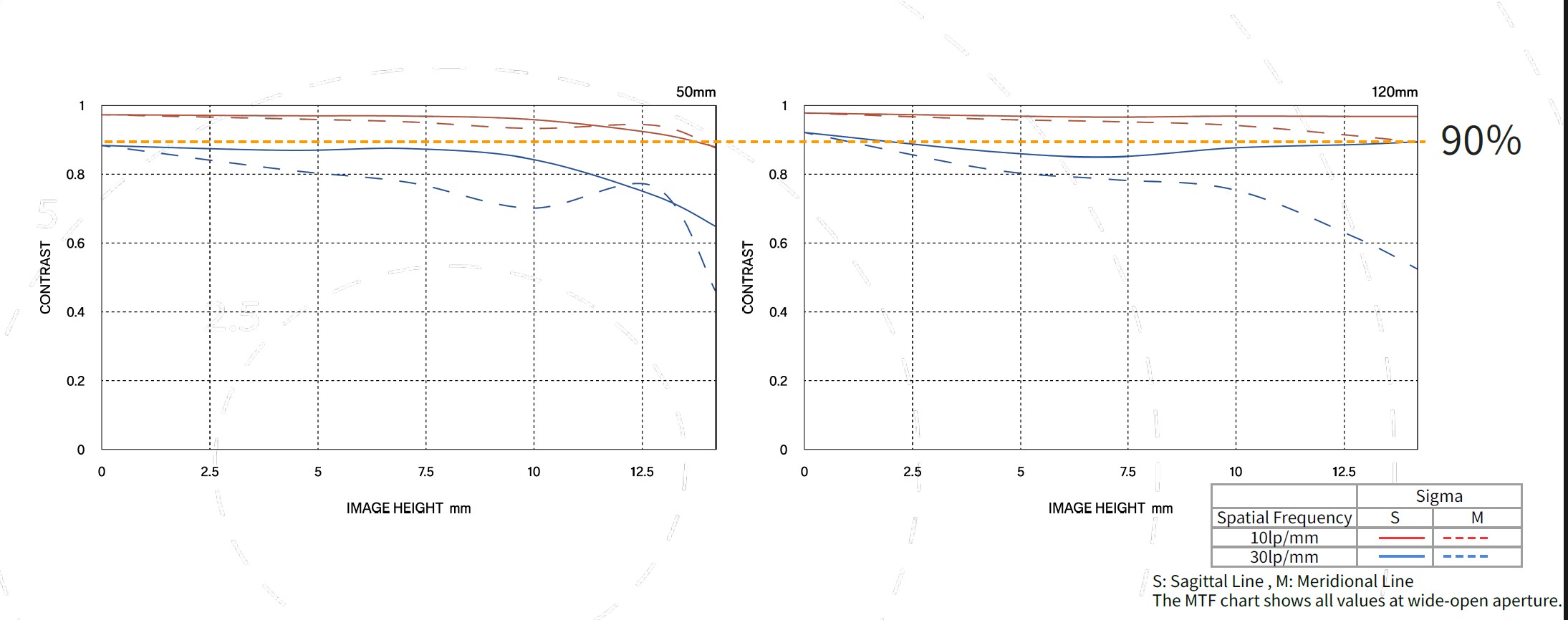
The MTF chart looks very strong at 50mm and 120mm, though with more astigmatism in the corners at 120mm.
Fuji’s 40MP X-Trans APS-C sensor is the most pixel dense sensor that I test on, with an equivalent pixel density to a 90+ MP full frame sensor (which doesn’t currently exist). What’s more, most editing software has a more difficult time with sharpening and demosaicing images from the X-Trans sensor. Despite those challenges, the Sigma 50-120mm excelled in giving me extremely crisp, high contrast images.
Here’s a shot taken at 75mm, F4 along with crops:
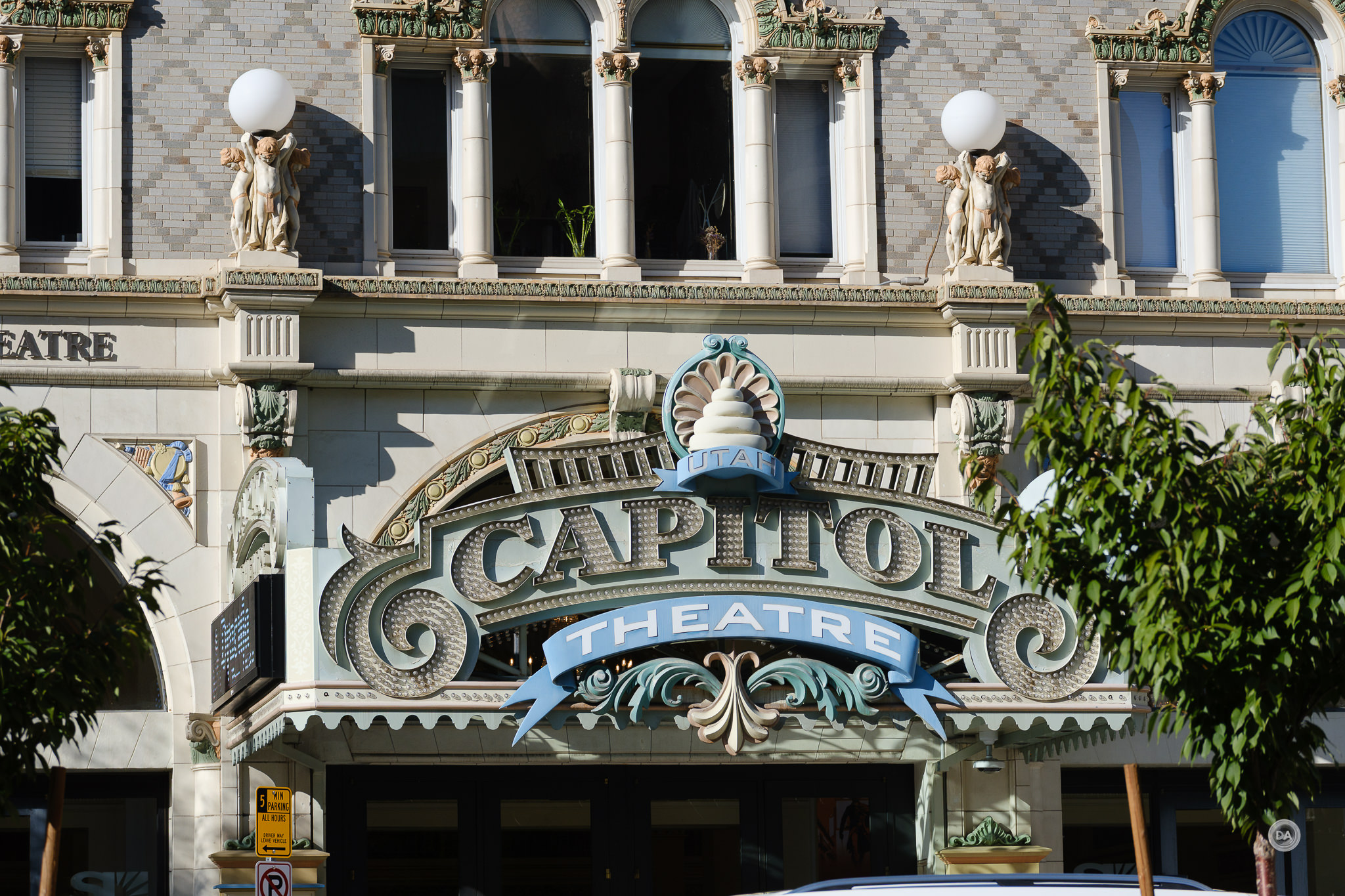

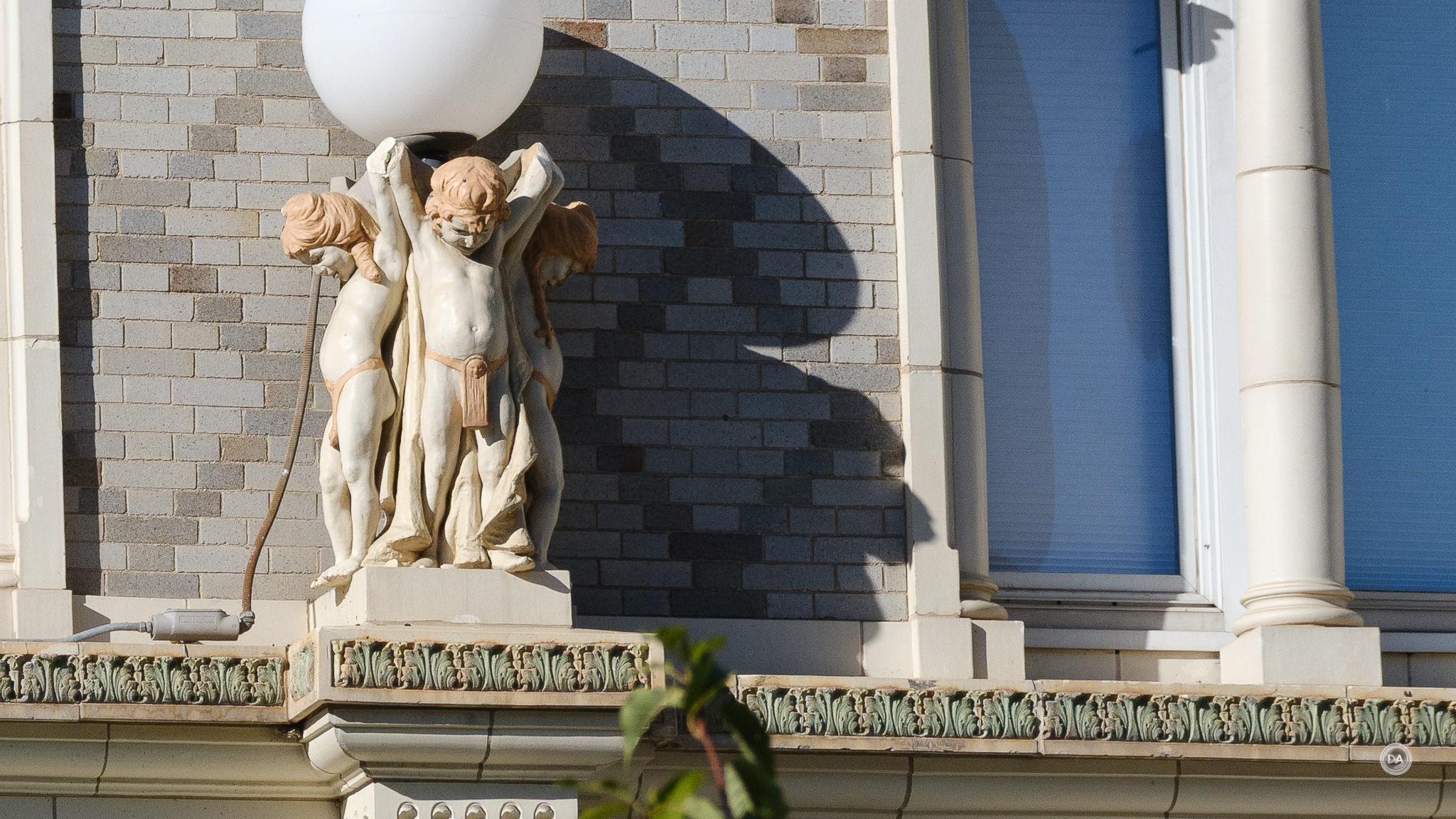
I tested two different copies of the Fuji 50-140mm, and I never saw results that good from that lens.
Let’s take a closer look at some other metrics.
Sigma lenses do get excellent profile support on all three of these platforms, but if we turn off electronic corrections (which always come at some cost), we find that the compact design has led to some significant distortion and vignette. It is a consistent pincushion style distortion that grows slightly throughout the zoom range (from -5 on the wide end to -8 on the telephoto end). Vignette is heavy at 50mm (+70 to correct) and is extremely heavy by 120mm (I had to max out the sliders, with vignette penetrating near to the center of the frame).
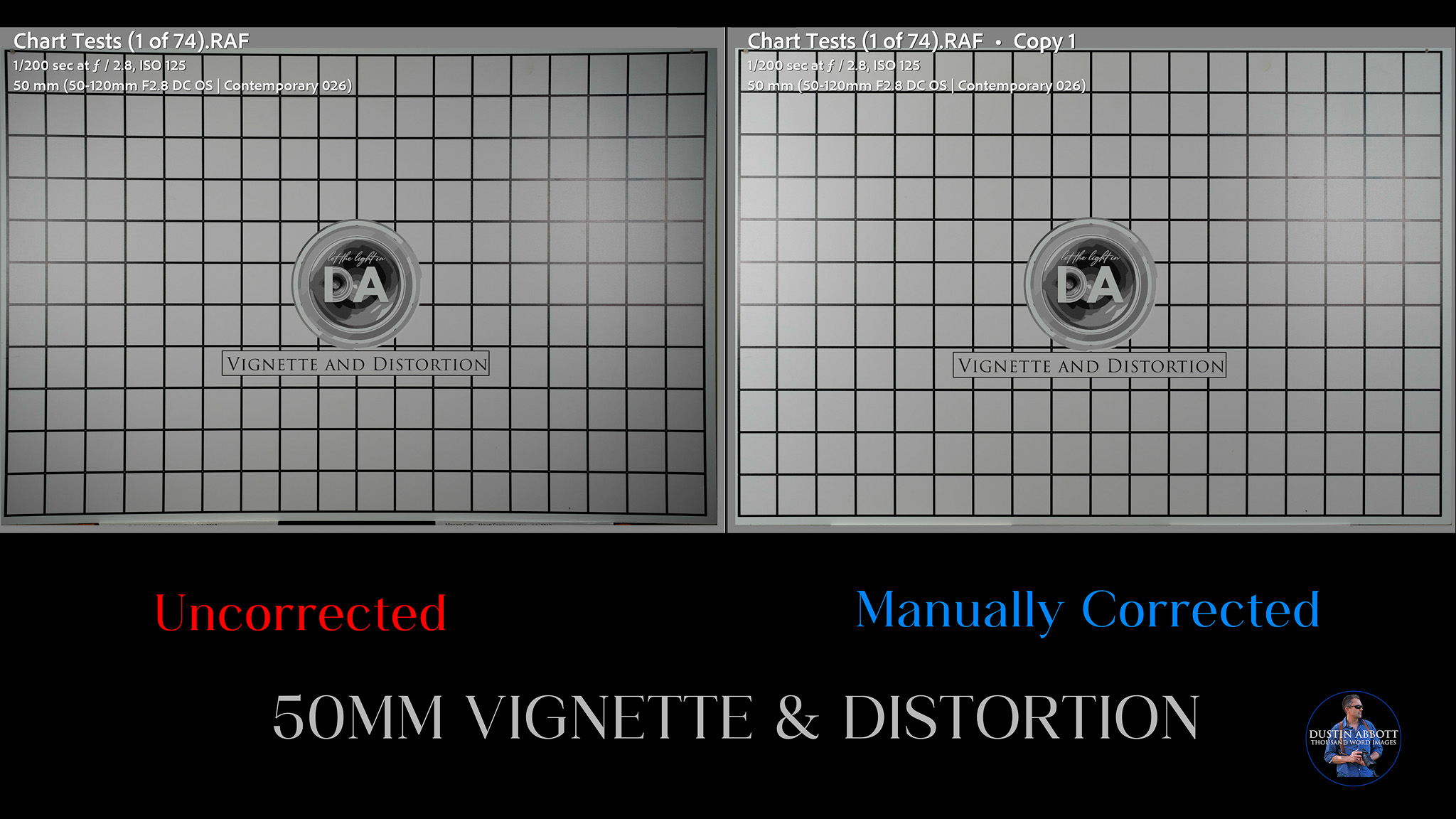
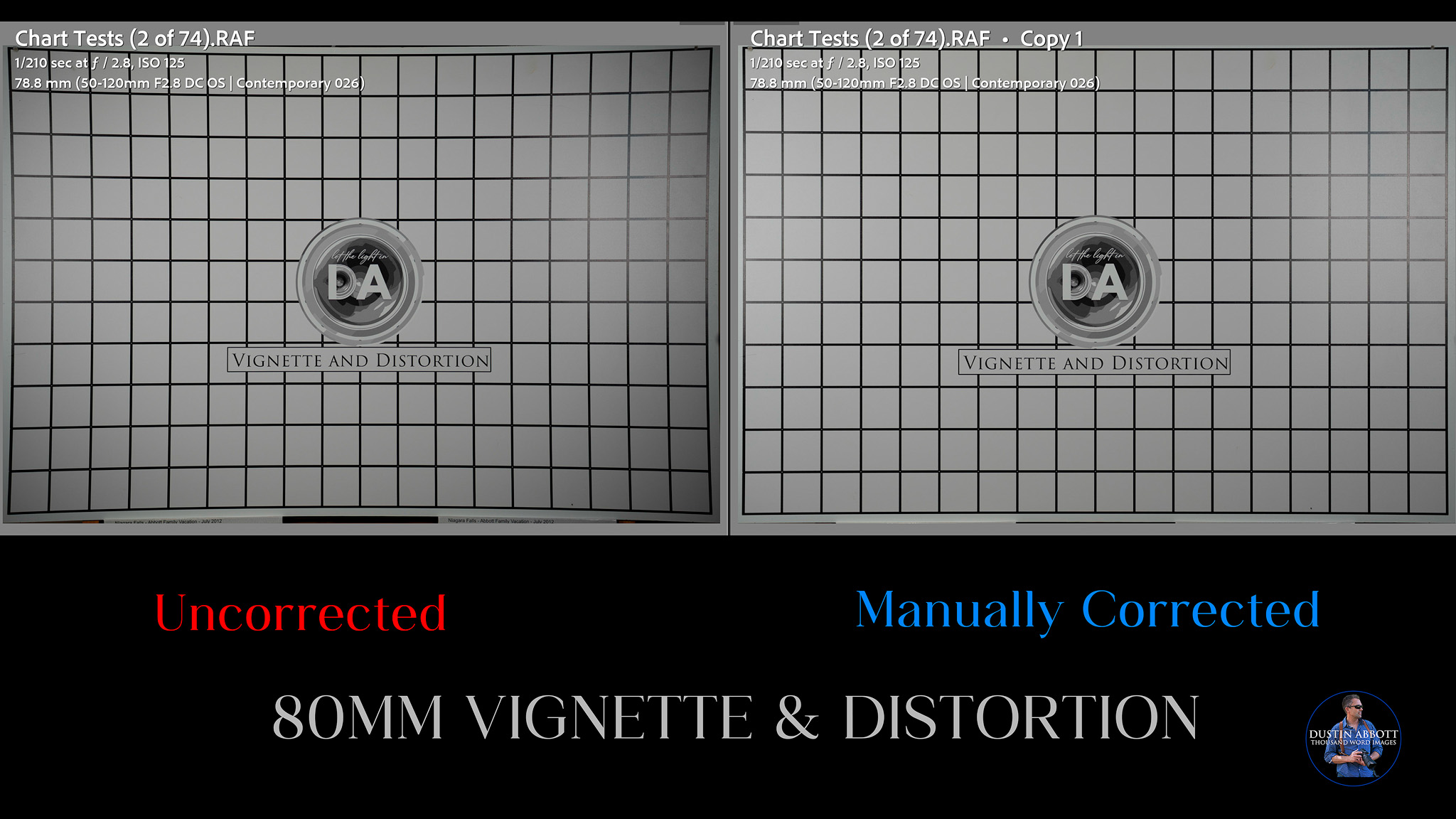
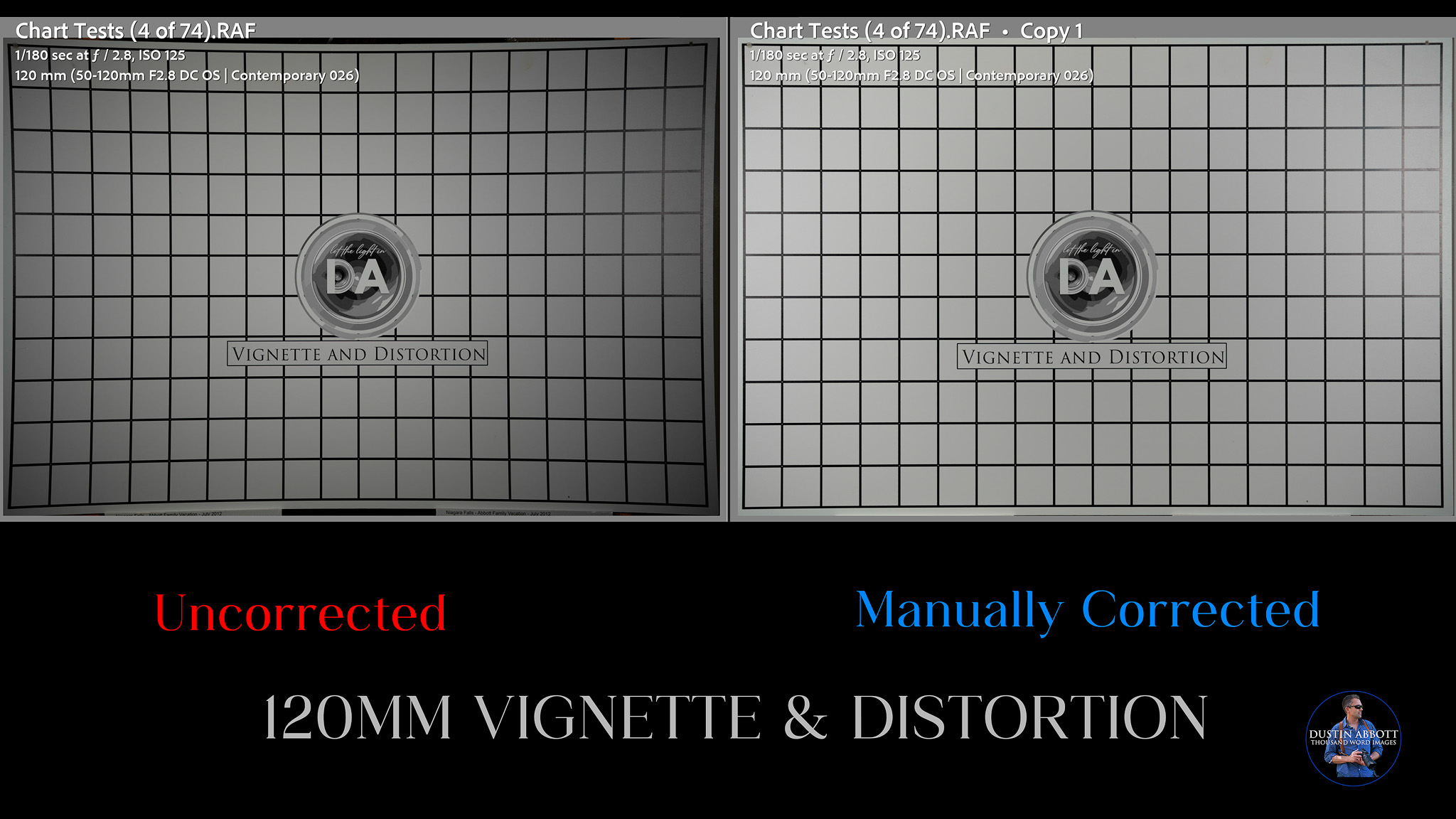
The vignette is effectively corrected by the correction profile, though at the cost of additional noise in the corners where those “shadows” have been lifted. That noise will become stronger at higher ISO values. Most people won’t notice this, however, and the correction profile cleans up things pretty well.

Longitudinal Chromatic Aberrations (LoCA) shows up as colored fringing before and after the plane of focus and tends to be more pronounced in large aperture lenses. The 50-120mm is a strong performer in this metric, showing next to no fringing.

I felt like the LoCA control on my Dad’s old SLR was near perfect, with almost no fringing on the shiny edges at all.
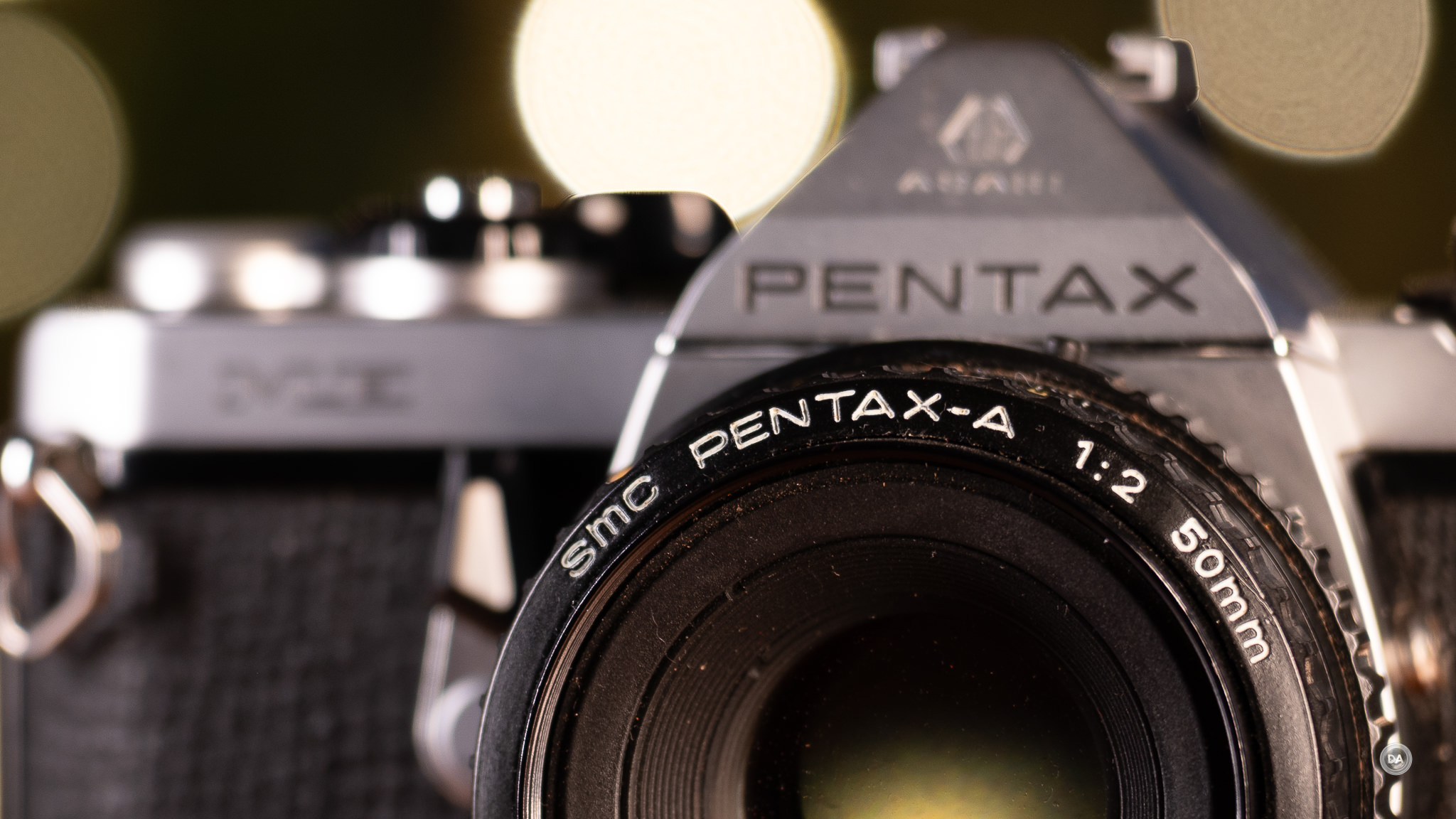
Lateral Chromatic Aberrations (LaCA) show up as color fringing on either side of contrast objects near the edge of the frame. The 20-60mm shows no real issues with LaCA. There’s the tiniest bit there, but nothing hardly visible.
The engineers weren’t able to minimize distortion and vignette in this compact design, but they certainly managed to suppress fringing.
So how about sharpness?
Here’s a look at the test chart that subsequent crops will come from.

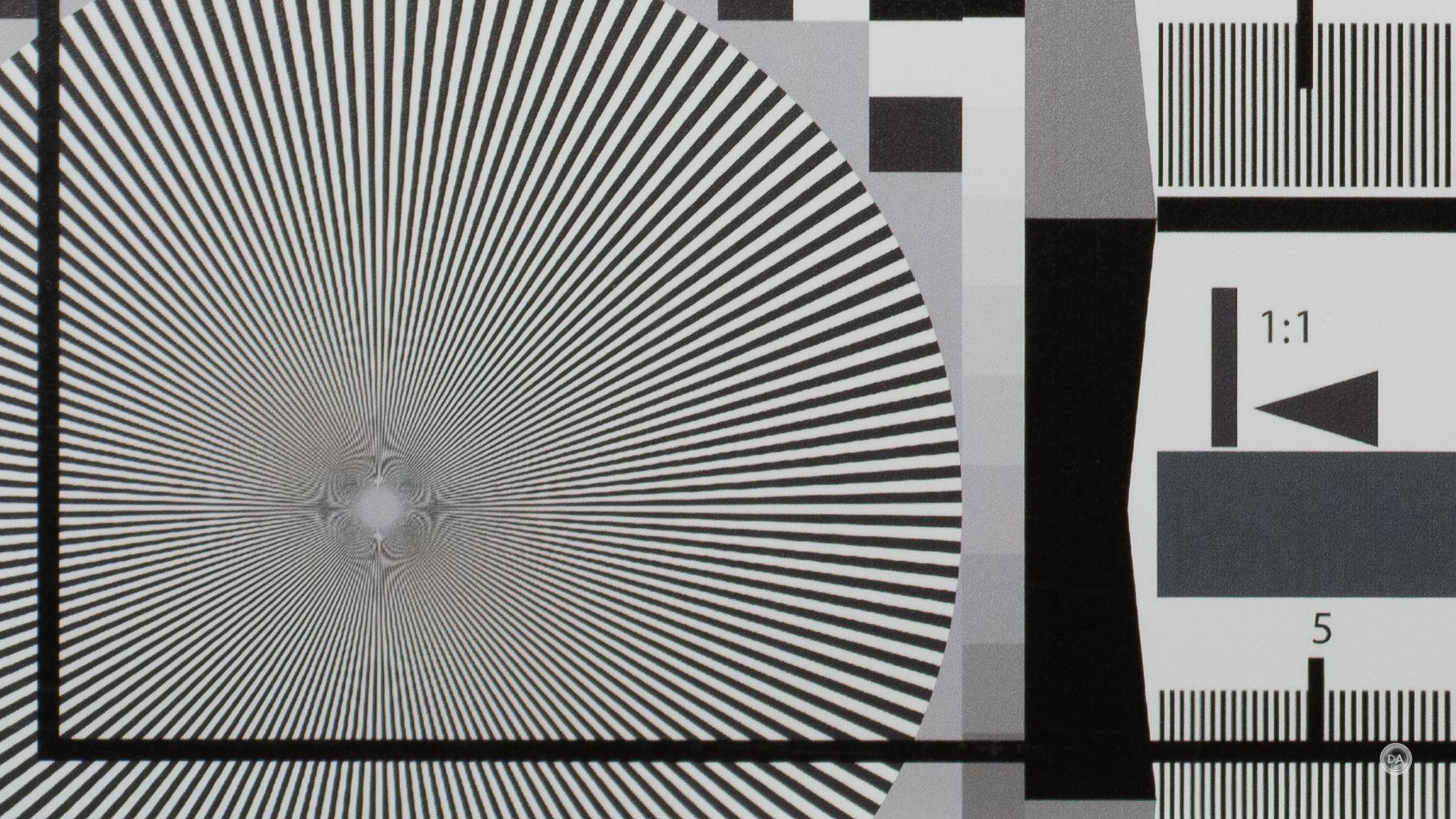
My test chart results are shot on a 40MP Fujifilm X-H2 and results are shown at a 200% level of magnification. We will start on the wide end. Here’s crops at 50mm F2.8 from the center, midframe, and corner.



We can see that detail and contrast are excellent in the center and midframe but a bit softer in the corners.
Stopping down to F4 improves contrast a bit in the center and midframe.

The corners hit their peak sharpness at F8 but were never exceptionally sharp.

I thought real-world results were better, however, as while I can see that the corner/edge performance is softer, it is still very usable at a 100% level of magnification.

Diffraction arrives early on a 40MP APS-C camera, so results are softening by F11 and are noticeably soft by F22.

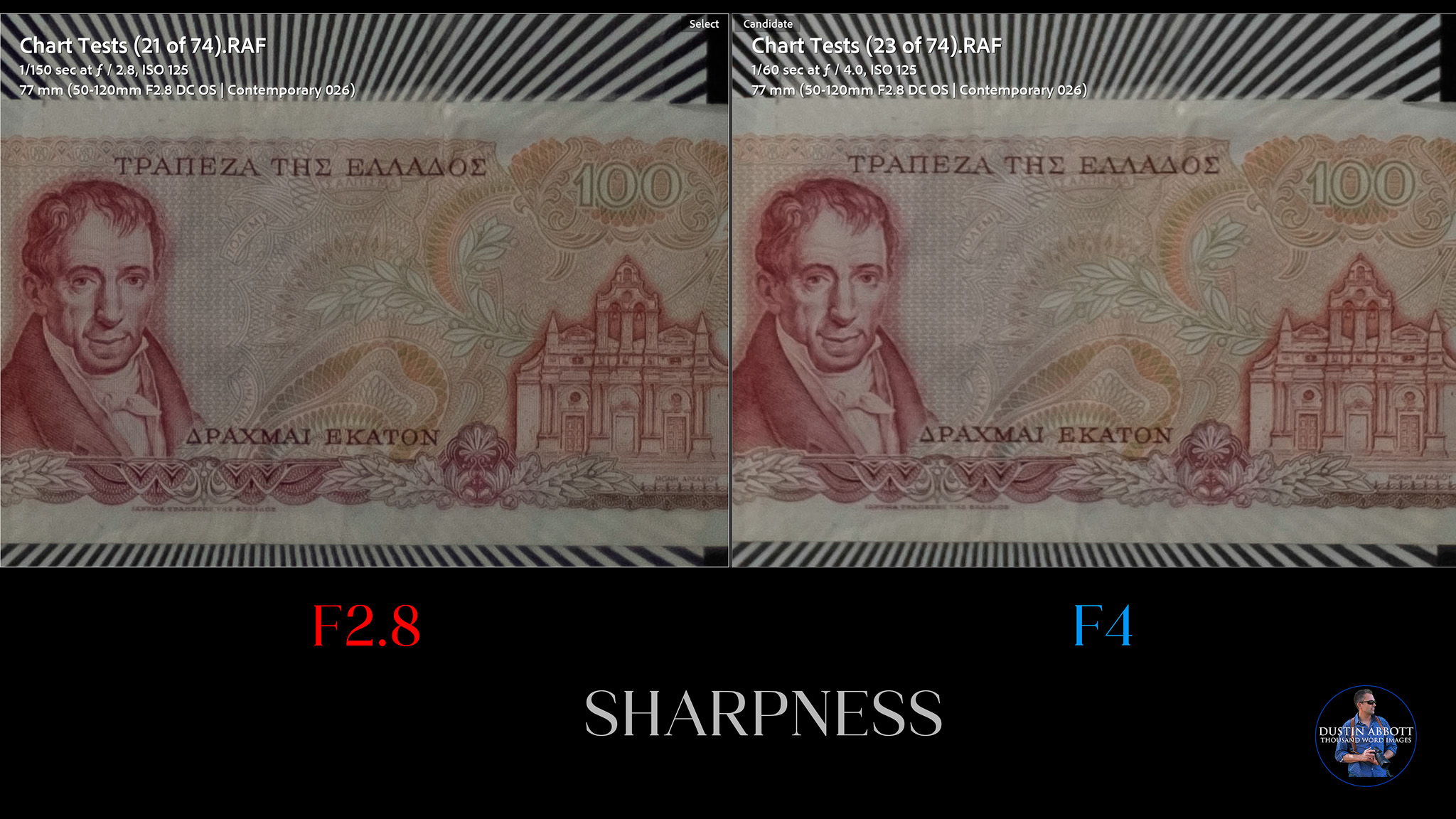
Moving on the in zoom range to 80mm finds a more consistent result across the frame. Sharpness and contrast look good at F2.8 and better at F4 in the center:

…while the corners also show more consistent sharpness.
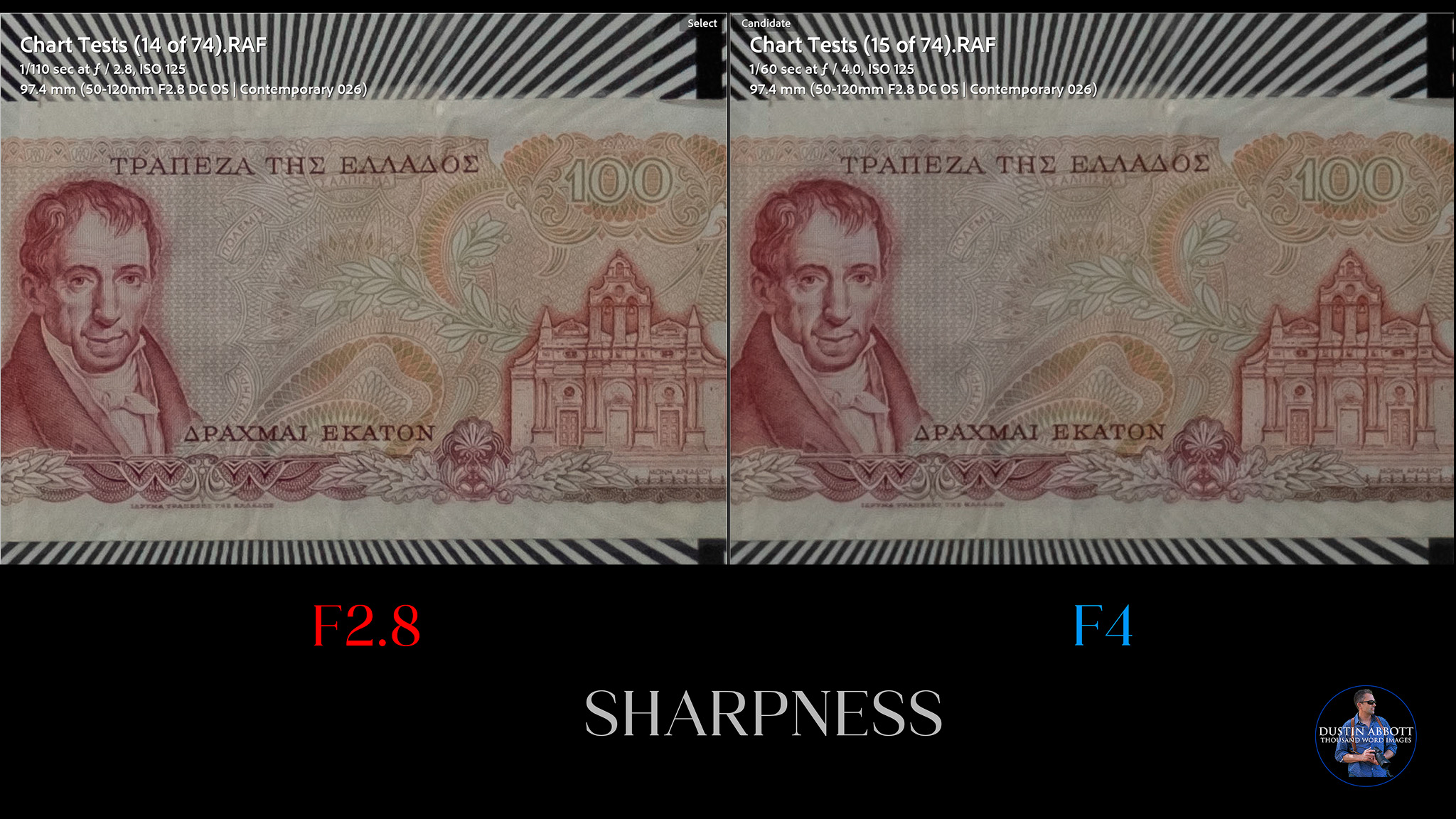
The high water mark for performance arrives at 100mm, where the lens is most consistently excellent across the frame. The center looks great…

…as do the corners.
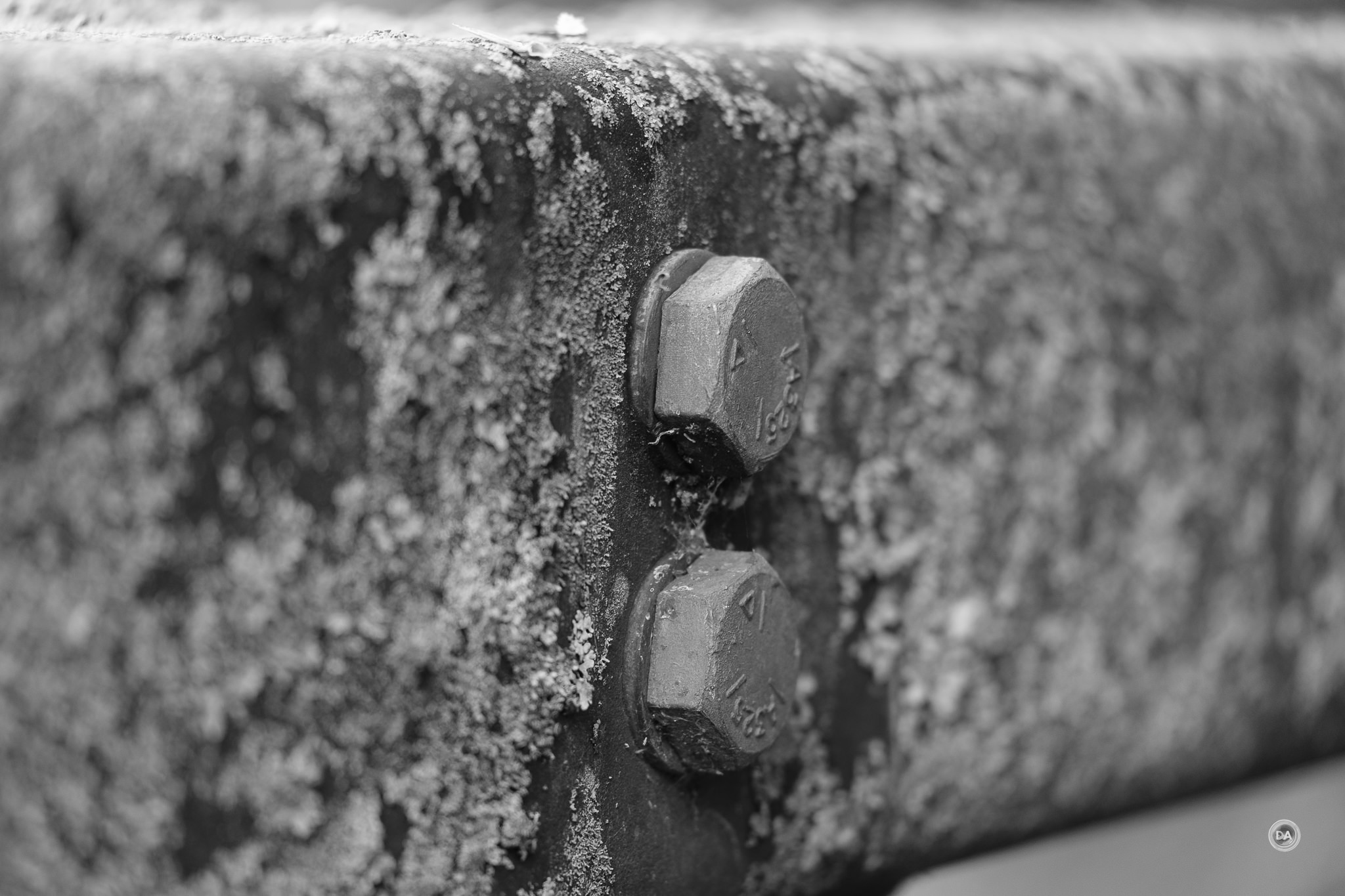
Real world contrast and detail at 100mm is excellent.
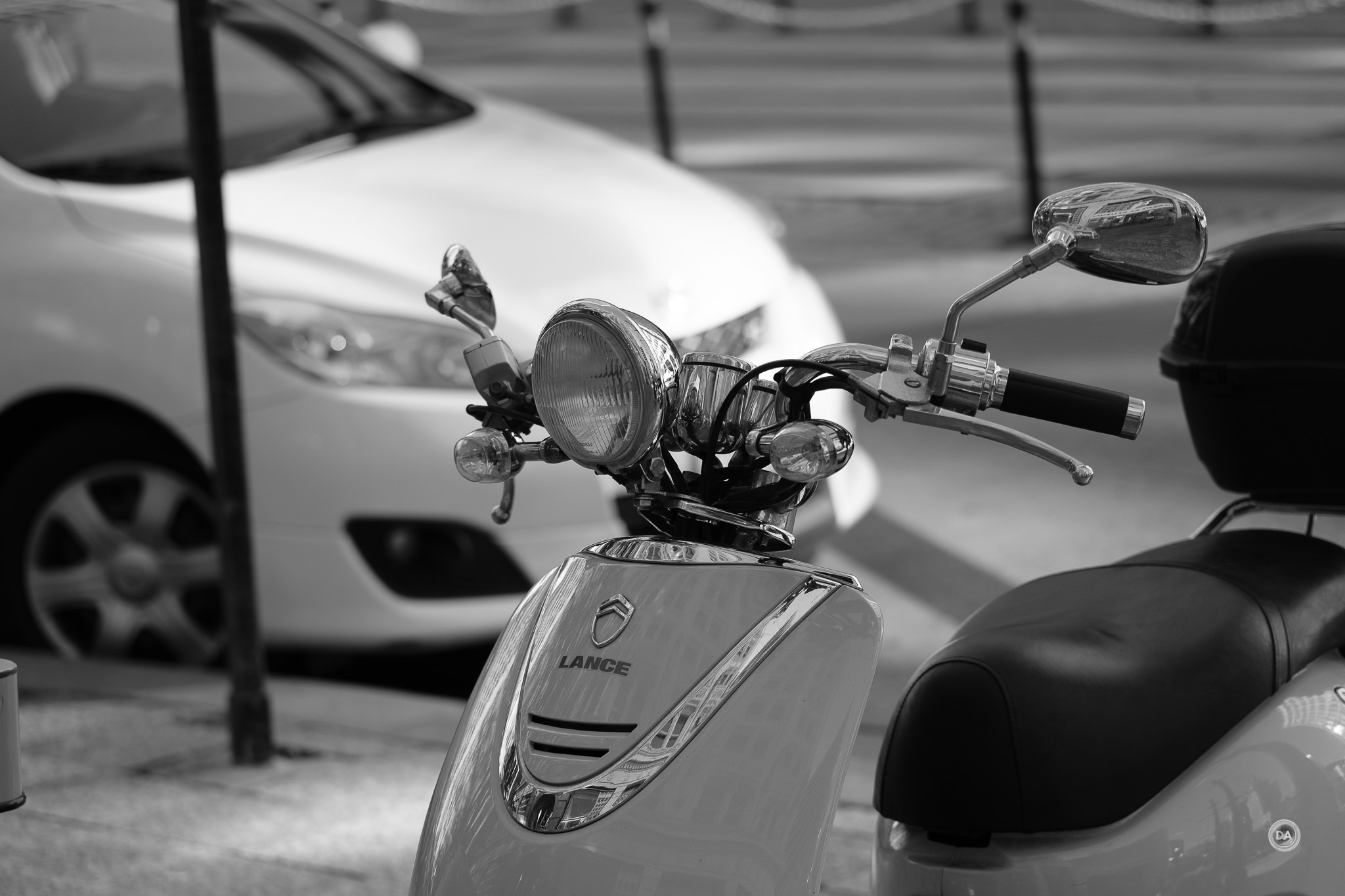
Moving on to 120mm, we find that contrast at F2.8 has slipped a bit, with a very noticeable improvement happening at F4.

The corners are softer than what we saw at 100mm, but start to improve when stopped down to F4:

Real world results can look excellent, however, even at F2.8. Here’s an image along with a deep crop that look great.


I would say that Sigma has done a great job of delivering a consistently sharp and high contrast image across the zoom range here.
The final image above allows us to transition to a discussion of rendering and bokeh. You can see that the strong cat-eye shape in the corners lends itself to a bit of a swirl effect at F2.8. You can see that effect a little more pronounced here.

Not everyone loves that look, but, to me, that is the most interesting thing about the rendering. You can achieve a stronger blur at closer focus distances, though I find that the bokeh has a few too many hard edges to be truly creamy.

Those hard edges will be a bit more prominent in situations where the ratio of the subject to the background is less favorable.

I sometimes find that Sigma lenses are better at delivering great contrast and sharpness than great rendering, but I also think that what we have here will satisfy most shooters.
I also found that the colors from the lens were a nice match for Fuji’s great film simulations, including their excellent monochrome Acros options.
This one is just the Provia standard profile, but I love the unique colors provided by shooting through display glass.
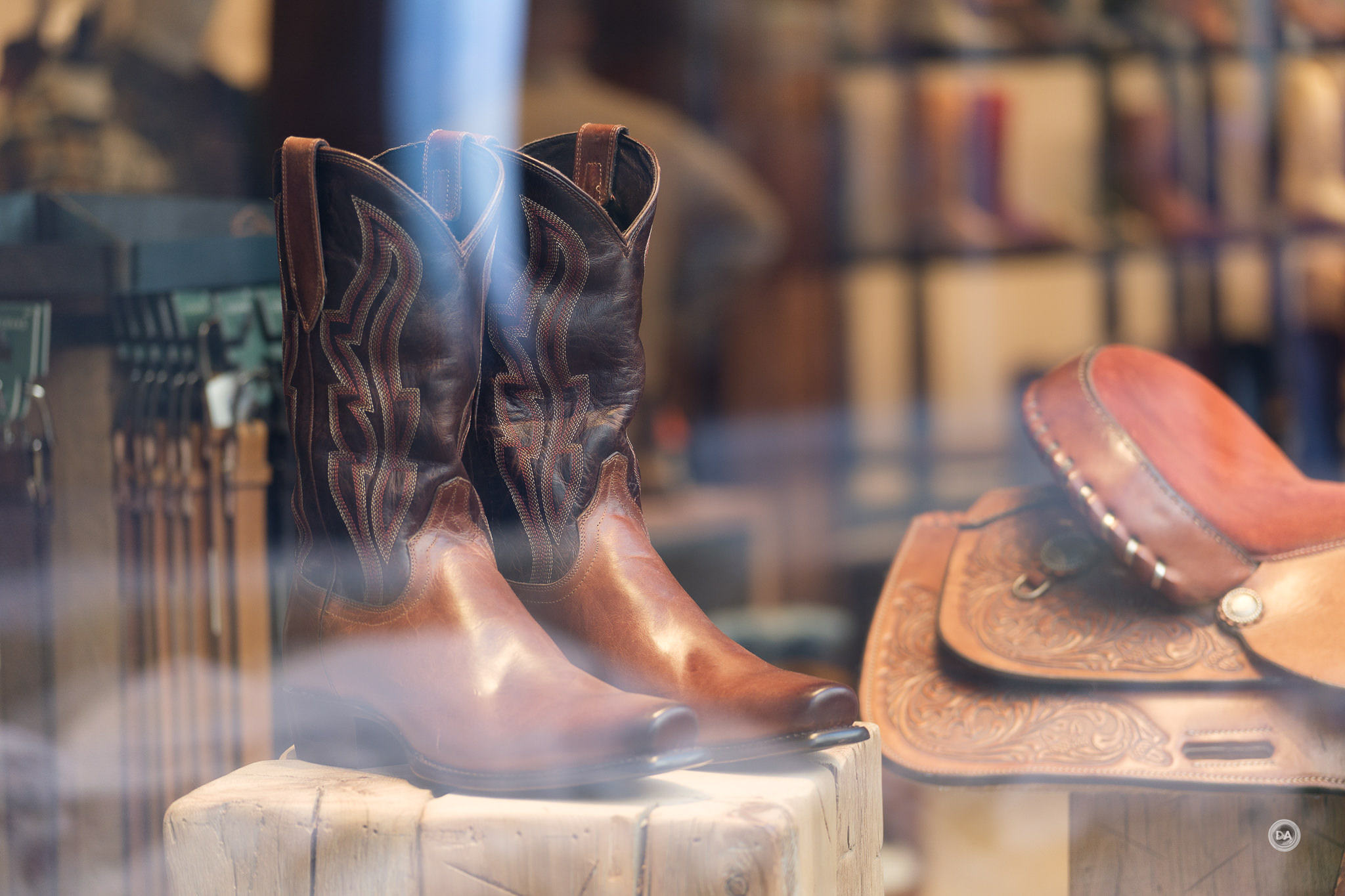
Here’s one with Astia, and again I love the color palette.

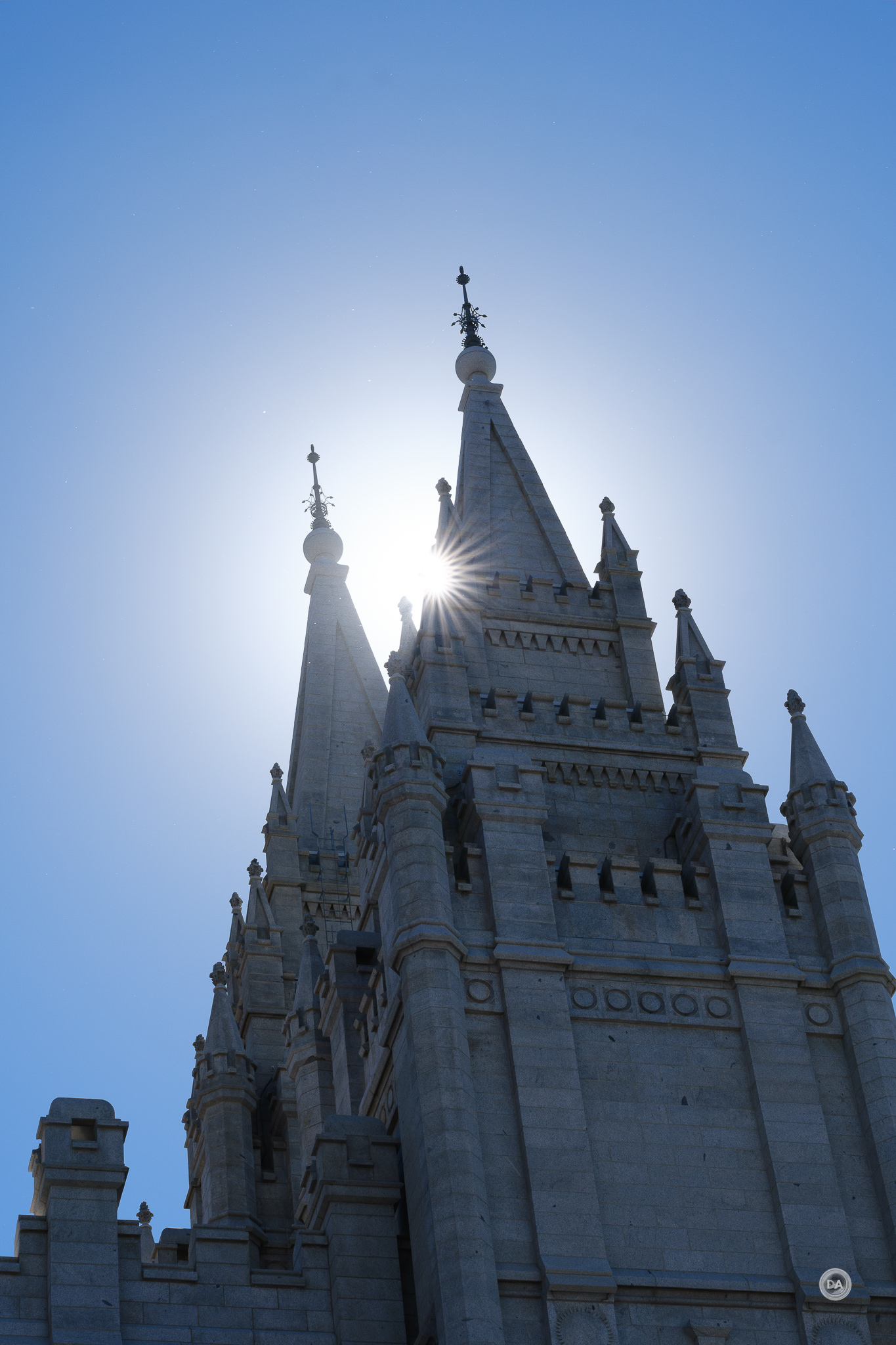
I found the flare resistance to be somewhat situational. Sigma’s coatings are generally very good, but I did find that bright sun could be quite dominant in certain situations.
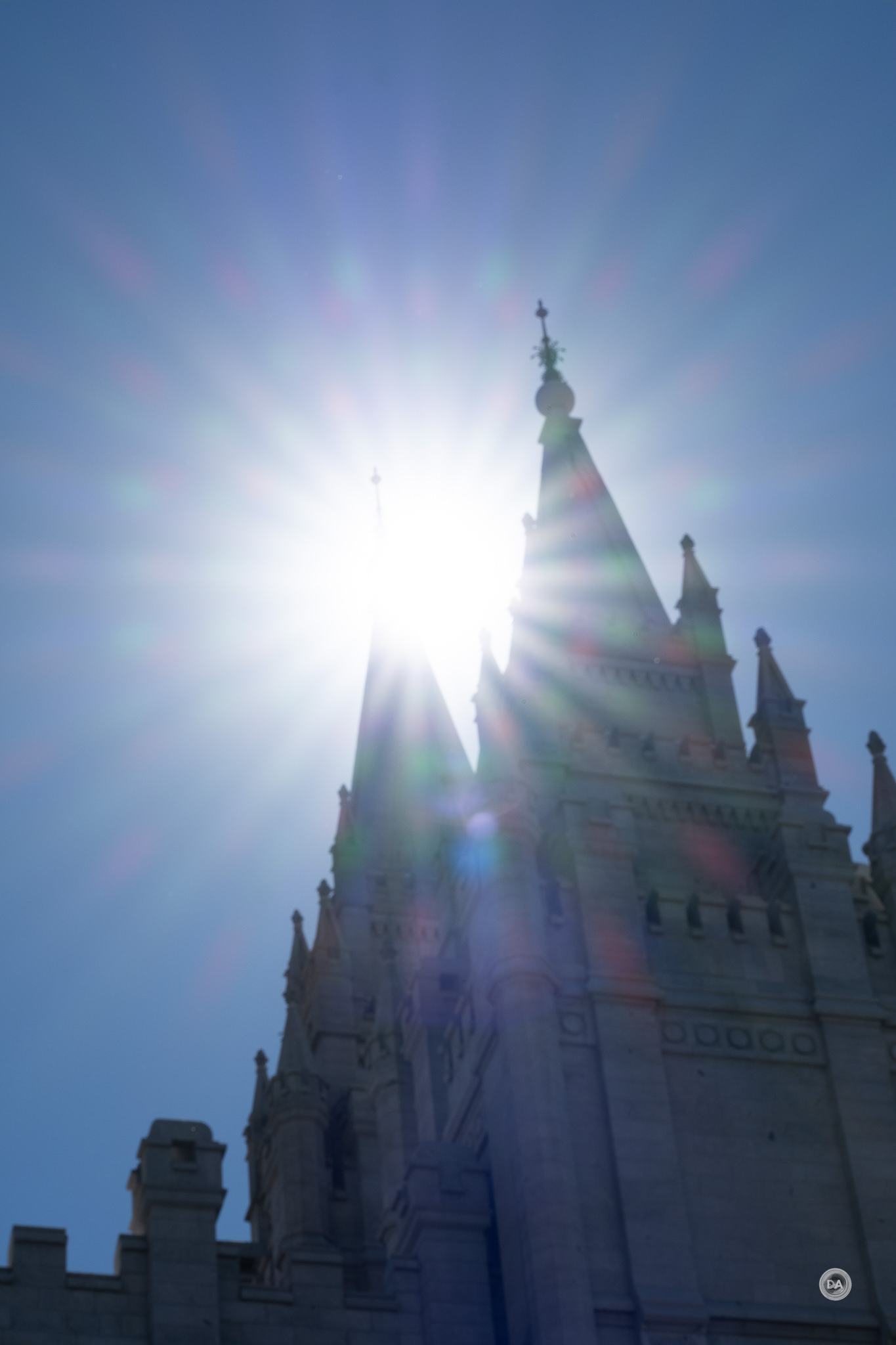
I reframed that image and allowed the building to absorb some of the intensity of the sun, and got a much neater image that shows off the 22-pointed sunstar from the lens.
This image shot into the evening sun shows a nice glow but without ghosting artifacts.

I can live with this, as there is nothing destructive here.
In summation, while Sigma’s engineers had to leave a bit more vignette and distortion optically uncorrected than what I would prefer, I feel like most people are going to be satisfied with the optics here, particularly considering how compact and lightweight the lens is. Nice job, Sigma.
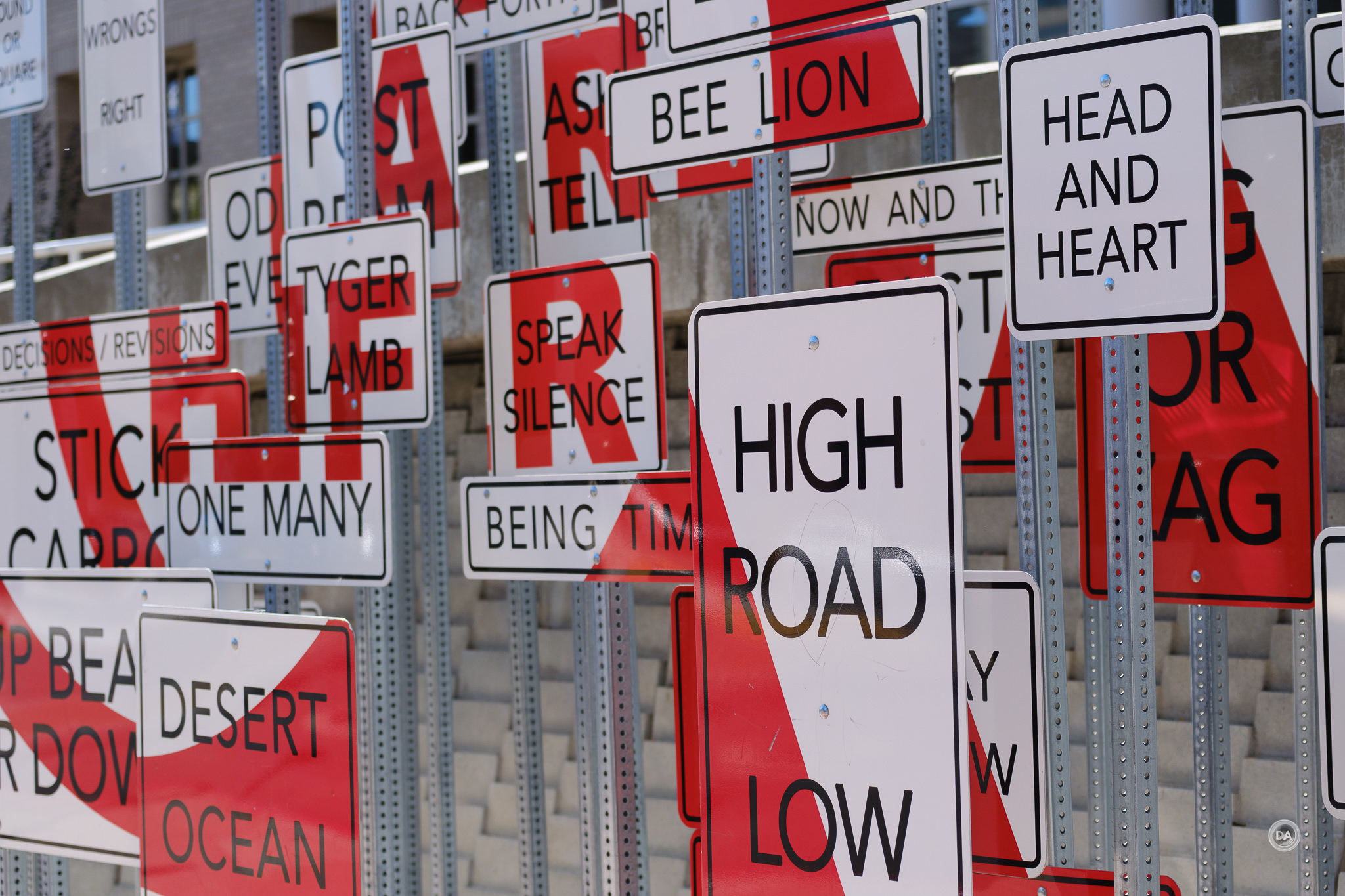
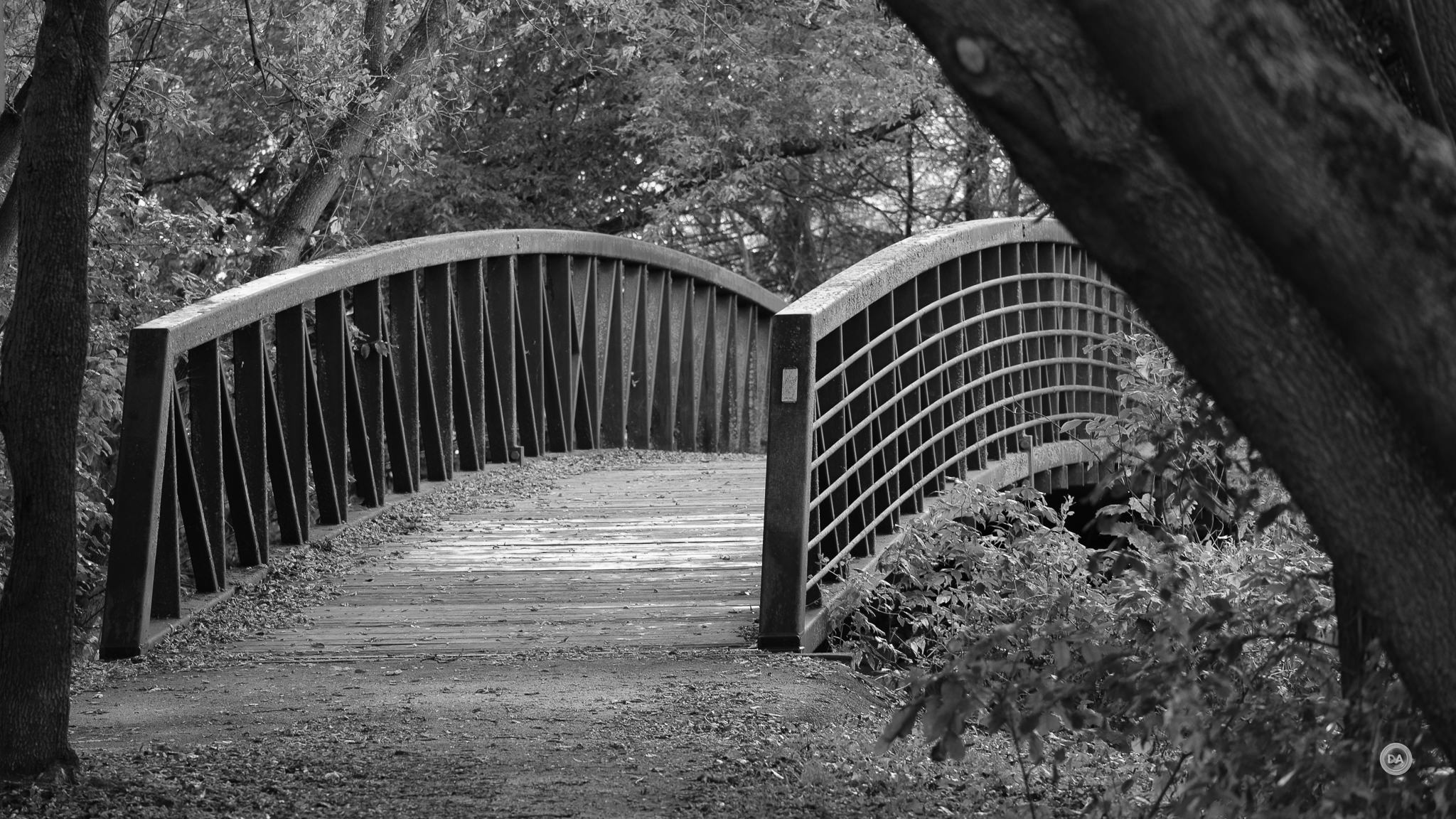
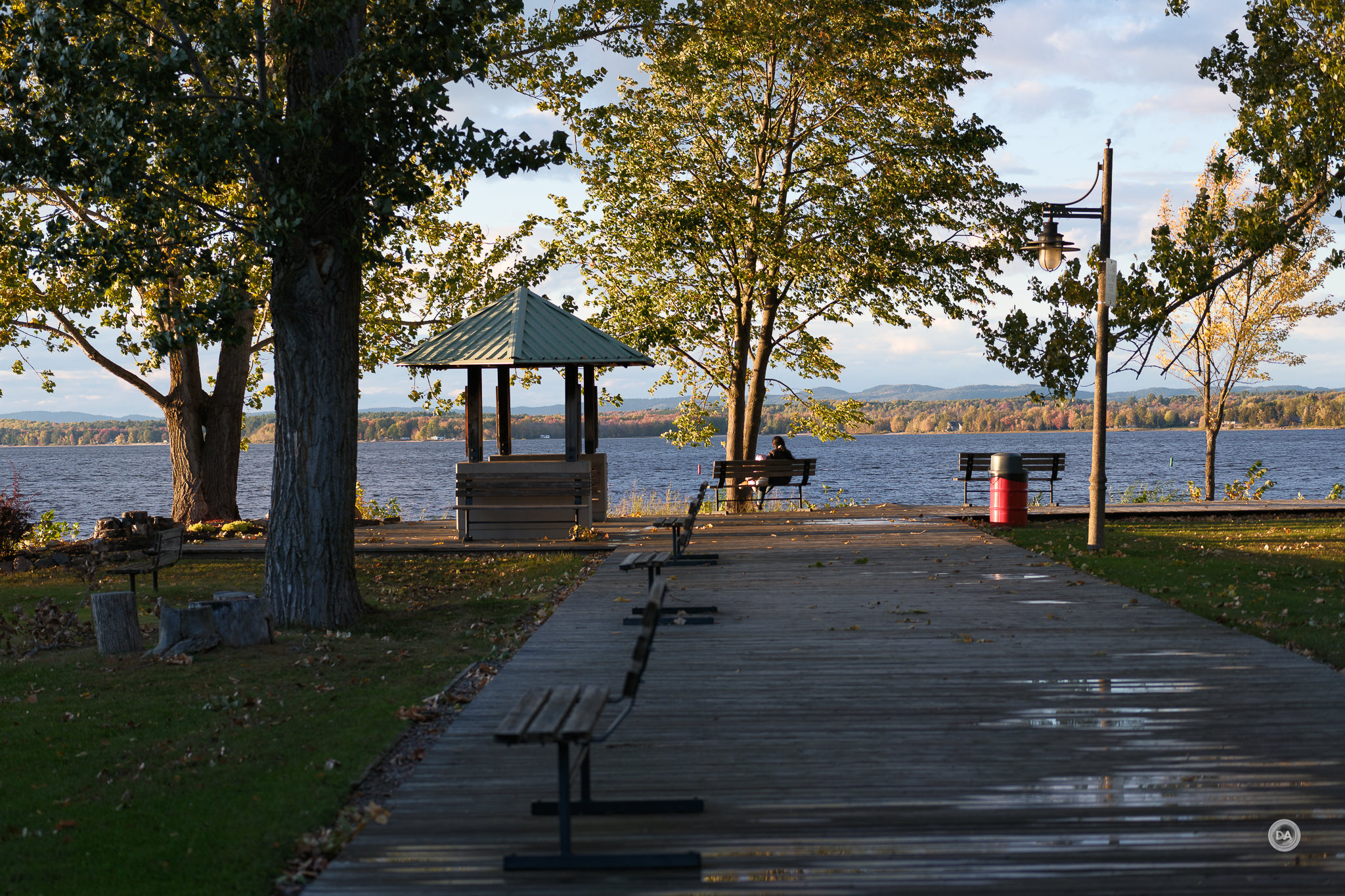
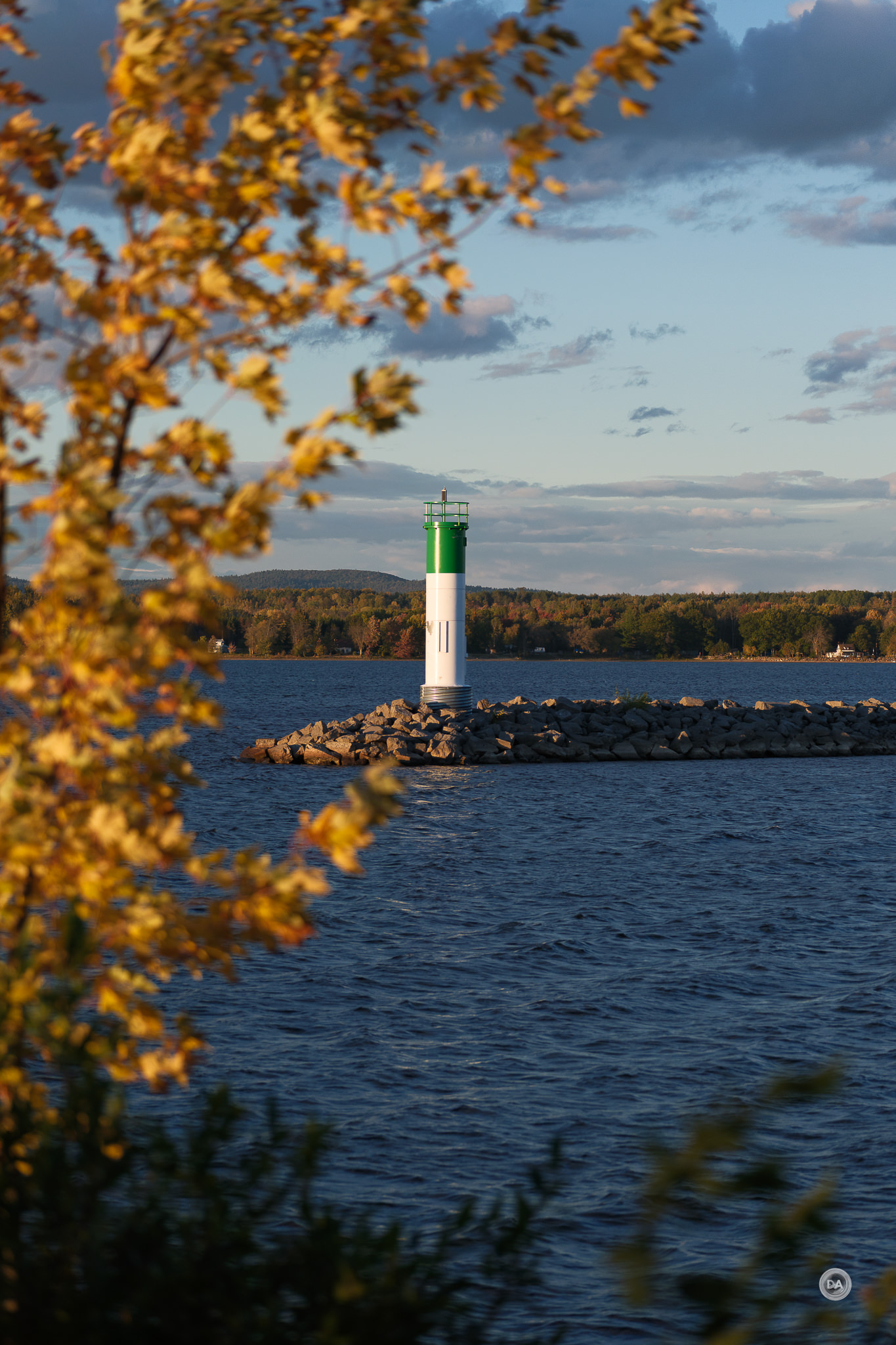
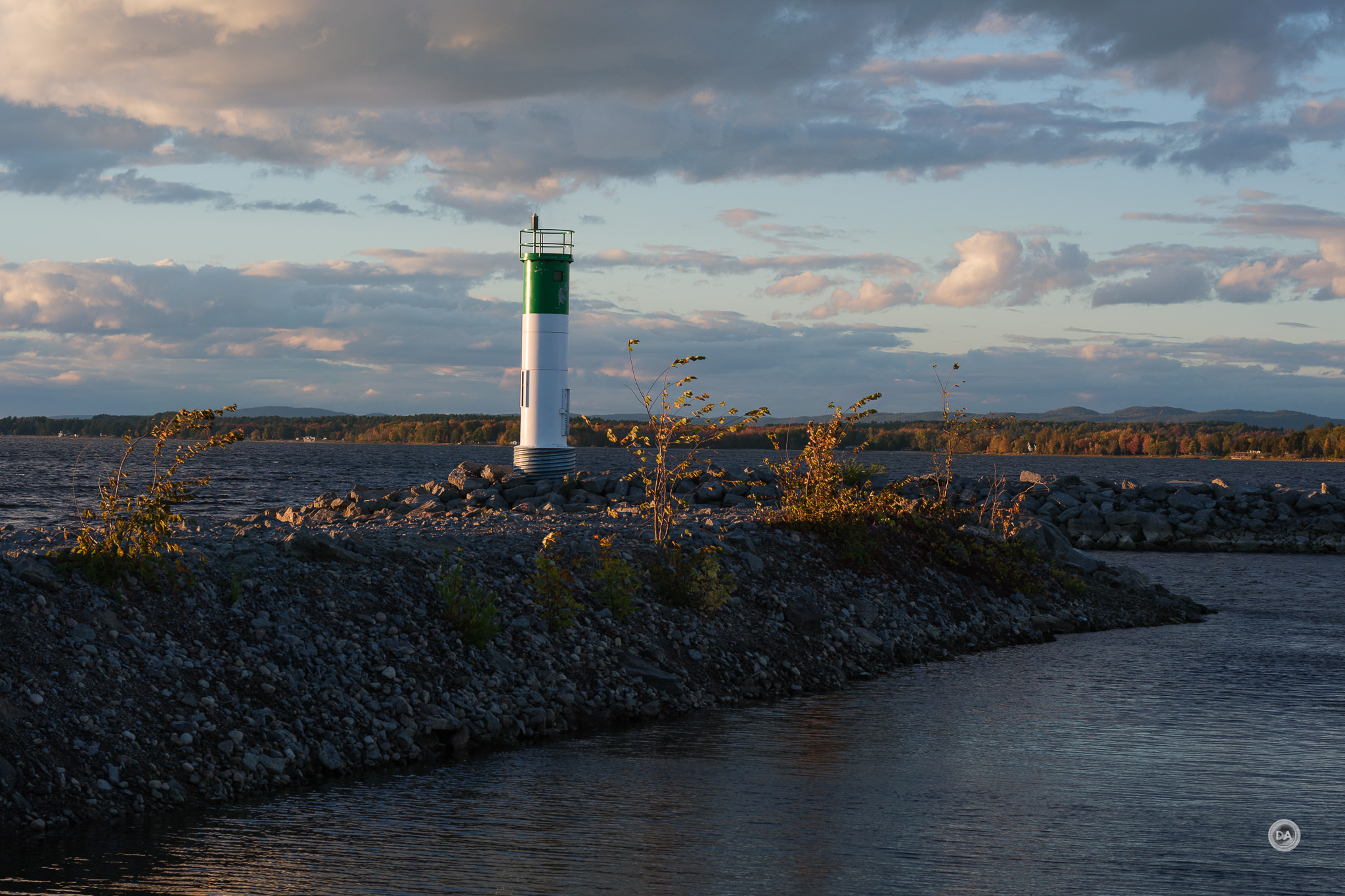
Here’s a mini gallery of extra images for you to enjoy.





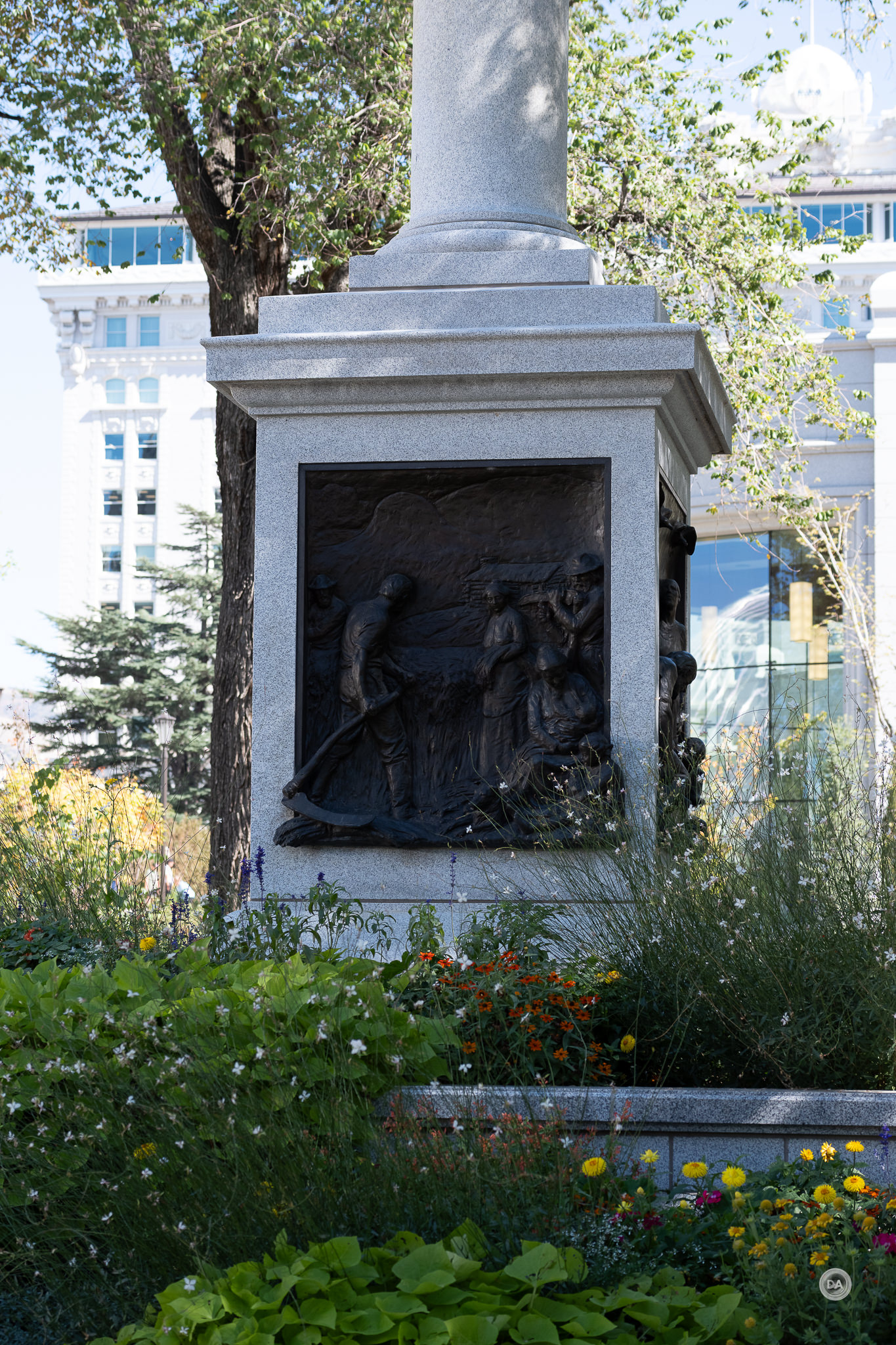
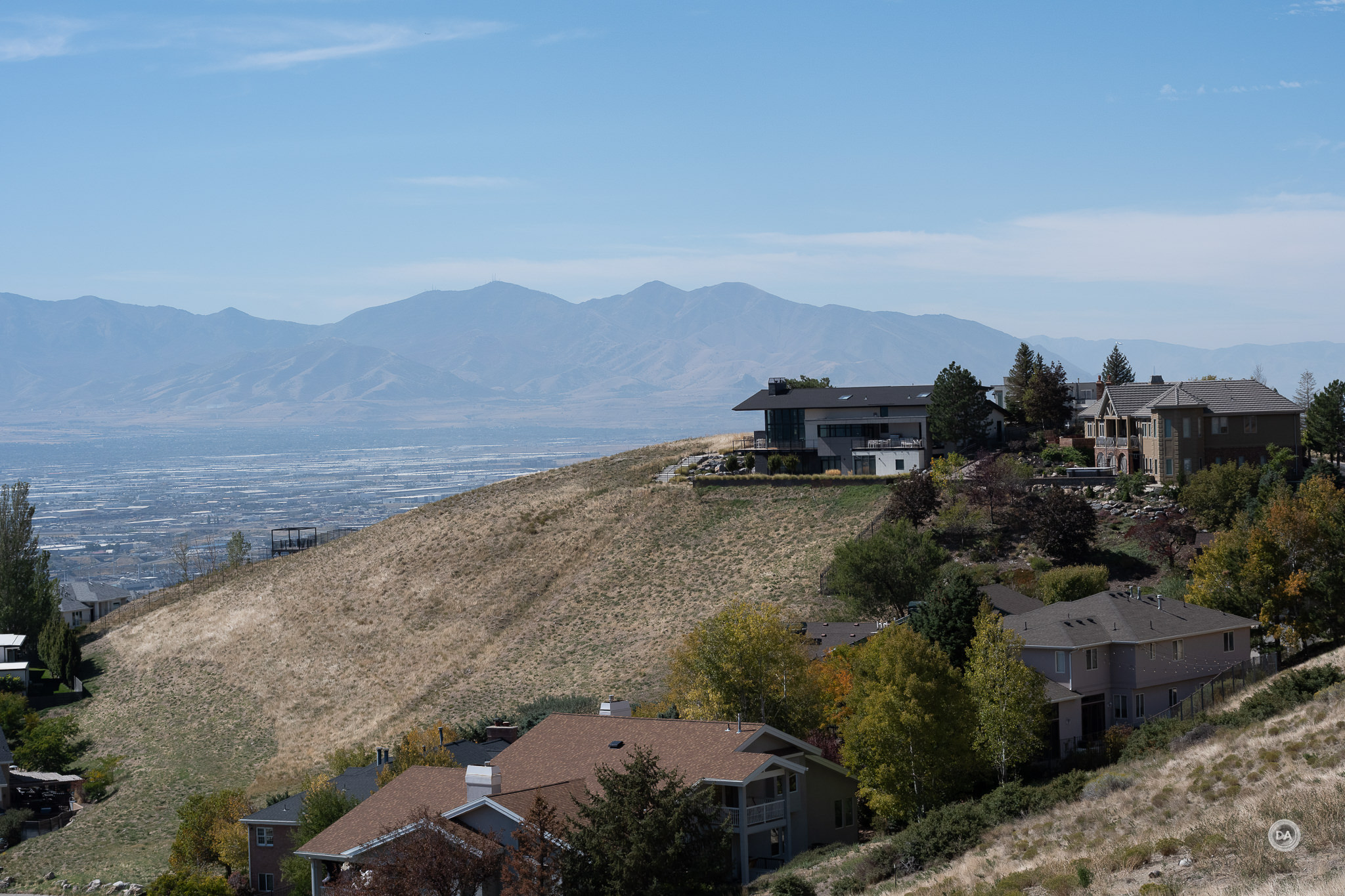
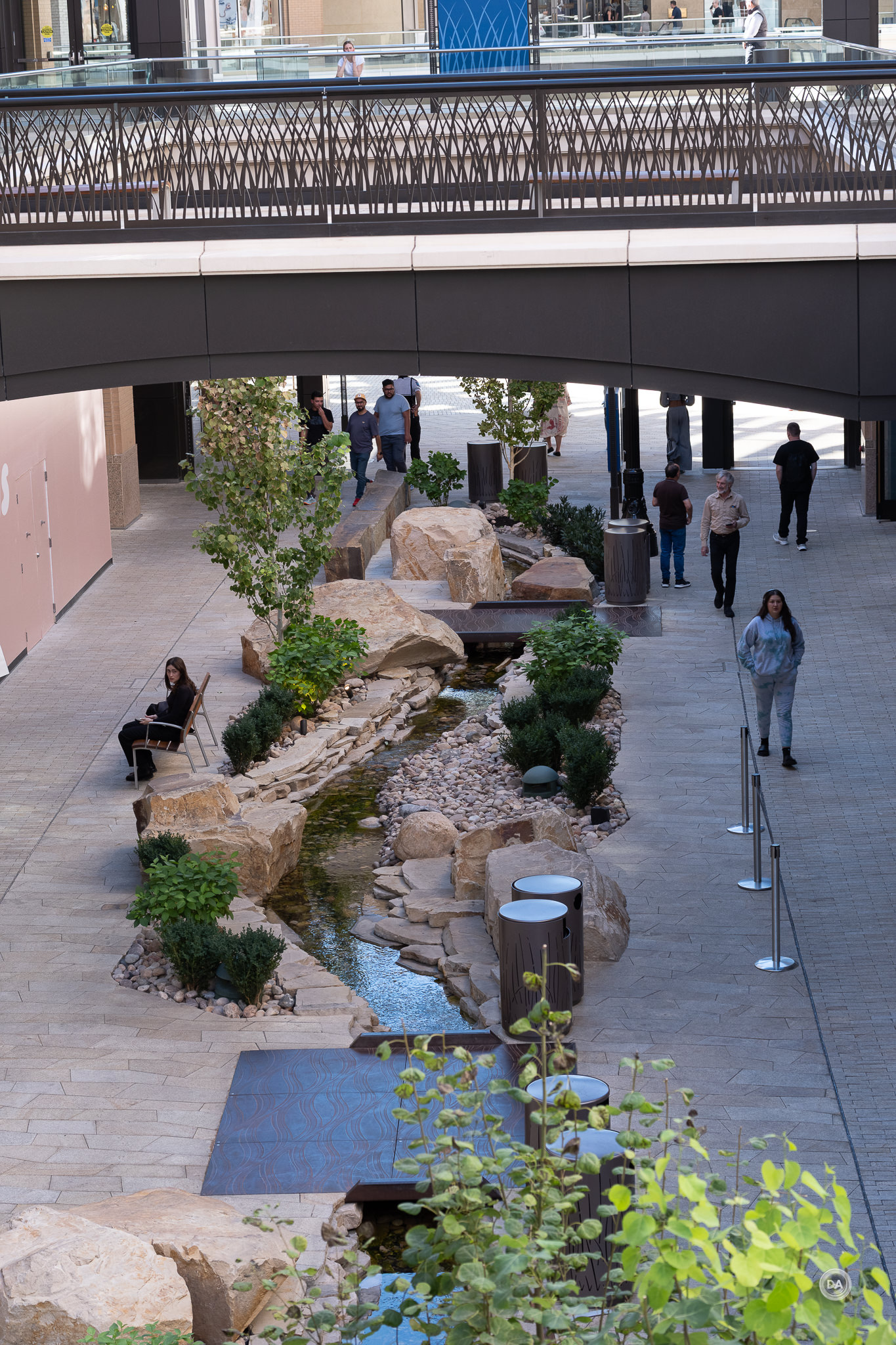
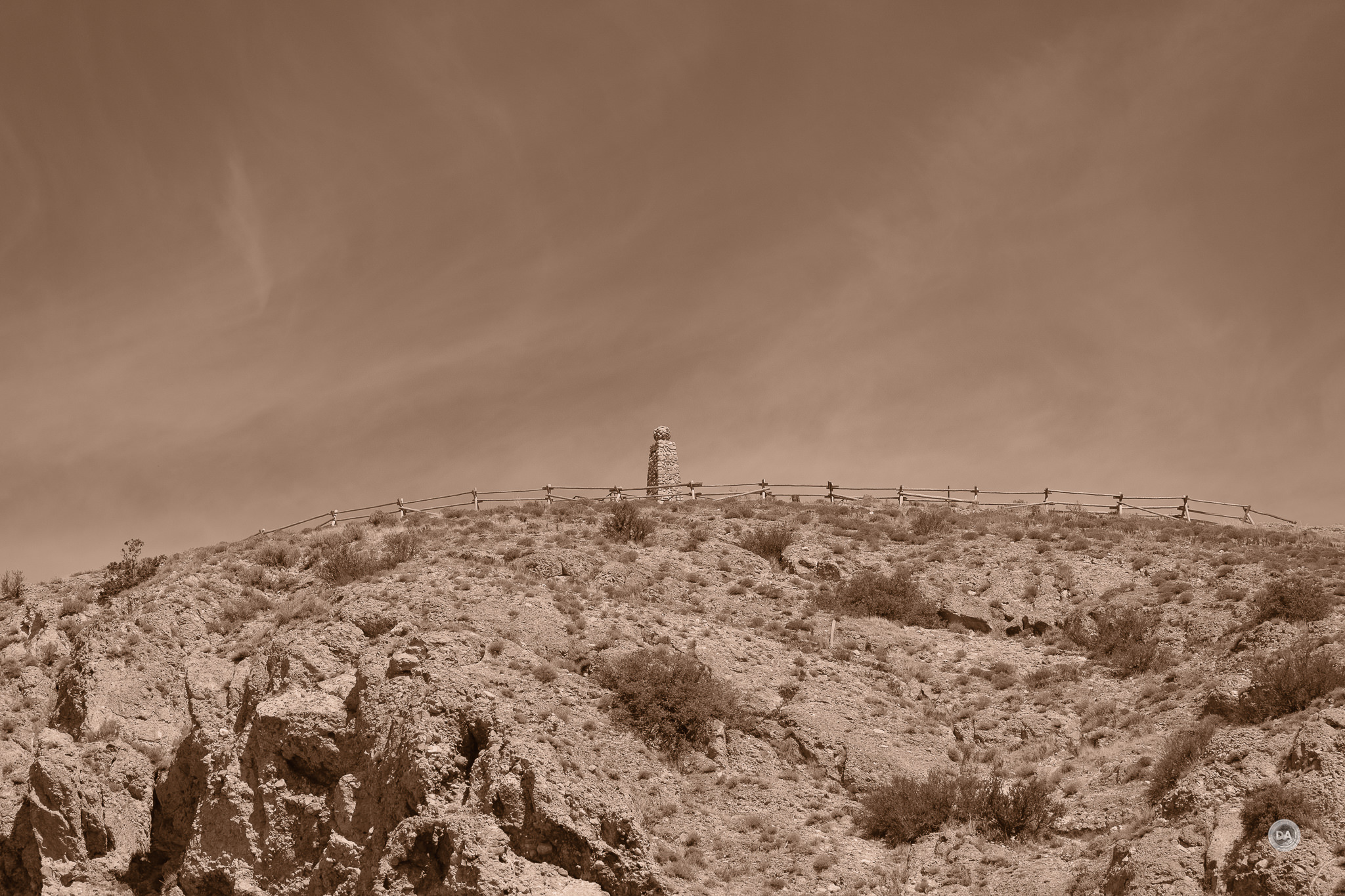








Conclusion
I’ve been waiting for a lens like this for a long time, as platforms like Sony E and Canon RF have lacked any kind of dedicated fast APS-C telephoto zoom and Fuji’s option (as documented in this review) is simply too big, too heavy, and too expensive. On Sony and Canon you could use a full frame option, of course, but the zoom ranges are designed for full frame cameras are less useful here. What’s more, the lenses are unnecessarily large and heavy for APS-C because they are designed to cover a much larger image circle. The Sigma 50-120mm F2.8 DC OS just makes sense – it is designed for APS-C specifically, so it is much more compact, lightweight, and cheaper as a result.

Sigma has been careful with the pricing here, too, as while the $799 USD price is more expensive than the 10-18mm F2.8 ($729) or the 18-50mm F2.8 ($659), it is also more expensive to manufacture and includes the aperture ring along with OS. The price feels very reasonable, and the compact size and light weight make this lens a real winner for travel or just packing light generally.
I’ve documented a few of my Fuji focus frustrations in this review, but I’m still considering getting this lens for my own personal Fuji kit. I have to believe that Fuji is going to figure out focus in future cameras, at which point a lens like this Sigma becomes exponentially more valuable. This is a great value, flexible photographic tool, and it comes highly recommended from me!
Pros:
- Compact and Lightweight: The Sigma 50-120mm weighs only 390g, making it significantly lighter and easier to handle than the Fuji 50-140mm, which weighs 995g.
- Affordable Price: At $799, it offers a more accessible price point compared to the Fuji lens ($1899), making it appealing to a wider range of photographers.
- Versatile Zoom Range: The 50-120mm focal length provides a useful 75-180mm equivalent range, suitable for various photography styles including landscapes and portraits.
- Impressive Optical Performance: Delivers sharp images with high contrast, excelling in real-world shooting scenarios.
- Smooth Autofocus: Utilizes Sigma’s HLA focus motor, providing quiet, smooth, and accurate focusing, especially for still subjects.
- Weather Resistant: Equipped with effective weather sealing, making it resilient for outdoor shooting in varied climates.
- Constant Aperture: Maintains a bright F2.8 maximum aperture throughout the zoom range
- Low Chromatic Aberrations: Demonstrates minimal longitudinal and lateral chromatic aberrations, contributing to overall image quality.
- Attractive Bokeh: Produces a unique bokeh effect with a degree of swirl, adding a creative touch to images.
- Compatible with Multiple Systems: Available for Fuji X-mount, Sony E-mount, and Canon RF-mount, making it versatile for different camera brands.
Cons:
- Distortion and Vignetting: Exhibits noticeable distortion and heavy vignetting, particularly at wider settings, which may require post-processing corrections.
- Limited on Fuji Systems: Autofocus performance may be less efficient with Fuji cameras, potentially impacting the ability to track moving subjects.
- Slightly Constricted Zoom Range: Compared to the Fuji 50-140mm, the range might feel limiting for some photographers who prefer a broader zoom.
_________________________________________________________________________
GEAR USED:
Purchase the Sigma 50-120mm F2.8 OS @ B&H Photo | Adorama | Amazon | Camera Canada | Amazon Canada | Amazon UK | Amazon Germany
Purchase the Sigma 10-18mm F2.8 DN @ B&H Photo | Adorama | Amazon | Camera Canada | Amazon Canada | Amazon UK | Amazon Germany
Purchase the Sigma 18-50mm F2.8 DN @ B&H Photo | Adorama | Amazon | Camera Canada | Amazon Canada | Amazon UK | Amazon Germany
Purchase the Fujifilm X-H2 @ B&H Photo | Adorama | Amazon | Camera Canada | Amazon Canada | Amazon UK | Amazon Germany
___________________________________________________________________
Purchase the Sony a7RV @ B&H Photo | Adorama | Amazon | Camera Canada | Sony Canada | Amazon Canada | Amazon UK | Amazon Germany
__________________________________________________________________
Purchase the Sony a7IV @ B&H Photo | Adorama | Amazon | Camera Canada | Sony Canada | Amazon Canada | Amazon UK | Amazon Germany
_________________________________________________________________
Purchase the Sony Alpha 1 @ Camera Canada | B&H Photo | Adorama | Amazon | Sony Canada | Amazon Canada | Amazon UK | Amazon Germany | Ebay
_________________________________________________________________
Want to support this channel? Use these affiliate links to shop at: B&H Photo | Amazon | Adorama | Camera Canada | Amazon Canada | Amazon UK | Ebay | Make a donation via Paypal
Buy DA Merchandise https://bit.ly/TWIMerch

Keywords: Sigma 50-120mm, 50-120mm, Contemporary, 2.8, f/2.8, DG, Sigma 50-120mm Review, Sigma 50-120mm f2.8 Review, #SIGMAEmount, #SIGMA #SIGMA50-120C, Fuji 50-140mm, APS-C, Review, Fujifilm X-H2, Sony E, Canon RF, Review, Hands On, Dustin Abbott, Real World, Comparison, Sharpness, Bokeh, Flare Resistance, Autofocus, Image Quality, Sample Images, Video, Photography, let the light in, weathersealing, #letthelightin, DA
Related posts:
 Sigma 15mm F1.4 DC | Contemporary Review
 Sigma 12mm F1.4 DC | Contemporary Review
 Sigma 20-200mm F3.5-6.3 DG Review
 Sigma 20-60mm F2.8-4 C Review
 Sigma 24-70mm F2.8 DG DN II | ART Review
 Sigma 28-105mm F2.8 DG DN ART Gallery
 Sigma 300-600mm F4 DG OS | SPORT Review
 Sigma 200mm F2 DG OS | SPORT Review
 Sigma 135mm F1.4 DG | ART Review
 Sigma 35mm F1.2 DG II | ART Review