

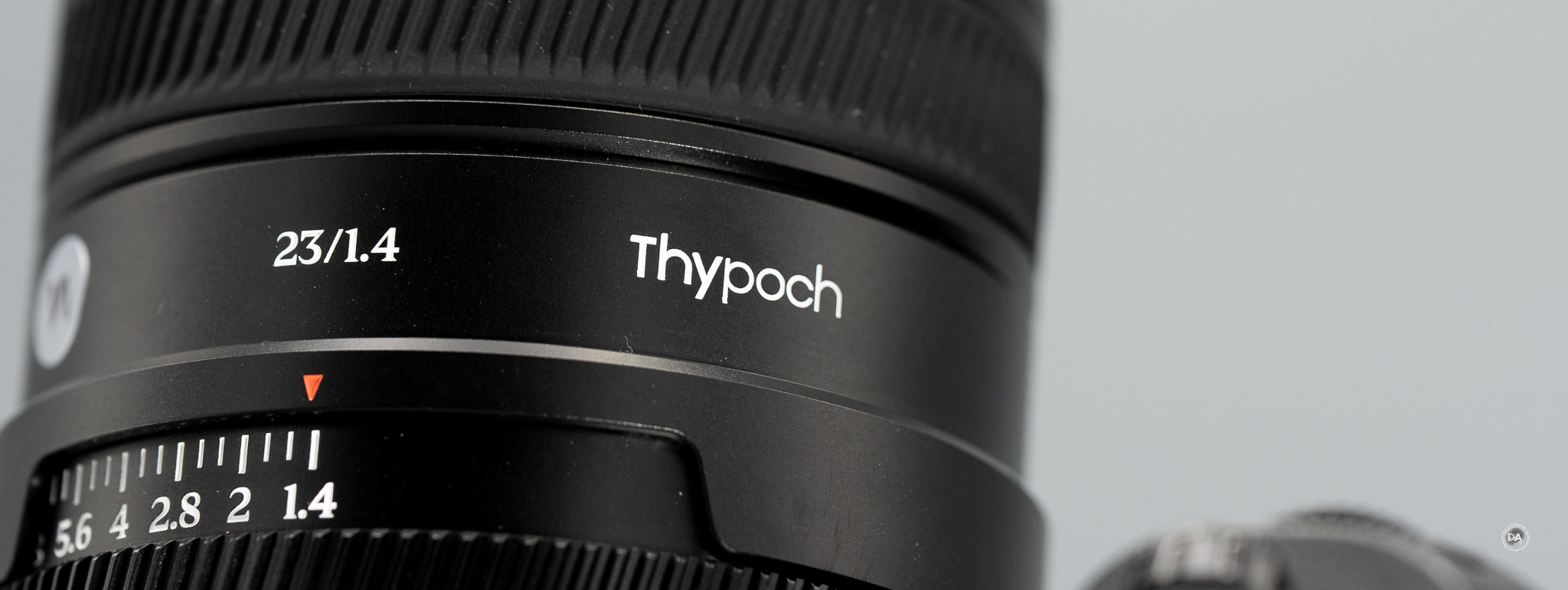
Thypoch has been one of the more intriguing new lens makers out of China in large part because of their unconventional approach. We’ve seen them tackle new versions of classic optical designs, design Leica competitors for M-mount, and even be the first lensmaker from China to launch a full frame mirrorless zoom. Today’s lens is a bit more conventional but is interesting nonetheless. The 23mm F1.4 is the first in a new series of APS-C autofocus lenses they will call the “Sculptor” series, and it undercuts the size, weight, and price of the main competitors. Is it worth it choosing over them? We’ll find out in the video review linked below or in this text review.
Follow Me @ YouTube | Patreon | Instagram | Facebook | DA Merchandise | Flickr | 500px | X
Thanks to Thypoch for sending me a review sample of this lens. As always, this is a completely independent review. *The tests and most of the photos that I share as a part of my review cycle have been done with the FUJIFilm X-H2.
___________________________________________________________________________________________
SUMMARY: The Thypoch Sculptor 23mm F1.4 is a notable addition to the APS-C autofocus lens market, offering a competitive price of $349, significantly lower than its rivals, such as the Fujinon XF 23mm F1.4 and Sigma 23mm F1.4. Despite its affordability, this lens boasts quality optics, a sturdy build, and weather sealing, making it an attractive option for photographers. While it delivers decent sharpness and detail with a lighter weight, it struggles slightly in areas like contrast and autofocus performance in challenging scenarios. Overall, the Sculptor 23mm F1.4 represents a solid alternative for those seeking high-quality imagery without the premium price tag.
Strengths:
- Affordable price point compared to competitors.
- Good build quality and weather resistance.
- Nice optical performance with detail and color rendering.
- Lightweight design makes it suitable for travel.
Weaknesses:
- Lower contrast and sharpness at wide apertures compared to higher-end lenses.
- Autofocus can struggle with fast-moving subjects.
- Aesthetic design may not appeal to all users.
There are several alternatives on X-mount at present, though the most common are the Fujinon XF 23mm F1.4 WR (my review here) and the Sigma 23mm F1.4 DC reviewed here. Both are nice lenses, but are considerably more expensive, with the Fujinon retailing for $1050 USD while the Sigma costs $659 USD. The Thypoch will hit the market at $349 USD, a third of the price of the Fujinon lens. The Sculptor 23mm is competitive with those lenses and is arguably the nicest built lens of the bunch.
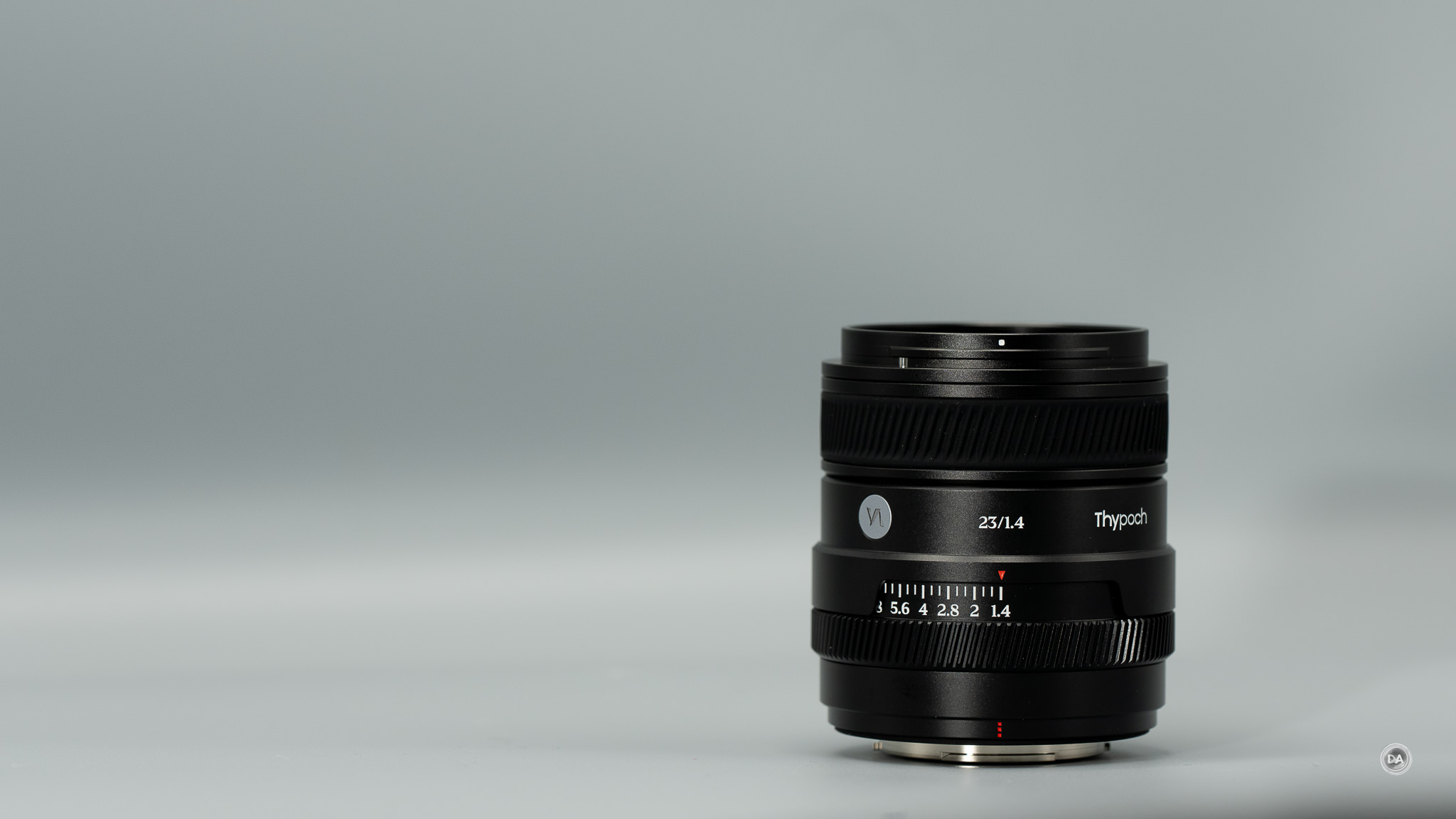
It is capable of producing nicely detailed images with a good balance of sharpness and rendering, and while the contrast isn’t quite as good as the Fujinon or Sigma lenses, it is delivering similar levels of detail even on the extremely high-resolution 40MP X-Trans sensor.
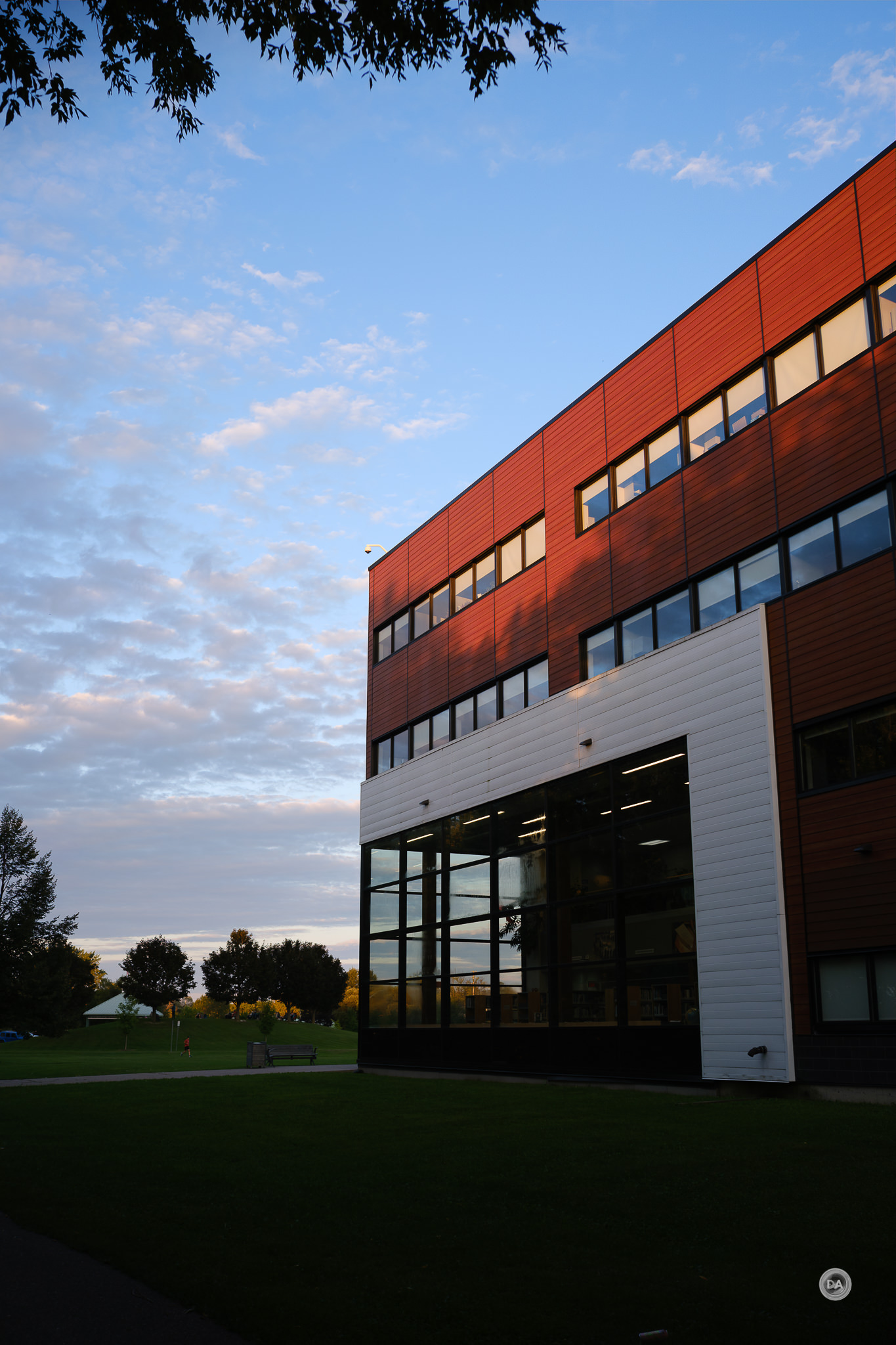
The bottom line is that the Thypoch Sculptor 23mm F1.4 is a beautifully made lens with quality optics, weather sealing, good autofocus, and all while being lighter in both your bag and your wallet.
Let’s take a closer look.
Thypoch Sculptor 23mm Build and Handling
Thypoch has released a number of beautiful lenses. Some are styled like classic lenses, others are beautifully crafted to give a Leica-esque feel, and even more modern designs like the Voyager 24-50mm have a great look. The Sculptor design doesn’t quite reach the level of those lenses in terms of the aesthetic design, in my opinion.
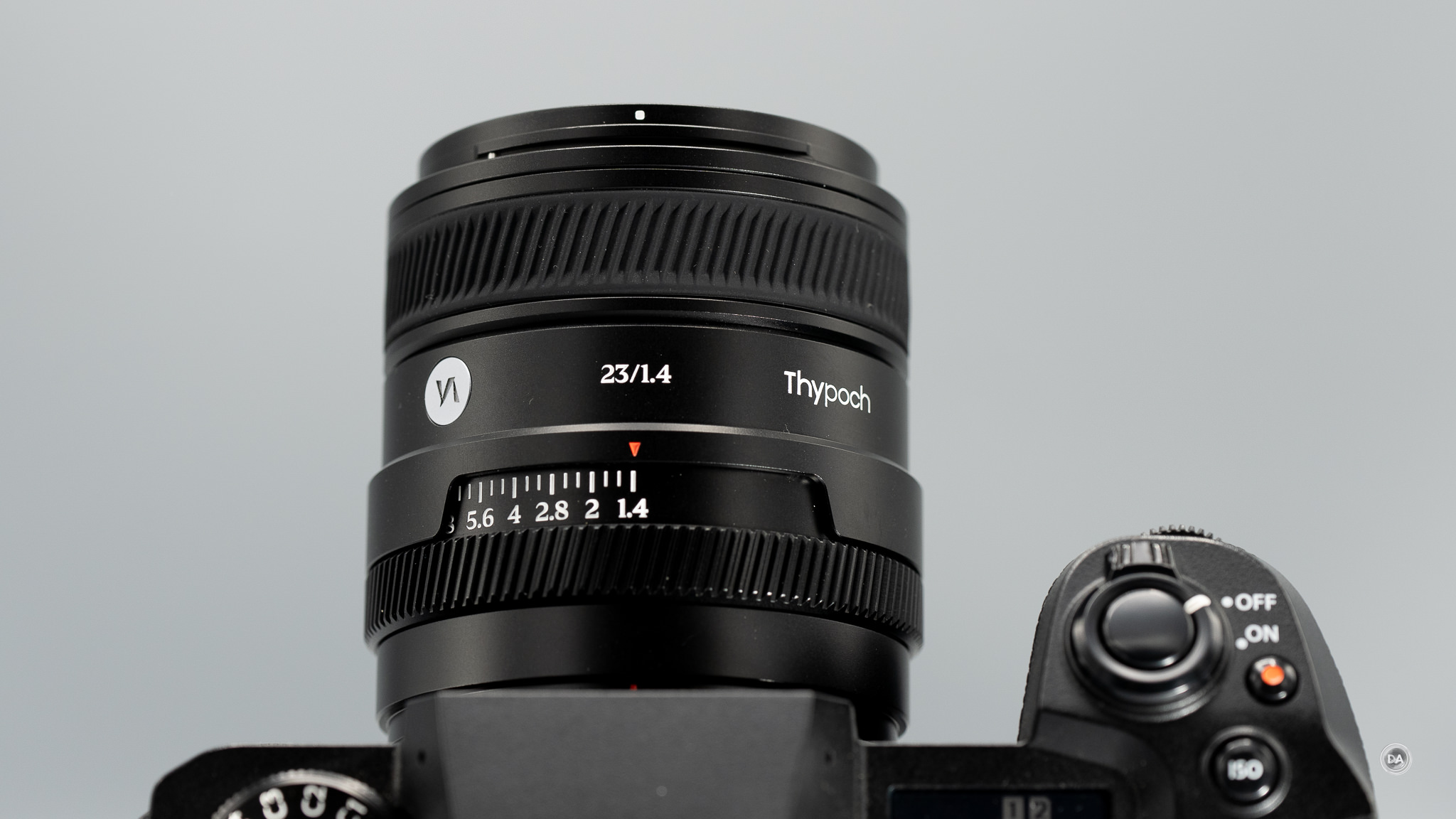
It’s a relatively straightforward design with body this is mostly black anodized metal, a rubberized focus ring, and an aperture ring that is ribbed metal. The unique design element here is a cutout at the aperture ring that gives a “peek-a-boo” look at the engraved aperture markings.
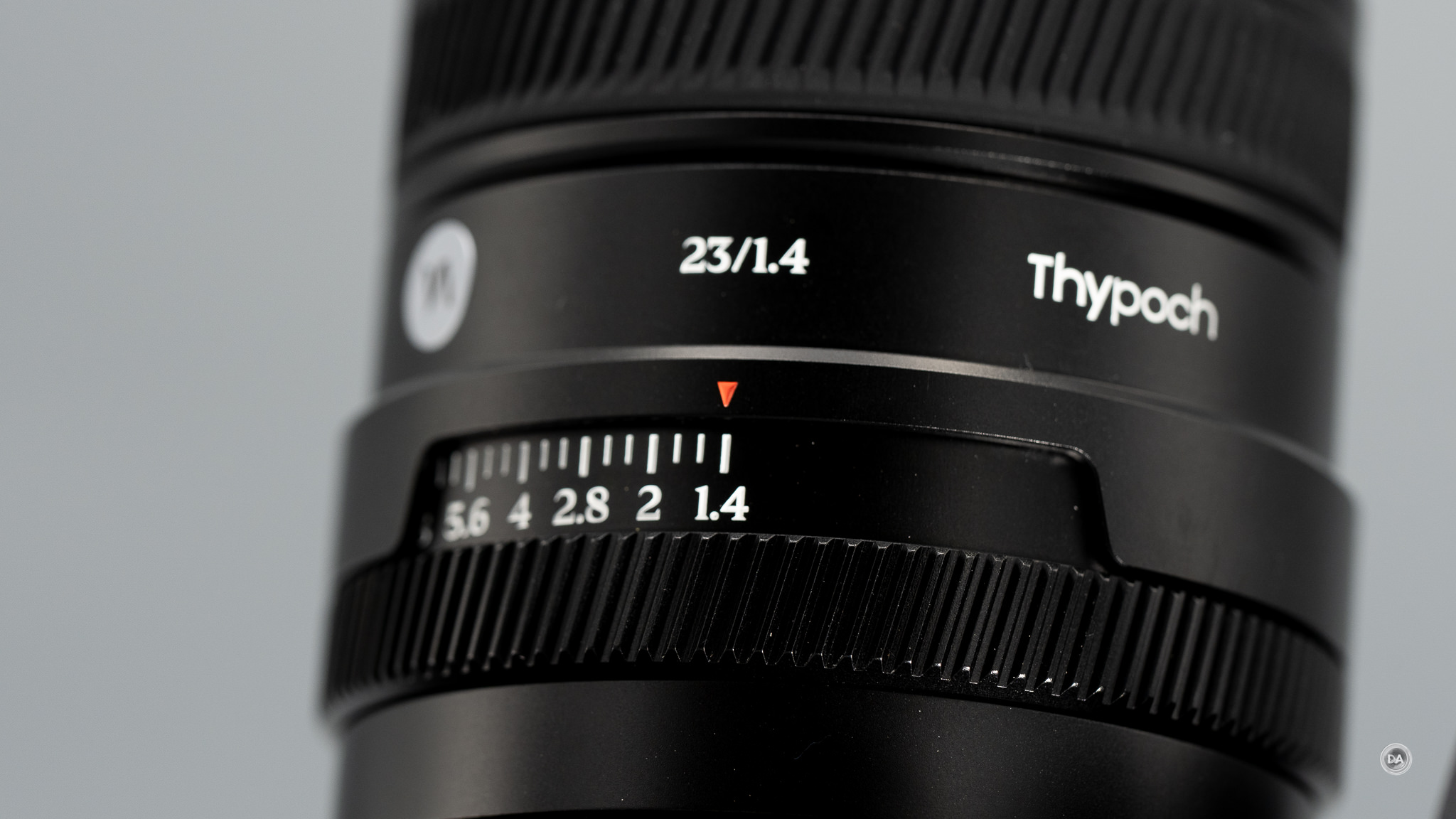
The aperture itself is clicked and has one-third stop detents in between the full aperture stops. Clicks are well delineated and there is a nice, firm space between F16 (minimum aperture) and the A (automatic) setting where aperture can be controlled from within the camera.
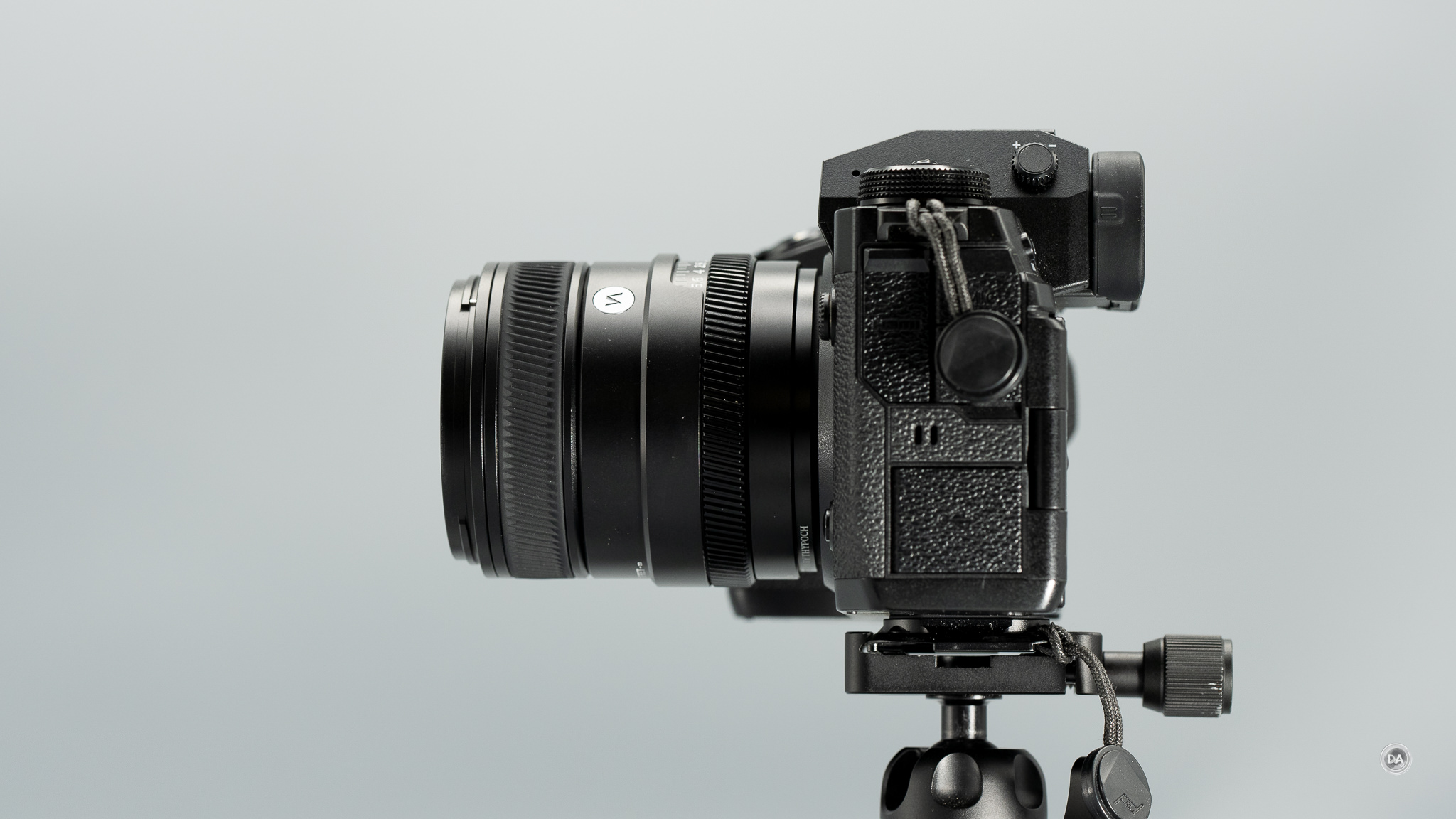
This follows the typical Fujifilm standard where an aperture ring is included but there is no AF | MF switch or custom buttons. I find that the design of the lens looks a bit like a variety of sections mashed together and lacks the more cohesive design found in many of Thypoch’s other lenses, though that is a taste thing.
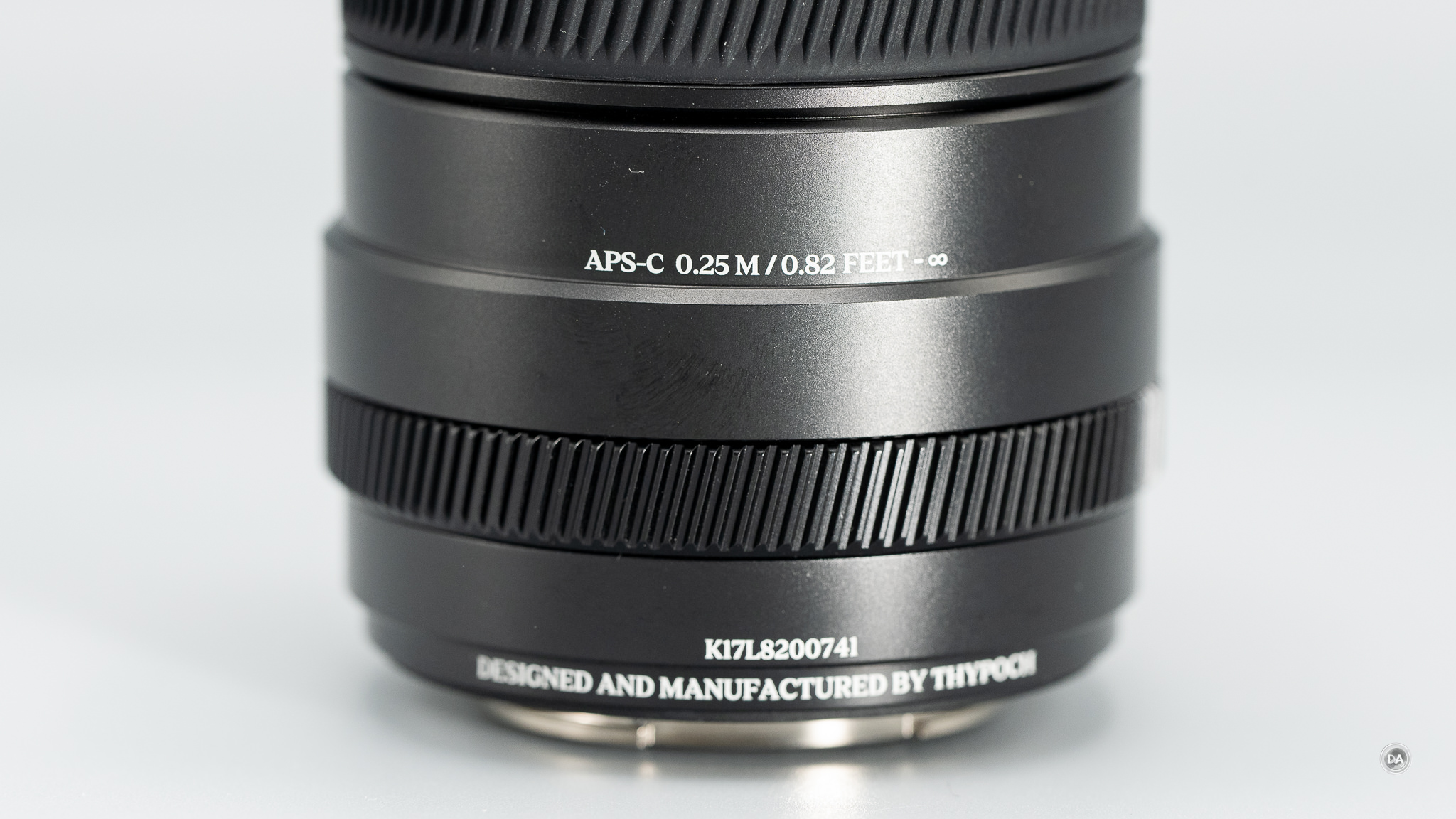
It is clearly a big deal to Thypoch that they design and manufacture their lenses in-house. They promote that right on the lens barrel.
The lens mount features a weather sealing gasket along with a USB-C port to allow for quick firmware updates. This is definitely my preferred position for USB-C ports.
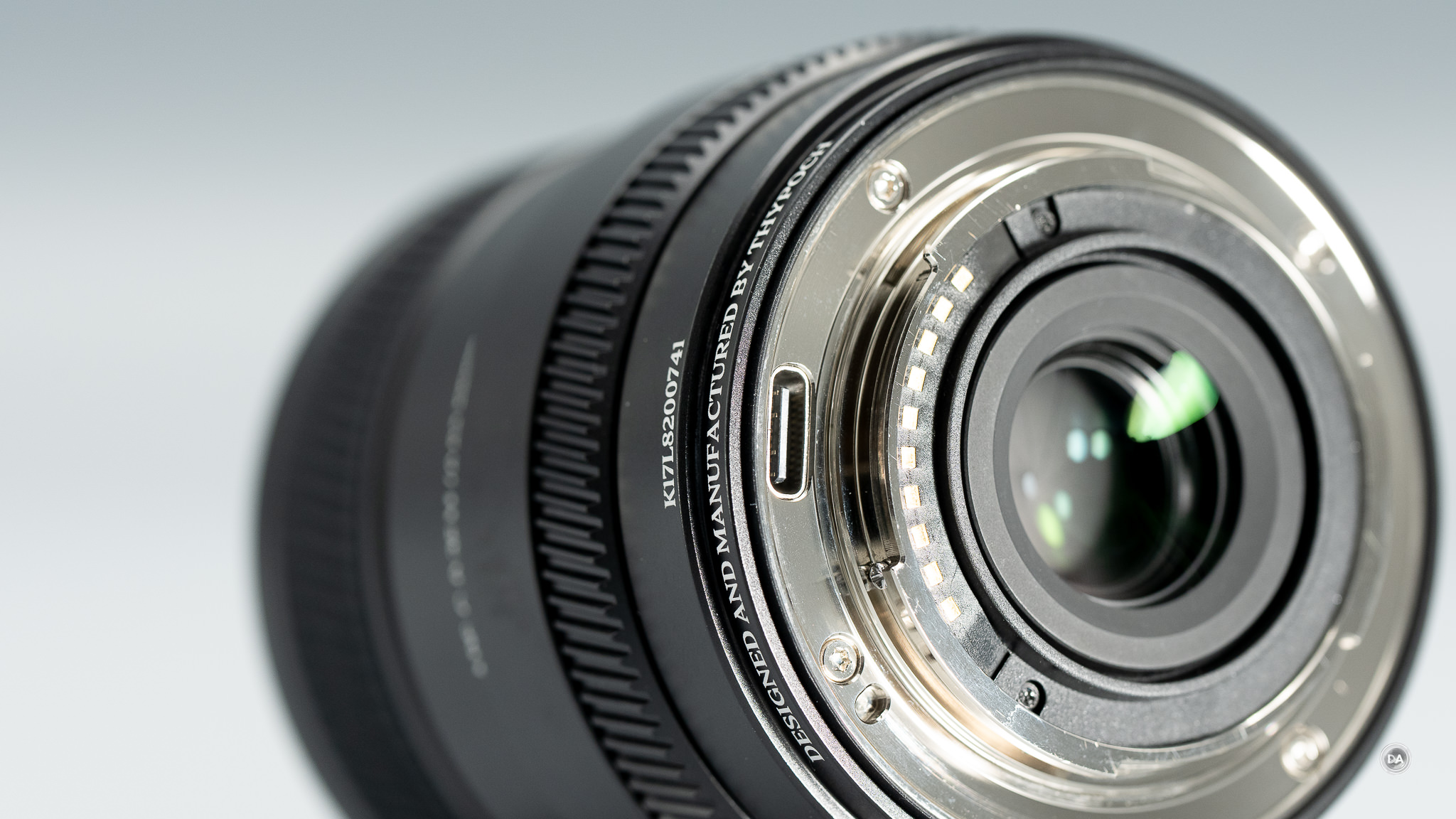
I asked Thypoch about the weather sealing, and they confirmed that the native lens is rated at IP52 without a front filter but rises to IP53 with a filter attached. That means using it in typical rainy conditions should be okay, but avoid hurricanes…
This is an all-metal lens, but Thypoch has managed to keep the weight at 283g, or 10 ounces. This compares favorably to the Fujifilm XF 23mm F1.4 (375g) and the Sigma 23mm F1.4 (340g). The Sigma is the outlier in that it lacks the aperture ring that both the Thypoch and Fujifilm lenses have. The Thypoch has a very high-quality dense feeling in the hand despite the low weight.
I measure the lens at 63mm (2.5″) in diameter and 72mm (2.83″) in length. That makes it slightly smaller in both width and length than either the Sigma or Fuji lenses. This definitely qualifies as a compact lens, one small and light enough to match even the smaller Fujifilm bodies.
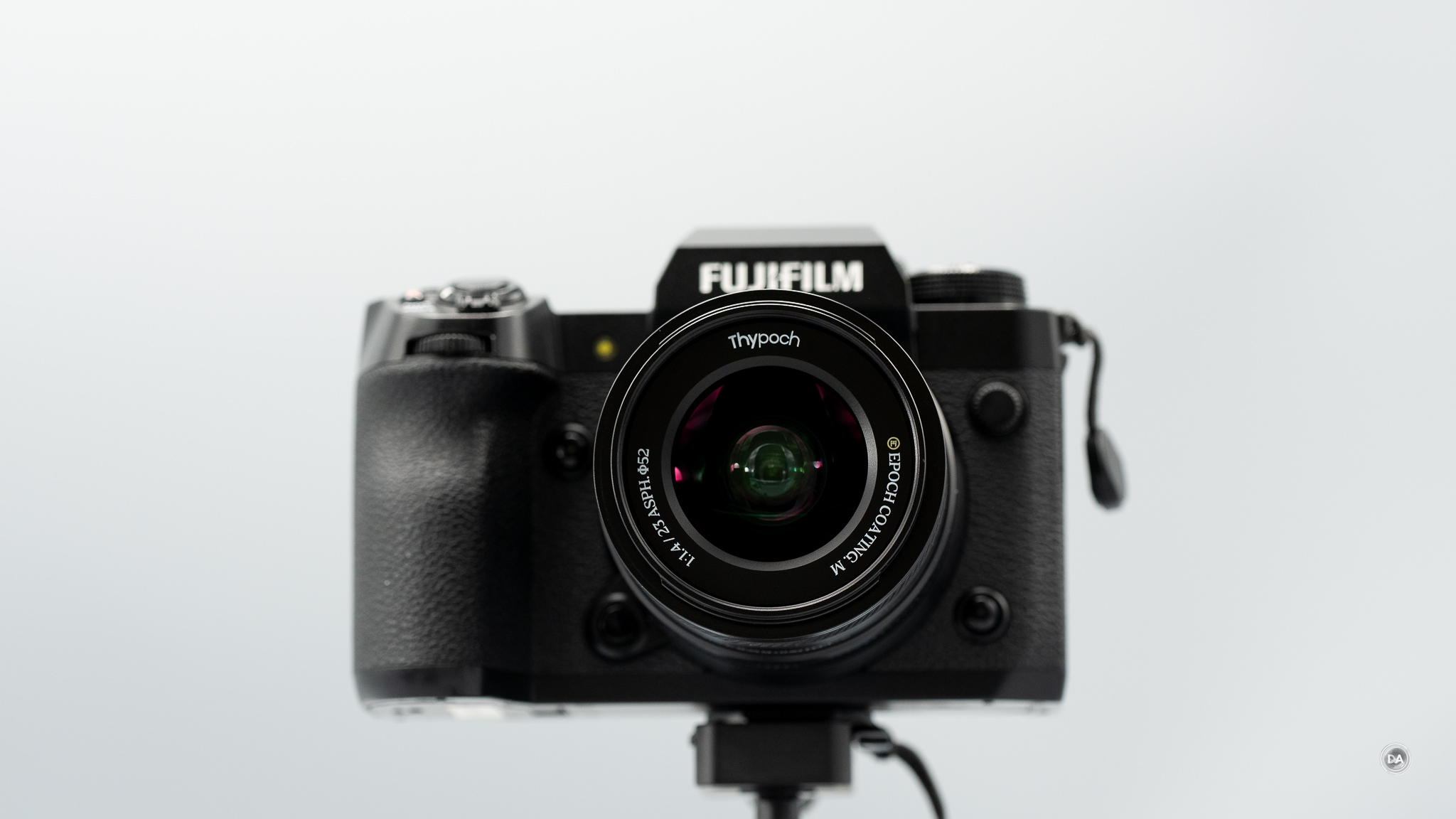
Up front we have a common 52mm front filter thread, which matches the Sigma but is smaller than the 58mm of the Fujifilm lens.
The lens hood is a bit odd, as while it bayonets on fairly traditionally, it is a shallow hood that almost looks like the opening of an anamorphic lens.
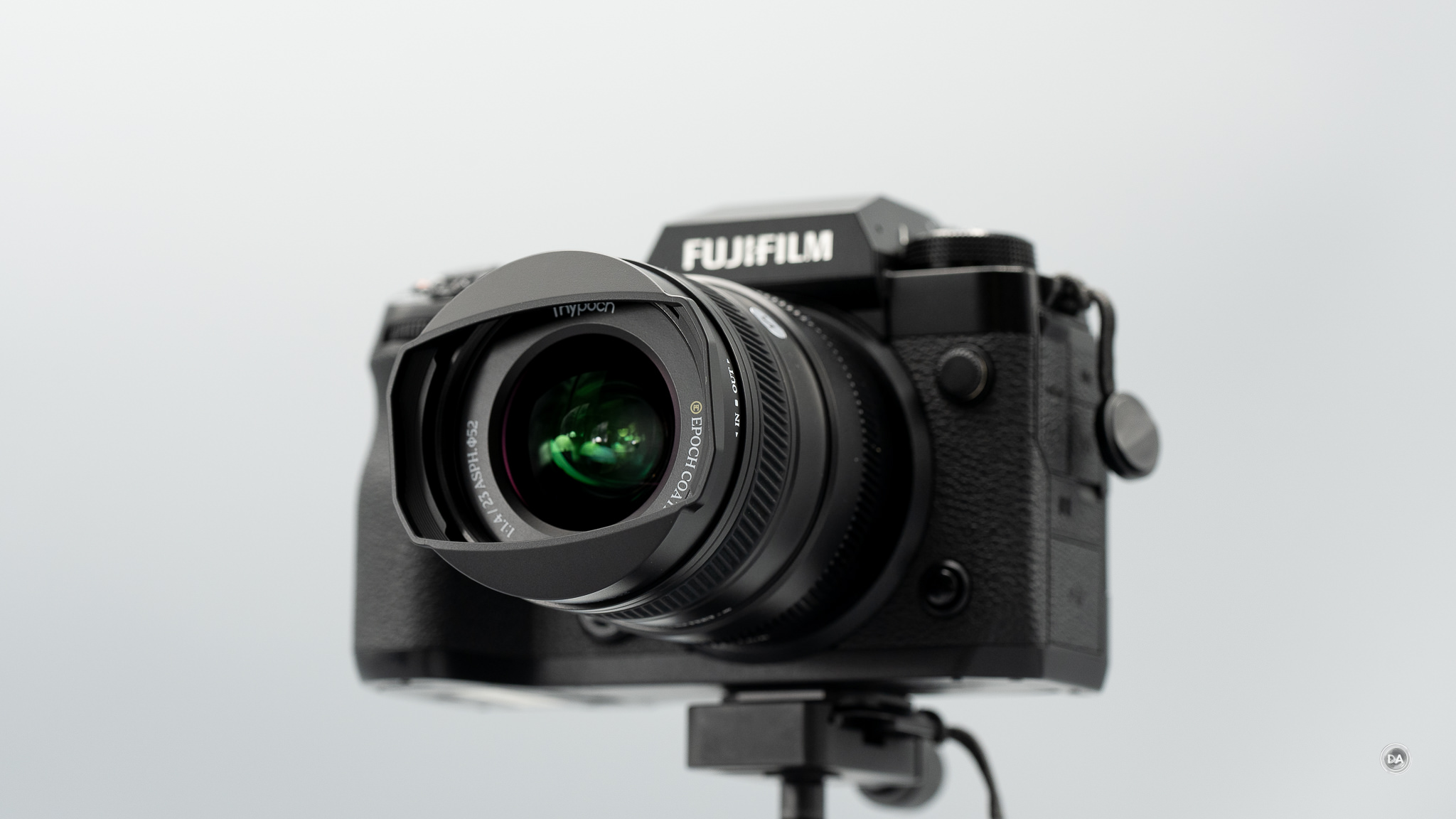
That leads to some filtering complications. A very slim filter will probably fit and still allow the hood to be used, but my only 52mm filter is fairly thick and wouldn’t quite fit.
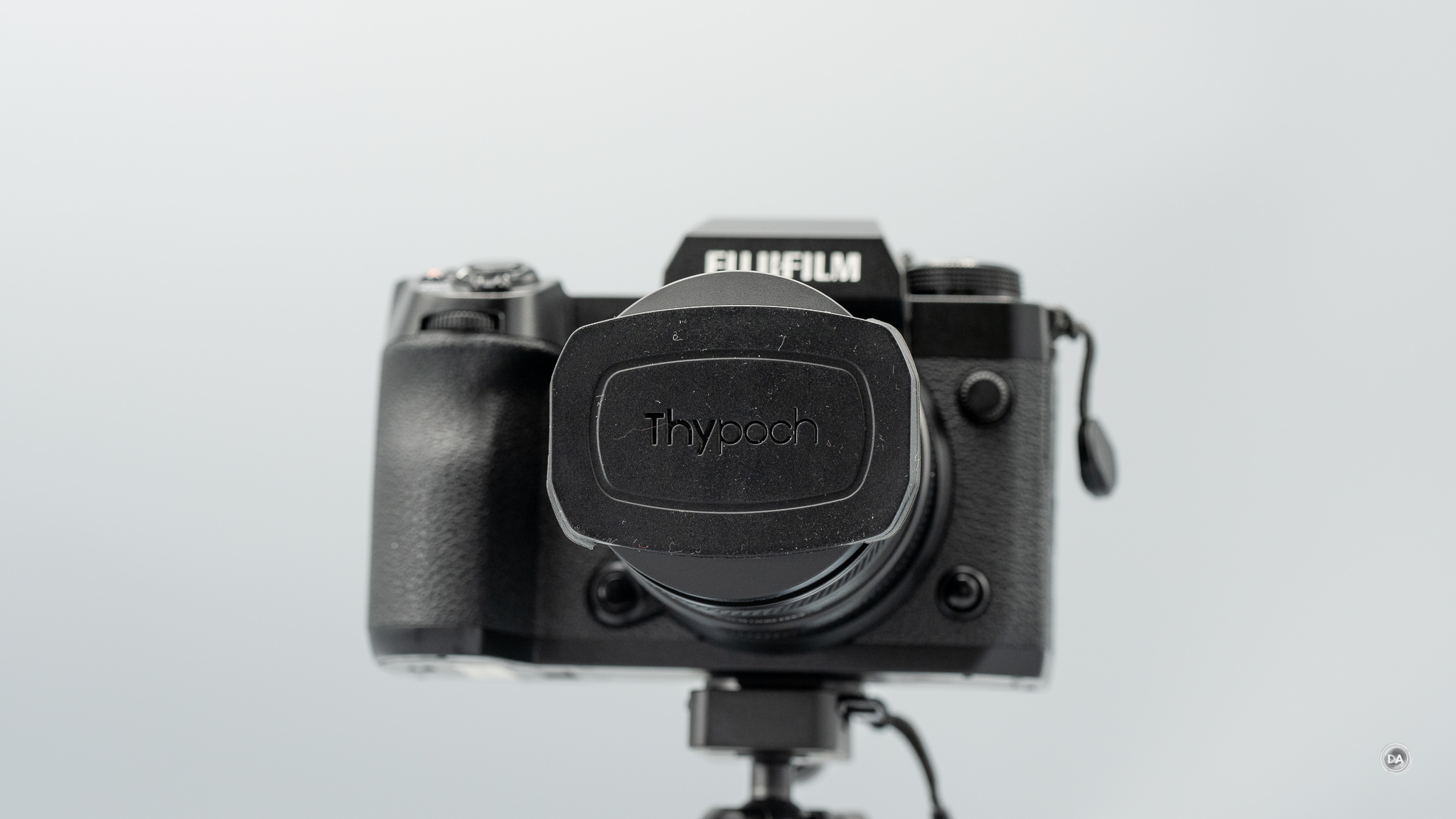
The second challenge is that the front lens cap is a rubber piece that stretches over the opening. It is a little odd and (as you can see from my photo) is bit of a lint collector.
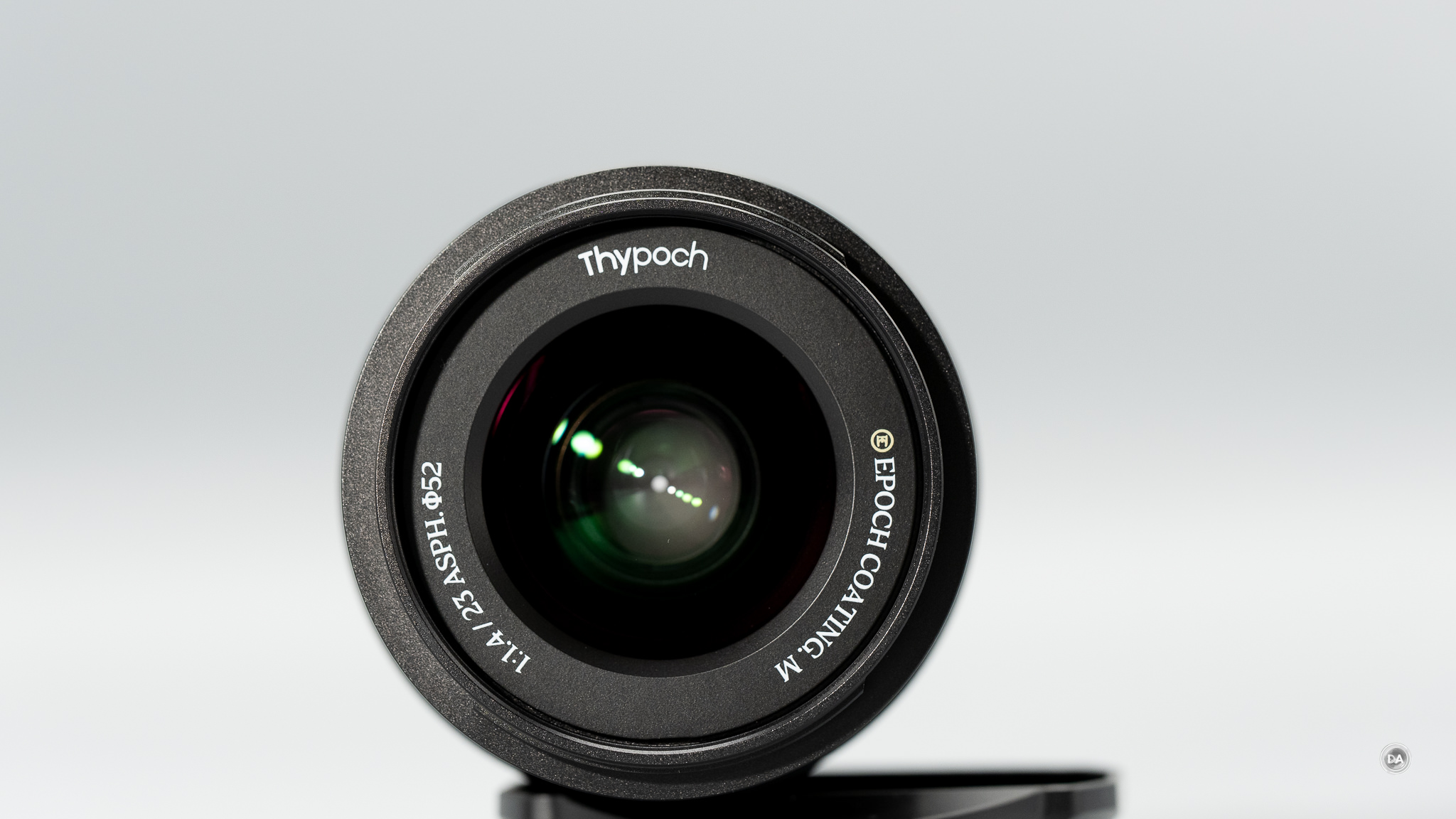
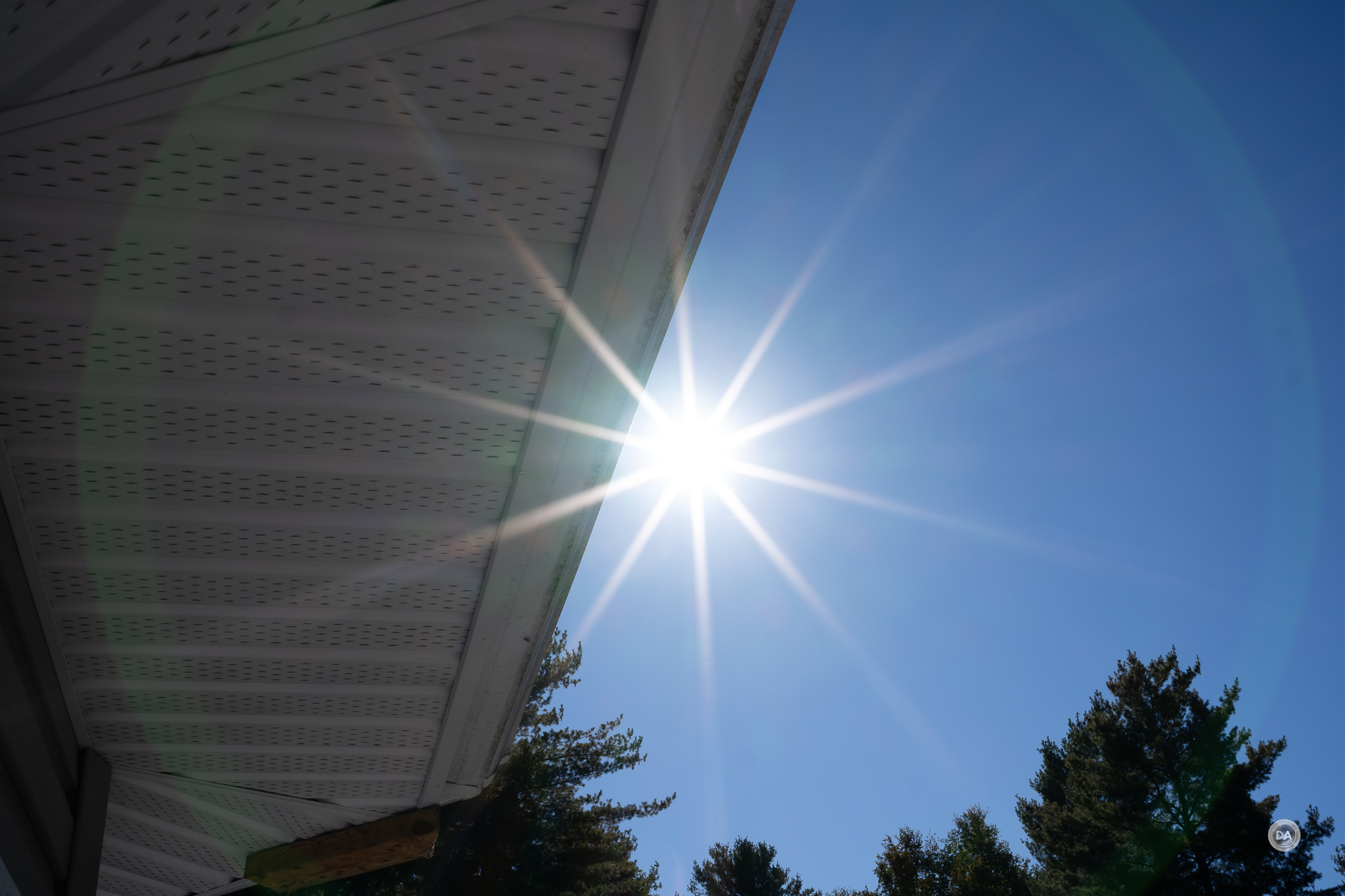
The aperture iris made up of ten blades
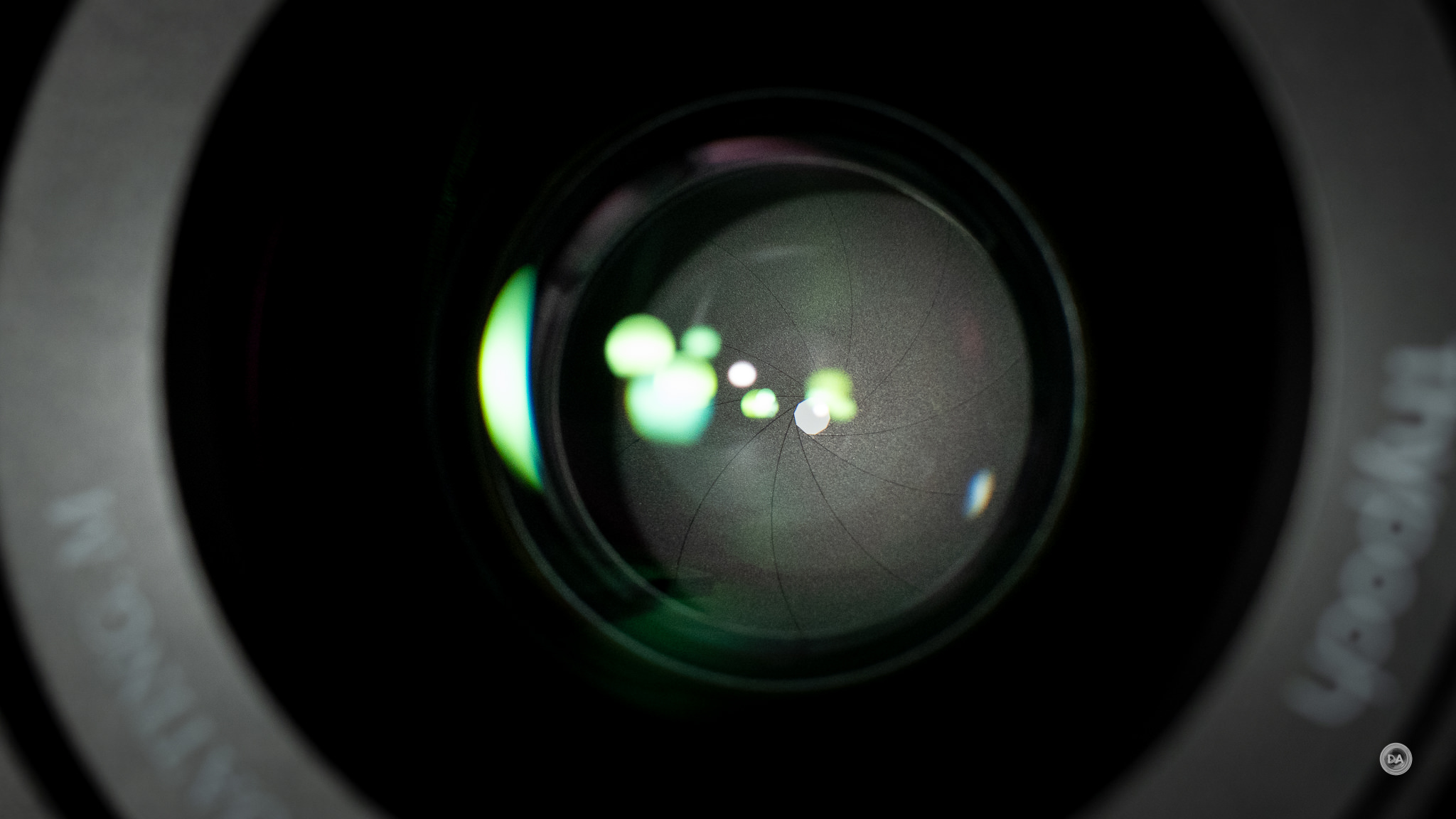
Aperture irises with an even number of blades (as here) produce sunstars with an equal number of points (ten, in this case).
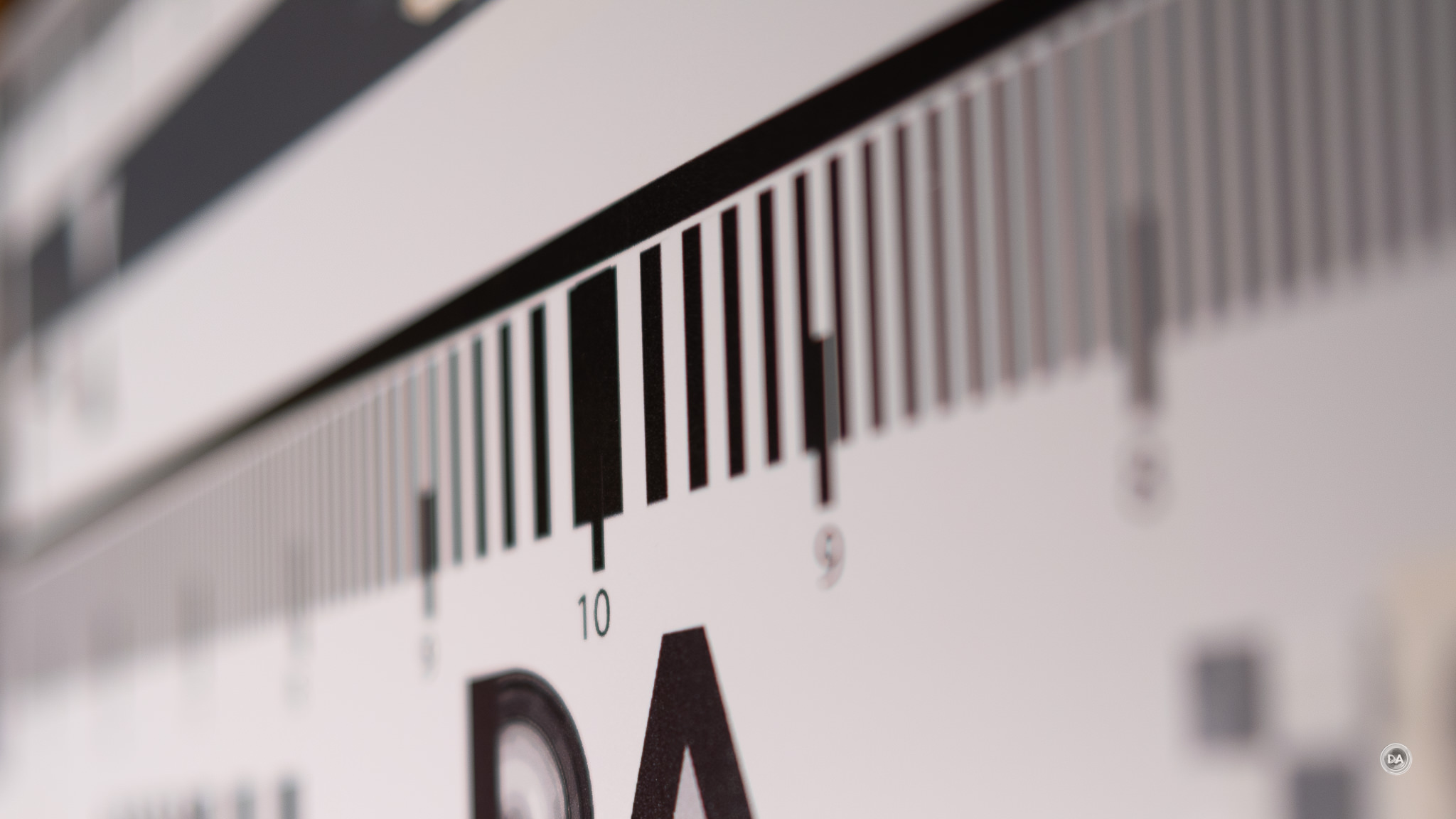
The minimum focus distance is 25cm, which matches what the Sigma delivers but can’t quite compete with the closer 19cm MFD of the Fujinon lens. The Sigma has a magnification level of 0.14x, which seems slightly higher than what the Thypoch can achieve. I estimate it to be more like 0.13x. Here’s the maximum I can achieve on my test chart.
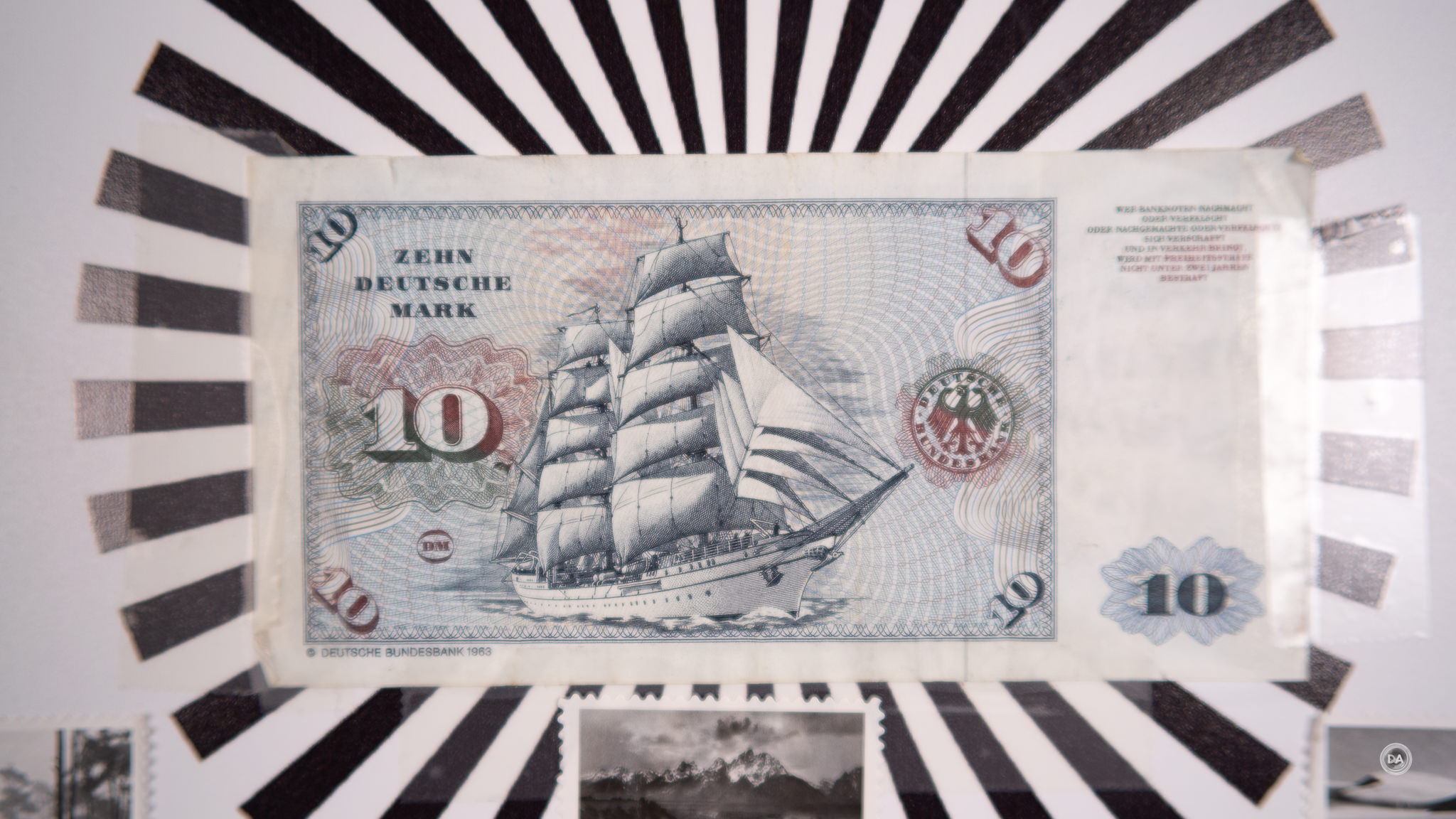
Up close performance is softer and lower contrast than the competing lenses, and you can see that the plane of focus isn’t particularly flat. I found the same with three dimensional subjects. Up close delivers what has often been euphemistically called “dreamy” rendering.
While I don’t love all the design elements here, this is a very nicely made lens that handles well and certainly undercuts the primary competition in price.
Autofocus Performance
The Sculptor 23mm utilizes an STM focus motor to drive focus. As always on Fuji it is difficult to separate the lens’ behavior from the more clunky approach to autofocus that Fuji bodies exhibit. Part of the problem is that Fuji’s autofocus involves stopping the lens down to the preset aperture for autofocus, but what I often find is that the aperture actually opens and closes even when focusing at the wide open aperture, providing a bit of a “double-clutch” action that makes the focus feel less smooth. The actual autofocus speed feels pretty good, with focus moving quickly when a new subject is chosen. I also found autofocus accuracy to be good.
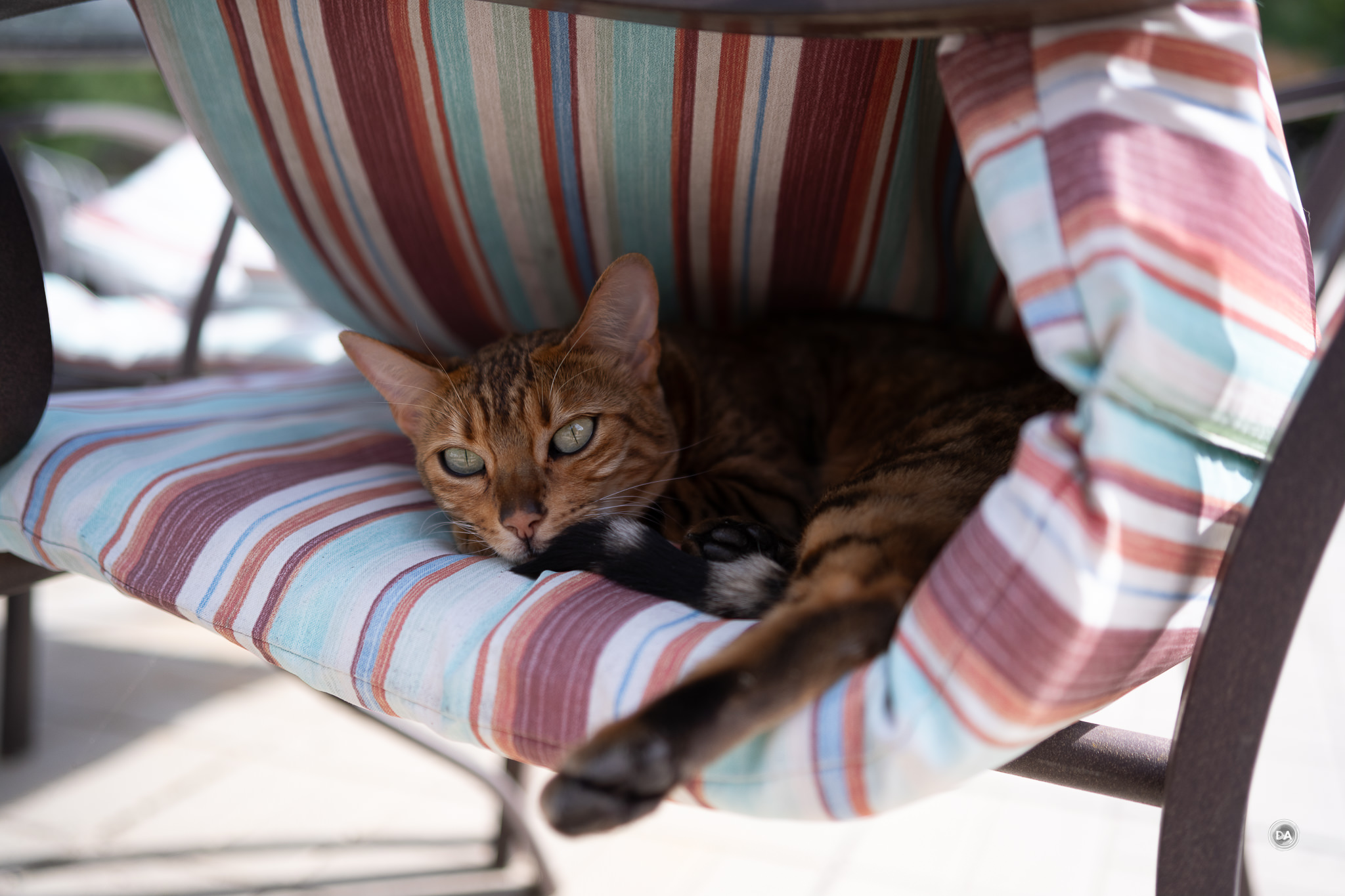
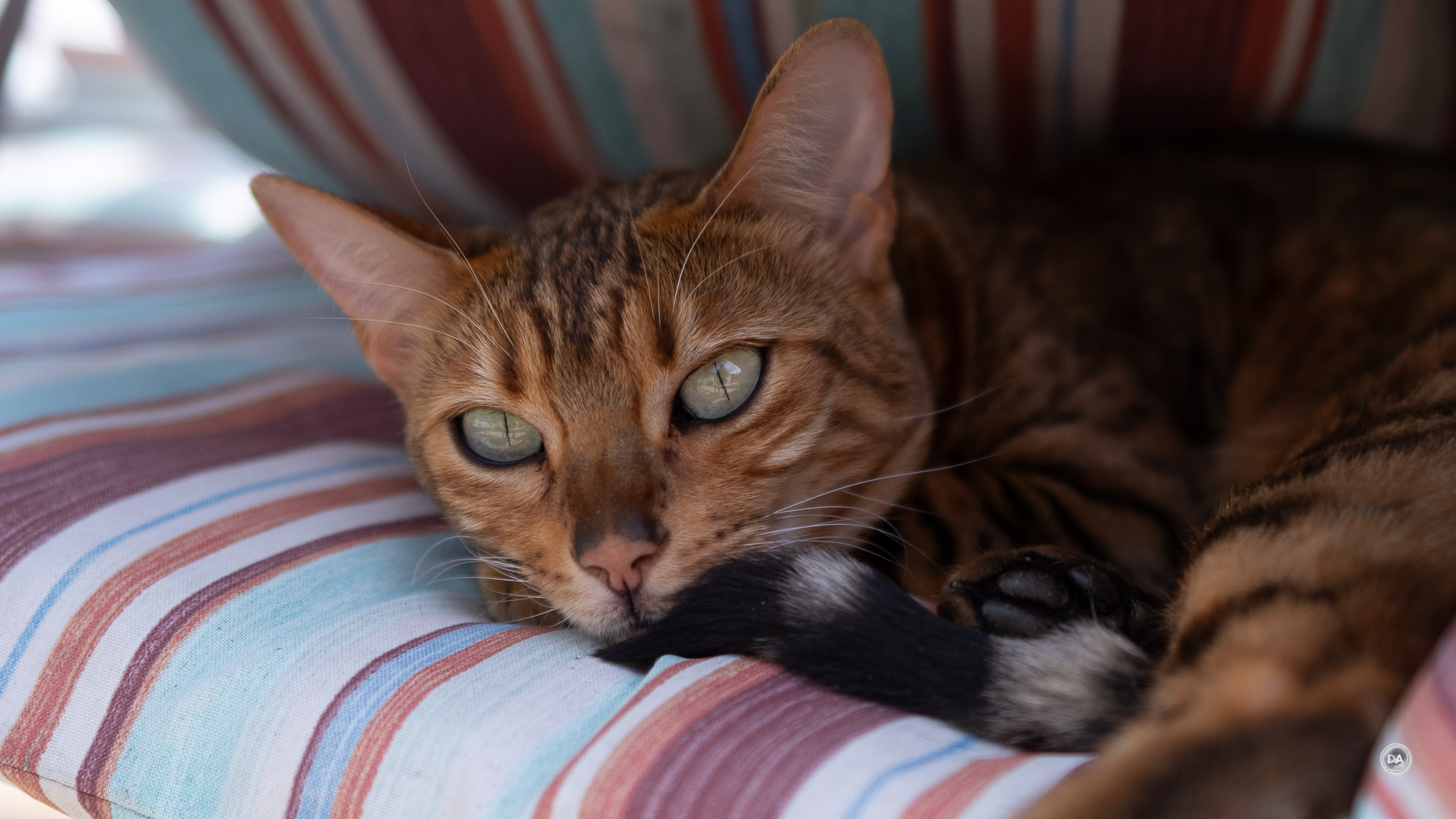
In the shot above, I was shooting at F1.4 and Nala was laying in a shadowed area surrounded by bright sunlight. It was bright enough that I had a hard time focusing on her in the shadows with my eyes, but the Eye AF grabbed focus accurately even at F1.4.
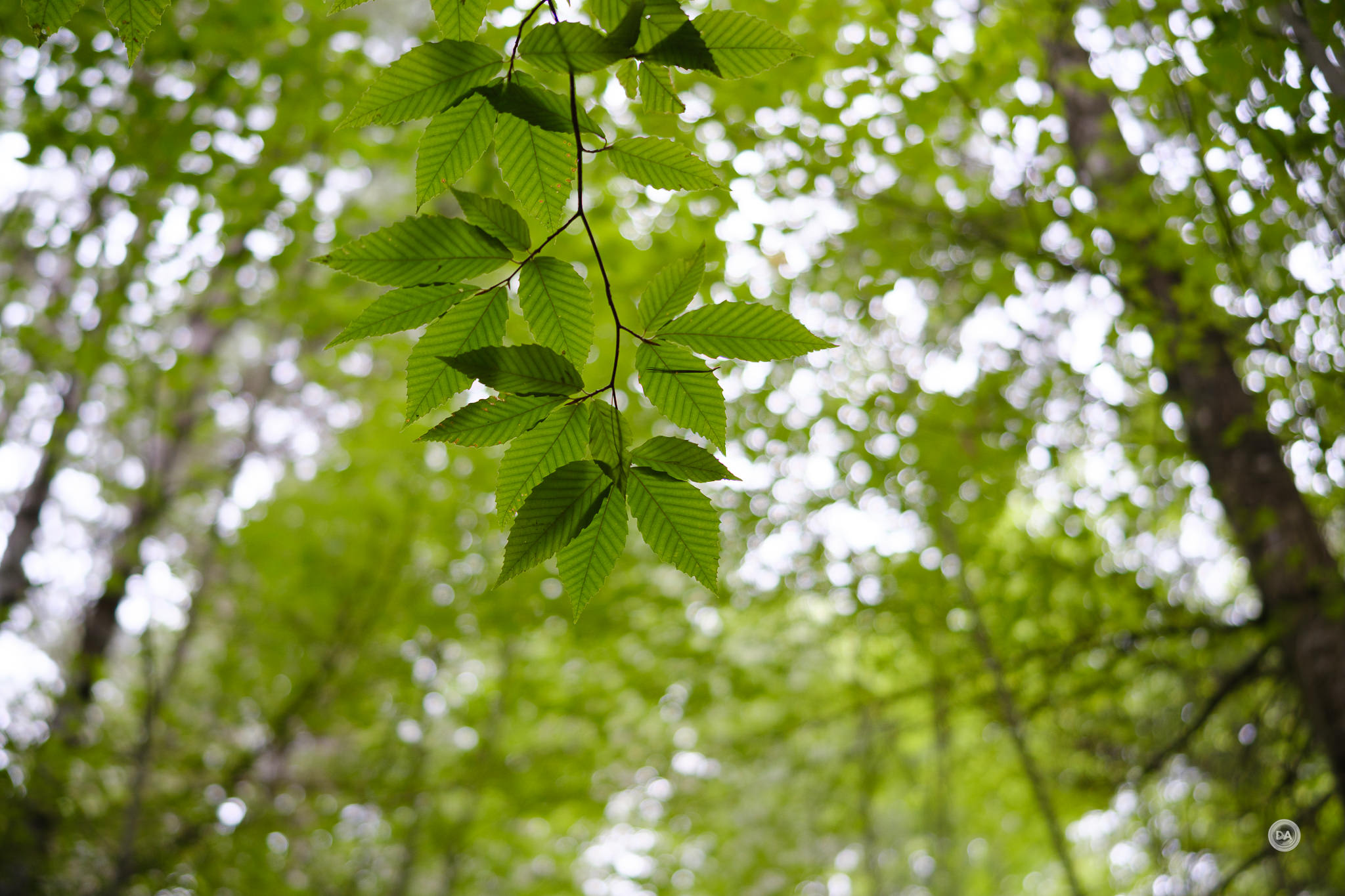
Likewise here, I had a shadowed foreground against a bright canopy of leaves higher up. I had to overexpose by a full stop to get this shot. Autofocus nailed it, though.
If the target is moving, however, autofocus had a much more difficult time locking on. That’s not unusual on Fuji, though certainly I think the Fujinon 23mm F1.4 would be a bit better in that situation.
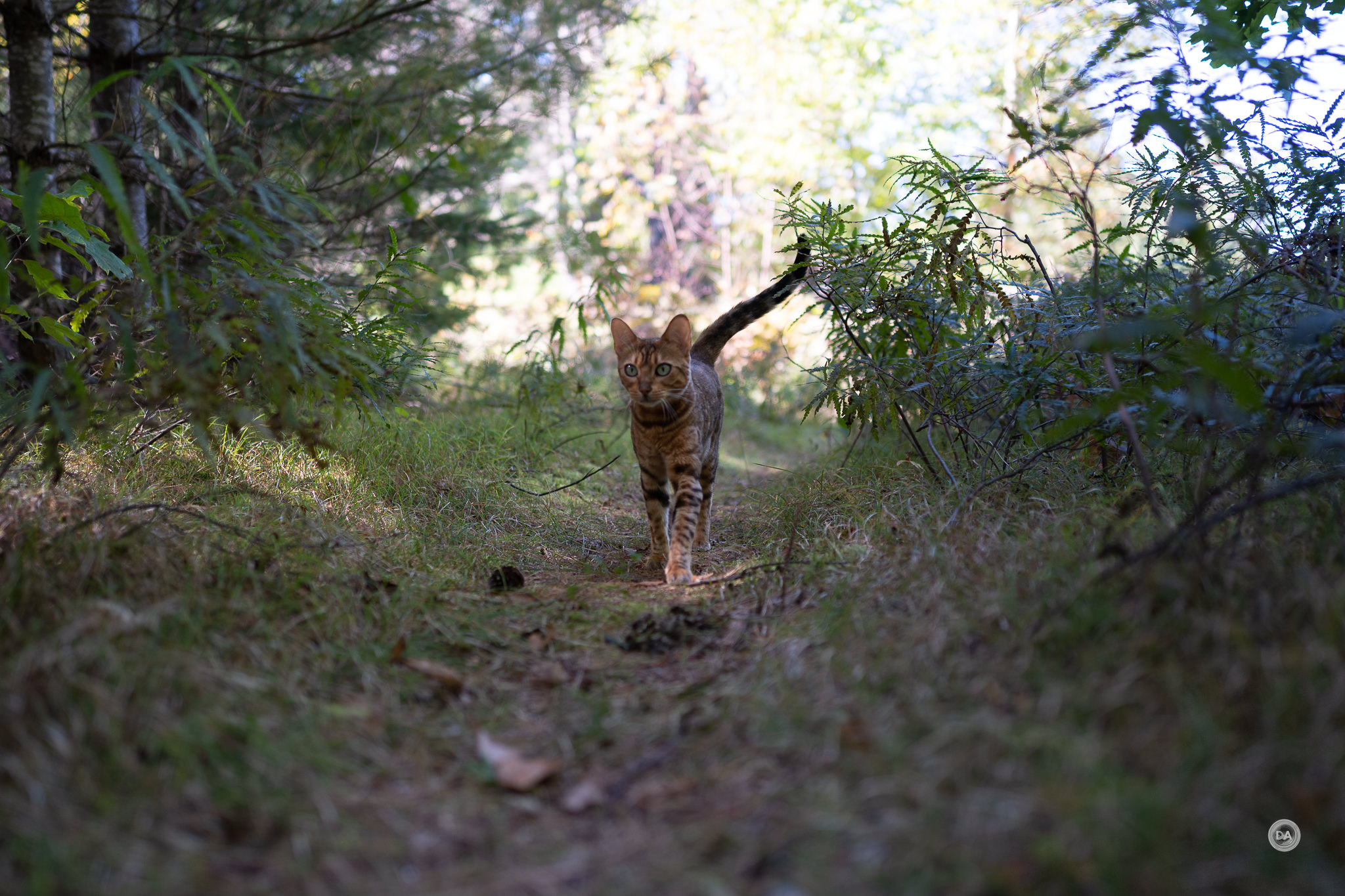
Photos taken in this kind of setting were almost always backfocused. I basically couldn’t get a well focused result until she stopped moving.
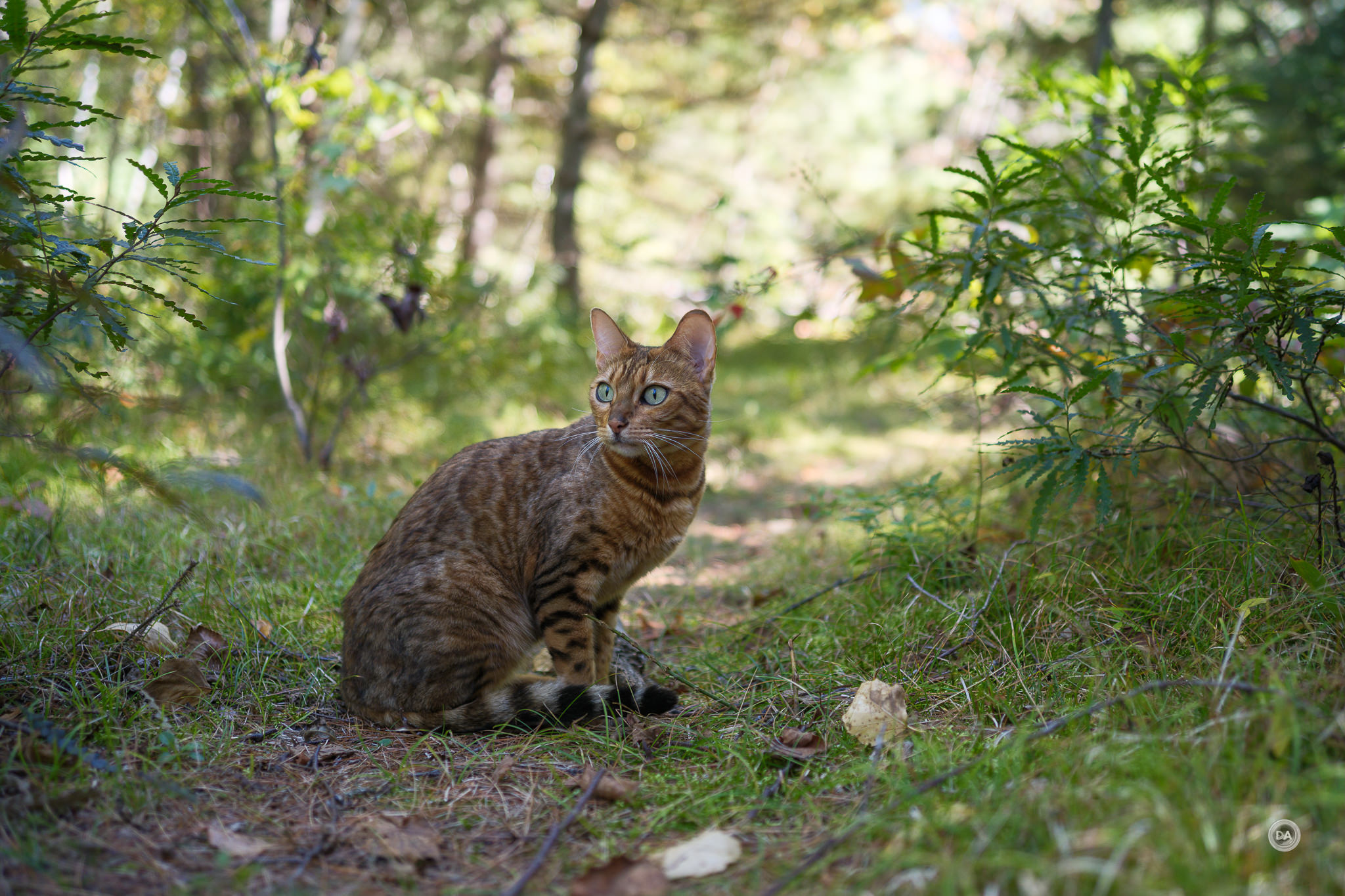
I asked her to stop and sit about a half-dozen times. She did not.
She sat down when she wanted to.
Cats.
Video Performance
Certainly some of the similar autofocus issues plague video capture. Video didn’t really catch up in a brief clip where Nala was walking towards me.
Autofocus pulls happen in two stages (all too common on Fuji), with the initial pull covering most of the distance happening quickly, then a second stage where focus is fine tuned. It isn’t very cinematic. Focus breathing is apparent, but it probably seems worse than it is because everything feels a little abrupt.


In my hand test, sometimes focus moved from my hand to my eye, but in other cases (image two) focus didn’t move even when the previous subject (my hand) was out of frame.
During other videos, major focus changes would include a few visible steps, but smaller adjustments where movements were subtle were fine. Here is a freeze frame from the middle of Nala moving around on a stump.
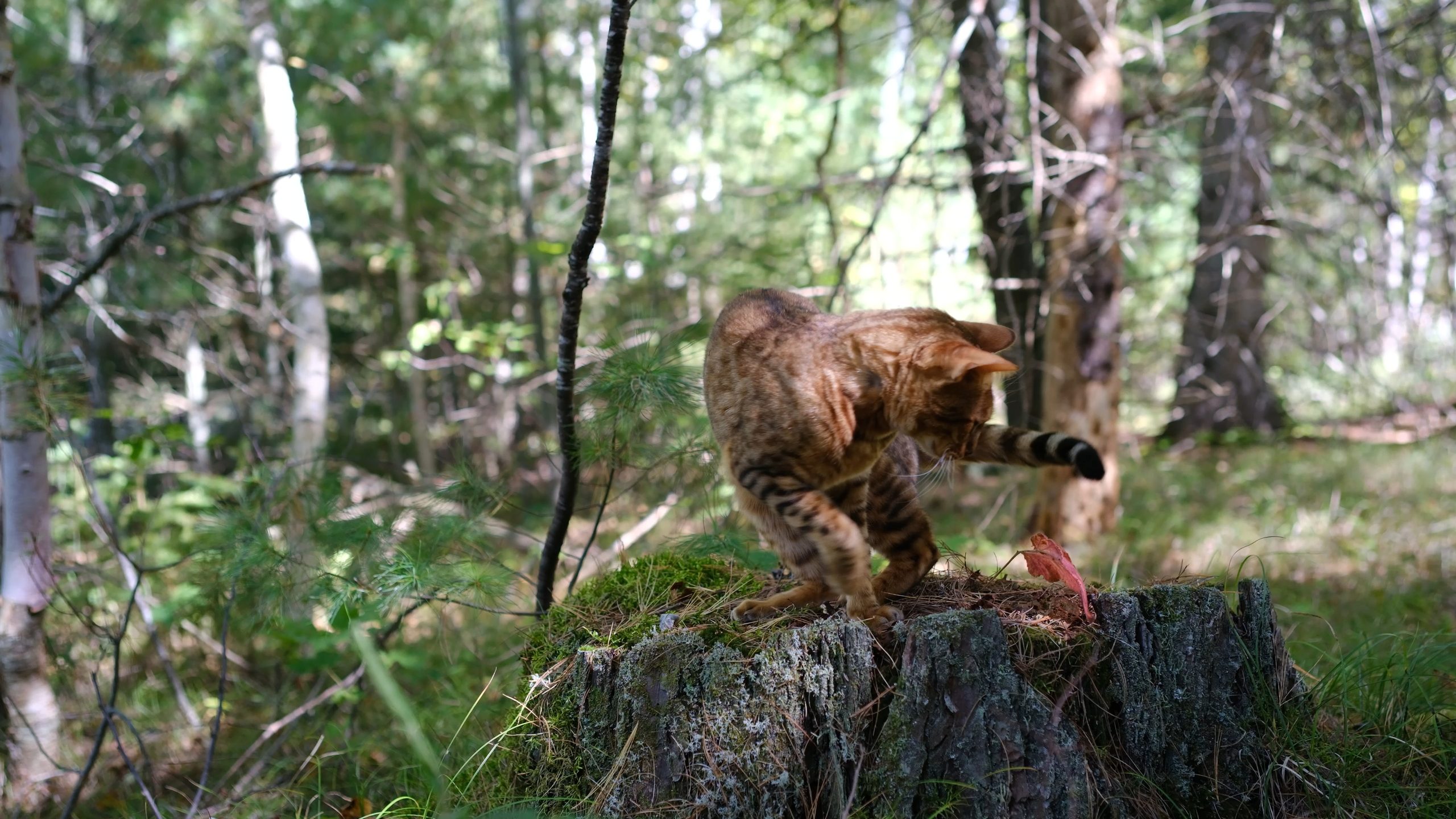
Autofocus is about average for a third party lens on Fujifilm X-mount. It is hard for me to recommend Fuji as a video platform for this reason.
Optical Performance
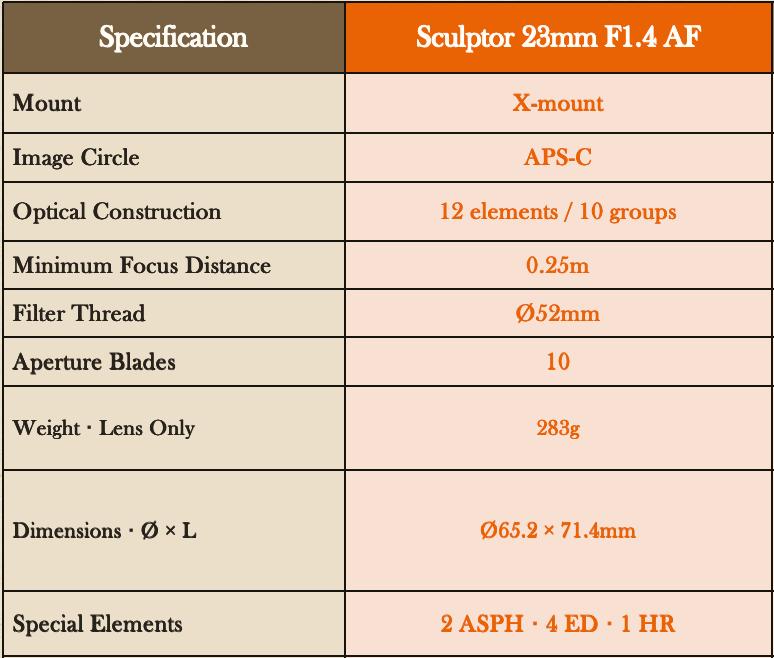
The Sculptor 23mm F1.4 AF has an optical design of 12 elements in ten groups. This includes 2 Aspherical lenses, 4 ED (extra-low dispersion) elements, and 1 HR (high refractive) element.
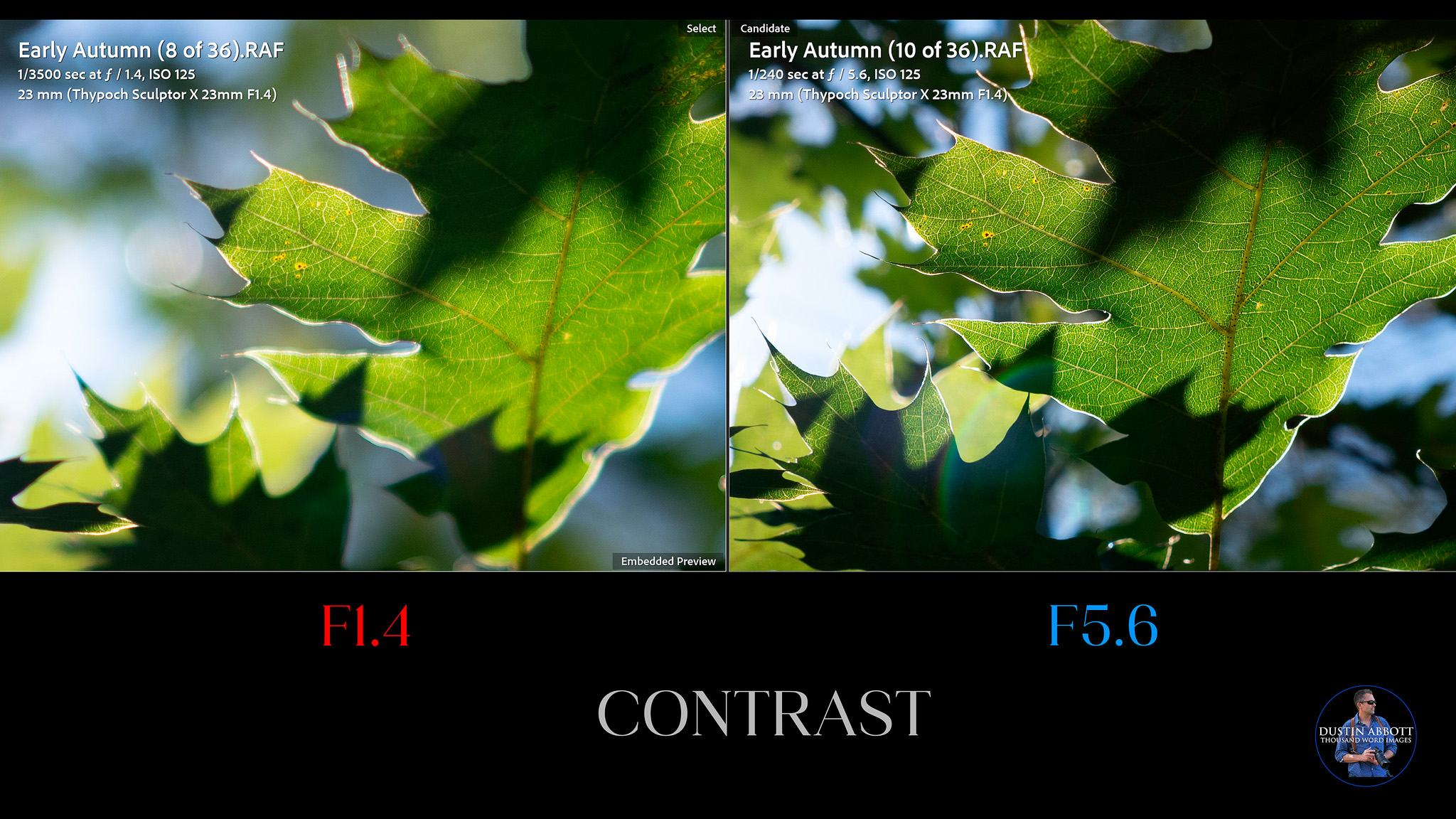
Testing it on the extremely demanding Fujifilm 40MP X-Trans sensor definitely puts it to the test. Detail is fairly good, but contrast at wide apertures is only okay.
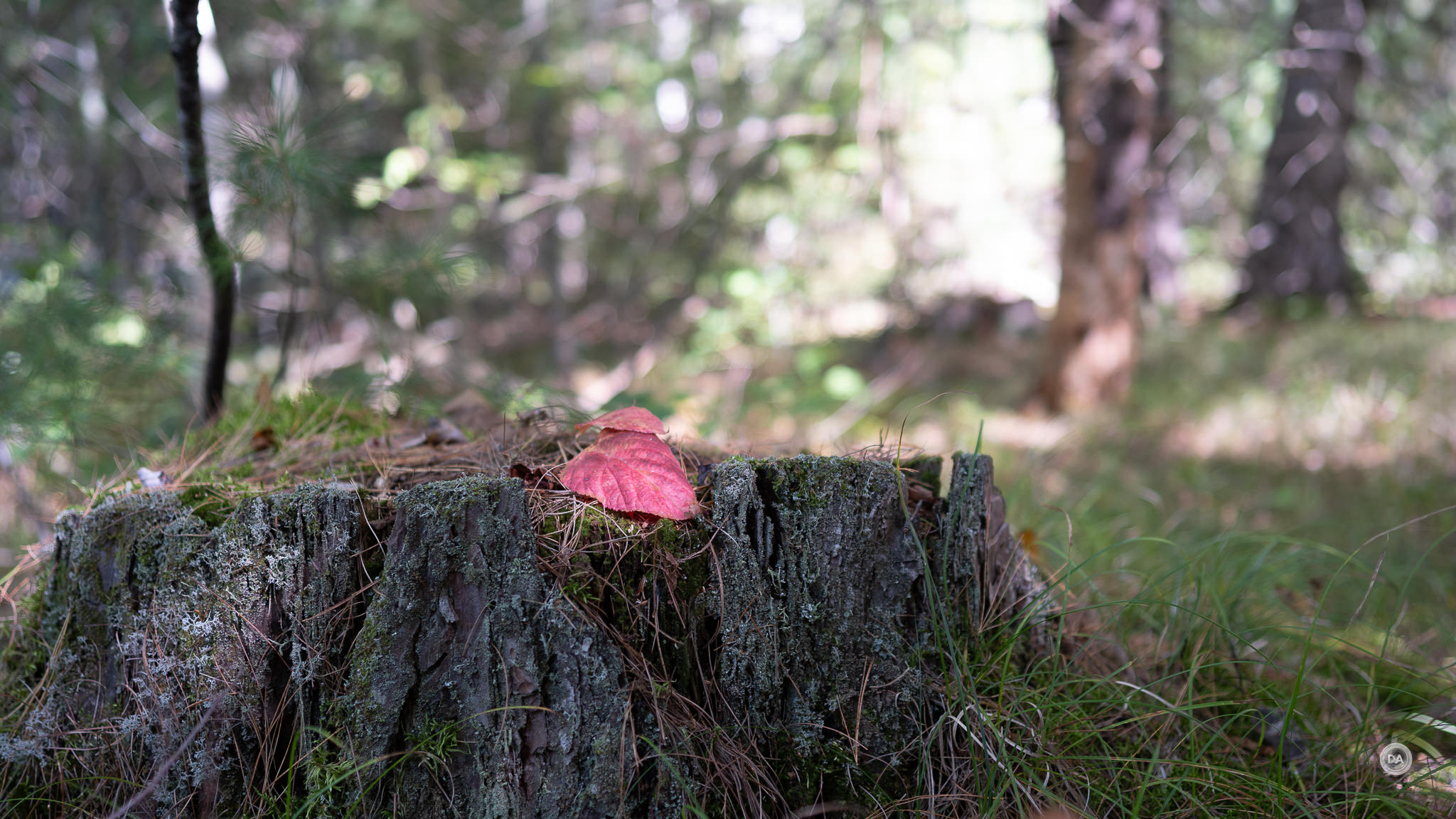
You can see how much contrast improves when the lens is stopped down from this comparison here.
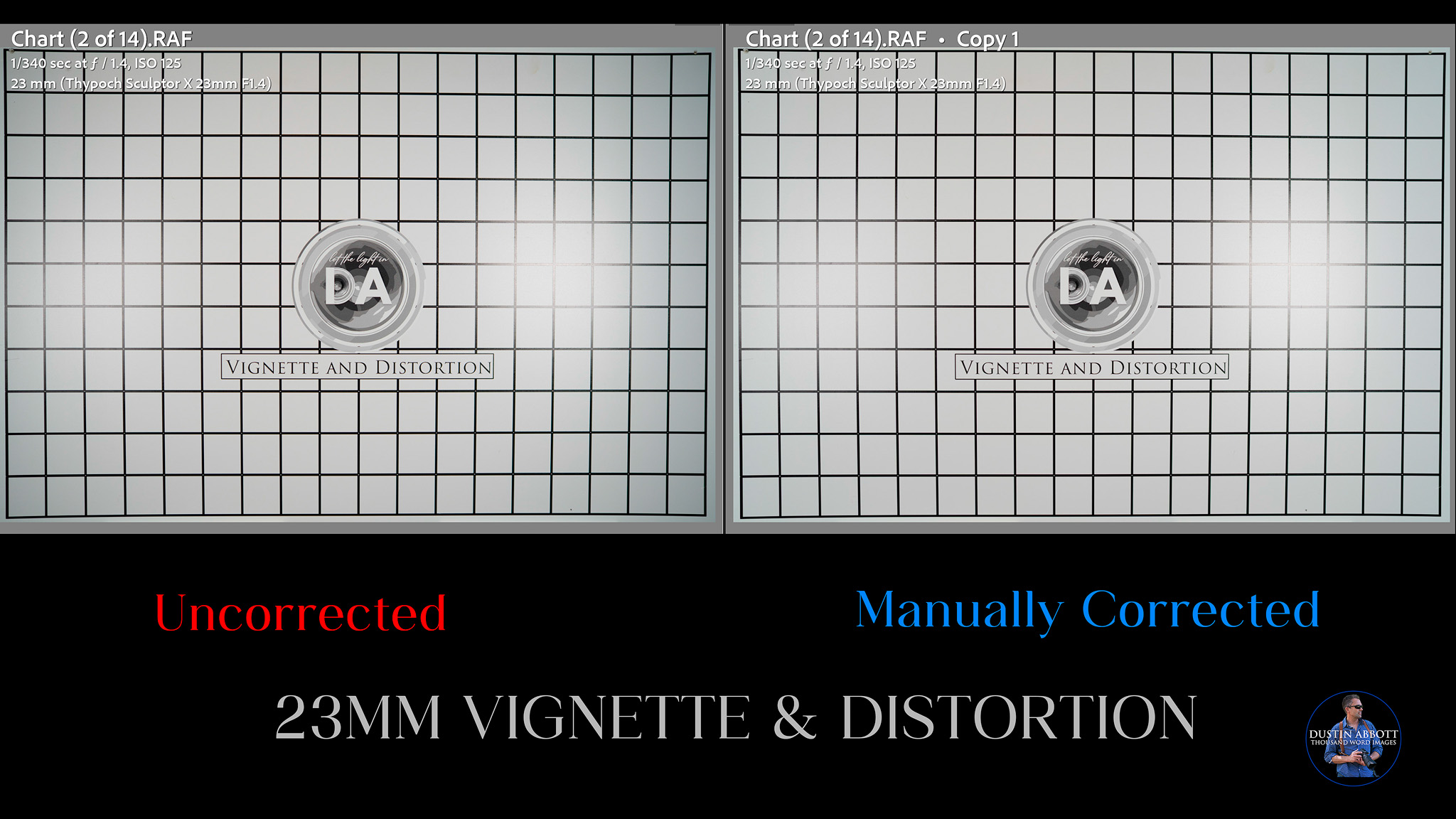
There is minimal distortion, though what is there has some wave and doesn’t correct in a linear fashion. I dialed in a -1 for the correction below. Vignette isn’t bad, requiring just a +43 to correct.
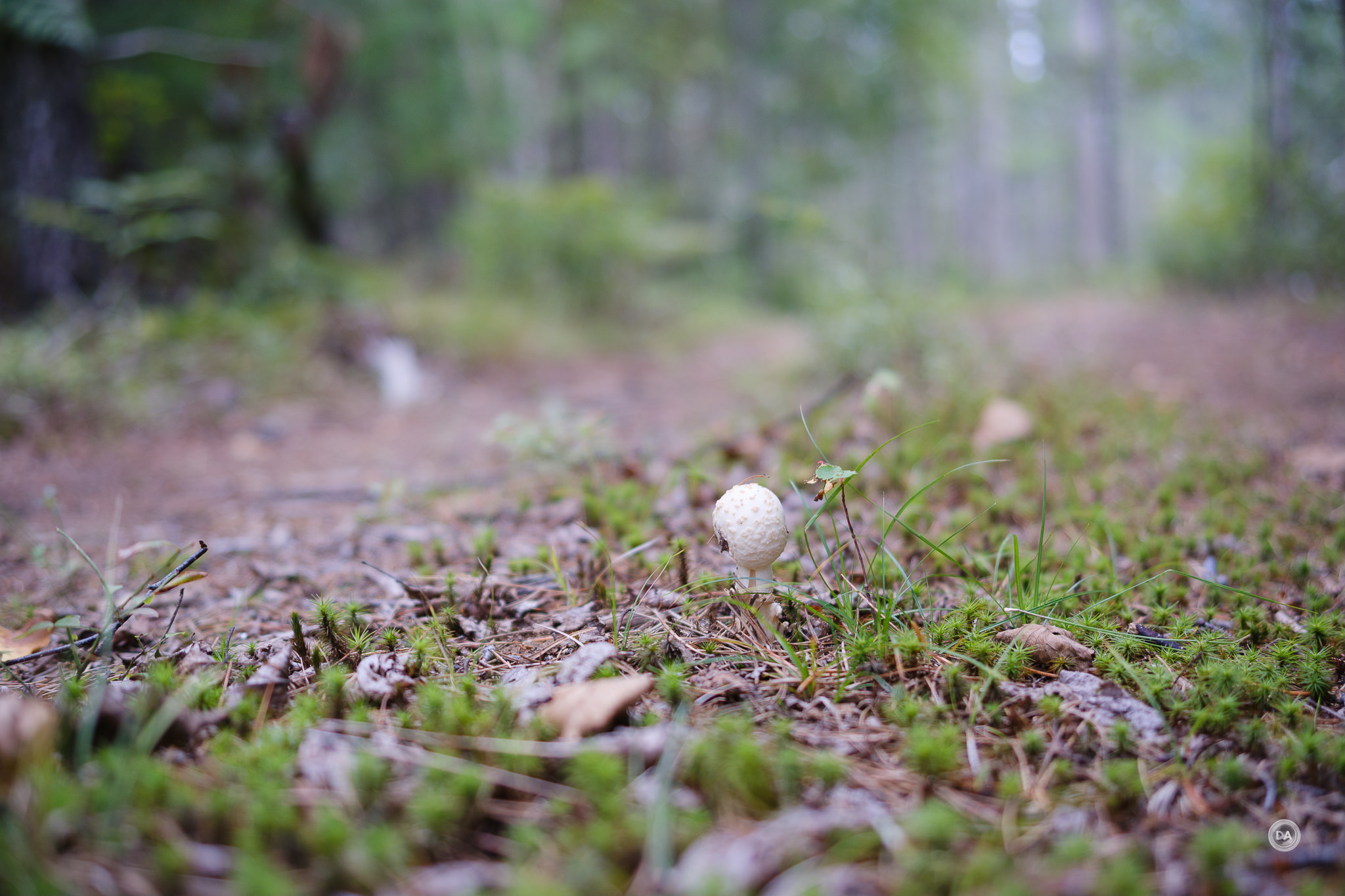
In most situations you won’t notice either the vignette or the distortion. This shot is at F1.4, for example, and the corners look fairly bright (almost as if they had been corrected.)
Longitudinal Chromatic Aberrations, or LoCA, manifests as fringing before and after the plane of focus. There is some fringing before and after the plane of focus, but it is fairly well controlled.
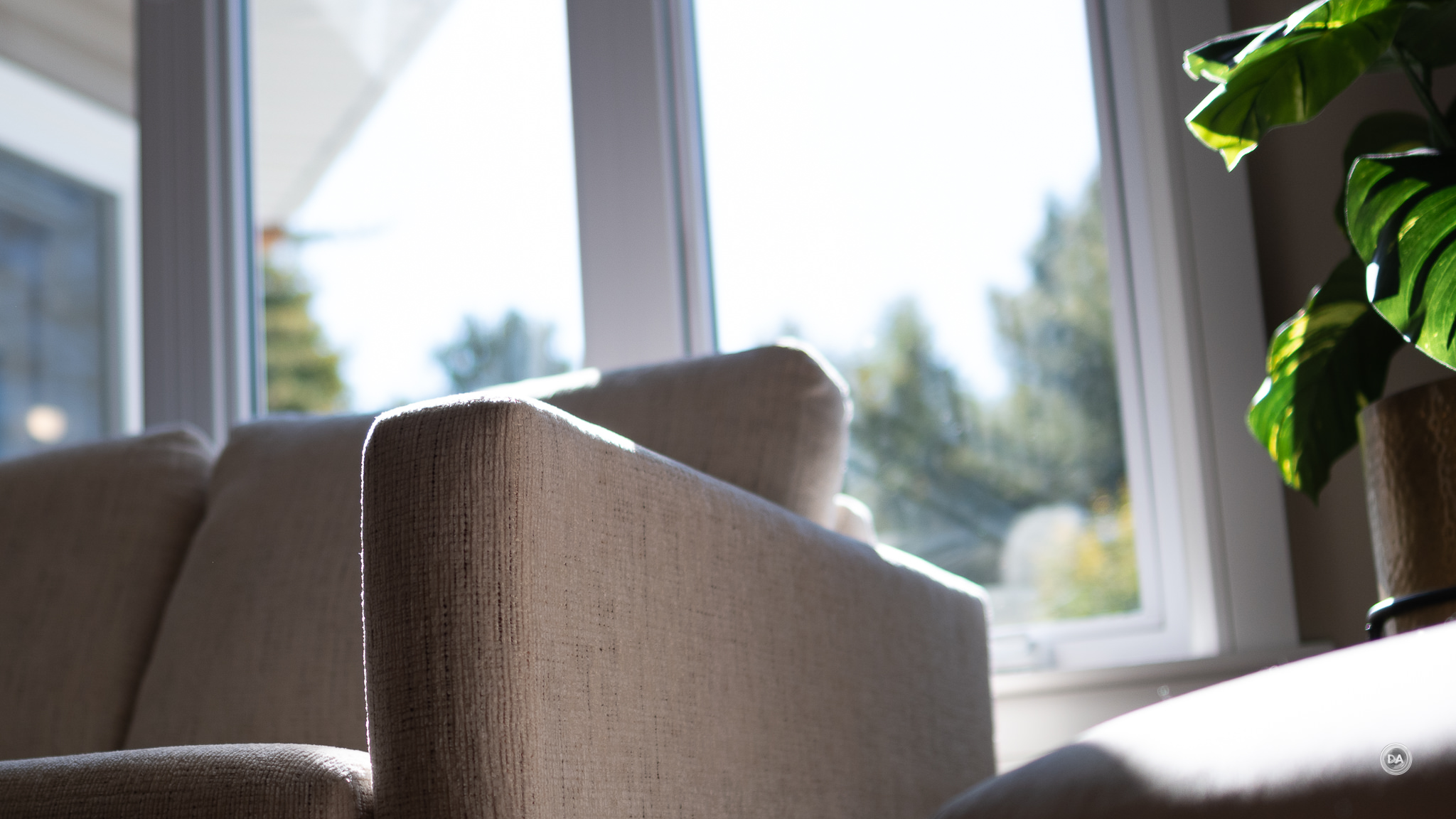
I didn’t see much of a problem with real-world shots. This window shot shows a tiny bit of fringing along the high-contrast area along the back of the couch and a bit of magenta fringing along the edge of the chair in the foreground, but I really had to go looking for it.
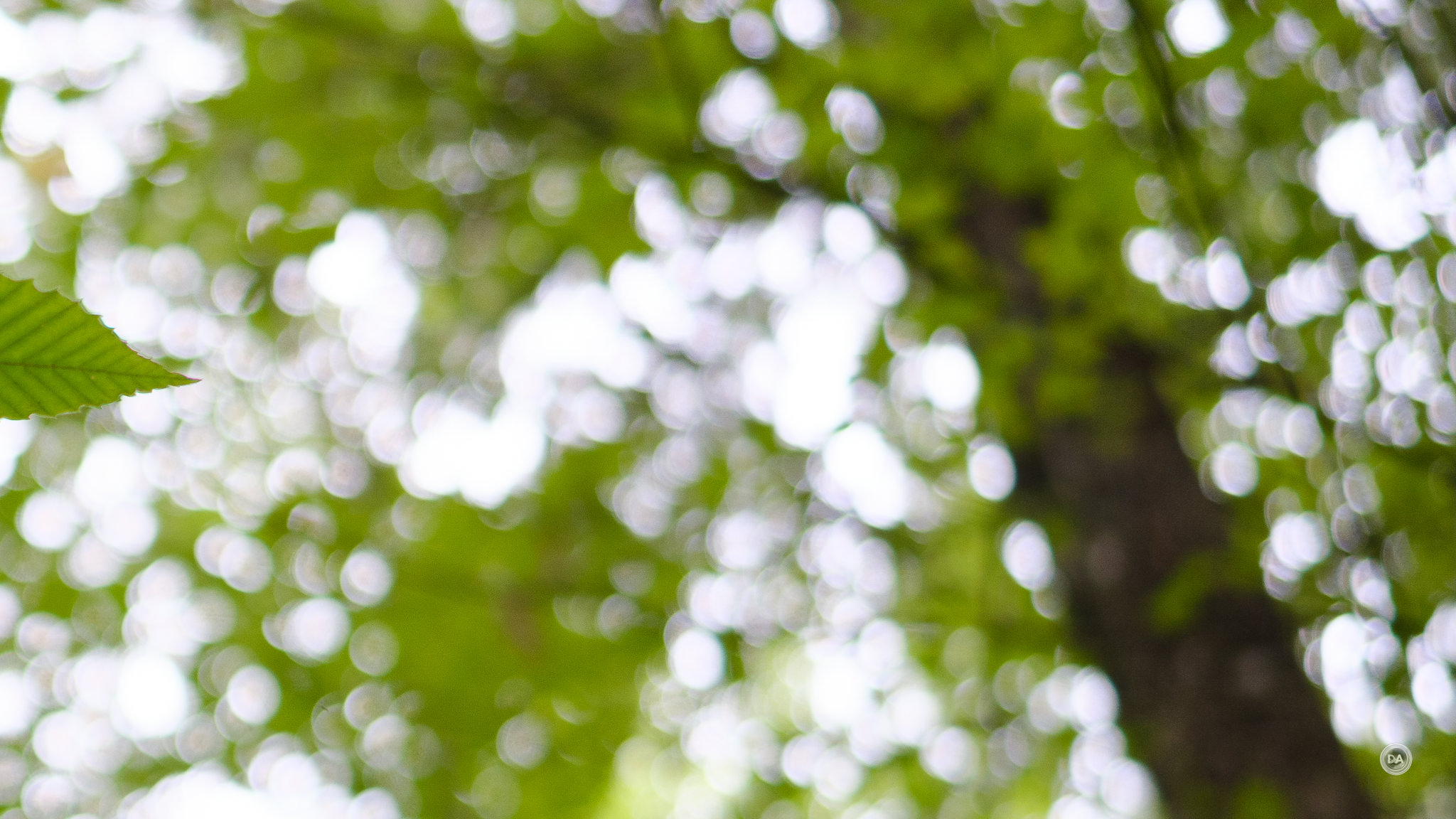
There’s also a little bit of green outlining in the high contrast spots in the foliage, but not so much that I noticed it looking at the image globally (this is a deep crop).
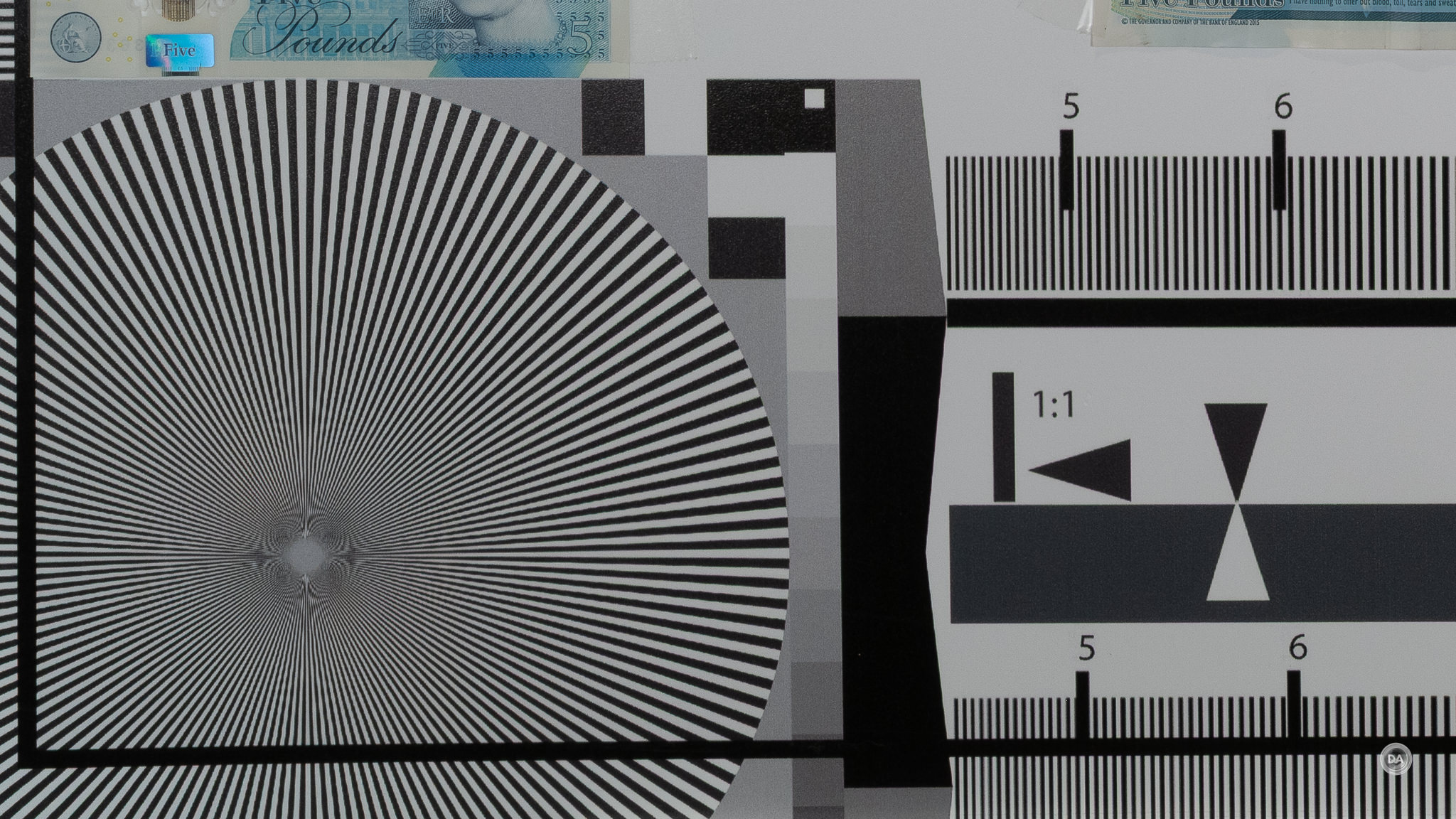
Lateral Chromatic Aberrations (LaCA) show up as fringing around contrast transitions near the edge of the frame. This test looks pretty clean to me.
In general I wouldn’t say that any of these things represent a real problem.
So how about resolution and contrast? These results are shot on the Fujifilm X-H2 (40MP) and the crops are shown at roughly 200% magnification level. Here’s a look at the test chart that the crops are taken from.
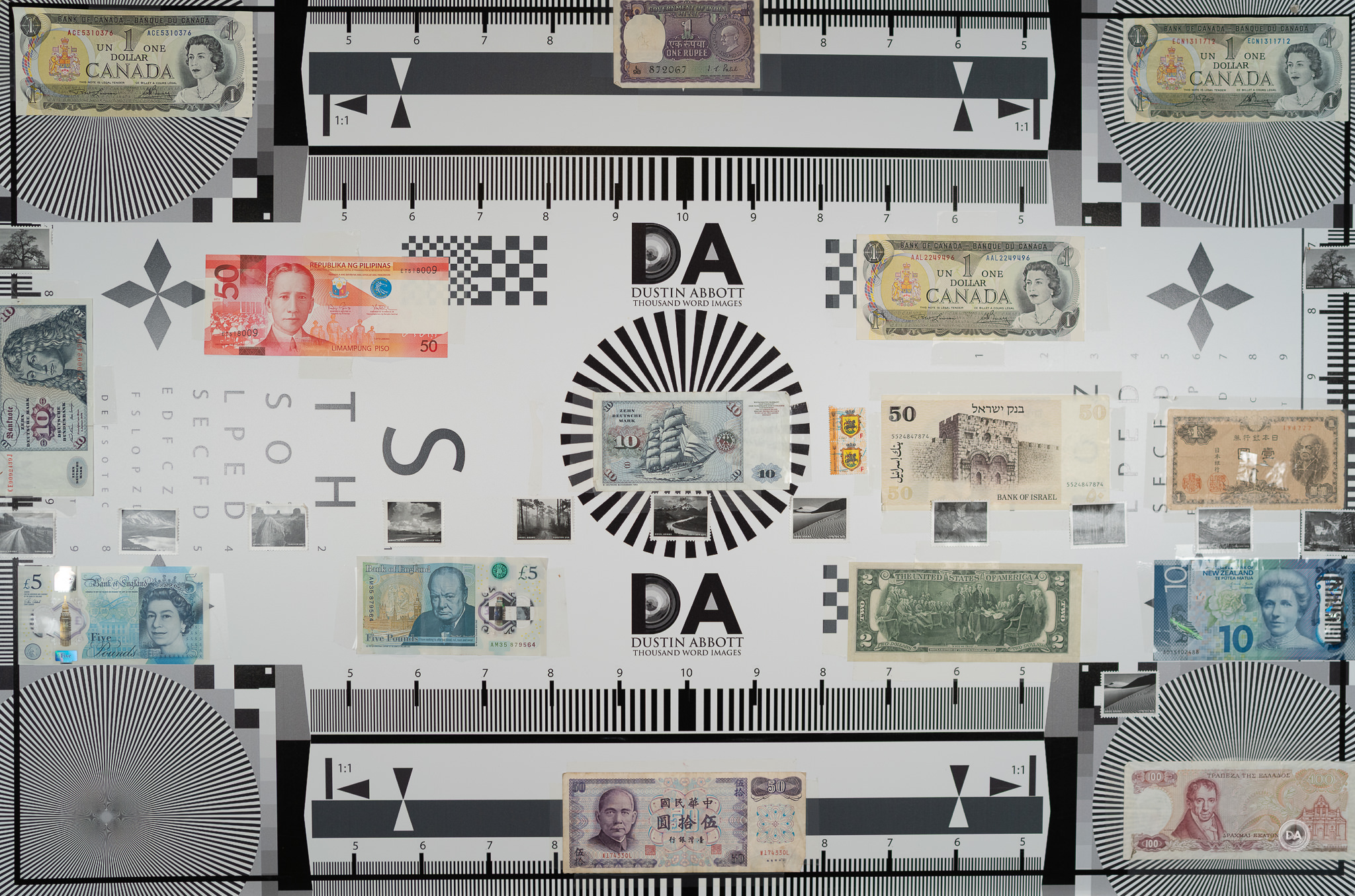
If we zoom in and look at the 200% crops at F1.4 from the center, mid-frame, and lower right, we discover that sharpness and contrast are good in the center, fairly good in the midframe, and softer in the corners.
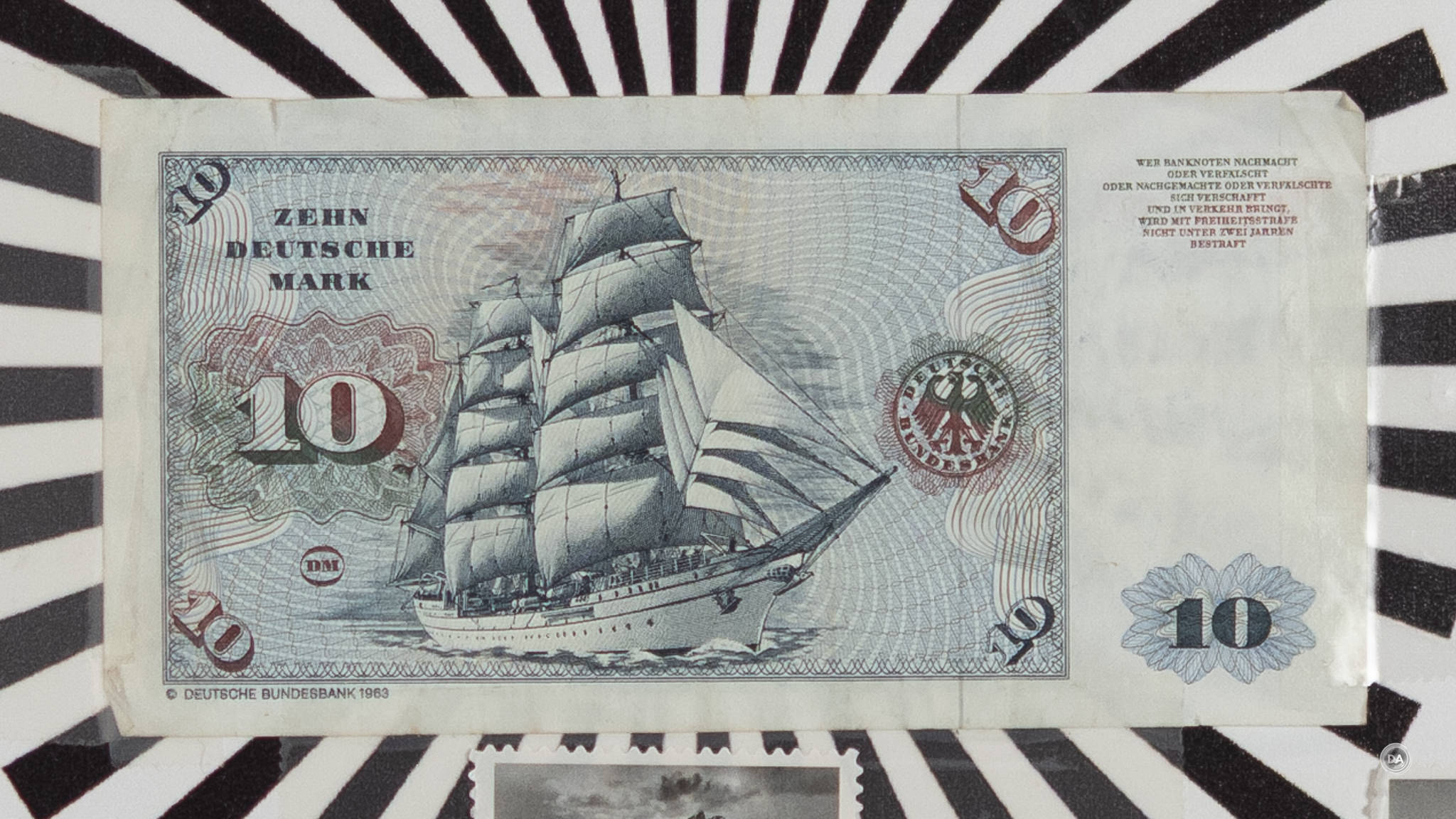


How does that stack up to the competition? Here’s how it compares across the frame to the Sigma 23mm F1.4:
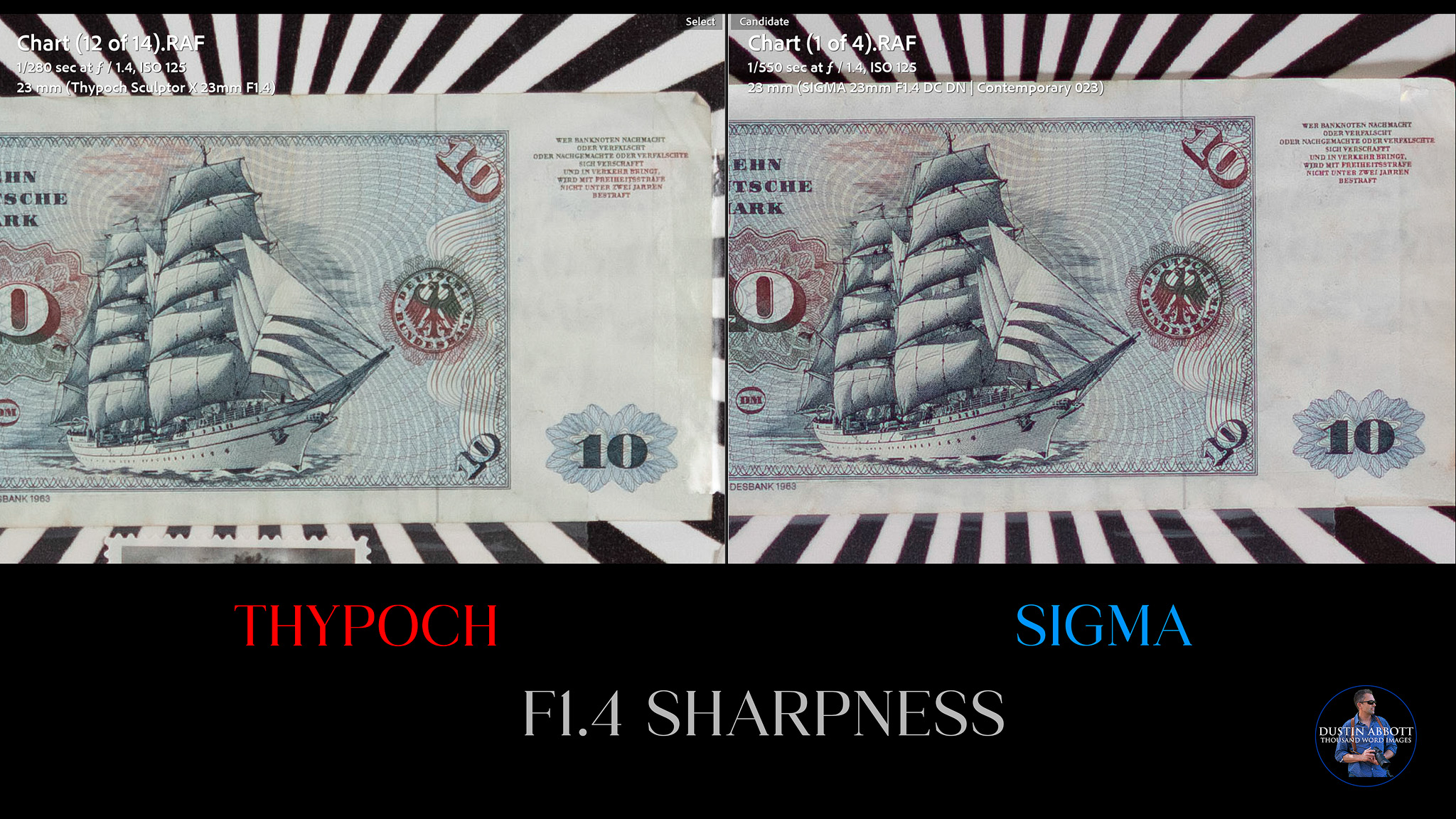
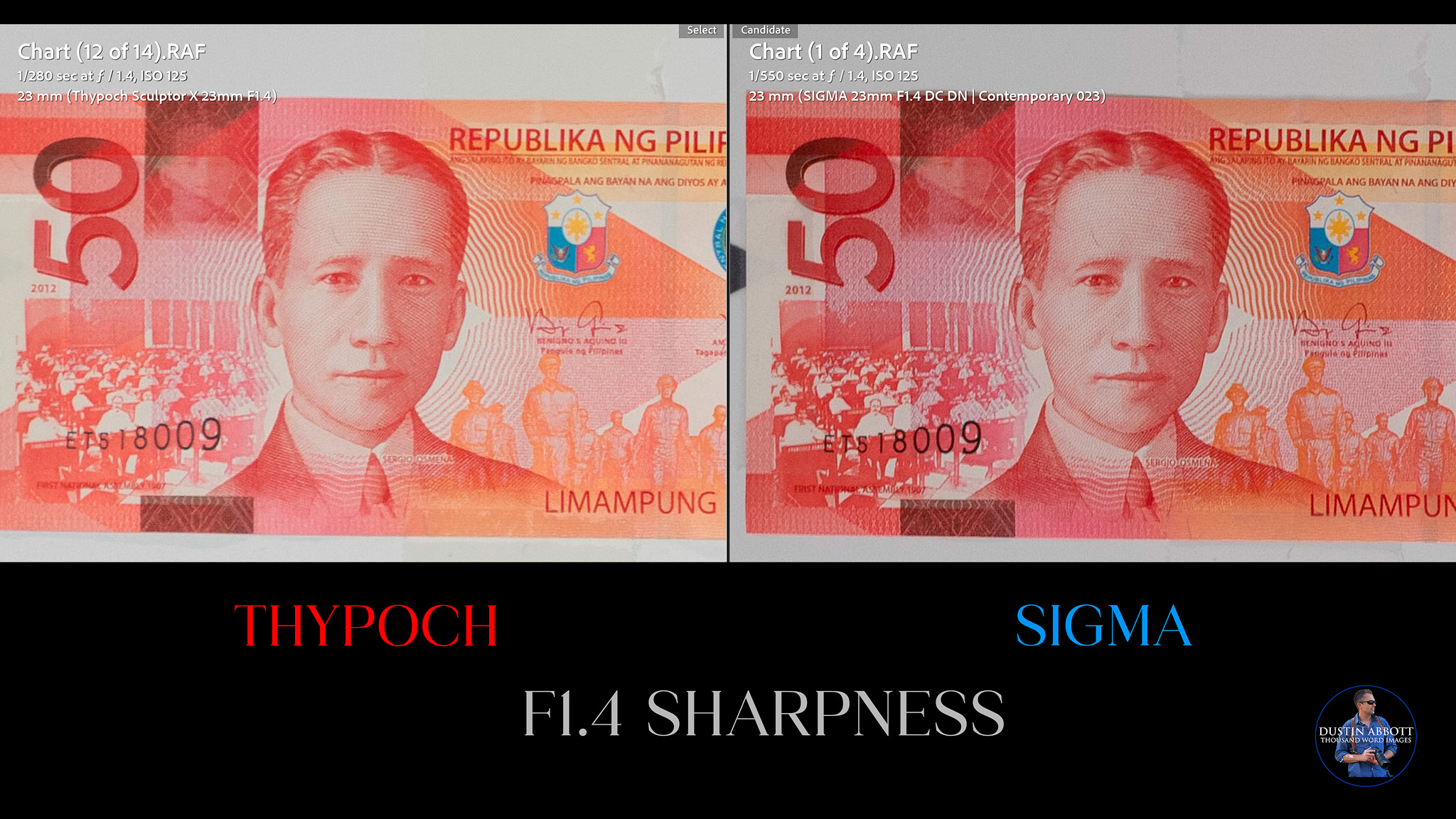
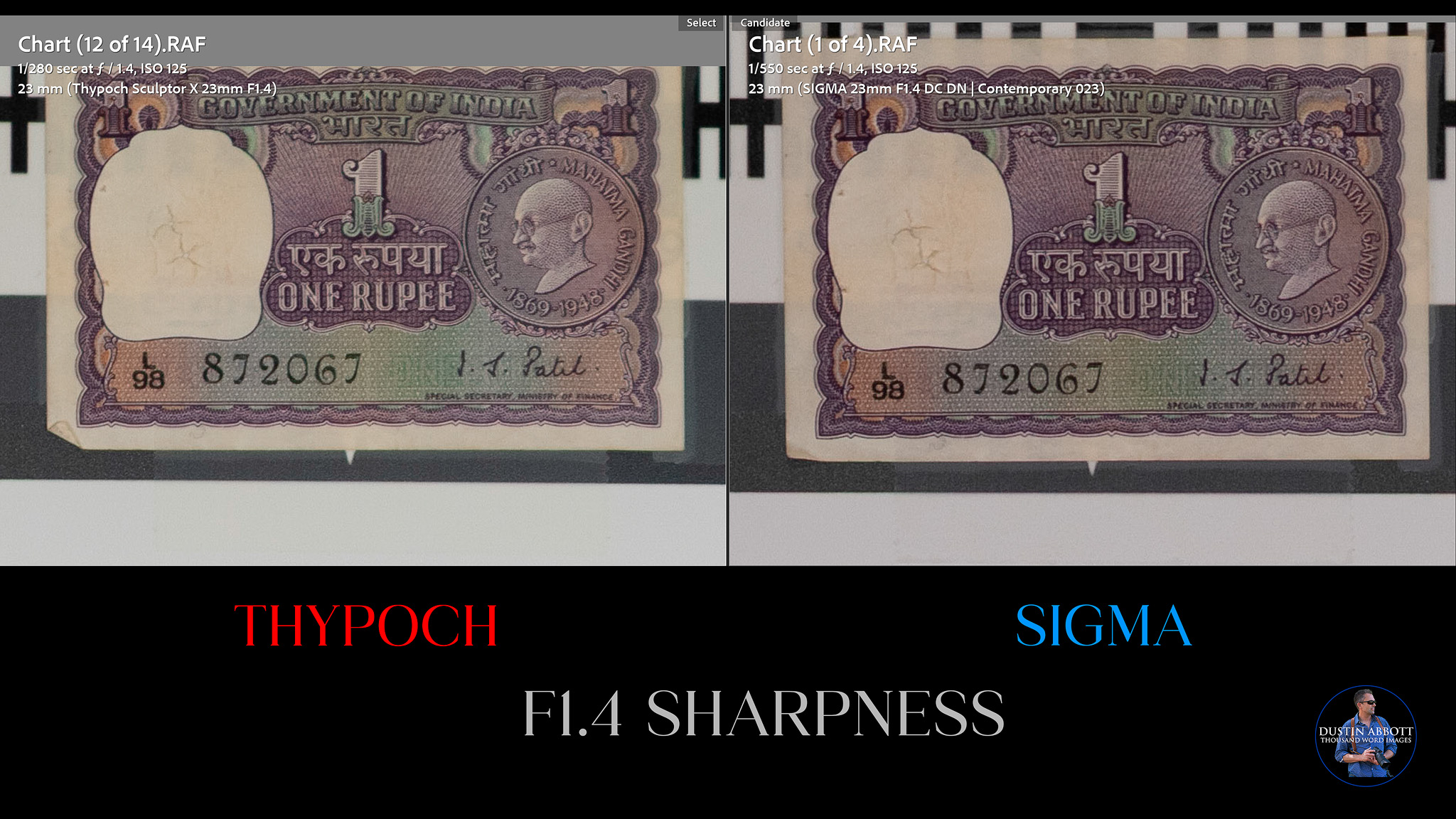
In the center of the frame we see that Sigma shows more contrast but similar levels of detail, though the Sigma lens has a few color fringing issues. The difference in contrast in the midframe is noticeable, while the edge performance is similar with just slightly more detail for the Sigma. These are lenses with a very different personality.
How about the premium Fujinon lens?
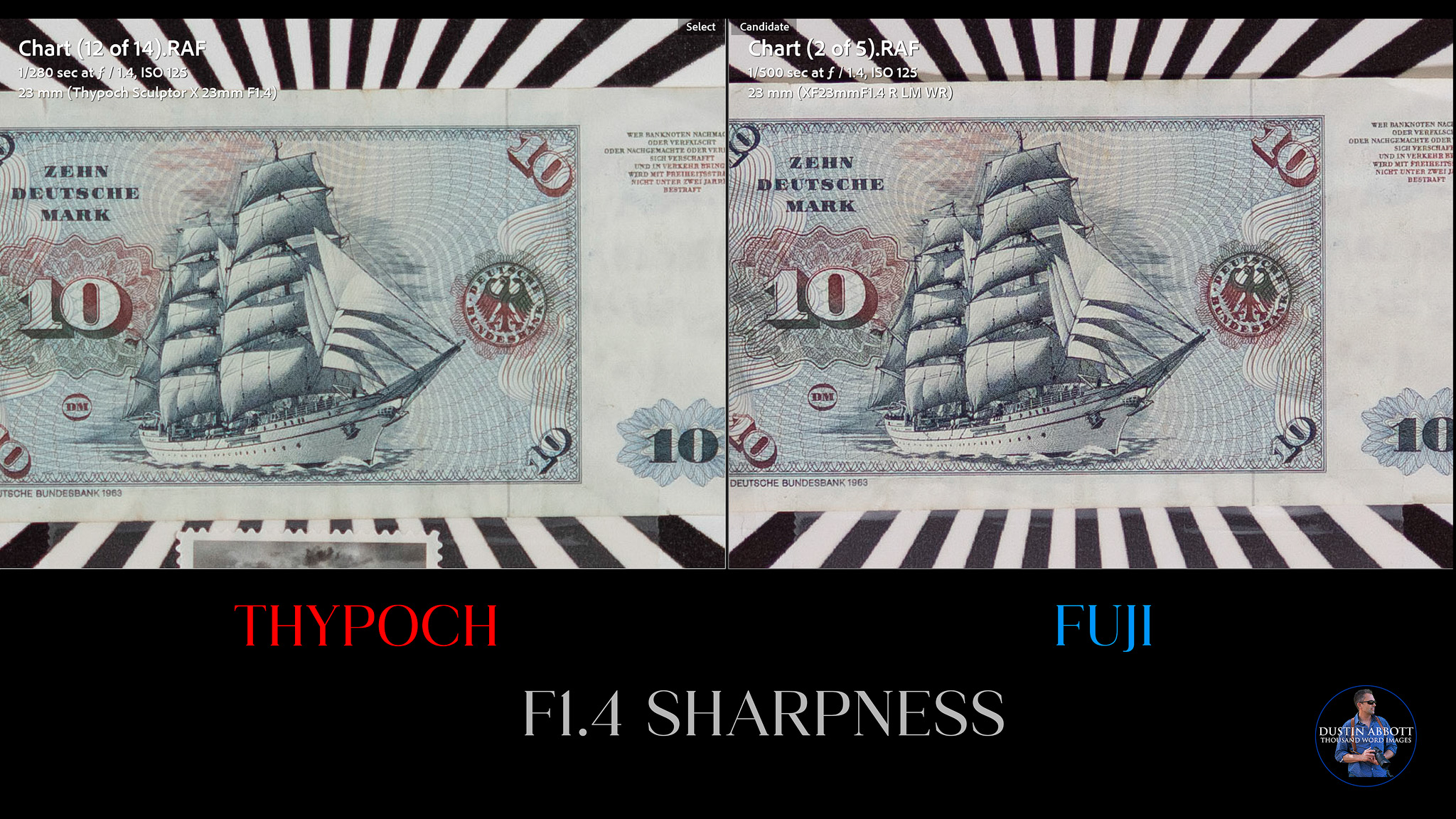
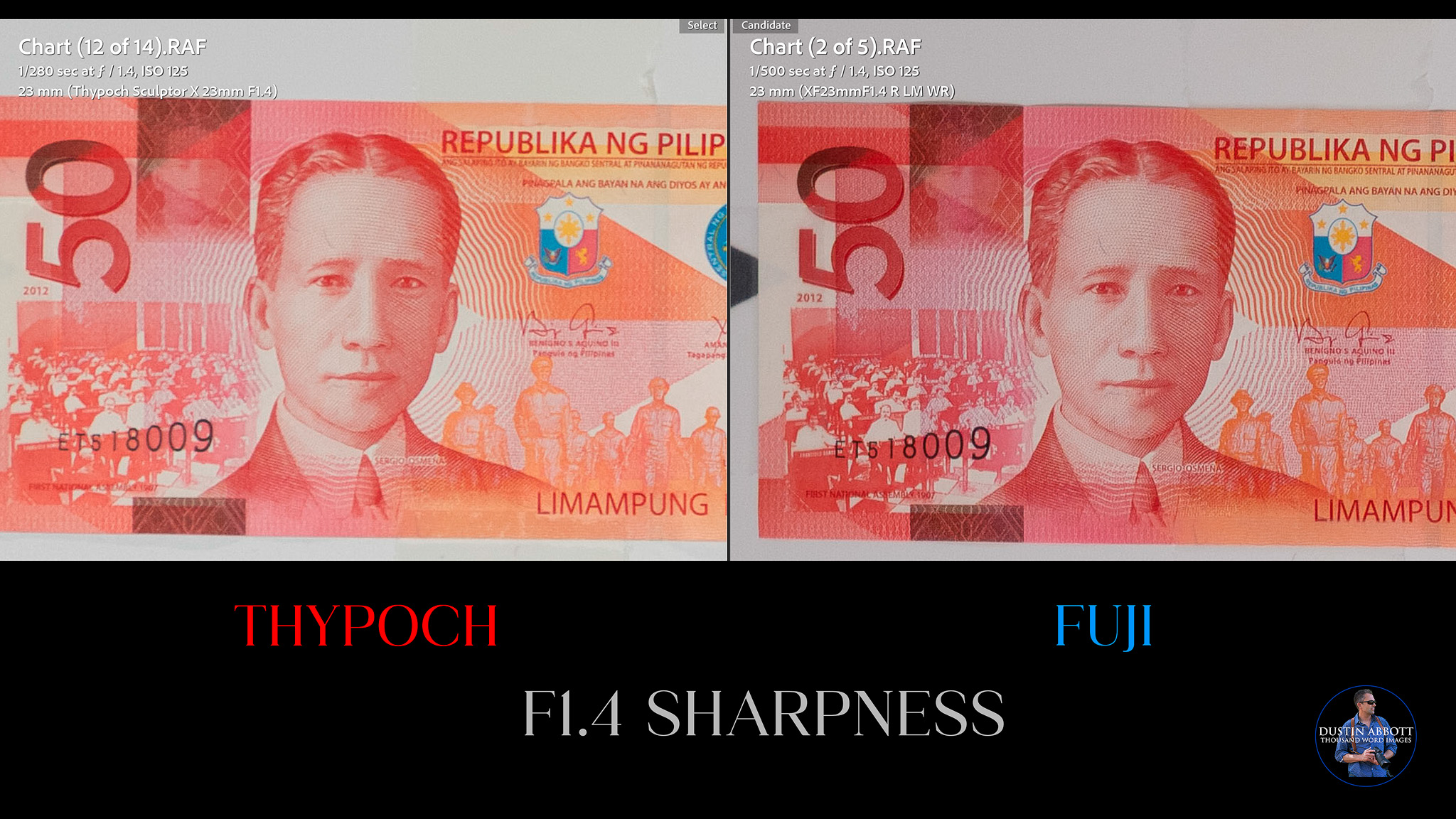
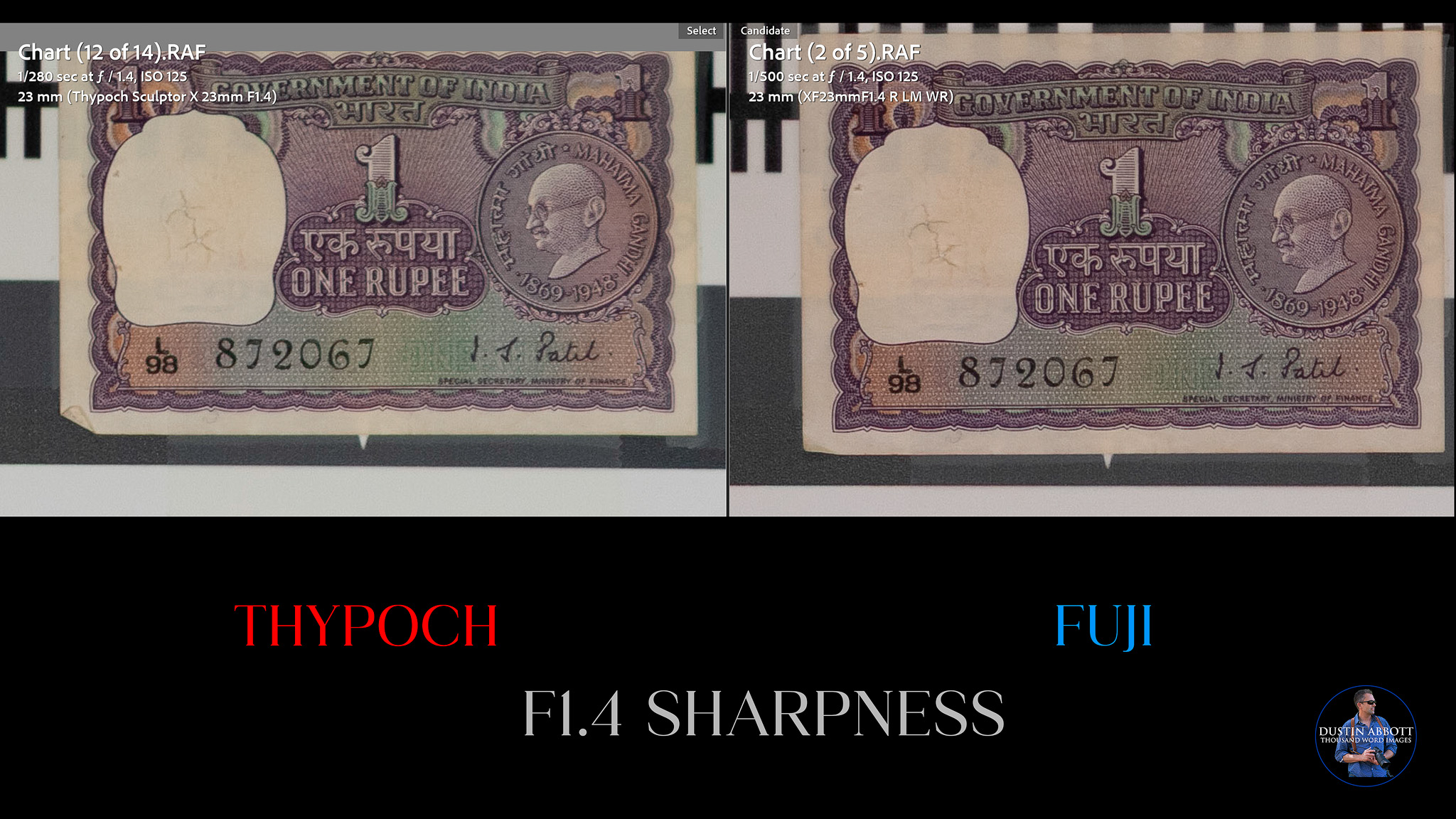
The Fuji lens produces an exceptional center results, with better detail, contrast, and none of the fringing issues. The midframe result is similar, showing much stronger contrast and more detail. The edge shot is also better, with clearly superior contrast.
In this case, it is a matter of “you get what you pay for”, though one would have to question if that extra bit of contrast is worth three times as much money. Both the Sigma and the Fuji lens are higher contrast, but you can also see that the Fuji results are superior to the Sigma’s in their nuance.
Not everyone is looking for top sharpness and contrast, however, and I feel like the Sculptor’s “global contrast” (the way the image looks as a whole) looks nice and punchy.
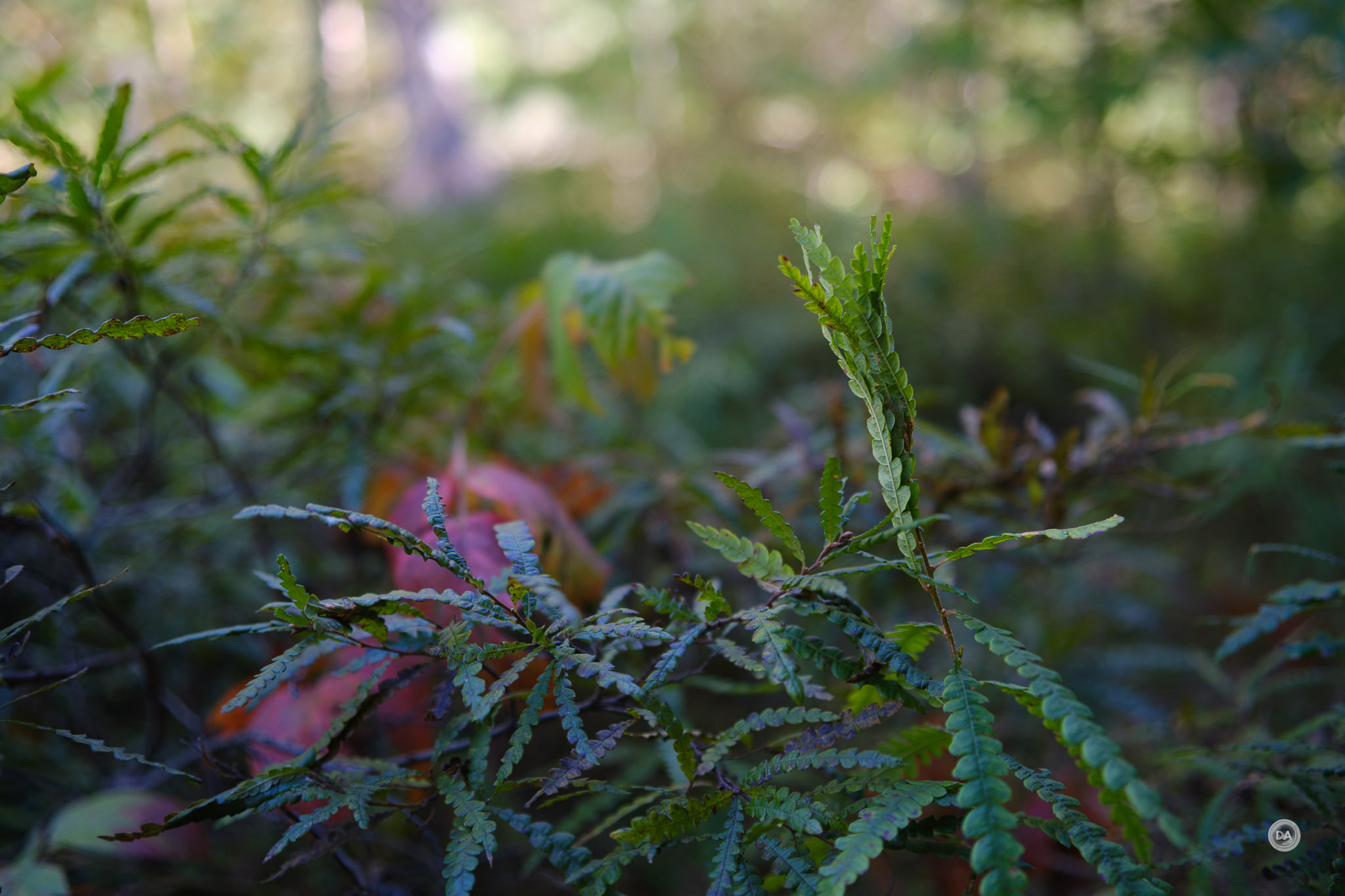
It is only when you zoom in to a pixel level that you see that the “microcontrast” (contrast on fine details) isn’t exceptional.
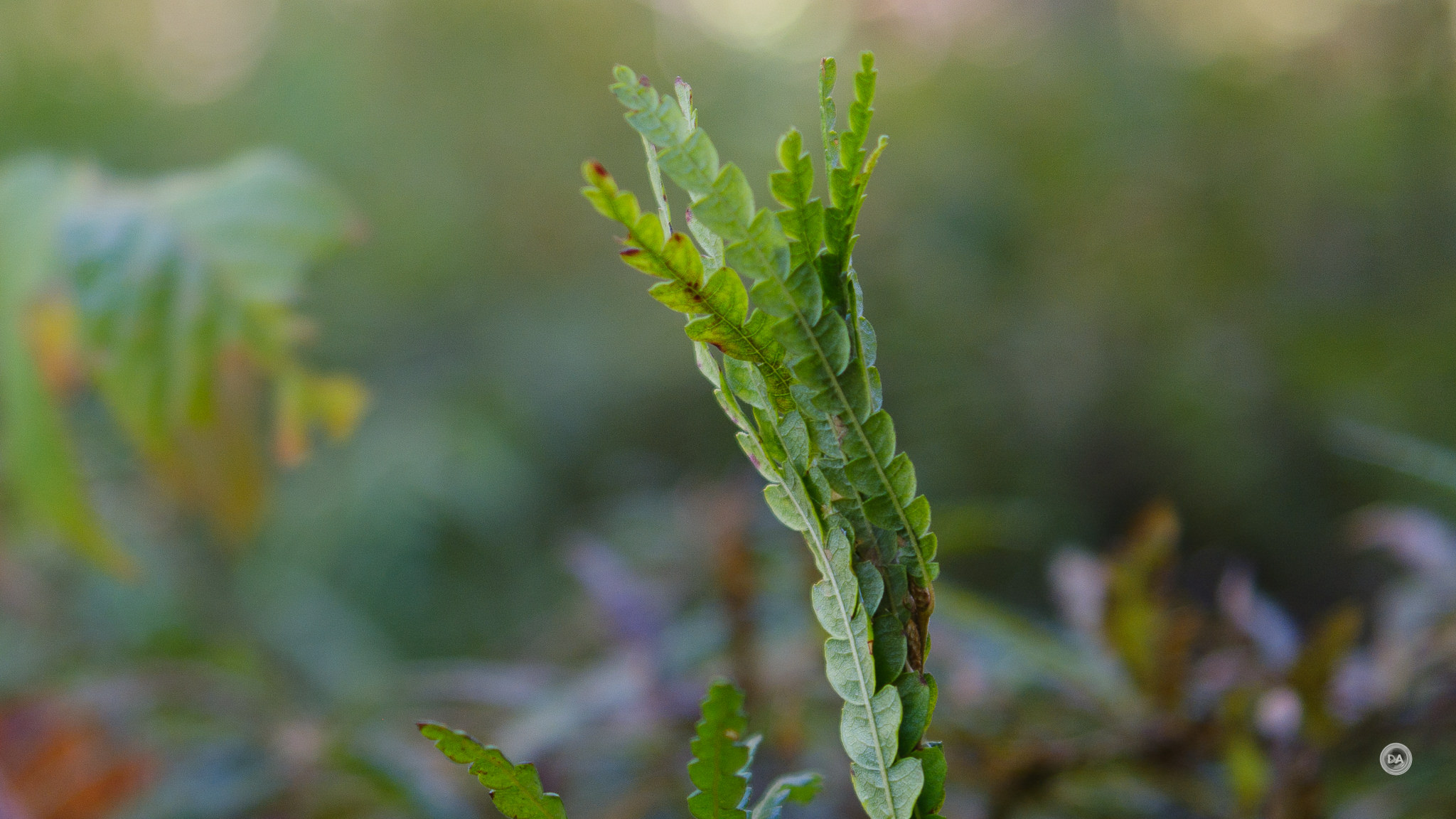
Interpretation: are you a pixel peeper or not? If you aren’t, you can look at that overall image and see good contrast, rich colors, and nice bokeh.
Stopping down to F2 produces more contrast and detail, though it still doesn’t rise to the level of what the Fuji or Sigma is capable of at F1.4.
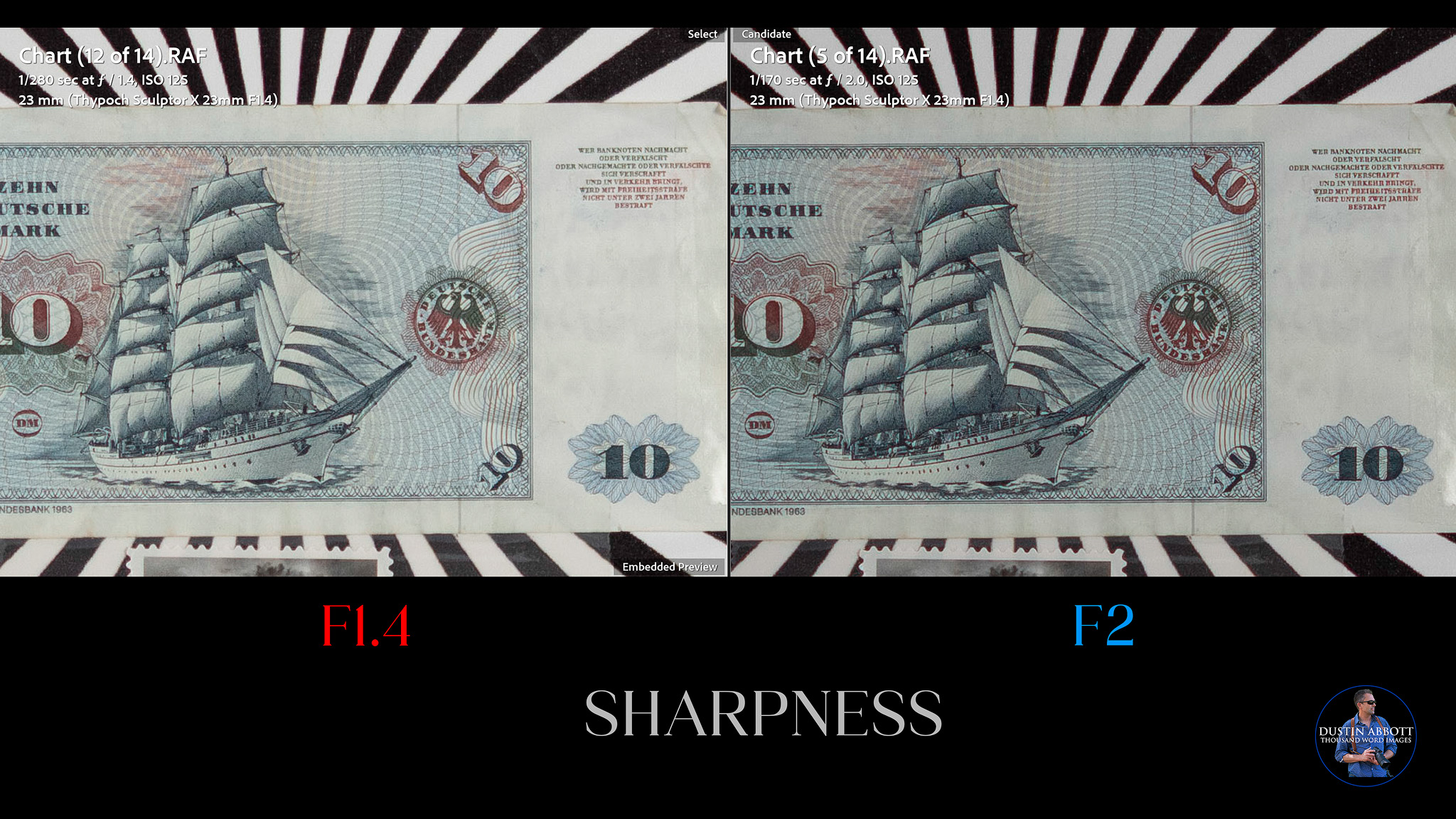
By F2.8 the corners are showing good improvement.
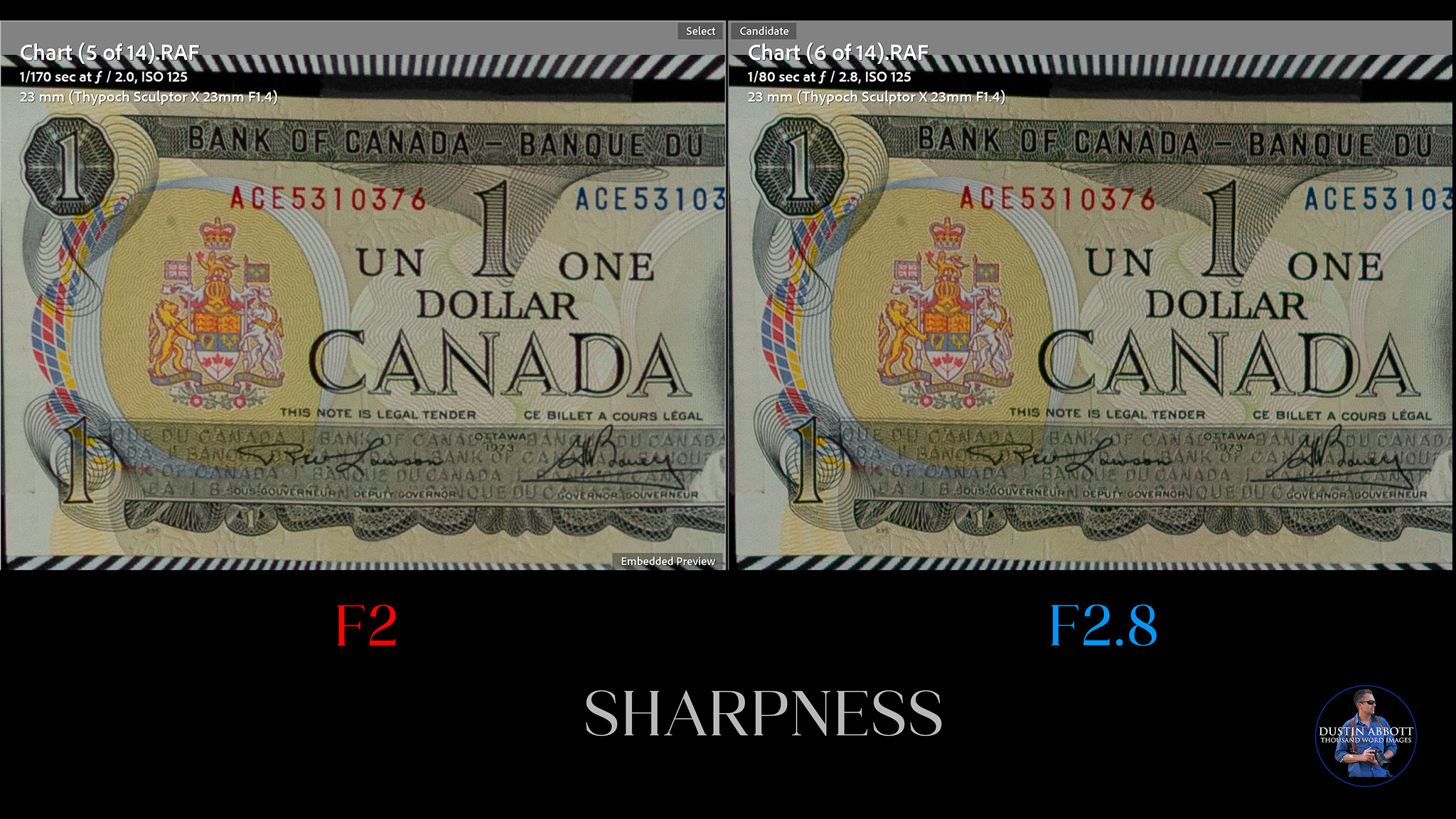
By F4 I felt like images had good “punch” to them, with nice color, contrast, and detail.
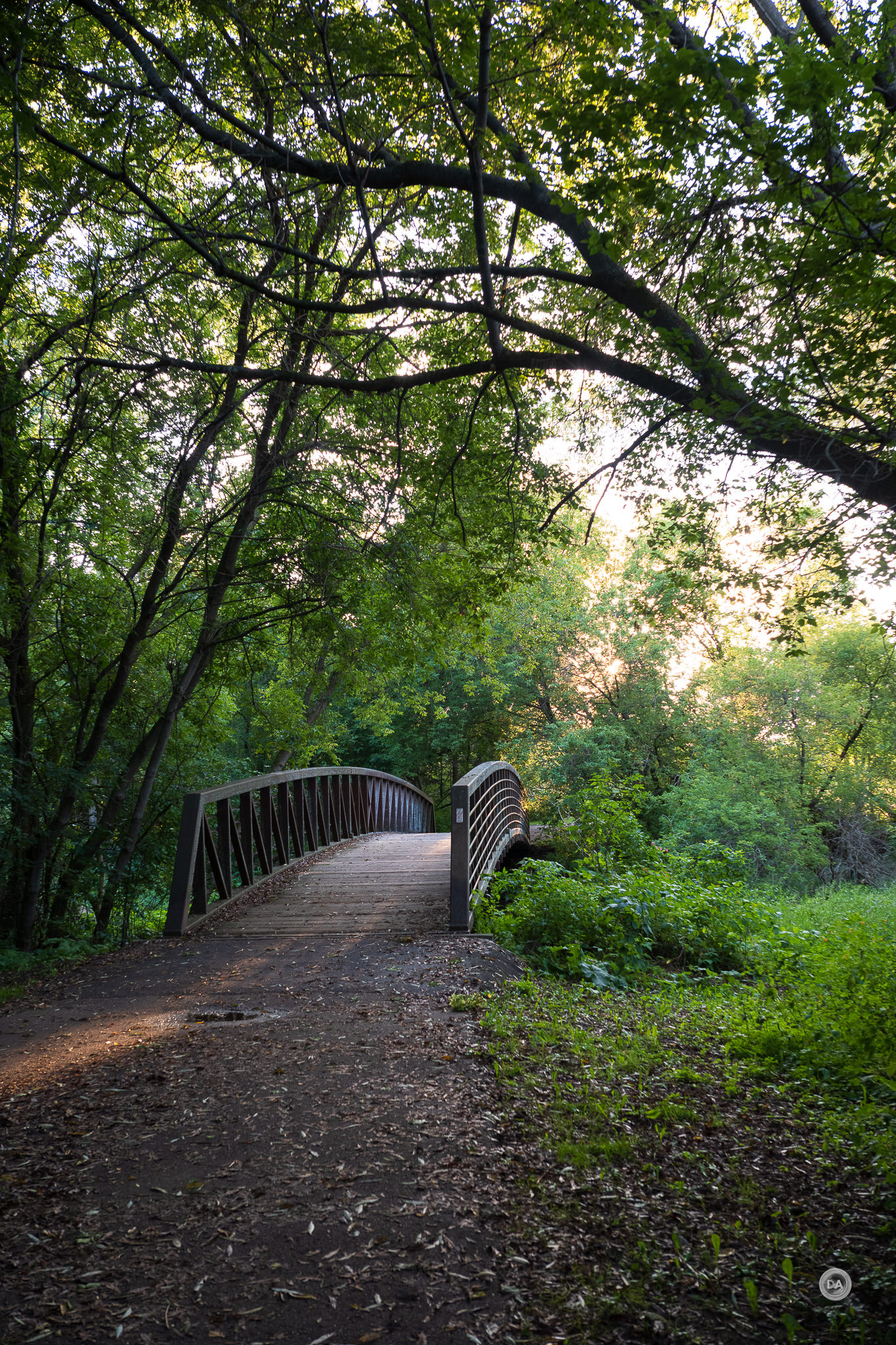
Detail is usable right out to the edge of the frame, though not what I would call “pin sharp”.
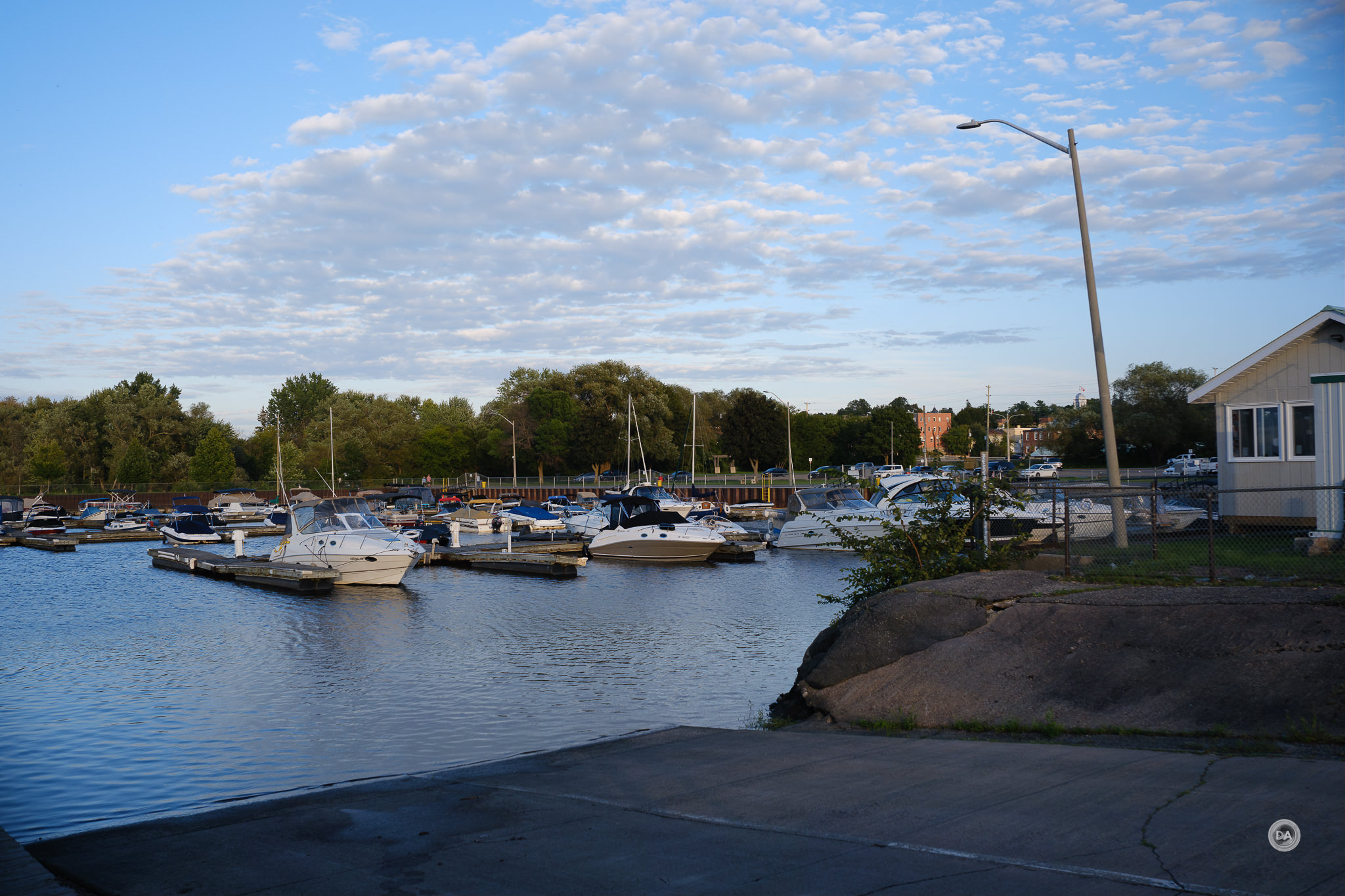
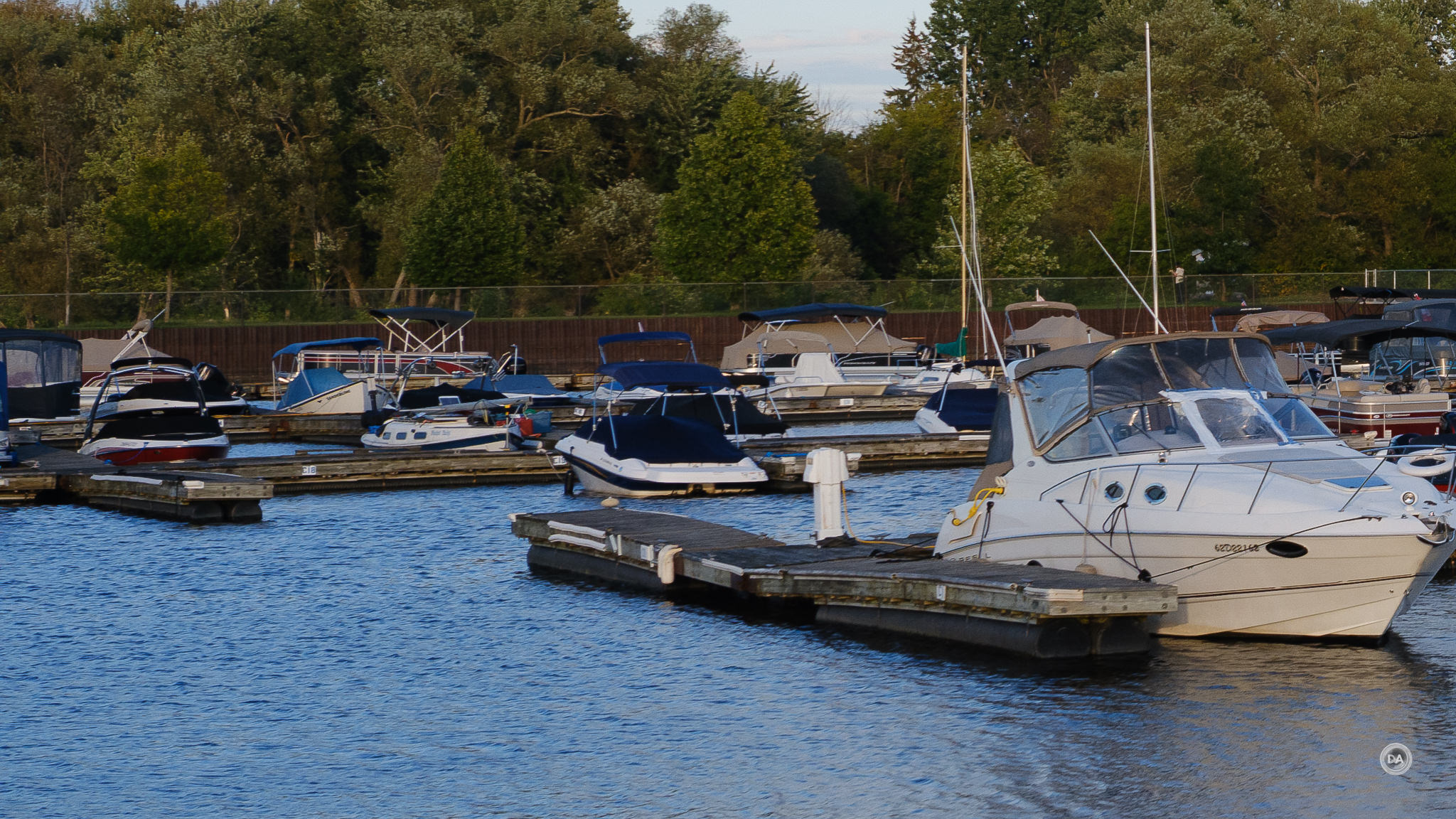
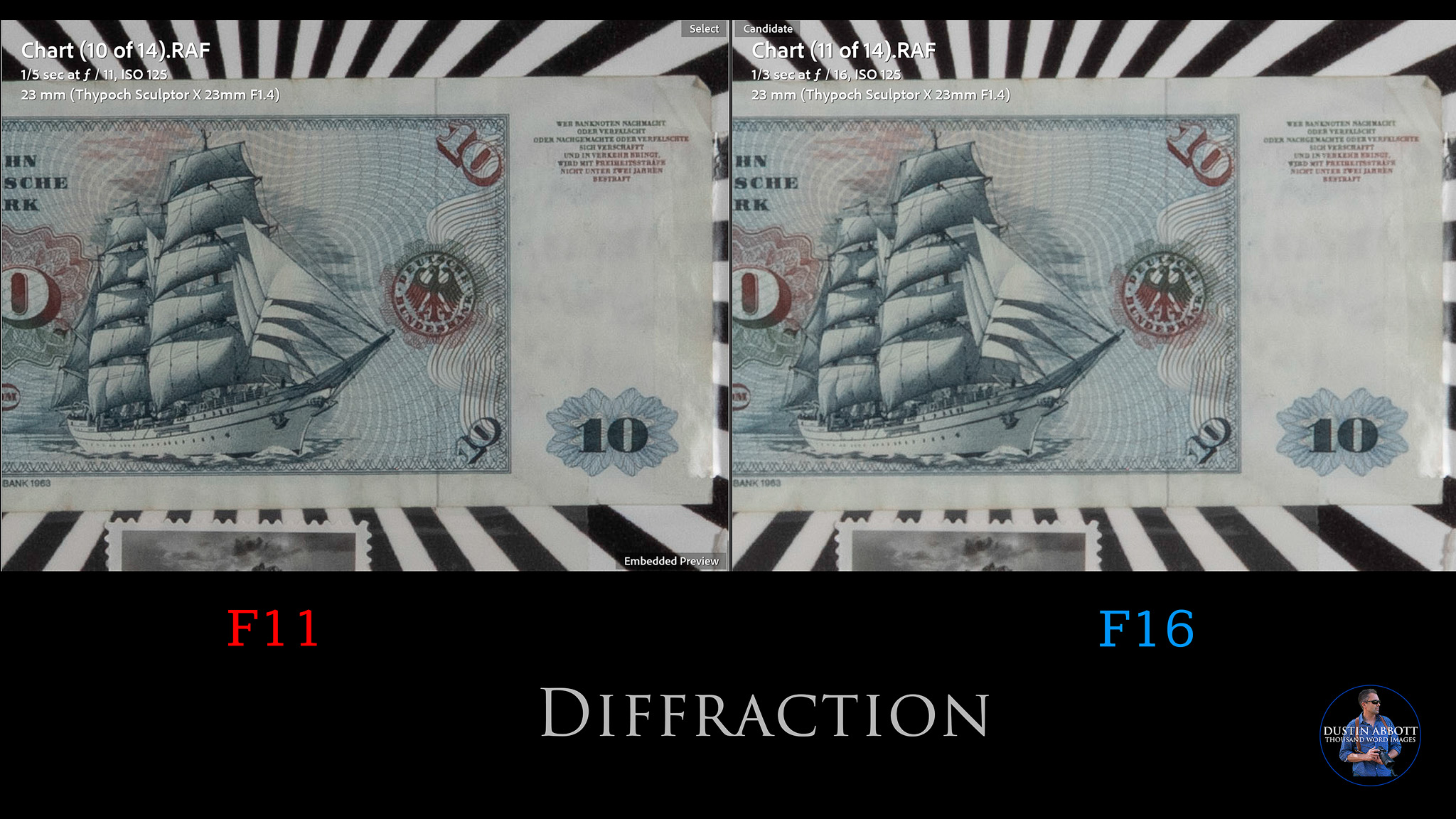
Diffraction is an unfortunate reality on higher resolution cameras, so you will see a faint softening by F11 and a more obvious softening by the minimum aperture of F16.
We have seen that the Sculptor 23mm can’t quite compete with the Sigma and Fujinon lenses in raw sharpness and contrast, but I do think it is far more competitive when it comes to rendering, where I would argue it surpasses the Sigma (if not quite rising to the level of the Fuji).
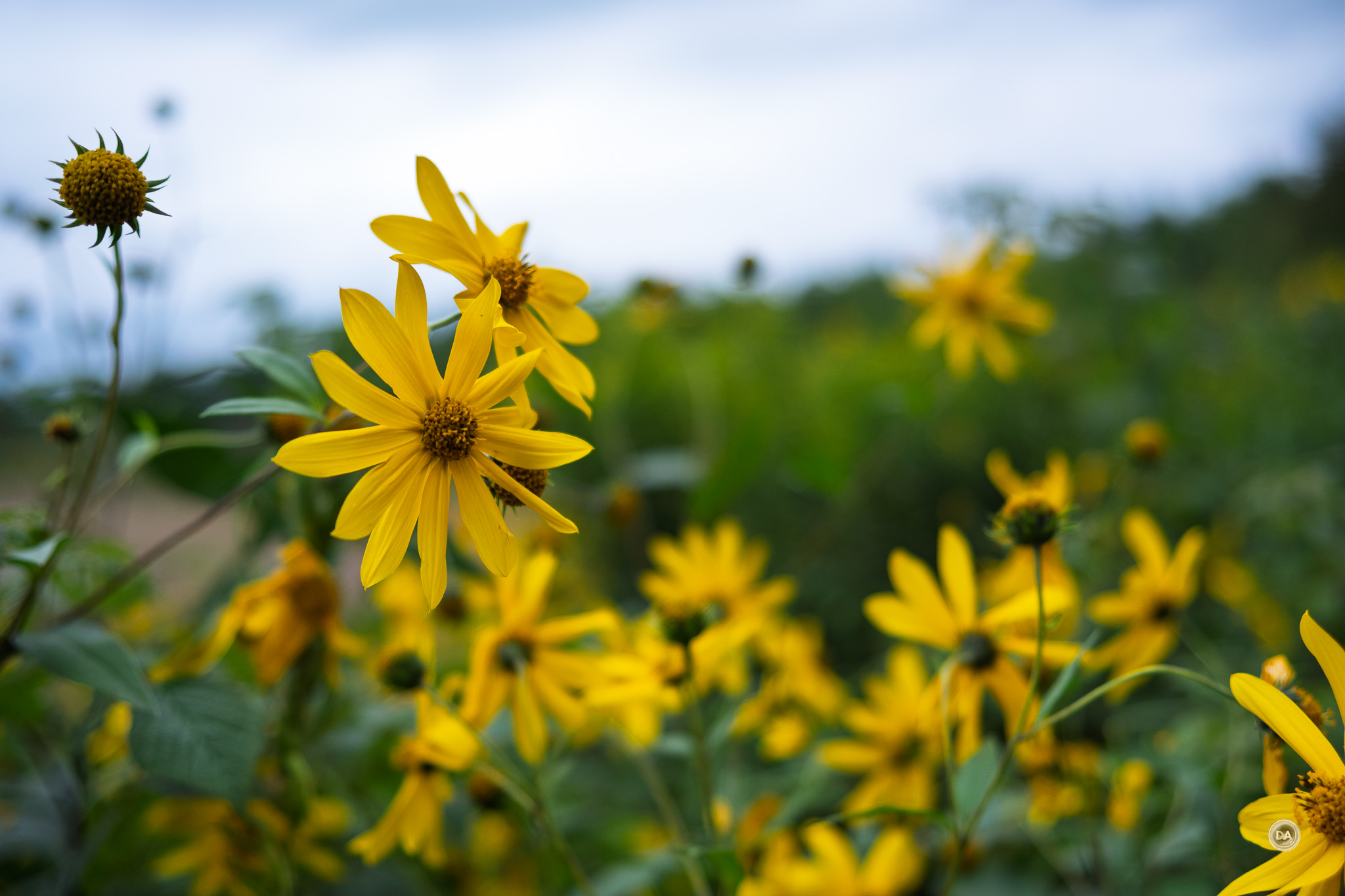
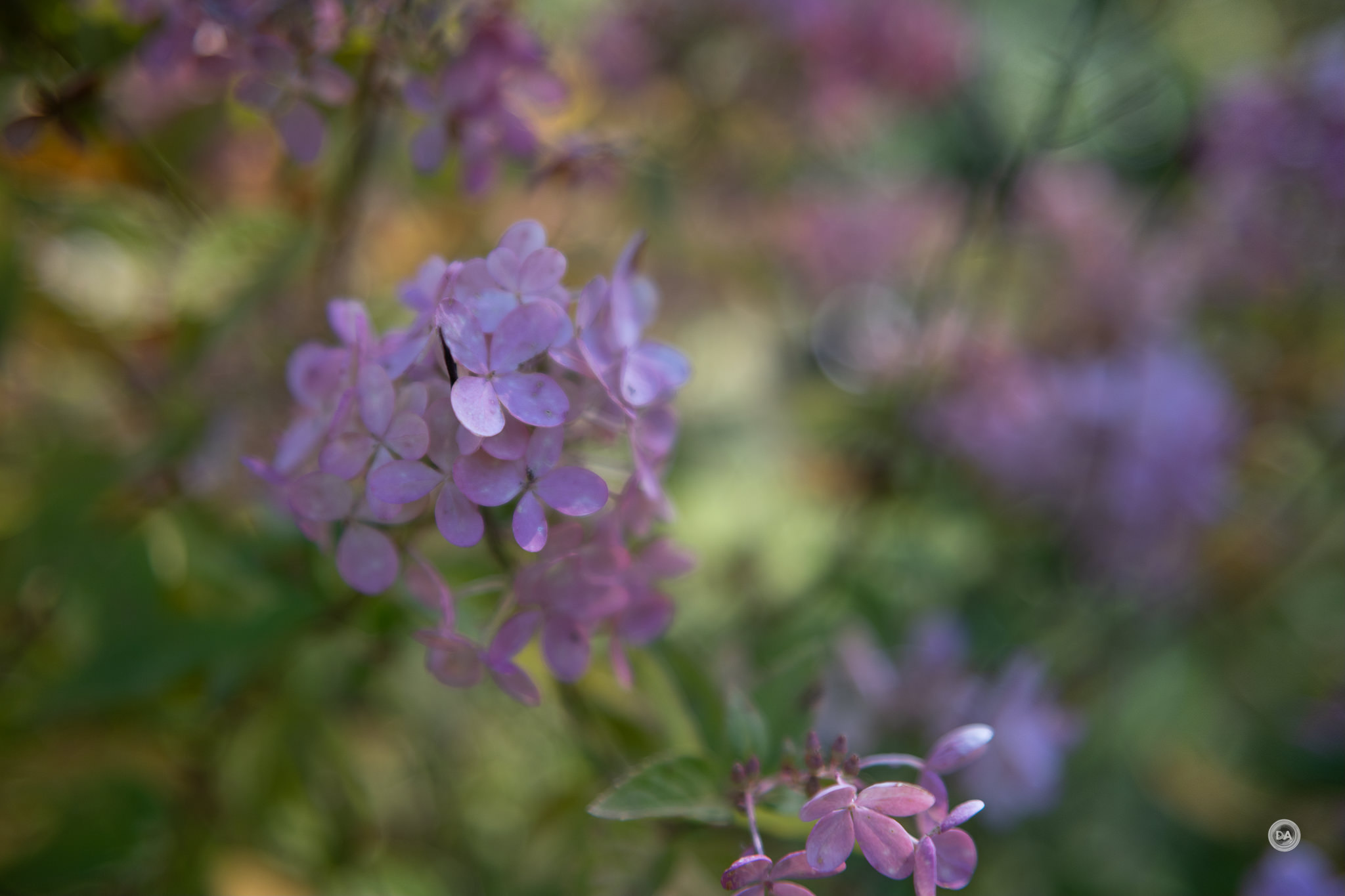
The transition to defocus is nice and smooth, and both the quantity and quality of background blur are excellent.
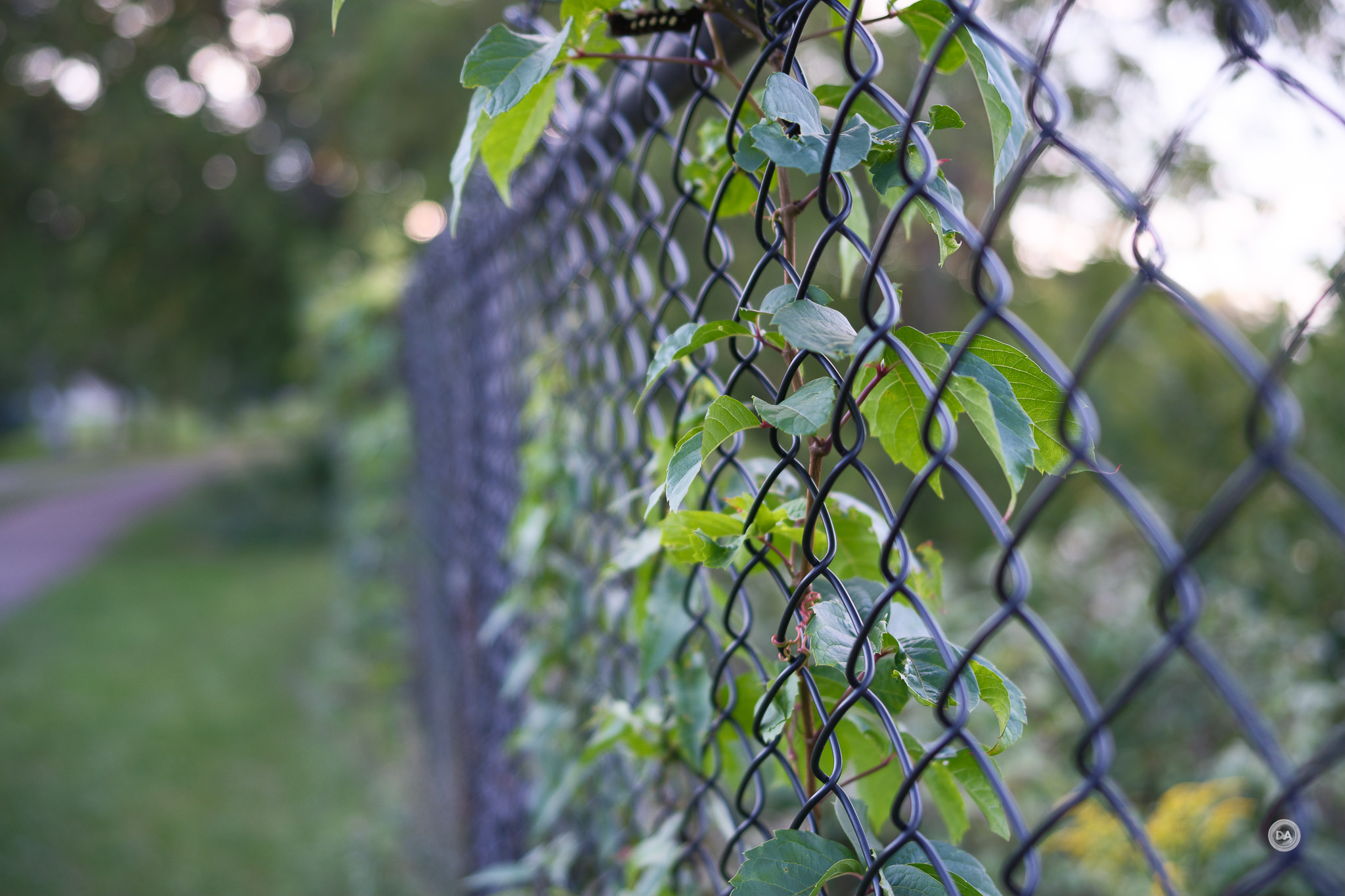
There can be a few too many hard edges if you have difficult backgrounds, like the many bare branches in this shot.
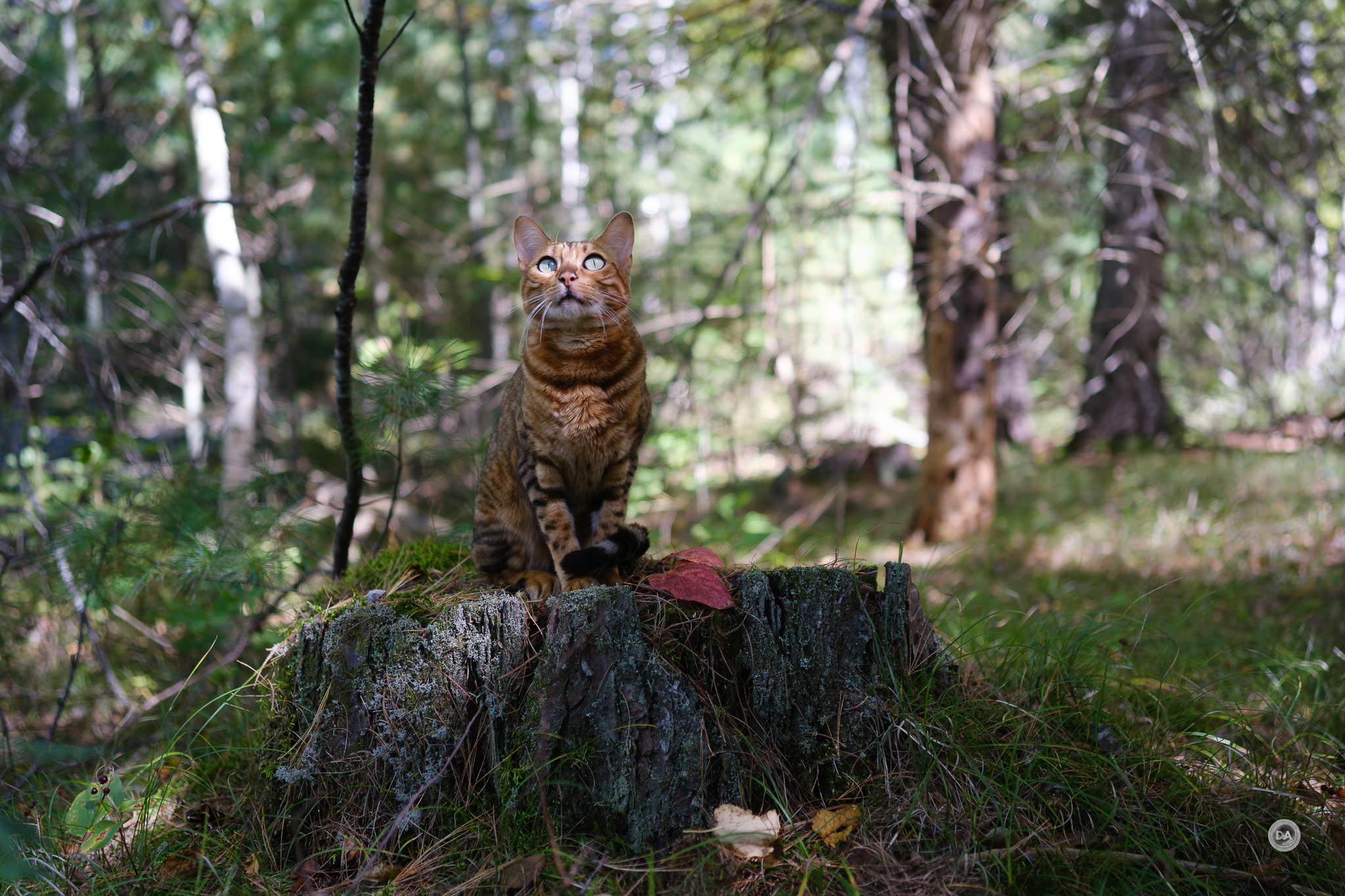
In most situations, though, I was pleased with the combination of global contrast and the quality of defocus.
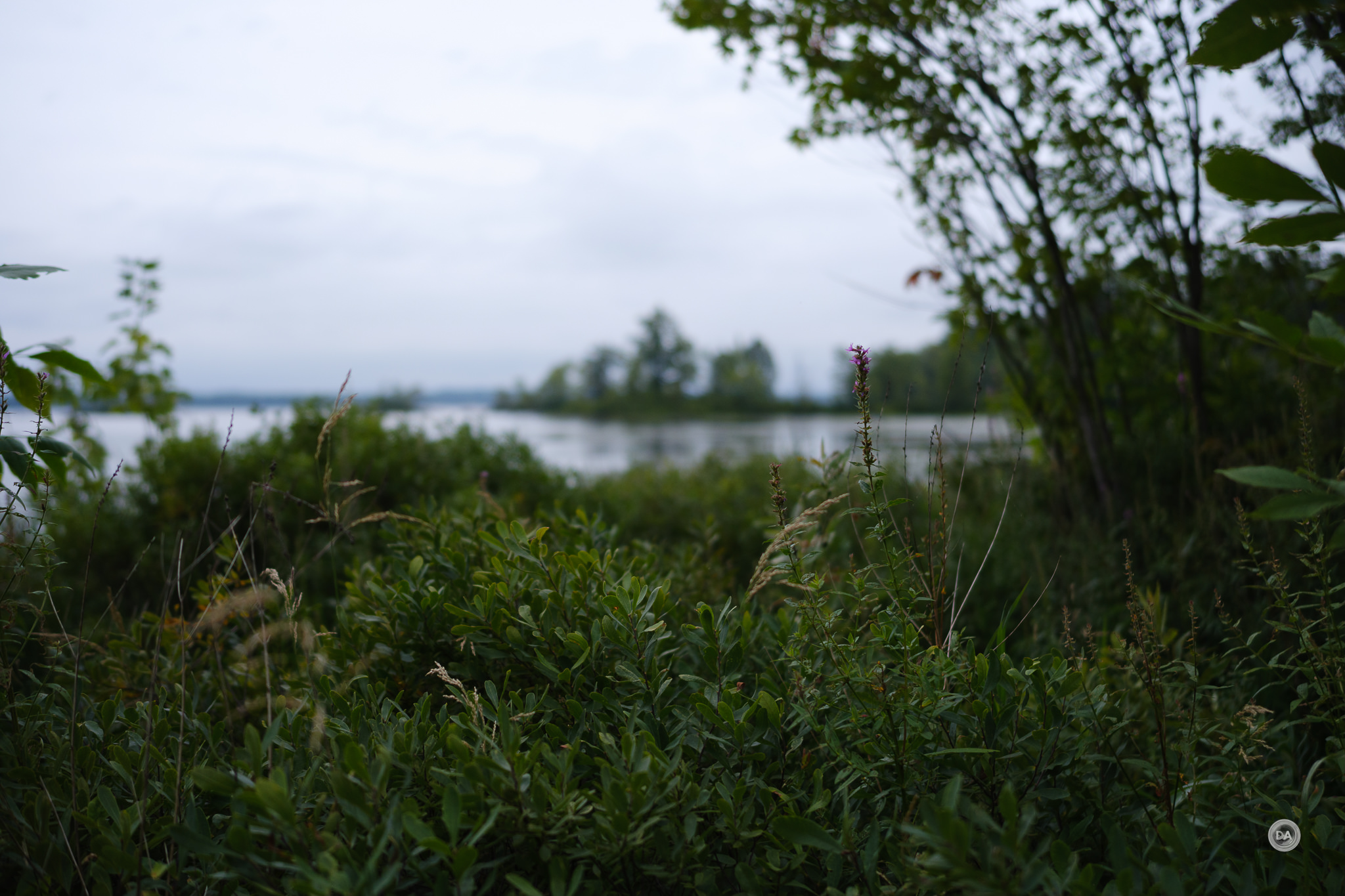
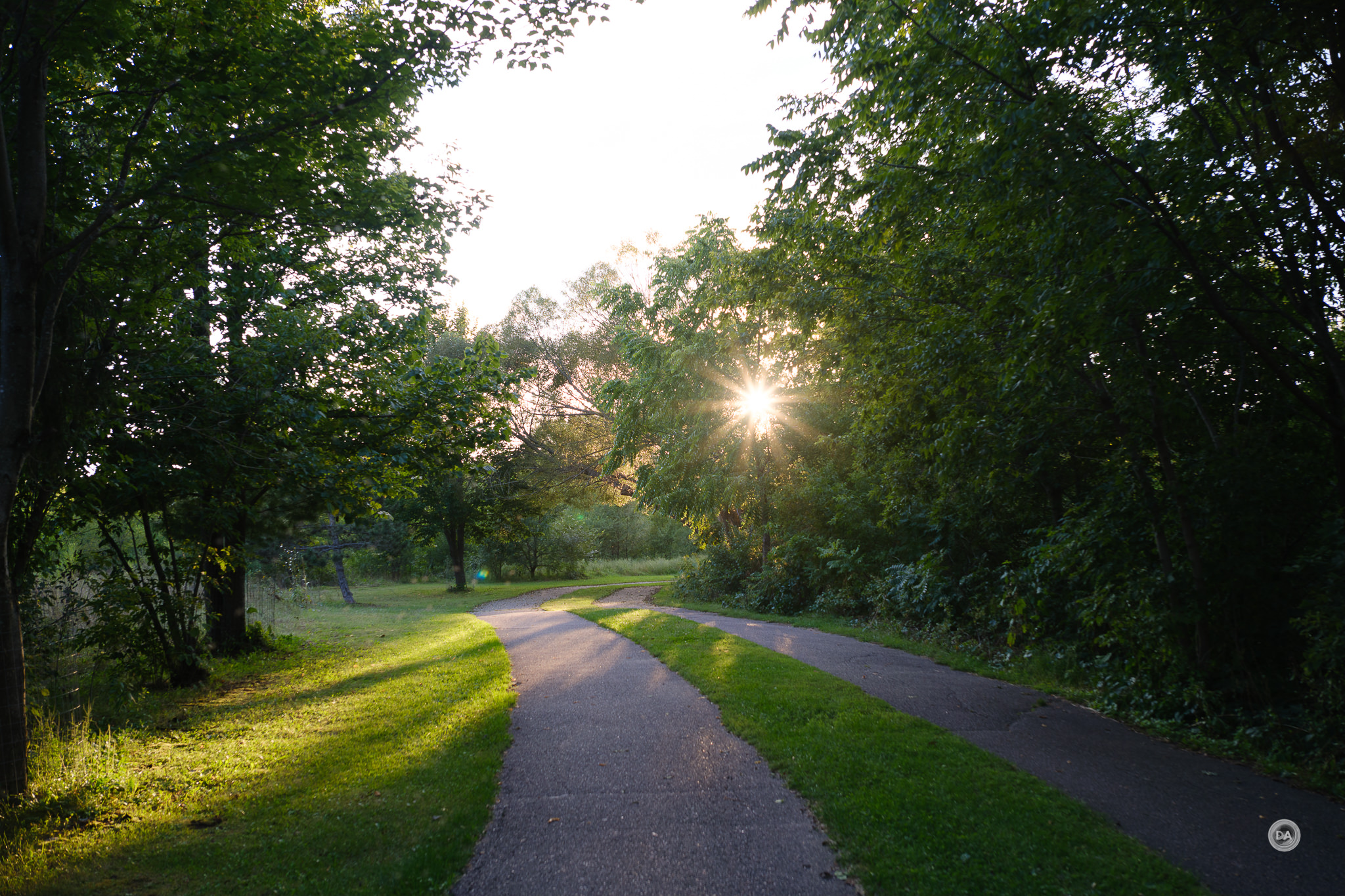
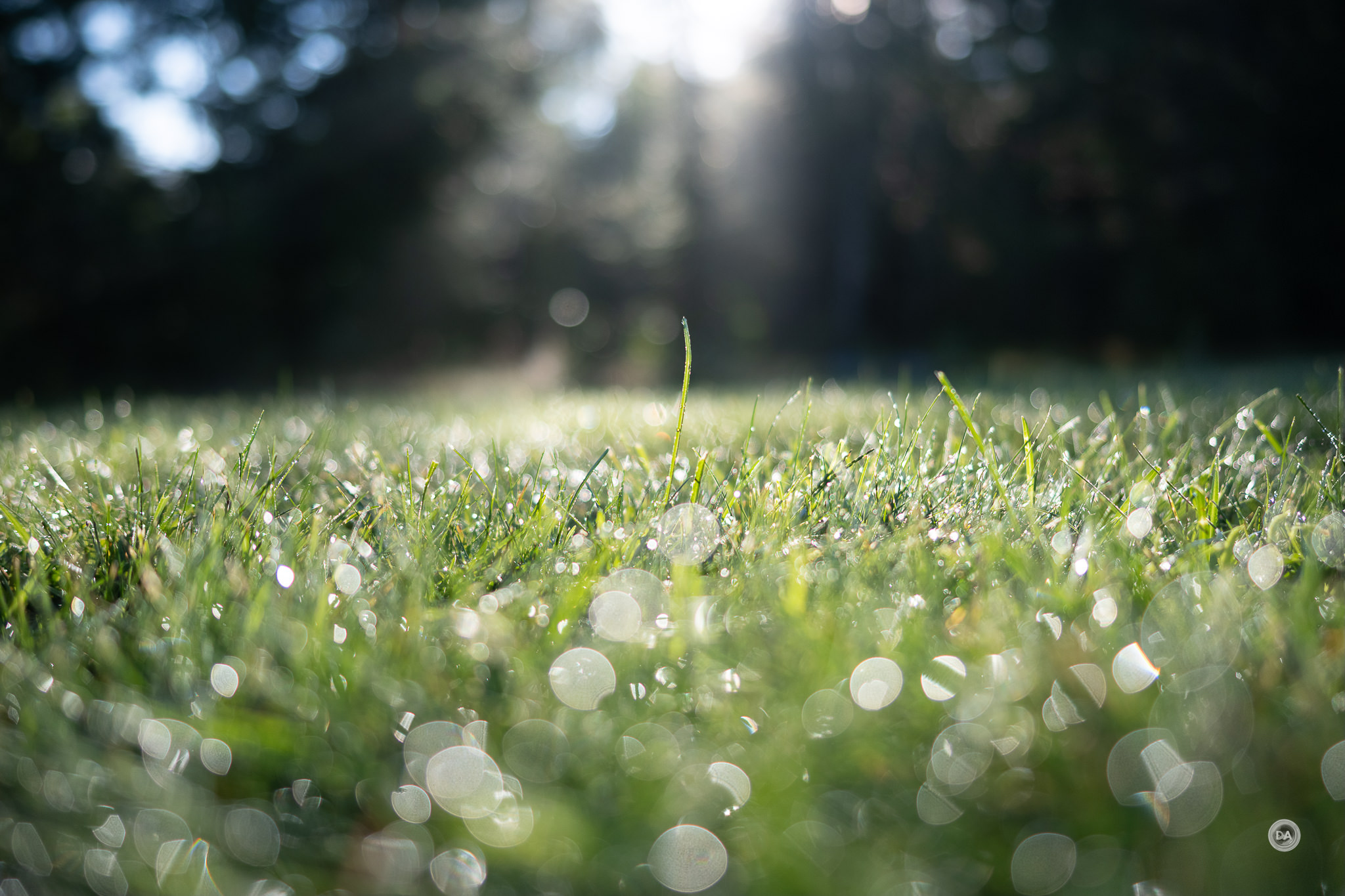
How about flare resistance? The Sculptor 23mm does employ Thypoch’s “Epoch” coatings, though they don’t entirely banish flare. There can be some minor ghosting artifacts at wide apertures, and at small apertures there is a ring that emerges at certain angles. The ten bladed sunstar is visually interesting, however.

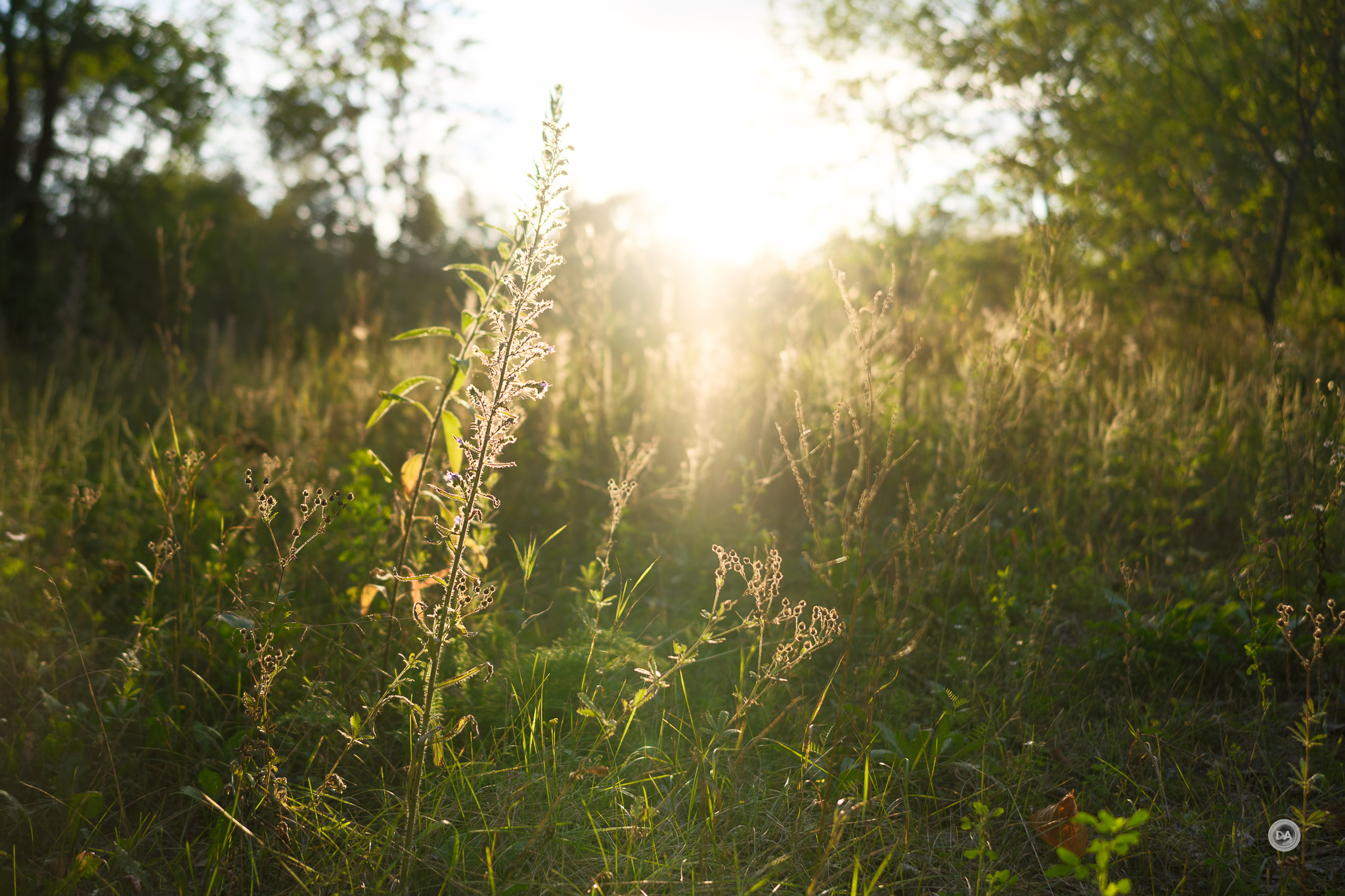
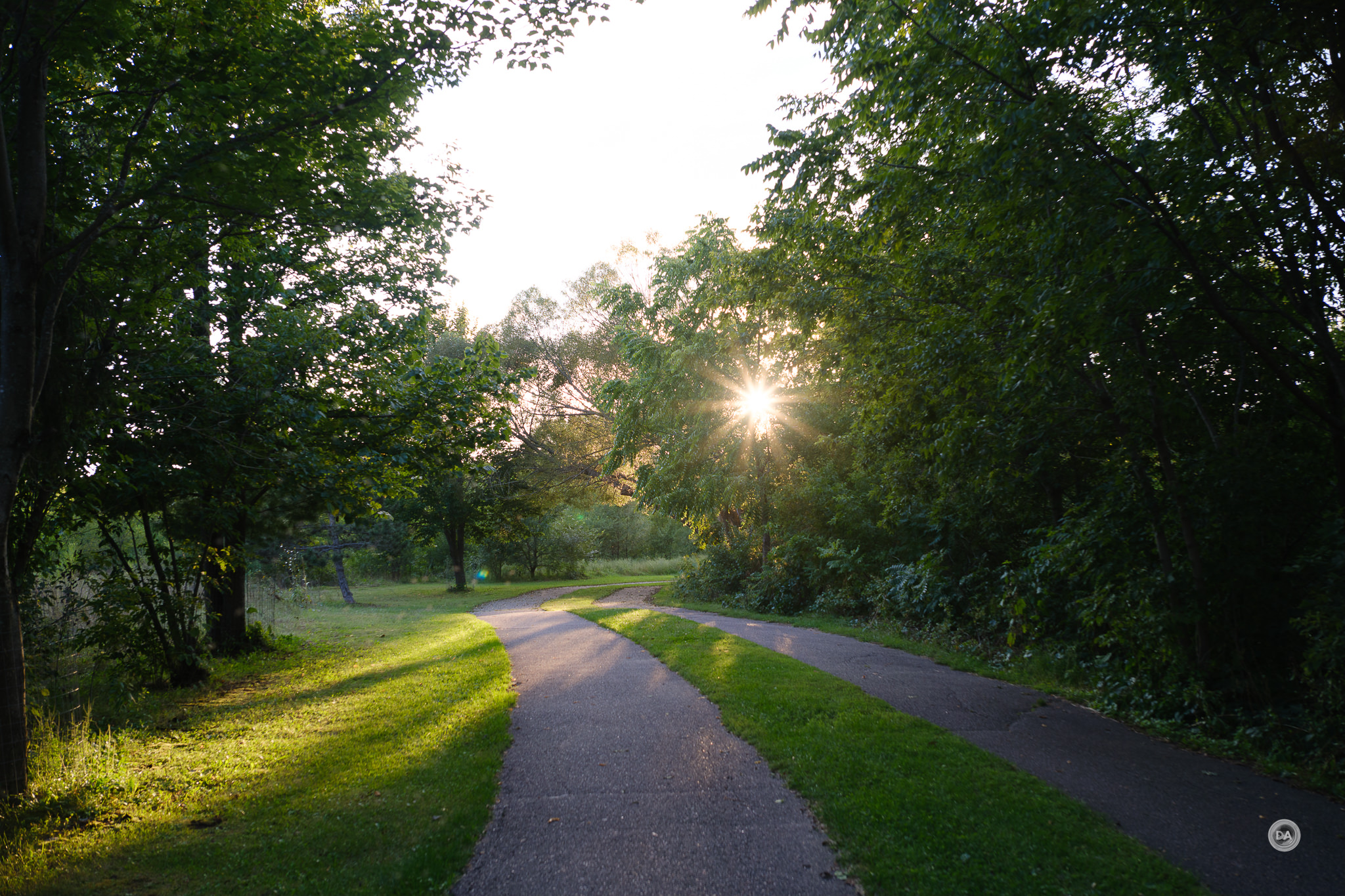
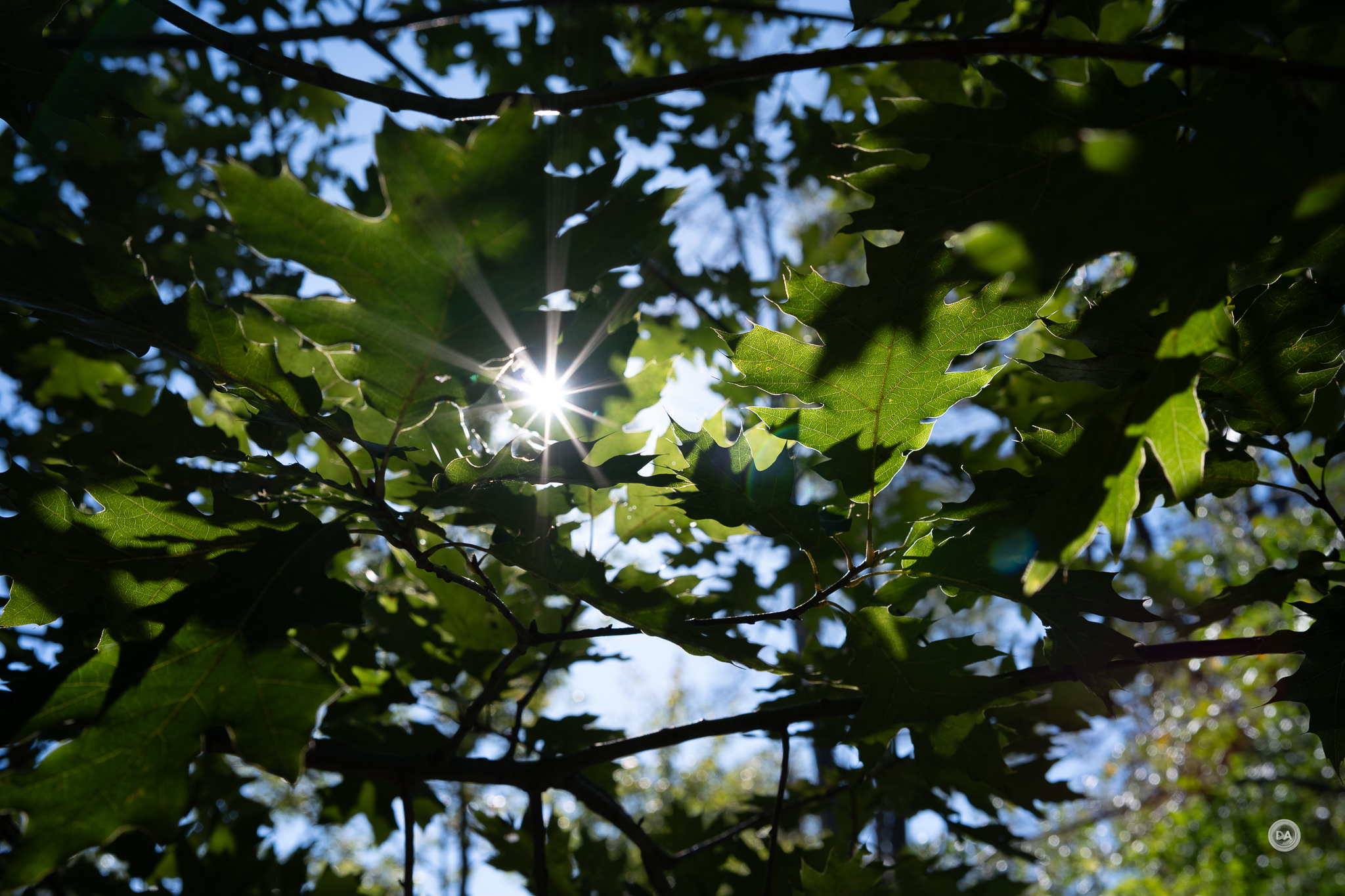
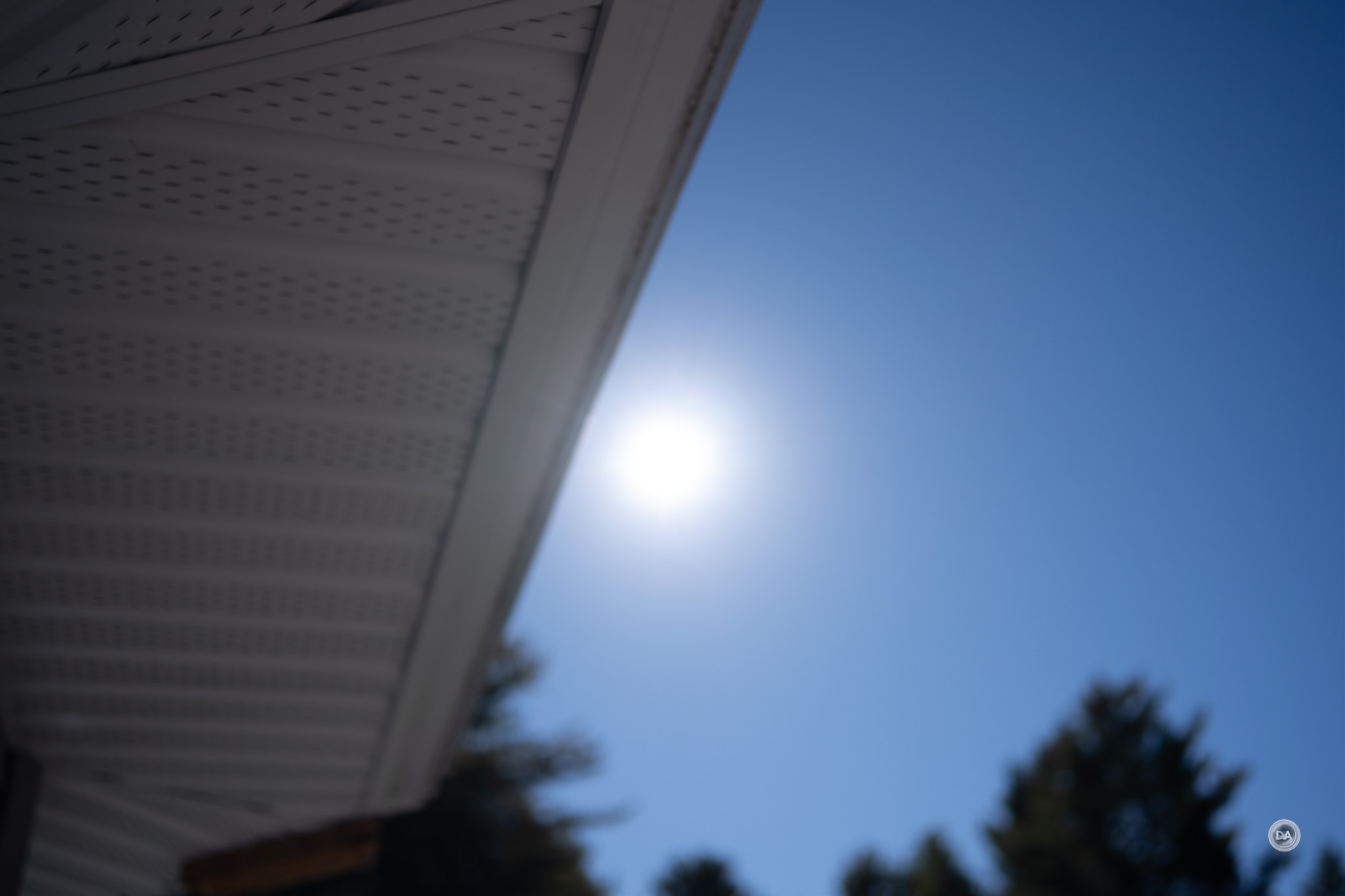
Here’s an early morning shot of the dew on the grass, and you can see that the sun through the trees produces an interesting effect.
The flare resistance is no better than average, though fortunately average is pretty good these days.
I did like the colors out of the lens. It seems like a good fit for Fuji’s color science, and I liked the results with various film simulations.
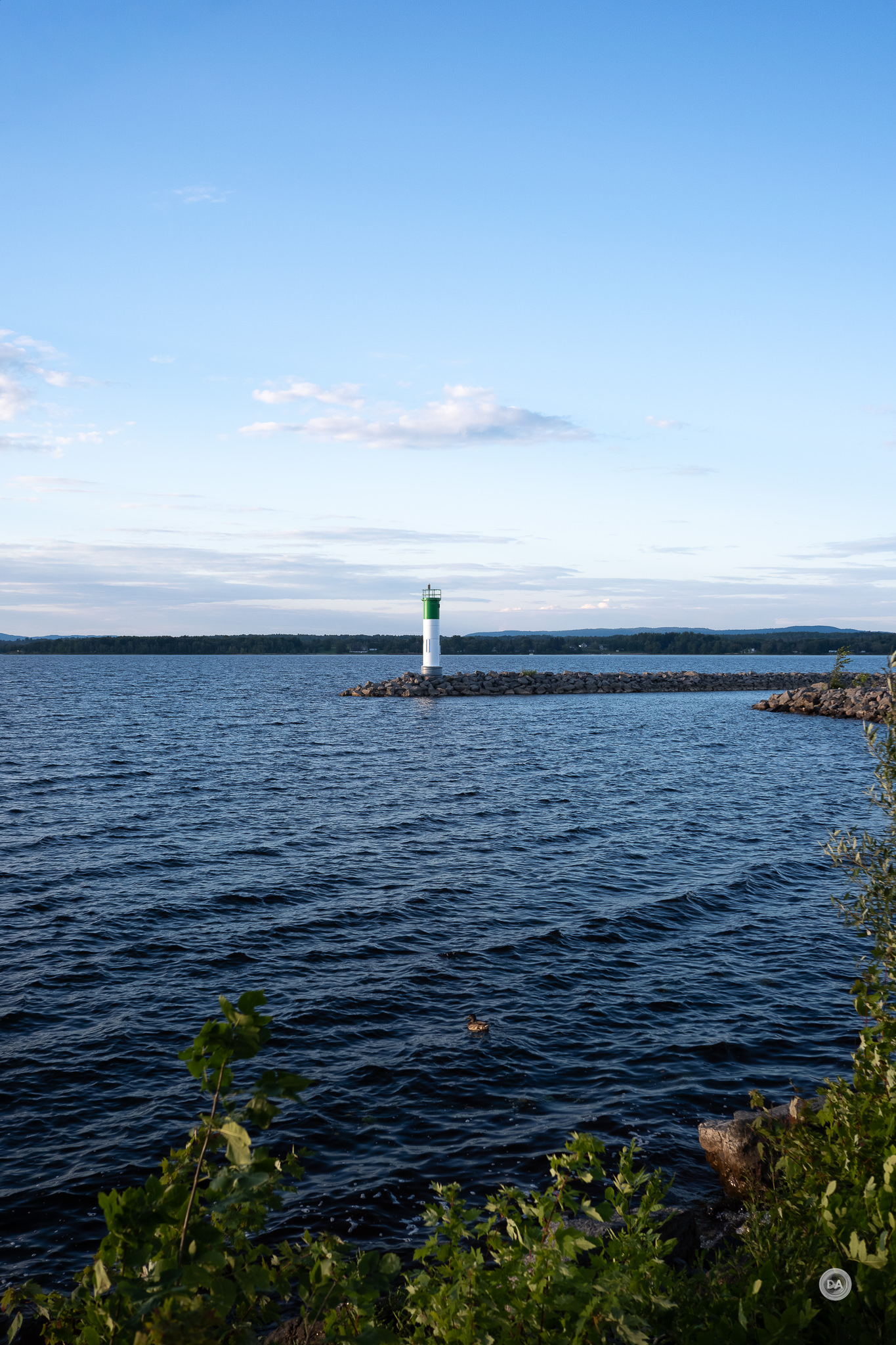
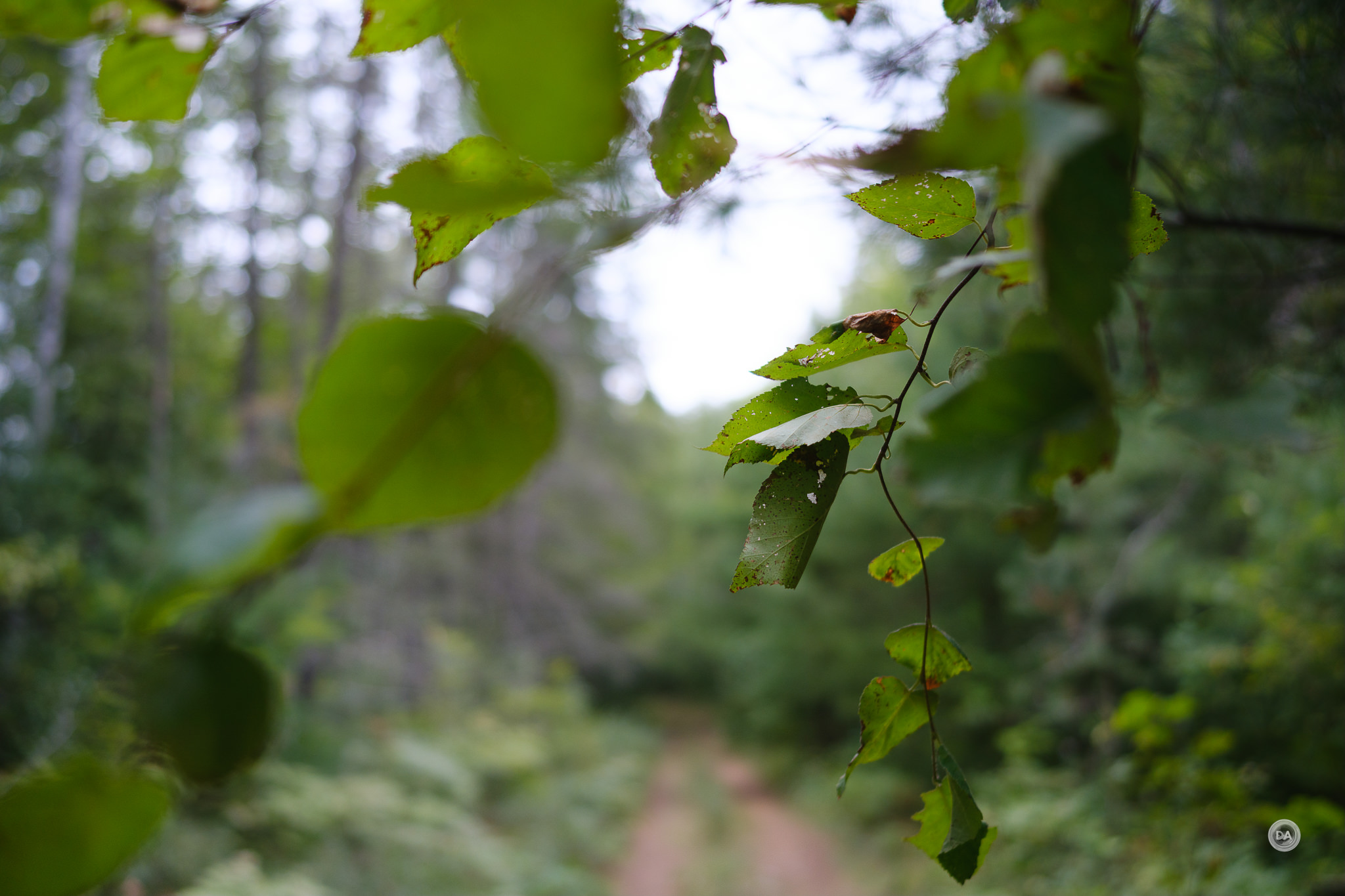
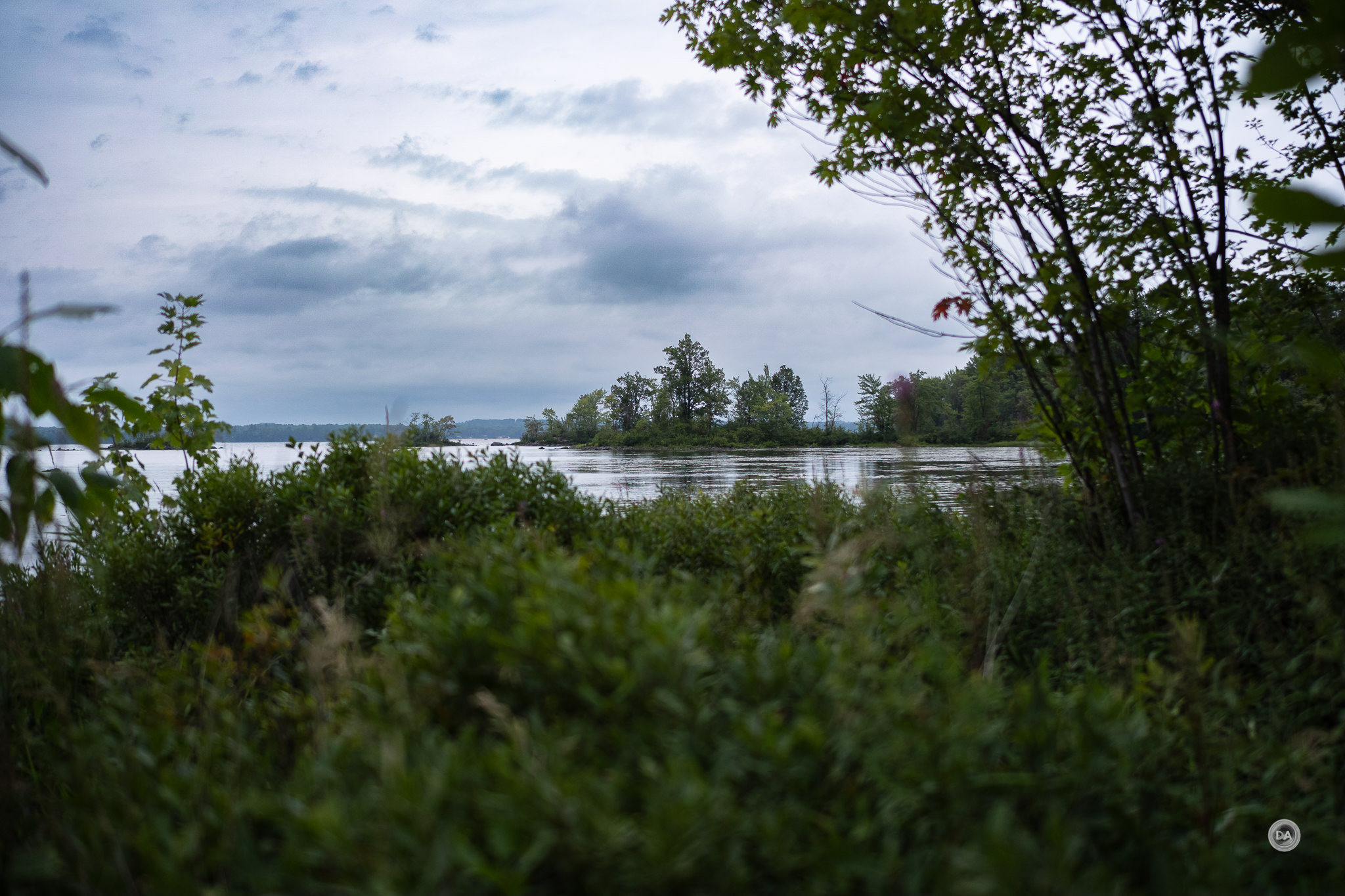
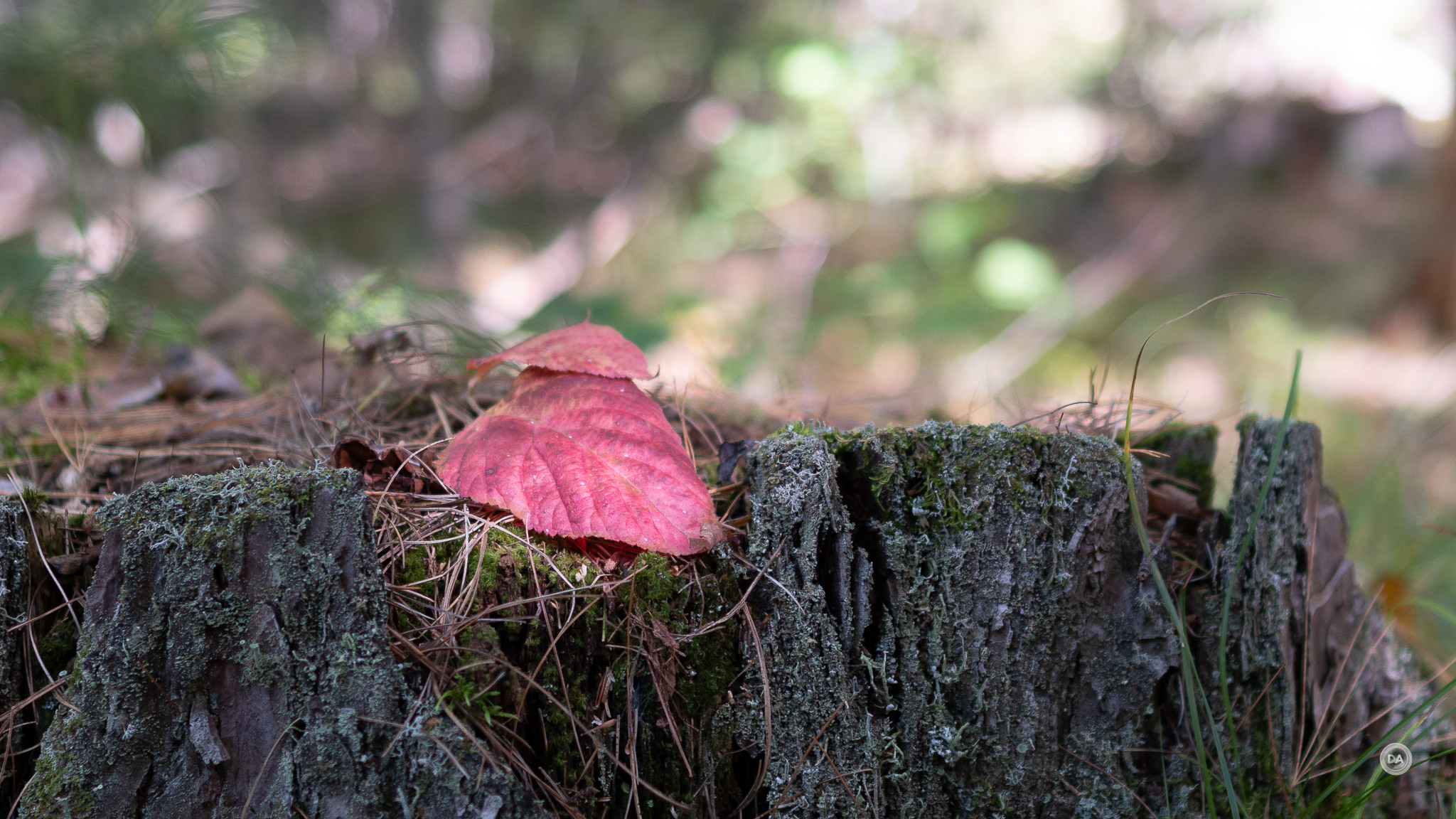
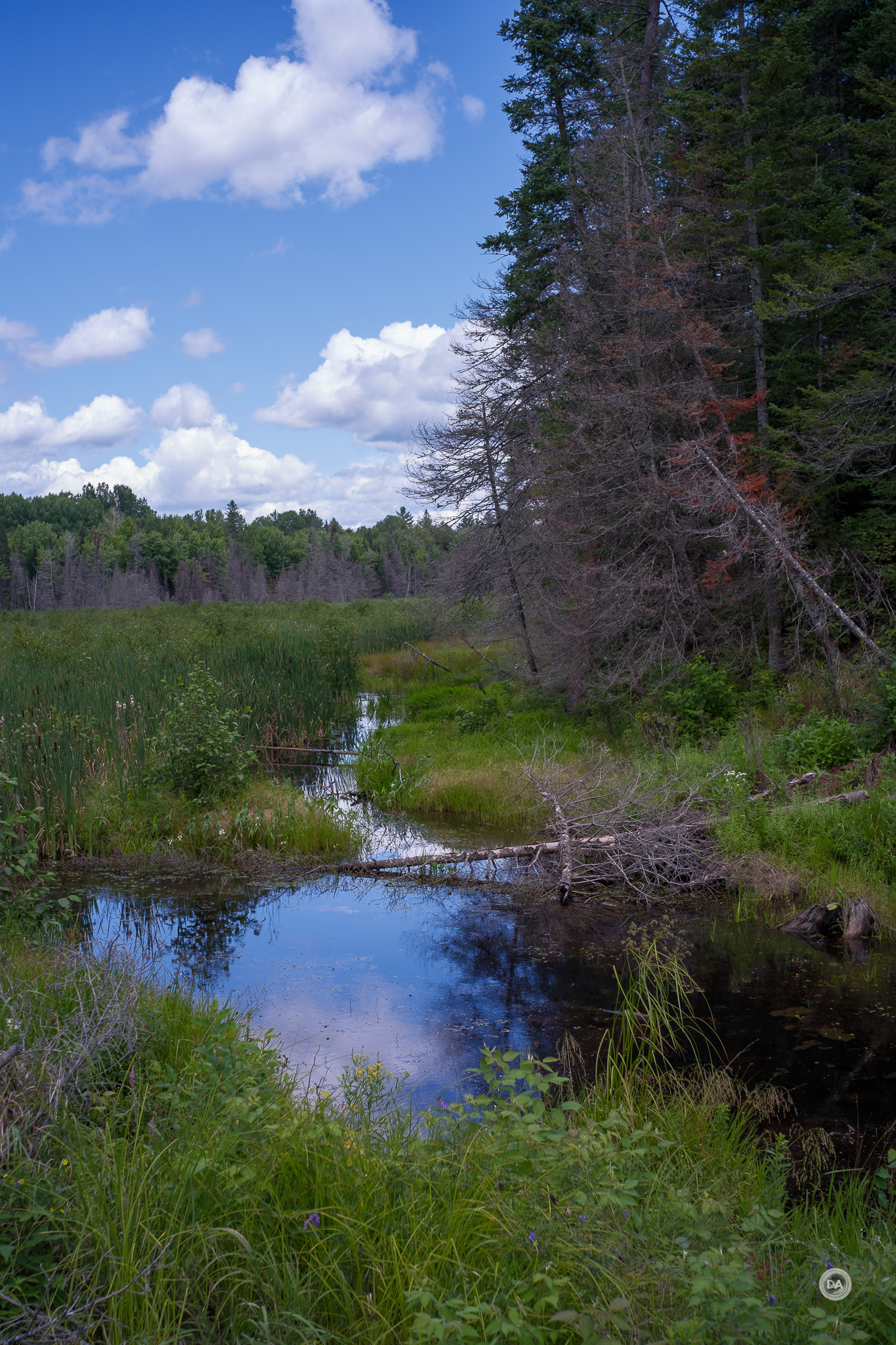
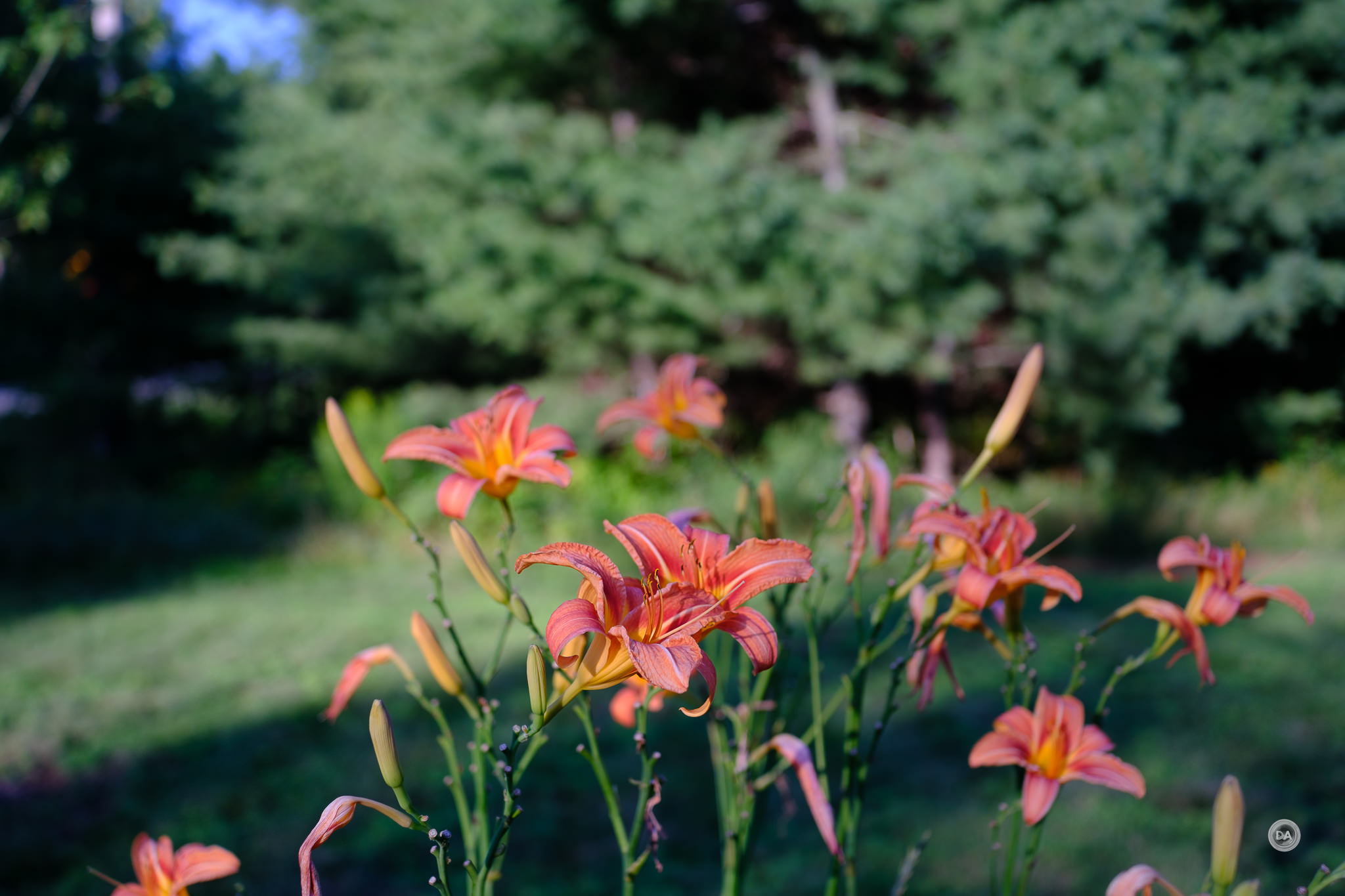
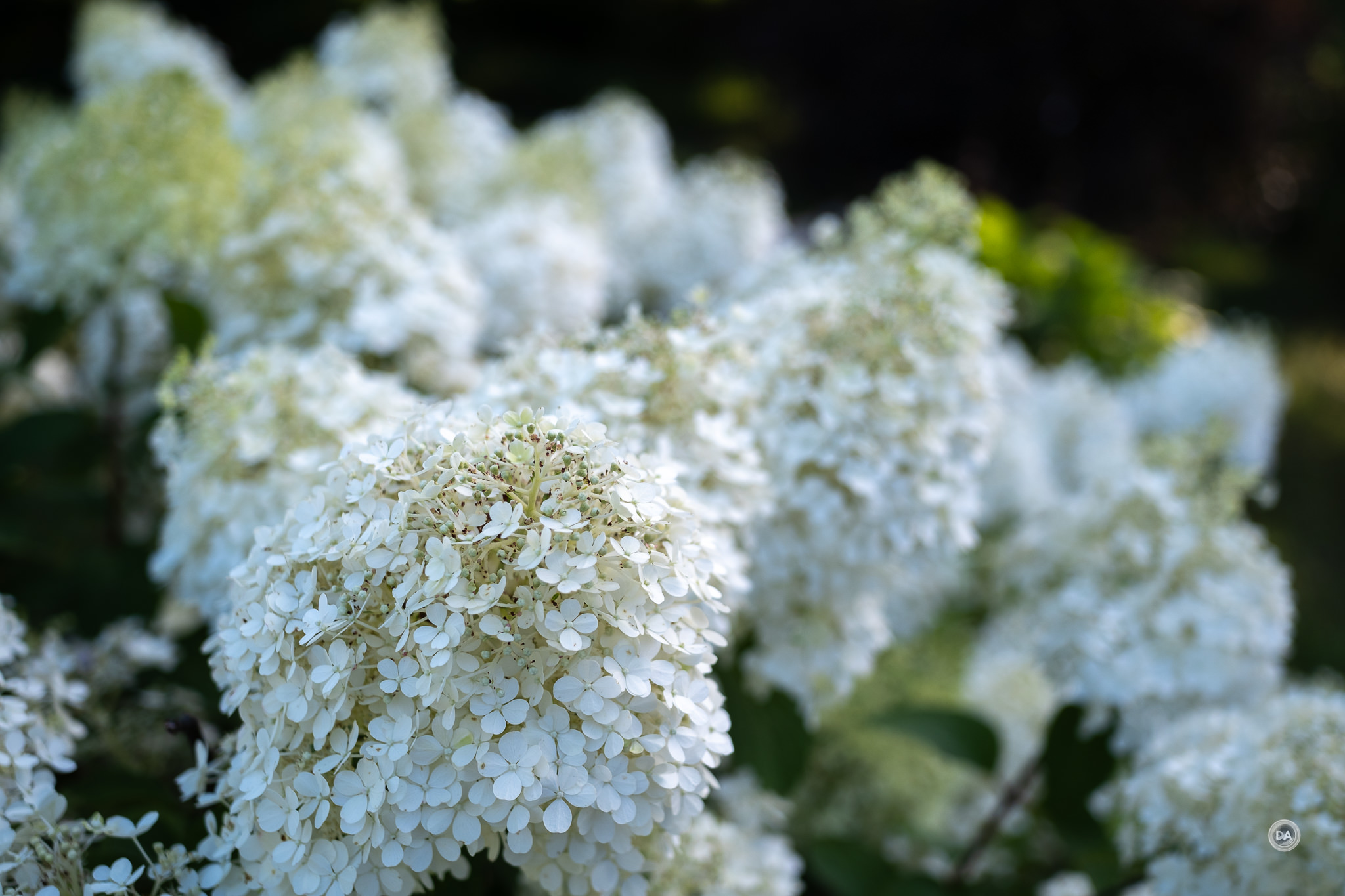
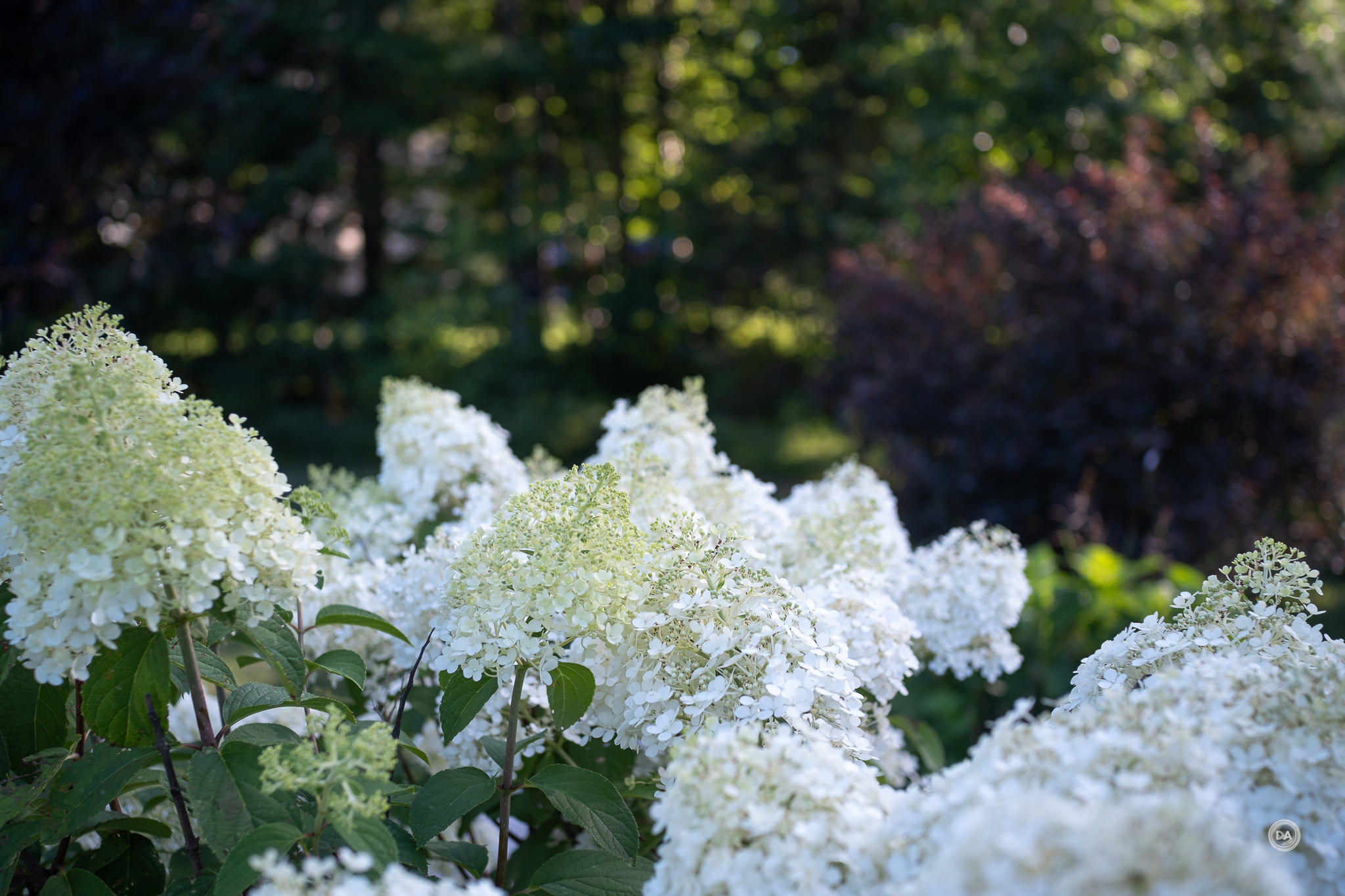
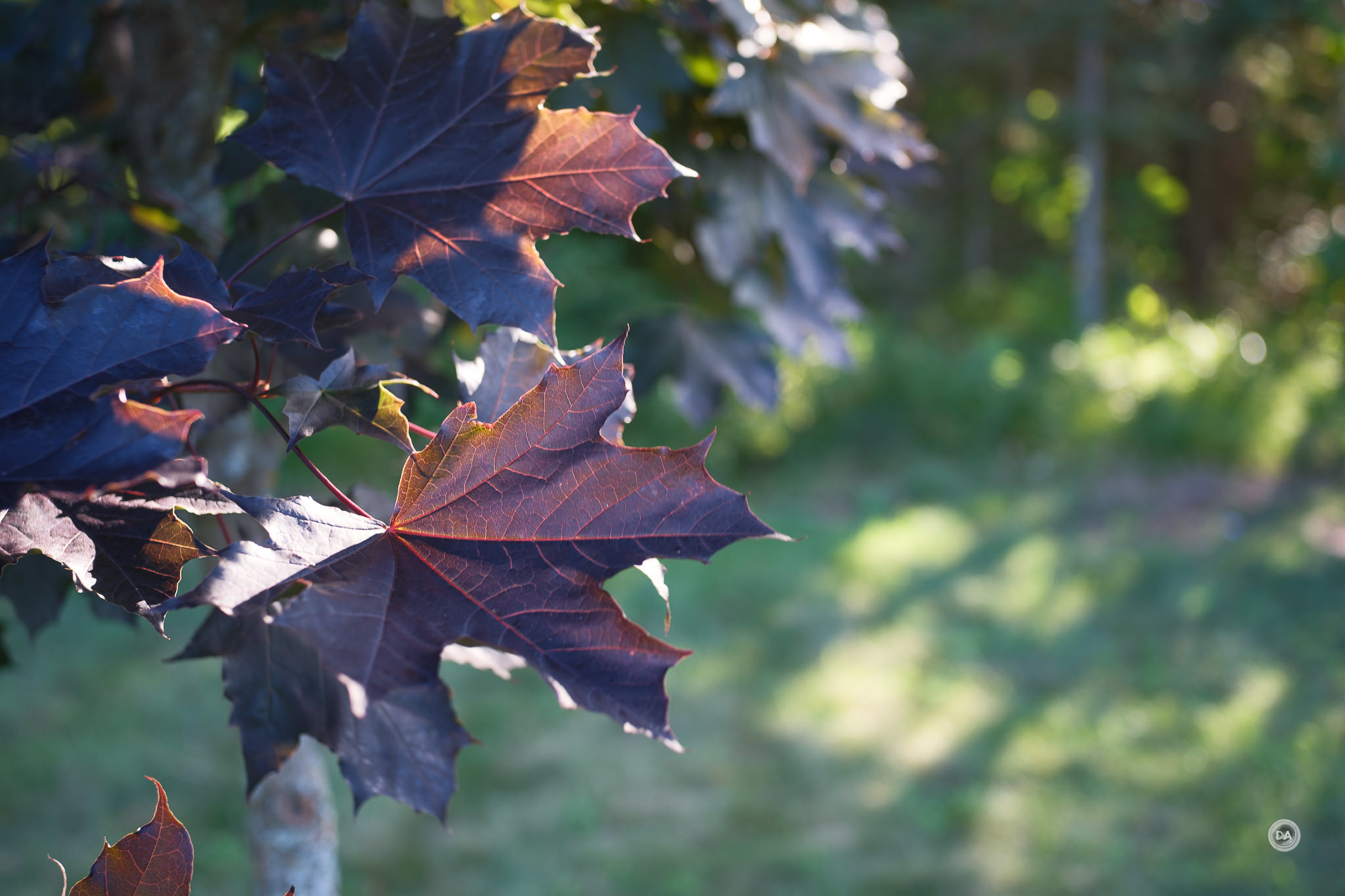
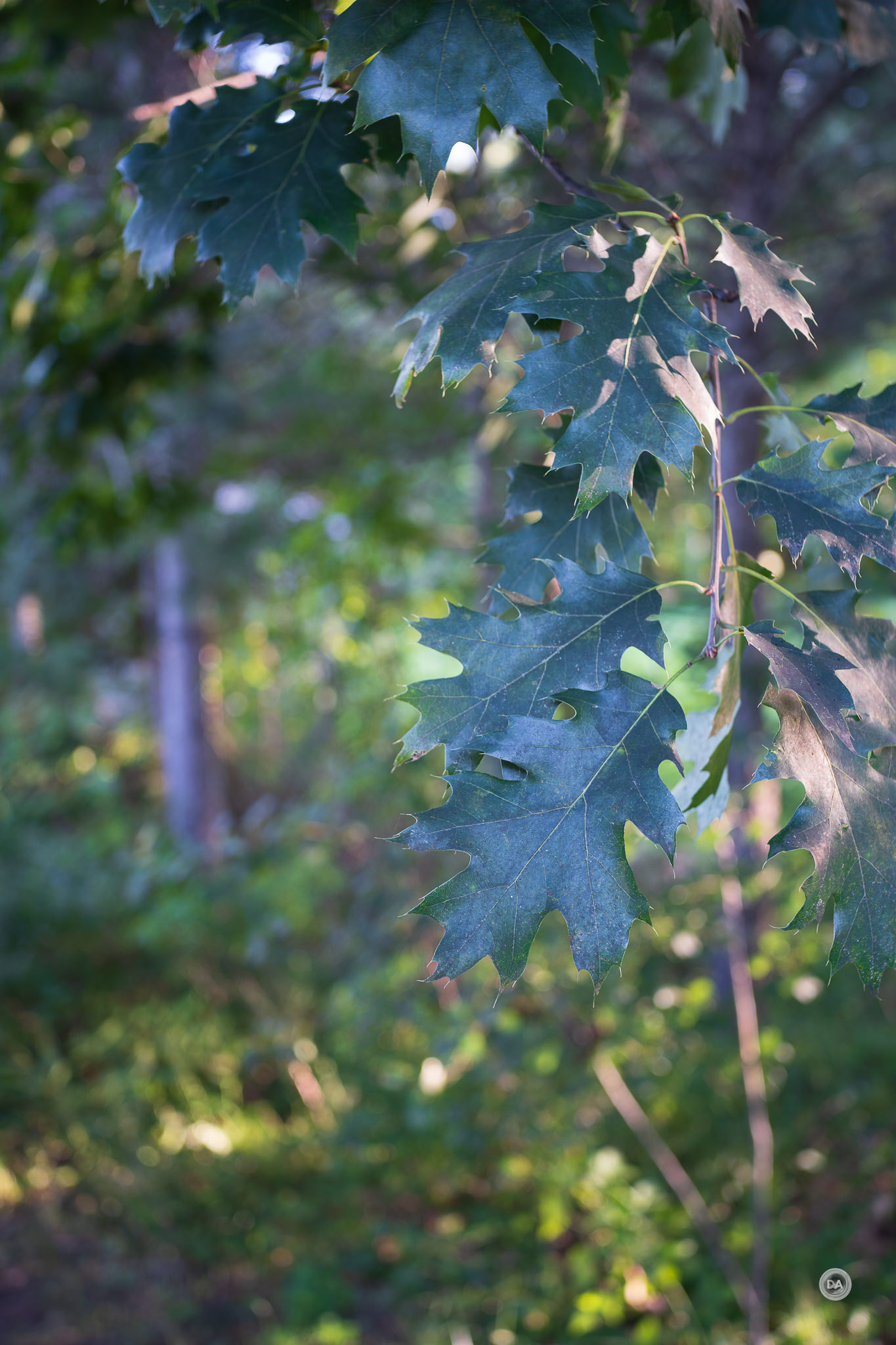
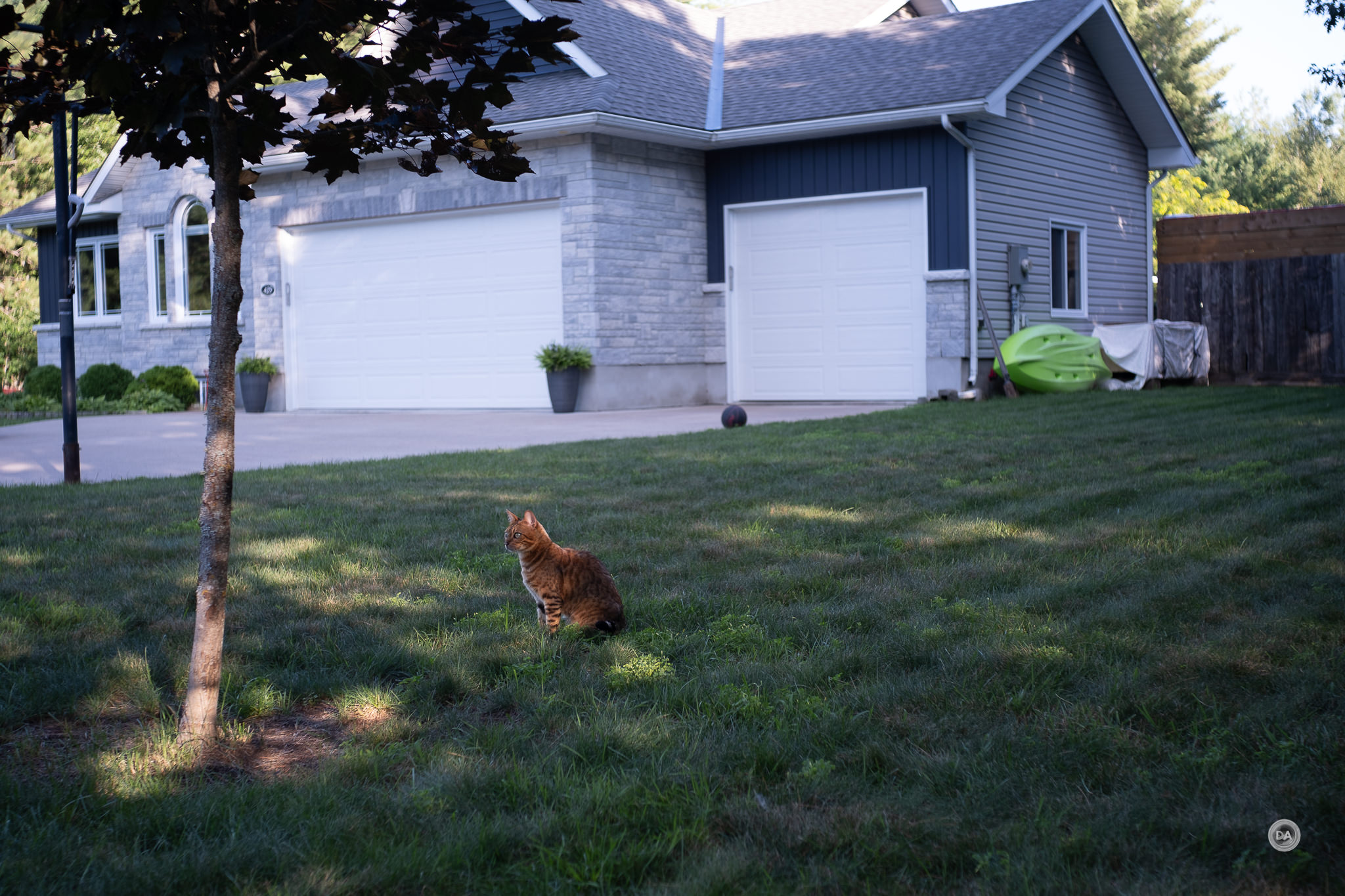
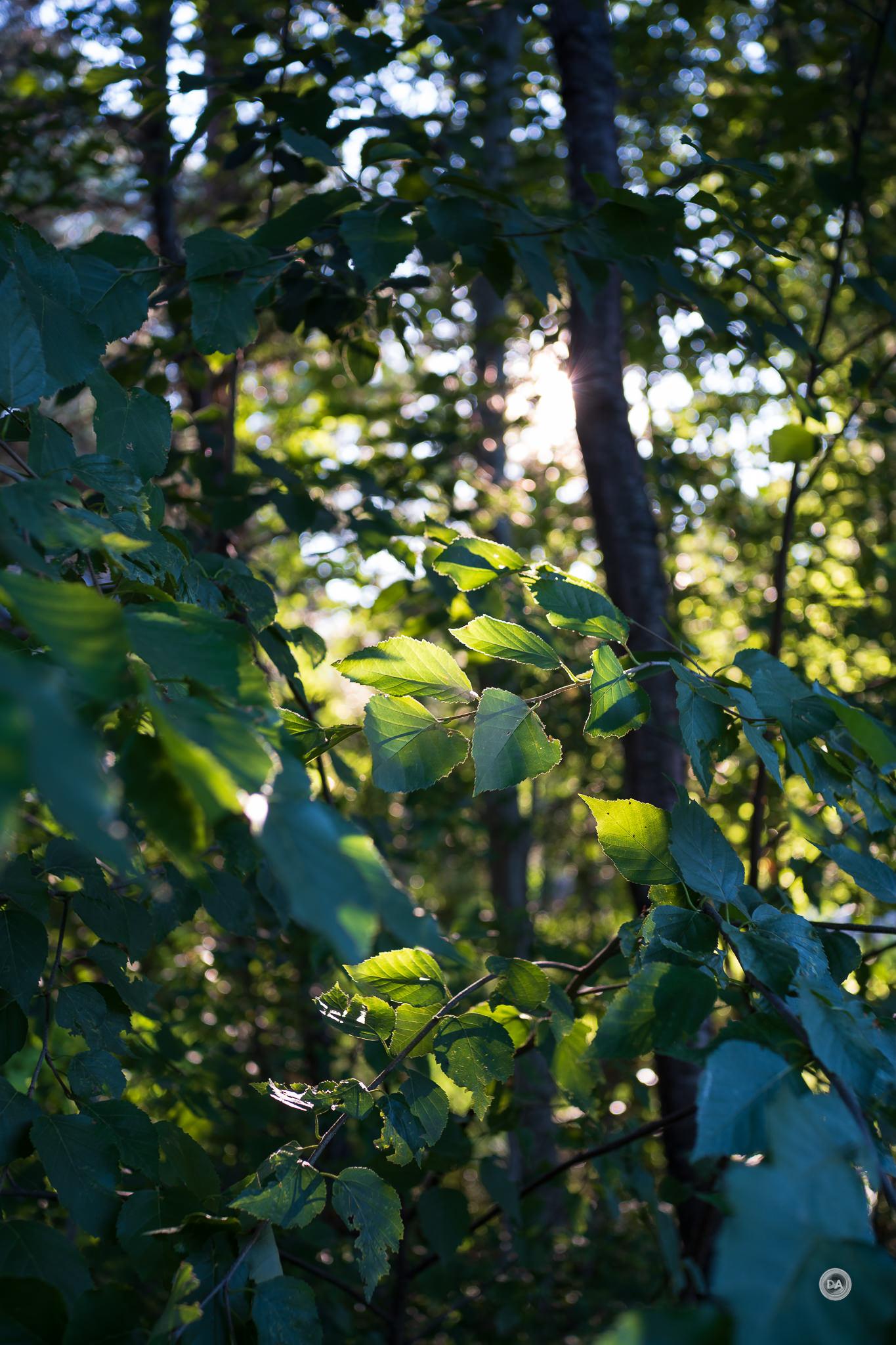
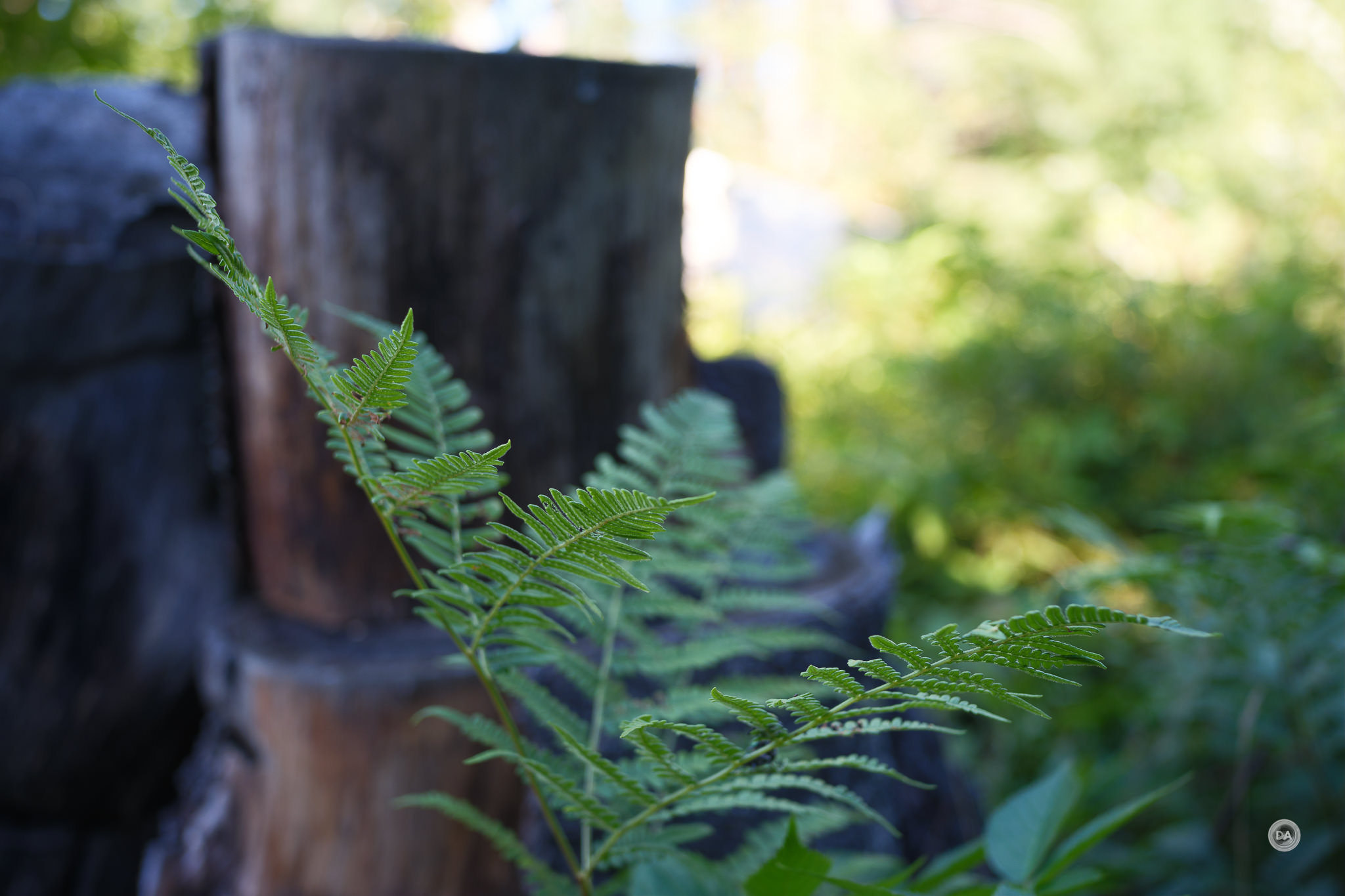
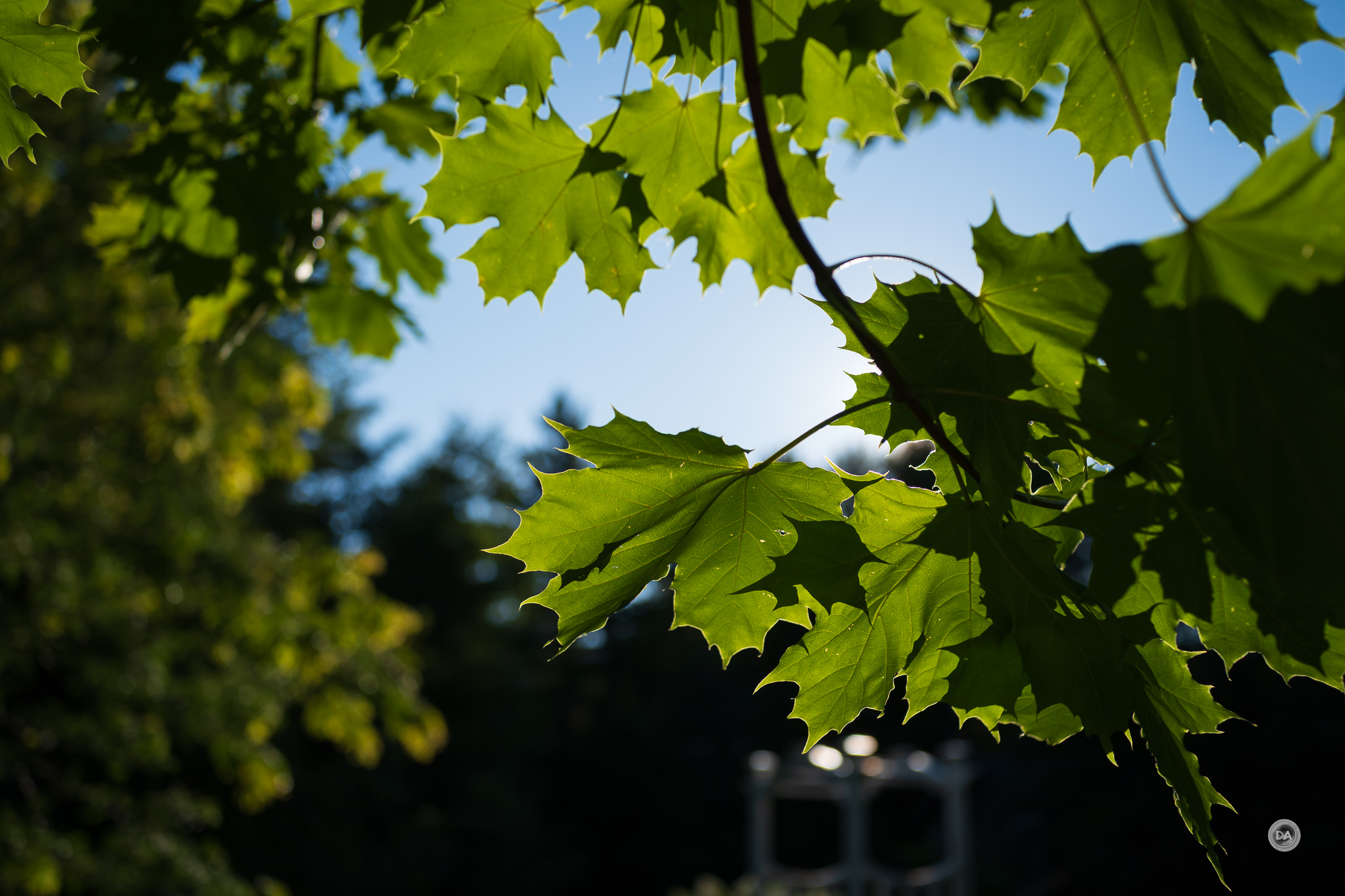
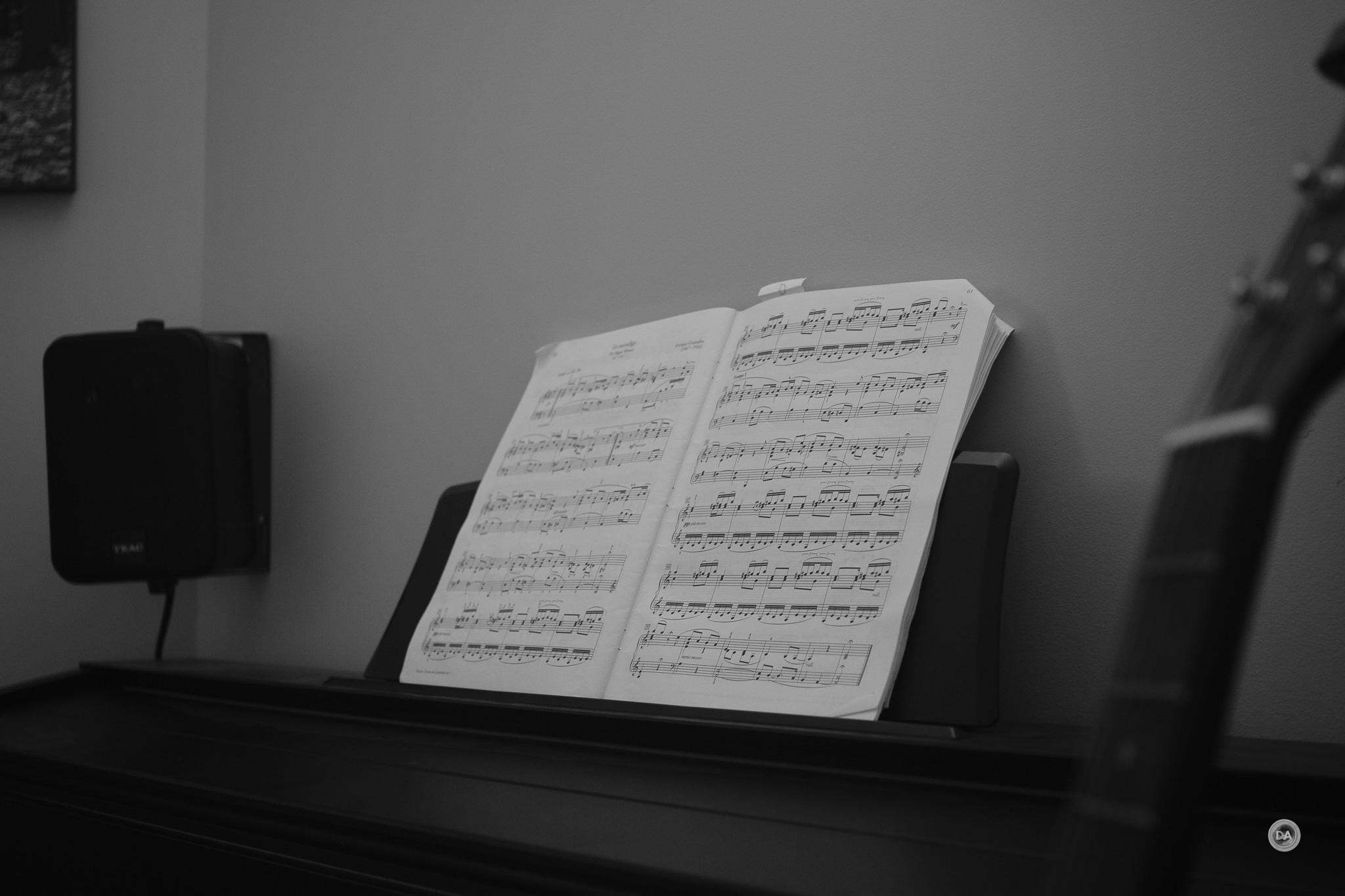
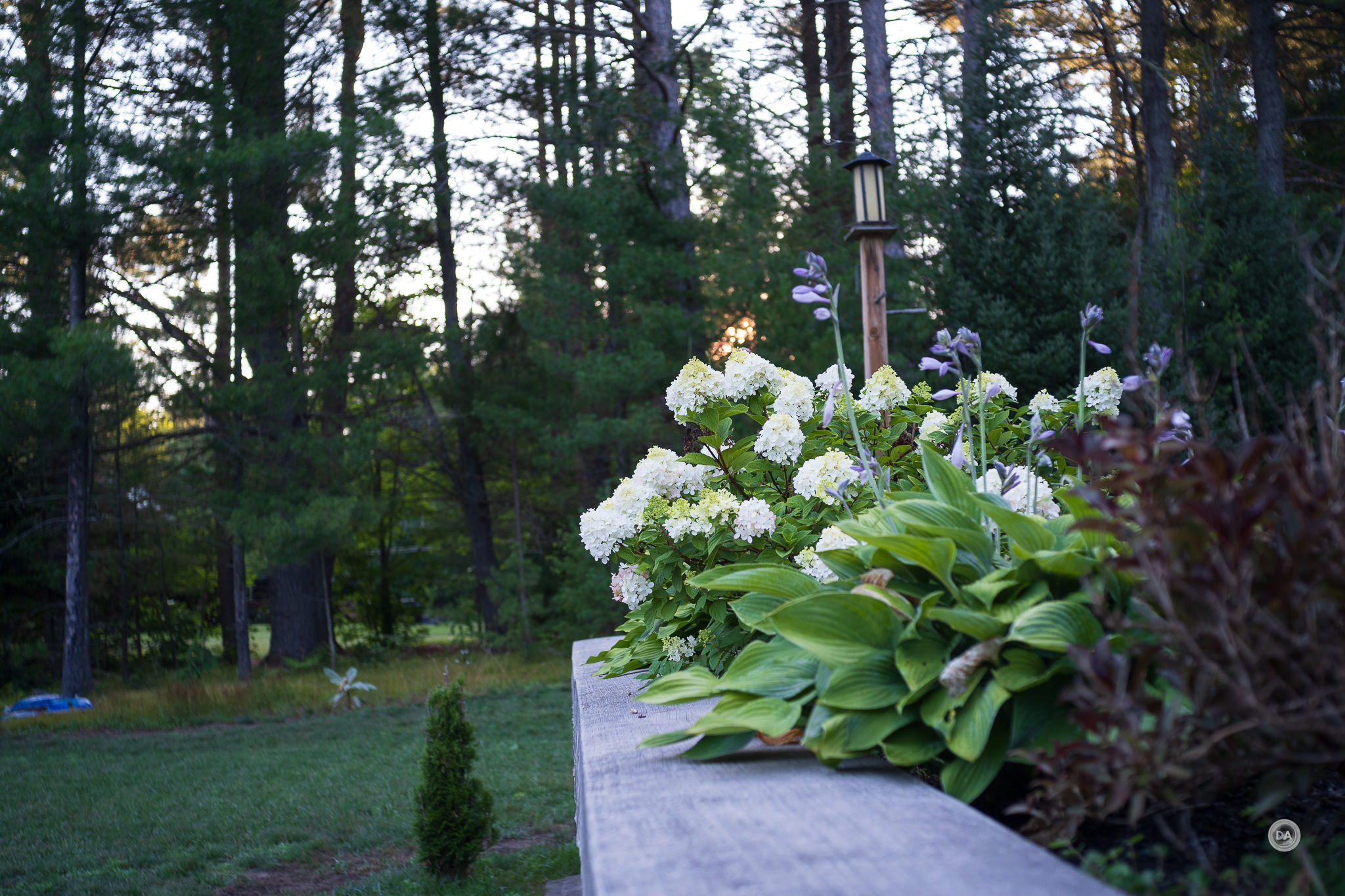
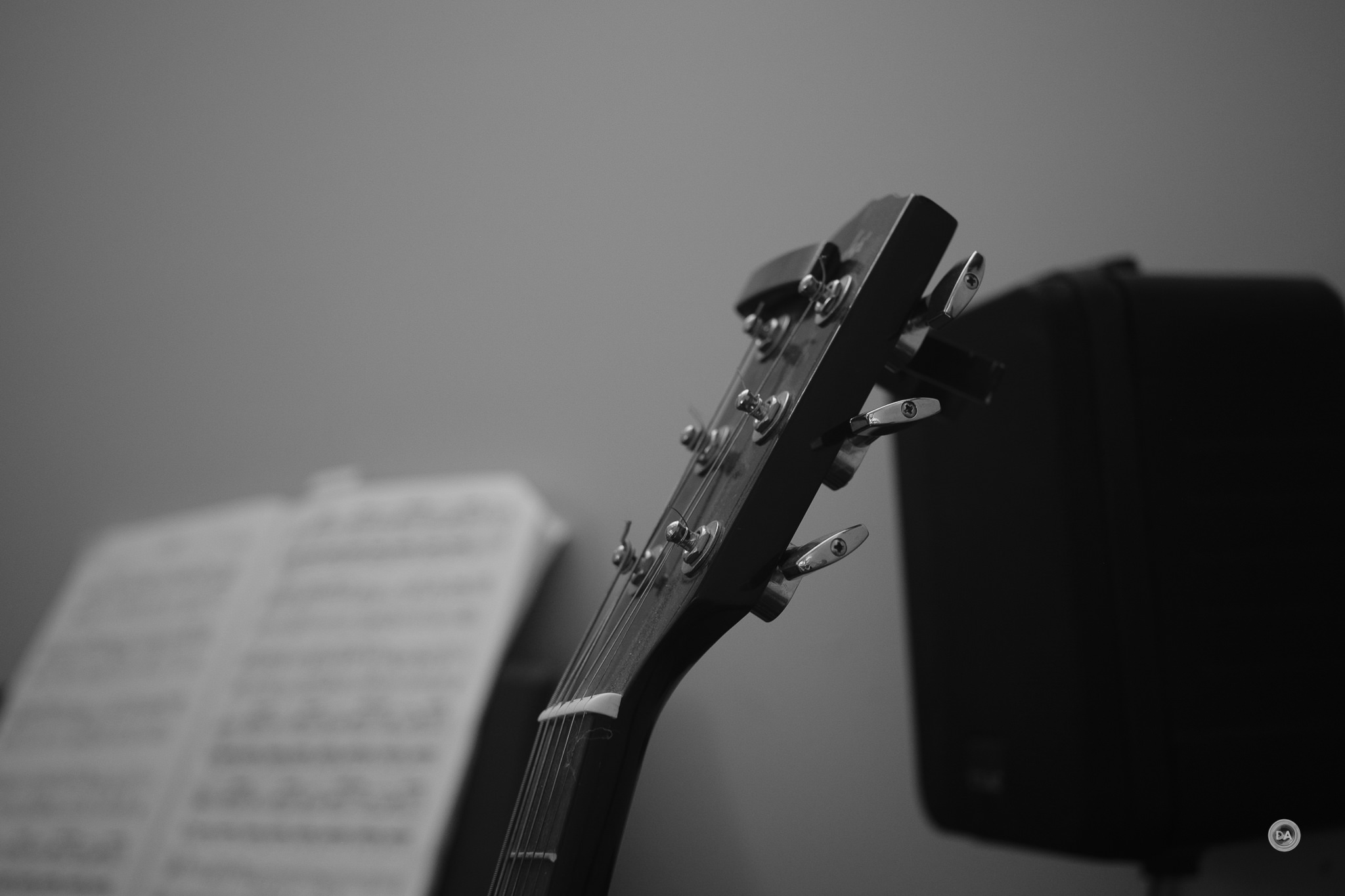
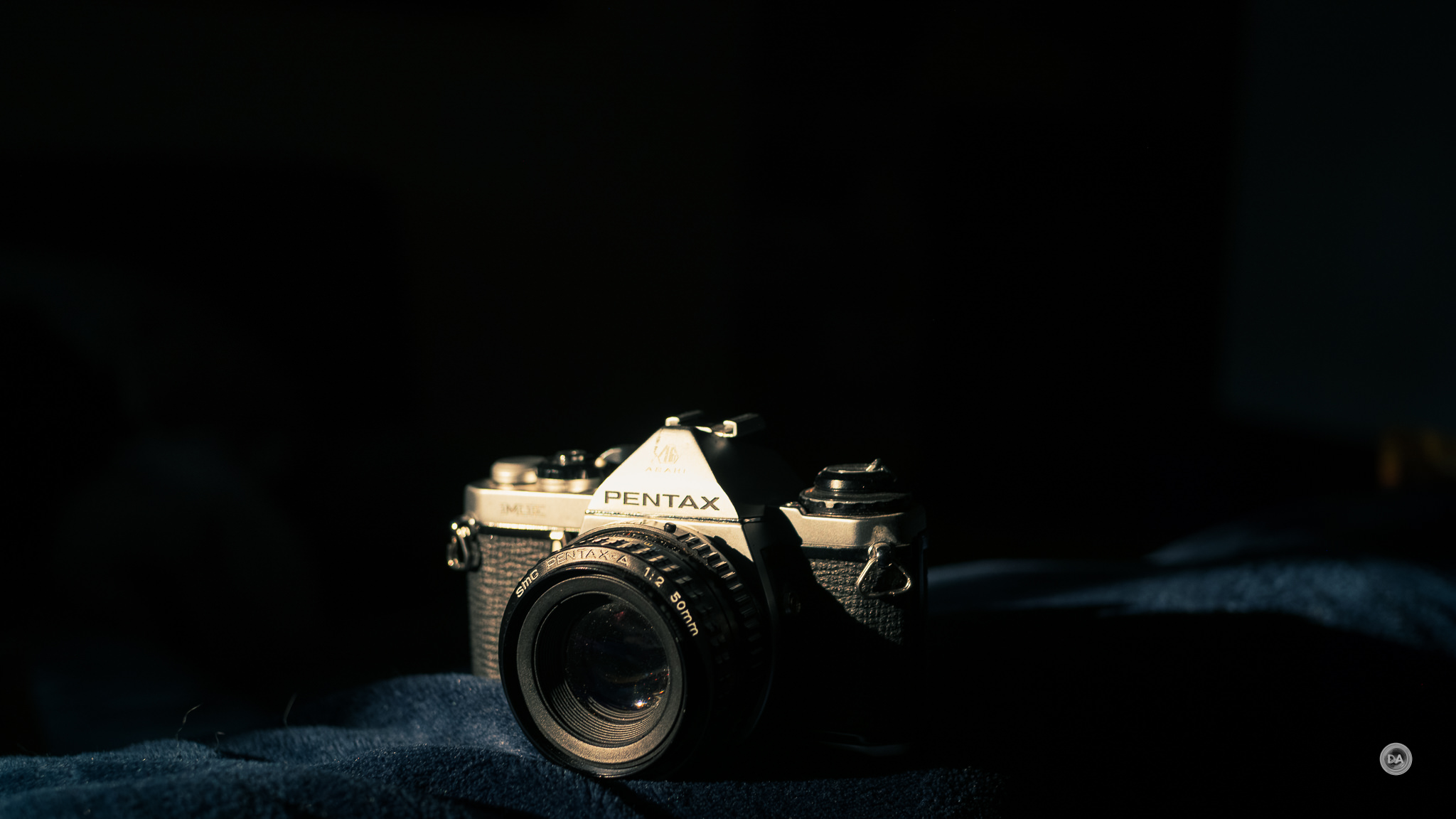
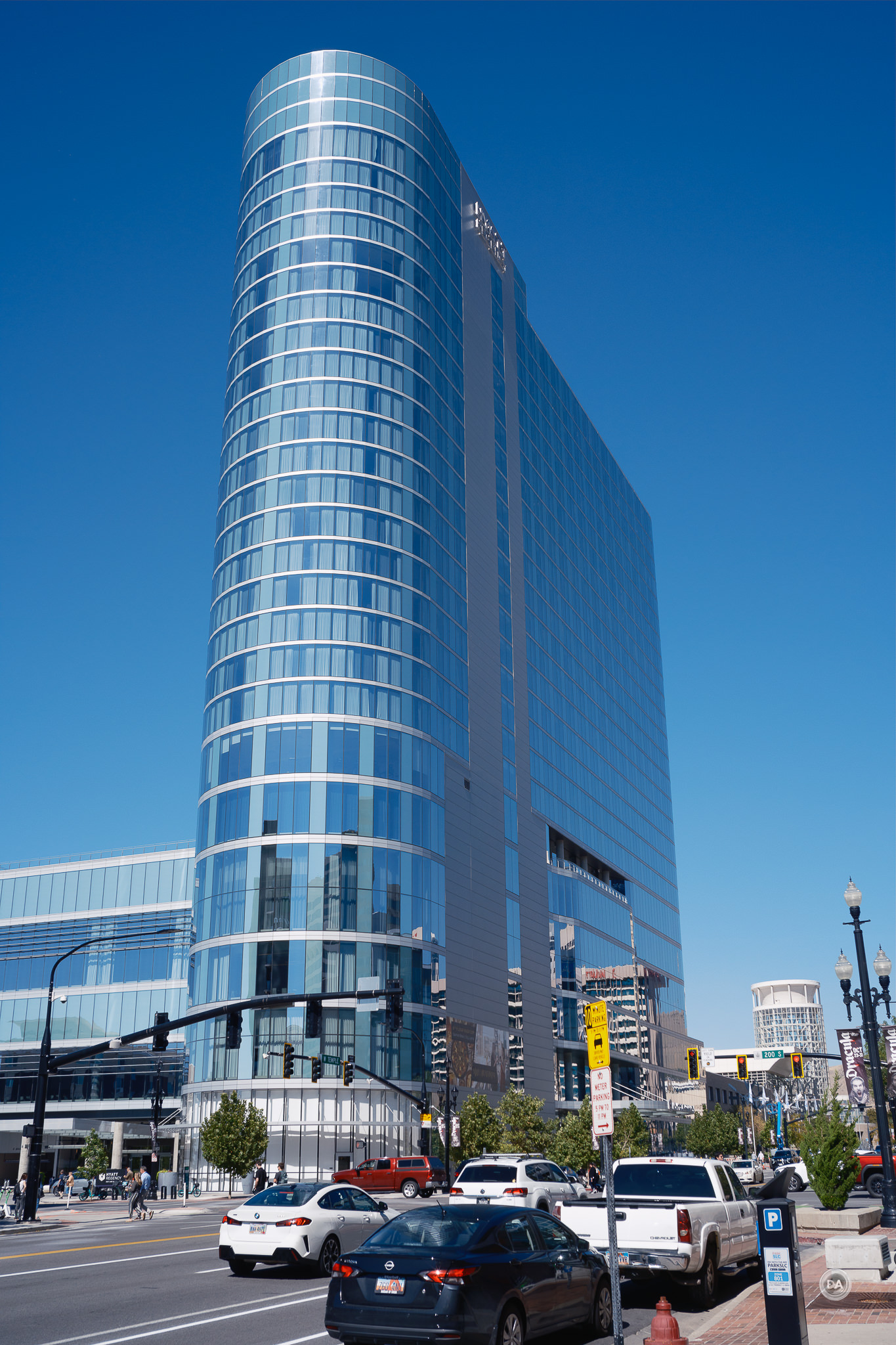
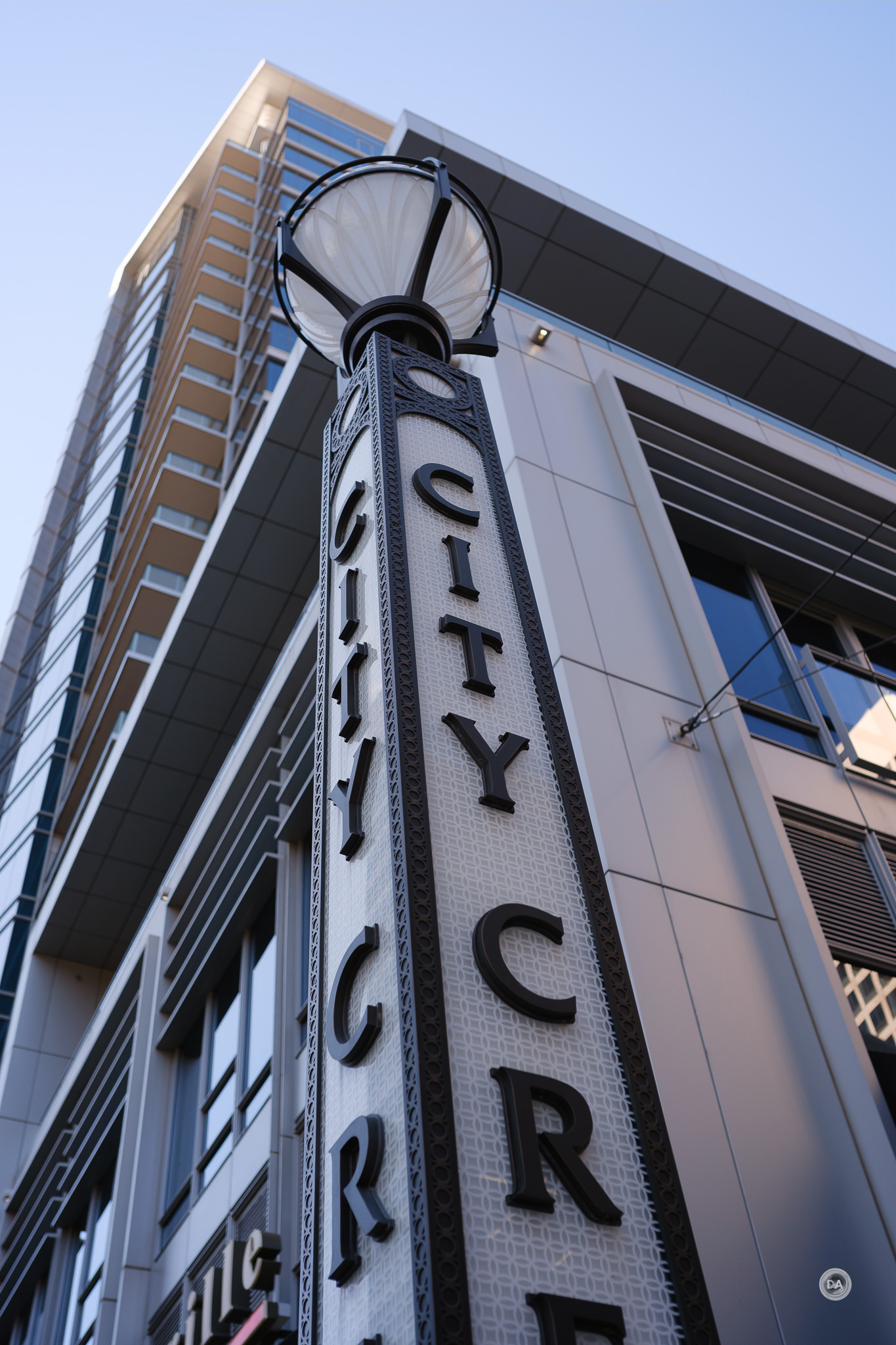
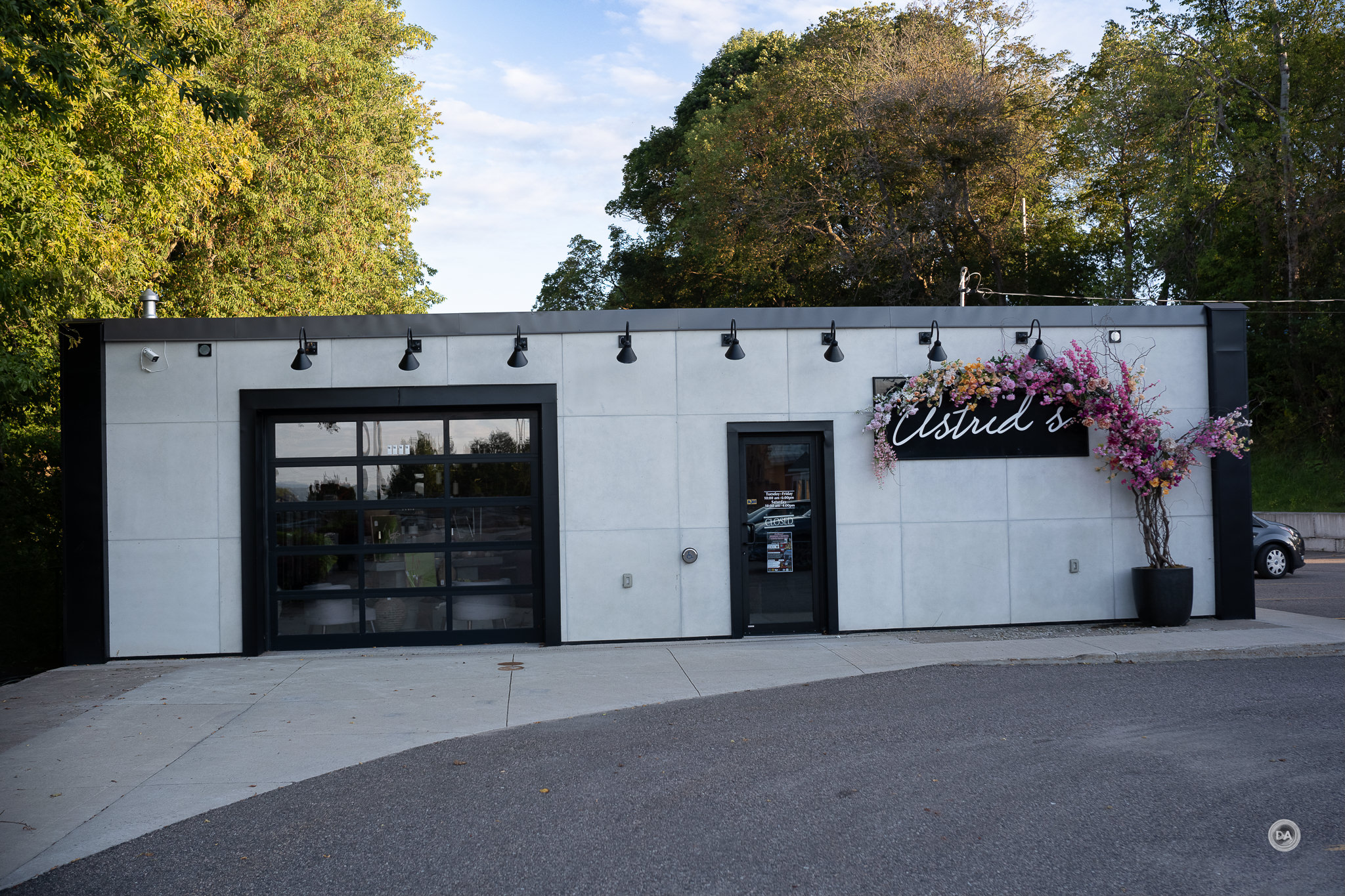
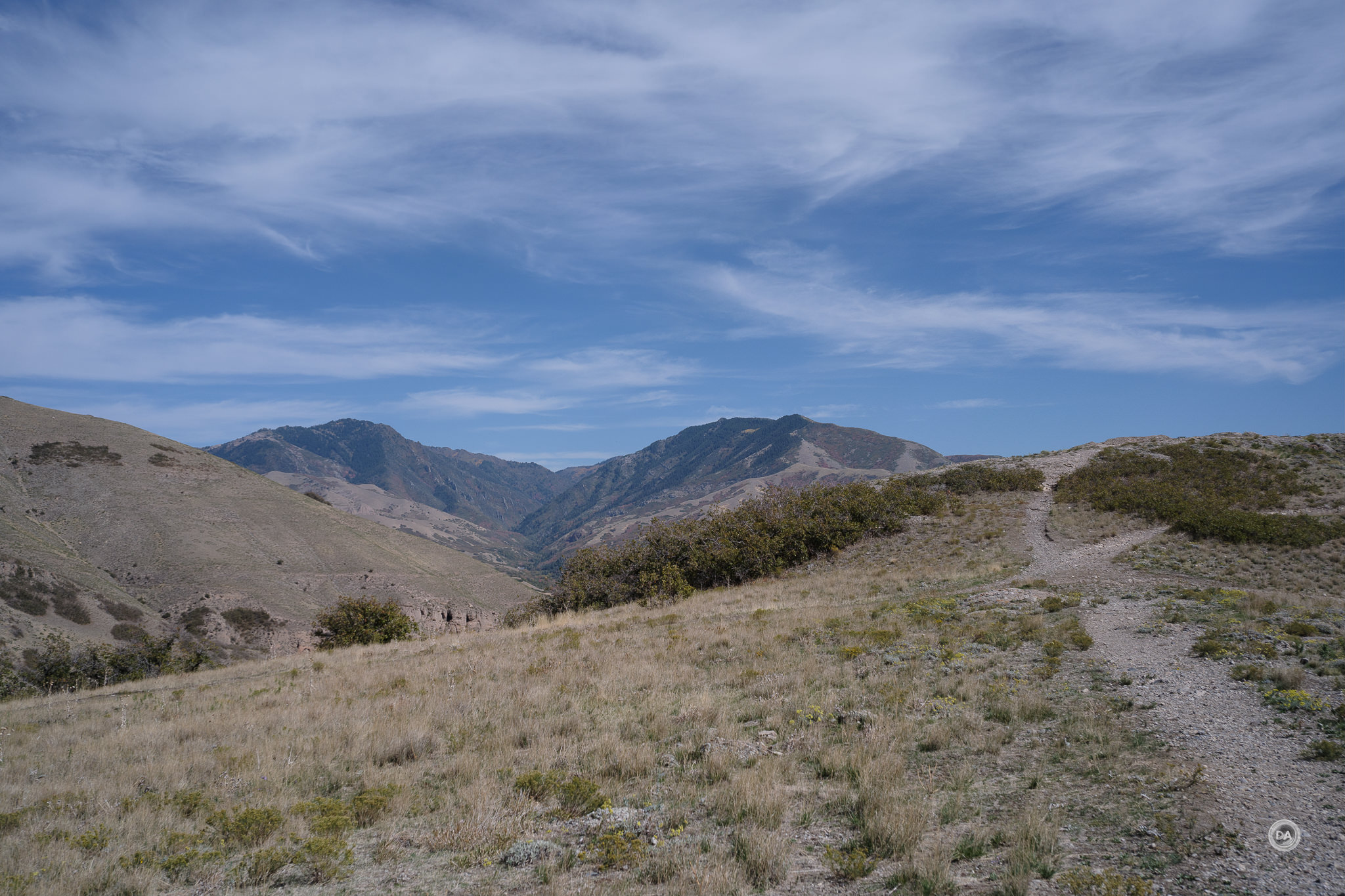
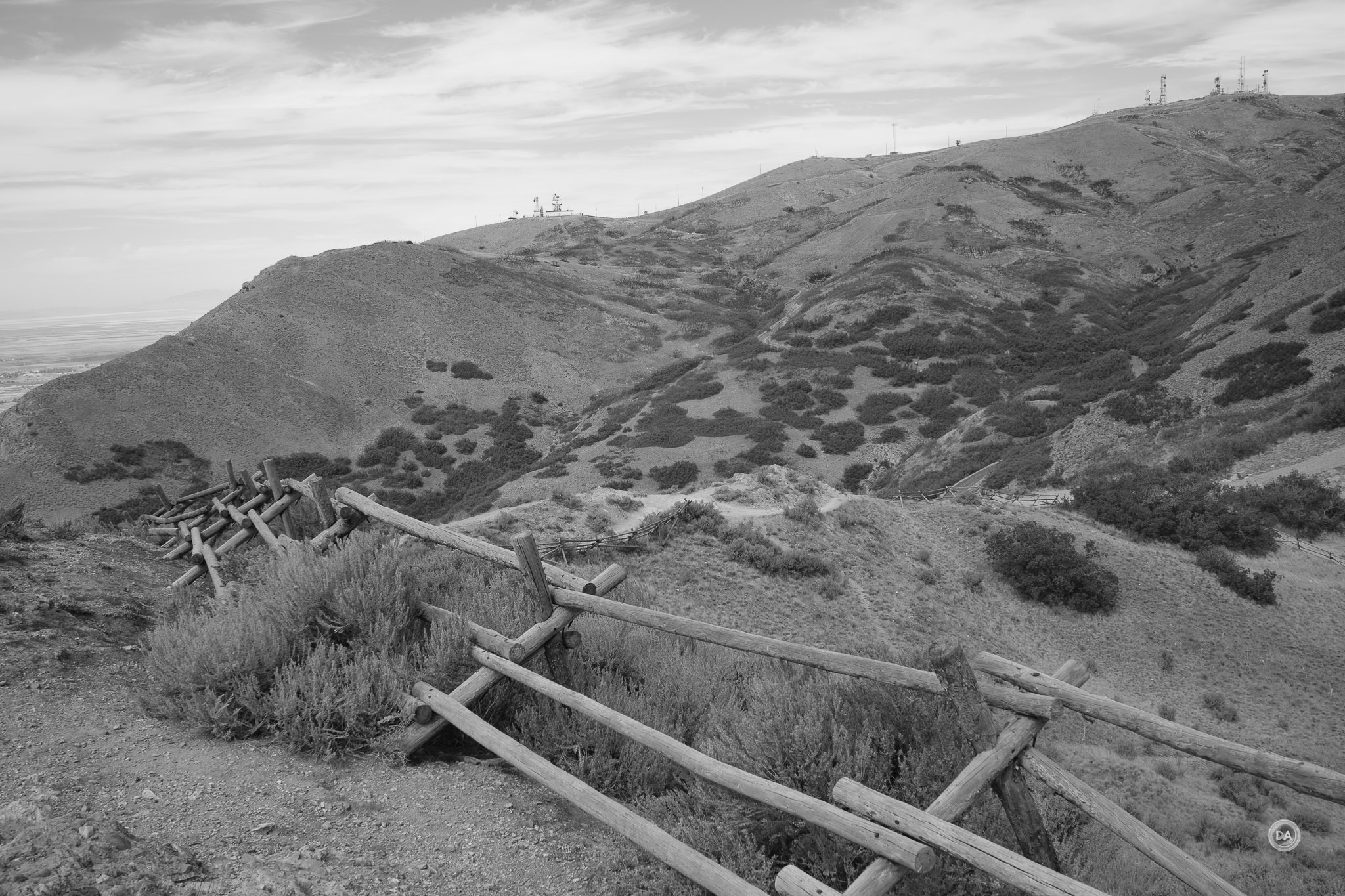
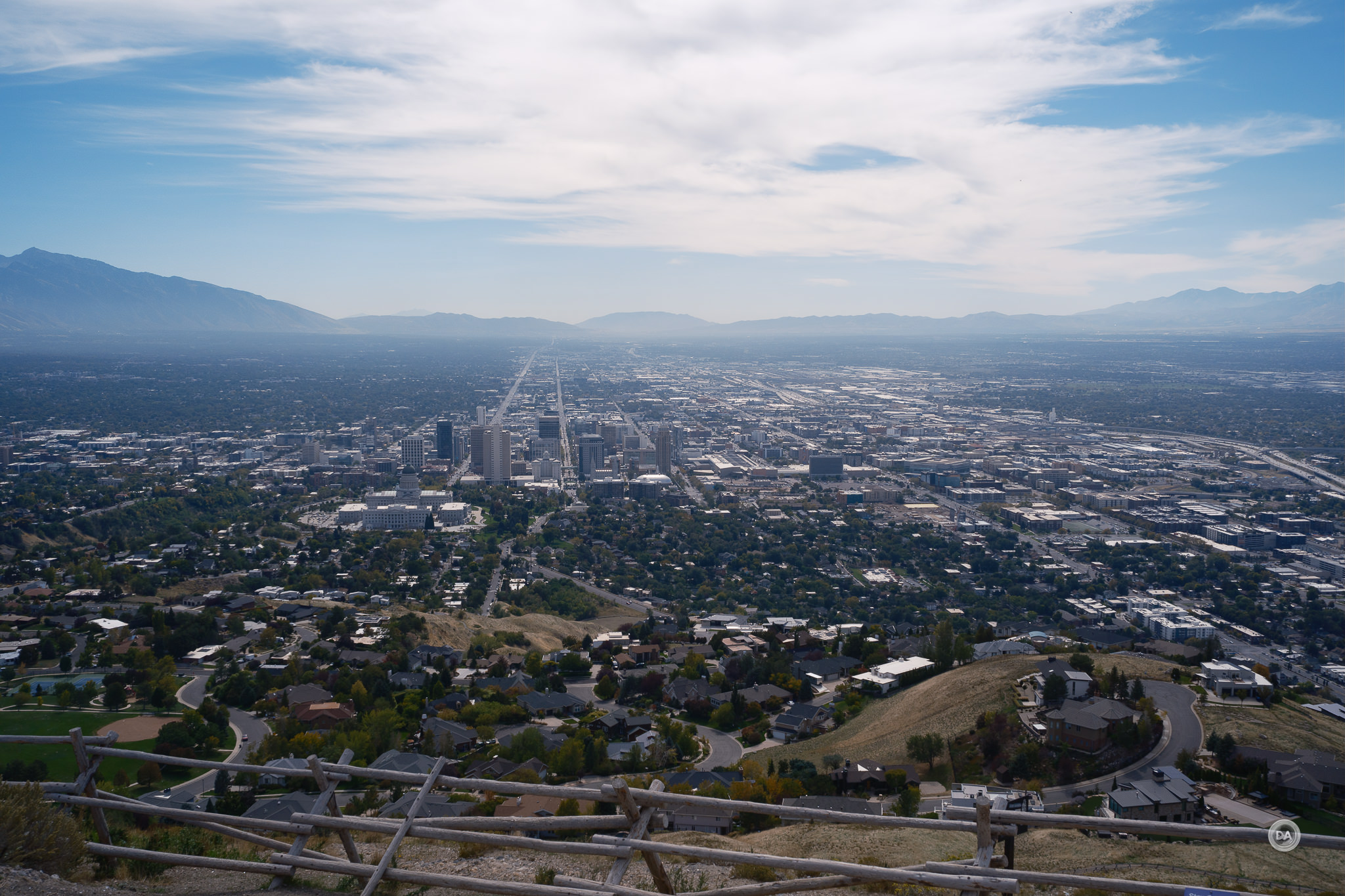
Bottom line is that I like this lens on the macro level a lot, but less at a micro level. I like the images I see out of it. Here’s a mini-gallery of more images for you to enjoy.
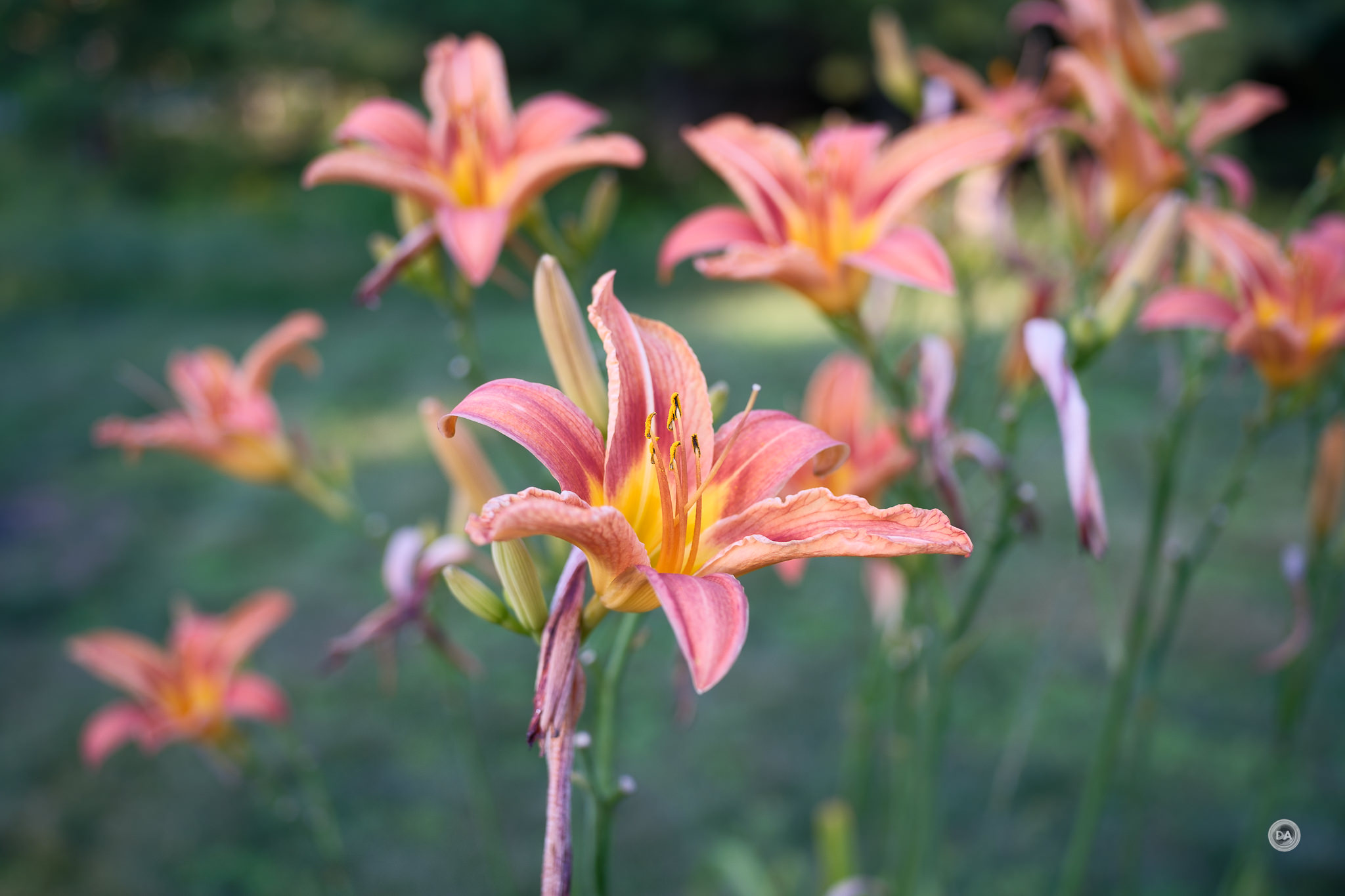
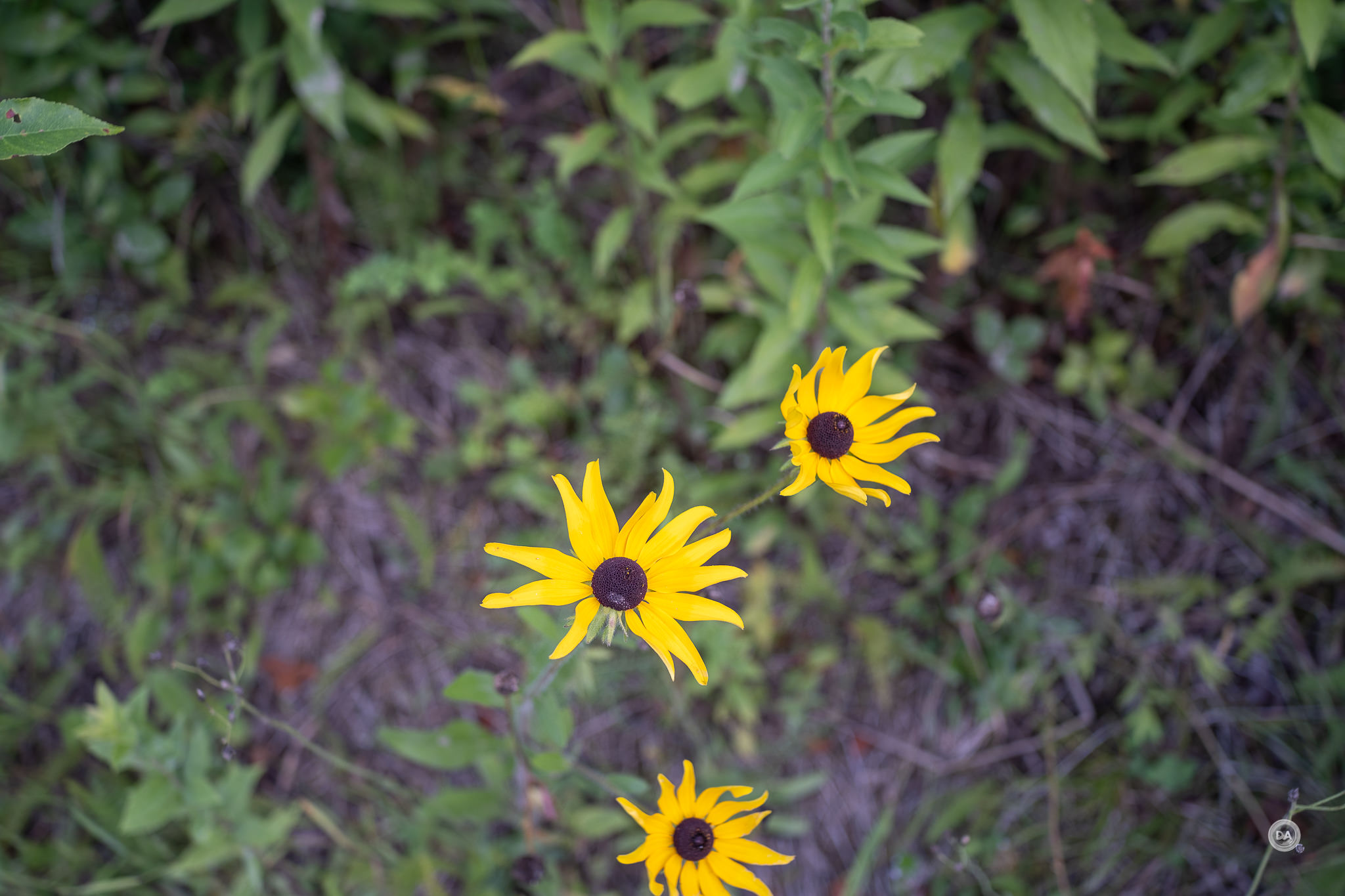


Conclusion
Thypoch has been one of the more interesting new Chinese lensmakers. Most of their lenses have not fit into any “conventional” basket, but the Sculptor series will almost certainly be the most conventional set of lenses we’ve seen from them. The Thypoch Sculptor 23mm F1.4 largely competes against more expensive Sigma and Fuji options on price, though merit in some areas could also be argued.
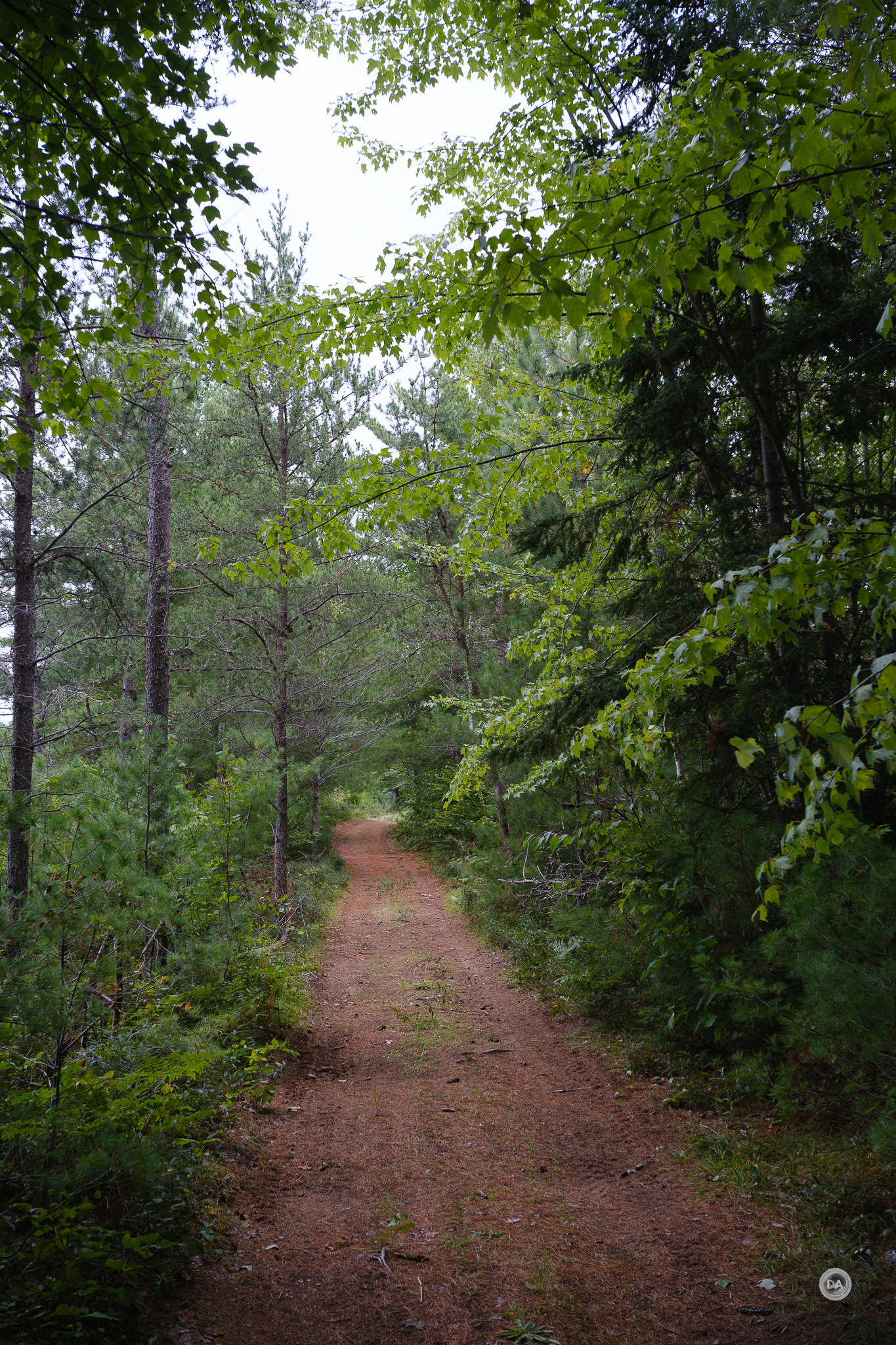
The lens is lighter than the competition while also being equally well made. It has solid autofocus, nice optics, and both the WR (weather resistance) and R (aperture ring) that defines Fuji’s own better lenses.
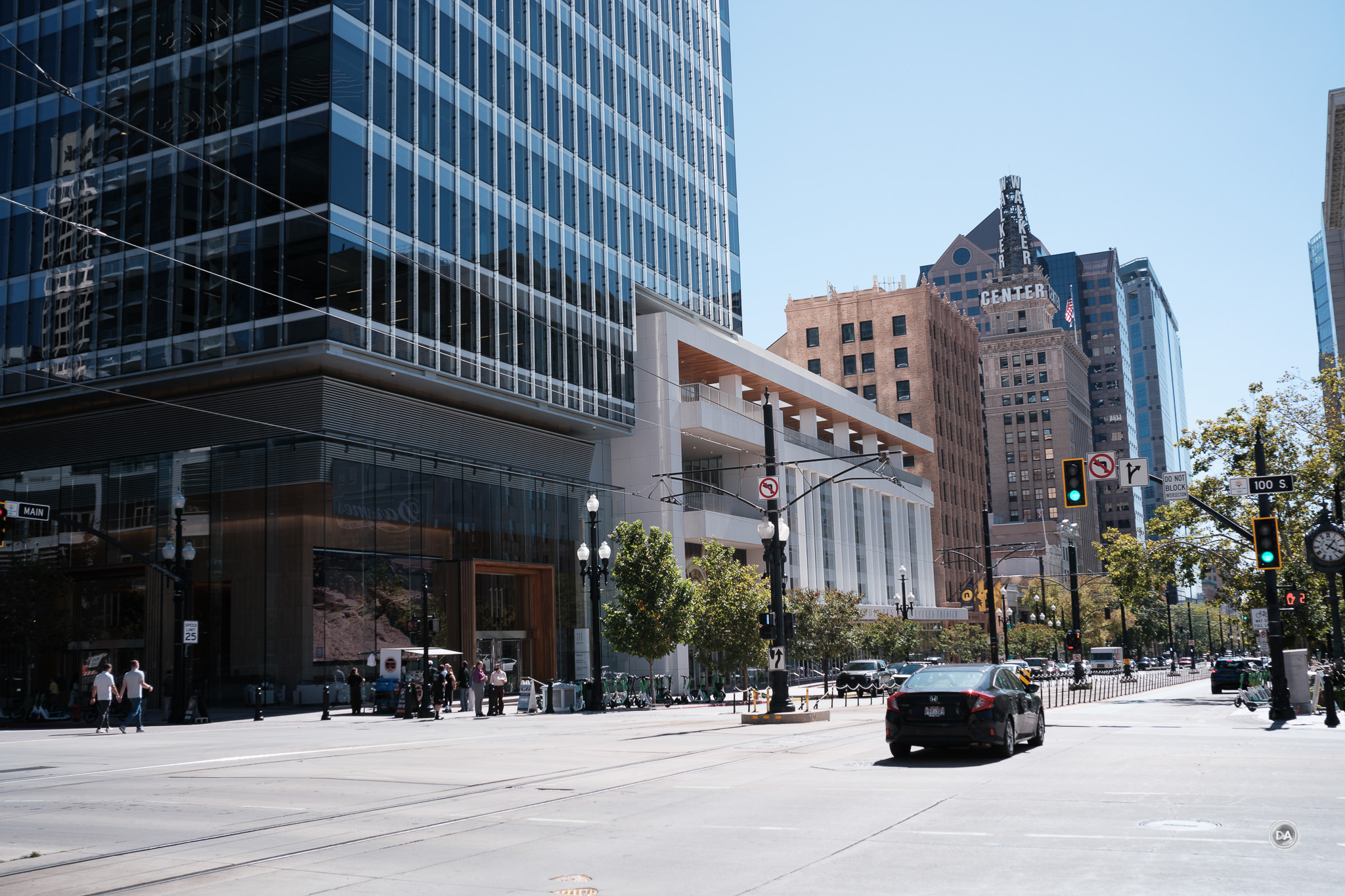
Fujifilm has occupied a unique platform as the “premium” APS-C brand. I really loved the 23mm F1.4 WR from Fuji when I tested it, but that lens comes at a huge price premium. Not everyone can afford that, and for those who can’t, the Thypoch Sculptor 23mm F1.4 will be an excellent consolation price. It delivers nice images, weighs nearly 100g less than the Fuji lens, and carries some of that attention to detail that Thypoch is becoming known for. I look forward to seeing more lenses in the series moving ahead.

Pros:
- Affordability: At $349, it is significantly cheaper than the Fujinon XF 23mm F1.4 ($1,050) and Sigma 23mm F1.4 ($659), making it accessible for budget-conscious photographers.
- Quality Build: The all-metal construction provides durability, while the weather sealing (IP52 without a filter, IP53 with one) offers protection against moisture and dust.
- Lightweight Design: Weighing only 283g (10 oz), it is lighter than both competitor lenses, making it easier to carry for extended photography sessions.
- Decent Optical Performance: Produces detailed images with good color rendering, which aligns well with Fujifilm’s color science.
- Aperture Control: The lens features a ribbed aperture ring with firm detents, allowing for precise control over the aperture settings.
- Pleasant Bokeh: Provides nice background blur, contributing to aesthetically pleasing images, especially in portrait settings.
Cons:
- Lower Contrast: While it provides good detail, the overall contrast is not as strong as that of the Fujinon and Sigma lenses.
- Autofocus Limitations: Struggles with tracking fast-moving subjects, leading to occasional back focusing, especially in challenging lighting conditions.
- Subpar Close-Up Performance: The lens delivers softer images with lower contrast at close distances compared to rival lenses, with a “dreamy” rendering.
- Potential Filter Issues: The shallow lens hood design may limit the use of filters, and the rubber lens cap can collect lint and is somewhat unconventional.
- Minor Ghosting and Flare: Although average for modern lenses, some flare can appear at wide apertures, which may affect image quality in certain lighting situations.
_____________________________________________________________________
GEAR USED:
Purchase the Thypoch Sculptor 23mm F1.4 @ B&H Photo https://bhpho.to/4dF9mNq | Adorama https://prf.hn/l/VxNpx48/ | Amazon https://link.amazon/B03SJe5SC | Amazon Canada https://link.amazon/B0dOJtP3I
_________________________________________________________________________
Purchase the Sony a7RV @ B&H Photo | Adorama | Amazon | Camera Canada | Sony Canada | Amazon Canada | Amazon UK | Amazon Germany
__________________________________________________________________
Purchase the Sony a7IV @ B&H Photo | Adorama | Amazon | Camera Canada | Sony Canada | Amazon Canada | Amazon UK | Amazon Germany
_________________________________________________________________
Purchase the Sony Alpha 1 @ Camera Canada | B&H Photo | Adorama | Amazon | Sony Canada | Amazon Canada | Amazon UK | Amazon Germany | Ebay
_________________________________________________________________
Want to support this channel? Use these affiliate links to shop at: B&H Photo | Amazon | Adorama | Camera Canada | Amazon Canada | Amazon UK | Ebay | Make a donation via Paypal
Buy DA Merchandise https://bit.ly/TWIMerch

Keywords: Thypoch, Thypoch Sculptor, 23mm, F1.4, Thypoch Sculptor 23mm F1.4, X-Mount, Autofocus, FUJIFilm, X-H2, X-T5, X-T6, Review, Hands On, Dustin Abbott, Real World, Comparison, Sharpness, Bokeh, Flare Resistance, Autofocus, Image Quality, Sample Images, Video, Photography, let the light in, weathersealing, #letthelightin, DA
Related posts:
 Thypoch Eureka 28mm F2.8 X-mount Review
 Yongnuo YN 50mm F1.8X DA DSM Pro Review
 Yongnuo YN 50mm F1.8 DA DSM Pro Gallery
 Yongnuo YN 23mm F1.4S DA DSM WL Pro
 Tokina ATX-M 11-18mm F2.8 X-Mount Review
 Yongnuo YN 23mm F1.4 DSM WL Pro Gallery
 Tokina ATX-M 11-18mm F2.8 X Gallery
 Yongnuo YN 56mm F1.4S DA DSM WL Pro Review
 Yongnuo 56mm F1.4 DA DSM WL Pro Gallery
 Viltrox Pro AF 56mm F1.2 X Review